
Smithsonit ist ein Zinkcarbonat-Mineral mit der chemischen Formel ZnCO₃ und ein wichtiges sekundäres Mineral, das in Oxidationszonen zinkhaltiger Erzlagerstätten entsteht. Es gehört zur Gruppe der Carbonatminerale und ist Teil der Calcitgruppe, teilt strukturelle Ähnlichkeiten mit Mineralien wie Calcit, Magnesit und Siderit. Obwohl reiner Smithsonit typischerweise farblos oder weiß ist, zeigen natürliche Exemplare oft eine breite Palette attraktiver Farben, darunter Blau, Grün, Rosa, Gelb, Braun, Grau und Violett. Diese Farben werden hauptsächlich durch Spurenelemente verursacht, die Zink in der Kristallstruktur ersetzen und die bemerkenswerte Vielfalt schaffen, die Smithsonit bei Mineralsammlern sehr geschätzt macht.
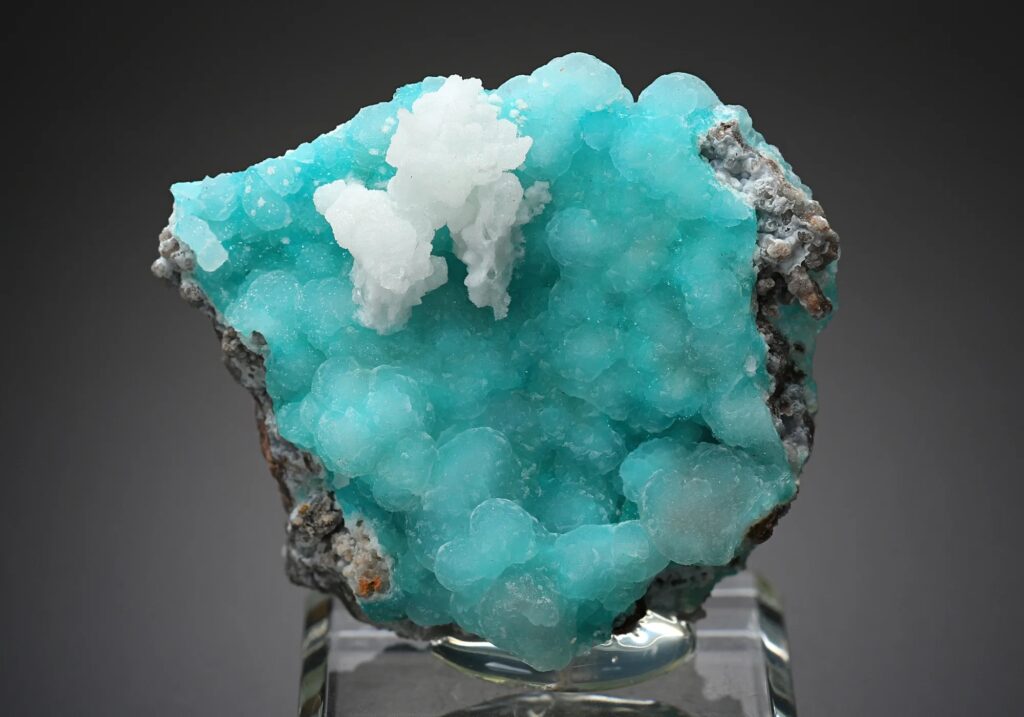
Anders als viele Minerale, die große, klar definierte Kristalle bilden, kommt Smithsonit am häufigsten in traubigen Massen, Krusten, Überzügen, stalaktitischen Formationen und kompakten Aggregaten vor. Seine sanften Farben, abgerundeten Texturen und der perlige bis wachsartige Glanz verleihen ihm ein unverwechselbares Aussehen, das ihn zu einem beliebten Sammlermineral und einem Edelsteinmaterial für Cabochons und Dekorationsobjekte gemacht hat. Obwohl er aufgrund seiner mäßigen Härte und Empfindlichkeit gegenüber Beschädigungen nicht als traditioneller Edelstein gilt, werden hochwertige Smithsonit-Exemplare für ihre Seltenheit, einzigartigen Formationen und geologische Bedeutung geschätzt. Das Mineral wurde nach dem englischen Chemiker und Mineralogen James Smithson benannt, als Anerkennung für seine Beiträge zur Mineralwissenschaft. Smithsons wissenschaftliches Vermächtnis wurde später mit der Gründung der Smithsonian Institution verbunden, und der Mineralname bewahrt seinen Einfluss auf die Entwicklung der modernen Mineralogie.
Geschichte des Smithsonits
Die Geschichte des Smithsonits spiegelt die Entwicklung der Mineralklassifikation, der chemischen Wissenschaft und der Zinkbergbauindustrie wider. Über viele Jahrhunderte hinweg war Smithsonit hauptsächlich als Zinkerz bekannt, nicht als eigenständige Mineralart. In Europa und anderen Bergbauregionen wurden Zinkcarbonatminerale historisch unter dem Namen „Calamine“ zusammengefasst, einem allgemeinen Begriff für zinkhaltige Erze. Diese Terminologie führte zu Verwirrung, da sowohl Smithsonit, ein Zinkcarbonat, als auch Hemimorphit, ein Zinksilikat, vor den Fortschritten in der Mineralchemie, die es Wissenschaftlern ermöglichten, sie zu unterscheiden, häufig mit demselben Namen bezeichnet wurden.
Im späten 18. und frühen 19. Jahrhundert halfen Verbesserungen in der chemischen Analyse Mineralogen, die Zusammensetzung und Klassifikation von Zinkmineralien besser zu verstehen. Forscher entdeckten, dass bestimmte Galmei-Proben aus Zinkcarbonat und nicht aus Zinksilicat bestanden, was zur Anerkennung von Smithsonit als eigenständige Mineralart führte. Im Jahr 1832 führte der französische Mineraloge François Sulpice Beudant offiziell den Namen Smithsonit ein, um James Smithson zu ehren, der wichtige Beiträge zur Chemie und Mineralienkunde geleistet hatte. Smithsonit spielte auch eine bedeutende Rolle in der historischen Entwicklung der Zinkproduktion. Bevor Zinksulfiderze wie Sphalerit zur dominierenden Quelle für industrielles Zink wurden, war Smithsonit eines der wichtigsten Zinkerze, das weltweit abgebaut wurde. Besonders wichtig war es in Regionen, in denen oxidierte Zinklagerstätten nahe der Oberfläche zugänglich waren. Das aus Smithsonit gewonnene Zink trug zu Industrien wie der Messingherstellung, dem Metallschutz und der Legierungsproduktion bei.
Heute ist Smithsonit keine primäre kommerzielle Zinkquelle mehr, da sich der moderne Bergbau hauptsächlich auf größere und wirtschaftlichere Sulfidlagerstätten konzentriert. Dennoch bleibt es ein wichtiges Mineral in der geologischen Forschung und im Mineralsammeln. Berühmte Fundorte wie die Tsumeb Mine in Namibia, die Kelly Mine in New Mexico und mehrere historische europäische Zinkdistrikte haben außergewöhnliche Smithsonit-Exemplare hervorgebracht, die weiterhin Sammler und Museen weltweit anziehen.
Chemische Zusammensetzung und Klassifikation des Smithsonits
Smithsonit hat die ideale chemische Formel ZnCO₃, bestehend aus Zink, Kohlenstoff und Sauerstoff. Es wird als Carbonatmineral klassifiziert und gehört zur Calcitgruppe, die mehrere Mineralien mit ähnlichen Kristallstrukturen, aber unterschiedlichen chemischen Zusammensetzungen umfasst. In der Struktur des Smithsonits besetzen Zinkionen Positionen, die von Carbonatgruppen umgeben sind, und bilden ein stabiles trigonales Kristallgerüst.
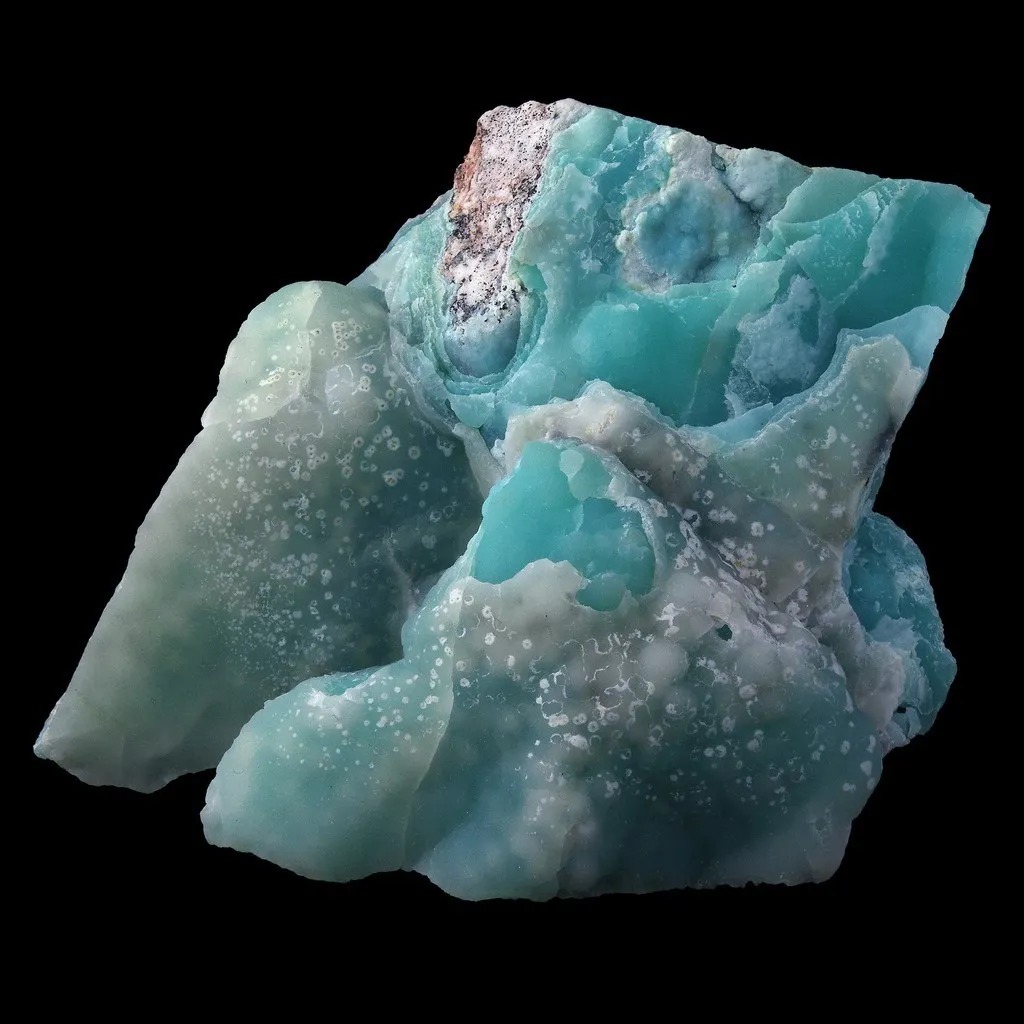
In natürlichen Exemplaren kommt Smithsonit selten als vollkommen reines Zinkcarbonat vor. Verschiedene Elemente können während der Mineralbildung Zink ersetzen und chemische Variationen erzeugen, die das Erscheinungsbild des Minerals beeinflussen. Kupferverunreinigungen können blaue oder grüne Farben erzeugen, Kobalt kann Rosatöne oder violette Töne hervorbringen, während Eisen und Mangan gelbe, braune oder graue Schattierungen beitragen können. Diese chemischen Substitutionen sind für die große Bandbreite an Farben und visuellen Eigenschaften verantwortlich, die in verschiedenen Smithsonitlagerstätten gefunden werden.
Da Smithsonit in chemisch wechselnden Umgebungen entsteht, kann seine Zusammensetzung von Ort zu Ort erheblich variieren. Diese Variation wirkt sich nicht nur auf die Farbe aus, sondern kann auch Textur, Kristallentwicklung und Mineralvergesellschaftungen beeinflussen. Aus diesem Grund weisen Smithsonit-Stücke aus verschiedenen geologischen Regionen oft einzigartige Merkmale auf, die Sammlern helfen, ihre Herkunft zu bestimmen.
Bildung und geologisches Vorkommen von Smithsonit
Smithsonit bildet sich hauptsächlich durch Verwitterung und Oxidation von Zinksulfidmineralen, insbesondere Sphalerit, in oberflächennahen Umgebungen. Wenn zinkreiche Lagerstätten mit sauerstoffhaltigem Grundwasser und karbonatreichen Bedingungen in Kontakt kommen, wandeln chemische Reaktionen primäre Zinkminerale in sekundäre Karbonatminerale wie Smithsonit um. Dieser Prozess findet häufig in den Oxidationszonen hydrothermaler Zinklagerstätten statt, wo sich ändernde Umweltbedingungen die Bildung neuer Minerale ermöglichen.
Das Mineral bildet sich typischerweise in Hohlräumen, Brüchen und Verdrängungszonen innerhalb von Kalkstein und anderen karbonatreichen Gesteinen. Anstatt große Einzelkristalle zu erzeugen, entwickelt sich Smithsonit meist als abgerundete, traubige Überzüge, massive Aggregate und schichtartige Krusten. Diese Formationen weisen oft glatte Oberflächen und subtile Farbvariationen auf, was sie für Sammler sehr attraktiv macht.
Smithsonit wird häufig in Verbindung mit anderen sekundären Mineralien gefunden, darunter Hemimorphit, Cerussit, Malachit, Azurit, Calcit und Limonit. Diese Mineralienkombinationen liefern wichtige geologische Informationen über die Oxidationsprozesse, die in alten Erzlagerstätten stattfanden. Bedeutende Vorkommen von Smithsonit wurden in Namibia, den Vereinigten Staaten, Mexiko, Australien, Griechenland, Italien, Spanien und China entdeckt, wobei mehrere historische Minen Exemplare von außergewöhnlicher Qualität hervorgebracht haben.
Arten und Farbvarianten von Smithsonit
Smithsonit ist bekannt für seine bemerkenswerte Farbvielfalt, die hauptsächlich aus Spurenelementen resultiert, die in seine Kristallstruktur eingebaut sind. Verschiedene Varietäten werden oft anhand ihrer dominierenden Farben und mineralischen Verunreinigungen identifiziert.
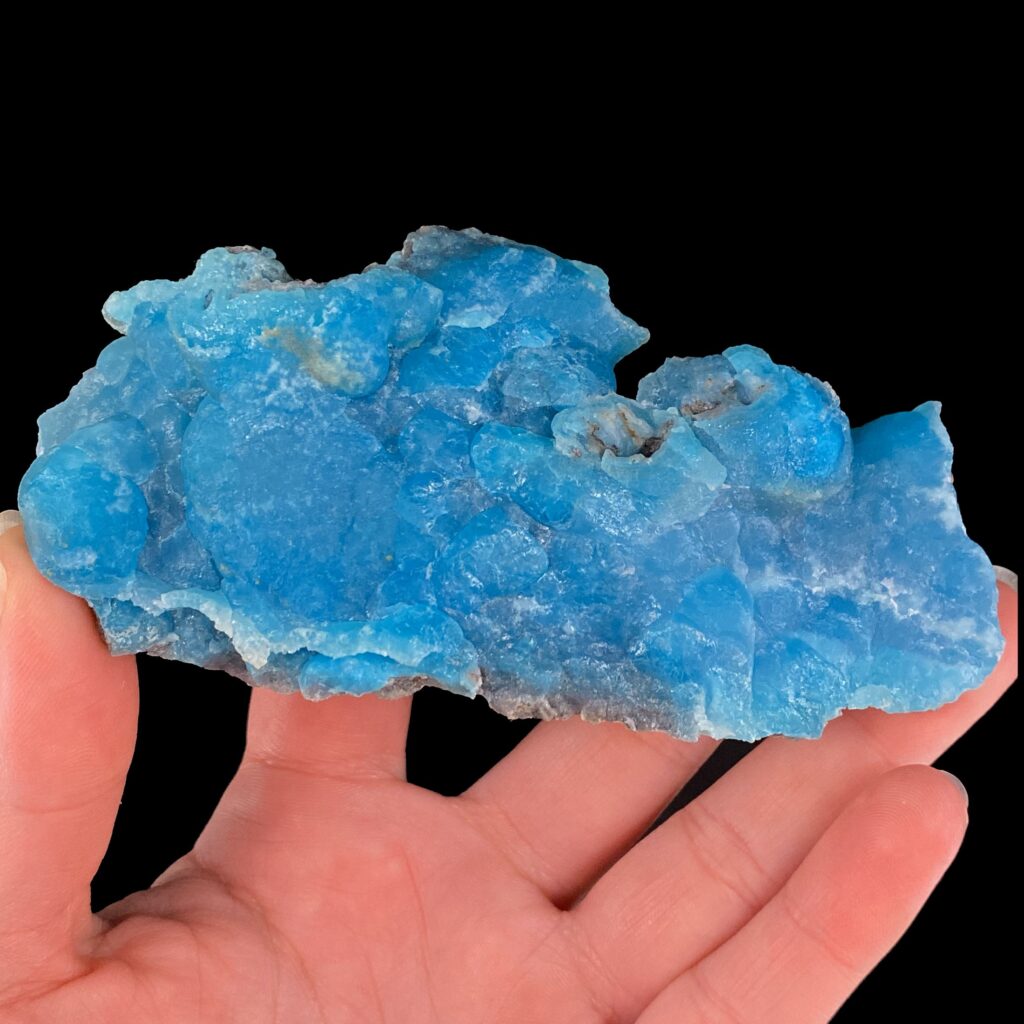
Blauer Smithsonit Ist eine der beliebtesten Varietäten unter Sammlern und Edelsteinliebhabern. Ihre blaue Färbung wird üblicherweise mit Kupferverunreinigungen in Verbindung gebracht und kann von blassem Himmelblau bis zu tieferen Türkistönen reichen. Viele blaue Smithsonit-Exemplare kommen als botryoidale Massen mit glatten, abgerundeten Oberflächen vor, die ein optisch ansprechendes Erscheinungsbild erzeugen.
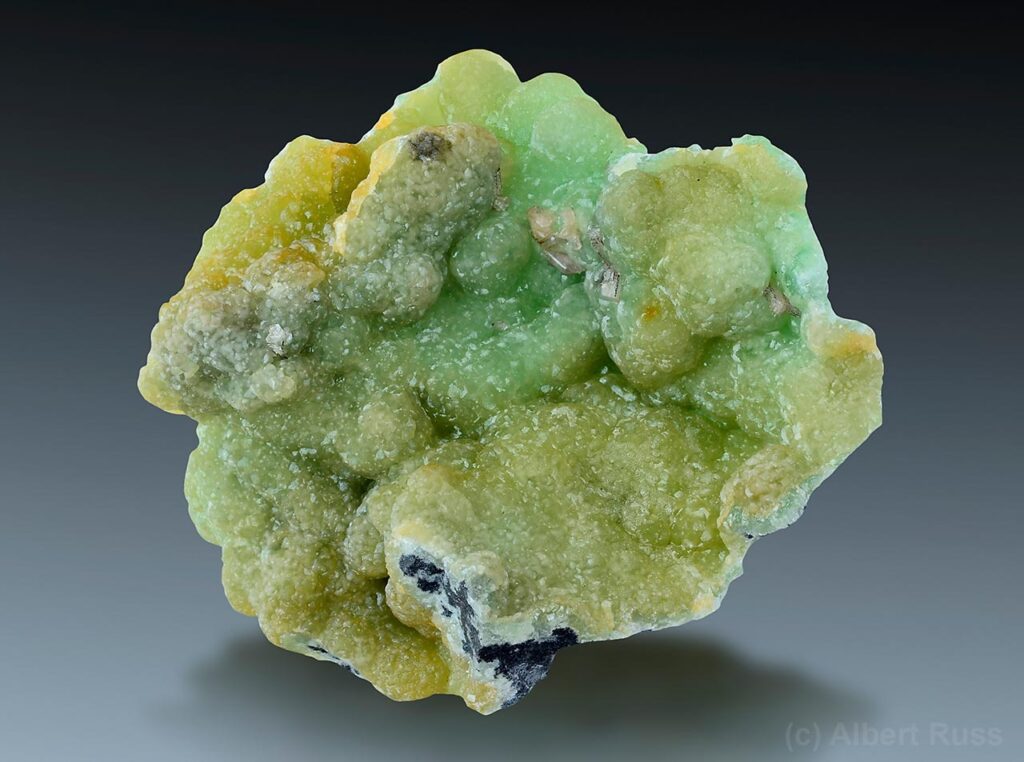
Grüner Smithsonit ist eine weitere häufige Varietät, die oft von Kupfer, Nickel oder anderen Spurenelementen beeinflusst wird. Grüne Exemplare können blass und pastellfarben erscheinen oder je nach chemischer Zusammensetzung und Fundort stärkere Farbtöne aufweisen. Diese Varietäten sind häufig mit anderen kupferhaltigen Mineralien in oxidierten Erzumgebungen vergesellschaftet.
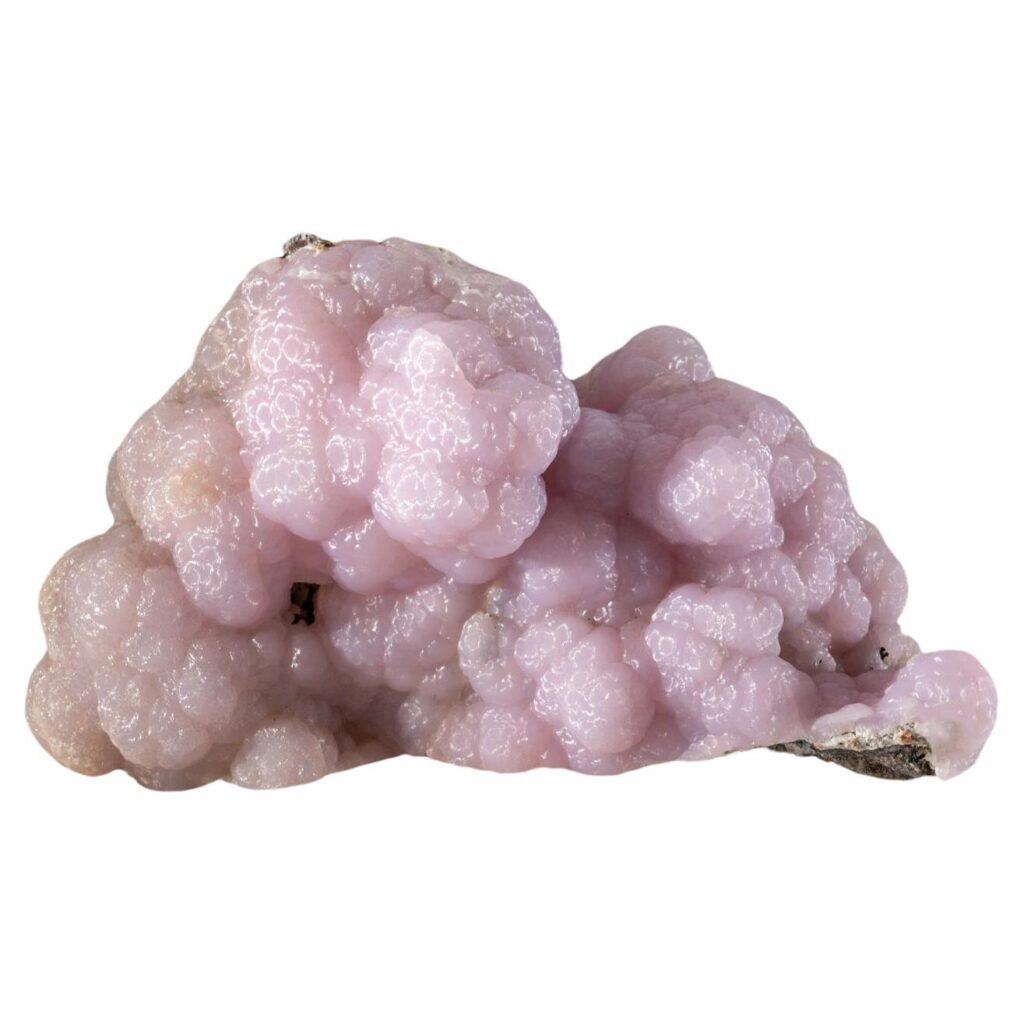
Pink Smithsonit wird wegen seiner attraktiven Färbung, die normalerweise durch Kobaltsubstitution verursacht wird, hoch geschätzt. Kobalthaltiger Smithsonit aus bestimmten Fundorten kann zarte rosa, pinke oder lavendelfarbene Töne aufweisen und gehört zu den begehrtesten Formen für Sammler.
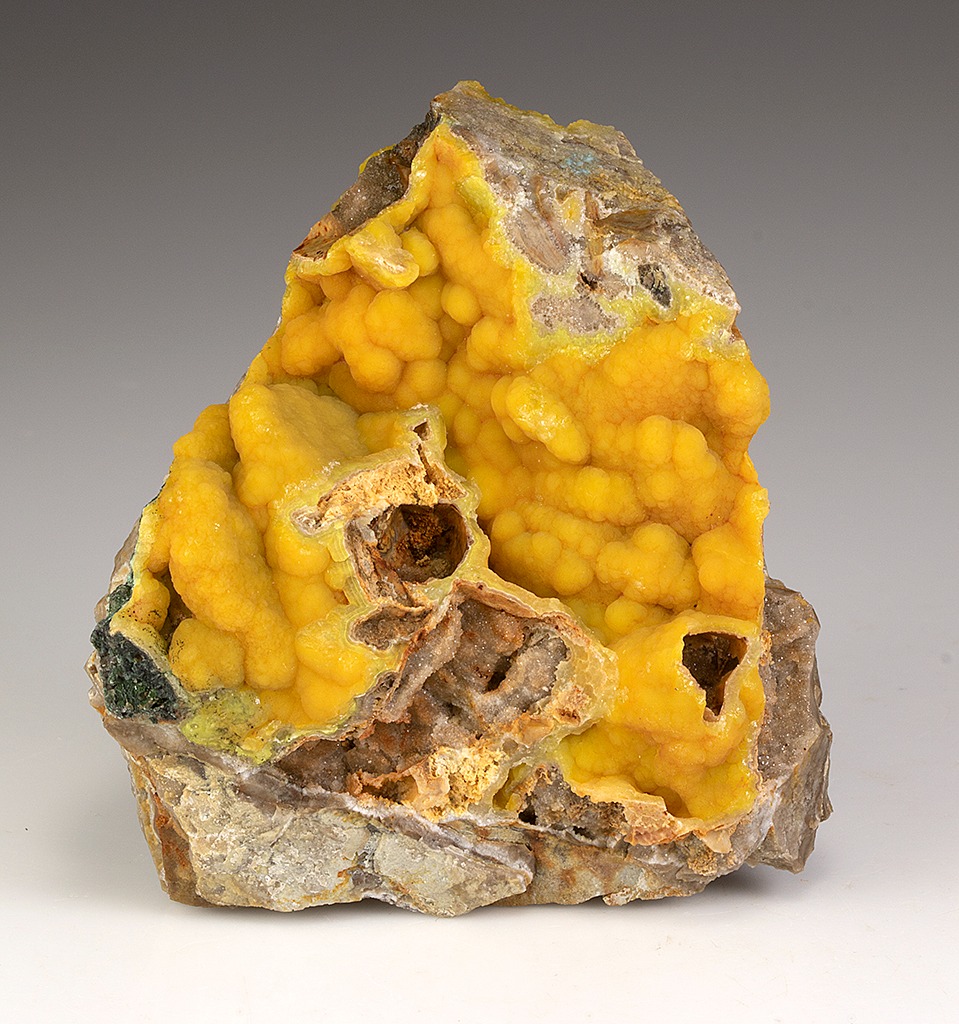
gelber, brauner, weißer und grauer Smithsonit Varietäten entstehen im Allgemeinen durch unterschiedliche Reinheitsgrade und Spurenelementgehalte. Obwohl weniger bekannt als blaue oder rosafarbene Exemplare, können diese Farben dennoch schöne Texturen und interessante geologische Merkmale aufweisen, insbesondere in Kombination mit ungewöhnlichen Kristallgewohnheiten oder Mineralassoziationen.
Kristallstruktur und Physikalische Eigenschaften von Smithsonit
Smithsonit kristallisiert im trigonalen Kristallsystem und entwickelt häufig eine rhomboedrische Struktur, ähnlich wie andere Mitglieder der Calcit-Gruppe. Gut ausgebildete Kristalle sind relativ selten, und das Mineral wird häufiger in traubigen, massiven oder krustenartigen Bildungen angetroffen. Seine Kristallstruktur trägt zu seiner perfekten rhomboedrischen Spaltbarkeit bei, was bedeutet, dass es entlang bestimmter Ebenen spalten kann, wenn es Spannungen ausgesetzt wird.
Das Mineral hat eine Mohs-Härte von ungefähr 4 bis 4,5 und ist damit weicher als viele verbreitete Edelsteine. Sein spezifisches Gewicht ist für ein Karbonatmineral relativ hoch, aufgrund des Zinkgehalts üblicherweise um 4,4 bis 4,5. Smithsonit zeigt typischerweise einen glasartigen, perlmuttartigen oder wachsartigen Glanz, insbesondere auf polierten Oberflächen. Die Transparenz reicht von durchsichtig bis undurchsichtig, abhängig von der Kristallqualität und der inneren Struktur.
Smithsonit als Edelstein und Sammlermineral
Obwohl Smithsonit in der kommerziellen Schmuckherstellung nicht weit verbreitet ist, hat es aufgrund seiner ungewöhnlichen Farben und attraktiven Texturen als Sammlergestein an Popularität gewonnen. Aufgrund seiner relativ geringen Härte und vollkommenen Spaltbarkeit wird es normalerweise zu Cabochonen verarbeitet und nicht zu facettierten Edelsteinen. Die glatte polierte Oberfläche von Smithsonit hebt seine sanften Farben und natürlichen Muster hervor, was es für Anhänger, Ohrringe und künstlerische Schmuckstücke geeignet macht.
Unter den edelsteinqualitativen Exemplaren sind blaue, rosa und grüne Varietäten am begehrtesten. Jedoch erfordert Smithsonit-Schmuck eine sorgfältige Handhabung, da das Mineral leicht zerkratzt werden kann und bei starken Stößen brechen kann. Aus diesem Grund wird es allgemein als eher geeignet für gelegentlichen Schmuck angesehen, nicht für alltägliche Ringe oder stark beanspruchte Gegenstände.
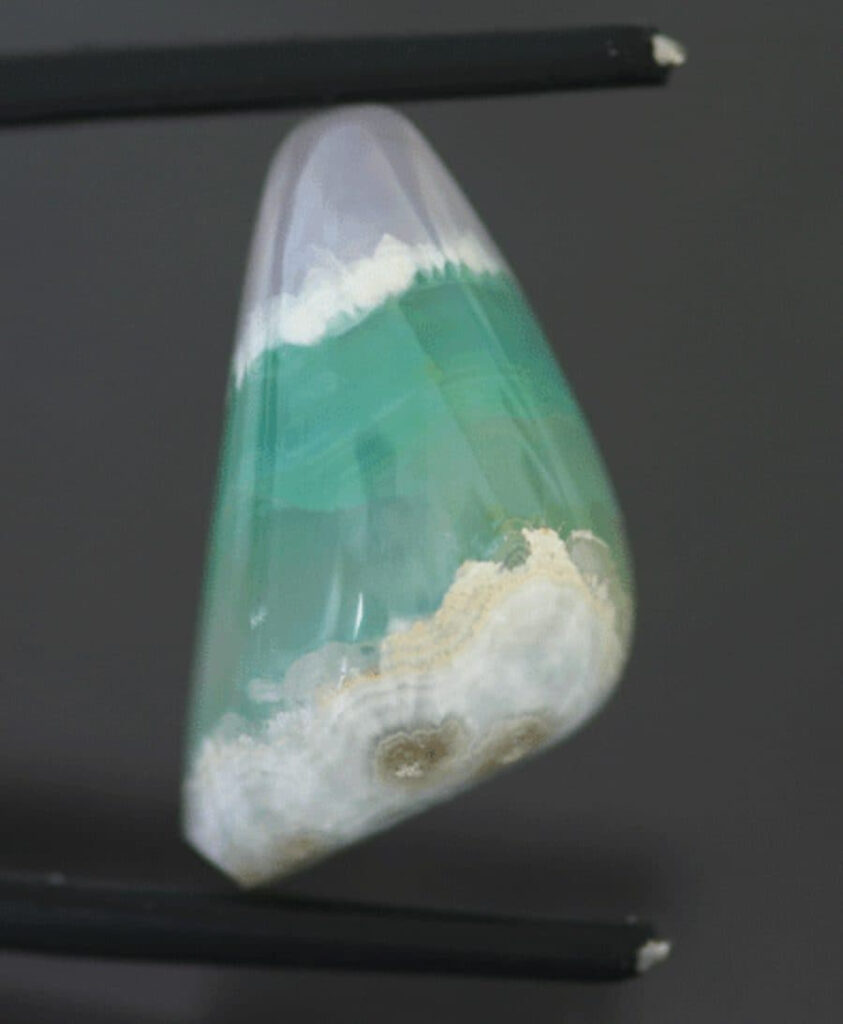
Sammler schätzen Smithsonit oft höher als der Schmuckmarkt, weil außergewöhnliche Exemplare wichtige geologische Informationen preisgeben und einzigartige natürliche Formationen zeigen. Exemplare aus berühmten Bergbauregionen mit lebhaften Farben, ungewöhnlichen Texturen oder historischer Bedeutung können zu begehrten Ergänzungen von Mineralsammlungen werden.
Verwendungen und Bedeutung von Smithsonit
Historisch gesehen war Smithsonit ein wichtiges Zinkerz und trug wesentlich zur frühen Zinkgewinnungsindustrie bei. Vor der weit verbreiteten Verwendung von Sphalerit wurden Smithsonitlagerstätten als wertvolle Zinkquelle abgebaut. Das gewonnene Metall wurde zur Herstellung von Messinglegierungen, verzinkten Materialien und verschiedenen Industrieprodukten verwendet.
Die moderne industrielle Nutzung von Smithsonit ist begrenzt, da der größte Teil der Zinkproduktion heute von größeren Sulfidlagerstätten abhängt. Dennoch bleibt das Mineral in der mineralogischen Forschung, Lehre, Museumssammlungen und der Edelsteinindustrie wichtig. Seine Rolle beim Verständnis von Oxidationsprozessen in Erzlagerstätten macht es auch für Geologen wertvoll, die die Mineralbildung untersuchen.
Smithsonit stellt weiterhin eine wichtige Verbindung zwischen Wirtschaftsgeologie, Mineralwissenschaft und Sammelkultur dar. Seine Kombination aus chemischer Bedeutung, historischer Wichtigkeit und ästhetischem Reiz sichert seine anhaltende Beliebtheit unter Mineralienbegeisterten.
Smithsonit identifizieren
Die Identifizierung von Smithsonit erfordert die Untersuchung mehrerer physikalischer und chemischer Eigenschaften. Seine relativ hohe Dichte, die Karbonatzusammensetzung, die rhomboedrische Spaltbarkeit und die typischen traubigen Bildungen liefern nützliche Hinweise. Wie andere Karbonatminerale reagiert Smithsonit mit Säuren und setzt bei Kontakt mit Salzsäure Kohlendioxid frei, wobei die Reaktion im Vergleich zu Calcit schwächer ausfallen kann.
Da Smithsonit Mineralien wie Hemimorphit, Calcit und Aragonit ähneln kann, erfordert eine genaue Identifizierung möglicherweise zusätzliche Testmethoden, einschließlich Härteprüfung, Dichtemessungen, Mikroskopie oder chemische Laboranalyse. Die professionelle Identifizierung ist besonders wichtig für wertvolle Sammlerexemplare.
Smithsonit Pflege und Wartung
Smithsonit sollte aufgrund seiner mäßigen Härte und Spaltbarkeit vorsichtig behandelt werden. Stücke und Schmuck sollten vor Kratzern, Stößen und aggressiven Chemikalien geschützt werden. Die Reinigung sollte auf sanfte Methoden mit warmem Wasser, milder Seife und einem weichen Tuch beschränkt werden. Ultraschallreiniger, Dampfreiniger und scheuernde Materialien sollten vermieden werden, da sie die Mineralfläche beschädigen oder Risse verursachen können. Für Sammler ist die getrennte Aufbewahrung von Smithsonit von härteren Mineralien hilfreich, um versehentliche Kratzer zu vermeiden und die natürliche Schönheit des Stücks zu bewahren.