
Smithsonit er et zinkcarbonatmineral med den kemiske formel ZnCO₃ og er et vigtigt sekundært mineral dannet i oxidationszoner af zinkholdige malmaflejringer. Det tilhører carbonatmineralgruppen og er en del af calcitgruppen, hvor det deler strukturelle ligheder med mineraler som calcit, magnesit og siderit. Selvom ren smithsonit typisk er farveløs eller hvid, viser naturlige prøver ofte en bred vifte af attraktive farver, herunder blå, grøn, pink, gul, brun, grå og lilla. Disse farver skyldes hovedsageligt sporelementer, der erstatter zink i krystalstrukturen, hvilket skaber den bemærkelsesværdige mangfoldighed, der gør smithsonit meget værdsat blandt mineralsamlere.
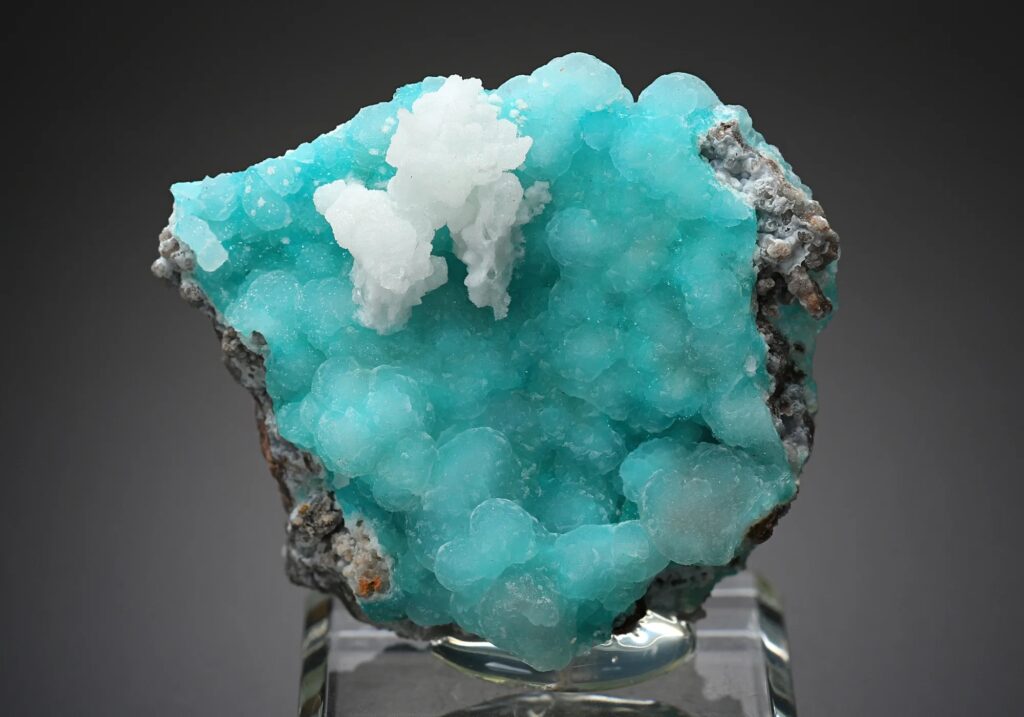
I modsætning til mange mineraler, der danner store, veldefinerede krystaller, forekommer smithsonit oftest som botryoidale masser, skorper, belægninger, stalaktitformationer og kompakte aggregater. Dets bløde farver, afrundede teksturer og perle- til voksagtige glans giver det et karakteristisk udseende, der har gjort det til et populært samlermineral og et ædelstensmateriale til cabochoner og dekorative genstande. Selvom det ikke betragtes som en traditionel ædelsten på grund af sin moderate hårdhed og følsomhed over for skader, værdsættes højkvalitets smithsonitprøver for deres sjældenhed, unikke formationer og geologiske betydning.Mineralet blev opkaldt efter den engelske kemiker og mineralog James Smithson som anerkendelse af hans bidrag til mineralogien. Smithsons videnskabelige arv blev senere forbundet med etableringen af Smithsonian Institution, og mineralnavnet bevarer hans indflydelse på udviklingen af moderne mineralogi.
Smithsonits historie
Smithsonits historie afspejler udviklingen inden for mineralogisk klassifikation, kemisk videnskab og zinkmineindustrien. I mange århundreder var smithsonit primært kendt som en zinkmalm snarere end som en distinkt mineralart. I Europa og andre mineområder blev zinkcarbonatmineraler historisk set samlet under navnet "calamine", en generel betegnelse for zinkholdige malme. Denne terminologi skabte forvirring, fordi både smithsonit, et zinkcarbonat, og hemimorfit, et zinksilikat, ofte blev beskrevet under samme navn, før fremskridt inden for mineralkemi gjorde det muligt for forskere at skelne mellem dem.
I slutningen af 1700-tallet og begyndelsen af 1800-tallet hjalp forbedringer i kemisk analyse mineraloger med bedre at forstå sammensætningen og klassificeringen af zinkmineraler. Forskere opdagede, at visse kalaminprøver bestod af zinkcarbonat frem for zinksilikat, hvilket førte til anerkendelsen af smithsonit som en særskilt mineralspecies. I 1832 introducerede den franske mineralog François Sulpice Beudant officielt navnet smithsonit for at ære James Smithson, som havde gjort vigtige bidrag til kemi og mineralstudier.Smithsonit spillede også en væsentlig rolle i den historiske udvikling af zinkproduktion. Før zinksulfidmalme som sphalerit blev den dominerende kilde til industrielt zink, var smithsonit en af de vigtigste zinkmalme, der blev udvundet rundt om i verden. Det var især vigtigt i regioner, hvor oxiderede zinkforekomster var tilgængelige nær overfladen. Udvundet zink fra smithsonit bidrog til industrier som messingfremstilling, metalbeskyttelse og legeringsproduktion.
I dag er smithsonit ikke længere en primær kommerciel zinkkilde, fordi moderne minedrift hovedsageligt fokuserer på større og mere økonomisk levedygtige sulfidforekomster. Det forbliver dog et vigtigt mineral inden for geologisk forskning og mineralsamling. Berømte lokaliteter som Tsumeb-minen i Namibia, Kelly-minen i New Mexico og flere historiske europæiske zinkdistrikter har produceret ekstraordinære smithsonitprøver, som fortsat tiltrækker samlere og museer verden over.
Kemisk sammensætning og klassificering af smithsonit
Smithsonite har den ideelle kemiske formel ZnCO₃, bestående af zink, kulstof og oxygen. Det klassificeres som et carbonatmineral og tilhører calcitgruppen, som omfatter flere mineraler med lignende krystalstrukturer, men forskellige kemiske sammensætninger. Inden for smithsonitstrukturen optager zinkioner positioner omgivet af carbonatgrupper, hvilket danner en stabil trigonal krystalramme.
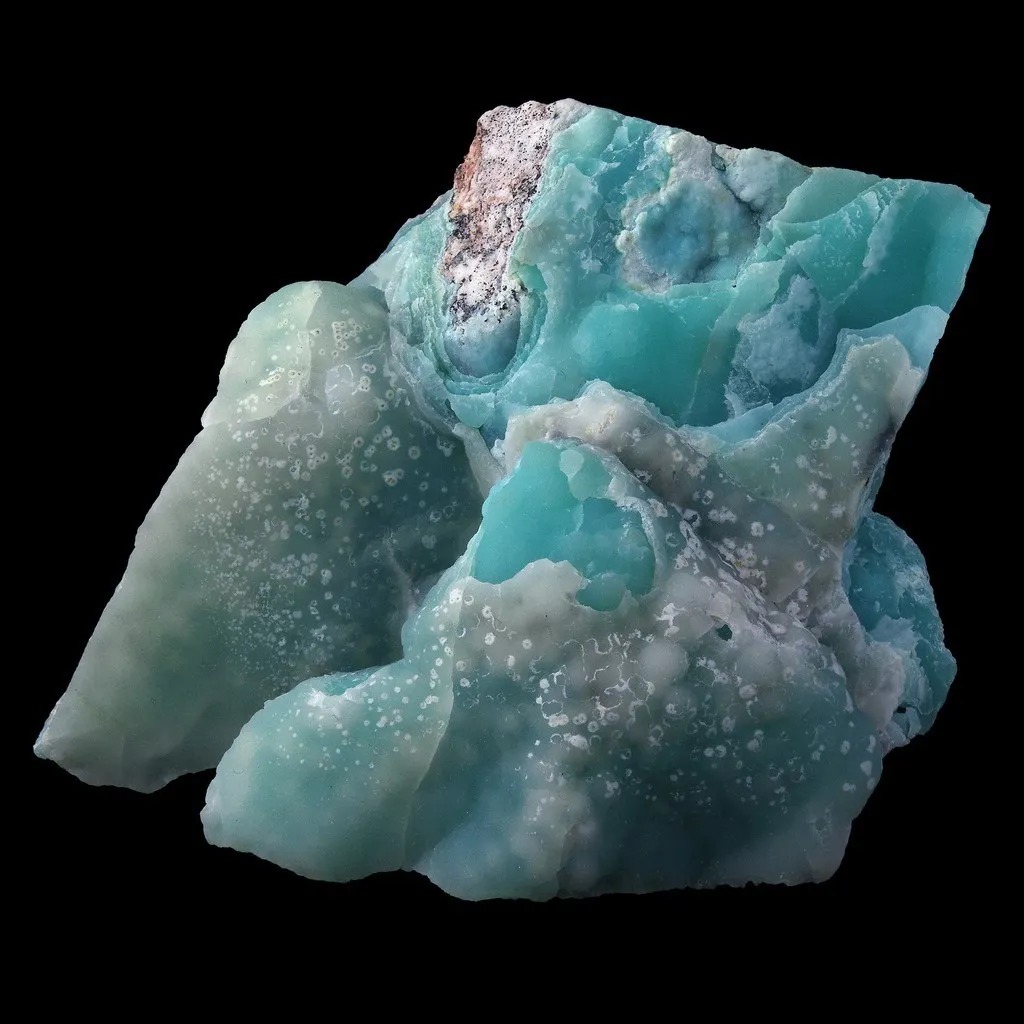
I naturlige prøver findes smithsonit sjældent som en fuldstændig ren zinkcarbonat. Forskellige grundstoffer kan erstatte zink under mineraldannelsen, hvilket skaber kemiske variationer, der påvirker mineralets udseende. Kobberforureninger kan skabe blå eller grønne farver, kobolt kan give pink eller lilla toner, mens jern og mangan kan bidrage med gule, brune eller grå nuancer. Disse kemiske substitutioner er ansvarlige for den brede vifte af farver og visuelle egenskaber, der findes i forskellige smithsonitforekomster.
Fordi smithsonit dannes i kemisk skiftende miljøer, kan dets sammensætning variere betydeligt mellem lokaliteter. Denne variation påvirker ikke kun farven, men kan også påvirke tekstur, krystaludvikling og mineralassociationer. Af denne grund udviser smithsonitprøver fra forskellige geologiske regioner ofte unikke karakteristika, der hjælper samlere med at identificere deres oprindelse.
Dannelse og geologisk forekomst af smithsonit
Smithsonit dannes primært gennem forvitring og oxidation af zinksulfidmineraler, især sphalerit, i overfladenære miljøer. Når zinkrige aflejringer udsættes for iltet grundvand og karbonatrige forhold, omdanner kemiske reaktioner primære zinkmineraler til sekundære karbonatmineraler som smithsonit. Denne proces forekommer almindeligvis i oxidationszoner af hydrotermiske zinkforekomster, hvor skiftende miljøforhold tillader nye mineraler at udvikle sig.
Mineralet dannes typisk i hulrum, sprækker og udskiftningszoner i kalksten og andre karbonatrige bjergarter. I stedet for at danne store individuelle krystaller udvikler smithsonit sig normalt som afrundede botryoidale overtræk, massive aggregater og lagdelte skorper. Disse formationer har ofte glatte overflader og subtile farvevariationer, hvilket gør dem meget attraktive for samlere.
Smithsonit findes ofte i forbindelse med andre sekundære mineraler, herunder hemimorfitt, cerussit, malakit, azurit, calcit og limonit. Disse mineralkombinationer giver vigtige geologiske oplysninger om de oxidationsprocesser, der fandt sted i gamle malmaflejringer. Betydelige forekomster af smithsonit er blevet opdaget i Namibia, USA, Mexico, Australien, Grækenland, Italien, Spanien og Kina, hvor flere historiske miner har produceret prøver af enestående kvalitet.
Typer og farvevarianter af smithsonit
Smithsonite er kendt for sin bemærkelsesværdige farvediversitet, som hovedsageligt stammer fra sporelementer indarbejdet i dens krystalstruktur. Forskellige varianter identificeres ofte ud fra deres dominerende farver og mineralske urenheder.
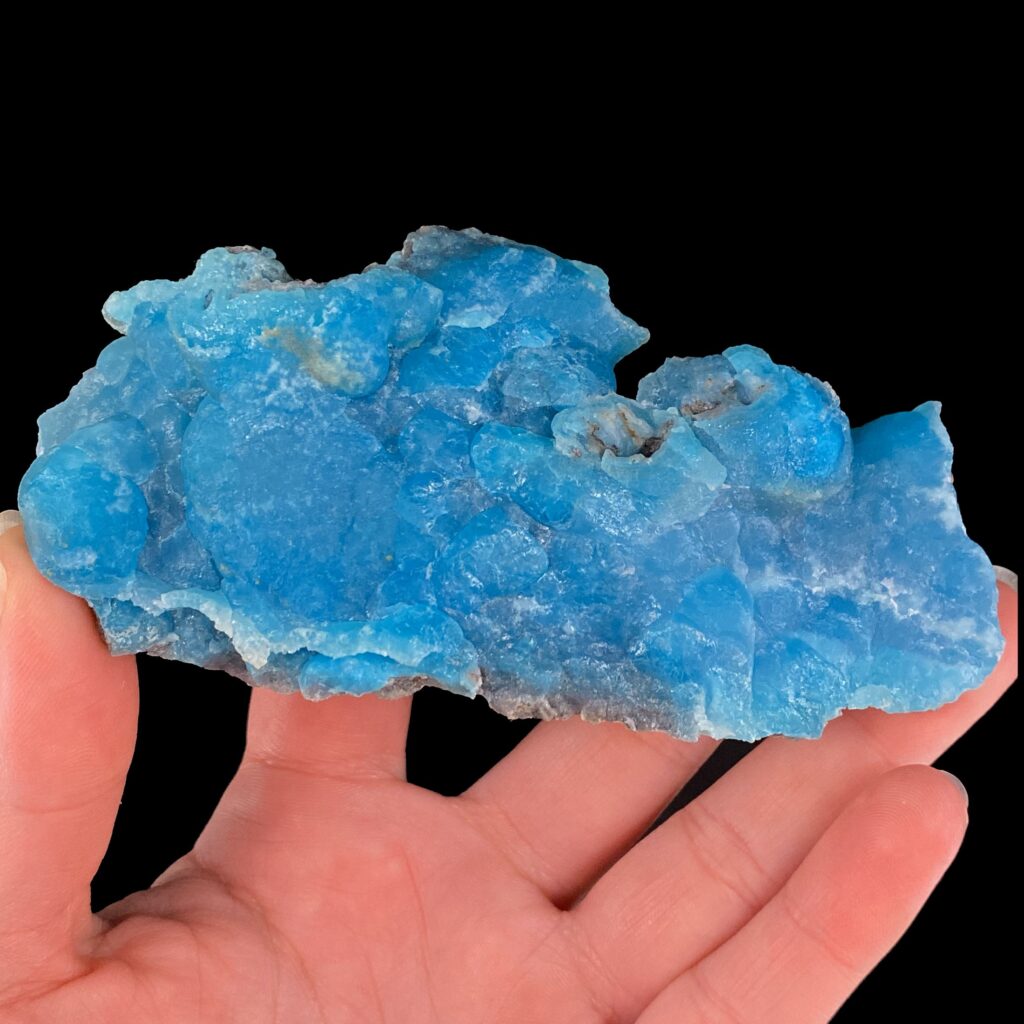
Blå smithsonit er en af de mest populære varianter blandt samlere og ædelstensentusiaster. Dens blå farve er almindeligvis forbundet med kobberurenheder og kan variere fra bleg himmelblå til dybere turkise nuancer. Mange blå smithsonit-prøver forekommer som botryoidale masser med glatte, afrundede overflader, der skaber et visuelt tiltalende udseende.
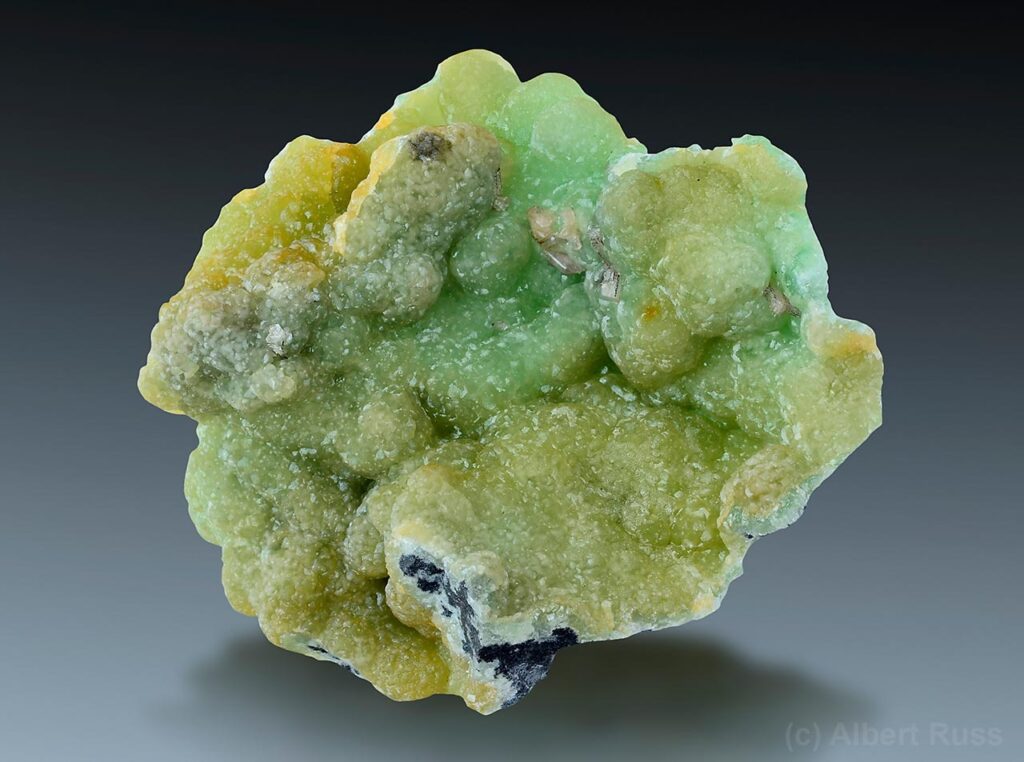
Grøn smithsonit er en anden almindelig variant, ofte påvirket af kobber, nikkel eller andre sporstoffer. Grønne prøver kan fremstå blege og pastelfarvede eller vise stærkere nuancer afhængigt af kemisk sammensætning og lokalitet. Disse varianter er ofte forbundet med andre kobberholdige mineraler i oxiderede malmmiljøer.
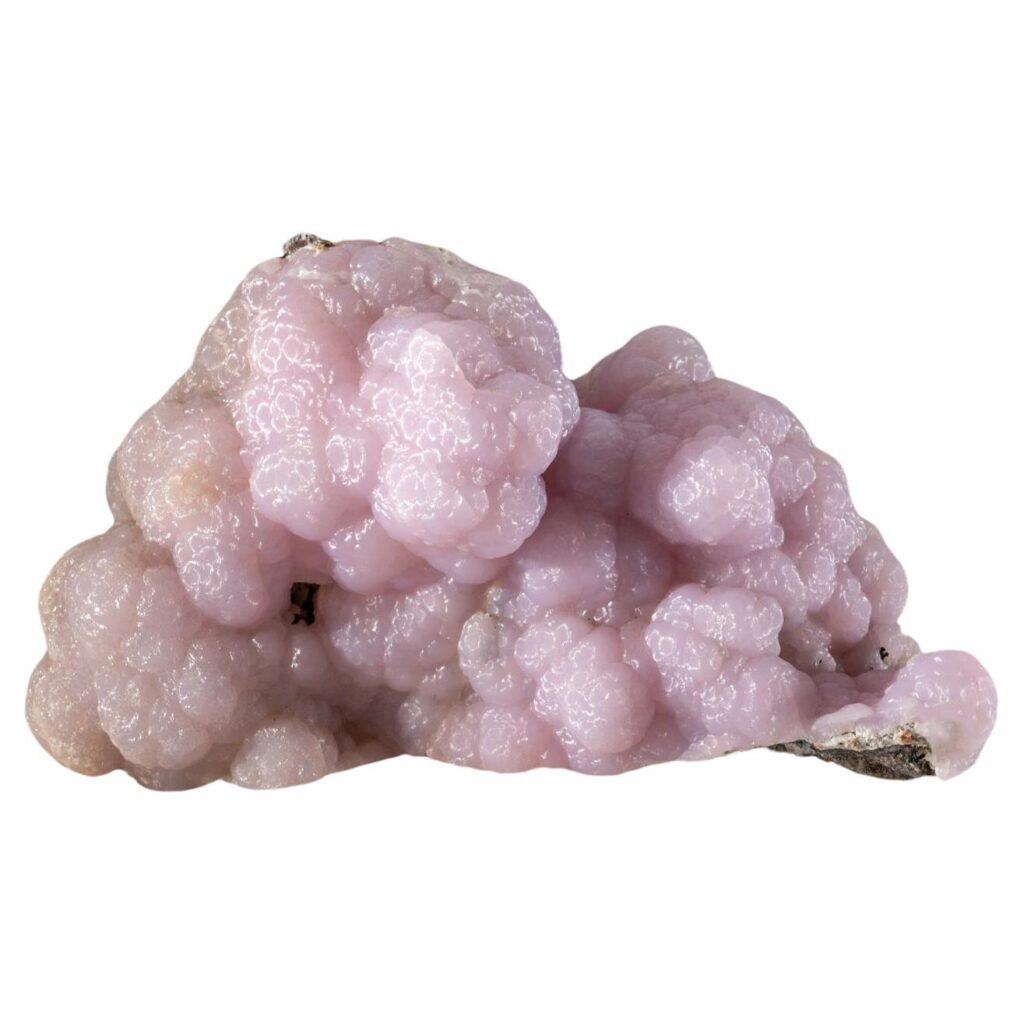
Pink smithsonit er højt værdsat på grund af sin attraktive farve, som normalt skyldes koboltersubstitution. Koboltbærende smithsonit fra bestemte lokaliteter kan vise sarte rosa, lyserøde eller lavendeltoner og er blandt de mest eftertragtede former for samlere.
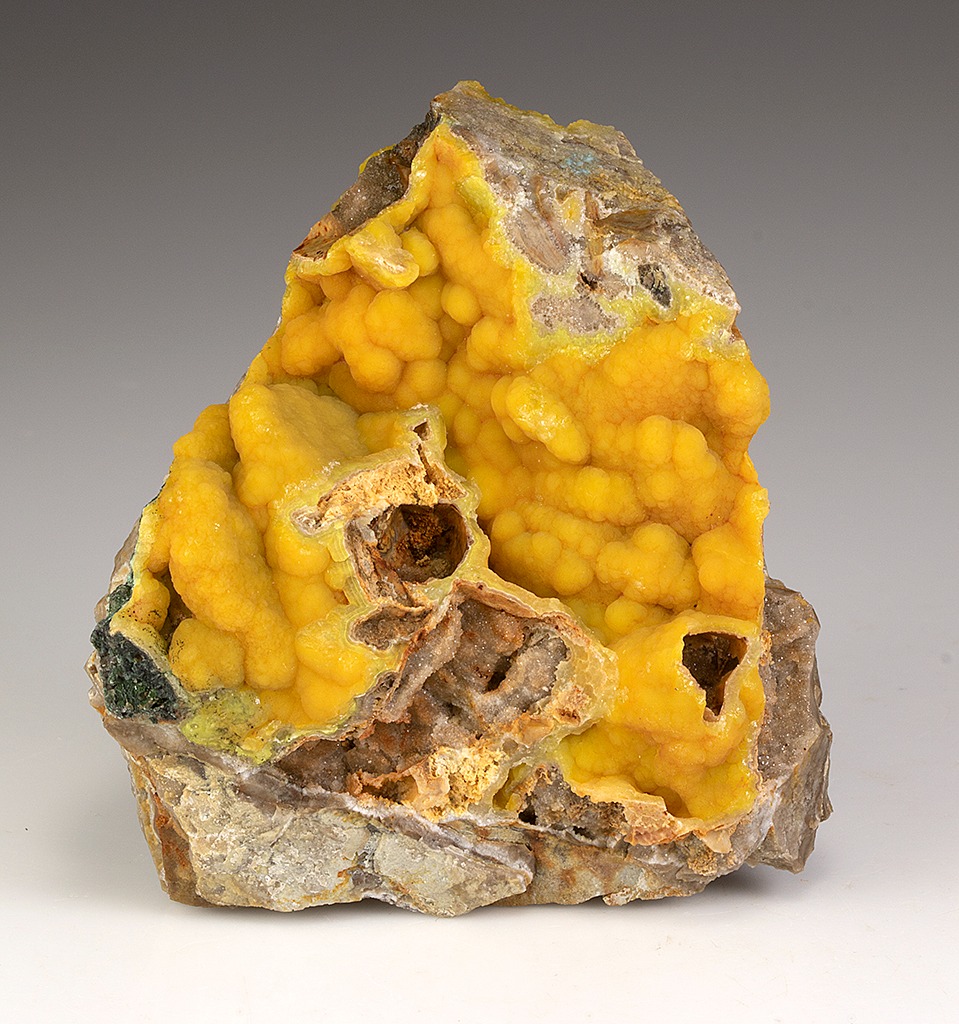
Gul, brun, hvid og grå smithsonit varianter stammer generelt fra forskellige niveauer af renhed og indhold af sporstoffer. selvom de er mindre berømte end blå eller lyserøde eksemplarer, kan disse farver stadig udvise smukke teksturer og interessante geologiske træk, især når de kombineres med usædvanlige krystalvaner eller mineralassociationer.
Krystalstruktur og fysiske egenskaber af smithsonit
Smithsonite krystalliserer i det trigonale krystalsystem og udvikler ofte en rhomboedrisk struktur svarende til andre medlemmer af calcitgruppen. Velformede krystaller er relativt sjældne, og mineralet forekommer oftere som botryoidale, massive eller skorpeagtige formationer. Dets krystalstruktur bidrager til den perfekte rhomboedriske spaltning, hvilket betyder, at det kan splittes langs bestemte planer, når det udsættes for stress.
Mineralet har en Mohs-hårdhed på omkring 4 til 4.5, hvilket gør det blødere end mange almindelige ædelsten. Dets specifikke vægt er relativt høj for et karbonatmineral, normalt omkring 4.4 til 4.5, på grund af tilstedeværelsen af zink. Smithsonit udviser typisk en glasagtig, perleagtig eller voksagtig glans, især på polerede overflader. Gennemsigtighed varierer fra gennemsigtig til uigennemsigtig afhængigt af krystalkvalitet og indre struktur.
Smithsonit som ædelsten og samlemineral
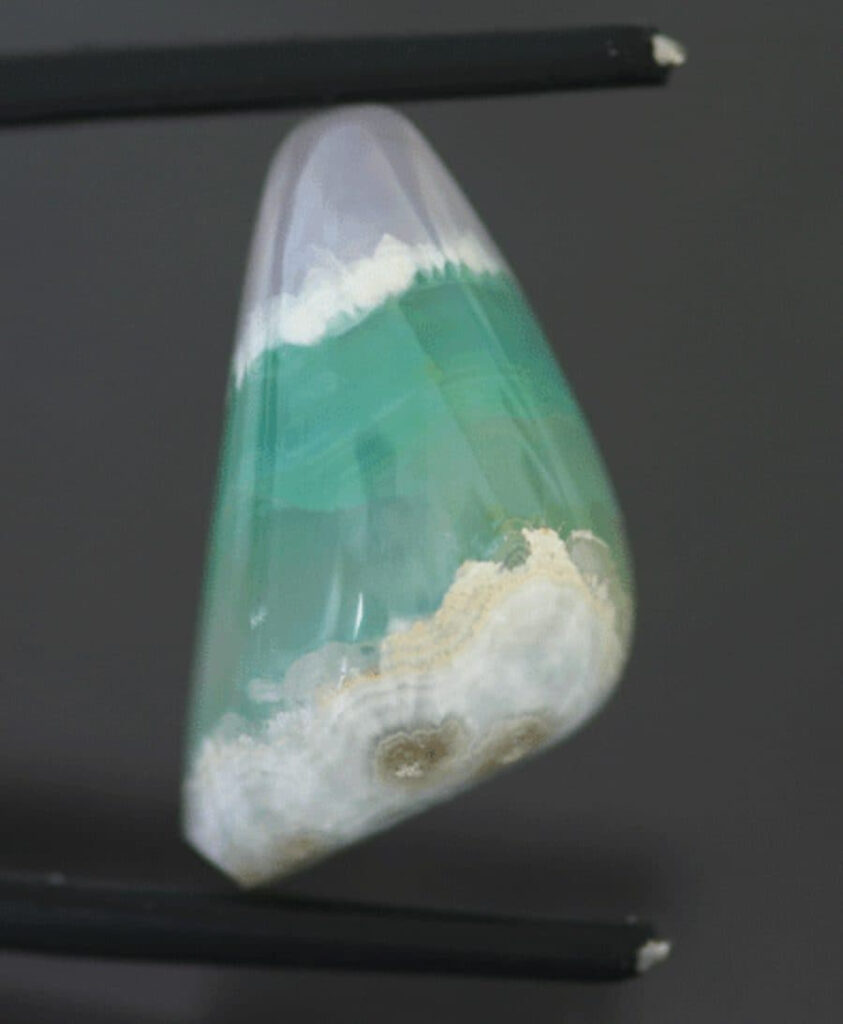
Selvom smithsonit ikke er meget brugt i kommerciel smykkeindustri, har det vundet popularitet som samlerædelsten på grund af sine usædvanlige farver og attraktive teksturer. På grund af sin forholdsvis lave hårdhed og perfekte spaltning skæres den normalt til cabochoner i stedet for facetterede ædelstene. Den glatte polerede overflade af smithsonit fremhæver dens bløde farver og naturlige mønstre, hvilket gør den velegnet til vedhæng, øreringe og kunstneriske smykkestykker.
Blandt ædelstenskvalitetsprøver er blå, lyserøde og grønne varianter de mest eftertragtede. Dog kræver smithsonit-smykker omhyggelig håndtering, da mineralet let kan blive ridset og kan revne, hvis det udsættes for kraftige stød. Derfor anses det generelt for mere velegnet til lejlighedsvise smykker end til hverdagsringe eller stærkt brugte genstande.
Samlere værdsætter ofte smithsonit højere end smykkemarkeder, fordi ekstraordinære eksemplarer afslører vigtig geologisk information og viser unikke naturformationer. Eksemplarer fra berømte mineområder med levende farver, usædvanlige teksturer eller historisk betydning kan blive eftertragtede tilføjelser til mineralsamlinger.
Anvendelser og betydning af Smithsonite
Historisk set var smithsonit en vigtig zinkmalm og bidrog betydeligt til de tidlige zinkudvindingsindustrier. Før den udbredte brug af sphalerit blev smithsonitforekomster udvundet som en værdifuld kilde til zink. Det udvundne metal blev brugt til fremstilling af messinglegeringer, galvaniserede materialer og forskellige industriprodukter.
Moderne industriel anvendelse af smithsonit er begrænset, fordi det meste zinkproduktion i dag er afhængig af større sulfidaflejringer. Ikke desto mindre forbliver mineralet vigtigt inden for mineralogisk forskning, undervisning, museumsamlinger og ædelstensindustrien. Dets rolle i forståelsen af oxidationsprocesser i malmforekomster gør det også værdifuldt for geologer, der studerer mineraldannelse.
Smithsonit repræsenterer fortsat en vigtig forbindelse mellem økonomisk geologi, mineralvidenskab og samlerkultur. Dets kombination af kemisk betydning, historisk vigtighed og æstetisk appel sikrer dets fortsatte popularitet blandt mineralentusiaster.
Sådan identificerer man smithsonit
Identifikation af smithsonit kræver undersøgelse af flere fysiske og kemiske egenskaber. Dens relativt høje densitet, karbonatsammensætning, romboedrisk spaltning og typiske botryoidale formationer giver nyttige spor. Ligesom andre karbonatmineraler reagerer smithsonit med syrer, idet det frigiver kuldioxid ved eksponering for saltsyre, selvom reaktionen kan være svagere sammenlignet med calcit.
Smithsonit kan ligne mineraler som hemimorfitt, calcit og aragonit, så nøjagtig identifikation kan kræve yderligere testmetoder, herunder hårdhedstest, specifik vægtmåling, mikroskopi eller laboratorie kemisk analyse. Professionel identifikation er især vigtig for værdifulde samlerprøver.
Smithsonite Pleje og vedligeholdelse
Smithsonit skal håndteres forsigtigt på grund af dets moderate blødhed og spalteegenskaber. Prøver og smykker skal beskyttes mod ridser, stød og skrappe kemikalier. Rengøring bør begrænses til skånsomme metoder med varmt vand, mild sæbe og en blød klud. Ultralydsrensere, damprensere og slibende materialer bør undgås, da de kan beskadige mineraloverfladen eller skabe brud. For samlere hjælper det at opbevare smithsonit adskilt fra hårdere mineraler for at forhindre utilsigtede ridser og bevare prøvens naturlige skønhed.