{{ osCmd }} K

스미소나이트

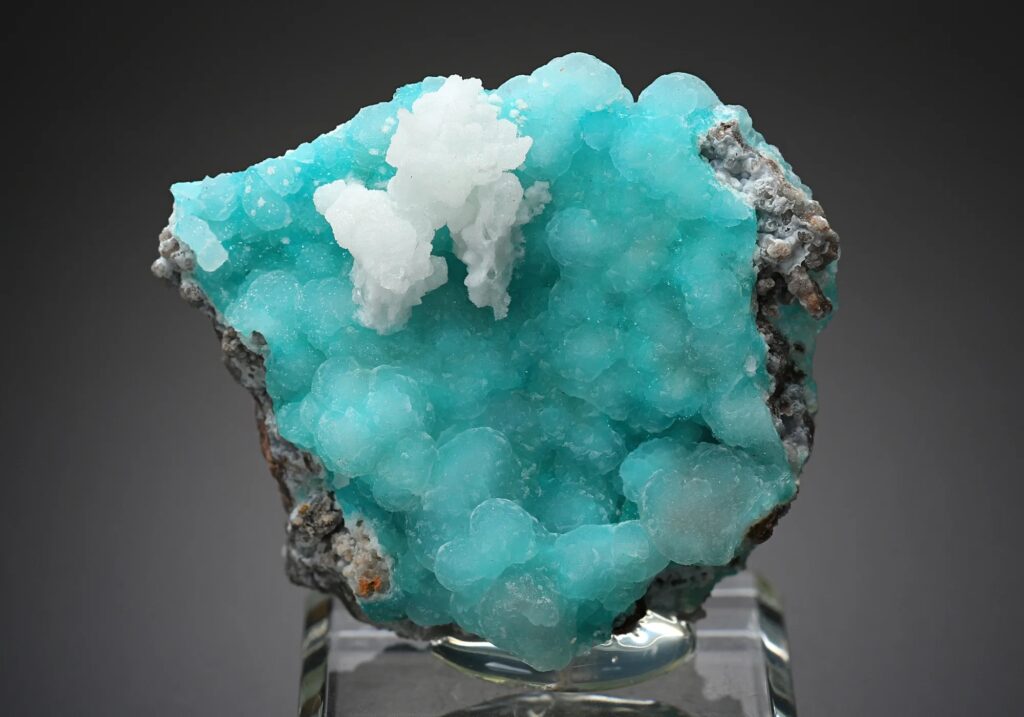
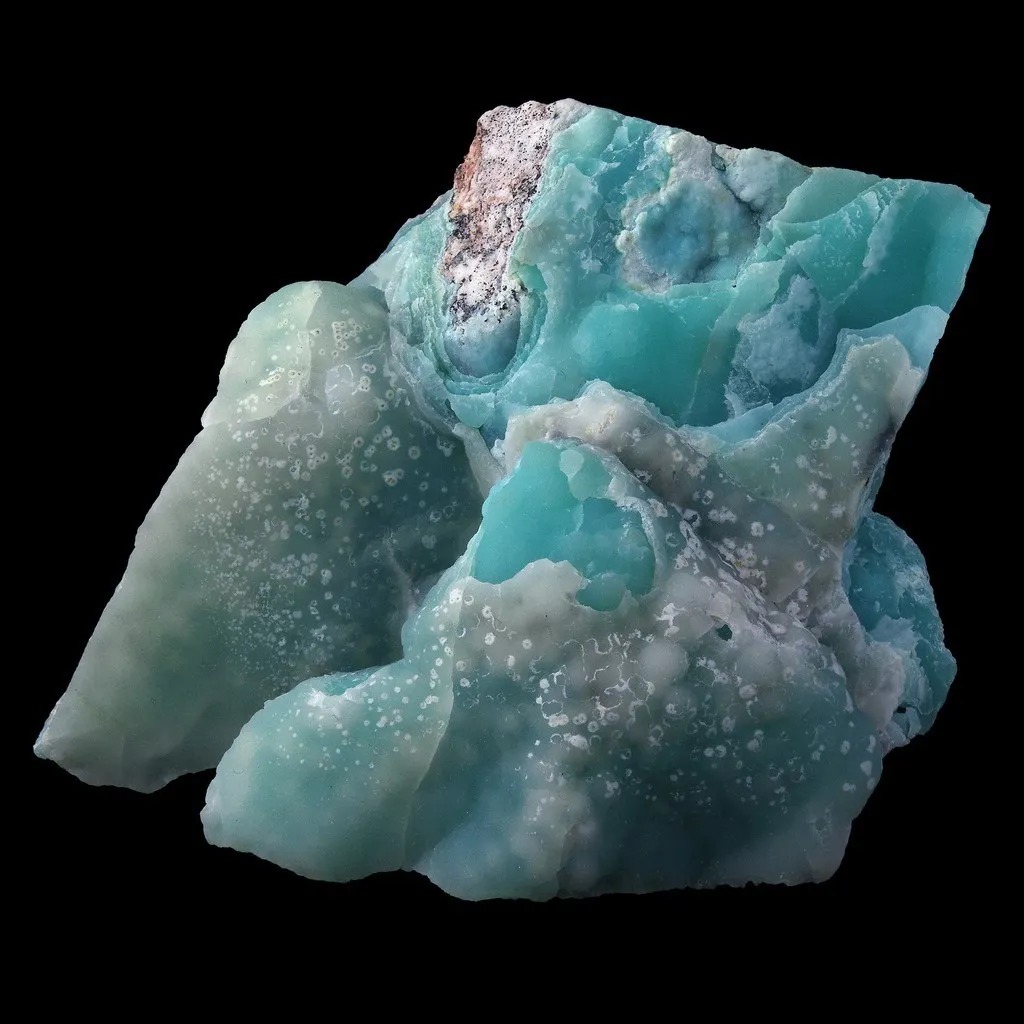
스미소나이트는 산화 아연 광상에서 형성되는 아연 탄산염 광물(ZnCO₃)로, 다양한 색상, 포도상 구조, 그리고 광물학적 중요성으로 인정받고 있습니다.
스미소나이트 광물 데이터
화학식 ZnCO₃
광물군 방해석군 (질산염, 탄산염 및 붕산염류)
결정학 삼방정계; 육방 스케일노헤드럴 결정류 (공간군: R3̄c)
격자 상수 a = 4.65 Å, c = 15.03 Å
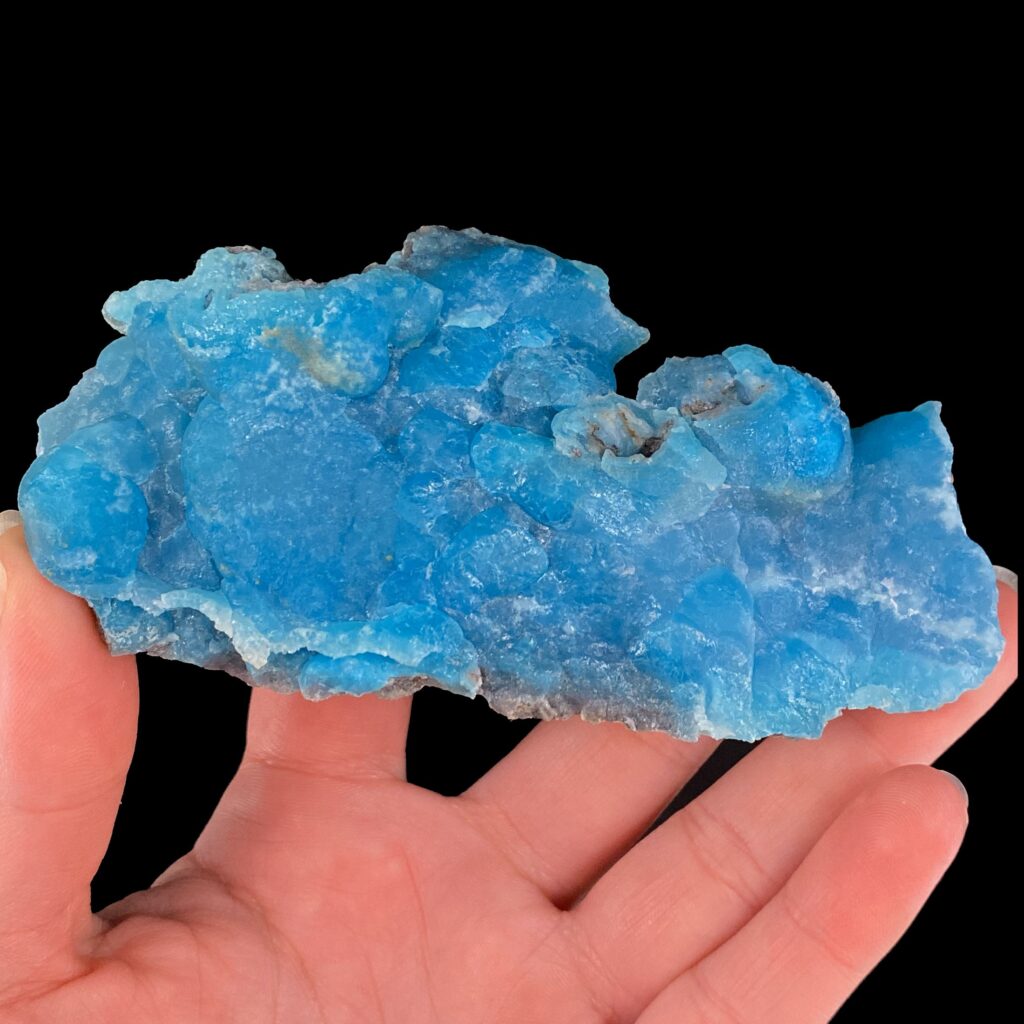
결정 습성 주로 포도상(葡萄狀), 신장상(腎臟狀), 종유석상(鍾乳石狀) 또는 입상(粒狀) 괴상(塊狀) 집합체로 발생하며; 뚜렷한 능면체(菱形體)나 편삼각면체(偏三角面體) 결정은 드물고, 종종 곡면(曲面)을 가진다("dry-bone ore").
광학 현상 없음 (매우 높은 복굴절을 나타내며, 이로 인해 다면체 보석의 뒷면 패싯이 이중으로 보일 수 있지만, 별효과나 고양이 눈 효과는 나타나지 않습니다.)
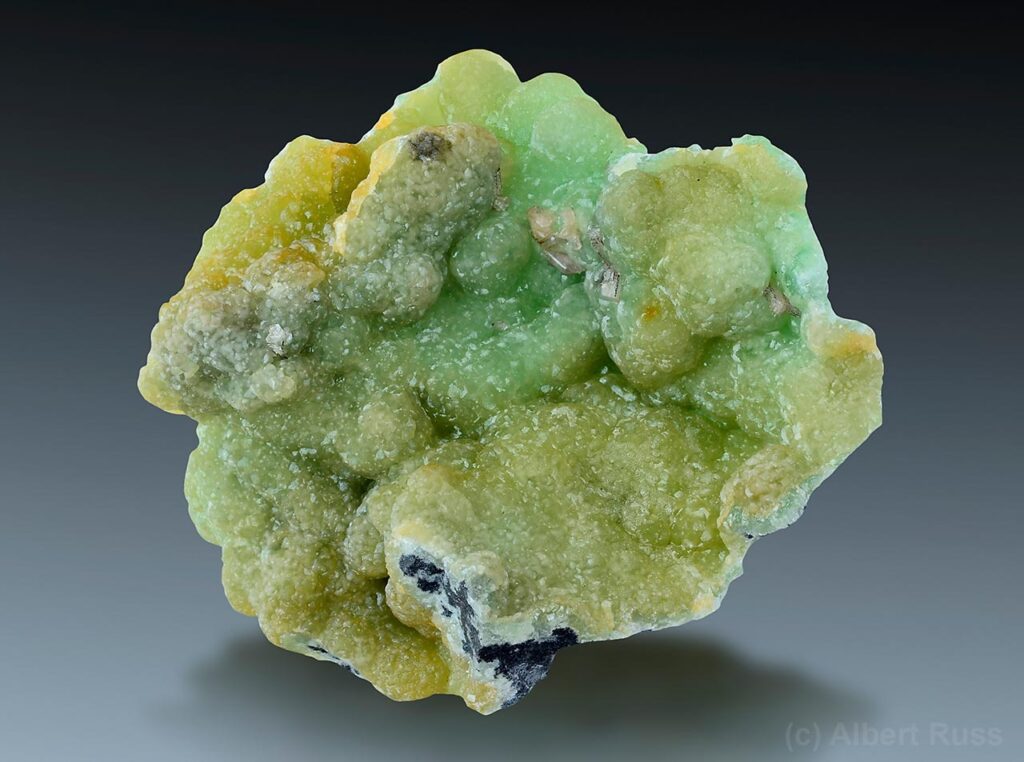
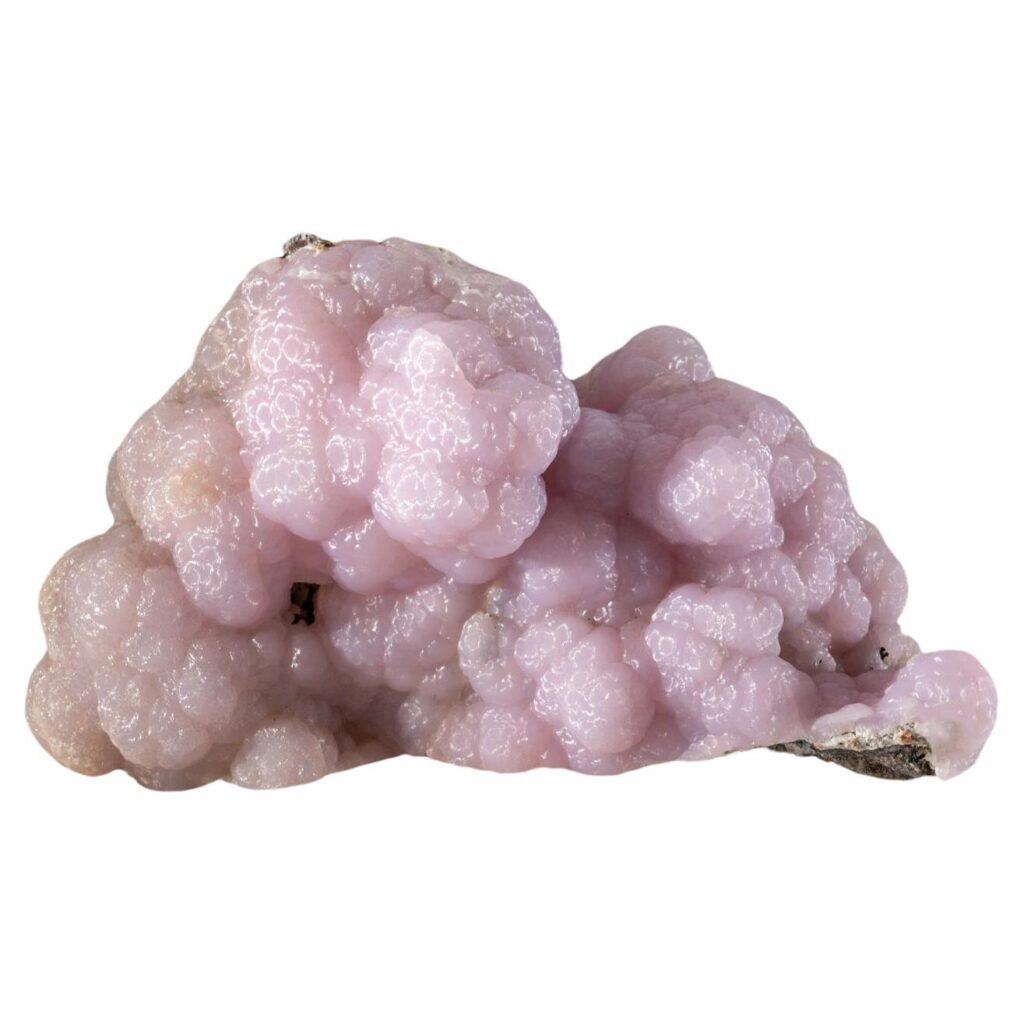
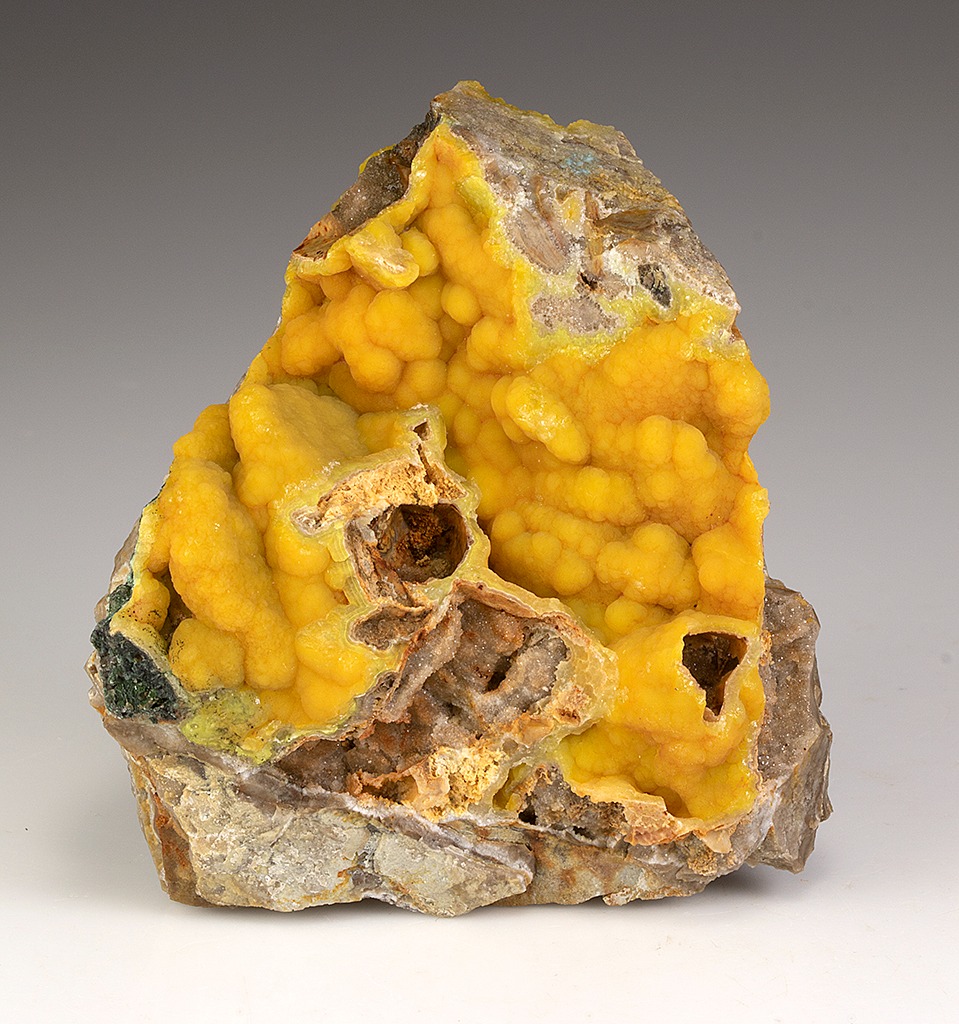
색상 범위 일반적으로 흰색, 회색 또는 연한 갈색; 카드뮴 때문에 '터키 지방 광석'이라고 불리는 선명한 파란색, 녹색, 노란색, 분홍색, 보라색 등이 전이 금속 불순물에 따라 나타나는 것으로 유명합니다.
모스 경도 4.0 - 4.5 (상대적으로 부드럽고 삼방정계 탄산염 구조와 일치함)
누프 경도 낮음~중간; 규산염에 비해 쉽게 긁히고 부서지기 쉬움.
줄무늬 하얀색
굴절률 (RI) nε = 1.625, nω = 1.850 (매우 높은 복굴절: δ = 0.225)
광학 문자 일축성 음성 (-)
다색성 없음에서 매우 약함; 깊은 색상의 표본에서만 보이며 기본 몸 색상 톤과 일치합니다.
분산 강함 (그러나 높은 복굴절은 종종 다면석에서 분산 효과를 가립니다).
열전도율 낮음 (비금속 탄산염 광물 종에 일반적).
전기 전도율 주변 표준 조건에서의 전기 절연체.
흡수 스펙트럼 청록색 표본(구리 함유)은 적색-주황색 영역에서 넓은 흡수대를 보이며, 분홍색 표본(코발트 함유)은 490nm, 510nm, 545nm 부근에서 띠를 나타냅니다.
형광 약한에서 중간 정도의 형광을 나타낼 수 있으며, 단파(SW) 또는 장파(LW) 자외선 아래에서 종종 부드러운 분홍색, 빨간색, 파란색 또는 녹색으로 빛나고, 인광을 띨 수도 있습니다.
비중 (SG) 4.42 - 4.45 (비금속 광물로서는 매우 높은 밀도, 높은 아연 함량 때문).
광택 (폴란드어) 결정면에서는 유리광택(유리질)에서 진주광택; 포도상 집합체에서는 준유리광택, 수지광택 또는 견사광택.
투명성 반투명에서 불투명까지; 극히 드문 결정체는 완전히 투명할 수 있음
분열 / 균열 {101̄1} 면에서 완벽한 능면체 / 불규칙한 아패각상 파단.
강인함 / 끈기 취성; 방향성 압력이나 충격 하에서 쉽게 쪼개지거나 파괴됨.
지질학적 산출 상태 일차 아연 함유 광상의 산화 또는 풍화대에서 형성되는 이차 광물로, 종종 석회암 및 기타 탄산염 암석을 대체합니다.
내포물 유체 포유물, 동심 성장대, 미세 결정질 산화철(갈색 착색 유발), 또는 소량의 구리-탄산염 필라멘트.
용해도 찬 염산(HCl)에서 기체를 방출하며 거품을 내고 완전히 용해되는데, 이는 탄산염의 주요 진단 시험입니다.
안정성 표준 대기 조건에서는 안정하지만, 고온 가열 시 산화 아연(ZnO)으로 분해되고 이산화 탄소(CO₂)를 방출합니다.
관련 광물 헤미모르파이트, 윌레마이트, 하이드로징카이트, 세루사이트, 말라카이트, 아주라이트, 아우리칼사이트, 리모나이트.
일반적인 처리 방법 일반적으로 처리되지 않음. 때때로 다공성의 포도상 덩어리는 보석 세공 작업을 위한 내구성을 향상시키기 위해 무색 수지나 폴리머로 안정화될 수 있음.
저명한 표본 세계적으로 유명한 전기적인 청색 포도상 덩어리 (뉴멕시코주 켈리 광산); 생생한 노란색 덩어리 (아칸소주); 그리고 크고 잘 형성된 분홍색과 녹색 표본 (나미비아 추메브).
어원학 1832년에 프랑수아 쉴피스 보당이 제임스 스미스슨(1765–1829), 영국 화학자이자 광물학자이며 스미소니언 협회의 설립자를 기리기 위해 명명하였다.
스트렌츠 분류법 05.AB.05 (추가 음이온 없음, H₂O 없음; 알칼리 토금속 및 전이 금속 탄산염).
대표적 산지 United States (New Mexico, Arkansas, Arizona), Namibia (Tsumeb), Greece (Laurion), Italy (Sardinia), Mexico (Chihuahua), and Zambia (Kabwe).
방사성 없음 (완전히 비방사성).
독성 Low-risk; however, inhalation of zinc carbonate dust generated during cutting or grinding should be avoided, as it can cause respiratory tract irritation.
상징주의와 의미 In economic geology, it serves as an important historical zinc ore indicator. Metaphysically, it is revered as a stone of tranquility, emotional healing, stress relief, and the cultivation of inner peace and security.

Smithsonite is a zinc carbonate mineral with the chemical formula ZnCO₃ and is an important secondary mineral formed in the oxidation zones of zinc-bearing ore deposits. It belongs to the carbonate mineral group and is part of the calcite group, sharing structural similarities with minerals such as calcite, magnesite, and siderite. Although pure smithsonite is typically colorless or white, natural specimens often display a wide range of attractive colors, including blue, green, pink, yellow, brown, gray, and purple. These colors are mainly caused by trace elements that replace zinc within the crystal structure, creating the remarkable diversity that makes smithsonite highly valued among mineral collectors.

Unlike many minerals that form large, well-defined crystals, smithsonite most commonly occurs as botryoidal masses, crusts, coatings, stalactitic formations, and compact aggregates. Its soft colors, rounded textures, and pearly to waxy luster give it a distinctive appearance that has made it a popular collector’s mineral and a gemstone material for cabochons and decorative objects. Although it is not considered a traditional precious gemstone due to its moderate hardness and sensitivity to damage, high-quality smithsonite specimens are appreciated for their rarity, unique formations, and geological significance.The mineral was named after English chemist and mineralogist James Smithson in recognition of his contributions to mineral science. Smithson’s scientific legacy later became associated with the establishment of the Smithsonian Institution, and the mineral name preserves his influence on the development of modern mineralogy.

History of Smithsonite

The history of smithsonite reflects the evolution of mineral classification, chemical science, and the zinc mining industry. For many centuries, smithsonite was known primarily as a zinc ore rather than as a distinct mineral species. In Europe and other mining regions, zinc carbonate minerals were historically grouped under the name “calamine,” a general term used for zinc-bearing ores. This terminology created confusion because both smithsonite, a zinc carbonate, and hemimorphite, a zinc silicate, were commonly described using the same name before advances in mineral chemistry allowed scientists to distinguish them.

During the late 18th and early 19th centuries, improvements in chemical analysis helped mineralogists better understand the composition and classification of zinc minerals. Researchers discovered that certain calamine specimens were composed of zinc carbonate rather than zinc silicate, leading to the recognition of smithsonite as a separate mineral species. In 1832, French mineralogist François Sulpice Beudant officially introduced the name smithsonite to honor James Smithson, who had made important contributions to chemistry and mineral studies.Smithsonite also played a significant role in the historical development of zinc production. Before zinc sulfide ores such as sphalerite became the dominant source of industrial zinc, smithsonite was one of the major zinc ores mined around the world. It was especially important in regions where oxidized zinc deposits were accessible near the surface. Extracted zinc from smithsonite contributed to industries such as brass manufacturing, metal protection, and alloy production.

Today, smithsonite is no longer a primary commercial zinc source because modern mining focuses mainly on larger and more economically viable sulfide deposits. However, it remains an important mineral in geological research and mineral collecting. Famous localities such as the Tsumeb Mine in Namibia, the Kelly Mine in New Mexico, and several historic European zinc districts have produced exceptional smithsonite specimens that continue to attract collectors and museums worldwide.

Chemical Composition and Classification of Smithsonite

Smithsonite has the ideal chemical formula ZnCO₃, consisting of zinc, carbon, and oxygen. It is classified as a carbonate mineral and belongs to the calcite group, which includes several minerals with similar crystal structures but different chemical compositions. Within the smithsonite structure, zinc ions occupy positions surrounded by carbonate groups, forming a stable trigonal crystal framework.

In natural specimens, smithsonite rarely exists as a perfectly pure zinc carbonate. Various elements can substitute for zinc during mineral formation, producing chemical variations that influence the mineral’s appearance. Copper impurities may create blue or green colors, cobalt can produce pink or purple tones, while iron and manganese may contribute yellow, brown, or gray shades. These chemical substitutions are responsible for the wide range of colors and visual characteristics found in different smithsonite deposits.

Because smithsonite forms in chemically changing environments, its composition can vary significantly between locations. This variation not only affects color but can also influence texture, crystal development, and mineral associations. For this reason, smithsonite specimens from different geological regions often display unique characteristics that help collectors identify their origin.

Formation and Geological Occurrence of Smithsonite

Smithsonite forms primarily through the weathering and oxidation of zinc sulfide minerals, especially sphalerite, in near-surface environments. When zinc-rich deposits are exposed to oxygenated groundwater and carbonate-rich conditions, chemical reactions transform primary zinc minerals into secondary carbonate minerals such as smithsonite. This process commonly occurs within the oxidation zones of hydrothermal zinc deposits, where changing environmental conditions allow new minerals to develop.

The mineral typically forms in cavities, fractures, and replacement zones within limestone and other carbonate-rich rocks. Instead of producing large individual crystals, smithsonite usually develops as rounded botryoidal coatings, massive aggregates, and layered crusts. These formations often display smooth surfaces and subtle color variations, making them highly attractive to collectors.

Smithsonite is frequently found associated with other secondary minerals, including hemimorphite, cerussite, malachite, azurite, calcite, and limonite. These mineral combinations provide important geological information about the oxidation processes that occurred within ancient ore deposits. Significant smithsonite occurrences have been discovered in Namibia, the United States, Mexico, Australia, Greece, Italy, Spain, and China, with several historic mines producing specimens of exceptional quality.

Types and Color Varieties of Smithsonite

Smithsonite is known for its remarkable color diversity, which results mainly from trace elements incorporated into its crystal structure. Different varieties are often identified based on their dominant colors and mineral impurities.

Blue smithsonite is one of the most popular varieties among collectors and gemstone enthusiasts. Its blue coloration is commonly associated with copper impurities and may range from pale sky blue to deeper turquoise shades. Many blue smithsonite specimens occur as botryoidal masses with smooth, rounded surfaces that create a visually appealing appearance.

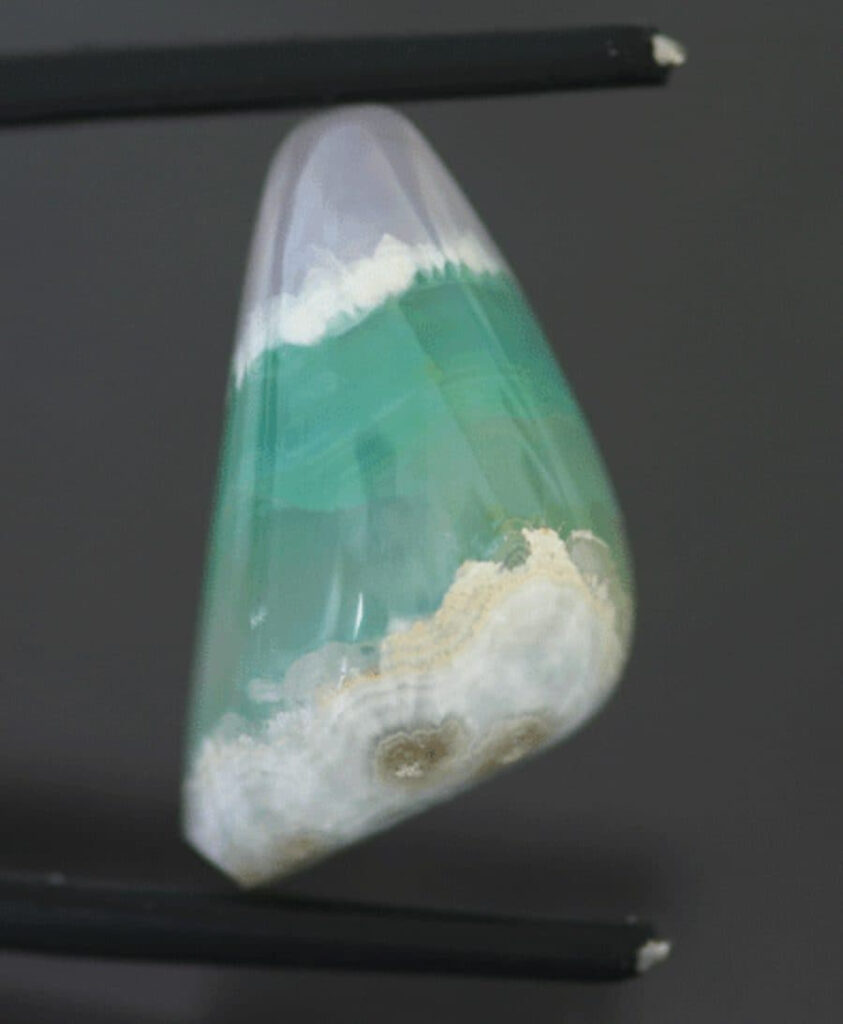
Green smithsonite is another common variety, often influenced by copper, nickel, or other trace elements. Green specimens may appear pale and pastel or show stronger shades depending on chemical composition and locality. These varieties are frequently associated with other copper-bearing minerals in oxidized ore environments.

Pink smithsonite is highly valued because of its attractive coloration, which is usually caused by cobalt substitution. Cobalt-bearing smithsonite from certain localities can display delicate rose, pink, or lavender tones and is among the most desirable forms for collectors.

Yellow, brown, white, and gray smithsonite varieties generally result from different levels of purity and trace-element content. Although less famous than blue or pink specimens, these colors can still display beautiful textures and interesting geological features, especially when combined with unusual crystal habits or mineral associations.

Crystal Structure and Physical Properties of Smithsonite

Smithsonite crystallizes in the trigonal crystal system and commonly develops a rhombohedral structure similar to other members of the calcite group. Well-formed crystals are relatively uncommon, and the mineral is more often encountered as botryoidal, massive, or crust-like formations. Its crystal structure contributes to its perfect rhombohedral cleavage, which means it can split along specific planes when subjected to stress.

The mineral has a Mohs hardness of approximately 4 to 4.5, making it softer than many common gemstones. Its specific gravity is relatively high for a carbonate mineral, usually around 4.4 to 4.5, due to the presence of zinc. Smithsonite typically exhibits a vitreous, pearly, or waxy luster, especially on polished surfaces. Transparency varies from transparent to opaque depending on crystal quality and internal structure.

Smithsonite as a Gemstone and Collector Mineral

Although smithsonite is not widely used in commercial jewelry, it has gained popularity as a collector gemstone because of its unusual colors and attractive textures. Due to its relatively low hardness and perfect cleavage, it is usually cut into cabochons rather than faceted gemstones. The smooth polished surface of smithsonite highlights its soft colors and natural patterns, making it suitable for pendants, earrings, and artistic jewelry pieces.

Among gemstone-quality specimens, blue, pink, and green varieties are the most desirable. However, smithsonite jewelry requires careful handling because the mineral can be scratched easily and may fracture if exposed to strong impacts. For this reason, it is generally considered more suitable for occasional-wear jewelry rather than everyday rings or heavily used items.

Collectors often value smithsonite more highly than jewelry markets because exceptional specimens reveal important geological information and display unique natural formations. Specimens from famous mining localities with vivid colors, unusual textures, or historical significance can become highly sought-after additions to mineral collections.

Uses and Importance of Smithsonite

Historically, smithsonite was an important zinc ore and contributed significantly to early zinc extraction industries. Before the widespread use of sphalerite, smithsonite deposits were mined as a valuable source of zinc. The extracted metal was used in producing brass alloys, galvanized materials, and various industrial products.

Modern industrial use of smithsonite is limited because most zinc production now depends on larger sulfide deposits. Nevertheless, the mineral remains important in mineralogical research, education, museum collections, and the gemstone industry. Its role in understanding oxidation processes in ore deposits also makes it valuable to geologists studying mineral formation.

Smithsonite continues to represent an important connection between economic geology, mineral science, and collecting culture. Its combination of chemical significance, historical importance, and aesthetic appeal ensures its continued popularity among mineral enthusiasts.

How to Identify Smithsonite

Smithsonite identification requires examining several physical and chemical characteristics. Its relatively high density, carbonate composition, rhombohedral cleavage, and typical botryoidal formations provide useful clues. Like other carbonate minerals, smithsonite reacts with acids, releasing carbon dioxide when exposed to hydrochloric acid, although the reaction may be weaker compared with calcite.

Because smithsonite can resemble minerals such as hemimorphite, calcite, and aragonite, accurate identification may require additional testing methods, including hardness testing, specific gravity measurements, microscopy, or laboratory chemical analysis. Professional identification is especially important for valuable collector specimens.

Smithsonite Care and Maintenance

Smithsonite should be handled carefully because of its moderate softness and cleavage properties. Specimens and jewelry should be protected from scratches, impacts, and harsh chemicals. Cleaning should be limited to gentle methods using warm water, mild soap, and a soft cloth.Ultrasonic cleaners, steam cleaners, and abrasive materials should be avoided because they may damage the mineral surface or create fractures. For collectors, storing smithsonite separately from harder minerals helps prevent accidental scratching and preserves the specimen’s natural beauty.

보석 백과사전

A부터 Z까지 모든 보석 목록 및 각 보석에 대한 상세 정보

탄생석

이 인기 있는 보석들과 그 의미에 대해 자세히 알아보세요

커뮤니티

보석 애호가 커뮤니티에 가입하여 지식과 경험, 새로운 발견을 공유해 보세요.