
Euxenite, specifically identified in modern mineralogy as Euxenite-(Y), is a complex rare-earth oxide mineral that serves as a primary host for various high-field-strength elements. Its chemical composition is represented by the formula (Y,Ca,Ce,U,Th)(Nb,Ta,Ti)₂O₆. The mineral typically exhibits a brownish-black to velvet-black coloration with a submetallic to vitreous luster. It is chemically classified within the complex oxide group and forms a solid solution series with polycrase-(Y). The distinction between the two is defined by the ratio of niobium and tantalum to titanium; euxenite is characterized by a predominance of niobium and tantalum, whereas polycrase is titanium-dominant. Because of the presence of radioactive thorium and uranium, most natural specimens undergo the process of metamictization, where alpha-particle radiation disrupts the crystal lattice over geologic time, resulting in an amorphous, glass-like internal state despite retaining its external crystal morphology.
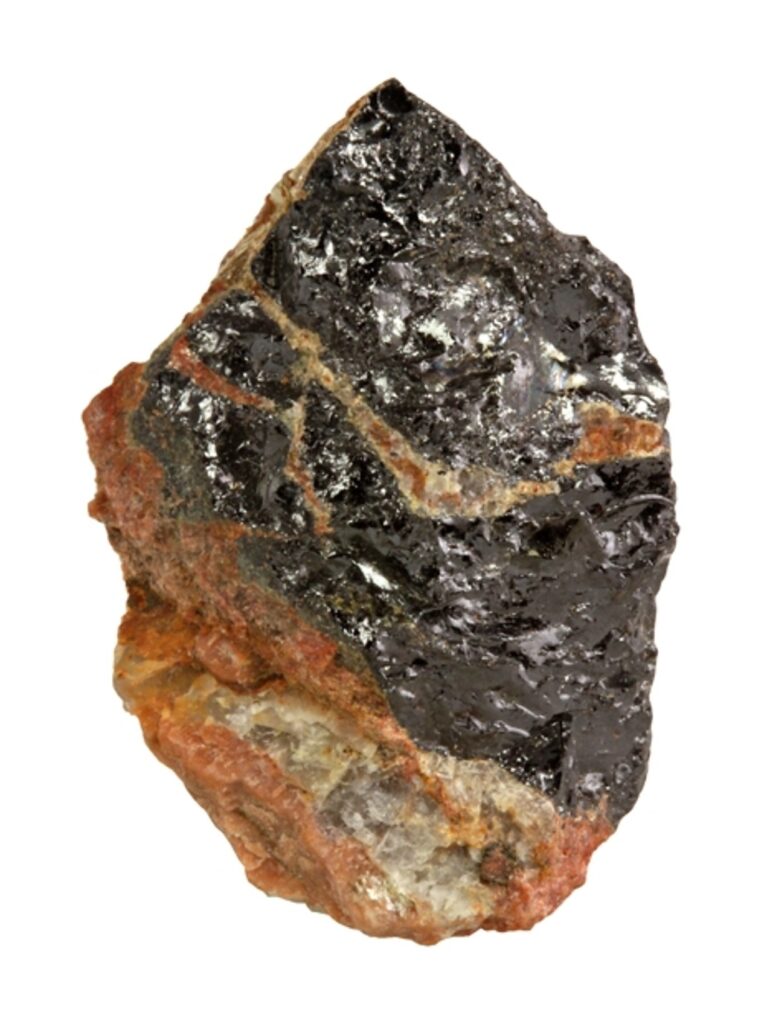
The formation of euxenite is predominantly associated with granite pegmatites, specifically those of the rare-element class. It crystallizes in the late stages of magmatic differentiation when incompatible elements—those that do not easily fit into the structures of common rock-forming minerals like quartz or feldspar—become highly concentrated in the residual melt. It is frequently found in association with other rare minerals such as monazite, xenotime, beryl, and columbite. Beyond its primary occurrence in igneous rocks, the mineral’s high specific gravity (ranging from 4.7 to 5.0) and relative resistance to chemical weathering allow it to persist in secondary alluvial deposits. Consequently, it is often recovered from heavy mineral sands and placer deposits alongside gold and magnetite. Major geological occurrences have been documented in the pegmatite fields of Norway, Madagascar, Ontario (Canada), and the Minas Gerais region of Brazil.
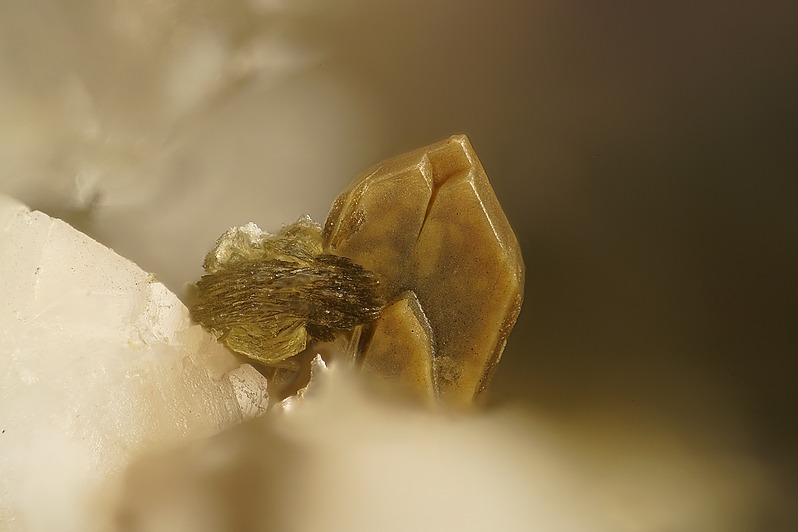
Euxenite was first identified and described in 1840 (with further formal characterization in 1870) based on specimens obtained from Jøland, Norway. The initial discovery is attributed to the Norwegian geologist Balthazar Mathias Keilhau, while the formal naming is credited to the German chemist Friedrich Scheerer. The etymology is rooted in the Greek word euxenos, meaning “hospitable to strangers.” This nomenclature was intended as a scientific metaphor for the mineral’s complex chemical appetite; it “welcomes” a diverse array of rare earth and metallic elements into its structure that were, at the time of its discovery, considered exotic or “strange” to the chemical community. Throughout the 20th century, euxenite gained industrial and scientific importance as a source of yttrium and niobium, and it remains a critical mineral for geochronological studies due to its inherent radioactive content, which allows scientists to date the pegmatitic systems in which it resides.
Physical and Chemical Properties
Euxenite-(Y) is a complex rare earth oxide mineral that typically crystallizes in the orthorhombic crystal system, specifically within the Pnma space group. The internal architecture of the mineral is characterized by a framework of edge-sharing (Nb,Ta,Ti)O₆ octahedra that link together to form staggered chains. These chains create structural voids and interstitial sites which are occupied by larger eight-coordinated cations, primarily yttrium and other rare earth elements. However, due to the consistent presence of radioactive impurities such as thorium and uranium substituting into the lattice, euxenite is frequently encountered in a metamict state. In this state, alpha-particle emission and recoil nuclei have bombarded the lattice over millions of years, effectively shattering the periodic arrangement of atoms and transforming the mineral into an isotropic, glass-like amorphous substance. When these metamict samples are subjected to laboratory annealing at high temperatures, the kinetic energy allows the atoms to migrate back into their thermodynamic equilibrium positions, restoring the original orthorhombic diffraction pattern.
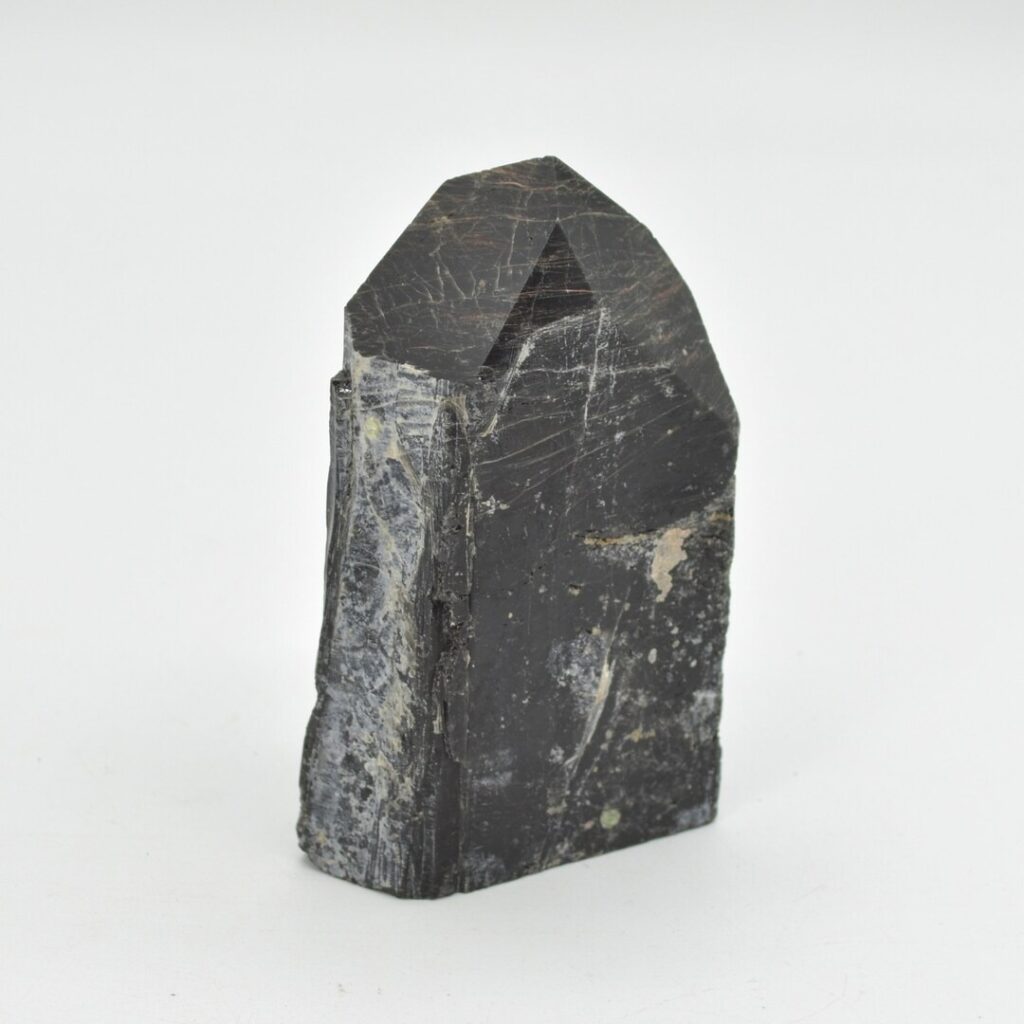
Physically, euxenite exhibits a striking appearance with a color profile ranging from deep velvet black to a reddish or brownish-black hue. Its luster is often described as sub-metallic or resinous, appearing vitreous on freshly fractured surfaces. It is a relatively durable mineral with a Mohs hardness of 5.5 to 6.5, making it harder than glass but softer than quartz. A key identifying physical feature is its conchoidal fracture—a tendency to break along smooth, curved surfaces resembling the shape of a seashell—which is especially prominent in metamict specimens that lack natural cleavage planes. The mineral possesses a high specific gravity, typically between 4.7 and 5.0, though this value fluctuates depending on the ratio of tantalum to niobium.
Chemically, the mineral is defined by the generalized formula (Y,Ca,Ce,U,Th)(Nb,Ta,Ti)₂O₆. It serves as an end-member of a complex solid-solution series with polycrase-(Y). The primary chemical distinction between the two is the titanium content; according to mineralogical classification, a specimen is defined as euxenite when the molecular sum of niobium and tantalum is greater than that of titanium. It is highly resistant to chemical weathering and most common acids, which allows it to persist in the environment long after its host rock has decomposed. Consequently, while it is primarily found embedded in granitic pegmatites associated with quartz, feldspar, and mica, it is also frequently recovered from heavy-mineral placer deposits and detrital black sands. Because of its uranium and thorium content, it is often surrounded by a “pleochroic halo” in host minerals like biotite, caused by localized radiation damage to the surrounding crystal matrix.
Radioactive Properties and Applications of Euxenite-(Y)
The radioactivity inherent in Euxenite-(Y) is primarily a result of the substitution of uranium and thorium into its complex crystalline framework, where these radioactive elements occupy the same structural positions as yttrium and other rare earth elements. Over vast periods of geological time, the internal lattice of the mineral undergoes bombardment from alpha-particle emissions and nuclear recoil during the decay of these isotopes. This sustained internal radiation causes a phenomenon known as metamictization, which shatters the periodic atomic arrangement and converts the once-structured orthorhombic mineral into an amorphous, glass-like state. Within its natural environment, this radioactive nature is often evidenced by pleochroic halos, which are circular zones of physical damage caused by radiation to the surrounding minerals.
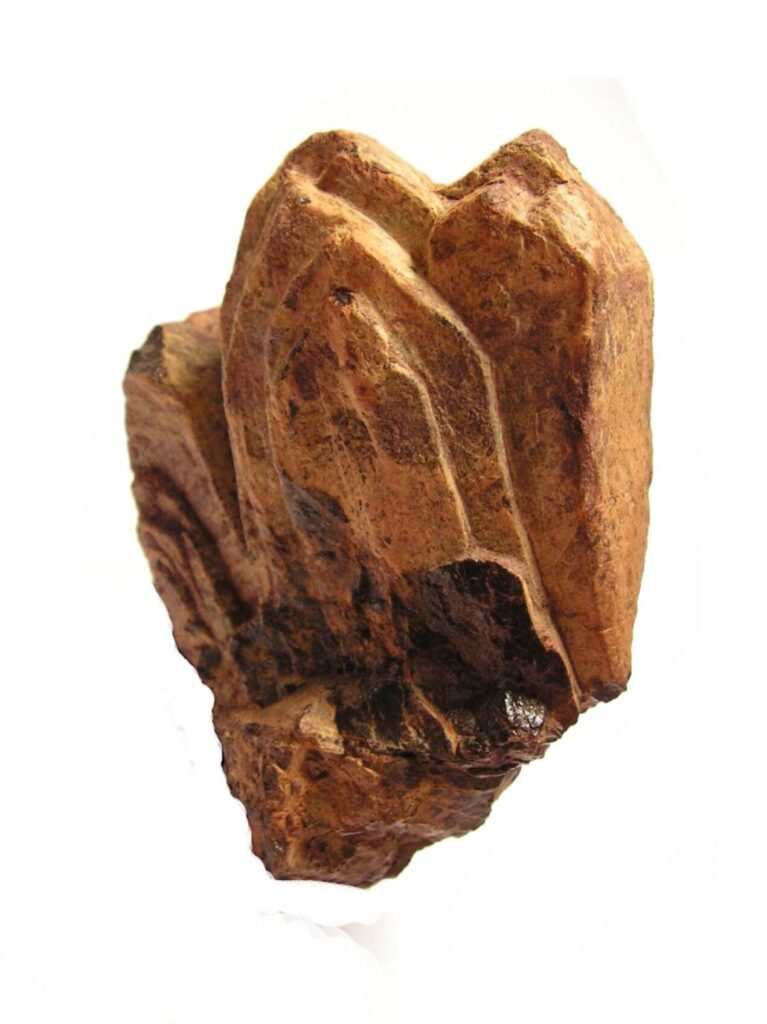
In terms of practical applications, Euxenite-(Y) functions as an important industrial ore for several critical materials, including yttrium and other heavy rare earth elements essential for modern electronics and superconductors. It is also processed to extract refractory metals such as niobium and tantalum, which are indispensable in the production of high-strength alloys and capacitors for mobile technology. Beyond material extraction, the mineral plays a significant role in geochronology, as the presence of trapped uranium and thorium allows scientists to perform U-Pb dating to establish the age of host granitic pegmatites. Furthermore, Euxenite-(Y) is utilized in scientific research regarding nuclear waste management, as its ability to remain chemically stable while containing radioactive isotopes offers a natural model for developing synthetic storage materials for long-lived nuclear waste.