
Crocoite is a rare lead chromate mineral with the ideal chemical formula PbCrO₄, belonging to the chromate mineral class. It is distinguished by its vivid orange-red, scarlet-red, or hyacinth-red coloration, which results from the presence of hexavalent chromium within its crystal structure. Crocoite crystallizes in the monoclinic crystal system and typically forms elongated prismatic, striated, or acicular crystals, often occurring in radiating aggregates and crystal clusters. The mineral possesses an adamantine to vitreous luster, high refractive indices, and a relatively high specific gravity of approximately 5.9–6.1 due to its substantial lead content. Despite its striking appearance, crocoite is relatively soft, with a Mohs hardness of 2.5–3, and exhibits perfect to distinct cleavage, making well-formed crystals fragile and susceptible to damage. As a result, crocoite is primarily valued as a collector and museum mineral rather than a material for ornamental or jewelry applications.
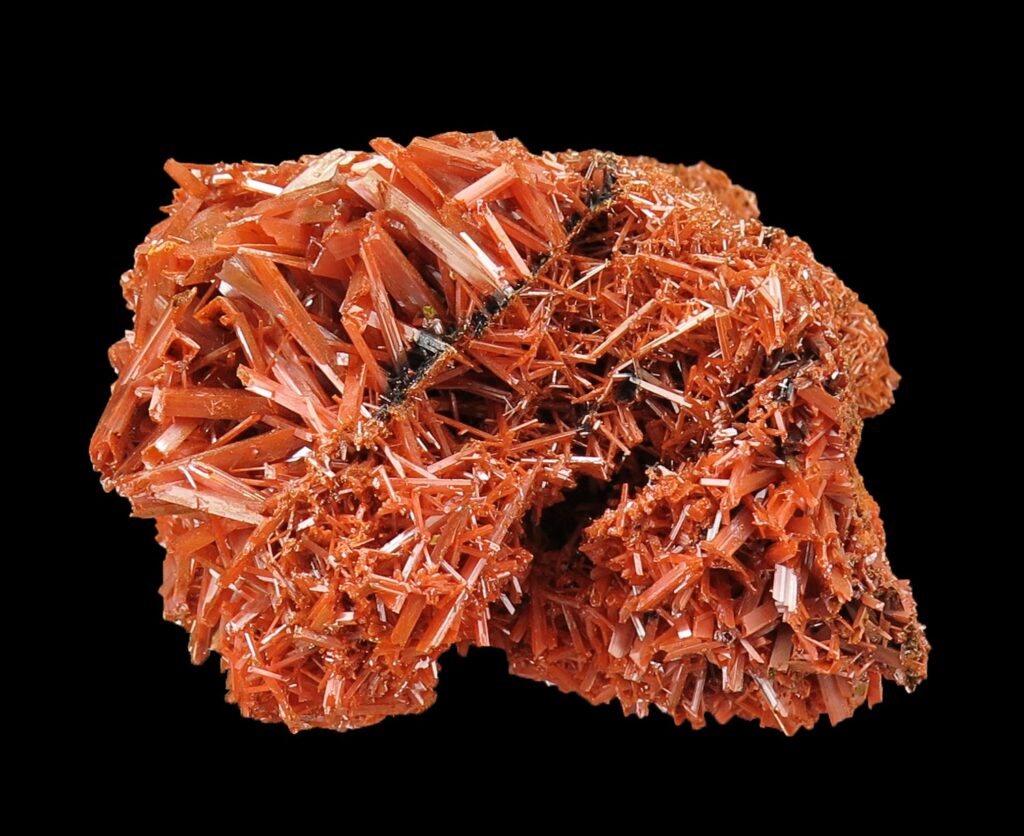
Crocoite forms as a secondary mineral within the oxidation zones of lead-rich hydrothermal ore deposits under highly specialized geochemical conditions. Its occurrence requires the interaction of lead-bearing minerals, most commonly galena (PbS), with chromium-bearing fluids generated through the weathering of ultramafic rocks, serpentinites, or other chromium-enriched lithologies. During oxidation, groundwater transports dissolved lead and chromate ions, which subsequently combine and precipitate as crocoite within fractures, cavities, and porous gossan environments. Because significant concentrations of lead and chromium rarely occur together in the same geological setting, crocoite remains an uncommon mineral worldwide. It is frequently associated with other secondary lead minerals, including pyromorphite, cerussite, anglesite, vauquelinite, phoenicochroite, and limonite, all of which form under similar supergene alteration processes.
Crocoite holds considerable historical significance in both mineralogy and chemistry because it served as the source material for the discovery of the chemical element chromium. The mineral was first identified in the eighteenth century within the Berezovsky mining district of the Ural Mountains, Russia, where its intense red coloration attracted scientific interest. In 1797, French chemist Louis Nicolas Vauquelin conducted a chemical analysis of the mineral and successfully isolated a previously unknown element, later named chromium after the Greek word chroma, meaning “color,” in reference to the diverse and vivid compounds produced by the element. The mineral itself was formally named crocoite in 1832 by August Breithaupt, deriving from the Greek word krokos, meaning “saffron.” Although the historic Russian occurrences played an important role in the mineral’s scientific recognition, the most notable modern specimens originate from the Dundas mineral field of western Tasmania, Australia, which is internationally recognized for producing exceptionally large, lustrous, and well-crystallized crocoite specimens.
Crystal Structure, Color, and Optical Properties
Crocoite crystallizes in the monoclinic crystal system and belongs to the space group P2₁/n, with a crystal structure closely related to that of the barite group and other chromate minerals. Its structure consists of isolated chromate tetrahedra (CrO₄)²⁻ linked by large Pb²⁺ cations, creating a dense atomic arrangement that contributes to the mineral’s high specific gravity. Crystal development is commonly characterized by elongated prismatic habits parallel to the c-axis, although slender acicular crystals, radiating sprays, crusts, and parallel aggregates are also frequently observed. Individual crystals are often longitudinally striated and may exhibit hollow or skeletal growth forms resulting from rapid crystallization under supergene conditions.
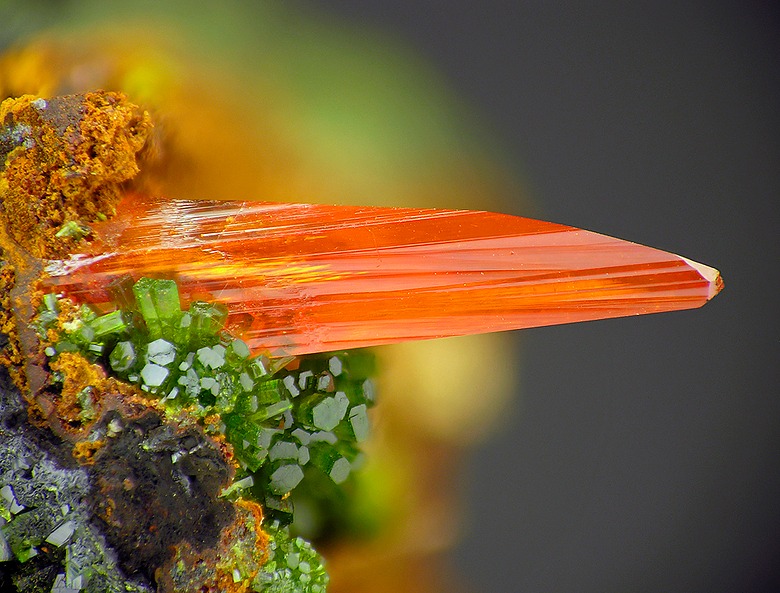
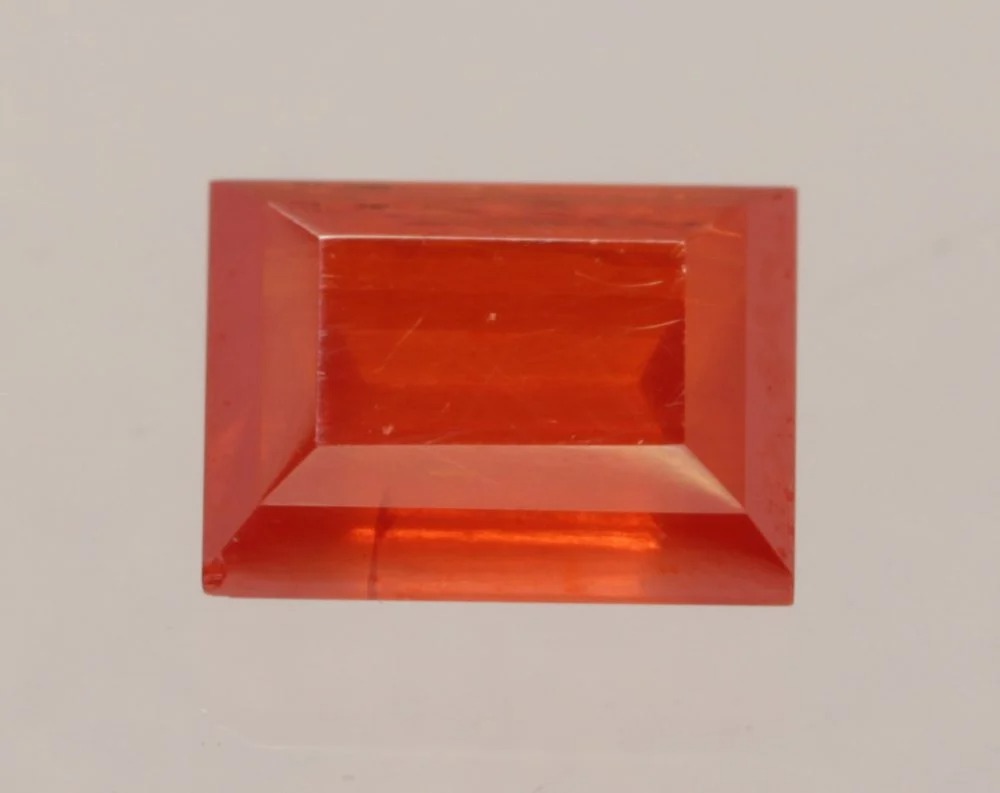
Color is one of crocoite’s most diagnostic and recognizable features. Fresh crystals typically display vivid shades ranging from saffron-orange and orange-red to deep scarlet-red or hyacinth-red. The intense coloration is produced by electronic charge-transfer processes involving hexavalent chromium (Cr⁶⁺) within the chromate groups. Weathering or prolonged exposure to environmental conditions may occasionally dull the surface color, although freshly broken crystal faces generally retain their characteristic brilliance. The mineral produces an orange-yellow to yellow-orange streak, which remains useful for identification despite its distinctive appearance.
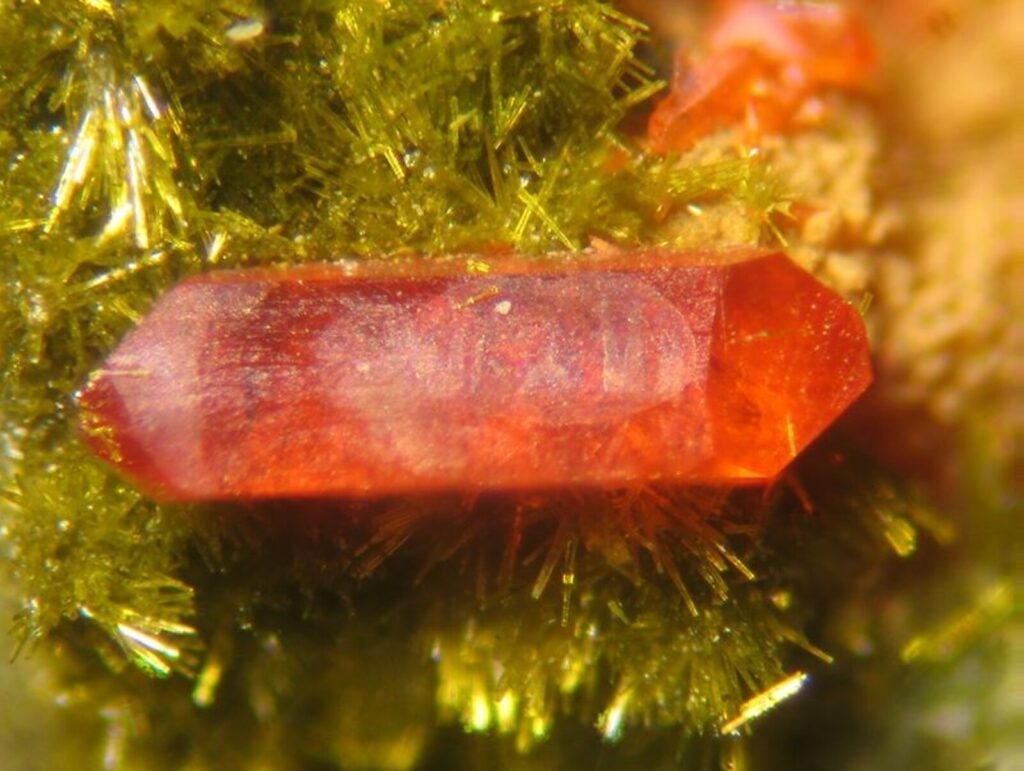
Optically, crocoite is transparent to translucent and exhibits exceptionally high refractive indices, with reported values of approximately nα = 2.29, nβ = 2.36, and nγ = 2.66. These unusually high values generate strong light dispersion and contribute to the mineral’s brilliant adamantine to vitreous luster. Crocoite is optically biaxial positive and displays moderate to strong birefringence, producing noticeable interference colors under polarized light. The mineral also exhibits pronounced pleochroism, with observed colors varying from yellowish-orange to deep red depending on crystallographic orientation. Combined with its high refractive indices and vibrant pigmentation, these optical characteristics make crocoite one of the most visually distinctive minerals known.
Physical and Chemical Properties
Crocoite is a lead chromate mineral with the ideal chemical formula PbCrO₄, representing the naturally occurring lead analogue of synthetic chrome-yellow pigments. Its composition is dominated by lead oxide (PbO) and chromium trioxide (CrO₃), with theoretical proportions of approximately 68.9% PbO and 31.1% CrO₃ by weight. Minor chemical substitutions are generally limited, although trace amounts of sulfur, iron, or other elements may occasionally be detected depending on the geological environment in which the mineral formed.
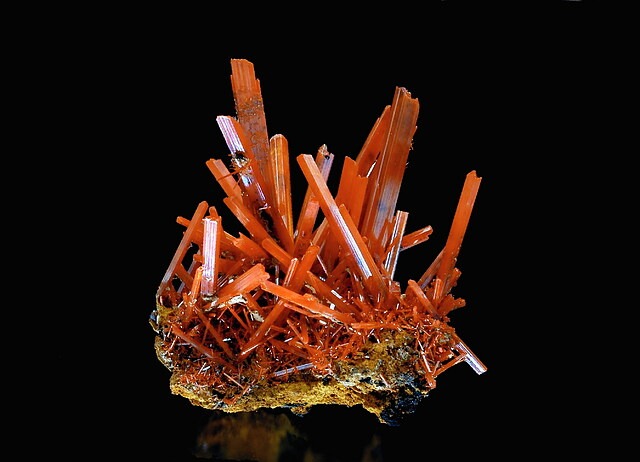
Physically, crocoite is distinguished by its combination of high density and low mechanical durability. The mineral possesses a Mohs hardness of 2.5–3, making it relatively soft and susceptible to scratching. It has a specific gravity ranging from approximately 5.9 to 6.1, reflecting the substantial contribution of lead to its crystal structure. Cleavage is typically distinct to imperfect, most commonly developed along the {110} and related crystallographic planes, while fracture ranges from uneven to subconchoidal. Due to its brittleness and tendency to break along cleavage surfaces, intact crystals can be difficult to extract and preserve, particularly when occurring in delicate acicular clusters.
Crocoite exhibits several characteristic chemical behaviors that aid in its identification. It is soluble in concentrated hydrochloric acid and nitric acid, releasing lead into solution while producing chromate-related reaction products. When heated, the mineral decomposes relatively easily and may fuse before a blowpipe, reflecting the instability of lead chromate at elevated temperatures. Because crocoite contains both lead and hexavalent chromium, it should be handled with appropriate care, and prolonged inhalation or ingestion of dust should be avoided. Although the mineral has no significant industrial use today, its chemical composition remains historically important because it served as the original source material from which chromium was first isolated and identified in the late eighteenth century.
Uses of Crocoite
Due to its extreme rarity, high fragility, and toxic composition containing both lead and hexavalent chromium, crocoite has virtually no modern industrial applications. Today, the mineral’s primary significance lies in the fields of high-end mineral collecting, museum curation, and scientific research. Exceptional specimens, particularly the intertwined, hollow prismatic needles recovered from Tasmania’s Dundas mineral field, are globally renowned and heavily sought after for their vibrant coloration, unique crystal geometry, and spectacular aesthetic appeal. Beyond its visual allure, crocoite holds a legendary place in the history of chemistry. In 1797, French chemist Louis Nicolas Vauquelin first isolated and identified the element chromium using natural crocoite specimens from the Berezovskoe deposit in Russia. While lead chromate compounds derived from or inspired by crocoite contributed significantly to the development of early, vibrant chrome-based industrial pigments like “chrome yellow,” natural crocoite itself was never mined extensively for commercial paint production due to its scarcity. Consequently, the mineral remains a prized reference and educational specimen in mineralogical and geological collections worldwide for studying chromate mineralization.
Metaphysical Meaning of Crocoite
In alternative crystal healing and metaphysical traditions, crocoite is revered as a potent stone of intense energy, vitality, and spiritual renewal. Because of its fiery, intense orange-red coloration, it is strongly linked to the Root and Sacral Chakras, where practitioners utilize it to ground spiritual energy while simultaneously stimulating physical life force and passion. It is frequently regarded as a dynamic catalyst for personal transformation and inspiration, believed by enthusiasts to help dissolve stagnant emotional patterns, overcome creative blocks, and foster the inner confidence required to embrace major life changes. However, because crocoite contains toxic heavy metals and is highly fragile, it should never be used to create direct elixirs, carried loosely, or handled excessively. These metaphysical interpretations are rooted entirely in spiritual and cultural beliefs rather than scientific data, and they should never be used as a substitute for professional medical or mineralogical facts.