{{ osCmd }} K
Eine Explosion von Unterwasserfarben mit leuchtend roten und rosa Weichkorallen und braunen Steinkorallen, umgeben von einem dichten Schwarm orangefarbener Goldfische und kleiner schwarzer Fische unter einer sonnenbeschienenen Meeresoberfläche.
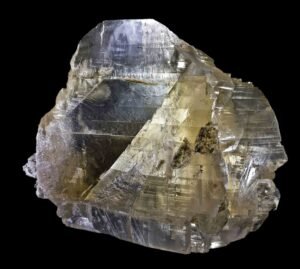
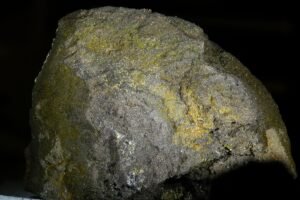
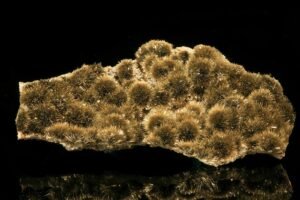
Koralle: Der lebende Edelstein aus dem Meer

Deep within the abyss of the sapphire sea lies nature’s most prestigious “palette.” Coral, the gemstone hailed as the “Flower of the Ocean,” possesses neither the icy detachment of diamonds nor the ostentatious glitz of gold. Growing silently amidst the surging waves, it condenses the sheer vitality of the ocean into a texture as warm and mellow as jade. As an “organic gemstone” birthed from the deep, coral is far more than a mere ornament worn around the neck; it is a crimson legend, sculpted by the rhythmic hands of time and tide. What Is Coral? In the specialized field of gemology, coral is classified as an organic gemstone, a rare category of jewels birthed by biological life rather than geological pressure. Coral is the external skeleton of a tiny, plant-like marine animal called the coral polyp. Gem-quality coral primarily originates from precious marine species belonging to the genus Corallium, most notably Corallium rubrum. Unlike the porous, brittle corals found in shallow tropical reefs, these precious corals thrive in the dark, high-pressure depths of the Mediterranean and Pacific. These organisms are colonial polyps—tiny, soft-bodied creatures that act as master architects of the deep. To protect their delicate forms, they extract minerals from the surrounding seawater to secrete a dense, internal skeleton of calcium carbonate (CaCO3) in the form of calcite. The structures that result from generations of these creatures growing as colonies on top of each other can be quite massive, building rigid, branching skeletons over decades or even centuries. The slow growth rate—sometimes as little as 1mm per year—is what grants the material its remarkable density and fine-grained texture. Since time immemorial, coral has been used for carvings, cabochons, and other jewelry pieces. Once harvested, the dull, outer skin is removed to reveal a core that, when expertly cut and polished, transforms from skeletal remains into a gemstone with a vitreous, mirror-like luster. From the fiery crimson of Sardegna to the ethereal Angel Skin pink, these polished skeletons are the very living gemstones that have graced royal treasuries for millennia. From Polyp to Reef: The Journey of Growth The journey begins with the coral polyp, a tiny, soft-bodied marine animal that resembles a miniature sea anemone. Despite its delicate appearance, the polyp is a master architect. These organisms are colonial, meaning they live in massive groups where individuals are interconnected by living tissue. To protect their vulnerable bodies, polyps extract calcium and carbonate ions from the surrounding seawater to secrete a hard internal skeleton of calcium carbonate (CaCO3) in the form of calcite. As generations of these creatures grow as colonies on top of each other, the process unfolds in stages: This transition from a singular, “plant-like” marine animal to a colossal limestone monument creates the “Living Gemstone” that has been used since time immemorial for carvings, cabochons, and jewelry. The Color Standards of Precious Coral The trade names for calcareous coral form a specialized vocabulary that identifies quality, color, and origin in the gemstone market. At the top of the color intensity scale, terms like ox blood, arciscuro, and carbonetto are used to describe the darkest red shades, while rosso scuro and rosso represent standard dark red and red varieties. The delicate pink category is particularly diverse, featuring the highly prized angel skin—also known by the Italian name pelle d’angelo—alongside rosa pallido, salmon, and rosa vivo, which signifies a medium pink tone. Geographically, sardinian coral is renowned for its high quality and extreme hardness, whereas algerian and sicilian corals are generally categorized as lower quality. From the Pacific, Japanese coral is noted for its pink hue and distinctive white center, with specific grades such as moro for high-quality purplish red and tosa for average quality. Other notable international varieties include the white bianco, the good-quality white or pink Italian coral, akori from Cameroon, and the African star from South Africa, which is unique for its spectrum ranging from red and pink to violet and yellow-orange. Aka (Oxblood Red): Regarded as the pinnacle of coral colors, Aka (the Japanese word for red) describes a very dark, intense crimson often referred to as oxblood. It typically possesses a slight translucency and a glass-like luster, often featuring a distinct white “soul” or center in its raw state. Sardegna (Sardinian Red): Named after the Mediterranean island, this is the standard for “true red” coral. It is characterized by a vibrant, uniform saturation without a white core, making it highly desirable for spherical beads and symmetrical jewelry. Momo (Peach and Salmon): This category covers a broad range of warm tones, from rich orange-reds to soft peach hues. Momo coral is often found in larger sizes, making it the preferred choice for intricate carvings and large cabochons. Angel Skin (Pelle d’Angelo): One of the rarest and most sought-after varieties, Angel Skin coral is an extremely pale, uniform pink. It is prized for its delicate, fleshy tone that resembles the legendary complexion of an angel, possessing a soft, ethereal glow. Deep Sea Pink: This variety typically features a white base marbled with pink veins or spots. As the name suggests, it is harvested from much deeper waters than Mediterranean varieties, resulting in a unique, variegated appearance. White (Bianco): Pure white coral is devoid of any red or pink pigments. While less common in high-end jewelry than its red counterparts, it is highly valued in specific artistic traditions for its clean, ivory-like aesthetic. Black and Gold Coral: Unlike the calcium-based corals mentioned above, black and gold varieties are organic, horn-like corals. Black coral is recognized by its dense, jet-black color, while gold coral is famous for its natural metallic sheen and yellowish-brown luster. The market value of precious coral varies significantly based on variety, color intensity, and size, with prices ranging from modest sums to thousands of dollars per carat. Aka (Oxblood Red) coral stands at the pinnacle of the market, where high-clarity, large-diameter beads can command several thousand dollars per gram due to their intense crimson hue and glass-like luster. Sardegna (Sardinian Red) and

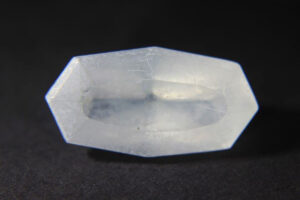
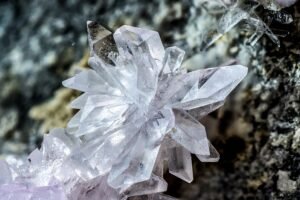
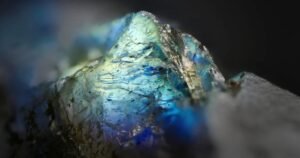
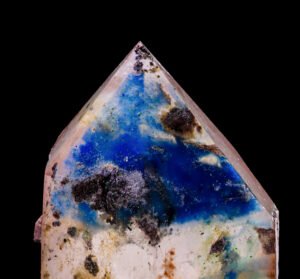
Eine Makro-Nahaufnahme einer klaren Quarzkristallspitze mit einer gesättigten, elektrisch blauen Papagoit-Phantom-Einschlussbildung vor schwarzem Hintergrund.

Papagoit: Ein seltenes Kupfersilikat von auffallender azurblauer Intensität

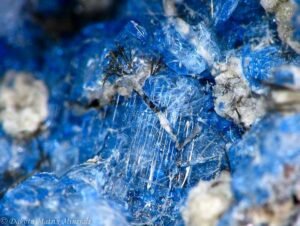
Papagoite is one of the most visually arresting and mineralogically intriguing copper silicates known to collectors and gem enthusiasts. Celebrated for its saturated, electric-blue coloration, this rare mineral occupies a unique niche in both systematic mineralogy and the world of high-end mineral specimens. Although seldom encountered in faceted form due to its rarity and physical limitations, papagoite has gained considerable attention for its dramatic inclusions within quartz and its distinctive crystallographic character. What Is Papagoite? Papagoite is an exceptionally rare and vibrant cyclosilicate mineral, most famous for its mesmerizing, electric-blue hue that seems to glow with an otherworldly intensity. First discovered in 1960 in Ajo, Arizona, it was named in honor of the Tohono Oʼodham people (formerly known as the Papago) who are indigenous to the region. While it is chemically a complex calcium copper aluminum silicate, its true allure lies in its scarcity and its stunning presentation as microscopic, needle-like inclusions within clear quartz crystals—most notably from the legendary Messina Mine in South Africa. Because the primary sources for high-quality specimens have long been exhausted, papagoite has become a definitive “holy grail” for mineral collectors, prized both for its vivid copper-driven color and its dreamlike appearance when trapped in crystal “phantoms.” Mineralogical Classification and Chemistry Papagoite is a hydrated copper aluminum silicate with the idealized chemical formula CaCuAlSi2O6(OH)3. It belongs to the silicate mineral class, specifically within a structurally complex group of chain silicates. The intense blue coloration arises primarily from copper (Cu2+) ions, whose electronic transitions within the crystal lattice selectively absorb portions of the visible spectrum, producing the mineral’s vivid azure hue. This specific interaction with light is what gives the mineral its signature electric glow, distinguishing it from other copper-bearing silicates that might lean more toward green or turquoise tones. The mineral crystallizes in the monoclinic crystal system (though sometimes discussed in relation to tetragonal symmetries in specific structural studies), typically forming elongated prismatic crystals or granular aggregates. However, well-formed crystals that are visible to the naked eye are transitionally rare. In the majority of geological occurrences, the material is encountered as microscopic inclusions trapped within other host minerals or as compact, earthy masses. When these inclusions occur within clear quartz, they often form radiating sprays or “suns” that are highly sought after for their aesthetic and scientific value. The Spectrum of Papagoite: Beyond a Single Shade While papagoite is most celebrated for its iconic electric blue or deep azure, its mineralogical and visual profile reveals a nuanced palette that extends beyond a single monochromatic tone. The mineral’s color spans a spectrum from profound, dark azure to a bright, luminous cerulean. Under specific lighting conditions, the presence of copper in its chemical composition may even impart a faint blue-green tint, though this greenish lean is typically much less pronounced than that of its famous associate, ajoite. When tested for its streak, the mineral is reduced to a delicate pale blue powder. The visual complexity of papagoite is further enhanced by its association with other minerals and its internal structure. In world-class collector specimens, papagoite frequently coexists with ajoite, which presents as a soft teal or turquoise green. When both minerals are suspended within a single clear quartz crystal, they create a dreamlike landscape of interlocking deep blues and soft greens. Furthermore, under microscopic examination, the blue distribution often appears uneven due to internal zoning or structural variations, manifesting as clusters of varying intensity. Ultimately, while its “soul” remains a singular, high-saturation blue, papagoite offers a sophisticated internal world of color. Papagoite: Formation and Gemological Occurrence The formation of papagoite is a sophisticated geochemical process that occurs within the secondary oxidation zones of copper deposits, particularly in environments rich in reactive silica. As a secondary mineral, it is not formed during initial magmatic crystallization but rather through the long-term chemical weathering of primary copper ores when exposed to oxygen and meteoric waters. The presence of specific cations—calcium, copper, and aluminum—must converge under precise pressure and temperature thresholds within a silica-saturated environment to allow this complex silicate to crystallize. In the gemological context, papagoite is most renowned for its hydrothermal occurrence, where it is captured as inclusions within growing quartz crystals. This is famously seen in the Messina Mine of South Africa, where copper-rich fluids circulated through fractured quartz veins. As the quartz crystals precipitated from the hydrothermal solution, tiny sprays of papagoite were trapped within the host, often forming “phantoms” that trace the crystal’s historical growth stages. Because these specific geological conditions are rarely met and the primary historical localities have largely ceased production, the formation of high-quality papagoite remains a rare anomaly in the mineral kingdom. Gemological Utility and Synthetic Status While its breathtaking color makes it a tempting candidate for jewelry, Papagoite is rarely used in traditional faceted settings due to its physical properties. With a relatively low hardness and a tendency to occur in brittle, fibrous aggregates, the mineral is prone to fracturing under the pressure of professional cutting tools. Furthermore, because it is almost never found in large, transparent crystals, it is virtually impossible to produce substantial faceted gemstones. Instead, it is primarily celebrated in the jewelry world as “included quartz,” where the hard quartz host acts as a protective shield for the delicate blue papagoite “phantoms” inside. These specimens are often cut into cabochons or polished points to showcase the internal landscapes without risking the mineral itself.Regarding lab-grown alternatives, there is currently no synthetic Papagoite available on the commercial market. The geological conditions required to balance copper, aluminum, calcium, and silica into this specific crystal lattice are extremely complex and costly to replicate in a laboratory setting. While some deceptive “blue-included” glass or dyed quartz exists, authentic papagoite remains a strictly natural treasure, prized by collectors for its rarity and the fact that it cannot be mass-produced by man. Geographical Sources of Papagoite Papagoite is an exceptionally rare mineral with only a handful of documented localities worldwide. Its occurrence is restricted to specific geological environments where copper-rich fluids interact with high-silica

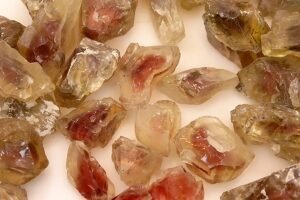
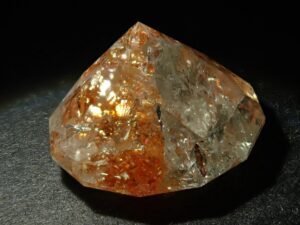
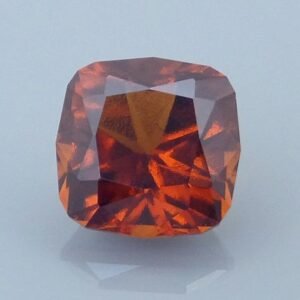
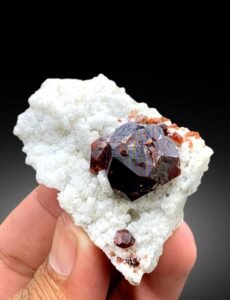
Hessonit-Granat mit Melasse-Effekt-Einschlüssen

Hessonit: Der Zimtstein aus der Grossular-Gruppe

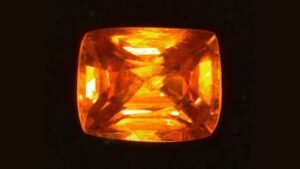
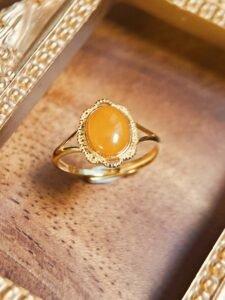
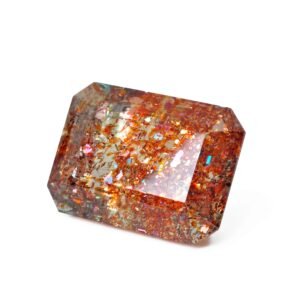
Hessonite, historically admired and scientifically classified as the yellow-orange to reddish-orange variety of grossular garnet, remains one of the most distinctive members of the vast garnet group. Often referred to by its evocative trade name, the “cinnamon stone,” this gemstone is defined by its warm, honey-to-cinnamon hues, which are chemically derived from its status as a calcium-aluminum silicate Ca₃Al₂(SiO₄)₃. Beyond its rich color palette, hessonite has fascinated gemologists and collectors for centuries due to its characteristic internal appearance—most notably the “roiling” or “syrup-like” visual effect caused by its unique inclusions. Balancing historical prestige with accessibility, hessonite serves as both a vital subject for gemological study and a beautiful, inexpensive option for fine jewelry. Color Range and Visual Appeal The most prized specimens display a rich, saturated cinnamon-orange color characterized by high transparency and minimal darkening. Beyond its vibrant palette, hessonite is one of the most distinctive varieties within the vast garnet group due to its characteristic internal appearance. Its warm tones make it especially attractive in yellow gold settings, where the metal enhances the gem’s natural, fiery glow. Furthermore, as a durable and relatively abundant variety, hessonites make beautiful yet inexpensive jewelry stones for collectors and enthusiasts alike. The Suitability of Hessonite for Jewelry Hessonite is an exceptional choice for jewelry, balancing historical prestige with practical durability. As a variety of grossular garnet, it possesses a Mohs hardness of 6.5 to 7.0, making it resilient enough for daily wear in pieces such as pendants, earrings, and brooches. Because it lacks cleavage, this calcium aluminum silicate gemstone is notably resistant to splitting, though it should be set with care in rings to protect it from heavy impact. Identifying Characteristics: The “Whisky in Water” Phenomenon Identifying hessonite involves observing unique optical and internal signatures that stem from its calcium aluminum silicate structure. Although it belongs to the isometric crystal system, hessonite often exhibits anomalous double refraction (ADR) due to internal strain. While typically included—sometimes heavily enough for features to be visible to the naked eye—these inclusions rarely detract from the gem’s value unless they compromise its structural integrity. The most diagnostic feature is the “whisky in water” or “heat wave” effect, a roiled internal appearance that makes the stone appear more translucent than transparent. While this syrupy texture is a classic hallmark, it is important to note that modern specimens from Afghanistan and Orissa, India, often lack this effect, offering a level of high transparency that expands the traditional visual profile of the variety.

Chabazit

Was ist Chabazit? Vollständiger Leitfaden zu diesem seltenen Zeolith-Edelstein

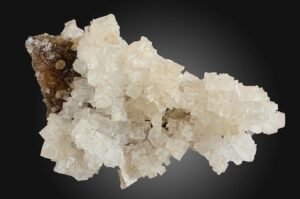
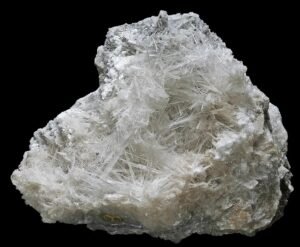
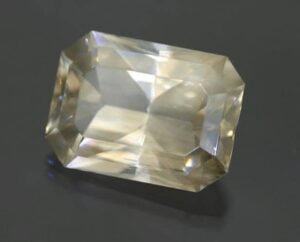
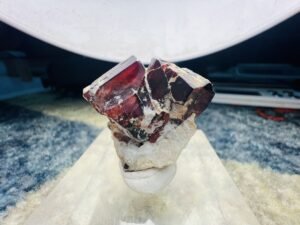
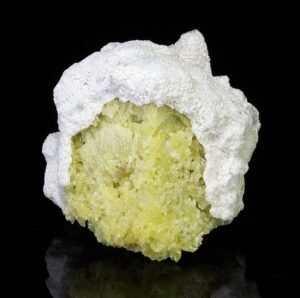
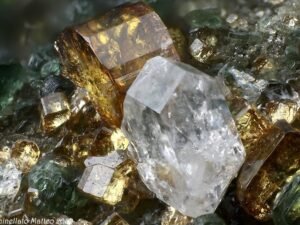
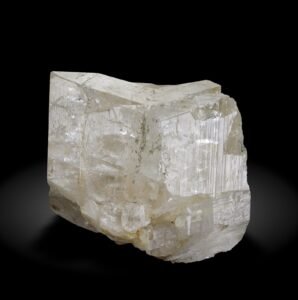
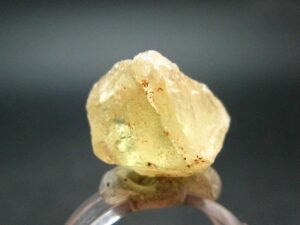
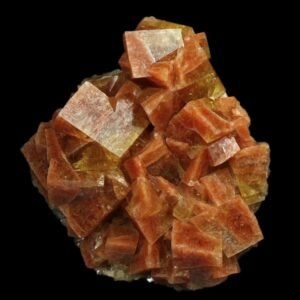
Chabazite stands out as a fascinating zeolite mineral, revered by geologists and industrial engineers alike for its distinctive rhombohedral crystal form and its exceptional, high-capacity ion-exchange properties. As a cornerstone member of the zeolite group, it belongs to a specialized family of hydrated aluminosilicate minerals typically birthed in the high-energy environments of volcanic cavities or through the slow alteration of sedimentary ash. Its complex chemical architecture is generally represented by the formula (Ca,Na₂,K₂,Mg)Al₂Si₄O₁₂·6H₂O ,a variable composition that highlights its ability to host different dominant cations depending on its specific geological “birthplace.” Beyond its chemical utility, the mineral carries a rich historical pedigree; it was first identified in the late 18th century and subsequently named by the legendary French mineralogist René Just Haüy, whose work laid the very foundations of modern crystallography. The name “chabazite” itself echoes ancient origins, derived from the Greek word chabazios (meaning “easy to break”), a direct nod to the mineral’s perfect rhombohedral cleavage that allows it to fracture into neat, geometric shards. Today, this “easy to break” stone is a high-tech hero, utilized as a sophisticated molecular sieve to filter gas streams and remediate environmental toxins, proving that its value has only grown since its discovery over two centuries ago. At its structural core, chabazite is a sophisticated hydrated calcium sodium aluminum silicate, though its chemical identity is famously fluid; depending on its geological environment, cations such as potassium and magnesium frequently substitute into its framework. This mineral belongs to the tectosilicate group, characterized by a robust three-dimensional lattice of interconnected SiO₄ and AlO₄ tetrahedra. These tetrahedral units are linked by shared oxygen atoms to form an intricate, cage-like framework known specifically as the “chabazite-type” (CHA) structure. This internal geometry is defined by large, open cavities connected by narrow eight-membered ring windows, effectively creating a natural molecular sieve. This high-porosity architecture grants chabazite its most remarkable functional capabilities: the ability to absorb and release water molecules reversibly without collapsing (dehydration and rehydration), the capacity for selective cation exchange to “swap” ions with its surroundings, and the power to trap specific gases and microscopic molecules within its molecular cages. It is this unique combination of chemical flexibility and structural stability—represented by the general formula (Ca,Na₂,K₂,Mg)Al₂Si₄O₁₂·6H₂O—that elevates chabazite from a mere geological curiosity to a critical asset in industrial catalysis, carbon capture, and environmental filtration. Visual Appearance and Identification of Chabazite In the field, chabazite is most recognized for its elegant and often symmetrical visual presentation. While it is naturally colorless or white in its purest form, the presence of trace impurities or specific dominant cations can shift its palette toward delicate shades of pink, salmon-orange, pale yellow, or even brownish-red. These crystals typically exhibit a vitreous (glassy) luster and vary from transparent to translucent, often catching the light in a way that highlights their sharp geometric edges. Identifying chabazite requires a keen eye for its specific physical properties, which distinguish it from other members of the zeolite family: Does Chabazite Make a Good Jewelry Stone? While chabazite can exhibit a range of pale yet undeniably attractive colors—from delicate salmon pinks to soft, translucent yellows—it is rarely considered a viable candidate for mainstream jewelry. The primary obstacle lies in its physical vulnerability; with a Mohs hardness rating of only 4 to 5, the stone is far too soft to withstand the daily abrasions and impacts associated with rings or bracelets. Furthermore, chabazite is seldom found in a “clean” or “eye-clean” condition. Its complex, cage-like internal framework naturally leans toward translucency rather than the high-grade transparency required for traditional faceting.Because these crystals are almost never entirely transparent, lapidaries and faceters find them incredibly challenging to work with. Often, a gem cutter can only salvage a single small corner of a pinkish or colorless crystal to produce a finished gem. Consequently, you are far more likely to encounter chabazite in a dedicated mineral cabinet than in a jewelry collection. Even prestigious museum galleries that specialize in rare or “exotic” gemstones seldom possess faceted chabazite specimens, making a cut stone a true holy grail for niche collectors. Major Localities and Geological Occurrences Chabazite is widely distributed across the globe, typically found lining the cavities and vesicles of volcanic rocks like basalt and phonolite, or occurring within altered tuff and sedimentary deposits. These diverse environments result in varying chemical compositions and crystal habits depending on the region’s specific geochemistry. Notable localities for world-class chabazite specimens include: Although faceting chabazite isn’t too difficult, it’s too soft for jewelry. However, only a handful of cut chabazites may exist because facetable material is extremely scarce.

Sillimanit

Was ist Sillimanit? Ein umfassender Leitfaden zu diesem hochtemperaturmetamorphen Edelstein

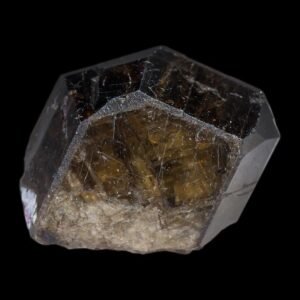
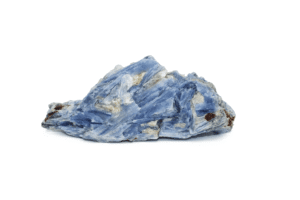
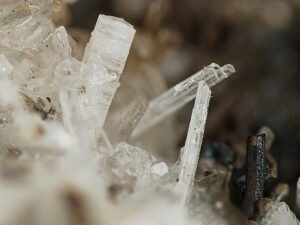
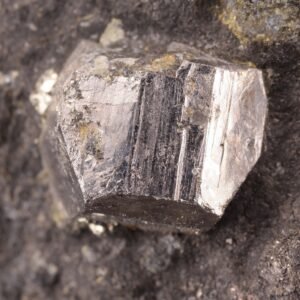
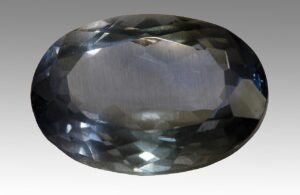
Sillimanite is a distinguished anhydrous aluminum silicate mineral with the chemical formula Al₂SiO₅, representing the high-temperature, moderate-pressure endmember of the diagnostic polymorphic triad that includes Kyanite and Andalusite. While these three species are chemically identical, their distinct crystal structures—Sillimanite being orthorhombic—serve as a critical “geological speedometer” and thermometer for petrologists; the presence of sillimanite specifically indicates that a rock has undergone high-grade metamorphism, often exceeding temperatures of 600°C. Found predominantly within pelitic schists and gneisses, this mineral is prized for its exceptional refractory properties, maintaining structural integrity under extreme thermal stress, which makes it indispensable for high-tension industrial ceramics and furnace linings. Beyond its industrial utility, sillimanite holds a prestigious niche in the gemological market; while faceted transparent crystals are exceedingly rare, its fibrous variety, often termed “fibrolite,” is celebrated for its remarkable chatoyancy. When cut into cabochons, these specimens exhibit a sharp, silky “cat’s eye” effect that rivals more famous gemstones, offering a unique blend of geological significance and understated aesthetic elegance that appeals deeply to mineralogists and elite collectors alike. Is Sillimanite a Gemstone? While sillimanite technically qualifies as a gemstone, its presence in the commercial jewelry market is constrained by a unique set of mineralogical challenges. Unlike the ubiquitous quartz or the robust sapphire, sillimanite suffers from a scarcity of large, inclusion-free crystals suitable for high-end faceting. Furthermore, its moderate hardness (approximately 6.5 to 7.5 on the Mohs scale) and perfect basal cleavage make it susceptible to fracturing during the delicate cutting process, requiring an expert hand to navigate its structural fragility. Despite these hurdles, sillimanite is highly coveted by “connoisseur” collectors for its distinct optical phenomena. When the mineral occurs in its transparent crystalline form, it can be faceted into stones with a vitreous luster and sophisticated hues of pale green, yellow, or violet-blue. However, it is the fibrous variety, historically known as “fibrolite,” that truly captivates the niche market. When these dense, parallel fibers are expertly cut into cabochons, they produce a striking chatoyancy, or “cat’s eye” effect, characterized by a sharp, silky band of light dancing across the surface. Ultimately, sillimanite remains a “geologist’s gem”—valued more for its role as a high-temperature metamorphic indicator and its rare optical signatures than for mass-market consumption. The chromatic and optical profile of sillimanite is a masterclass in trace-element chemistry and structural alignment. While chemically pure sillimanite is colorless, it acts as a versatile host for transition metal impurities—most notably iron, titanium, and occasionally chromium—which imbue the mineral with a sophisticated palette. These range from subtle, watery pastels and sun-drenched yellows to deep olive greens and rare, sought-after violet-blues that can mimic the appearance of fine sapphire. Major Sources of Sillimanite Sillimanite occurs worldwide, especially in regions with high-grade metamorphic rocks. Notable sources include: Sri Lanka, in particular, has produced gem-quality sillimanite suitable for faceting. Industrial Uses of Sillimanite Beyond its niche in the world of gemology, sillimanite is a formidable industrial powerhouse, prized for its exceptional refractory properties and chemical resilience. Its utility is primarily driven by a high aluminum-to-silica ratio and a crystal structure that remains remarkably stable under extreme thermal stress. Unlike many other minerals that expand or fracture when subjected to intense heat, sillimanite maintains its structural integrity and resists the corrosive effects of molten glass and acidic slags, making it an essential component in heavy manufacturing. The true industrial “magic” of sillimanite occurs during high-temperature processing. When heated to temperatures exceeding approximately 1550°C, sillimanite undergoes a critical phase transformation known as mullitization. During this process, it decomposes into mullite (3Al₂O₃ · 2SiO₂) and a liquid silica phase. Mullite is a rare needle-like mineral in nature but a “super-material” in industry, valued for its low thermal expansion, high creep resistance, and superb mechanical strength at elevated temperatures. Consequently, sillimanite is the primary raw material for several high-performance applications:

Bustamit

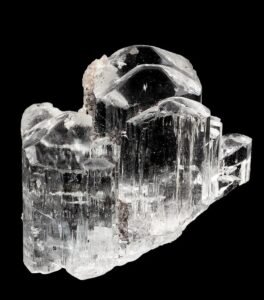
Bustamit: Ein umfassender Leitfaden zu diesem seltenen rosa Mangan-Silikat-Edelstein

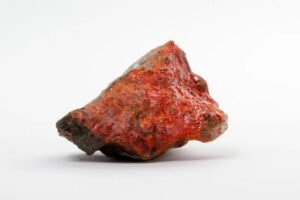
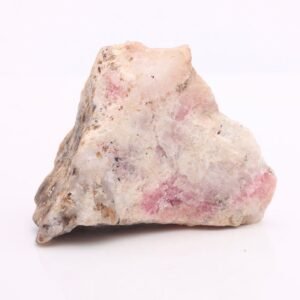
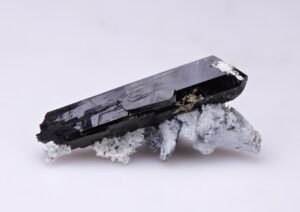
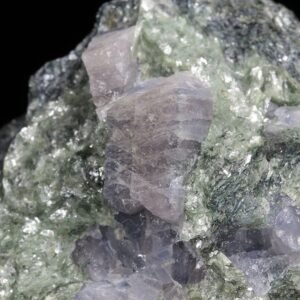
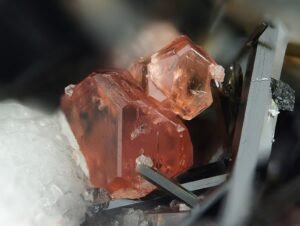
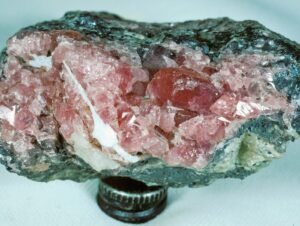
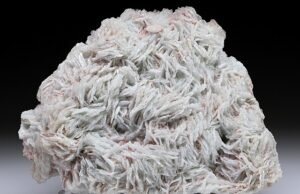
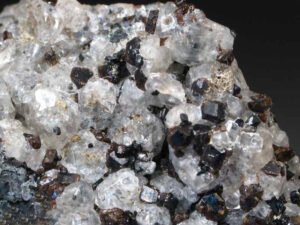
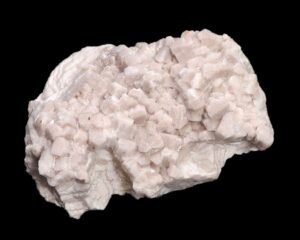
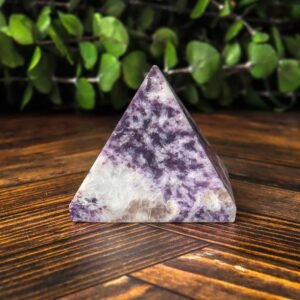
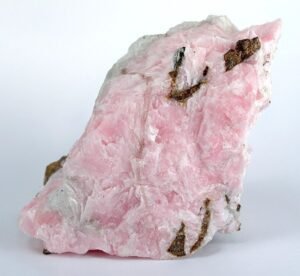
Bustamite is a rare manganese silicate mineral known for its attractive pink to reddish coloration and complex crystal chemistry. Although it is not widely used in mainstream jewelry, bustamite holds strong appeal among mineral collectors and gem enthusiasts due to its vibrant color, geological rarity, and association with famous mineral localities around the world. What Is Bustamite? A rare and captivating manganese inosilicate, Bustamite is defined by the chemical formula (Mn,Ca)₃Si₃O₉ and belongs to the pyroxenoid group of chain silicates—a structural family closely related to pyroxenes but distinguished by its unique atomic arrangements. Formally described in 1822 and named in honor of former Mexican President Anastasio Bustamante, this mineral was first identified in Mexico but has since been discovered in various manganese-rich metamorphic environments worldwide. Mineralogically, it is a near-twin to rhodonite; their similarities in composition and triclinic crystal structure often make them indistinguishable without rigorous laboratory testing. Unlike common gemstones like quartz which consist primarily of silicon dioxide, Bustamite’s identity is forged by its substantial manganese content, which acts as a natural pigment to produce a stunning spectrum of soft pinks, rose-reds, and occasionally deep orange-brown tones. It typically forms in metamorphosed manganese deposits where limestone or other calcium-rich rocks undergo contact metamorphism, allowing calcium and manganese to bond with silicate chains over vast geological timescales. While well-formed crystals are a rarity, it is frequently found in massive, granular, or fibrous aggregates. Though its moderate hardness and distinct cleavage limit its presence in mainstream jewelry, the mineral remains highly prized among collectors and lapidary enthusiasts for its aesthetic warmth and geological rarity. Is Bustamite Used in Jewelry? Pale pink and brownish red bustamites can make very attractive faceted gems. However, stones in large sizes are rare and difficult to cut. Ultimately, bustamite is a mineral far better suited for the curated displays of a gem collection than the rigors of a jewelry setting. With a moderate hardness ranging from 5.5 to 6.5 on the Mohs scale and the presence of both perfect and good cleavage planes in two directions, the stone remains highly susceptible to surface scratches and structural fracturing. These same cleavage properties pose a formidable challenge to lapidaries, as the material tends to split during the grinding process; consequently, one will seldom encounter faceted bustamite on the open market, as its delicate nature demands the protection of a collector’s case rather than the exposure of daily wear. Bustamite vs. Rhodonite: What’s the Difference? Bustamite and rhodonite are gemological twins that share a striking physical resemblance and frequently coexist within the same mineral deposits, a similarity so profound that the material originally identified as bustamite in 1826 was later revealed to be merely a mixture of rhodonite and johannsenite. Due to their challenging cleavage and moderate hardness, both minerals are notoriously difficult to facet, making them rare encounters for gemologists—though rhodonite is more frequently seen in cut form. To definitively separate these two species, practitioners rely on three primary diagnostic tests: first, a refractive index reading will show that bustamite possesses a lower range (1.662 to 1.707) compared to rhodonite’s higher values (1.711 to 1.752); second, their optical signatures differ, as bustamite is biaxial negative while rhodonite is biaxial positive; and third, bustamite exhibits a lower specific gravity (3.32 to 3.43) than the denser rhodonite (3.57 to 3.76). While not a definitive test, bustamite is also generally characterized by its paler, more delicate pink tones compared to the often bolder saturation of its counterpart. Where Is Bustamite Found? Bustamite forms in manganese-rich metamorphic deposits, especially in contact metamorphic zones and skarn environments. Because it requires specific geochemical conditions rich in manganese and calcium, its occurrences are relatively limited compared to more common silicate minerals. Below are the most important bustamite-producing localities worldwide: United States Franklin Mining DistrictThis historic mining area is one of the most famous manganese mineral localities in the world. Bustamite from Franklin is typically massive to granular and often associated with rhodonite, willemite, and other manganese minerals. Sterling Hill Mining MuseumLocated near Franklin, this site also produced bustamite as part of its complex manganese ore deposits. Mexico Bustamite was first described from Mexico and named after Anastasio Bustamante. Mexican deposits remain historically significant, although most specimens available today come from other countries. Namibia Tsumeb MineOne of the world’s most famous mineral localities, Tsumeb produced high-quality bustamite crystals. These specimens are especially valued by collectors due to their well-formed crystal structure and vibrant coloration. Japan Japan has produced fine pink bustamite crystals from metamorphosed manganese deposits. Japanese specimens are often well-crystallized and collectible. South Africa Manganese mining regions in South Africa have also yielded bustamite, typically in massive or granular form rather than large transparent crystals. The rarity of bustamite stems from its stringent chemical proportions and fragile physical structure. While it is ill-suited as a durable center stone for an engagement ring, it remains an exceptional treasure for advanced collectors who pursue unique, vibrant coloration and geological depth.

Onyx

Onyxstein: Vollständiger Leitfaden zu Eigenschaften, Varianten, Wert und Pflege

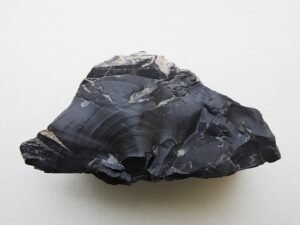
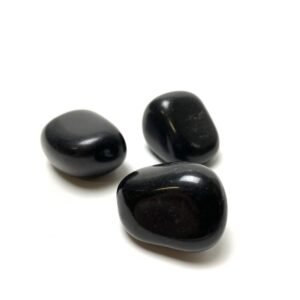
Onyx stands as one of nature’s most geometrically disciplined masterpieces. As a distinguished variety of chalcedony, it is a microcrystalline form of quartz fundamentally composed of silicon dioxide. While many gemstones are defined by their chaotic brilliance, onyx is celebrated for its orderly internal architecture; traditionally, “true” onyx is characterized by its signature parallel black and white bands. These straight, ribbon-like layers are the stone’s mineralogical fingerprint, providing a sharp visual contrast that distinguishes it from the concentric, curved swirls found in its close relative, agate. Formed over aeons within the gas cavities of volcanic rock, these bands are the result of rhythmic silica deposits, where subtle shifts in mineral impurities during the crystallization process “paint” the distinct color transitions. This unique structural layering has made onyx the premier canvas for lapidary artists throughout history, particularly in the creation of cameos and intaglios, where carvers utilize the contrasting depths to bring three-dimensional figures to life. Whether in its natural banded state or its modern, sleek solid-black finish, onyx remains a symbol of grounded elegance and architectural precision in the gemstone world. Is Onyx a Type of Agate? Clarifying the Relationship Onyx and agate are siblings in the mineral world, both belonging to the chalcedony family, which is a microcrystalline form of quartz composed of silicon dioxide . While they share the same chemical DNA and a dense, waxy texture, they are distinguished by their internal architecture. The fundamental difference lies in the geometry of their banding: Onyx: Characterized by straight, parallel bands that resemble neatly stacked ribbons. Agate: Known for curved, concentric, or irregular bands that often follow the rounded contours of the volcanic cavities where they formed. Technically, both gemstones are varieties of banded chalcedony. However, in the precise language of gemology, onyx is not a sub-type of agate. They are best described as closely related cousins. The straight-layered nature of onyx is what historically made it the premier choice for cameo carving, as it allowed artists to cut a figure on one flat color layer against a contrasting background layer. Onyx Varieties: Exploring Different Types True Onyx: The Classic Black and White Stone True onyx traditionally refers to the most iconic form of the gemstone, featuring strongly defined, parallel black and white bands. This stark contrast made it the premier material for ancient glyptography, specifically for carving cameos and intaglios. By skillfully navigating the flat layers, artisans could carve a white figure in high relief against a deep black background. Its alternative name, Arabic onyx, reflects its historical trade routes and the high-quality specimens found in the Arabian Peninsula. Sardonyx: The Colorful Variety Sardonyx is a vibrant variation that features reddish-brown layers, known as sard, combined with crisp white bands. This material was highly valued in ancient Rome, where it was the preferred stone for seals and engraved signet rings because hot wax would not stick to its smooth surface. Beyond its functional use, sardonyx is historically associated with July birthstone traditions and was often carried by Roman soldiers as an amulet of courage. Nicolo Onyx: The Blue-Appearing Variation Nicolo onyx is a specialized variety consisting of a very thin black or dark brown upper layer over a lighter, often grey or white base. When the top layer is cut extremely thin, it creates a visual phenomenon where the stone appears bluish due to the transmission of light through the layers. This subtle, smoky blue effect was especially popular in antique cameo carvings during the Renaissance and Victorian eras, as it added a soft, ethereal quality to the finished piece. Black Onyx: The Most Popular Form Solid black onyx is the most commercially significant variety in the modern gemstone market. While naturally occurring jet-black chalcedony is rare, most stones available today achieve their uniform, midnight-black color through a permanent dyeing process that has been practiced since Roman times. This treatment enhances the stone’s natural porosity to create a sleek, consistent appearance. Its affordability and deep, reflective luster make it a staple in contemporary jewelry design. Where Are Onyx Stones Found? Onyx Misnomers: Avoiding Common Confusion Mexican Onyx – Actually Banded Calcite, Not Quartz Mexican onyx is one of the most frequent misnomers found in the decor and interior design industry. Despite its name, this material is actually a form of banded calcite or aragonite. Unlike the silica-based true onyx, which has a hardness of 7 on the Mohs scale, Mexican onyx is composed of calcium carbonate and is much softer, typically ranking around 3. It is often used for carved bowls, lamps, and decorative bookends because it is easier to shape, but it lacks the durability and quartz structure of authentic onyx. Marble Onyx – Decorative Stone, Not Chalcedony Marble onyx is another term used to describe a variety of banded, translucent limestone. While it is prized as a luxury building material for countertops and wall cladding due to its stunning visual layers, it is not chalcedony. From a geological perspective, marble onyx is a sedimentary rock formed from the drip-stone deposits in caves or around cold springs. It is chemically identical to marble and calcite, making it reactive to acids and prone to scratching, which stands in stark contrast to the acid-resistant and hardy nature of true quartz onyx. Obsidian – Volcanic Glass, Not Onyx Because of its deep, uniform black color, obsidian is occasionally confused with or sold as black onyx. However, obsidian is a naturally occurring volcanic glass formed by the rapid cooling of silica-rich lava. Because it cools so quickly, it lacks a crystalline structure entirely, whereas onyx is microcrystalline. Obsidian is also more brittle and exhibits a conchoidal (shell-like) fracture pattern, which differs from the way onyx breaks. The Essential Distinction: True Onyx Is Always a Quartz Variety To avoid confusion, it is important to remember that true onyx is strictly a member of the chalcedony family. Its defining characteristics are its silicon dioxide composition and its specific microcrystalline growth. If a stone can be scratched by a steel knife or reacts

Zerstörende Edelsteintests

Zerstörende Edelsteintests: Streifentests verstehen

Streak testing is one of the oldest and most reliable techniques used in mineral identification. It reveals the true color of a mineral in powdered form rather than its surface appearance. Although this method is widely used in geology and mineralogy, it is classified as a destructive gemstone test and is rarely performed on finished gemstones because it can scratch or permanently damage their surfaces. In mineral identification, streak often provides more consistent diagnostic information than visible color. Surface color can vary due to impurities, oxidation, lighting, or crystal structure. However, when a mineral is reduced to powder, its streak color more directly reflects its chemical composition. How the Streak Test Works Streak testing is performed using an unglazed porcelain plate known as a streak plate. The plate typically has a hardness of about 6.5 to 7 on the Mohs scale. To perform the test, a mineral specimen is firmly dragged across the plate, leaving behind a line of powdered material. If the mineral is softer than the streak plate, it will produce a visible powder trail. If it is harder than the plate, it will scratch the porcelain instead of leaving a streak. In such cases, the result is recorded as “no streak.” The key principle is simple: the streak represents the mineral’s powdered color, which is often more diagnostic than the external crystal color. Streak Color Identification Chart Gem / Crystal Mohs Hardness Chemical Formula Typical Color Streak Color Notes Quartz 7 SiO₂ Various White Most common crystal Amethyst 7 SiO₂ Purple White Iron causes color Citrine 7 SiO₂ Yellow White Often heat-treated Rose Quartz 7 SiO₂ Pink White Usually massive form Smoky Quartz 7 SiO₂ Brown White Color from radiation Garnet 6.5–7.5 (Fe,Mg,Ca,Mn)₃Al₂(SiO₄)₃ Red / Various White Rarely leaves streak Peridot 6.5–7 (Mg,Fe)₂SiO₄ Olive green White Idiochromatic Topaz 8 Al₂SiO₄(F,OH)₂ Various White Hardness 8 Aquamarine 7.5–8 Be₃Al₂Si₆O₁₈ Blue White Same species as emerald Emerald 7.5–8 Be₃Al₂Si₆O₁₈ Green White Brittle despite hardness Ruby 9 Al₂O₃ Red White Chromium trace Sapphire 9 Al₂O₃ Blue / Various White All colors except red Diamond 10 C Colorless None (too hard) Hardness 10 Opal 5.5–6.5 SiO₂·nH₂O Various White Amorphous structure Turquoise 5–6 CuAl₆(PO₄)₄(OH)₈·4H₂O Blue-green White to pale blue Porous Tanzanite 6–7 Ca₂Al₃(SiO₄)(Si₂O₇)O(OH) Violet-blue White Usually heat-treated Spinel 8 MgAl₂O₄ Various White Often confused with ruby Moonstone 6–6.5 (K,Na)AlSi₃O₈ Milky white White Feldspar group Alexandrite 8.5 BeAl₂O₄ Green to red White Color-change effect Malachite 3.5–4 Cu₂CO₃(OH)₂ Bright green Light green Soft copper carbonate Azurite 3.5–4 Cu₃(CO₃)₂(OH)₂ Deep blue Light blue Often with malachite Chrysocolla 2–4 (Cu,Al)₂H₂Si₂O₅(OH)₄·nH₂O Blue-green Pale green to blue Very soft Cuprite 3.5–4 Cu₂O Dark red Brownish-red Dense copper oxide Bornite 3 Cu₅FeS₄ Brown to iridescent purple Grayish-black Peacock ore Chalcopyrite 3.5–4 CuFeS₂ Golden yellow Greenish-black Tarnishes easily Native Copper 2.5–3 Cu Copper-red Copper-red Metallic, malleable Tenorite 3.5–4 CuO Black Black Secondary copper mineral Allochromatic and Idiochromatic Gems and Streaks When discussing streak testing in mineral identification, it’s important to understand the difference between allochromatic and idiochromatic gemstones. These two categories explain why some minerals show streak colors that differ from their surface appearance.Allochromatic gems get their color from trace impurities rather than their main chemical structure. The base mineral itself is usually colorless or white in pure form. For example, Quartz can appear purple, yellow, or smoky depending on trace elements or radiation exposure, yet its streak is white because the powdered form reflects the underlying silicon dioxide composition. Another example is Corundum. Even though ruby and sapphire varieties display intense red or blue colors due to chromium or iron impurities, the streak of corundum is white.In contrast, idiochromatic gems derive their color from essential elements within their chemical formula. The color is fundamental to the mineral’s identity. Malachite is green because copper is part of its structure, and it leaves a green streak. Azurite is blue for the same reason and leaves a pale blue streak.In general, allochromatic minerals often produce a white streak, while idiochromatic minerals are more likely to produce a colored streak consistent with their chemical composition—provided they are soft enough to leave one. Streak Testing Procedures Streak testing is performed using an unglazed porcelain plate, commonly called a streak plate. The plate typically has a hardness of about 6.5 to 7 on the Mohs scale. The standard procedure involves the following steps: If the mineral is softer than the plate, it will leave a visible streak. If it is harder, it will scratch the plate instead of producing powder. In that case, the result is recorded as “no streak.” Because this method can scratch polished surfaces, it is considered a destructive test when applied to finished gemstones. What Is the Difference Between Gemology and Mineralogy for Streak Testing? Although streak testing is fundamental in mineralogy, its role in gemology is very limited. In mineralogy, streak testing is a common and valuable identification tool. Mineralogists often work with rough, opaque specimens where slight surface abrasion does not significantly reduce value. The streak color can quickly distinguish between minerals with similar outward appearances, especially metallic minerals. In gemology, however, preservation is a priority. Gemologists typically examine faceted, polished stones that may have significant financial value. Scratching the surface of a gemstone can permanently damage its polish and reduce its market price. Therefore, gemologists rely on non-destructive techniques such as refractive index testing, magnification, spectroscopy, and specific gravity measurements instead of streak testing. In summary, streak testing remains essential in mineral science but is rarely appropriate in professional gemstone evaluation due to its destructive nature.

Dioptase

Dioptase: Der smaragdgrüne Kupfer-Edelstein von intensiver Schönheit

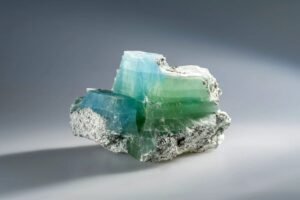
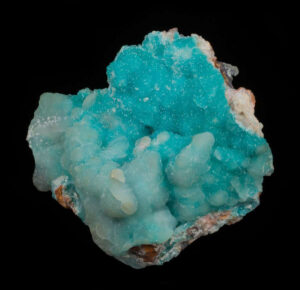
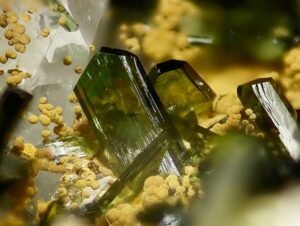
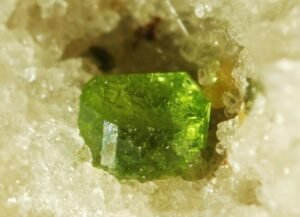
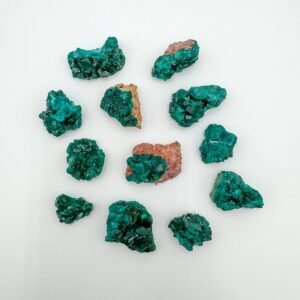
Dioptase is one of the most visually striking green gemstones in the mineral world. With its deep emerald-like color and brilliant crystal structure, it often surprises people who encounter it for the first time.Dioptase is a copper cyclosilicate mineral known for its vivid green to bluish-green color. Its intense coloration comes directly from its copper content. Chemically, it is composed of copper, silicon, oxygen, and hydrogen.Despite its emerald-like appearance, dioptase is a completely different mineral species. Its crystal system is trigonal, and it often forms transparent to translucent prismatic crystals with a glassy (vitreous) luster. Because of its moderate hardness and perfect cleavage, dioptase is considered fragile compared to traditional jewelry stones.Dioptase is most commonly found in tiny crystal formations. While larger specimens do exist, they seldom contain broad, flawless sections, which means faceted stones typically weigh no more than one or two carats. Its perfect cleavage further complicates the cutting process, making faceting especially challenging. That said, skilled lapidaries can still shape attractive, larger cabochons from translucent masses of dioptase. The Historical “Identity Crisis” For centuries, dioptase was misidentified. In the late 1700s, it was famously sent to Tsar Alexander I of Russia as “emerald” from Kazakhstan. It wasn’t until 1797 that French mineralogist René Just Haüy identified it as a distinct mineral, noting its lower hardness and higher specific gravity compared to true beryl (emerald). Dioptase is often compared to emerald because of its similar green color. However, they are very different minerals. Advanced Identification Tips The Pyroelectric Effect: One of dioptase’s most fascinating traits is that it is pyroelectric—when heated, the crystal generates an electric charge. Visual Inclusions: Under a loupe, you may see “incipient cleavages”—tiny internal flat planes that reflect light, sometimes creating rainbow-like interference colors. Streak Test: While a streak test (yielding a green-to-blue-green powder) is diagnostic, it is a destructive test and should never be performed on a finished gemstone. Dioptase vs. Lookalikes Dioptase is frequently confused with other green stones, but its unique physics give it away: Locality and Value The Tsumeb Mine in Namibia stands as the undisputed “Gold Standard” of the mineral world; specimens from this legendary site are prized for their large, saturated emerald-green crystals that pop against a stark white calcite matrix, commanding the highest premiums. In contrast, Altyn-Tyube, Kazakhstan, holds prestige as the “type locality”—the site of the mineral’s original discovery—and remains a favorite for collectors who value historical significance and classic, deep-toned crystal clusters. For those seeking aesthetic variety, Kaokoveld, Namibia, is renowned for its striking associations, often featuring dioptase crystals nestled within or perched atop clear quartz. Meanwhile, the United States (specifically Arizona) has carved out a niche in the “micromount” market; while the crystals here are rarely large, their geometric perfection and sharp terminations make them highly coveted by specialized collectors who appreciate beauty on a miniature scale. Safety and Toxicity Due to its high copper content, dioptase requires careful handling during the cutting and polishing phases, as its dust is technically toxic. Inhaling or accidentally ingesting fine dioptase particles can lead to acute health issues such as respiratory distress or vomiting, while long-term chronic exposure may result in serious liver and kidney damage. Consequently, lapidaries and faceters must take rigorous precautions, including wearing high-grade protective masks and ideally utilizing a glovebox to contain dust during the cutting, polishing, and cleaning processes. However, it is important to note that these risks are specific to the processing of the mineral; once the stone is in its finished form, either as a polished gem or a cabinet specimen, wearing or handling it poses no health hazards to the owner. Care and Maintenance As a hydrous mineral containing structural water, dioptase is exceptionally sensitive to environmental shifts, requiring meticulous care to preserve its brilliance. Owners should strictly avoid ultrasonic or steam cleaners, as the intense vibrations and thermal shock will almost certainly cause the fragile crystals to shatter. Chemical exposure is equally hazardous; dioptase is soluble in acids—meaning even common household vinegar can etch and dull its surface luster. For safe maintenance, use only lukewarm water and a very soft cloth for gentle cleaning. Furthermore, to prevent accidental scratching, always store dioptase separately from harder gemstones like topaz or diamonds, ensuring this delicate copper treasure remains pristine. Due to cleavage and possible fractures, dioptases should only be cleaned with a soft brush, mild detergent, and warm water. Consult our gemstone jewelry cleaning guide for more care recommendations.

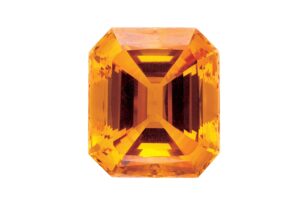
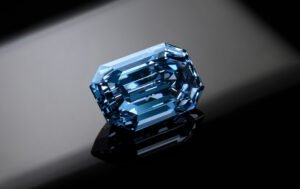
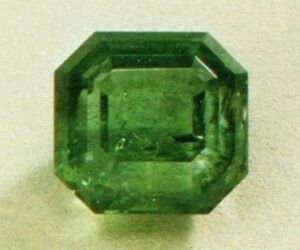
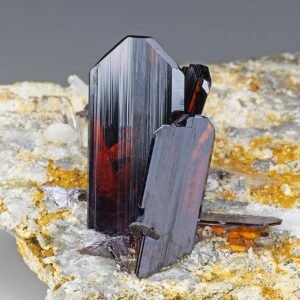
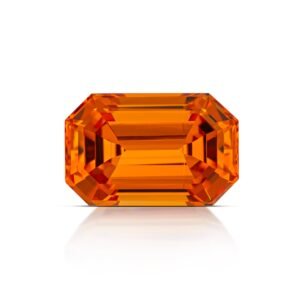
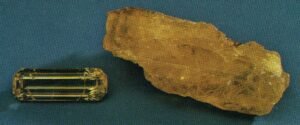
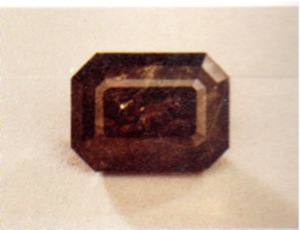
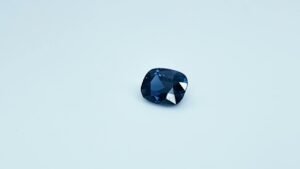
Ein smaragdgeschliffener Bismutotantalit-Edelstein aus Madagaskar mit einer tiefdunklen braunen Farbe.

Bismutotantalit Edelstein-Informationen und Übersicht

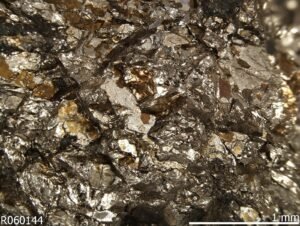
Bismutotantalite stands as an exceptionally rare and chemically complex mineral member of the stibiotantalite group, distinguished primarily by its fascinating fusion of heavy bismuth and refractory tantalum within a stable oxide framework. It is a naturally occurring inorganic compound that materializes only under highly specific and extreme geological pressures, typically during the final, volatile-rich phases of magmatic differentiation. While the mineral is technically capable of being faceted into striking collector stones by master lapidaries, it remains one of the most elusive and exotic materials encountered in the gemstone world. Its presence in any collection is usually a testament to an exhaustive search, as it is far more difficult to source than traditional precious gems, often reserved for the most comprehensive mineralogical archives and holy grail enthusiast circuits. Name and Chemical Nature The nomenclature of bismutotantalite serves as a literal chemical inventory of its primary metallic constituents, namely bismuth and tantalum. Formally represented by the chemical formula (Bi, Sb)(Ta, Nb)O4, it exists as part of a complex and continuous solid-solution series where antimony may substitute for bismuth and niobium may replace tantalum depending on the local geochemistry of the host rock. The absolute dominance of bismuth and tantalum is the defining characteristic of this specific species, resulting in a mineral that is significantly heavier and more chemically resilient than its more common relatives in the broader tantalite group. Its composition represents a rare geochemical coincidence where two heavy, rare metals find a stable structural home in the same crystal lattice, offering a unique glimpse into the elemental sorting processes of the Earth’s crust. Physical Characteristics Bismutotantalite typically manifests in a sophisticated and earthy color palette that ranges from honey-yellow and light cinnamon brown to deep, pitch-black tones. Its luster is one of its most captivating features, varying from submetallic to adamantine, which gives polished surfaces a brilliant, greasy-to-metallic sheen that catches the light with a distinctively heavy or dense appearance. Perhaps its most startling physical trait is its extreme density; with a specific gravity often exceeding 8.15, a small crystal feels unexpectedly massive in the palm of the hand, weighing nearly three times as much as a quartz crystal of equivalent volume. It possesses a Mohs hardness of approximately 5 to 5.5, which is comparable to window glass, and while large crystals are usually opaque and rugged, thin splinters or edges often reveal a surprising, warm translucency that hints at the hidden gemological potential within the raw ore. Optical Properties From an optical perspective, bismutotantalite is a powerhouse of light manipulation and refraction. It exhibits remarkably high refractive indices, typically measured at alpha = 2.388, beta = 2.403, and gamma = 2.428, which far exceed the limits of most standard gemological refractometers and even rival the optical brilliance of a diamond. Classified as biaxial positive, its internal crystalline symmetry belongs to the orthorhombic system, characterized by three mutually perpendicular axes of unequal length. This complex internal geometry results in significant birefringence and strong dispersion, meaning light is split and refracted intensely as it passes through the crystal lattice. This contributes to a visual fire and perceived depth that is rarely seen in minerals of such high metallic content, making the few transparent examples highly prized for their optical performance. Occurrence and Geological Setting This mineral is essentially a child of the granitic pegmatite, specifically those described as highly evolved or chemically zoned. These are coarse-grained igneous rocks formed during the terminal stages of magma crystallization, where the residual melt becomes highly enriched in rare elements and volatile gases that do not easily fit into the structures of common rock-forming minerals like feldspar or quartz. As the parent magma body cools and solidifies, elements like bismuth and tantalum are squeezed into these final, concentrated liquid pockets. When these rare fluids finally crystallize in vugs or veins, they allow bismutotantalite to form alongside other exotic species like tourmaline, lepidolite, and spodumene, often in high-pressure environments that facilitate the growth of rare oxide minerals. Sources and Localities The global supply of bismutotantalite is restricted to a handful of elite and historically significant geological sites. The type locality is Gamba Hill in Uganda, where the first documented specimens were identified in the late 1920s, revealing to the scientific community the existence of such a heavy bismuth-tantalum oxide. Since then, other world-class specimens have been unearthed in the Acari region of Brazil and the complex pegmatite fields of Mozambique. Rare occurrences have also been noted in the Stewart Mine in California, USA, and parts of Kazakhstan. Because these deposits are so localized and the mineral occurs in such small, sporadic quantities, there are no dedicated commercial mining operations for it; instead, it is almost exclusively recovered as a serendipitous byproduct of industrial tantalum or lithium mining. Bismutotantalite is an exceptional rarity in the world of faceted gemstones, often missing even from the most comprehensive mineral collections. While several members of the tantalite group are occasionally cut, this species remains the most elusive. Despite its alluring warm hues, its modest hardness and distinct cleavage mean it is best reserved as a protected “trophy” specimen rather than for use in jewelry.

Edelstein-Enzyklopädie

Liste aller Edelsteine von A bis Z mit ausführlichen Informationen zu jedem einzelnen

Geburtsstein

Erfahren Sie mehr über diese beliebten Edelsteine und ihre Bedeutung.

Gemeinschaft

Werden Sie Teil einer Community von Edelsteinliebhabern, um Wissen, Erfahrungen und Entdeckungen auszutauschen.