
Tugtupite is an exceptionally rare beryllium aluminum silicate mineral (chemically denoted as Na₄BeAlSi₄O₁₂Cl) that belongs to the sodalite group within the broader silicate category, sharing structural and chemical similarities with minerals like sodalite and hackmanite. Valued by mineralogists and gemstone enthusiasts alike, it is characterized by its distinct visual appearance—ranging from pale pink and vivid cherry red to occasional white or bluish tones—as well as its remarkable optical properties, including strong fluorescence under ultraviolet light and tenebrescence (the ability to reversibly change color when exposed to light or dark conditions). Unlike more abundant gem-quality minerals distributed globally, tugtupite forms only under highly specific, alkaline igneous conditions, making high-grade specimens extremely limited in nature and primarily localized to a few remote geological sites, most notably the Ilimaussaq complex in South Greenland. Due to this chemical complexity, structural relationship to helvine-group minerals, and scarce occurrence, tugtupite serves as a subject of significant interest in both advanced mineralogical research and fine gemstone collecting.
History and Discovery of Tugtupite
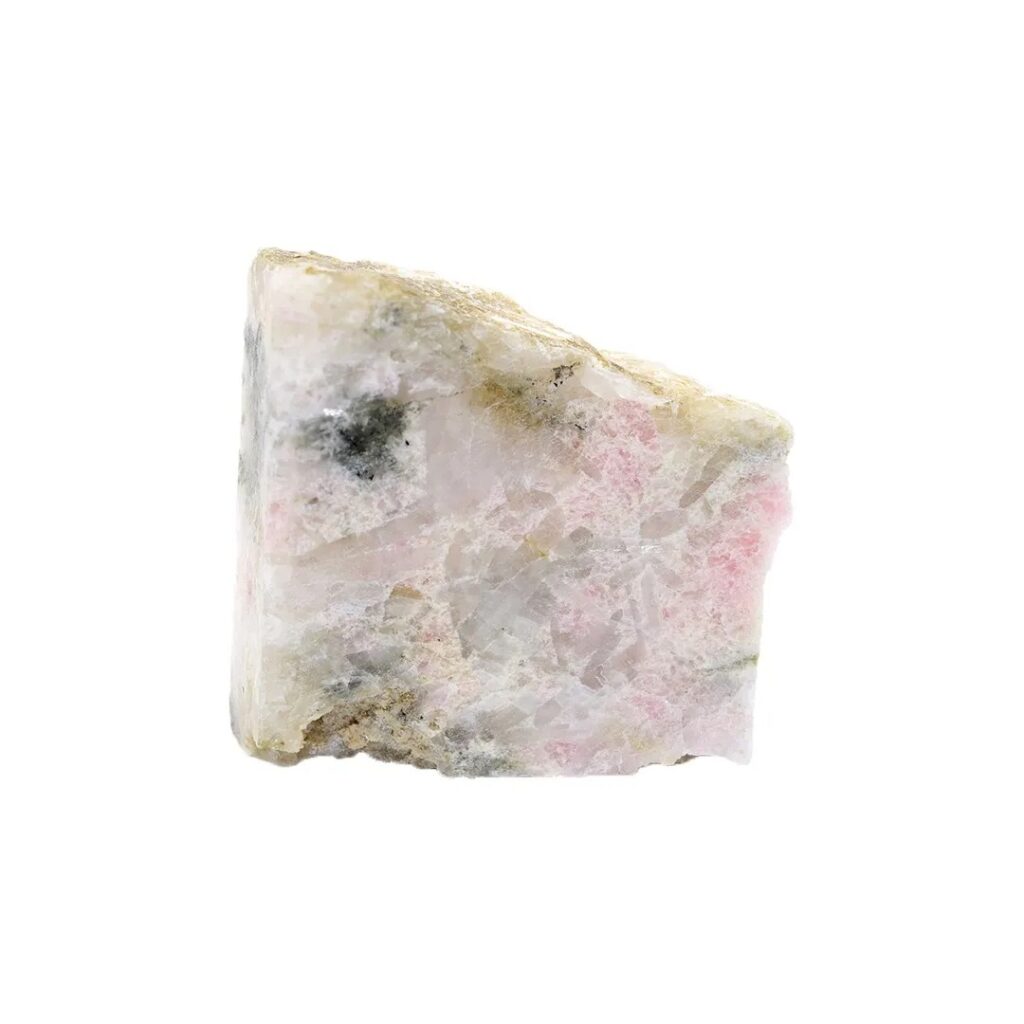
Tugtupite was first identified in 1957 at Tugtup Agtakôrfia, located within the geologically famous Ilímaussaq alkaline complex in southern Greenland, from which the mineral formally derives its name. Its formal description coincided with the mid-20th-century expansion of mineralogical research into Greenland’s unique peralkaline igneous rocks, where its local cultural resonance also took root—the name incorporates the Greenlandic word tuttu (reindeer), colloquially referring to its vivid crimson hues as “reindeer blood.” While minor occurrences have since been reported in a few other highly specialized alkaline intrusions globally, such as Russia’s Kola Peninsula and Mount Saint-Hilaire in Canada, the Ilímaussaq intrusion remains the preeminent source of gem-grade and intense-color specimens, maintaining tugtupite’s status as a highly sought-after localized rarity in international mineral collections.
Formation and Geological Occurrence of Tugtupite
Tugtupite develops under extraordinary geological conditions, forming primarily within highly alkaline igneous environments—specifically agpaitic nepheline syenite complexes and their associated hydrothermal systems. The formation process is driven by late-stage, volatile-rich hydrothermal fluids circulating through fractures and cavities in the cooling host rock; as temperature and pressure drop, rare concentrations of sodium, beryllium, aluminum, silicon, and chlorine crystallize to yield this unusual mineral. The world’s primary source remains the renowned Ilímaussaq complex in southern Greenland, where tugtupite typical occurs in late hydrothermal veins, replacement zones, and pegmatitic cavities alongside closely associated minerals such as albite, sodalite, analcime, chkalovite, and various feldspathoids. Because its crystallization demands an uncommon geochemical confluence of high alkalinity and hyper-enrichment of beryllium alongside chlorine, suitable natural environments are exceptionally scarce, explaining tugtupite’s extremely limited global occurrence.
Types and Varieties of Tugtupite
Tugtupite exhibits a complex range of color variations, physical habits, and optical behaviors influenced by its crystal structure, trace-element chemistry, and reaction to electromagnetic radiation. While not divided into distinct species in formal mineralogy, the material is generally classified by geologists and gemologists into several recognized varieties based on color profile, optical phenomena, and structural association:
Deep Crimson and Cherry Red Varieties
The deep crimson and cherry red specimens represent the most prized and iconic color variety of tugtupite. This intense pigmentation is primarily caused by color centers—specifically trapped electrons or sulfur-related radicals—within its sodalite-like framework structure. Historically referred to in local Greenlandic lore as “reindeer blood” (tuttu), this variety displays high saturation and is highly sought after for both lapidary cutting and high-end mineral collection.
Pale Pink to White Varieties
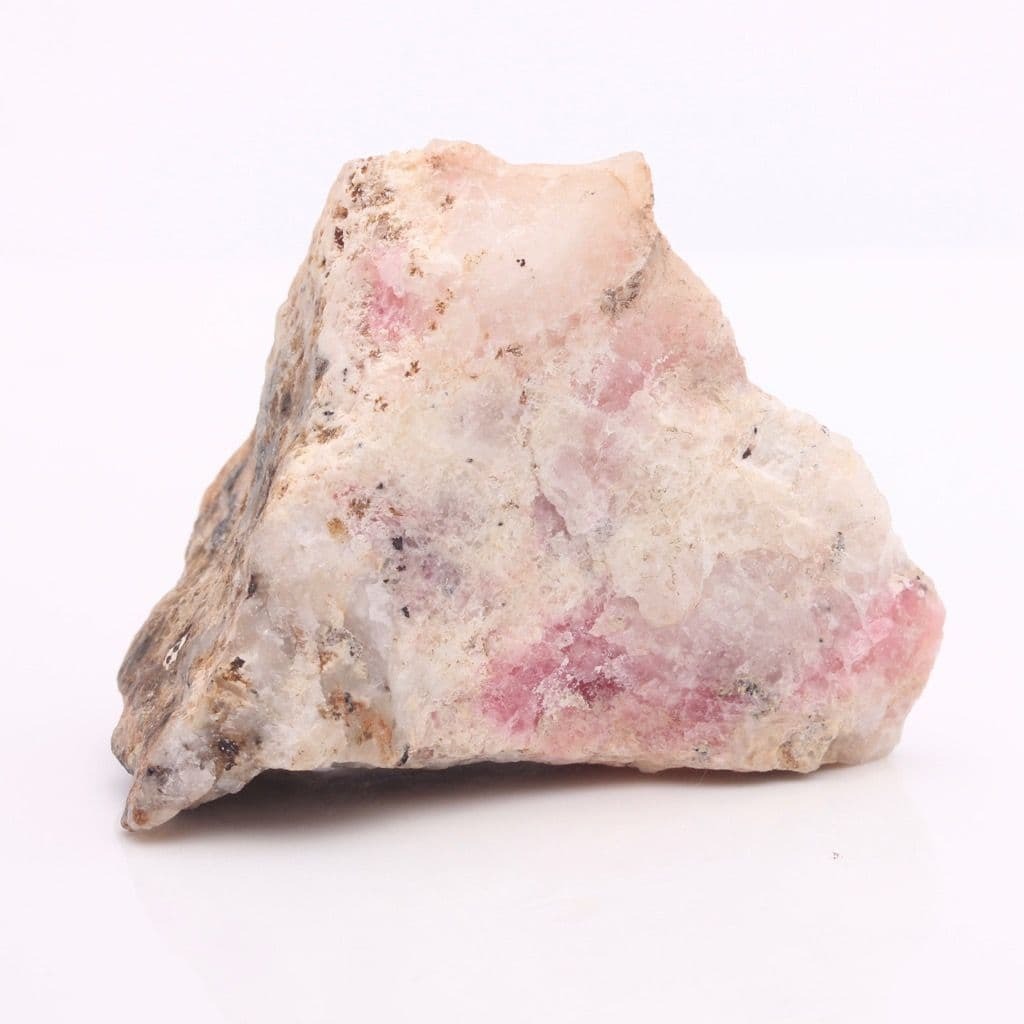
Pale pink and opaque white varieties occur when the concentration of active color centers within the crystal matrix is lower, or when specimens have remained unexposed to ultraviolet radiation for extended periods. These lighter specimens frequently serve as the ideal baseline for observing optical phenomena, as their initial pale body color provides a stark contrast when dramatic color changes are triggered by environmental energy sources.
Rare Blue and Bluish-Green Variants
Extremely uncommon in nature, bluish-green to faint blue tugtupite specimens represent a rare chromatic anomaly within the mineral group. These variations are typically attributed to minor substitutions of specific transition metal ions or unique sulfur species localized within the cage-like interstitial voids of the sodalite-group framework, differing from the standard pink-to-red chromophores.
Highly Fluorescent Specimens
Although virtually all tugtupite displays luminescent properties, certain specimens exhibit exceptionally intense fluorescence. Under shortwave ultraviolet (SWUV) radiation, these specimens emit a intense, fiery red-orange luminescence, while under longwave ultraviolet (LWUV) light, they generally produce a brilliant salmon-pink glow. This pronounced fluorescence is a key diagnostic physical property used to identify tugtupite and distinguish it from visually similar minerals like rhodonite or rhodochrosite.
Tenebrescent (Photochromic) Varieties
Tenebrescence, or reversible photochromism, is one of tugtupite’s most distinctive optical features. When exposed to shortwave ultraviolet light or direct sunlight, pale pink or white specimens undergo an internal electronic shift that rapidly intensifies their coloration to a vivid, saturated red. When placed in dark storage or exposed to mild heat, the color center returns to its ground state, causing the mineral to revert back to its lighter baseline hue.
Massive and Microcrystalline Aggregates
From a structural perspective, the vast majority of gem-grade tugtupite occurs as dense, massive, or fine-grained microcrystalline aggregates rather than well-formed Euhedral crystals. These compact, opaque to translucent vein fillings and hydrothermal cavity deposits possess sufficient toughness and structural integrity to be shaped into cabochons, carvings, and ornamental gems.
Matrix Intergrowths and Composite Forms
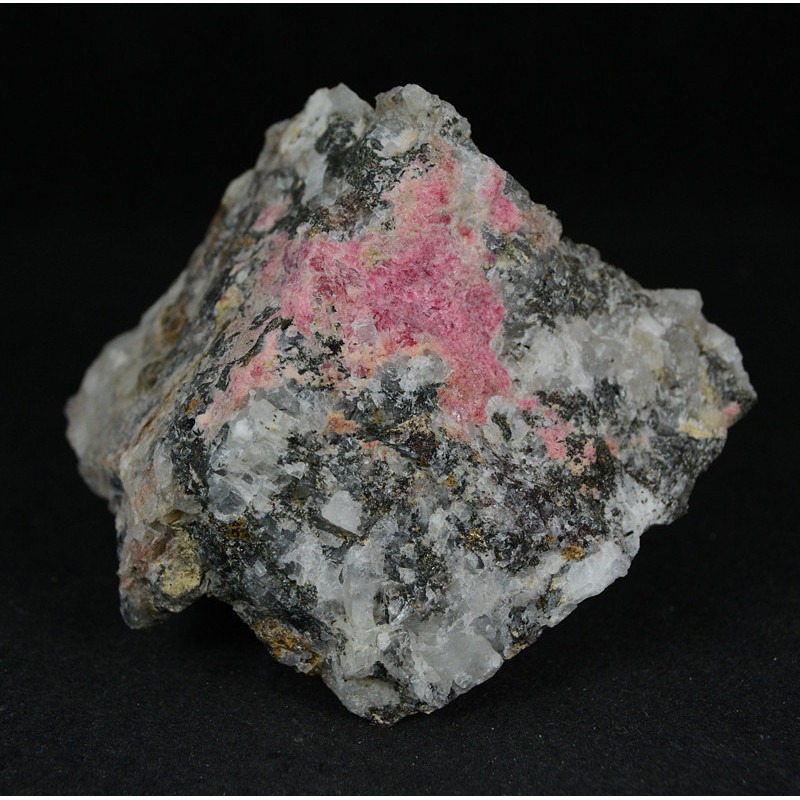
In its native geological environment, tugtupite frequently forms complex intergrowths with host and accessory minerals from the Ilímaussaq alkaline intrusion. These composite forms feature tugtupite intimately intergrown with minerals such as white albite, blue sodalite, greenish-grey analcime, and pale chkalovite. These specimens display striking multi-mineral color contrasts and provide valuable geological context regarding late-stage hydrothermal mineralization processes.
Crystal Structure and Mineral Composition
Tugtupite crystallizes within the tetragonal crystal system, characterized by a complex three-dimensional framework topology structurally closely related to that of sodalite-group minerals. Its atomic framework is constructed from interconnected silica (SiO₄) and alumina (AlO₄) tetrahedra, alongside essential beryllium units that define its distinct stoichiometry (formally formulated as Na₄BeAlSi₄O₁₂Cl). Within this open silicate network, spacious cage-like cavities host sodium cations and chlorine anions. The mandatory inclusion of beryllium within the framework is a defining mineralogical feature; because beryllium is a light element requiring highly specialized geochemical differentiation to concentrate in late-stage alkaline igneous systems, its presence strictly limits the formation of tugtupite. Furthermore, this open, cage-like crystal architecture directly accommodates minor chemical substitutions and structural lattice defects (such as trapped electron centers or sulfur-based radicals). These structural micro-features serve as the primary physical mechanisms driving tugtupite’s notable optical phenomena, including its vivid color variations, intense ultraviolet fluorescence, and reversible tenebrescence.
Physical and Optical Properties
Tugtupite displays a distinct suite of physical and optical properties that make it easily recognizable among silicate minerals. It typically possesses a Mohs hardness ranging from 4 to 6, a vitreous to greasy luster, and a relatively low specific gravity of approximately 2.30 to 2.36 g/cm³. The mineral usually forms dense, microcrystalline, or massive aggregates, as well-defined euhedral crystals are extremely rare. Structurally, it exhibits poor, uneven cleavage with a conchoidal fracture pattern. Its most distinctive physical characteristic is its remarkable optical behavior: tugtupite is intensely fluorescent, glowing a bright crimson or salmon-red under ultraviolet light, and displays reversible tenebrescence (photochromism), where its body color rapidly deepens from pale pink or white to vivid cherry red when exposed to direct sunlight or UV radiation.
Chemical Composition and Stability
Chemically classified as a sodium beryllium aluminum silicate chloride, tugtupite has the formal chemical formula Na₄BeAlSi₄O₁₂Cl. It represents a rare beryllium-bearing member of the feldspathoid/sodalite group, incorporating essential sodium, beryllium, aluminum, silicon, oxygen, and chlorine into its crystal lattice. In terms of chemical reactivity, tugtupite is relatively stable under normal atmospheric conditions, though its color centers are thermally sensitive; exposure to elevated temperatures can bleach its red pigmentation back to a lighter baseline state. Furthermore, due to its moderately low hardness and susceptibility to reaction with strong acids, gem-grade specimens require gentle handling and protection from harsh chemicals to preserve their structural integrity and optical brilliance.
Major World Localities and Geographic Distribution
Tugtupite is an exceptionally scarce mineral globally, restricted almost entirely to a small number of complex peralkaline igneous massifs. Geological occurrences are extremely localized because its formation requires a specific geochemical confluence of high alkalinity and severe enrichment in sodium, beryllium, and chlorine during late-stage magmatic-hydrothermal evolution.
Primary Source: The Ilímaussaq Complex (South Greenland)
The Ilímaussaq intrusive complex in southern Greenland is the world’s preeminent locality for tugtupite and the only known source capable of producing gem-quality material in commercial, albeit very limited, quantities. * Type Locality (Tugtup Agtakôrfia): First discovered in 1957 on the coastal cliffs along the northern shore of the Tunulliarfik Fjord. The mineral originally described from this site occurred mostly as small white-to-faintly-pink fine-grained grains intergrown with other sodalite-group minerals. * Kvanefjeld Plateau: Situated in the northwestern corner of the intrusion, Kvanefjeld represents the most famous site for gem-grade tugtupite. Hydrothermal albite veins cutting through alkali syenite at this plateau yielded the vibrant, saturated “reindeer blood” cherry-red specimens that established the stone’s gemological popularity. * Taseq Slope and Kangerluarsuk Fjord: Additional major occurrences within the intrusion include hydrothermal albite-analcime veins on the Taseq Slope—noted for fine microcrystalline masses and distinct photochromic behavior—and localities near Kangerluarsuk.
Minor Secondary Occurrences
Outside of South Greenland, tugtupite has been confirmed at only a few other isolated geologic sites worldwide, none of which yield gem-grade or large carved-quality specimens: * Lovozero Massif (Kola Peninsula, Russia): Small microcrystalline grains and thin veinlets of tugtupite occur within highly agpaitic pegmatites (such as the Shkatulka pegmatite) alongside other rare beryllium- and alkali-rich silicates. * Mont Saint-Hilaire (Quebec, Canada): Trace occurrences of tugtupite have been documented within late-stage hydrothermal cavities and pegmatites of this alkaline intrusive complex, though material from this site is predominantly of academic interest to collectors.
Applications and Uses of Tugtupite
Tugtupite’s primary applications lie in the gemological and ornamental arts, where its rarity and vivid optical properties make it a highly sought-after material. Due to its dense microcrystalline to massive habit and moderate hardness (4 to 6 on the Mohs scale), gem-quality tugtupite is fashioned into cabochons, beads, polished slabs, and decorative carvings. Lapidaries and fine jewelry designers particularly prize saturated “reindeer blood” cherry-red specimens, frequently featuring them alongside contrasting matrix minerals like white albite or blue sodalite. Because the mineral is susceptible to thermal stress and mechanical wear, finished gem pieces require careful handling and are typically set into protective custom jewelry or preserved as high-end collector cabochons. Beyond its lapidary appeal, tugtupite holds substantial value in mineral collecting, museum display, and scientific research. Premier hand specimens—especially those from historic Greenlandic sites—are centerpiece items in specialized fluorescent mineral collections due to their fiery red luminescence under ultraviolet light and remarkable reversible photochromism (tenebrescence). For geoscientists and solid-state physicists, tugtupite serves as a vital natural subject for studying electron-trapping color centers within open framework silicates, while also acting as an essential petrological indicator for extreme beryllium and sodium enrichment during late-stage hydrothermal evolution in alkaline igneous complexes.