
Topaz is a naturally occurring aluminum silicate mineral belonging to the nesosilicate group, characterized by an orthohombic crystal system, a definitive Mohs hardness rating of 8, a vitreous luster, and distinct basal cleavage. The ideal chemical formula of topaz is expressed as Al₂SiO₄(F,OH)₂, indicating a complex crystalline matrix wherein aluminum, silicon, and oxygen are bound with varying ratios of fluorine and hydroxyl groups. In its chemically pure, unblemished state, topaz is completely colorless and transparent; however, the introduction of transition metal trace elements or the presence of structural lattice defects (color centers) regularly indices a broad spectrum of natural color variations, encompassing shades of yellow, orange, blue, pink, red, brown, and green. Due to its high refractive index, significant specific gravity, and exceptional physical durability against scratching, topaz has historically served as a prominent precious gemstone in the lapidary industry and is universally recognized as the traditional birthstone for November. Beyond its extensive commercial and gemological applications, topaz functions as a critical petrological and mineralogical indicator in geological research, as it typically crystallizes under highly specific conditions within fluorine-rich environments—most notably granitic pegmatites, rhyolitic gas cavities, and high-temperature pneumatolytic or hydrothermal veins—thereby providing vital geochemical data regarding the petrogenesis and volatile evolution of highly fractionated, silica-rich igneous systems.
History and Discovery of Topaz
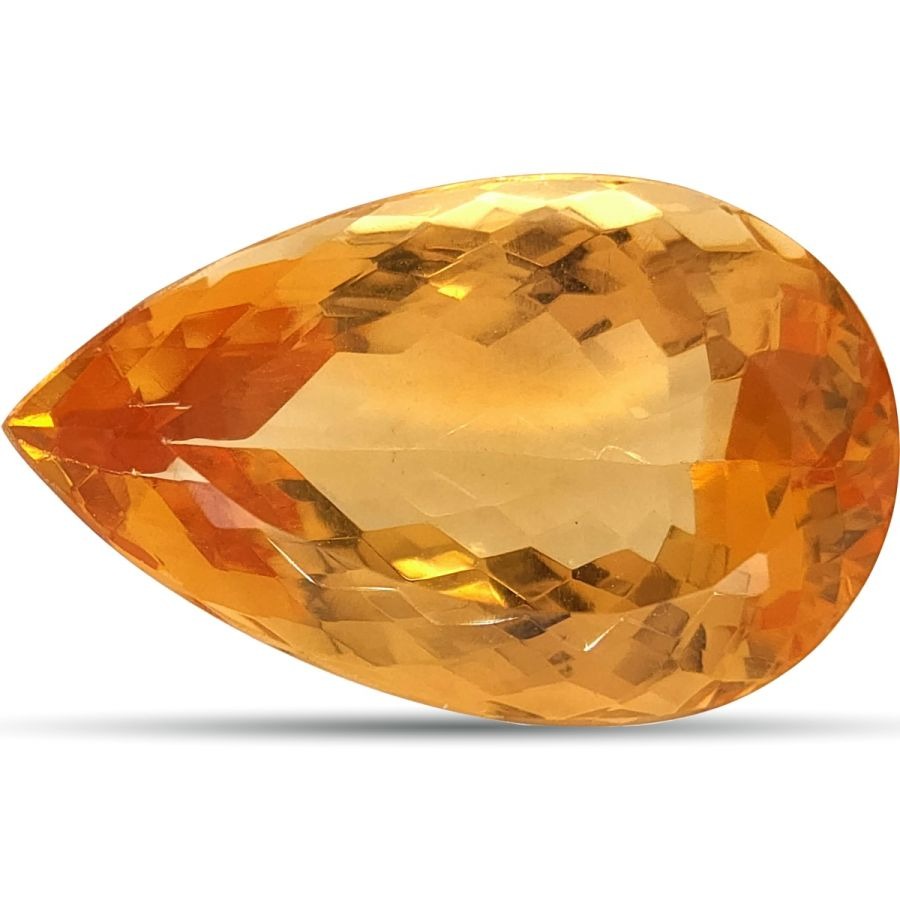
The historical narrative and discovery of topaz are intricately intertwined with the evolution of ancient gemological nomenclature and the development of modern mineralogical science. Etymologically, the term “topaz” is widely hypothesized to derive from Topazios, the ancient Greek name for Zabargad Island in the Red Sea; however, historical and gemological analyses indicate that classical writers systematically applied this designation to a broad category of yellow-green gemstones—most notably peridot (olivine)—rather than the specific aluminum silicate mineral recognized today. Prior to the advent of advanced chemical analyses and modern crystallographic identification techniques, gemstones were primarily classified by macro-properties such as color, which led to the widespread misidentification of various yellow minerals, particularly citrine quartz, under the generic umbrella of topaz. This taxonomic ambiguity was resolved during the development of systematic mineralogy, which established topaz as a distinct mineral species characterized by unique chemical compositions and crystallographic structures. The geopolitical and economic prominence of the gemstone shifted significantly during the 18th and 19th centuries following the discovery of major, high-quality primary deposits within the Ural Mountains of Russia and the pegmatite fields of Minas Gerais, Brazil. In particular, the Ouro Preto region of Brazil became renowned for producing a rare, chromium-bearing, golden-to-reddish-orange variety subsequently designated as “Imperial Topaz,” a gemstone that remains a critical historical and mineralogical benchmark for the species due to its distinct geochemical provenance and exceptional optical characteristics.
Formation and Geological Occurrence of Topaz
The petrogenesis and geological occurrence of topaz are fundamentally governed by the segregation of highly fractionated, volatile-rich silicic magmas, primarily manifests within environments characterized by an elevated concentration of fluorine. During the late-stage differentiation of granitic magmas, incompatible elements, including fluorine, aluminum, and silicon, become highly concentrated within the residual, supercritical fluid phase. As these mineralizing fluids migrate into lithostatic fractures, open cavities, and surrounding host rock exocontacts, the systematic decrease in temperature and pressure facilitates the slow crystallization of topaz over extended geological timescales. Consequently, the primary geological matrices for topaz encompass granitic pegmatites, where it paragenetically coexists with quartz, K-feldspar, muscovite, beryl, and tourmaline; lithophysae and gas cavities within extrusive rhyolitic volcanic suites formed via post-depositional vapor-phase crystallization; and high-temperature pneumatolytic to hydrothermal quartz veins. The growth of macrocrystalline, gem-quality topaz is intrinsically contingent upon precise geochemical parameters, wherein fluorine serves as a critical complexing agent that enhances the solubility and transport of aluminum and silica within hydrothermal solutions while stabilizing the resulting nesosilicate crystalline lattice. Furthermore, localized fluctuations in ambient geological conditions, post-crystallization ionizing radiation from surrounding radioactive isotopes, and the substitution of minor trace elements within the crystal structure ultimately dictate the polymorphic coloration and final morphological properties of individual specimens.
Types and Varieties of Topaz
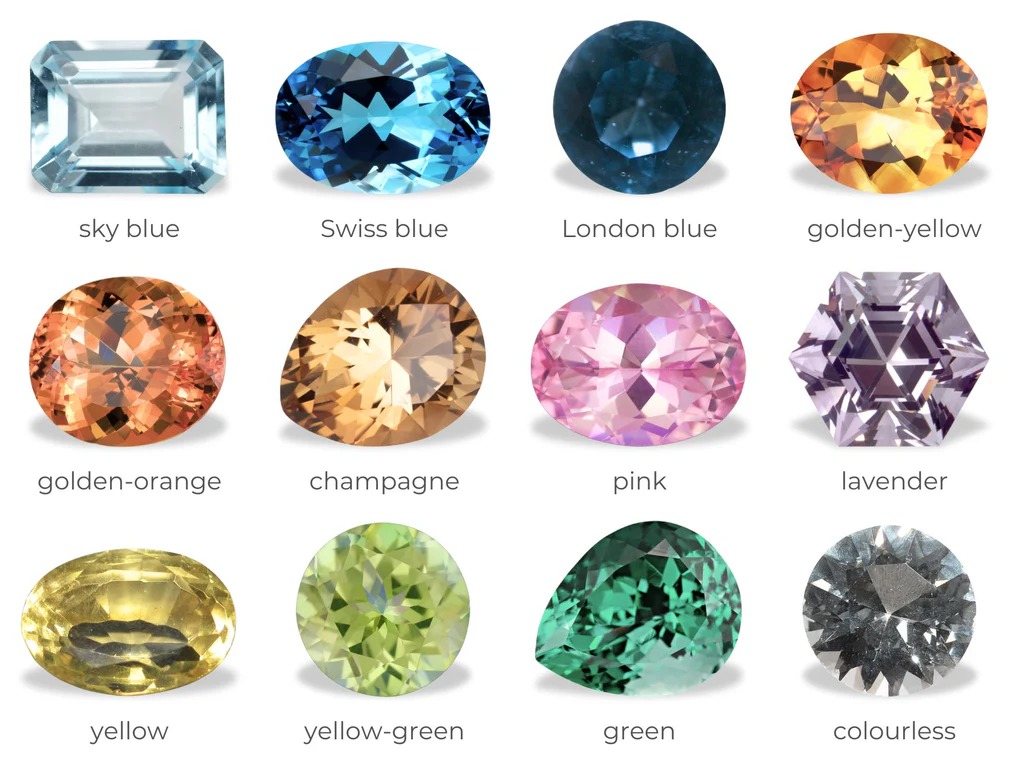
- Imperial Topaz: Widely considered the most valuable and historically significant variety, imperial topaz is characterized by its distinct golden-orange, pinkish-orange, or vibrant reddish-orange hues. The coloration is primarily attributed to the presence of trace chromium (Cr³⁺) substitutions within the crystal lattice, coupled with specific color centers.
- Sherry Topaz: Named after its visual resemblance to sherry wine, this variety exhibits a yellowish-brown to brownish-orange profile. Its color is generally derived from unstable color centers that can occasionally fade upon prolonged exposure to ultraviolet radiation.
- Blue Topaz: While naturally occurring blue topaz exists due to natural radiation, it is exceedingly rare and typically possesses a pale saturation. Consequently, the vast majority of commercial blue topaz is produced by subjecting colorless crystals to high-energy electron or gamma irradiation, followed by thermal stabilization. This process yields distinct trade grades, including:
- Sky Blue: A pale, soft blue reminiscent of an aquamarine.
- Swiss Blue: A bright, saturated, medium-to-vibrant blue.
- London Blue: A deep, dark, grayish-blue or greenish-blue hue.
- Colorless / White Topaz: The chemically pure state of the mineral, lacking any trace element impurities or structural lattice defects. Due to its high abundance and lack of inherent color, it is frequently used as a base material for irradiation treatments, physical vapor deposition (PVD) coatings, or as an affordable diamond simulant.
- Pink and Red Topaz: Exceptionally rare in nature, these varieties owe their coloration to chromium impurities. Most pink topaz available in the commercial market is produced by the controlled thermal treatment (pinking) of brownish-yellow or sherry topaz containing trace amounts of chromium.
- Mystic / Azotic Topaz: An artificial variety created through advanced gemological enhancement rather than geological processes. It is produced by applying a microscopically thin, iridescent metallic oxide layer to the pavilion facets of colorless topaz via physical vapor deposition (PVD), resulting in a multi-colored, rainbow-like optical effect.
Crystal Structure of Topaz
The crystallographic architecture of topaz is defined by the orthorhombic crystal system, belonging specifically to the dipyramidal class (2/m 2/m 2/m) within the Pbnm space group. Its internal structure comprises an atomic framework where isolated silicate tetrahedra (SiO₄) are cross-linked by aluminum cations coordinated with oxygen, fluorine, and hydroxyl ions in an octahedral geometry, yielding a stable, highly condensed three-dimensional nesosilicate matrix. This robust, covalent-ionic atomic bonding accounts for the mineral’s high density and its defining Mohs hardness of 8. Habitually, topaz manifests as elongated, euhedral prismatic crystals terminated by bipyramids, pinacoids, or domes, which frequently exhibit vertical striations parallel to the c-axis—a morphological feature highly valued in mineralogical collection. Depending on localized thermodynamic conditions, localized inclusions, and structural line defects during nucleation, individual specimens can range optically from completely transparent to translucent or opaque. Notably, a critical structural liability of this mineral is its perfect basal cleavage parallel to the {001} plane, resulting from weaker atomic bonds between the layered planes of the crystal lattice. This characteristic necessitates extreme precision during lapidary processing, faceting, and subsequent jewelry mounting, as mechanical shock or directional stress can easily propagate fractures along these crystallographic planes.
Physical and Chemical Properties of Topaz
Chemically, topaz is a highly stable, refractory aluminum silicate fluorohydroxide mineral with the formula Al₂SiO₄(F,OH)₂. It remains completely insoluble in most common laboratory acids, demonstrating susceptibility only to concentrated sulfuric acid, which decomposes its crystalline framework at elevated temperatures. The relative ratio of fluorine to hydroxyl groups within its chemical structure varies continuously based on the specific thermodynamic conditions of its geological formation, which directly influences the mineral’s fundamental physical constants. An increase in the hydroxyl (OH⁻) content relative to fluorine systematically induces an upward shift in both the refractive index—shifting from 1.606–1.629 to approximately 1.616–1.638—and the specific gravity, which ranges from 3.49 in fluorine-rich specimens to 3.57 in hydroxyl-rich varieties. Furthermore, when subjected to extreme thermal environments, topaz undergoes dehydroxylation and defluorination, eventually breaking down into mullite and silica at temperatures exceeding 800°C to 1000°C.
Optically and mechanically, topaz exhibits highly definitive properties that make it a crucial subject in both mineralogy and gemology. It is an optically biaxial positive mineral that frequently displays weak to pronounced pleochroism; this phenomenon causes the gemstone to exhibit distinct color variations or directional saturation changes when viewed along different crystallographic axes, an optical property that lapidary artists must carefully calculate prior to faceting. While its definitive Mohs hardness rating of 8 establishes it as a reference mineral for hardness and renders its surfaces exceptionally resistant to everyday abrasion and scratching, its overall tenacity remains brittle. This brittleness, coupled with its highly distinct and perfect basal cleavage parallel to the {001} pinacoid plane, yields low fracture toughness under specific angles of stress. Consequently, despite its superficial durability, the mineral is highly vulnerable to structural failure, chipping, or internal cleavage fracturing when subjected to abrupt mechanical impacts, rapid thermal shock, or unevenly distributed pressure during setting.
Difference Between Topaz and Quartz
Topaz and quartz are frequently subjected to gemological misidentification due to their overlapping color spectrums and macro-crystalline similarities. However, they represent distinct mineral species governed by fundamentally disparate chemical structures, crystallographic habits, and physical properties.
| Property | Topaz | Quartz |
|---|---|---|
| Chemical Formula | Al₂SiO₄(F,OH)₂ | SiO₂ |
| Mineral Group | Nesosilicate | Tectosilicate (Silica Group) |
| Mohs Hardness | 8 (Scratches Quartz) | 7 |
| Specific Gravity | 3.49 – 3.57 (Noticeably Heavier) | 2.66 |
| Cleavage | Perfect basal cleavage parallel to {001} | None (Conchoidal fracture) |
| Refractive Index | 1.606 – 1.638 (Biaxial +) | 1.544 – 1.553 (Uniaxial +) |
Historical Misnomenclature & Modern Gemology
Historically, prior to the advent of advanced mineralogical testing, color-based classification led to widespread commercial confusion. Citrine and yellow heating-varieties of quartz were routinely marketed under the deceptive umbrella of “Spanish Topaz” or “Gold Topaz.”
In modern gemology, standard diagnostic techniques utilized by laboratories like the GIA easily differentiate the two. Due to its superior specific gravity, a loose topaz will feel significantly heavier than a quartz of identical dimensions. Furthermore, advanced instruments such as refractometers, polariscopes, and Raman spectroscopy offer definitive, non-destructive discrimination between true nesosilicate topaz and tectosilicate quartz imitations.
Major Topaz Deposits and Locations
The global distribution of economic topaz deposits is widespread, primarily localized within geologically stable cratons and orogenic belts characterized by highly fractionated granitic pegmatites, pneumatolytic systems, and rhyolitic volcanic suites. Foremost among these localities is Brazil, specifically the Ouro Preto district within the state of Minas Gerais, which serves as the premier source of the highly coveted imperial topaz, yielding specimens with rare golden, orange, pink, and vibrant reddish hues. Historically, the Ural Mountains of Russia represent another critical locality, particularly renowned during the 19th century for producing fine pink and imperial-colored crystals within pegmatitic matrices. In South Asia, the high-alpine pegmatites of Pakistan, notably in the Gilgit-Baltistan region, are celebrated for producing sharp, well-terminated crystals of both colorless and naturally pale blue topaz, while the alluvial gravels of Sri Lanka systematically yield high-clarity waterworn pebbles utilized extensively as faceting rough. In North America, the United States hosts notable occurrences including the Thomas Range in Utah—where topaz crystallizes within rhyolitic cavities alongside red beryl—as well as the pegmatite districts of Texas and Colorado. Furthermore, the volcanic fields of San Luis Potosí, Mexico, are globally recognized for producing distinct, naturally occurring yellow, orange, and amber-brown crystals, while various secondary alluvial and primary deposits across Australia and Nigeria continue to supply the international market with substantial quantities of colorless to pale blue gemstone rough.
Applications and Uses of Topaz
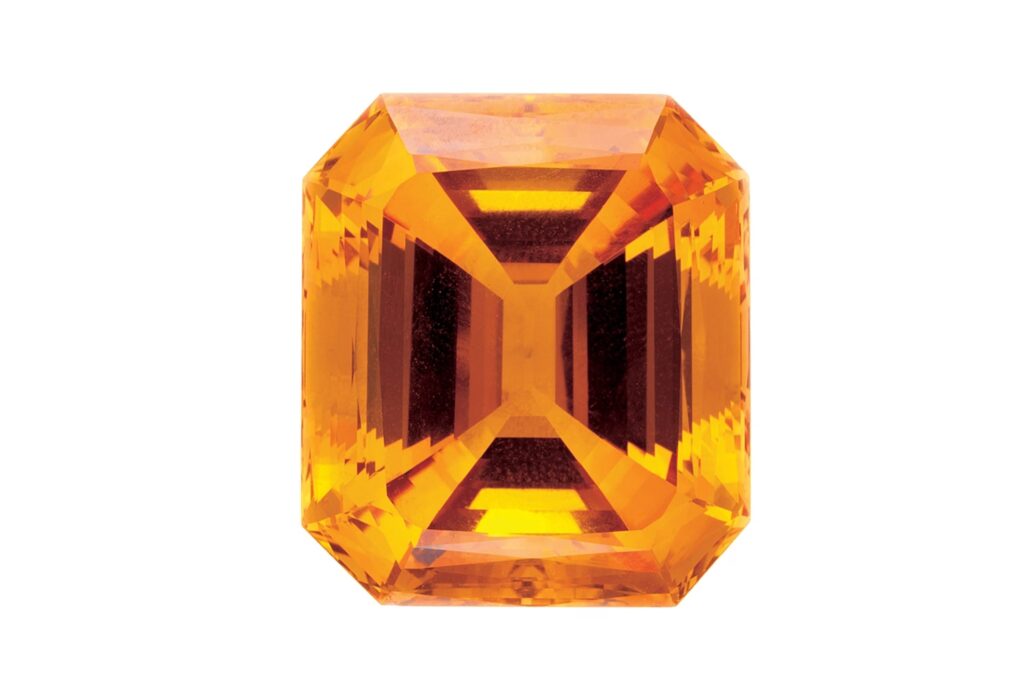
The industrial and commercial applications of topaz are predominantly bifurcated into high-end gemological integration and specialized technological utilization, dictated by the mineral’s distinct physical and optical properties. In the jewelry and lapidary industries, topaz serves as a highly resilient and versatile gemstone; its exceptional hardness (8 on the Mohs scale) and high refractive index make it ideal for faceting into intricate cuts that maximize brilliance and dispersion. Colorless topaz is extensively utilized as a primary substrate for advanced mineral engineering treatments—such as high-energy electron irradiation, gamma bombardment, and physical vapor deposition (PVD) of metallic oxides—to mass-produce highly stable blue, pink, and multi-colored gemstones for global commercial markets. Conversely, natural, untreated specimens with deep saturation, such as imperial topaz from Brazil or rare chromium-bearing pink crystals, are highly sought after as premium investment-grade assets and prized mineral specimens for institutional and private collectors.
Beyond its prominent role in the luxury sector, the robust physical durability and thermal stability of topaz lend it utility in specialized scientific and technical fields. Because of its precise chemical stability and resistance to thermal decomposition at temperatures below 800°C, high-purity topaz has historical and practical applications as a refractory material in industrial processes. In laboratory settings, its defining scratch resistance allows it to function as a standard reference mineral in scratch-hardness testing devices and specific abrasive operations. Furthermore, in geological and thermodynamic research, because the incorporation of fluorine versus hydroxyl groups within the topaz crystal lattice is highly sensitive to ambient pressures and temperatures during formation, the mineral is widely utilized as a precise geothermometer and geobarometer to reconstruct the volatile evolution and cooling histories of complex granitic and pegmatitic magma chambers.