
Tephroite is a relatively rare and fascinating silicate mineral belonging to the well-known Olivine group. Its ideal chemical formula is Mn₂SiO₄. In geology, it serves as an important “end-member” mineral in the olivine solid solution series, standing alongside the magnesium-rich Forsterite and the iron-rich Fayalite.
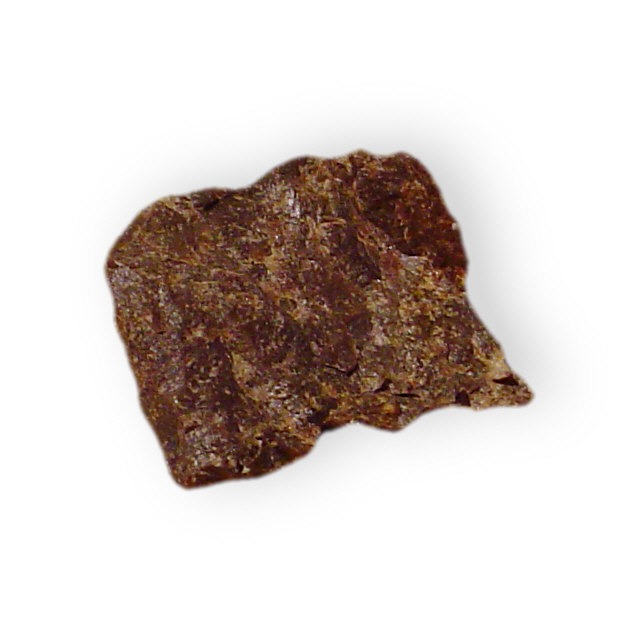
Physically, Tephroite has a Mohs hardness of about 6 and a specific gravity of around 4.1, typically exhibiting a translucent vitreous to greasy luster on its surface. Although its name implies a gray color, its actual color palette is quite diverse, ranging from olive green and bluish-green to flesh-red, grayish-brown, and even grayish-black. Due to its unique crystal structure and captivating colors, high-quality Tephroite crystals are not only crucial specimens for geologists studying mantle and crustal chemistry, but they are also highly sought-after rarities among top-tier mineral collectors worldwide.
The History of Tephroite
The discovery and naming history of Tephroite hold significant importance in the mineralogical community. This mineral was first officially recorded by science in 1823, described and named by the renowned German mineralogist Johann Friedrich August Breithaupt. Its English name “Tephroite” originates from the ancient Greek word tephros (τεφρός), meaning “ash-like” or “gray,” which vividly reflects the most typical color characteristic of the mineral when it was first unearthed.
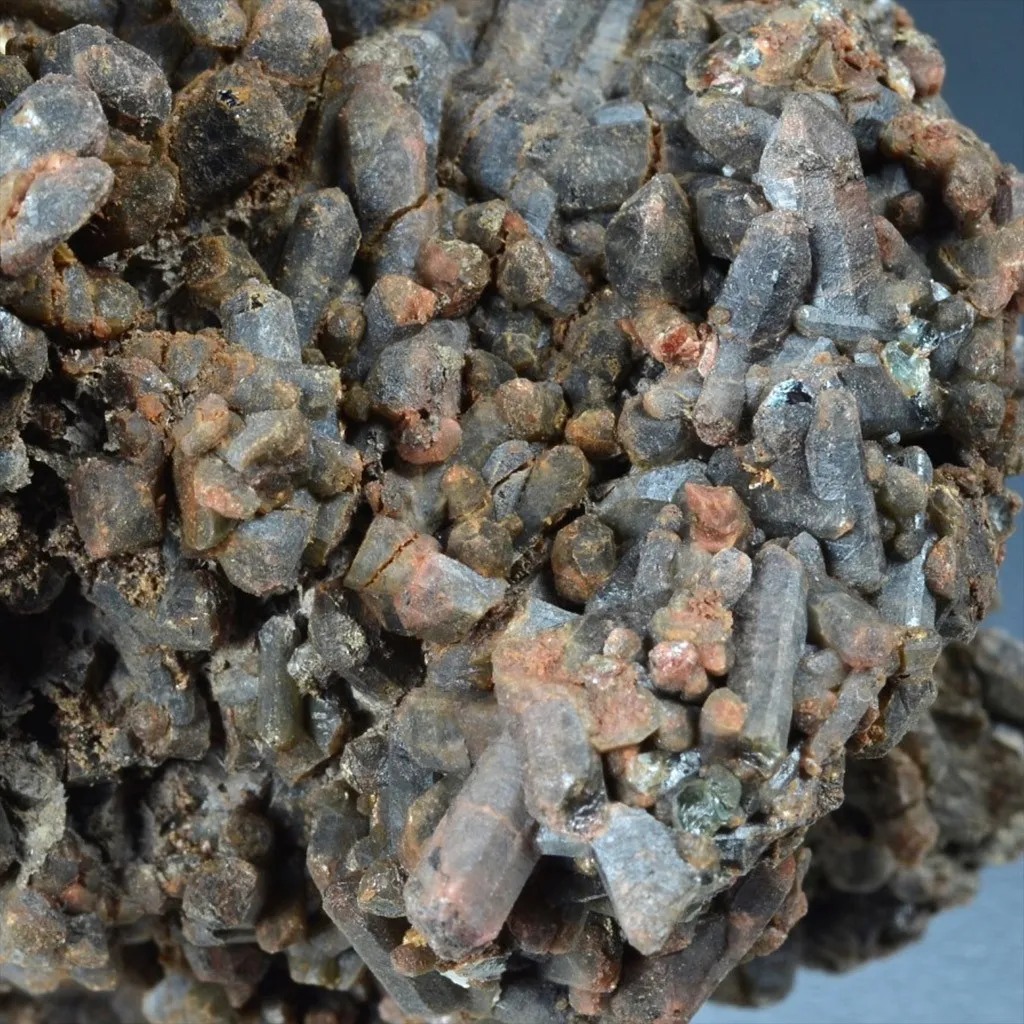
The type locality (the place where it was first discovered) for Tephroite is located in the famous Franklin and Sterling Hill mining districts in New Jersey, USA. These two areas are hailed as the “Fluorescent Mineral Capitals of the World,” renowned for their incredibly complex and rich zinc-iron-manganese orebodies. After being identified in the early 19th century, Tephroite quickly caught the attention of global mineralogists. As geological exploration advanced, scientists subsequently found traces of this mineral in the Långban mining district in Sweden, Cornwall in the UK, New South Wales in Australia, and the Kalahari Manganese Field in South Africa. This global footprint has provided humanity with valuable physical evidence to study the history of metamorphic manganese-rich deposits.
The Formation of Tephroite
The formation process of Tephroite is highly complex and heavily relies on specific high-temperature geochemical environments, which explains why it is not widely distributed in nature. From a genetic mineralogy perspective, Tephroite primarily forms in manganese-rich iron-manganese deposits and their associated skarn deposits.
Its core formation mechanism is usually closely related to metamorphism. When manganese-rich sedimentary rocks (such as manganese carbonates or oxides) deep within the Earth’s crust undergo high-temperature and high-pressure contact metamorphism or regional metamorphism, the manganese elements in these protoliths react intensely with surrounding silicon dioxide (SiO₂) to recrystallize and form Tephroite. Additionally, in some zones rich in hydrothermal activity, late-stage hydrothermal fluid alteration can also promote its generation.
In these harsh geological environments, Tephroite rarely “lives alone.” It is typically closely associated with a series of extremely complex manganese, iron, and zinc minerals, such as:
- ◆ Zincite
- ◆ Willemite
- ◆ Franklinite
- ◆ Rhodonite
- ◆ Manganocalcite
This unique mineral paragenesis (association) is not only highly ornamental but is also used by geologists as natural “geothermometers” and “geobarometers.” By studying these formations, scientists can reconstruct the complex material exchange and metamorphic history that occurred between magmatic intrusions and manganese-rich host rocks millions of years ago.
Types and Varieties of Tephroite: The Olivine Solid Solution Series
In mineralogy, pure end-member Tephroite (Mn₂SiO₄) is relatively rare in nature. Because manganese ions (Mn²⁺) share a similar ionic radius and charge with magnesium (Mg²⁺) and iron (Fe²⁺), these elements easily substitute for one another within the crystal lattice. This creates a continuous solid solution series, resulting in several distinct intermediate varieties and chemical types of Tephroite:
- Picrotephroite (Magnesium-rich Tephroite): When magnesium substitutes for a significant portion of the manganese, the mineral is known as Picrotephroite. This variety bridges the gap between Tephroite and Forsterite (Mg₂SiO₄). It is commonly lighter in color, often showing pale green or grayish-white hues, and typically forms in environments where manganese-rich deposits interact with dolomitic limestones.
- Ferrotephroite (Iron-rich Tephroite): Ferrotephroite represents the intermediate state between Tephroite and Fayalite (Fe₂SiO₄). The inclusion of iron typically darkens the mineral, shifting its color toward deep brownish-black or dark gray. It is frequently found in metamorphic iron-manganese orebodies where both elements are abundant.
- Zinc-Bearing Tephroite (Roepperite): A highly famous and localized variety found almost exclusively in the Franklin and Sterling Hill mining districts of New Jersey is Roepperite. In this specific variety, iron and zinc (Zn²⁺) replace a notable amount of the manganese. It is structurally unique and serves as a classic textbook example of how highly localized, zinc-rich geochemical environments can alter standard mineral compositions.
Applications and Uses of Tephroite
While Tephroite is not a major industrial commodity mined in mass quantities like iron or copper, it holds immense value in academic research, premium collecting, and geological exploration. Its foremost application is as a natural geothermometer and geobarometer in scientific studies. Because its formation requires highly specific high-temperature and high-pressure conditions, geologists analyze the exact ratios of manganese, iron, and magnesium within its crystal lattice to calculate the precise environmental conditions of metamorphic rocks and skarn deposits from millions of years ago. Additionally, in mining exploration, the presence of Tephroite serves as an excellent indicator mineral, helping geologists map ancient hydrothermal pathways and pinpoint the locations of high-grade, economically viable manganese, iron, and zinc orebodies.
Beyond fieldwork and laboratory analysis, Tephroite finds a prominent role in the mineral market and heavy industrial research. High-quality crystals, particularly those from historic and closed localities like Franklin, New Jersey, or Långban, Sweden, are highly prized collector’s items, with exceptionally translucent specimens occasionally being faceted into rare exotic gemstones for specialized connoisseurs. At the same time, metallurgical engineers study the mineral’s characteristics to better understand industrial slag. Since synthetic manganese silicates structurally identical to Tephroite often form during the smelting of manganese-rich iron ores, understanding its melting behavior and viscosity yields vital insights for optimizing blast furnace efficiency in steel and ferroalloy production.