
Sarcolite is a rare anhydrous calcium sodium aluminum tectosilicate mineral with the ideal chemical formula NaCa₈Al₄Si₈O₃₀. It belongs to the feldspathoid group of silicate minerals and crystallizes in the tetragonal crystal system. The mineral is composed primarily of calcium, sodium, aluminum, silicon, and oxygen, although minor chemical substitutions may occur in natural specimens. Sarcolite is typically found in calcium-rich contact metamorphic rocks and skarn deposits, where it forms under high-temperature conditions through reactions between carbonate rocks and magmatic fluids. Because the mineral forms under relatively specific geological conditions, it has a limited natural distribution compared with many common rock-forming silicates.
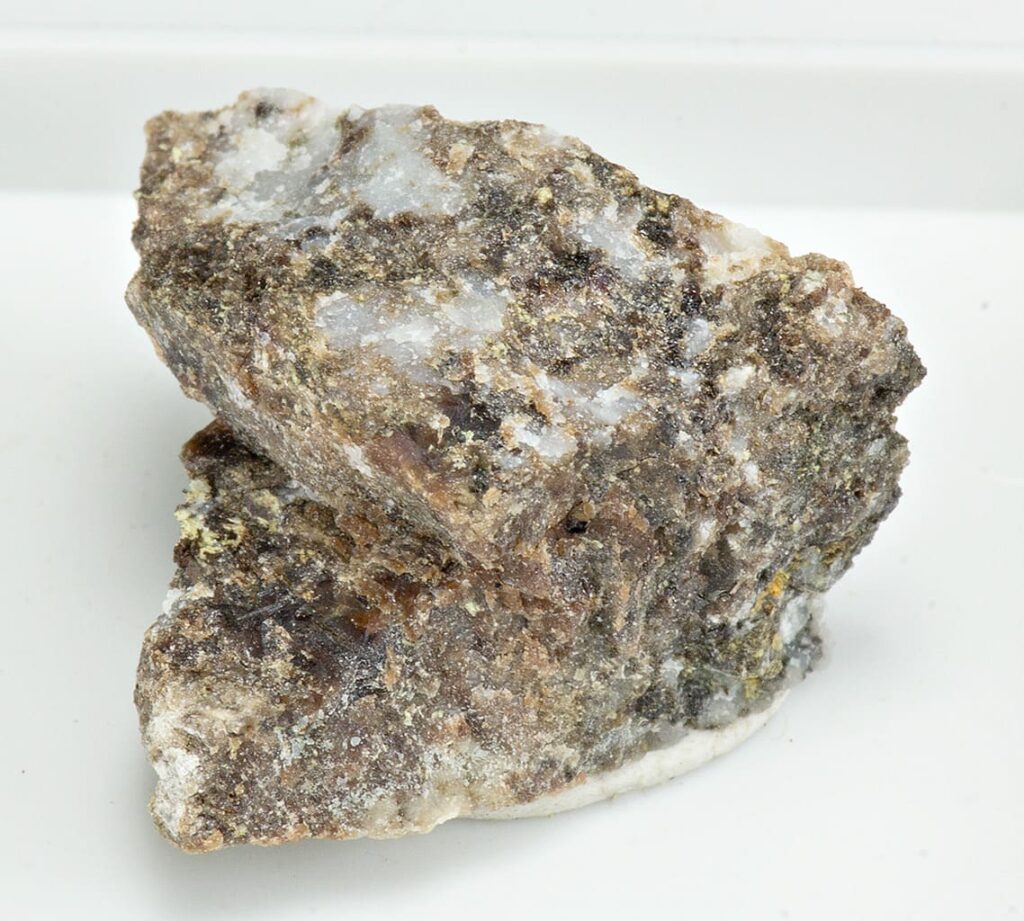
Sarcolite generally occurs as granular aggregates, short prismatic crystals, or irregular masses embedded within calc-silicate rocks. Well-developed crystals are relatively uncommon, and most specimens are small in size. The mineral is usually colorless, white, pale gray, cream, or light pink, with a vitreous luster and transparent to translucent appearance. Its physical characteristics are similar to several other calcium silicate minerals, making laboratory techniques such as X-ray diffraction and electron microprobe analysis useful for accurate identification.From a geological perspective, Sarcolite is associated with contact metamorphism and metasomatic processes in calcium-rich environments. It commonly occurs alongside minerals such as wollastonite, vesuvianite, gehlenite, garnet, diopside, melilite, and calcite. The occurrence of Sarcolite reflects the chemical composition of the host rocks and the conditions under which the surrounding magma and hydrothermal fluids interacted with carbonate rocks. Although it has little commercial application because of its rarity, Sarcolite is documented in mineralogical studies and museum collections as one of the minerals characteristic of calc-silicate assemblages formed during contact metamorphism.
History of Sarcolite
Sarcolite was first described in the early nineteenth century from volcanic ejecta associated with Monte Somma and Mount Vesuvius near Naples, Italy. The mineral was identified in limestone fragments that had been altered by high-temperature volcanic processes, a geological setting known for producing a variety of uncommon calcium silicate minerals. The name Sarcolite is derived from the Greek word sarx, meaning “flesh,” referring to the pale flesh-colored appearance observed in some of the original specimens.
During the nineteenth century, Sarcolite was examined alongside other minerals collected from the Somma-Vesuvius volcanic complex as mineralogists worked to classify the diverse silicate minerals produced by volcanic and contact metamorphic processes. As analytical techniques improved, including optical mineralogy, X-ray diffraction, and electron microprobe analysis, researchers obtained a more detailed understanding of its crystal structure and chemical composition. These studies confirmed that Sarcolite belongs to the feldspathoid group of tectosilicate minerals and differs structurally and chemically from feldspars despite certain similarities in composition.
Today, Sarcolite is recognized as a relatively uncommon mineral with a limited number of documented occurrences worldwide. It is primarily described in mineralogical literature, geological surveys, and museum collections, where it is associated with contact metamorphic calc-silicate rocks and volcanic limestone xenoliths. Although new localities have been reported over time, the classic occurrences in the Somma-Vesuvius region remain among the best-known references for the mineral.
Formation of Sarcolite
Sarcolite forms primarily during high-temperature contact metamorphism and metasomatic alteration of calcium-rich carbonate rocks. The mineral develops when limestone or dolostone comes into contact with hot magma or magmatic fluids, causing chemical reactions that transform the original carbonate minerals into calc-silicate assemblages. These reactions occur under relatively high temperatures and comparatively low pressures, conditions that are characteristic of contact metamorphic environments surrounding igneous intrusions.
The formation of Sarcolite depends on the availability of calcium, sodium, aluminum, and silica within the surrounding rocks and hydrothermal fluids. As magma cools, chemically active fluids migrate through fractures and pore spaces in adjacent carbonate rocks, introducing or redistributing elements that promote the crystallization of new minerals. Under suitable chemical conditions, Sarcolite may crystallize together with other calcium-rich silicates including wollastonite, gehlenite, melilite, vesuvianite, diopside, garnet, and calcite. The exact mineral assemblage varies according to the composition of the host rock, fluid chemistry, temperature, and the extent of metasomatic alteration.
In addition to contact metamorphic rocks, Sarcolite has also been identified in volcanic ejecta containing limestone xenoliths. In these environments, fragments of carbonate rock become incorporated into ascending magma and undergo rapid heating and chemical interaction with volcanic melts and gases. These localized reactions produce calc-silicate minerals under conditions similar to those found in contact metamorphic aureoles. Because Sarcolite forms within a relatively limited range of geological conditions, its occurrence is generally restricted to specific calc-silicate environments associated with carbonate-rich rocks and igneous activity.
Types of Sarcolite
Unlike many mineral groups, Sarcolite is not divided into multiple recognized mineral species or varieties based on chemical composition or crystal structure. It is recognized as a single mineral species by the International Mineralogical Association (IMA). However, natural specimens may show minor variations in color, crystal habit, and chemical composition depending on their geological environment and associated minerals.
- Colorless Sarcolite – Transparent to translucent crystals lacking significant trace-element substitutions. This is one of the least common appearances in natural specimens.
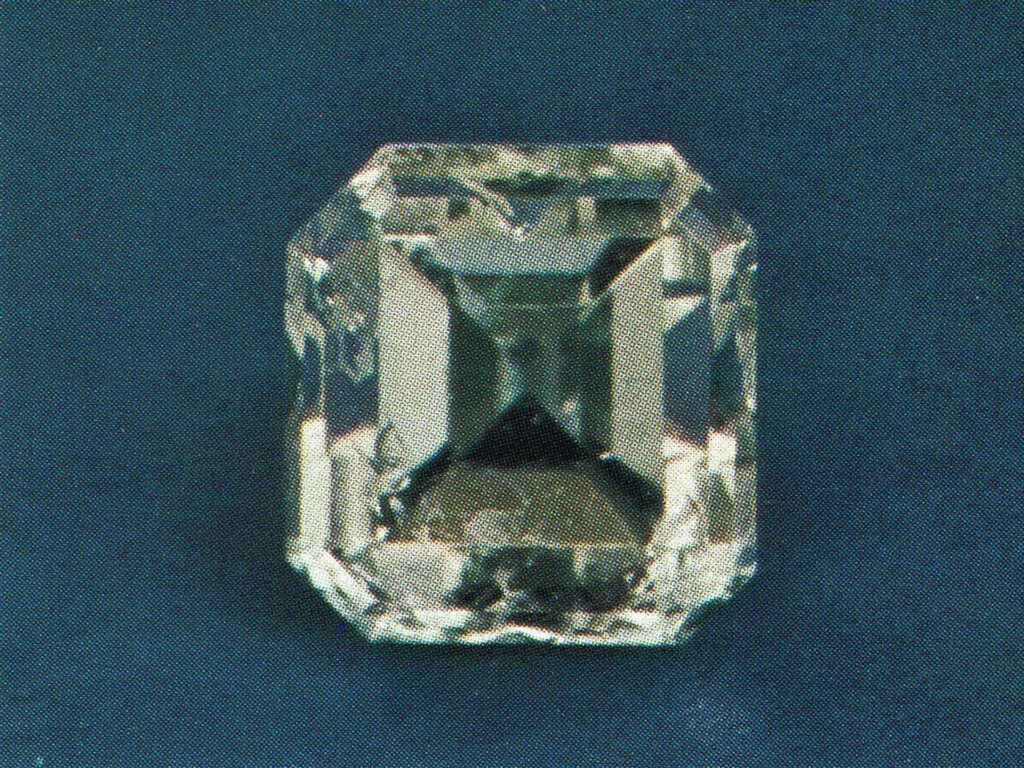
- White Sarcolite – The most frequently observed form, typically occurring as granular aggregates or small prismatic crystals in calc-silicate rocks.
- Cream to Pale Pink Sarcolite – Displays a faint cream or flesh-colored tint, the appearance that inspired the mineral’s name. The color is generally attributed to minor impurities or natural variation in composition.
- Massive Sarcolite – Occurs as irregular or granular masses intergrown with other calc-silicate minerals rather than as distinct crystals. This is the most common habit in contact metamorphic rocks.
- Crystalline Sarcolite – Develops as small tetragonal crystals or short prismatic grains within skarn deposits and altered limestone xenoliths. Well-formed crystals are relatively uncommon.
Occurrence and Distribution
Sarcolite has a relatively limited global distribution compared with many common silicate minerals and is generally associated with contact metamorphic environments containing calcium-rich carbonate rocks. It is most commonly found in calc-silicate rocks, skarns, and altered limestone xenoliths that have undergone high-temperature interaction with igneous intrusions or volcanic activity. Because the mineral forms only under specific chemical and thermal conditions, documented localities are comparatively few.
The classic and best-known occurrence of Sarcolite is the Monte Somma–Mount Vesuvius volcanic complex near Naples, Italy, where the mineral was first identified. In this region, Sarcolite occurs within limestone fragments that were incorporated into volcanic ejecta and altered by high-temperature magmatic processes. These occurrences have served as reference localities for mineralogical studies since the nineteenth century.Additional occurrences have been reported from several countries, including Germany, Russia, Japan, Canada, the United States, and Israel, although the mineral is generally uncommon at these localities. In most cases, Sarcolite is found in association with contact metamorphic calc-silicate rocks or skarn deposits formed where carbonate rocks have been altered by nearby igneous intrusions. Individual crystals are typically small, and the mineral usually occurs together with other calcium-rich silicates rather than as isolated specimens.
Sarcolite is commonly associated with minerals such as wollastonite, gehlenite, melilite, vesuvianite, diopside, grossular, calcite, garnet, spinel, perovskite, and monticellite. These mineral assemblages reflect calcium-rich, silica-poor environments affected by contact metamorphism and metasomatic alteration. The presence of Sarcolite within these assemblages provides information about the chemical conditions under which the host rocks were formed and subsequently altered.
Crystal Structure
Sarcolite crystallizes in the tetragonal crystal system and belongs to the feldspathoid group of tectosilicate minerals. Its crystal structure consists of a three-dimensional framework of interconnected aluminum-oxygen and silicon-oxygen tetrahedra that form a relatively open lattice. Calcium and sodium occupy large structural sites within this framework, helping to maintain overall charge balance and structural stability. This framework distinguishes Sarcolite from chain silicates, sheet silicates, and ring silicates, placing it within the tectosilicate subclass despite its relatively uncommon chemical composition.
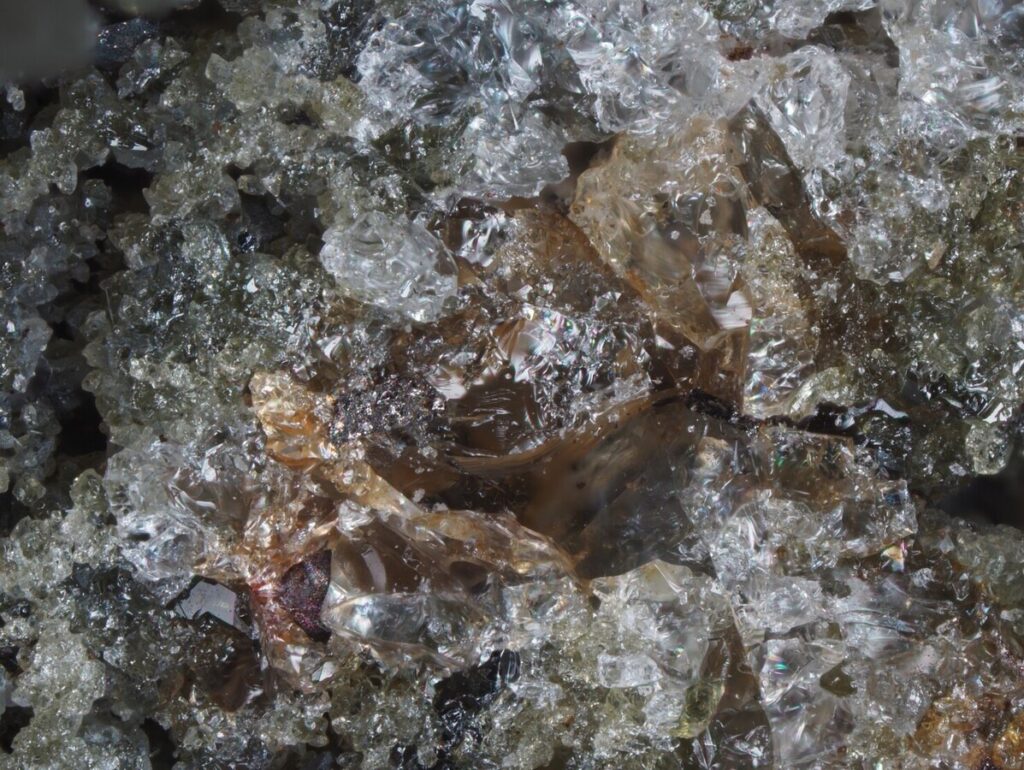
The crystal lattice allows limited chemical substitution, particularly between sodium and other alkali elements, although Sarcolite generally maintains a relatively consistent composition compared with many other silicate minerals. Variations in trace-element content may influence color and other minor physical characteristics but do not substantially alter the overall crystal structure. The mineral typically develops as short prismatic crystals or granular aggregates, while well-formed euhedral crystals remain relatively uncommon because of the restricted conditions under which the mineral crystallizes.
The crystal structure of Sarcolite is stable under the high-temperature, calcium-rich conditions associated with contact metamorphism but is not commonly formed in other geological environments. As a result, the mineral is generally restricted to calc-silicate assemblages produced through metasomatic reactions between carbonate rocks and magmatic fluids. Structural studies using X-ray diffraction have provided detailed information about the arrangement of atoms within the mineral and have confirmed its classification within the feldspathoid group.
Physical and Chemical Properties
Sarcolite is typically colorless, white, pale gray, cream, or light pink, although slight variations in color may occur because of minor chemical impurities or associated minerals. The mineral generally has a vitreous luster and ranges from transparent to translucent. Most natural specimens occur as granular aggregates or small prismatic crystals, while well-developed euhedral crystals are comparatively uncommon. Fresh crystal surfaces are usually bright and glassy, whereas weathered specimens may appear dull due to surface alteration.
Sarcolite has a Mohs hardness of approximately 5 to 6, making it moderately resistant to scratching. Its specific gravity ranges from about 2.9 to 3.1, reflecting its calcium-rich composition. Cleavage is generally indistinct or poorly developed, and fracture is uneven to irregular. The mineral produces a white streak and is considered brittle, breaking rather than deforming when subjected to mechanical stress. These physical characteristics are typical of many framework silicate minerals found in contact metamorphic environments.Chemically, Sarcolite is an anhydrous calcium sodium aluminum tectosilicate with the ideal formula NaCa₈Al₄Si₈O₃₀. Calcium is the dominant cation within the crystal structure, while sodium occupies additional structural sites that contribute to charge balance. Aluminum and silicon form the tetrahedral framework characteristic of tectosilicate minerals. Minor substitutions involving potassium, magnesium, iron, or other trace elements may occur in natural specimens, although these generally have only a limited effect on the mineral’s overall composition and crystal structure.
Because Sarcolite often occurs together with other calcium silicate minerals, field identification based solely on appearance can be difficult. Minerals such as gehlenite, melilite, wollastonite, and vesuvianite may occur in similar geological settings and exhibit overlapping physical characteristics. For this reason, laboratory techniques including X-ray diffraction (XRD), electron microprobe analysis (EPMA), Raman spectroscopy, and optical petrography are commonly used to confirm the identification of Sarcolite and distinguish it from other calc-silicate minerals.
Applications of Sarcolite
Sarcolite has no significant commercial or industrial applications because of its rarity and limited occurrence. The mineral is not mined as an ore and is not used as a gemstone or ornamental material on a commercial scale. Most known specimens are relatively small and occur within calc-silicate rocks, making large, high-quality crystals uncommon.In mineralogy and petrology, Sarcolite is studied as part of contact metamorphic and skarn mineral assemblages. Its occurrence helps researchers interpret the chemical conditions that developed during the interaction between carbonate rocks and magmatic fluids. When identified together with minerals such as gehlenite, melilite, wollastonite, and vesuvianite, Sarcolite contributes to understanding the evolution of calc-silicate rocks formed under high-temperature metasomatic conditions.
Sarcolite is also included in museum collections, university teaching collections, and reference mineral collections because it represents a relatively uncommon tectosilicate mineral. Well-documented specimens from classic localities such as the Monte Somma–Mount Vesuvius volcanic complex are used for mineral identification, crystallographic studies, and educational purposes. Although the mineral has limited practical applications outside scientific research and collecting, it remains part of the documented mineral diversity associated with contact metamorphism and volcanic carbonate alteration.