
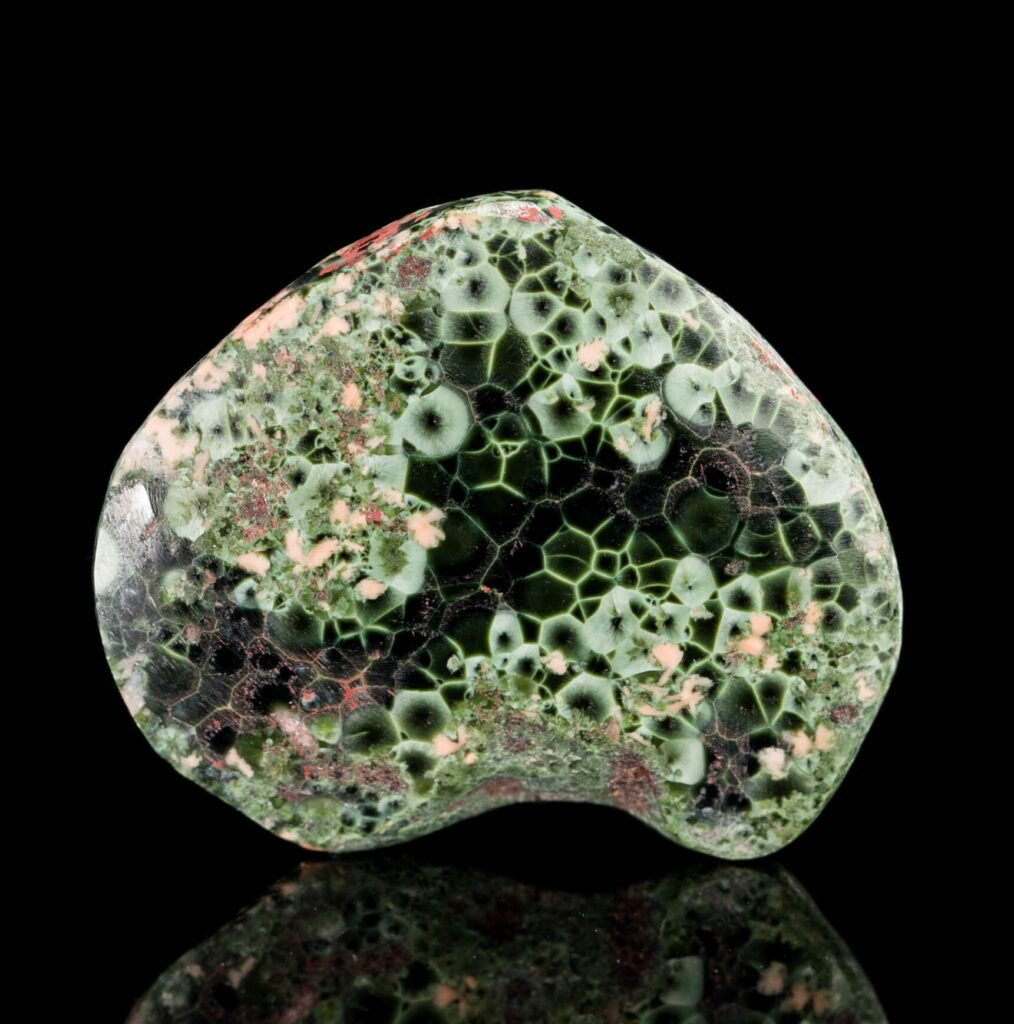
Pumpellyite is a highly complex, hydrous calcium aluminum silicate mineral group that occupies a fundamental position within the sorosilicate subclass of silicate minerals. Structurally characterized by isolated double silicate tetrahedra, Pumpellyite does not represent a single, monolithic mineral species but rather encompasses a diverse family of closely related mineral varieties. These variations are distinguished by the dominant cations occupying specific crystallographic sites within its atomic lattice—most notably magnesium, ferrous iron, ferric iron, manganese, and aluminum. While Pumpellyite-(Mg) and Pumpellyite-(Fe²⁺) are the most commonly encountered end-members in nature, other exotic species remain comparatively rare. Because the chemical nuances among these members are incredibly subtle and practically impossible to differentiate without advanced laboratory analysis (such as electron microprobe or X-ray diffraction), the vast majority of specimens are broadly designated as “Pumpellyite” across museum collections, commercial mineral markets, and general geological field reports. Visually, Pumpellyite is celebrated for its attractive, earthy color palette, typically manifesting in striking shades of olive-green, vibrant bluish-green, or deep, almost blackish dark green. Rather than forming well-developed, isolated, macroscopic crystals, it usually crystallizes as dense, interlocking aggregates. These formations frequently exhibit fibrous, radiating, or acicular (needle-like) habits, often filling vesicles and cavities in ancient volcanic rocks. Beyond its aesthetic appeal, Pumpellyite is paramount in academic geology; it is the definitive index mineral of the prehnite-pumpellyite metamorphic facies, making it an exceptionally vital tool for geologists studying very low-grade metamorphism and the earliest stages of tectonic crustal evolution.
History and Discovery of Pumpellyite
The formal recognition of Pumpellyite dates back to 1925, when it was first scientifically described from type specimens collected in the legendary copper-bearing volcanic rocks of Michigan’s Keweenaw Peninsula in the United States. In these ancient, billion-year-old flood basalts, the mineral was discovered intimately associated with native copper, filling the amygdaloidal cavities of the host rock. The mineral was named in profound tribute to the eminent American geologist Raphael Pumpelly (1837–1923). Pumpelly was a trailblazing figure in the earth sciences whose pioneering investigations into structural geology, economic ore deposits, and the paragenesis of copper ores deeply influenced the trajectory of North American geological research. Since its initial discovery in Michigan, the known geographic distribution of Pumpellyite has expanded exponentially. It has now been successfully identified in metamorphosed geologic terrains across every continent, fundamentally broadening our scientific comprehension of low-temperature, fluid-driven metamorphic processes. During the latter half of the twentieth century, rapid technological leaps in crystal chemistry and instrumental analysis dramatically altered our understanding of the mineral. These innovations revealed that Pumpellyite was actually a complex solid-solution series and a broader mineral group, leading to the modern classification of multiple distinct species based on their dominant chemical constituents. Today, Pumpellyite remains at the forefront of modern metamorphic petrology, playing an indispensable role in complex tectonic reconstructions, the mapping of ancient subduction zones, and the study of mineral stability deep within the Earth’s shifting crust.
Formation of Pumpellyite
The genesis of Pumpellyite is intrinsically linked to very low-grade regional metamorphism and the extensive hydrothermal alteration of mafic igneous rocks. It is a quintessential product of low-temperature geologic environments, developing under a highly specific thermal window that generally ranges from 200°C to 350°C, coupled with moderate lithostatic pressures. Its primary protoliths (parent rocks) are typically volcanic basalts, gabbros, diabases, and chemically similar mafic rocks that are subjected to progressive mineralogical transformation during crustal burial or tectonic subduction. Under these distinct physical conditions, original high-temperature igneous minerals—such as pyroxenes, olivine, and calcium-rich plagioclase feldspars—become thermodynamically unstable. In the presence of hot, circulating, silica-rich hydrothermal fluids, these primary minerals break down and release elements like calcium, iron, and magnesium. This chemical liberation triggers the crystallization of a new suite of stable hydrous silicate minerals, prominently including chlorite, epidote, prehnite, albite, and Pumpellyite.
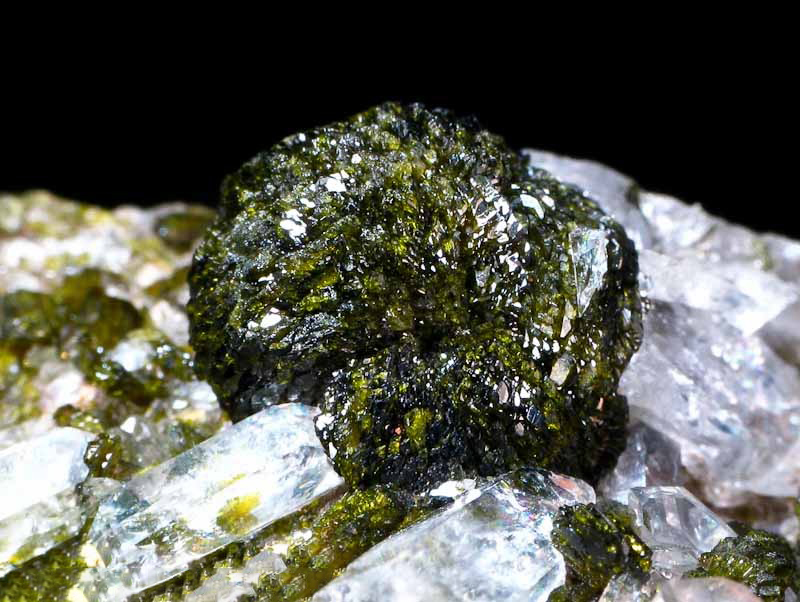
As a geologic barometer and geothermometer, the mineral is profoundly important. It is the hallmark of the prehnite-pumpellyite facies, a critical transitional zone that bridges the gap between the lower-temperature, lower-pressure zeolite facies (which borders on mere sedimentary diagenesis) and the higher-grade greenschist facies. Because the thermodynamic stability field of Pumpellyite occupies such a narrow and highly specific pressure-temperature range, its presence in a rock is a geologic smoking gun. It provides researchers with a highly reliable indicator for reconstructing intricate metamorphic histories, calculating the exact depths of ancient sedimentary burial, and interpreting the dynamic tectonic environments associated with ancient convergent plate boundaries, ocean-floor alteration, and the fundamental mechanics of the Earth’s lithosphere.
Types of Pumpellyite: A Solid-Solution Series
Pumpellyite is classified into several distinct species based on the dominant cations that occupy specific structural positions—primarily the octahedrally coordinated sites—within its dynamic crystal lattice. Because these elemental substitutions occur without altering the underlying atomic framework, these species possess visually identical physical properties and habits, making advanced laboratory analysis necessary for accurate identification.
| Mineral Species | Dominant Cation | Geologic Significance & Characteristics |
|---|---|---|
| Pumpellyite-(Mg) | Magnesium | The most ubiquitous member of the group, commonly found in a wide variety of low-grade metamorphic basic rocks and altered basalts globally. |
| Pumpellyite-(Fe²⁺) | Ferrous Iron | Highly prevalent in iron-bearing metamorphic terrains and metabasalts; it typically indicates a more reducing formation environment. |
| Pumpellyite-(Fe³⁺) | Ferric Iron | An oxidized variety that crystallizes under relatively high oxygen fugacity; less common than the Mg and Fe²⁺ dominant members. |
| Pumpellyite-(Al) | Aluminum | A comparatively rare species where aluminum dominates the specific variable octahedral sites normally occupied by heavier metals. |
| Pumpellyite-(Mn²⁺) | Manganese | A highly uncommon, manganese-rich variant, typically restricted to specific geochemically anomalous metamorphic zones or skarns. |
Occurrence and Distribution
Pumpellyite has a remarkably broad global distribution and occurs in numerous metamorphic belts associated with ancient oceanic crust, island arcs, and convergent plate margins. Important occurrences have been documented in the United States, Japan, New Zealand, Italy, Switzerland, Norway, Russia, China, Canada, Australia, and many other countries where low-grade metamorphic rocks are exposed. It is especially abundant in altered basaltic lava flows, greenstones, pillow basalts, metabasalts, and hydrothermally altered volcanic sequences. Pumpellyite frequently fills vesicles, fractures, and amygdales within volcanic rocks, often occurring together with prehnite, epidote, chlorite, quartz, calcite, albite, and zeolite minerals. These mineral assemblages provide valuable evidence for interpreting ancient geothermal systems, fluid-rock interactions, and regional metamorphic evolution. Although Pumpellyite is relatively common from a geological perspective, attractive collector-quality specimens displaying vivid green fibrous aggregates or radiating crystal sprays remain considerably less common than ordinary massive material.
Crystal Structure of Pumpellyite
Pumpellyite crystallizes in the monoclinic crystal system and features a highly intricate sorosilicate framework characterized by both isolated silicate tetrahedra (SiO₄) and paired double tetrahedral groups (Si₂O₇). The general chemical formula for the pumpellyite group is expressed as Ca₂XY₂(SiO₄)(Si₂O₇)(OH)₂·H₂O where complex variables allow significant elemental substitution. This intricate crystal architecture is defined by chains of edge-sharing aluminum-rich octahedra that run parallel to the crystallographic b-axis. These chains are linked by the silicate groups, with larger cavities accommodating calcium ions, while magnesium, iron, and manganese occupy highly specific coordination sites. Crucially, hydroxyl groups and structurally bound water molecules are integrated into the lattice, ensuring the mineral’s thermodynamic stability under relatively low-temperature, water-saturated metamorphic conditions. The structural flexibility of this framework permits extensive elemental diadochy without destabilizing the lattice, making Pumpellyite highly responsive to minute fluctuations in lithostatic pressure, geothermal temperature, fluid chemistry, and local oxidation states.
Physical and Chemical Properties
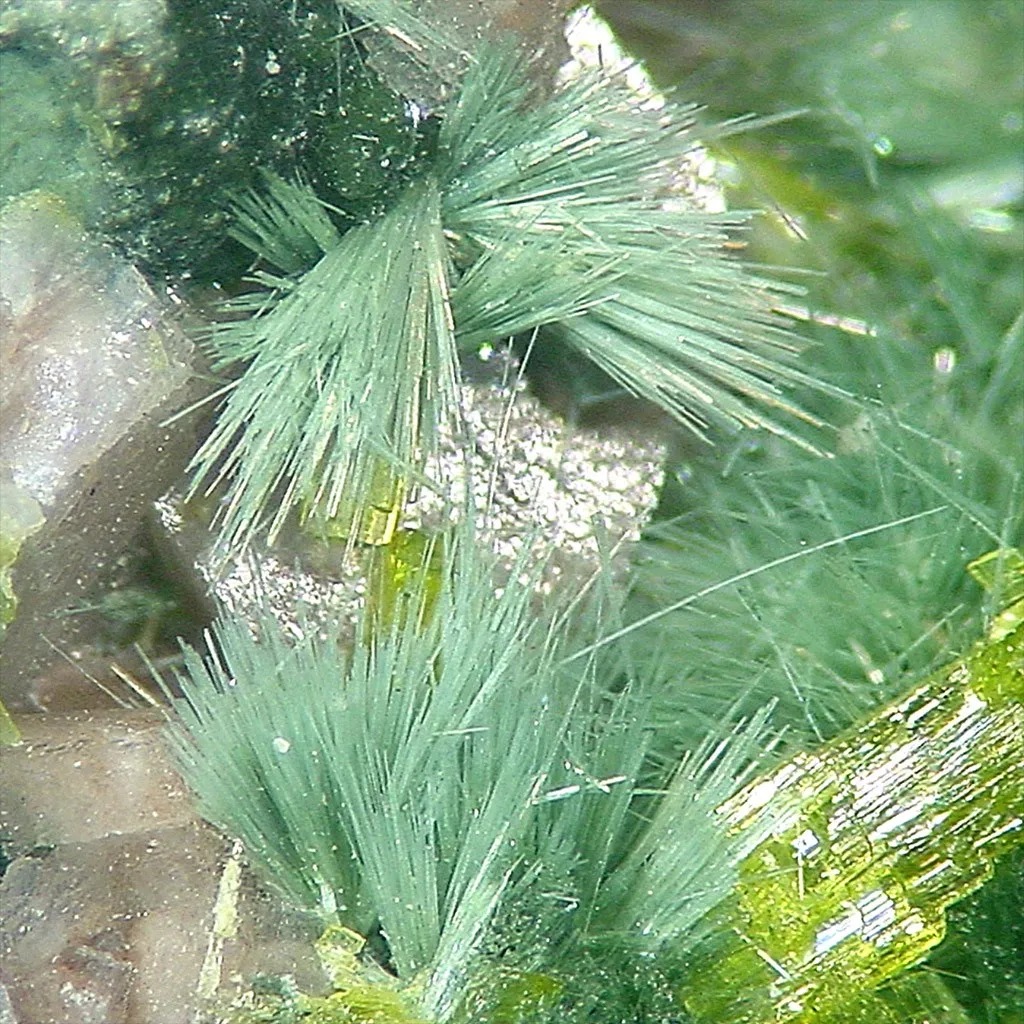
Pumpellyite is generally recognized by its characteristic shades of olive green, bluish green, dark green, gray-green, or occasionally nearly black. It commonly exhibits a vitreous to silky luster depending on crystal habit and displays white streaks. The mineral is translucent to nearly opaque and possesses a Mohs hardness ranging from approximately 5.5 to 6, making it moderately resistant to scratching. Its specific gravity averages around 3.2, reflecting the presence of calcium, aluminum, iron, and magnesium within its structure. Cleavage is typically well developed in two directions, although fibrous or massive specimens may display irregular fracture surfaces instead of obvious cleavage. Chemically, Pumpellyite is a hydrous calcium aluminum sorosilicate containing variable proportions of magnesium, ferrous iron, ferric iron, manganese, and aluminum. This extensive solid-solution behavior accounts for the diversity of recognized species while maintaining similar external appearances. From a petrological standpoint, Pumpellyite is highly valued because its presence records very specific pressure-temperature conditions, allowing geologists to estimate metamorphic grades and reconstruct tectonic histories with considerable confidence.
Applications of Pumpellyite
Pumpellyite has relatively limited commercial or industrial applications because it rarely occurs in large, high-purity deposits suitable for extraction and lacks the durability or transparency required for widespread gemstone use. Nevertheless, its scientific significance is exceptionally high. In academic geology and mineralogy, Pumpellyite serves as one of the most important index minerals for identifying very low-grade metamorphic environments and distinguishing the prehnite-pumpellyite metamorphic facies from adjacent metamorphic grades. Researchers use its mineral chemistry to investigate pressure-temperature evolution, hydrothermal alteration, fluid circulation, and subduction-related metamorphism within ancient geological terranes. In petrographic laboratories, Pumpellyite is routinely examined using thin-section microscopy, X-ray diffraction, Raman spectroscopy, and electron microprobe analysis to characterize metamorphic reactions and determine mineral assemblages. Well-crystallized or aesthetically attractive specimens are also sought after by mineral collectors, particularly those displaying vivid green fibrous aggregates from classic localities, where they represent excellent examples of minerals formed during low-grade metamorphic processes rather than high-temperature igneous crystallization.