
Pectolite is a calcium sodium hydroxide silicate mineral with the chemical formula NaCa₂Si₃O₈(OH). It belongs to the inosilicate group and typically develops as radiating, fibrous, or acicular aggregates rather than as large, well-formed individual crystals. Pectolite is commonly white, gray, colorless, or pale green, although variations in composition and inclusions can produce other shades. The mineral has a Mohs hardness of about 4.5 to 5 and generally has a vitreous to silky luster, particularly when its fibrous crystals are closely packed into radiating aggregates.
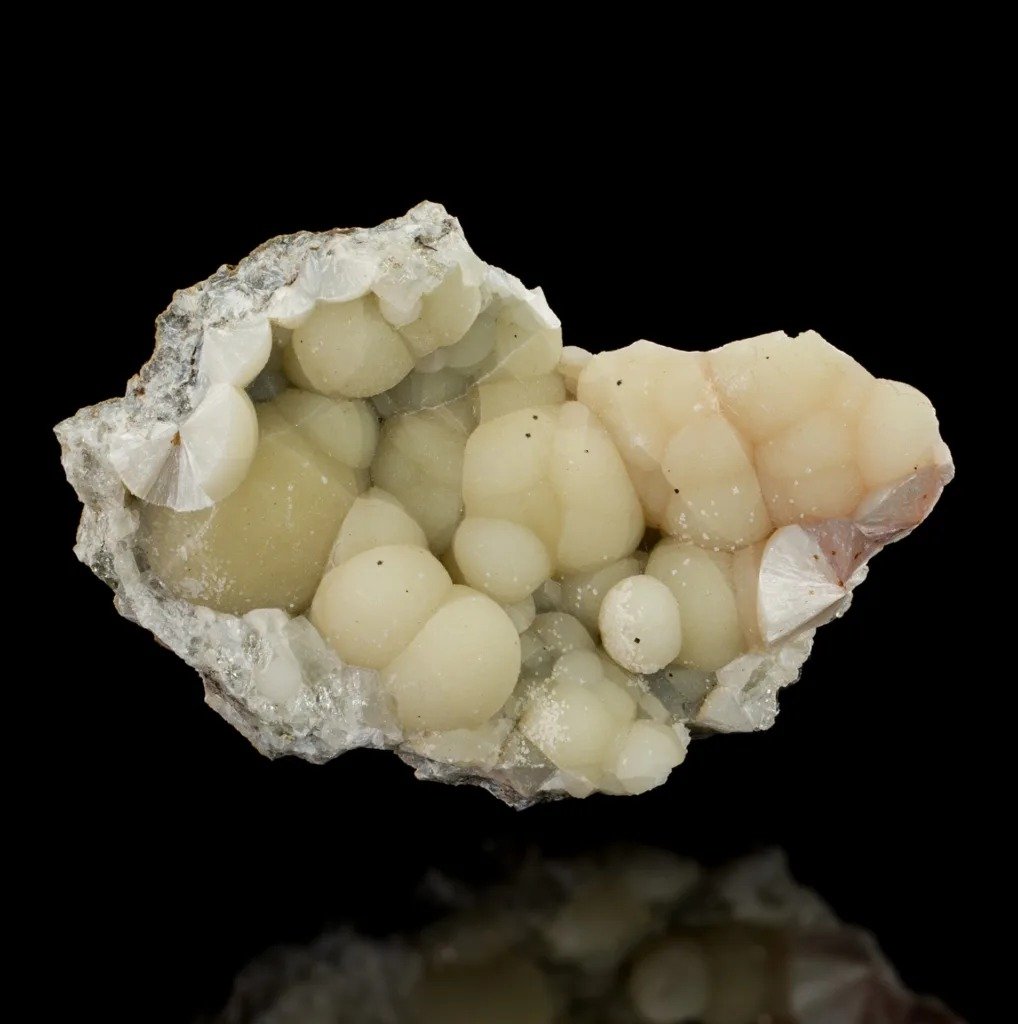
Pectolite is best known mineralogically for its distinctive crystal habit and its occurrence in cavities and fractures within basaltic and other volcanic rocks. Individual crystals can be extremely slender and may form compact sprays, spherical aggregates, or radiating masses. The mineral has a monoclinic crystal structure and belongs to the wollastonite group of minerals, which includes several calcium silicate minerals with related structural characteristics. Pectolite is also notable because its fibrous aggregates can resemble other pale-colored silicate minerals, making crystal habit, hardness, cleavage, and associated minerals useful for identification.
The name pectolite is derived from the Greek words pektos, meaning “well joined” or “compact,” and lithos, meaning “stone,” referring to the closely intergrown nature of its crystals. Pectolite occurs in several geological environments, particularly in cavities and fractures associated with basaltic rocks and hydrothermal alteration. One of the best-known varieties is the blue-green material from the Dominican Republic commonly known as Larimar. In mineralogical classification, Larimar is not a separate mineral species but a variety of pectolite in which copper-related coloration produces its characteristic blue to blue-green appearance.
History and Discovery of Pectolite
Pectolite was first described as a distinct mineral species in the early nineteenth century. Its name was introduced by German mineralogist August Breithaupt in 1828, based on the characteristic tendency of its slender crystals to occur in closely intergrown and radiating aggregates. Early specimens were primarily recognized from cavities and altered zones in igneous rocks, where the mineral occurs together with other secondary calcium and sodium silicate minerals. The recognition of pectolite as a separate species was based on its characteristic crystal form, physical properties, and chemical composition.
During the nineteenth and twentieth centuries, pectolite was identified from a range of localities associated with basaltic and other volcanic rocks. Mineralogical studies showed that it commonly forms as a secondary mineral in cavities, fractures, and alteration zones, where circulating fluids interact with the original rock. Its acicular crystals may grow inward from cavity walls, producing radiating clusters and compact fibrous masses. These habits became important characteristics for distinguishing pectolite from visually similar white or pale-colored zeolite-group and calcium silicate minerals.
Pectolite later became particularly well known because of deposits in the Dominican Republic. Blue and blue-green pectolite from the country, especially material from the Barahona region, developed considerable interest among mineral collectors and the gemstone trade under the name Larimar. The coloration is associated primarily with copper in the mineral’s composition and is distinct from the normally white to gray appearance of pectolite. Although Larimar has a separate commercial name and is widely treated as a gemstone variety, it remains pectolite from a mineralogical classification standpoint rather than constituting a separate mineral species.
Chemical Composition of Pectolite
Pectolite has the ideal chemical formula NaCa₂Si₃O₈(OH), indicating that its structure contains sodium, calcium, silicon, oxygen, and hydroxyl. It is therefore classified as a hydrous calcium-sodium silicate. The silicon and oxygen atoms form silicate chains that are an important structural feature of the mineral, while calcium and sodium occupy positions between and around these silicate units. The hydroxyl group is incorporated directly into the crystal structure rather than occurring simply as physically retained water.
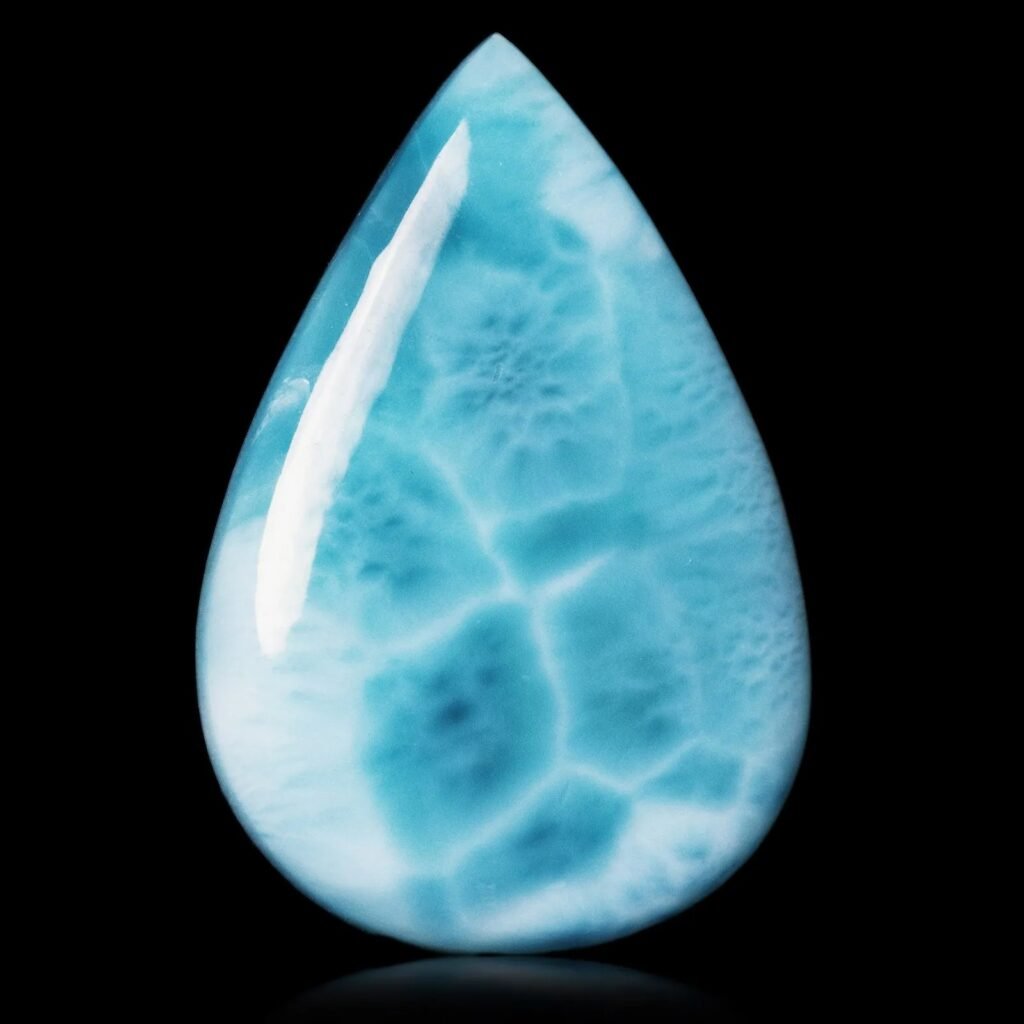
Natural pectolite can show minor chemical variation because of substitutions and impurities within its crystal structure. The presence of elements such as copper can be particularly significant in colored varieties. In blue to blue-green pectolite from the Dominican Republic, copper-related components contribute to the characteristic coloration. Other trace elements and inclusions can also influence the observed color, transparency, and appearance of individual specimens. For this reason, pectolite specimens can display noticeable differences even when they belong to the same mineral species.
The chemical composition also helps explain some of pectolite’s physical characteristics. Its relatively moderate hardness, cleavage, density, and reaction to weathering are related to the arrangement and bonding of the silicate framework and the interstitial cations. Chemical analysis, together with crystallographic and physical-property data, is therefore used to distinguish pectolite from minerals with similar fibrous or radiating habits.
Crystal Structure of Pectolite
Pectolite crystallizes in the monoclinic crystal system and has a chain silicate structure belonging to the inosilicates. Its framework is based on linked silicate tetrahedra in which silicon atoms are coordinated by oxygen atoms to form extended chains. These chains are an important feature of pectolite’s internal structure and help account for the mineral’s characteristic elongated and acicular crystal habit. Calcium and sodium ions occupy structural positions between the silicate chains, while hydroxyl groups are incorporated into the structure.
The arrangement of the silicate chains produces a strong directional character in crystal growth. As a result, pectolite commonly develops as very slender prismatic or acicular crystals that occur in radiating clusters, sprays, divergent aggregates, and compact fibrous masses. Individual crystals can be difficult to distinguish when they grow densely together, particularly in massive specimens. The structural arrangement also contributes to the mineral’s cleavage and the way individual fibers or crystals break when subjected to mechanical stress.
Well-developed pectolite crystals are relatively uncommon compared with aggregates. In cavities within volcanic rocks, crystals may grow from the cavity walls toward open spaces, producing radiating groups with numerous thin crystal tips. In some specimens, the crystals form spherical or hemispherical aggregates as successive generations of fibers grow outward from a central point. These growth forms are among the most useful visual characteristics for recognizing pectolite, although laboratory identification may be necessary when its appearance overlaps with other fibrous silicate minerals.
Formation and Geological Occurrence of Pectolite
Pectolite is primarily a secondary mineral that forms through the alteration of volcanic rocks and the action of mineral-rich fluids. It is particularly associated with cavities, fractures, vesicles, and altered zones in basalt and related mafic igneous rocks. After volcanic rock solidifies, open cavities can become sites for the circulation of hydrothermal or low-temperature fluids containing calcium, sodium, silica, and other dissolved components. Under suitable chemical and physical conditions, these components can precipitate as pectolite on cavity walls or within fractures.
The formation of pectolite commonly occurs during relatively late stages of alteration rather than during the initial crystallization of the host igneous rock. It may therefore occur alongside a variety of secondary minerals, including zeolites, calcite, prehnite, apophyllite, natrolite, and other calcium- and sodium-bearing silicates. The exact mineral association depends on the composition of the host rock, temperature, fluid chemistry, permeability, and the sequence of alteration events. In a single cavity, pectolite may represent only one stage in a more complicated succession of mineral growth.
Pectolite is found in several regions where basaltic and other volcanic rocks have undergone suitable secondary alteration. Important occurrences have been reported from parts of North America, Europe, and the Caribbean. The Dominican Republic is particularly notable because of its blue to blue-green pectolite, commonly known as Larimar. These deposits occur in altered volcanic rocks and have produced material ranging from pale blue and greenish-blue aggregates to more compact masses with distinctive patterns. The geological setting of these deposits demonstrates how variations in fluid chemistry and trace-element content can produce significant differences in the appearance of the same mineral species.
Physical Properties of Pectolite
Pectolite is generally white, colorless, gray, pale green, or blue to blue-green, depending on its composition, impurities, and geological environment. The most familiar form consists of fine, radiating crystals that produce a silky or fibrous appearance, while more compact material can have a vitreous to slightly waxy luster. Transparent individual crystals are uncommon because pectolite usually develops as aggregates rather than large isolated crystals. The blue to blue-green variety associated with the Dominican Republic can range from translucent to relatively opaque, with color patterns often reflecting differences in mineral composition and the distribution of inclusions or secondary minerals.
Pectolite has a Mohs hardness of approximately 4.5 to 5, placing it in the moderate-hardness range. It is therefore harder than minerals such as calcite and fluorite but softer than quartz and many common gemstone minerals. Its specific gravity is generally around 2.7 to 2.9, reflecting its calcium- and sodium-rich silicate composition. The mineral has perfect to good cleavage in directions related to its crystal structure, although the appearance of cleavage can be difficult to observe in densely fibrous aggregates. Fracture may be uneven or splintery, particularly where the mineral consists of tightly intergrown acicular crystals.
The streak of pectolite is white, and its luster can vary according to crystal size and surface condition. Fine fibrous aggregates may show a silky sheen because light reflects from numerous closely packed crystal surfaces, while fresh crystal faces can display a more distinctly vitreous luster. Pectolite is not typically strongly fluorescent, although individual specimens can show variations caused by impurities or associated minerals. These physical properties, together with crystal habit and mineral associations, provide useful criteria for distinguishing pectolite from visually similar silicate minerals.
Color and Appearance of Pectolite
The color of ordinary pectolite is most commonly white, colorless, gray, or pale green. These colors are typical of specimens in which the crystal structure contains relatively small amounts of coloring trace elements. In fibrous or radiating aggregates, the individual crystals may be so fine that the specimen appears as a compact white or gray mass rather than as a collection of separate crystals. Surface weathering and associated minerals can also modify the apparent color and luster.
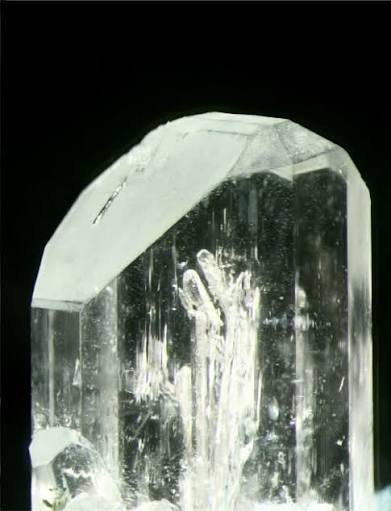
Blue and blue-green pectolite is particularly well known because of the material from the Dominican Republic marketed as Larimar. Its color ranges from pale blue and greenish blue to stronger blue tones, and some specimens contain contrasting white areas or darker inclusions. The coloration is associated with copper-bearing components within the pectolite and can vary considerably between different areas of the same deposit. Because of this variation, blue pectolite may show irregular patches, bands, cloud-like patterns, or areas of different color intensity rather than a completely uniform appearance.
The appearance of pectolite is also strongly influenced by its crystal habit. Acicular crystals can form radiating sprays, fan-shaped groups, spherical aggregates, or interlocking masses. When the fibers are extremely fine, they may produce a smooth or polished-looking surface after cutting, while coarser aggregates can retain visible crystal textures. These differences are important when examining specimens because color alone is not sufficient for identifying pectolite, particularly among pale-colored silicate minerals with similar geological occurrences.
Types and Varieties of Pectolite
Pectolite does not have a large number of formally recognized mineral varieties, but specimens can differ substantially in color, crystal habit, texture, and chemical composition. Most pectolite encountered in mineral collections can be described according to its appearance and geological setting rather than by separate species-level names. Common forms include white or colorless pectolite, gray pectolite, pale green pectolite, and blue to blue-green pectolite. The mineral may occur as individual acicular crystals, radiating aggregates, fibrous masses, or compact material filling cavities and fractures.
- White Pectolite — The most common appearance of pectolite, typically occurring as white, colorless, or pale gray acicular crystals and radiating aggregates.
- Gray Pectolite — Gray specimens may result from mineral inclusions, alteration, or variations in the composition of the material surrounding the pectolite crystals.
- Green Pectolite — Pale green to greenish specimens occur in some geological environments and may owe their color to trace elements or associated minerals.
- Blue Pectolite — Blue pectolite is most strongly associated with deposits in the Dominican Republic and commonly occurs as compact masses or aggregates with white and blue areas.
- Blue-Green Pectolite (Larimar) — Larimar is the commercial name commonly applied to blue to blue-green pectolite from the Dominican Republic. It is a variety of pectolite rather than a separate mineral species.
- Acicular Pectolite — This form consists of slender, needle-like crystals that may occur singly or in radiating clusters and sprays.
- Radiating Pectolite — Numerous fine crystals may grow outward from a central point, producing spherical, fan-shaped, or divergent aggregates.
- Fibrous Pectolite — Extremely fine intergrown crystals can produce compact fibrous textures and a silky surface appearance.
Among these forms, blue to blue-green pectolite is the most widely recognized outside traditional mineralogical collections because of its use as Larimar. However, the term Larimar refers specifically to the distinctive blue pectolite material from the Dominican Republic and should not be used as a general name for all blue pectolite from other localities. The mineralogical identity remains pectolite regardless of whether a specimen is white, gray, green, or blue.
Pectolite as Larimar
Larimar is the best-known commercial variety of pectolite and is characterized by its blue to blue-green coloration. It is found primarily in the Dominican Republic, where deposits in the Barahona Province have produced material used extensively as a decorative stone and gemstone. The name Larimar is a trade and variety name rather than the name of a separate mineral species. Mineralogically, the material is pectolite, with its distinctive coloration related largely to copper-bearing components and variations in the mineral’s composition.
Larimar typically occurs as compact, massive aggregates rather than as large, well-formed individual crystals. Its color can range from pale sky blue and greenish blue to deeper blue, with white areas commonly occurring throughout the material. Some specimens display irregular patterns resembling clouds, waves, or bands, although these visual patterns are a result of the natural distribution of different mineral components rather than a separate structural form of pectolite. The texture and appearance can vary considerably from one specimen to another depending on the conditions under which the mineral formed.
The geological occurrence of Larimar is closely associated with altered volcanic rocks. Pectolite formed in cavities and fractures where hydrothermal fluids interacted with the host rocks and supplied the chemical components required for crystallization. Copper-bearing conditions contributed to the development of the characteristic blue coloration. Associated minerals can include calcite, zeolites, and other secondary minerals that formed during different stages of alteration.
How to Identify Pectolite
Pectolite can be identified using a combination of crystal habit, hardness, cleavage, density, color, and geological association. Its characteristic acicular or fibrous crystals are among the most useful visual features. Individual crystals are commonly extremely thin and occur in radiating sprays, divergent clusters, or compact masses. White and colorless pectolite can resemble several other fibrous silicate minerals, so crystal habit alone may not always provide a definitive identification.
A hardness of approximately 4.5 to 5 can help distinguish pectolite from softer minerals such as calcite, although it is still significantly softer than quartz. Its relatively low specific gravity, white streak, and cleavage provide additional diagnostic information. In blue material, the color may suggest Larimar, but color should not be considered sufficient evidence for identification because other minerals can also occur in blue or blue-green forms.
For specimens where visual and physical properties are insufficient, mineralogical identification can be confirmed through analytical methods such as X-ray diffraction, chemical analysis, or microscopic examination. X-ray diffraction is particularly useful because it determines the characteristic crystal structure of the material, while chemical analysis can establish the presence and proportions of calcium, sodium, silicon, hydroxyl, and minor elements such as copper. These methods are useful for distinguishing pectolite from visually similar minerals and for characterizing unusual or fine-grained specimens.
Pectolite Occurrence and Mineral Associations
Pectolite commonly occurs in cavities and fractures within basaltic and other mafic volcanic rocks, where it forms as a secondary mineral during hydrothermal or low-temperature alteration. Vesicles that originally formed from gas bubbles in cooling lava can later become open spaces where mineral-bearing fluids circulate. When these fluids contain sufficient calcium, sodium, and silica, pectolite can crystallize along cavity walls or within fractures. The crystals may grow inward from the surrounding rock and develop as fine needles, radiating sprays, or compact aggregates.
Pectolite is frequently associated with other secondary minerals that form under similar geological conditions. Common associations include calcite, prehnite, zeolites, natrolite, apophyllite, datolite, and related calcium- and sodium-bearing silicates. The exact assemblage varies according to the chemistry and temperature of the mineral-forming fluids as well as the composition of the host rock. In some deposits, pectolite represents one stage in a sequence of mineral deposition, with different minerals forming before or after it as fluid conditions changed.
Important occurrences have been reported from several regions, including the United States, Canada, Europe, and the Caribbean. The mineral has been found in basaltic cavities in locations such as New Jersey and other parts of the northeastern United States, where radiating white pectolite aggregates can occur with zeolites and calcite. Other occurrences are known from areas with volcanic and hydrothermal activity, although the size, quality, and crystal habit of specimens vary considerably between localities.
The Dominican Republic has particular importance because of its blue pectolite deposits. The Barahona region is the principal source of Larimar, where blue and blue-green pectolite occurs in altered volcanic rocks. The material can form compact masses containing varying proportions of blue pectolite, white pectolite, and associated minerals. Differences in fluid composition, alteration conditions, and copper distribution contribute to the range of colors and patterns observed in specimens from the deposit.
Pectolite in Mineral Collections
Pectolite is collected in both its ordinary white and gray forms and its blue variety from the Dominican Republic. Well-developed acicular crystals can be valuable to mineral collectors because they clearly display the characteristic habit of the species. Radiating sprays and divergent clusters are particularly useful for demonstrating the fibrous growth pattern associated with pectolite. Specimens may also contain associated zeolites, calcite, prehnite, or other secondary minerals, providing information about the geological environment in which they formed.
Blue pectolite is generally encountered as polished slabs, cabochons, carvings, and other ornamental forms rather than as isolated crystals. The material known as Larimar is relatively soft compared with quartz and many common gemstone minerals, so finished pieces can be susceptible to scratching and abrasion. Its appearance is strongly influenced by the proportion and distribution of blue pectolite and lighter associated material, which produces considerable variation between individual pieces.
For mineral specimens, preservation is generally focused on protecting the delicate acicular crystals from mechanical damage. Fine pectolite fibers and crystal sprays can break relatively easily when handled or stored without adequate support. Specimens intended for display are therefore commonly kept in protective cases or containers that prevent contact with harder minerals and other objects.
Uses of Pectolite
Pectolite has relatively limited industrial applications because it is not typically found in large, uniform deposits suitable for bulk extraction. Its primary uses are associated with mineral collecting, geological study, and ornamental material. Ordinary white or gray pectolite is mainly valued as a mineral specimen, particularly when it forms well-developed acicular crystals, radiating aggregates, or distinctive associations with other secondary minerals. These specimens can provide useful examples of mineral formation in basaltic cavities and hydrothermal alteration environments.
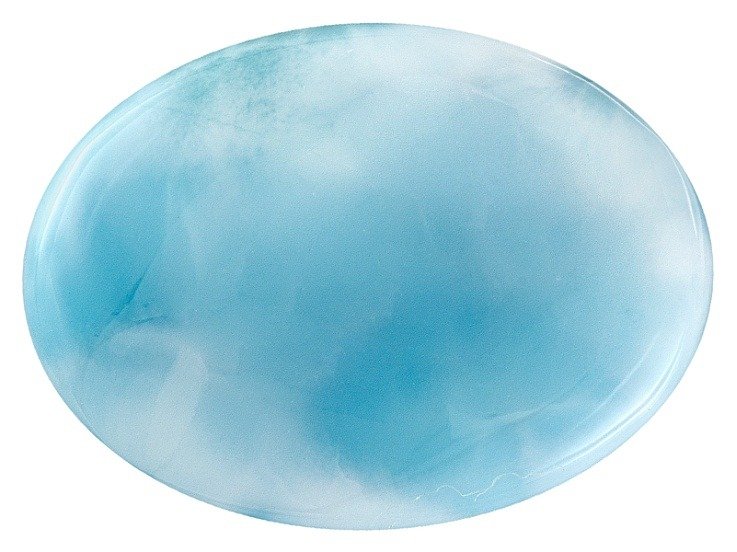
The blue variety of pectolite from the Dominican Republic, commonly known as Larimar, has a much broader ornamental use. Its blue to blue-green color, variable patterns, and ability to take a polish make it suitable for cabochons, beads, pendants, earrings, carvings, polished slabs, and other decorative objects. The material is generally cut to emphasize its natural color patterns, with pieces containing stronger blue coloration often showing a greater contrast against the white portions of the rock. Because pectolite has a moderate hardness of approximately 4.5 to 5, Larimar is more vulnerable to scratching and abrasion than harder gemstones such as quartz.
Pectolite also has significance in mineralogical and geological research. Its occurrence in volcanic cavities provides information about secondary mineralization and the chemical conditions of mineral-forming fluids. Studies of pectolite and its associated minerals can help document changes in fluid composition, temperature, and alteration processes during the later stages of volcanic-rock development. Chemical and crystallographic investigations are also useful for understanding substitutions within the pectolite structure and the causes of color variation in different occurrences.
| Mineral | Chemical Composition | Crystal System / Structure | Typical Habit | Hardness | Key Identification Features |
|---|---|---|---|---|---|
| Pectolite | NaCa₂Si₃O₈(OH) | Monoclinic; inosilicate | Acicular, fibrous, radiating aggregates | 4.5–5 | Calcium-sodium silicate; commonly forms slender radiating crystals in basaltic cavities; white to gray, with blue varieties known as Larimar |
| Natrolite | Na₂Al₂Si₃O₁₀·2H₂O | Orthorhombic; zeolite | Prismatic, fibrous, radiating aggregates | 5–5.5 | Commonly white or colorless; frequently occurs as slender crystals in volcanic cavities; generally harder than pectolite |
| Scolecite | CaAl₂Si₃O₁₀·3H₂O | Monoclinic; zeolite | Acicular, fibrous, radiating clusters | 5–5.5 | White to colorless needle-like crystals; commonly forms delicate sprays and radiating aggregates |
| Mesolite | Na₂Ca₂Al₆Si₉O₃₀·8H₂O | Orthorhombic; zeolite | Fine acicular and fibrous aggregates | 5–5.5 | Typically white and fibrous; commonly occurs with natrolite and scolecite in basaltic cavities |
| Apophyllite | Variable potassium-calcium fluorinated silicate | Tetragonal or orthorhombic, depending on species | Tabular, prismatic crystals | 4.5–5 | Often forms larger transparent or translucent crystals with prominent cleavage and vitreous luster |
| Larimar | Cu-bearing variety of pectolite | Monoclinic; inosilicate | Massive, compact, fine-grained aggregates | 4.5–5 | Blue to blue-green pectolite from the Dominican Republic; commonly shows white and blue patterns and is used as an ornamental material |
Key Differences
Pectolite is distinguished from many similar minerals by its calcium-sodium composition, inosilicate structure, monoclinic symmetry, and characteristic acicular or radiating habit. Natrolite, scolecite, and mesolite are zeolite-group minerals with different framework structures and higher water contents. Their similar white, fibrous appearance means that visual identification alone may sometimes be insufficient.
The distinction is particularly important for fine-grained or heavily intergrown specimens. Hardness, cleavage, crystal habit, associated minerals, and geological occurrence can provide useful supporting evidence, while powder X-ray diffraction and chemical analysis can provide a more definitive identification when specimens cannot be reliably distinguished by physical properties alone.
For blue material, Larimar should be regarded as a variety of pectolite rather than a separate mineral species. Its blue to blue-green color is characteristic of copper-bearing pectolite from the Dominican Republic, but color alone is not sufficient to identify pectolite because other minerals can have similar coloration.