
Gerstleyite is a rare hydrated sodium borate mineral that forms in highly alkaline, boron-rich evaporite environments. It belongs to the diverse group of borate minerals, a mineral group characterized by the presence of boron-oxygen structural units that can combine in a variety of complex arrangements. Gerstleyite is particularly interesting because its formation is closely related to the chemical evolution of concentrated saline and alkaline brines, where evaporation progressively increases the concentration of dissolved sodium, boron, and other elements. Unlike many common rock-forming minerals that occur in large crystals or extensive geological formations, Gerstleyite is generally encountered as fine-grained, massive, earthy, or compact material, making individual crystals relatively uncommon. Its color can vary from white and gray to pale yellowish or greenish shades, depending on impurities, associated minerals, grain size, and alteration. The mineral is not generally considered a gemstone because it lacks the transparency, hardness, and crystal development normally associated with gem materials; instead, its significance comes from its rarity, unusual chemistry, geological setting, and association with some of the world’s most important borate deposits.
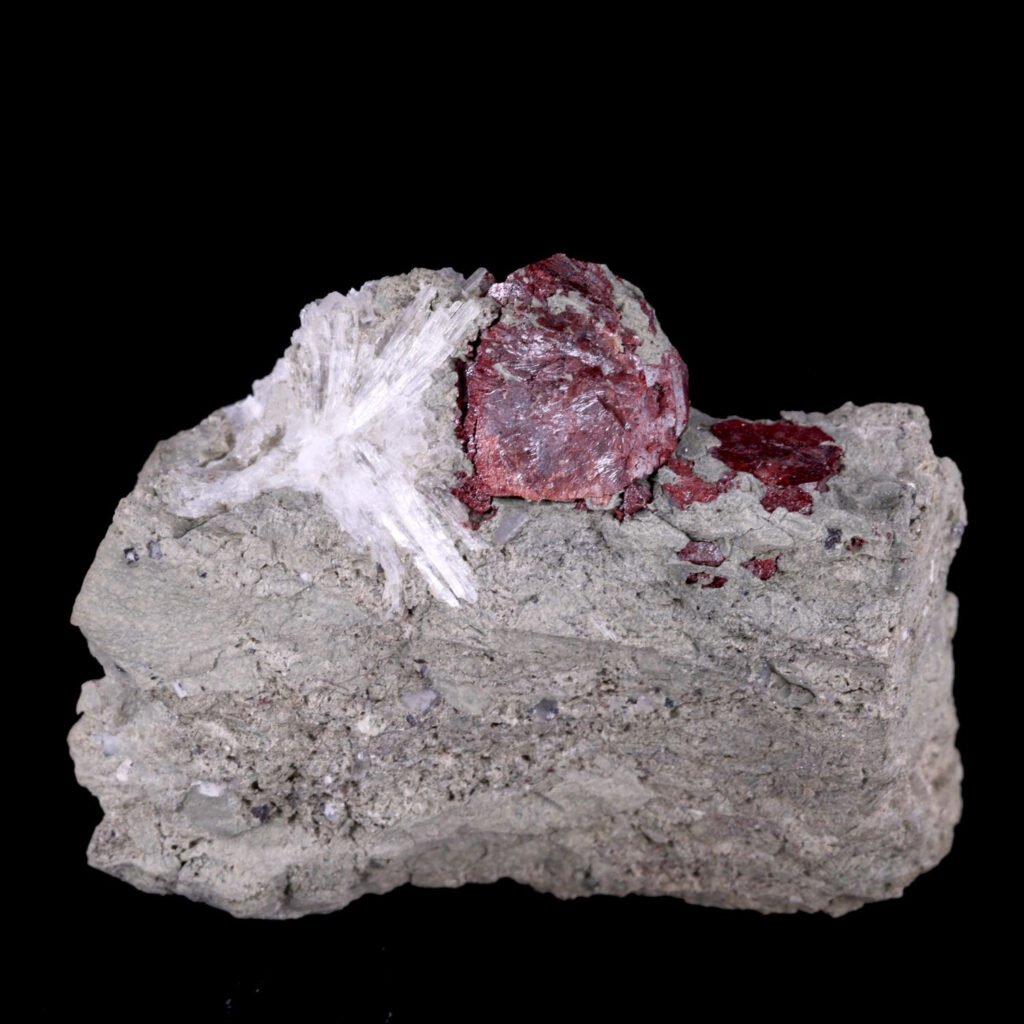
Gerstleyite is especially notable in the context of the borate deposits of California, United States, where a remarkable diversity of boron-bearing minerals developed under unusual evaporitic conditions. These deposits formed in closed or semi-closed basins in which boron-rich fluids and groundwater became concentrated through evaporation over geological periods of time. As the chemistry of the remaining brine changed, different minerals became stable and precipitated at different stages, producing complex assemblages of hydrated and anhydrous borates. Gerstleyite represents one of these specialized mineral phases and therefore provides useful information about the chemical conditions that existed during mineral formation. Its occurrence alongside other borate minerals can help mineralogists reconstruct the evolution of ancient brines, including changes in alkalinity, sodium concentration, water availability, temperature, and the relative abundance of boron. Because of this, Gerstleyite is valued primarily as a mineralogical and geological specimen rather than as a commercially important mineral. For collectors, it is an uncommon species with strong locality significance, while for researchers, it offers an example of how complex hydrated borates can develop in highly specialized evaporite environments.
History and Discovery of Gerstleyite
Gerstleyite was recognized as a distinct mineral from the unusual borate assemblages of California, United States, an area that has played an exceptionally important role in the study and production of borate minerals. The mineral was named in honor of William H. Gerstley, a figure associated with the development of the commercial borate industry in California. Its recognition as a separate mineral species reflects the remarkable chemical and mineralogical diversity found within the region’s evaporite deposits, where relatively small changes in the chemistry of highly concentrated brines could result in the formation of different borate phases. The discovery of Gerstleyite was therefore significant not because the mineral occurs in large quantities or has major industrial applications, but because it added another uncommon species to an already complex assemblage of sodium-, calcium-, and other boron-bearing minerals. Mineralogists studying these deposits have used such rare species to better understand the sequence of mineral precipitation and alteration that occurred as ancient saline waters became progressively concentrated.
Chemical Composition of Gerstleyite
Gerstleyite is a hydrated sodium borate with the commonly reported chemical formula Na₄B₁₀O₁₆(OH)₂·4H₂O. Its composition consists primarily of sodium, boron, oxygen, hydroxyl groups, and structurally bound water. The high boron content is characteristic of borate minerals, while the presence of both hydroxyl groups and water molecules indicates that Gerstleyite belongs to the hydrated portion of the borate mineral group. Boron can occur in different coordination environments within borate structures, most commonly as BO₃ triangular groups and BO₄ tetrahedral groups. These boron-oxygen units combine to form the mineral’s internal structural arrangement, with sodium ions and water-related components contributing to the overall stability of the structure.
The hydrated nature of Gerstleyite is closely related to the conditions under which it forms. Borate minerals can vary considerably in their water content and structural arrangement depending on the temperature, chemical composition, alkalinity, and degree of evaporation of the mineral-forming solution. In an evaporite deposit, sodium and boron become increasingly concentrated as water is removed, and different borate minerals may precipitate as the composition of the remaining solution changes. Gerstleyite represents one of the hydrated sodium borate phases that can develop under suitable conditions. Its chemical composition may also be affected by associated minerals and later alteration processes, particularly in deposits where hydrated borates occur together with other sodium- and calcium-bearing borates.
Crystal Structure of Gerstleyite
Gerstleyite has a complex hydrated borate structure in which boron and oxygen form the principal structural framework. Boron can occur in both threefold and fourfold coordination with oxygen, producing BO₃ and BO₄ groups that are linked within the crystal structure. Sodium ions occupy structural positions within this borate framework, while hydroxyl groups and water molecules are incorporated as additional components of the structure. The combination of these different structural units gives Gerstleyite a relatively complicated atomic arrangement compared with simple borate minerals. The presence of water is particularly relevant to its crystal structure because the water molecules are structurally associated with the mineral rather than simply being moisture held between grains. This hydrated arrangement is characteristic of many borate minerals formed from aqueous solutions and contributes to their behavior under changing environmental conditions.
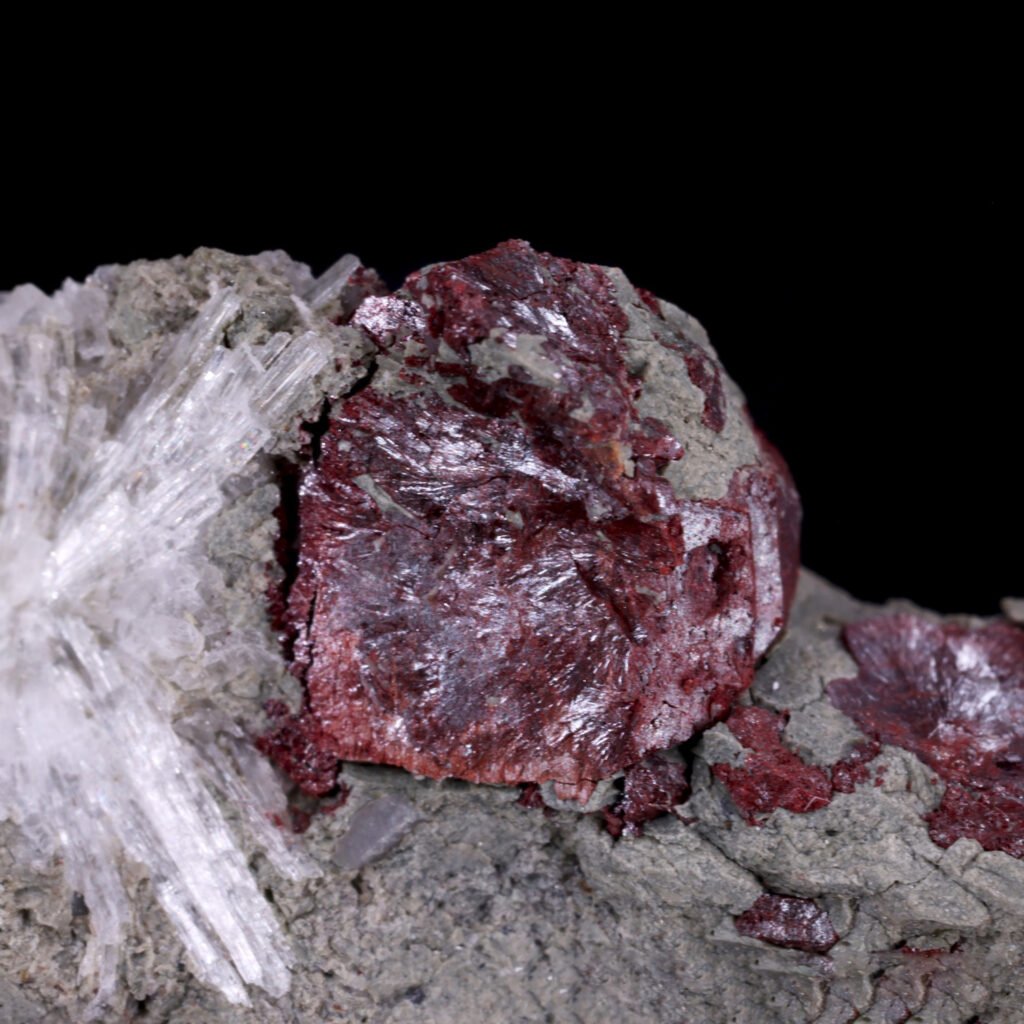
Gerstleyite commonly occurs as fine-grained, massive, or compact material, so well-developed individual crystals are not typically the most common form in which the mineral is encountered. Its structural characteristics are therefore often studied using mineralogical techniques rather than relying solely on visible crystal morphology. The arrangement of borate groups, sodium ions, hydroxyl groups, and water molecules determines the mineral’s crystallographic properties and influences its physical characteristics. In natural borate deposits, variations in temperature, evaporation, water availability, and solution chemistry can affect which hydrated or anhydrous borate phases are stable. As a result, Gerstleyite may occur within mineral assemblages containing several chemically related borates, with differences in hydration and composition reflecting changes in the conditions during mineral formation and subsequent alteration.
Physical Properties of Gerstleyite
Gerstleyite is generally found as a white, grayish, pale yellow, or pale green mineral, although the exact color can vary according to impurities, associated minerals, and the conditions under which the material formed. It commonly has a fine-grained, massive, compact, or earthy appearance rather than large, sharply defined crystals. The luster is typically dull to somewhat vitreous on fresh surfaces, while weathered or finely granular material may appear more earthy or chalky. Gerstleyite is generally translucent to opaque, with transparency strongly influenced by grain size and the presence of impurities. Its streak is typically light-colored, consistent with its pale appearance. Because the mineral commonly occurs in aggregates rather than isolated crystals, visible crystal faces and cleavage characteristics may be difficult to observe in ordinary hand specimens.
The relatively soft nature of Gerstleyite is consistent with its hydrated borate composition. Its physical behavior can also be influenced by its water content, grain size, porosity, and association with other minerals in the host deposit. Fresh material may have a different surface appearance from specimens that have undergone weathering or alteration. When examining a specimen, color and texture alone are therefore not sufficient for reliable identification because several other borate minerals can have similar pale colors and massive habits. The mineral’s physical properties are most useful when considered together with its chemical composition, geological occurrence, associated minerals, and crystallographic characteristics.
Formation and Geological Occurrence of Gerstleyite
Gerstleyite forms in borate-rich evaporite environments where alkaline waters become highly concentrated through prolonged evaporation. These environments commonly develop in closed or partially closed basins, where water carrying dissolved boron, sodium, and other chemical components accumulates in sediments or shallow saline lakes. As evaporation removes water, the concentration of dissolved substances gradually increases until individual minerals begin to precipitate. The formation of Gerstleyite is associated with particular stages of this process, when the solution contains suitable concentrations of sodium and boron under strongly alkaline conditions. Because borate minerals can have different stability ranges, changes in the chemistry of the brine may cause one mineral to form before or after another. Gerstleyite can therefore occur as part of a sequence of hydrated and anhydrous borate minerals rather than as an isolated phase.
The best-known occurrences of Gerstleyite are associated with the borate deposits of southern California, particularly the mineral-rich evaporite deposits of the Mojave Desert region. These deposits developed through a combination of sedimentation, groundwater activity, volcanic or hydrothermal input, and evaporation. Boron supplied to the basin became concentrated in the aqueous system, while sodium and other dissolved elements were progressively enriched as water was removed. Fine-grained Gerstleyite may occur within borate-bearing sediments or in association with other evaporite minerals. Later changes in groundwater circulation, temperature, hydration, or solution chemistry can also modify the original mineral assemblage. Consequently, Gerstleyite-bearing material may show relationships between different generations of borate minerals, with some phases representing primary precipitation and others developing through subsequent alteration or replacement.
Where Is Gerstleyite Found?
Gerstleyite is most closely associated with the borate deposits of California, United States, particularly those in the Mojave Desert and surrounding regions of southern California. This area contains extensive evaporite deposits that have produced a large number of sodium, calcium, and magnesium borate minerals. The mineral is especially associated with the Kramer Borate Deposit in Kern County, an important locality for the study of borate mineralogy. The geological setting of these deposits includes thick sequences of lacustrine and evaporitic sediments that accumulated in closed-basin environments. Boron was introduced into the basin through groundwater and other geological processes and was subsequently concentrated as the water evaporated. Under strongly alkaline conditions, the remaining brines became enriched in boron and sodium, allowing a succession of borate minerals to precipitate. Gerstleyite occurs within this complex mineral assemblage rather than being distributed uniformly throughout the deposit.
The distribution of Gerstleyite within borate deposits can be quite localized. Differences in the composition of individual layers, the availability of water, the concentration of dissolved elements, and later alteration processes can determine where particular borate phases are preserved. Gerstleyite may occur together with other hydrated and anhydrous borates, sometimes forming fine-grained aggregates or occurring within compact borate-rich material. California remains the principal region associated with the mineral, while occurrences outside the state are considerably less common. Because its formation requires a combination of high boron concentration, sodium-rich alkaline solutions, and suitable evaporitic conditions, Gerstleyite is not normally found in ordinary igneous, metamorphic, or common sedimentary rocks. Its occurrence is instead closely tied to specialized continental evaporite systems where extensive evaporation has produced highly concentrated borate-bearing solutions.
Types and Varieties of Gerstleyite
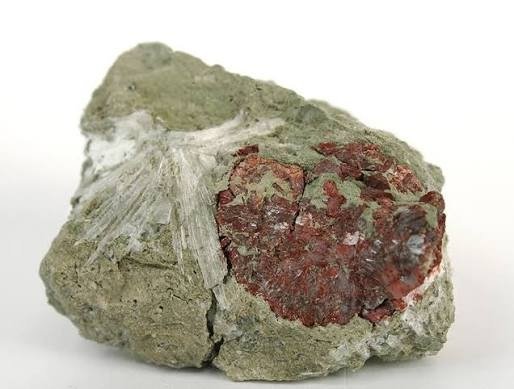
Gerstleyite is generally recognized as a distinct mineral species and does not have a large number of formally established varieties based on differences in chemical composition. However, natural Gerstleyite-bearing material can display noticeable differences in color, texture, grain size, and appearance depending on the geological environment and the minerals occurring with it. These differences are mainly related to impurities, mineral associations, crystal size, and alteration rather than representing separate mineral species. Because Gerstleyite commonly develops as fine-grained or massive material, specimens from different parts of a deposit may look considerably different even when they have essentially the same mineral composition. Descriptions of Gerstleyite specimens therefore often focus on their physical form and associated minerals rather than on officially defined varieties.
- Massive Gerstleyite – Compact material in which individual crystals are difficult to distinguish, producing a relatively uniform mineral texture.
- Fine-grained Gerstleyite – Material composed of very small crystals or aggregates, commonly giving the specimen a smooth, earthy, or compact appearance.
- White Gerstleyite – Pale material with a predominantly white appearance, generally associated with relatively low concentrations of strongly colored impurities.
- Grayish or yellowish Gerstleyite – Specimens showing gray, cream, yellow, or slightly greenish tones due to impurities or associated minerals within the deposit.
- Gerstleyite in borate aggregates – Material in which Gerstleyite occurs together with other borate minerals, producing mixed textures and variations in color and grain size.
- Altered Gerstleyite-bearing material – Specimens that have undergone later changes caused by groundwater, hydration, dehydration, or chemical alteration, sometimes resulting in changes to surface texture and mineral associations.
These forms describe the appearance and mode of occurrence of natural material rather than officially recognized mineral varieties.
Associated Minerals of Gerstleyite
Gerstleyite commonly occurs within complex borate mineral assemblages rather than as a completely isolated mineral. Its associated minerals can include other sodium-bearing and calcium-bearing borates that formed from the same evaporitic brines but under somewhat different chemical conditions. Minerals such as borax, kernite, ulexite, and colemanite are among the borates that can occur in the same general geological environments, although the exact assemblage varies between deposits and individual layers. The presence of these minerals reflects changes in the composition of the mineral-forming solutions during evaporation. As water is progressively removed from an alkaline basin, the concentrations of sodium, boron, calcium, and other dissolved components change, allowing different borate phases to become stable at different stages. Fine-grained Gerstleyite may consequently occur within or alongside other borate-rich material, sometimes making individual grains difficult to distinguish without mineralogical analysis.
The relationships between Gerstleyite and its associated minerals can also be affected by later geological processes. Changes in groundwater circulation, temperature, moisture, and solution chemistry may cause some hydrated borates to dissolve, recrystallize, or transform into other phases. As a result, a single specimen may contain several generations of minerals that formed at different stages of the deposit’s history. Examining these associations can help distinguish Gerstleyite from visually similar borates because locality and mineral assemblage provide important identification information. Since many borate minerals have pale colors, relatively low hardness, and massive or fine-grained habits, the presence of characteristic associated minerals can be more useful than appearance alone when evaluating a Gerstleyite specimen.
How to Identify Gerstleyite
Identifying Gerstleyite requires consideration of several properties because its typical fine-grained or massive habit does not provide a highly distinctive visual characteristic. The mineral can occur in white, gray, pale yellow, or slightly greenish material, and similar colors are found in a number of other borate minerals. Its generally soft and hydrated nature can provide useful preliminary information, while its association with evaporite sediments and other borates is an important geological clue. When examining a specimen, the overall texture, color, luster, transparency, hardness, and mode of occurrence should be considered together rather than relying on a single physical property. Fresh surfaces may appear somewhat vitreous or dull, whereas weathered surfaces can become more earthy or powdery. Because Gerstleyite is commonly present as fine-grained aggregates, individual crystal faces may be absent or difficult to observe.
A reliable identification normally requires mineralogical testing, particularly when the specimen is not from a well-documented locality. X-ray diffraction can be used to determine the characteristic crystal structure and distinguish Gerstleyite from structurally similar borates, while chemical analysis can confirm the presence and proportions of sodium, boron, oxygen, hydroxyl groups, and water indicated by its composition. Geological context is also useful: material from a known borate evaporite deposit containing a suitable assemblage of sodium and calcium borates is more consistent with Gerstleyite than visually similar material from an unrelated rock type. For this reason, locality information, associated minerals, chemical composition, and crystallographic data are normally considered together when making a definitive identification.
Applications of Gerstleyite
Gerstleyite has no significant direct industrial applications and is not commonly used as a commercial raw material. Its limited occurrence, specialized geological formation, and relatively uncommon availability make it unsuitable for large-scale extraction or manufacturing. Unlike commercially important borate minerals such as borax and kernite, Gerstleyite is mainly encountered as a mineralogical specimen. Its composition contains a substantial amount of boron, but its rarity and occurrence within complex evaporite deposits prevent it from being an important source of boron for industrial production. The mineral is therefore primarily encountered in geological collections, mineral databases, and specimens from well-known borate localities.
The main uses of Gerstleyite are related to mineral identification, geological study, and specimen collecting. Its chemical composition and occurrence can be examined alongside other borate minerals to characterize the mineral assemblages present in evaporite deposits. Individual specimens may also be preserved as examples of rare hydrated sodium borates, particularly when they have well-documented locality information. In mineral collections, Gerstleyite is generally valued for its rarity and geological occurrence rather than for ornamental or gem applications. It is not normally cut or polished for jewelry, and it does not have an established role as an abrasive, pigment, building material, or other common industrial mineral.