
Danburite is a calcium boron silicate mineral with the chemical formula CaB₂Si₂O₈ (also written as CaB₂(SiO₄)₂). As a relatively uncommon mineral, danburite is recognized for its transparent to translucent crystals, exceptional clarity, vitreous luster, and subtle coloration. In modern mineral classification frameworks, it is categorized within the silicate group as a tectosilicate. Although it does not share the widespread familiarity of quartz, topaz, or beryl, its physical durability, high brilliance, and well-formed prismatic crystals have made it a notable subject in mineralogy, specimen collecting, and gemology. The mineral typically forms elongated prismatic crystals that visually resemble topaz or fine quartz varieties; however, danburite maintains distinct crystallographic properties and a specific chemical composition that clearly separate it from these species. Naturally occurring specimens are most commonly colorless, though occurrences exhibiting pale yellow, golden yellow, pink, light brown, grayish, or near-white tones are regularly documented. High-clarity transparent crystals are periodically faceted into gemstones, where their Mohs hardness and resistance to abrasion allow them to perform reliably in jewelry settings.
History and Discovery of Danburite
Danburite was first discovered in 1839 near Danbury, Connecticut, USA, by American mineralogist Charles Upham Shepard. The mineral was named after its type locality, following the traditional mineralogical convention of referencing the location where a new species was initially identified. Although the original deposit in Danbury provided essential material for early descriptive studies, the locality became inaccessible over time as a result of urban development. Subsequent discoveries of additional deposits across various geological environments globally enabled mineralogists to determine its formation conditions and geographic distribution. Throughout the twentieth century, the mineral gained broader recognition among collectors and gemologists. High-yield deposits in Mexico—most notably in Charcas, San Luis Potosí—produced well-crystallized and gem-quality specimens, establishing the region as one of the primary commercial sources of danburite.
Formation and Geological Occurrence of Danburite
Danburite forms through specific geochemical processes primarily linked to hydrothermal activity, contact metamorphism, and the migration of volatile-rich fluids. The mineral develops when boron-bearing, chemically active solutions interact directly with calcium-rich host rocks under elevated temperature and pressure conditions. The primary setting for this process is within contact metamorphic zones and skarns, where igneous intrusions penetrate limestone, dolomite, or calc-silicate formations. Thermal energy and magmatic fluids introduce concentrated boron into the surrounding carbonate strata, creating favorable thermodynamic conditions for calcium borosilicate crystallization alongside associated minerals such as datolite, axinite, grossular garnet, diopside, and vesuvianite.
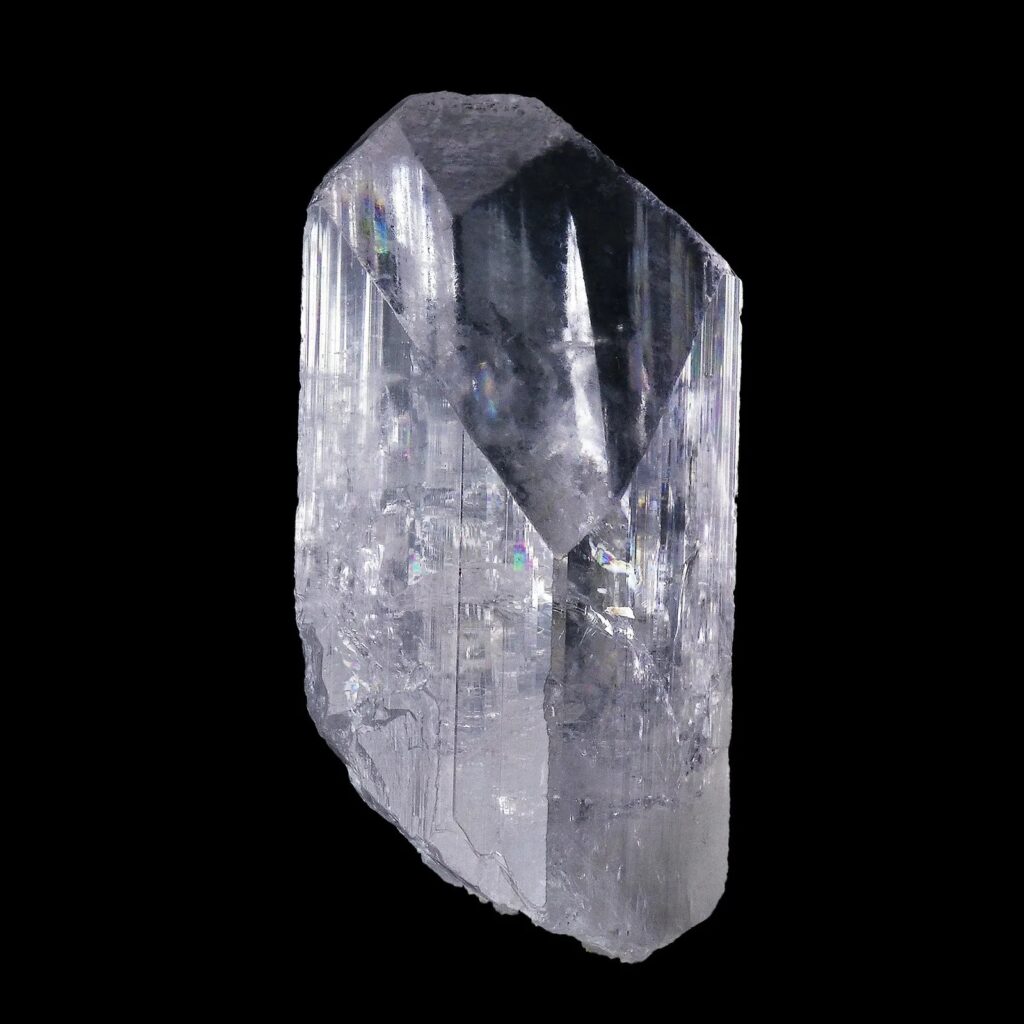
Beyond metamorphic skarn settings, danburite also occurs within marine and lacustrine evaporite deposits through low- to moderate-temperature diagenetic or metasomatic processes. Studies examining occurrences such as those in the Paradox Basin of Utah demonstrate that the mineral can precipitate when boron-rich, high-salinity brines circulate through evaporite sequences containing gypsum, anhydrite, or other calcium-bearing minerals. Physically, danburite crystallizes as well-defined, elongated prismatic forms terminated by prominent wedge-like faces, occurring as isolated single crystals, parallel-growth aggregates, or dense clusters lining interior cavity walls. Well-crystallized, transparent specimens displaying sharp face development and high visual clarity are particularly valued in mineralogical collections for illustrating structural crystallographic features and optical transparency.
Types and Varieties of Danburite
While danburite is a distinct mineral species without officially recognized mineralogical sub-varieties, specimens are primarily categorized based on color variations, physical growth habits, and localized optical phenomena:
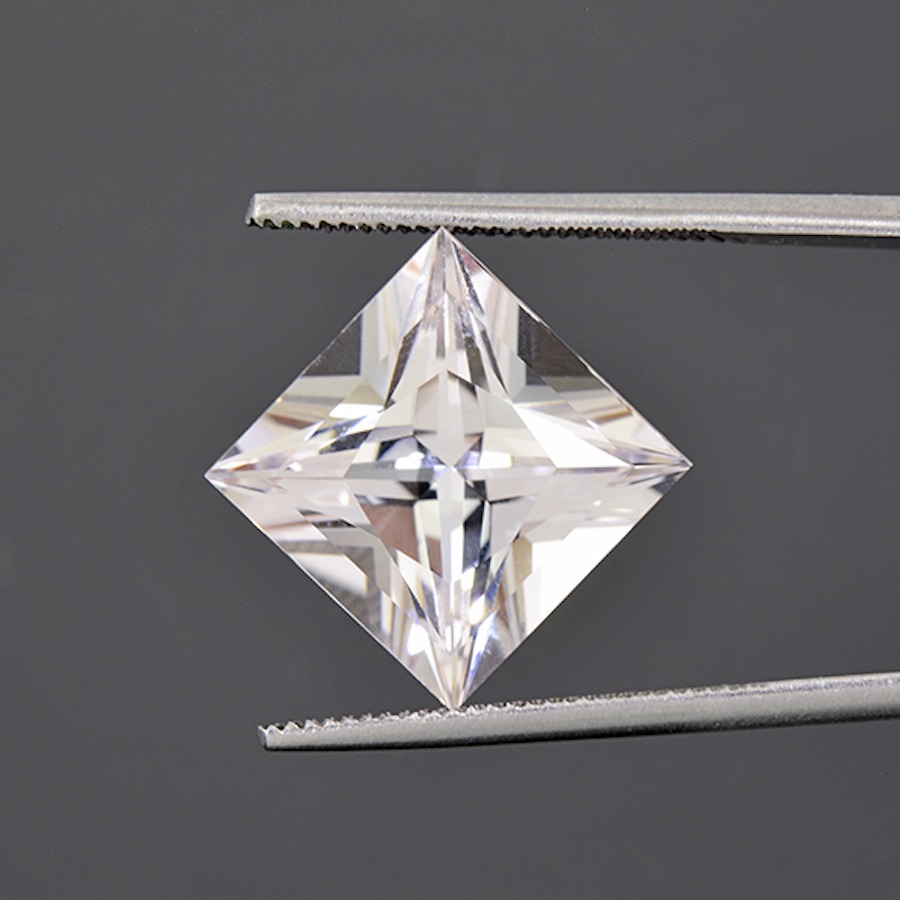
- Colorless (Clear) Danburite: This is the most common and widely recognized type of danburite. Highly transparent and eye-clean specimens are often faceted as gemstone substitutes for colorless topaz or quartz due to their strong vitreous luster and high clarity.
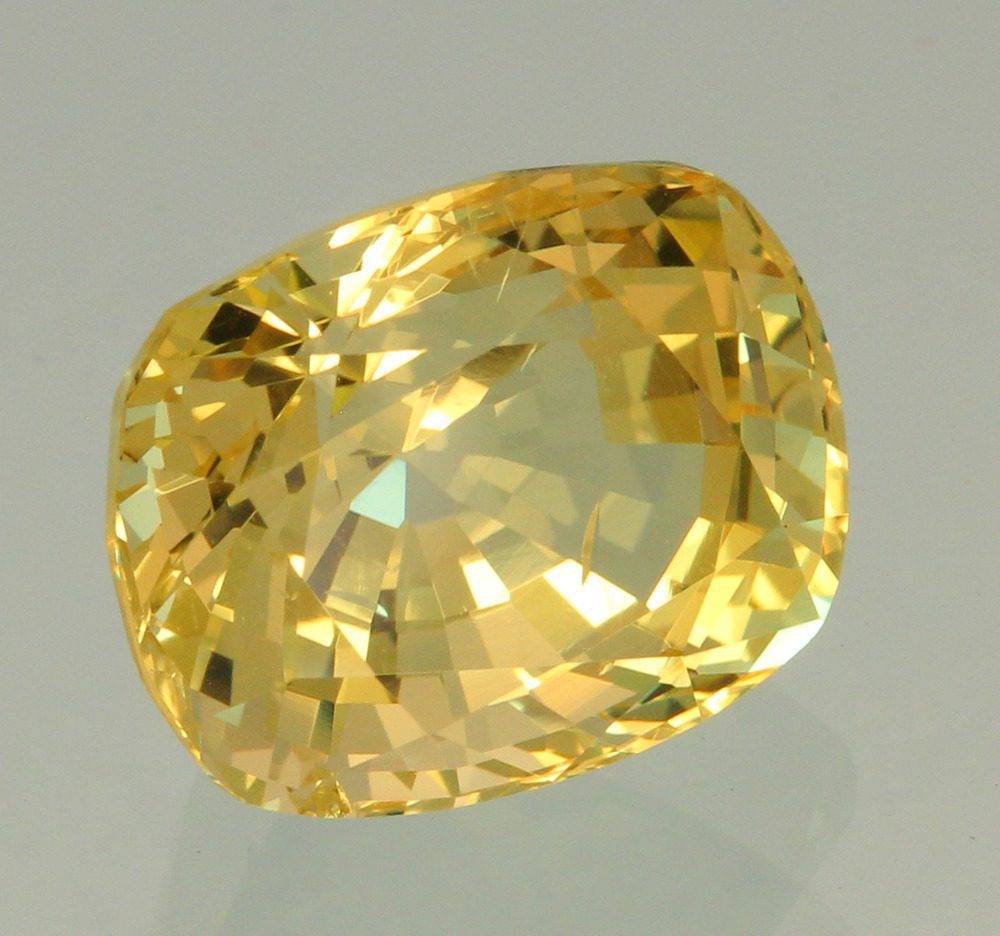
- Yellow to Golden Danburite: Ranging in shade from pale wine-yellow to deep golden-yellow, this color variation occurs when trace impurities or specific structural centers are present during crystal growth. Prominent golden specimens are notably produced in deposits across Myanmar and Russia.
- Pink Danburite: Highly sought after by gemstone and mineral collectors, pale pink to peachy-pink danburite is a naturally occurring, rare variety. The finest natural pink specimens originate predominantly from Charcas, San Luis Potosí, Mexico.
- Brownish and Greyish Danburite: Specimens displaying light brown, tan, or greyish tones are less frequently utilized in gem cut applications. These colors generally arise from inclusions, microscopic fluid cavities, or variations in trace mineral content during formation.
- Druzy and Matrix Aggregates: Beyond isolated single crystals, danburite frequently forms intergrown crystal clusters or matrix specimens where prismatic crystals are coated with fine, sparkling microcrystalline quartz (druzy coatings).
Crystal Structure of Danburite
Danburite crystallizes in the orthorhombic crystal system, belonging specifically to the orthorhombic dipyramidal crystal class. Its unit cell parameters consist of three mutually perpendicular crystallographic axes of unequal length (a, b, and c are all unequal, with alpha = beta = gamma = 90 degrees).
At the atomic level, the structural framework of danburite consists of a three-dimensional network of corner-sharing silica (SiO₄) and borate (BO₄) tetrahedra. In this framework, paired B₂O₇ and Si₂O₇ pyrosilicate-like groups link together, with calcium (Ca²⁺) ions occupying the interstitial sites within the open channels of the tetrahedral lattice to balance the electrical charge. This specific calcium borosilicate topology gives danburite high chemical stability and a Mohs hardness of 7.0 to 7.5.
In terms of crystal morphology, danburite typically displays elongated prismatic growth parallel to the c-axis, bounded by sharp vertical prism faces and terminated by distinct wedge-shaped dipyramidal faces. The crystals can occur as isolated individuals or as intergrown aggregates, with well-formed, highly transparent specimens reaching lengths of over ten centimeters in major hydrothermal and skarn deposits.
Physical and Chemical Properties of Danburite
Danburite is a calcium boron silicate mineral with the ideal chemical formula CaB₂Si₂O∯ (often written as CaB₂(SiO₄)₂). Chemically, it consists of approximately 22.8% CaO, 28.3% B₂O₃, and 48.9% SiO₂ by weight, forming a balanced borosilicate network with high thermal and chemical stability. On the Mohs hardness scale, danburite ranks between 7.0 and 7.5, giving it substantial resistance to scratching and surface wear. It exhibits a specific gravity ranging from 2.93 to 3.03, an uneven to subconchoidal fracture pattern, and a brittle tenacity. Unlike minerals such as topaz, danburite lacks distinct or prominent cleavage, possessing only poor basal cleavage on {001}; this structural trait reduces the likelihood of mechanical splitting during handling, cutting, or exposure to physical stress.
Optically, danburite is anisotropic and biaxial, with a refractive index spanning from nα = 1.627 to nγ = 1.639 and a low birefringence of approximately 0.006. Its surface luster is vitreous to slightly greasy, while its diaphaneity ranges from completely transparent in gem-quality crystals to translucent in denser aggregates. The dispersion of danburite is measured at 0.017, providing moderate brilliance when faceted without displaying extreme spectral fire. Under ultraviolet radiation, many danburite specimens show diagnostic luminescence, often fluorescing light blue to blue-green under both shortwave and longwave UV light, and occasionally exhibiting weak red or blue-white thermoluminescence when subjected to heat.
Major Danburite Localities
Danburite has been documented across a variety of geological settings globally, with notable occurrences in North America, Asia, Africa, and Europe. Historically, the mineral was first identified in Danbury, Connecticut, USA, which serves as its type locality and the origin of its name, though urban development has rendered the location inaccessible for modern collecting. Additional deposits within the United States have been documented in Russell, New York, as well as in evaporite settings within Utah. In contemporary mineral commerce and gemology, Mexico stands as the most prominent source of high-quality specimens; the mining district around Charcas in San Luis Potosí is internationally recognized for producing exceptionally large, well-developed prismatic crystals and clear gem-grade material that supplies much of the global collector market.
In addition to North America, significant deposits exist across several continents. In Africa, Madagascar yields clear to pale golden or champagne-colored transparent crystals that are frequently selected for gemstone faceting due to their clarity. In Asia, occurrences on Kyushu Island, Japan, as well as hydrothermal deposits in Myanmar and Russia (notably Dalnegorsk), produce well-crystallized specimens valued in mineralogical research and public museum collections. Other documented localities include skarn and metamorphic environments in Tanzania, Switzerland, and Bolivia, each contributing unique regional variations in growth habit, matrix association, and fluid inclusion characteristics.
Danburite vs Quartz and Topaz
Danburite is frequently evaluated alongside quartz and topaz due to shared physical characteristics, such as high transparency, vitreous luster, and prismatic crystal development. While visually comparable in colorless and pale varieties, significant diagnostic differences exist across their chemical, crystallographic, and optical parameters.
| Property | Danburite | Quartz | Topaz |
|---|---|---|---|
| Chemical Formula | CaB₂Si₂O₈ | SiO₂ | Al₂SiO₄(F,OH)₂ |
| Chemical Group | Calcium Borosilicate | Silicon Dioxide | Fluorine Aluminum Silicate |
| Crystal System | Orthorhombic | Trigonal | Orthorhombic |
| Mohs Hardness | 7.0 – 7.5 | 7.0 | 8.0 |
| Refractive Index | 1.627 – 1.636 | 1.544 – 1.553 | 1.606 – 1.638 |
| Specific Gravity | 2.97 – 3.03 | 2.65 | 3.49 – 3.57 |
| Cleavage | Poor / Indistinct | None | Perfect basal {001} |
| Birefringence | 0.006 (Very low) | 0.009 (Low) | 0.008 – 0.010 (Low) |
Applications and Uses of Danburite
Danburite serves several notable functions across gemology, mineral collecting, and scientific research. In the gemstone and jewelry industry, high-clarity transparent crystals—particularly colorless, pale yellow, and pink varieties—are faceted into various gem cuts for display and commercial use. With a Mohs hardness of 7.0 to 7.5 and an absence of distinct cleavage, danburite offers strong resistance to surface scratching and structural splitting, enabling it to perform reliably when mounted in rings, pendants, and other fine jewelry settings.
Beyond lapidary applications, danburite holds significant value in mineral specimen collecting and scientific studies. Undamaged, well-formed prismatic crystals—especially large specimens displaying sharp wedge-like terminations or preserved on matrix—are sought after by private collectors and public museums as classic representative display pieces. Furthermore, because of its distinct calcium borosilicate network structure, danburite serves as an important subject in mineralogical research to examine tetrahedral framework stability, phase transitions under high pressure and temperature, and the geochemical behavior of boron during metamorphic skarn formation.