Bloodstone : Gemological Properties, Formation, and Value
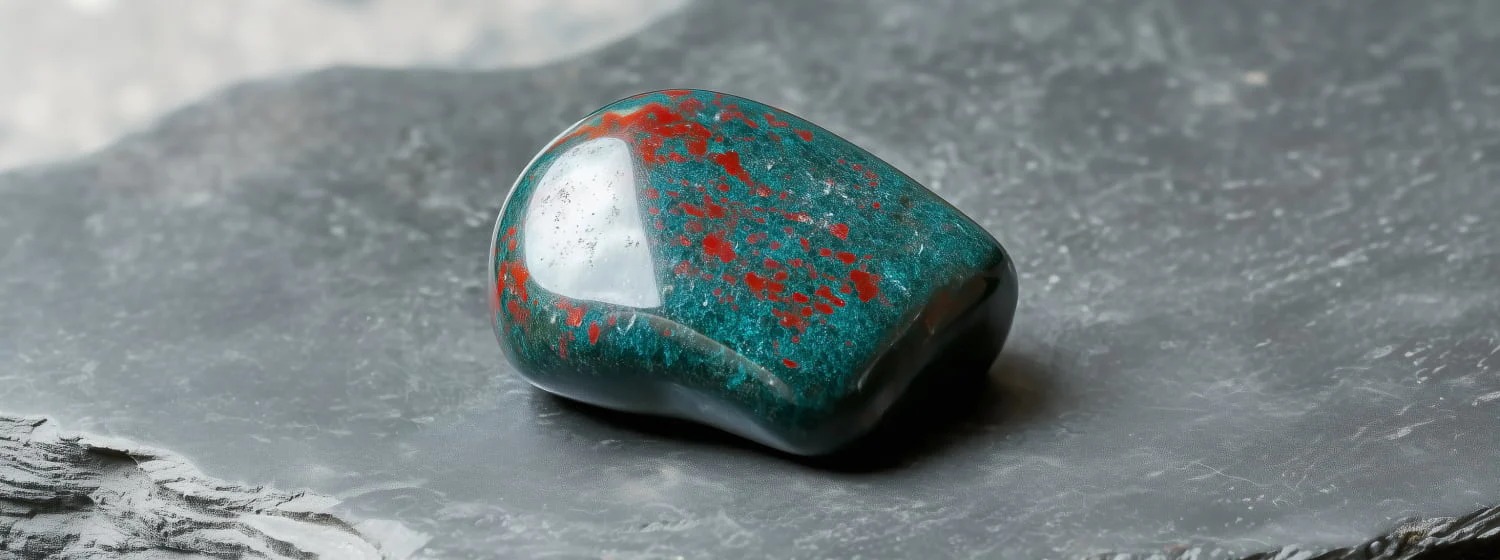
What is Bloodstone? Bloodstone, historically known as Heliotrope, stands as one of the most enigmatic and storied varieties within the vast chalcedony family of quartz. Instantly recognizable by its deep, forest-green opaque matrix—often speckled with dramatic, iron-rich inclusions that resemble droplets of fresh blood—the stone possesses a visual intensity that has captivated humanity for millennia. Unlike the ephemeral brilliance of transparent gemstones, bloodstone derives its charm from an earthy, primal contrast, a characteristic that has woven it deeply into the fabric of human myth, legend, and spiritual devotion across diverse civilizations. From a gemological perspective, bloodstone is far more than an aesthetic curiosity; it is a testament to the complex geochemical processes of the Earth, valued as much for its remarkable durability as for its unique color patterns. Each specimen acts as a distinct, natural mosaic, ensuring that no two pieces are ever truly identical, a trait that remains a cornerstone of its appeal to collectors and lapidary enthusiasts alike. Beyond its physical composition, bloodstone functions as a profound cultural artifact, serving as an enduring bridge between the ancient world—where it was coveted by soldiers as a protective talisman of strength—and the contemporary era, where it persists as a respected and historic birthstone for the month of March, bridging the gap between geological formation and the human imagination. The Genesis and Lore of Bloodstone The formation of bloodstone is a remarkable geological event, occurring primarily within low-temperature hydrothermal veins where silica-rich fluids permeate porous host rocks. As these fluids cool, they precipitate as microscopic quartz crystals, creating the dense, opaque structure of chalcedony. The stone’s signature red flecks are the result of localized oxidation: as iron-rich mineral solutions infiltrate the chlorite-infused green matrix, they undergo a chemical reaction to form inclusions of hematite—the very essence that bestows the stone with its evocative name. This earthly origin is deeply intertwined with a rich tapestry of folklore, as the stone’s striking appearance has historically been interpreted through diverse mystical lenses. In antiquity, the stone was known as Heliotrope, a name derived from the Greek words for “sun” and “turn.” As documented in Pliny the Elder’s Natural History (Book XXXVII), the ancients believed the gem possessed the magical ability to turn the sun’s rays red when submerged in water. Pliny himself recorded the lore that magicians once used the stone to confer invisibility upon its wearer—a belief that persisted well into the Middle Ages, notably appearing in Giovanni Boccaccio’s Decameron (Eighth Day, Third Tale). Throughout the Roman Empire, soldiers carried heliotrope as a powerful talisman of vitality and protection, firmly believing that it could staunch the flow of blood from battle wounds. By the medieval period, the stone’s symbolism shifted to incorporate Christian iconography; it became widely known as the “Martyr’s Stone.” A pervasive legend emerged claiming that the gem was first formed when drops of Christ’s blood fell onto a piece of dark green jasper at the foot of the Cross, staining the earth for eternity. This association with the Crucifixion led to the stone being carved into intaglios depicting sacred scenes, cementing its role as a revered amulet of spiritual strength and divine healing. Whether regarded as a tool of ancient sorcery or a relic of religious sacrifice, bloodstone remains a profound intersection of geological formation and human imagination. Varieties and Color Variations of Bloodstone While the hallmark of true bloodstone—or heliotrope—is its deep, opaque green matrix punctuated by distinct red hematite inclusions, the marketplace often classifies several related chalcedony varieties under the same umbrella. Understanding these distinctions is essential for both collectors and jewelry enthusiasts, as the term “bloodstone” can sometimes be applied broadly to various forms of spotted or patterned jasper and chalcedony. Heliotrope Heliotrope is the traditional and scientific name for bloodstone. Historically used in classical texts and early mineralogical descriptions, the term refers to the dark green chalcedony marked with red hematite inclusions. In modern gemology and jewelry trade, heliotrope and bloodstone are generally considered synonymous, both describing the distinctive green stone with red “blood-like” spots. Blood Jasper Blood jasper is a trade name sometimes used for stones that resemble bloodstone but display a more jasper-like structure. These materials may show darker red patches, brownish tones, or black matrices rather than the typical green background of classic bloodstone. Many specimens also contain white or gray quartz veining, giving them a more mottled and high-contrast appearance. Despite the name, blood jasper is usually classified separately from true bloodstone. Oriental Jasper This is a classic trade term, historically applied to high-quality bloodstone or blood-jasper sourced from Asian deposits. The prefix “Oriental” was traditionally utilized in the gemstone industry to denote material of exceptional quality or to lend an air of exoticism and prestige to the stone in Western markets. Fancy Jasper This is a broad trade category encompassing chalcedony or jasper that displays a spectrum of colors beyond the traditional green and red. Fancy Jasper may include shades of yellow, purple, orange, or cream in various mottled or swirling patterns. While these specimens are geologically related to bloodstone, they lack the specific “blood-like” red hematite drops that define the primary birthstone. Plasma In mineralogical terms, plasma is a bright, leek-green variety of chalcedony. If this green material contains the signature red hematite spots, it is classified as bloodstone. However, if the red inclusions are absent, the stone is simply referred to as plasma. Prase Similar to plasma, prase is a duller, leek-green chalcedony. While it can occasionally contain red spotting and be grouped with bloodstone, it is generally distinguished by a lighter, more muted green base color compared to the deep “imperial” green favored in high-quality bloodstone specimens. Does Bloodstone Make a Good Jewelry Stone? Bloodstone is an exceptional choice for jewelry, perfectly balancing bold aesthetics with impressive physical durability. As a member of the quartz family, it possesses a Mohs hardness of 6.5 to 7, making it sufficiently scratch-resistant for daily wear in rings, bracelets, and pendants. Its greatest strength lies in its toughness; because it lacks