
Yugawaralite is a rare calcium aluminosilicate mineral belonging to the zeolite group. It is a hydrated tectosilicate mineral with the chemical formula CaAl₂Si₆O₁₆·4H₂O and is recognized for its transparent to translucent crystals, delicate appearance, and unusual crystal structure. Like other zeolite minerals, Yugawaralite is characterized by an open framework of interconnected silicon and aluminum tetrahedra, which creates channels and cavities that can contain water molecules. This structural feature gives Yugawaralite typical zeolite properties, including the ability to release and absorb water under suitable conditions and participate in limited ion exchange processes.
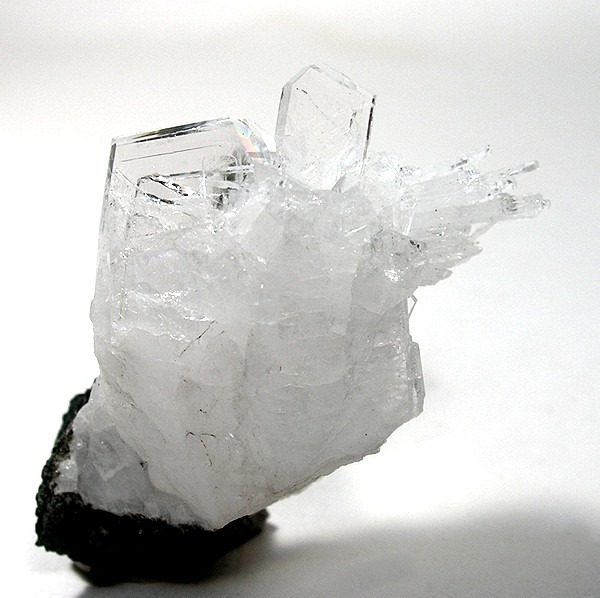
Yugawaralite commonly appears as colorless, white, or pale pink crystals with a vitreous to pearly luster. The mineral usually forms small prismatic or tabular crystals and is often found coating the surfaces of volcanic rocks or filling cavities created by hydrothermal alteration. Although it shares similarities with other zeolite minerals, Yugawaralite is distinguished by its monoclinic crystal system, specific chemical composition, and unique framework arrangement. Because of its rarity and limited occurrence, Yugawaralite is mainly collected as a mineral specimen and is highly valued by mineral enthusiasts and researchers studying zeolite mineralogy.
History of Yugawaralite
Yugawaralite was first discovered in 1952 near the Yugawara Hot Springs area in Kanagawa Prefecture, Japan. The mineral was identified and described by Japanese mineralogists who studied the unusual zeolite crystals found in this geothermal region. The name “Yugawaralite” was derived from its type locality, following the traditional mineral naming practice of associating newly discovered minerals with important geographic locations.
The discovery of Yugawaralite expanded scientific knowledge of zeolite minerals and provided researchers with a new example of a calcium-rich aluminosilicate framework. Since its initial description, further studies have focused on its crystal structure, chemical composition, and relationship with other zeolite minerals. Research on Yugawaralite has helped mineralogists better understand how variations in silicon-aluminum ordering and water content influence the structure and properties of zeolite minerals.
Although Yugawaralite was first identified in Japan, later discoveries have confirmed its presence in several other regions around the world, including parts of India, the United States, Canada, and other areas with suitable volcanic and geothermal geological conditions. Despite these additional occurrences, high-quality Yugawaralite crystals remain uncommon, making well-formed specimens valuable additions to mineral collections.
Formation of Yugawaralite
Yugawaralite forms mainly through low-temperature hydrothermal processes, where hot, mineral-rich fluids interact with volcanic rocks and create new secondary minerals. These fluids carry dissolved elements such as calcium, aluminum, and silicon through cracks, cavities, and porous areas within volcanic rocks. As the temperature decreases and the chemical environment changes, these elements gradually crystallize together with water molecules to form Yugawaralite.
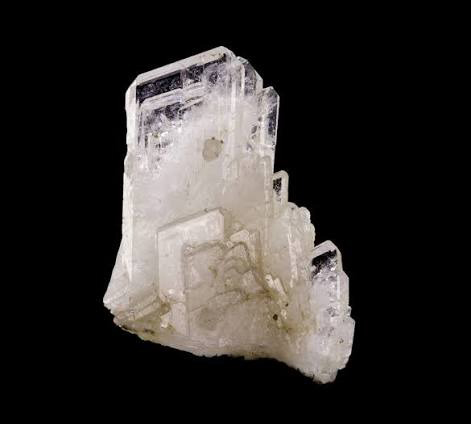
The mineral is typically associated with volcanic environments, especially areas where basaltic or other volcanic rocks have undergone hydrothermal alteration. During this process, the original rock minerals are partially dissolved by circulating fluids, allowing zeolite minerals such as Yugawaralite to grow in open spaces and fractures. The presence of calcium-rich fluids and suitable temperature conditions is particularly important for the formation of Yugawaralite.
Yugawaralite is often found together with other zeolite minerals, including stilbite, heulandite, and other calcium aluminosilicates. These mineral associations provide important information about the temperature, pressure, and chemical conditions under which the minerals formed. Because Yugawaralite develops under specific geological conditions, its occurrence is relatively limited compared with more common zeolite minerals. Its formation process makes it an important mineral for studying hydrothermal alteration, volcanic geology, and the complex chemistry of zeolite structures.
Types of Yugawaralite
Yugawaralite does not have officially recognized gemstone varieties, but mineral collectors commonly describe different forms based on crystal appearance, color, and occurrence. These variations reflect differences in crystal growth conditions, trace elements, and the geological environment where the mineral formed.
- Colorless Yugawaralite: The most typical form, appearing as transparent to translucent crystals with a glass-like luster. Clear crystals are highly valued by collectors because well-developed specimens are relatively rare.
- White Yugawaralite: Usually occurs as translucent or opaque crystals, often forming small clusters or coatings on a host rock. This type is commonly found in association with other zeolite minerals.
- Pale Pink Yugawaralite: A less common color variation characterized by light pink or pinkish tones. The coloration is generally related to trace elements or subtle structural differences rather than a change in the mineral’s basic composition.
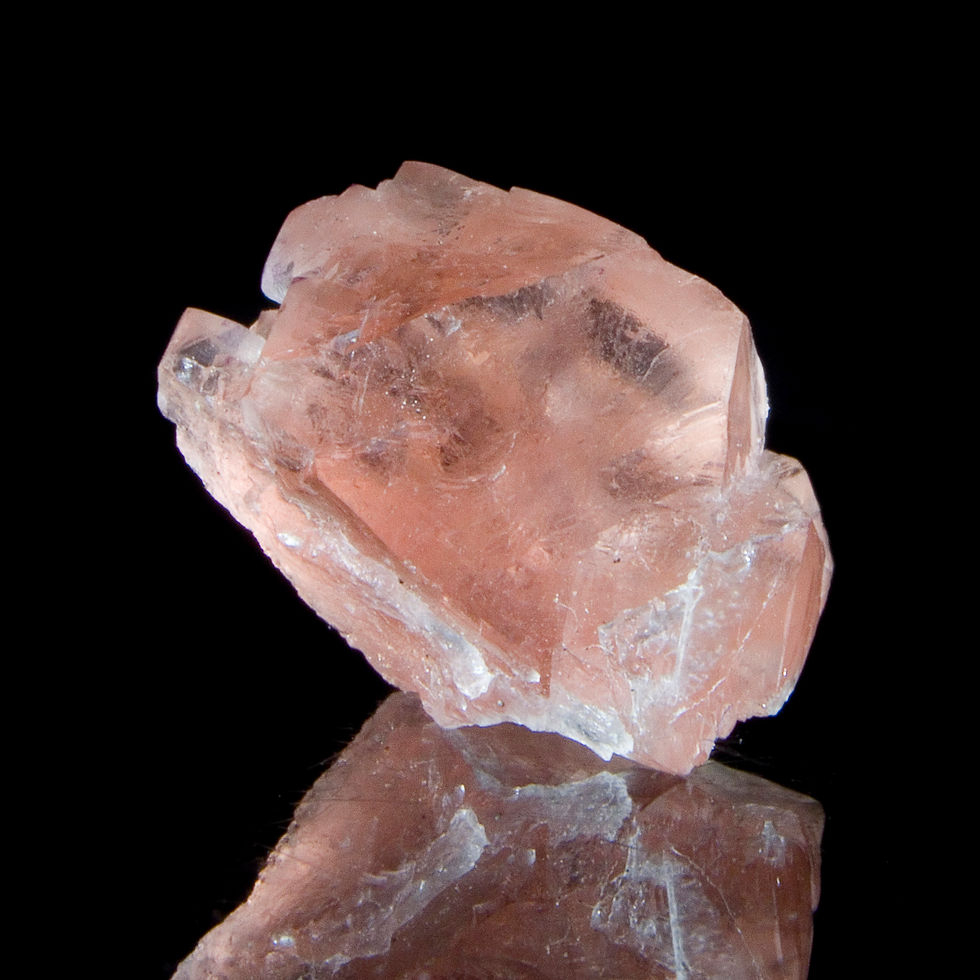
- Matrix Yugawaralite Specimens: Many collected specimens consist of Yugawaralite crystals attached to volcanic rock or other zeolite minerals. These specimens are often appreciated for showing the natural geological environment in which the mineral formed.
- Locality-Based Yugawaralite Specimens: Mineral collectors may also classify Yugawaralite according to its geographic origin, as specimens from different localities can vary in crystal size, habit, transparency, and association with other minerals. Famous localities often increase the scientific and collecting value of individual specimens.
Occurrence and Localities of Yugawaralite
Yugawaralite is a relatively rare mineral that occurs mainly in hydrothermal environments associated with volcanic rocks. Its type locality is the Yugawara Hot Springs area in Kanagawa Prefecture, Japan, where the mineral was first discovered and described. This geothermal region provided ideal conditions for the formation of zeolite minerals because hot, mineral-rich fluids circulated through volcanic rocks and deposited new minerals within cavities and fractures.
In addition to Japan, Yugawaralite has been reported from several other regions around the world. Notable occurrences include zeolite-rich areas in Maharashtra, India, where many high-quality zeolite minerals have formed in basaltic volcanic rocks. Other reported localities include parts of the United States, Canada, Iceland, Italy, and volcanic islands such as Réunion. These occurrences are generally limited in size, and specimens with well-developed crystals are relatively uncommon.
Yugawaralite deposits are typically found alongside other hydrothermal minerals, including stilbite, heulandite, chabazite, and other members of the zeolite group. The mineral’s distribution is closely related to geological environments where low-temperature hydrothermal fluids interact with volcanic rocks, making it an important indicator mineral for studying secondary mineral formation processes.
Crystal Structure of Yugawaralite
Yugawaralite crystallizes in the monoclinic crystal system and belongs to the framework silicate class of minerals. Its crystal structure consists of interconnected SiO₄ and AlO₄ tetrahedra, which form a three-dimensional framework containing channels and cavities. These open spaces accommodate calcium ions and water molecules, which are essential components of the mineral’s structure.
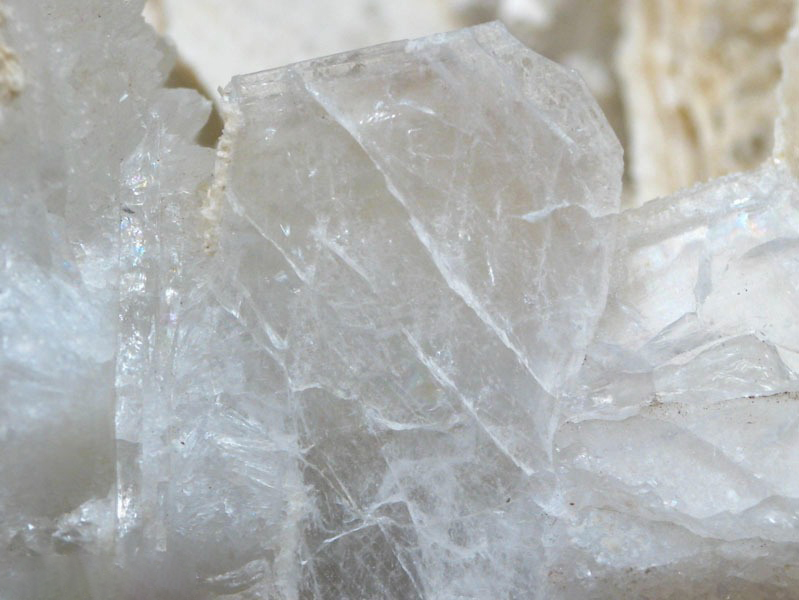
The framework structure of Yugawaralite is typical of zeolite minerals, where the substitution of aluminum for silicon creates a negative charge that must be balanced by additional cations such as calcium. Water molecules are held within the structural channels and can be removed through heating without completely destroying the mineral framework under suitable conditions.
The arrangement of silicon and aluminum atoms within the framework gives Yugawaralite its distinctive crystallographic characteristics and separates it from other closely related zeolites. Studies of its crystal structure have contributed to scientific research on zeolite formation, crystal growth mechanisms, and the relationship between chemical composition and mineral properties.
Physical and Chemical Properties of Yugawaralite
Yugawaralite is a hydrated calcium aluminosilicate mineral with the chemical formula CaAl₂Si₆O₁₆·4H₂O. It belongs to the zeolite group and contains calcium, aluminum, silicon, oxygen, and structurally incorporated water molecules. The presence of water within its framework is one of the defining characteristics of Yugawaralite and influences many of its physical properties.
Physically, Yugawaralite is usually colorless, white, or pale pink and has a vitreous to pearly luster. It typically forms transparent to translucent crystals and has a Mohs hardness of approximately 4.5–5, making it a relatively soft mineral compared with quartz and many gemstone minerals. It has a white streak, perfect to good cleavage, and a brittle fracture. Its specific gravity is relatively low, generally around 2.2, which is consistent with many zeolite minerals containing structural water.
Chemically, Yugawaralite can undergo dehydration when heated because water molecules are stored within its framework cavities. Like other zeolites, it may also exhibit ion exchange properties due to the presence of open channels and exchangeable calcium ions. However, because Yugawaralite is rare and difficult to obtain in large quantities, these properties are mainly of scientific interest rather than commercial importance.
Applications of Yugawaralite
Unlike industrial zeolites such as clinoptilolite or synthetic zeolite materials, Yugawaralite has very limited commercial applications because of its rarity and small-scale occurrence. Its primary importance is in mineral collecting, geological research, and scientific studies rather than industrial production.
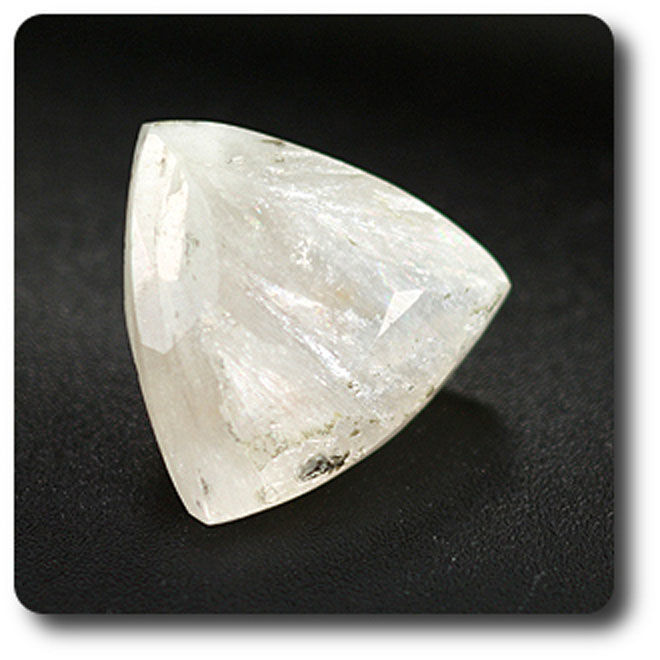
Yugawaralite is highly valued by mineral collectors due to its attractive crystal forms, transparency, and rarity. Well-developed specimens from classic localities are often preserved in private collections and museums. The mineral’s delicate crystals and unusual zeolite structure make it an interesting specimen for collectors who study uncommon minerals.
In scientific research, Yugawaralite is used as a natural example for studying zeolite crystal chemistry, hydrothermal mineral formation, and framework silicate structures. Researchers analyze its structure to better understand how aluminum and silicon are arranged within zeolite frameworks and how water molecules influence mineral stability.
Although Yugawaralite does not have significant industrial uses, its geological importance provides valuable insights into volcanic alteration processes and the formation of secondary minerals. Its rarity, unique structure, and connection to geothermal environments make it an important mineral species within the field of mineralogy.