
Ulexite is a naturally occurring borate mineral best known for its unusual optical properties and distinctive fibrous structure. Its chemical formula, NaCaB₅O₆(OH)₆·5H₂O, indicates that it contains sodium, calcium, boron, oxygen, hydrogen, and water molecules within its crystal structure. Although it is classified as a relatively common borate mineral, Ulexite has gained worldwide recognition because of its ability to transmit light through parallel mineral fibers, creating an effect similar to modern fiber-optic cables.
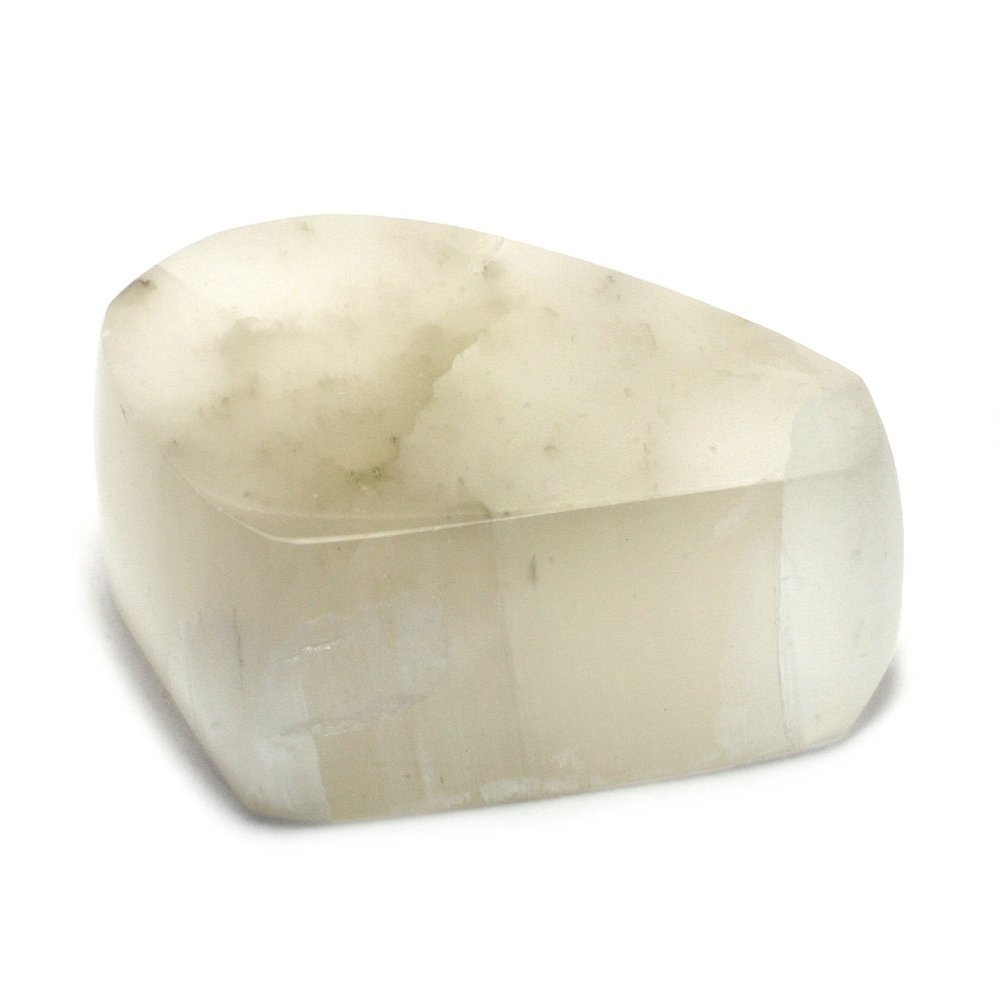
Because of this remarkable characteristic, Ulexite is commonly called the “Television Stone.” When a polished specimen is placed on top of printed text or an image, the image appears to be projected onto the upper surface of the mineral. This phenomenon has fascinated scientists, educators, collectors, and crystal enthusiasts for decades. Unlike traditional gemstones that are valued primarily for their color or brilliance, Ulexite is appreciated for its scientific significance and interactive visual properties.Ulexite usually forms in dry, evaporative environments where boron-rich water gradually concentrates and crystallizes. It commonly occurs as white, silky, fibrous masses rather than as large, well-defined crystals. Today, the mineral remains an important source of boron while also serving as one of the most recognizable examples of a naturally occurring optical mineral.
History and Discovery of Ulexite
Ulexite was first identified and scientifically described in 1840. The mineral was named after the German chemist Georg Ludwig Ulex, who made important contributions to analytical chemistry and the study of mineral compounds. During the 19th century, scientists were becoming increasingly interested in borate minerals because of their economic importance and their potential industrial applications. As researchers explored evaporite deposits around the world, they began to recognize Ulexite as a distinct mineral species with a unique chemical composition.
Initially, scientific interest in Ulexite focused primarily on its boron content rather than its optical behavior. However, researchers soon discovered that the mineral possessed an unusual ability to transmit light through its fibrous internal structure. This property distinguished Ulexite from nearly every other known mineral and eventually led to its popular nickname, the “Television Stone.” Long before fiber-optic communication became an essential part of modern technology, Ulexite provided scientists with a natural example of how light could travel through extremely small, parallel channels.
Throughout the 20th century, the mineral became increasingly valuable as an educational specimen. Universities, museums, and geological collections frequently included Ulexite because it offered a simple and effective way to demonstrate optical principles. Today, the mineral continues to attract attention not only because of its industrial significance as a borate mineral but also because of its extraordinary scientific and educational value.
Formation of Ulexite
Ulexite forms in evaporite deposits that develop in arid and semi-arid environments where water containing high concentrations of dissolved minerals gradually evaporates. The process usually begins when boron is released from volcanic rocks through weathering and transported into nearby lakes, salt flats, and underground water systems. As evaporation continues, the concentration of dissolved sodium, calcium, and boron increases until the chemical conditions become suitable for Ulexite to crystallize. This process often requires long periods of geological activity and stable environmental conditions.
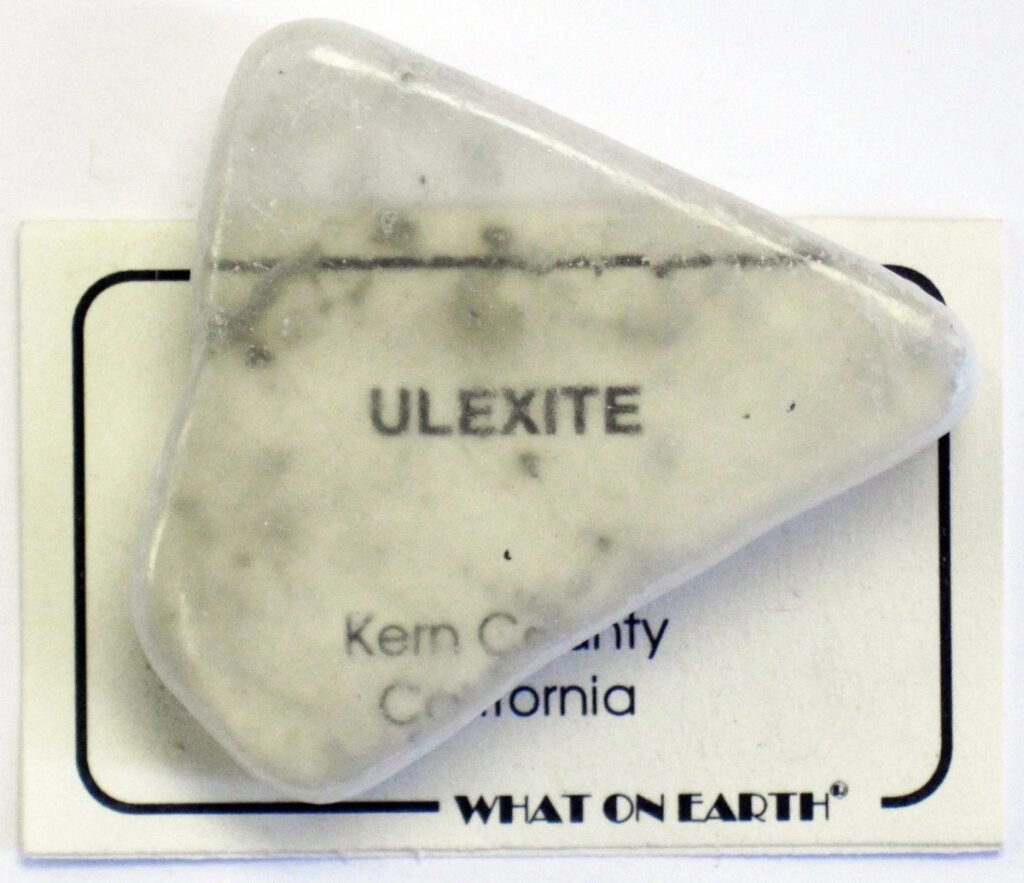
Most Ulexite deposits are associated with ancient lake basins and desert regions that experience limited rainfall and high evaporation rates. The mineral commonly occurs alongside other evaporite minerals such as borax, colemanite, gypsum, and halite. Unlike many minerals that develop as individual crystals, Ulexite usually grows as dense masses of parallel fibers. This fibrous growth pattern gives the mineral its remarkable optical properties and ultimately produces the famous television stone effect that makes Ulexite one of the most distinctive borate minerals in the world.
Types and Varieties of Ulexite
Although Ulexite is recognized as a single mineral species and does not have officially accepted mineral varieties, natural specimens can display different appearances depending on their crystal growth, geological environment, fiber development, and impurity content.
- Fibrous Ulexite – The most common form of the mineral, characterized by tightly packed parallel fibers that create the well-known television stone effect. This variety is highly valued for educational demonstrations because it can transmit images and light through its internal structure.
- Massive Ulexite – A compact and dense form that lacks clearly visible fibers on the surface. Massive specimens often appear as white or gray nodules and are commonly found in evaporite deposits associated with other borate minerals.
- Transparent or Translucent Ulexite – Specimens with greater clarity that allow light to pass through more effectively. These samples usually produce a stronger optical effect and are often selected for mineral collections and scientific displays.
- Nodular Ulexite – Rounded aggregates that develop within sedimentary deposits. These specimens frequently resemble cotton balls or cauliflower-like masses because of the way the mineral crystallizes within fine-grained sediments.
- Polished Television Stone – Although not a separate mineral variety, polished specimens are widely sold because surface polishing enhances the mineral’s natural fiber-optic properties, making the transmitted images much easier to observe.
Crystal Structure of Ulexite
Ulexite crystallizes in the triclinic crystal system, which is the least symmetrical of all crystal systems. Unlike minerals that develop in highly ordered cubic or hexagonal structures, Ulexite forms within a more complex and less symmetrical arrangement of atoms. Its crystal lattice is composed of borate groups linked together with sodium and calcium ions, while hydroxyl groups and water molecules are incorporated into the structure. The presence of water within the crystal framework plays an important role in determining many of the mineral’s physical characteristics, including its relatively low hardness and sensitivity to heat.
One of the most remarkable features of Ulexite is the arrangement of its fibrous crystals. Instead of growing as isolated crystals, the mineral develops thousands of extremely fine, parallel fibers that act as individual channels for light transmission. This structure allows light entering one side of the mineral to travel through the fibers and emerge on the opposite side while preserving the original image. The same principle is used in modern fiber-optic technology, which is why Ulexite has become one of the most famous naturally occurring examples of optical transmission in the mineral world. Its crystal structure continues to attract the attention of mineralogists, physicists, and materials scientists interested in the relationship between crystal growth and optical behavior.
Physical and Chemical Properties of Ulexite
Ulexite is typically found in white, colorless, gray, or pale yellow shades, although most specimens appear white because of their fibrous internal structure. The mineral usually exhibits a silky, satin-like, or vitreous luster that gives it a soft appearance. It ranges from transparent to translucent, and its most recognizable feature is its ability to transmit images through parallel fibers. This unusual optical effect makes Ulexite immediately distinguishable from most other borate minerals.
From a physical perspective, Ulexite is considered a relatively soft mineral, with a Mohs hardness of approximately 2.5. It can be scratched easily and requires careful handling to avoid damaging its delicate fibers. The mineral also possesses perfect cleavage and a white streak, while its specific gravity generally ranges from 1.95 to 2.0. Because it contains a significant amount of water within its crystal structure, Ulexite can become unstable when exposed to excessive heat, which may lead to dehydration and structural changes.
Chemically, Ulexite is classified as a hydrated sodium calcium borate. Boron is the dominant chemical component responsible for the mineral’s classification within the borate group, while sodium and calcium contribute to the stability of the crystal lattice. Ulexite commonly forms alongside other borate minerals in evaporite environments, and slight variations in chemical conditions can influence its crystal growth and overall appearance. Its unique combination of chemical composition and crystal structure is directly responsible for the remarkable optical properties that have made Ulexite famous throughout the scientific community.
Where Is Ulexite Found?
Ulexite is primarily found in arid regions where evaporite deposits have developed over long geological periods. Because the mineral forms through the evaporation of boron-rich water, its distribution is closely associated with ancient lake basins, salt flats, and volcanic environments. Most economically important deposits are located in areas that experience extremely low rainfall and high evaporation rates, conditions that allow dissolved minerals to accumulate and eventually crystallize.
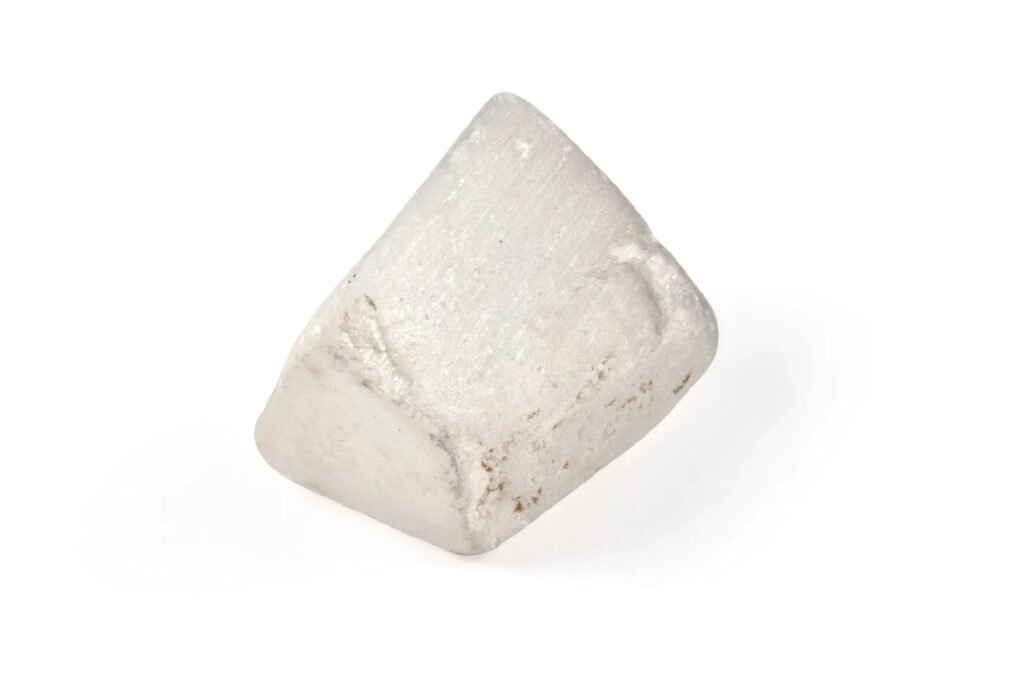
The United States is one of the world’s most significant sources of Ulexite, particularly in California, where extensive borate deposits have been mined for more than a century. South America also contains some of the largest known reserves, especially in Argentina and Chile, where boron-rich sediments have accumulated in the Andes region. Other notable occurrences have been reported in Turkey, Kazakhstan, China, and several other countries with large evaporite basins. Although Ulexite can be found in numerous locations worldwide, only a limited number of deposits contain concentrations large enough to support commercial mining operations.
Important Ulexite localities include:
- California, United States
- Jujuy Province, Argentina
- Salta Province, Argentina
- Northern Chile
- Eskişehir, Turkey
- Kazakhstan
- Tibet, China
Many of these regions produce multiple borate minerals rather than Ulexite alone. As a result, mining operations often extract several economically valuable minerals from the same geological deposits, contributing to the global supply of boron used in industrial manufacturing, agriculture, and chemical production.
Uses and Applications of Ulexite
Ulexite has important industrial value because it is a natural source of boron, an element that is widely used in manufacturing and chemical production. Boron compounds extracted from borate minerals contribute to the production of fiberglass, ceramics, detergents, insulation materials, and heat-resistant glass. The ability of boron to improve strength, durability, and thermal stability has made it an essential component in many industrial processes. Although Ulexite is not the only commercially important borate mineral, it remains an important contributor to the global boron industry.
Beyond its industrial significance, Ulexite is also highly valued in education and scientific research because of its remarkable optical properties. Its natural fiber-optic structure allows light and images to pass through the mineral, making it an excellent specimen for demonstrating the principles of optical transmission. Universities, museums, and science centers frequently use polished samples to help students understand how fiber-optic systems function. Mineral collectors also appreciate Ulexite because of its unusual appearance and scientific importance, and high-quality specimens are commonly displayed in private collections and geological exhibitions throughout the world.