
Turquoise is a hydrated phosphate mineral composed primarily of copper and aluminum, with the chemical formula CuAl₆(PO₄)₄(OH)₈·4H₂O. It forms through secondary mineralization processes in arid and semi-arid environments, where copper-rich groundwater interacts with aluminous host rocks over extended geological timescales. Mineralogically, turquoise belongs to the triclinic crystal system, although well-formed crystals are exceptionally rare in nature. Instead, it most commonly occurs as cryptocrystalline masses, nodules, veins, or compact botryoidal aggregates embedded within altered volcanic or sedimentary rocks. The mineral is renowned for its distinctive coloration, ranging from sky blue and robin’s-egg blue to greenish-blue and apple green, with color variations primarily controlled by the relative concentrations of copper, iron, and zinc within its structure. Copper is chiefly responsible for the vivid blue hue, while elevated iron content often produces greener tones.
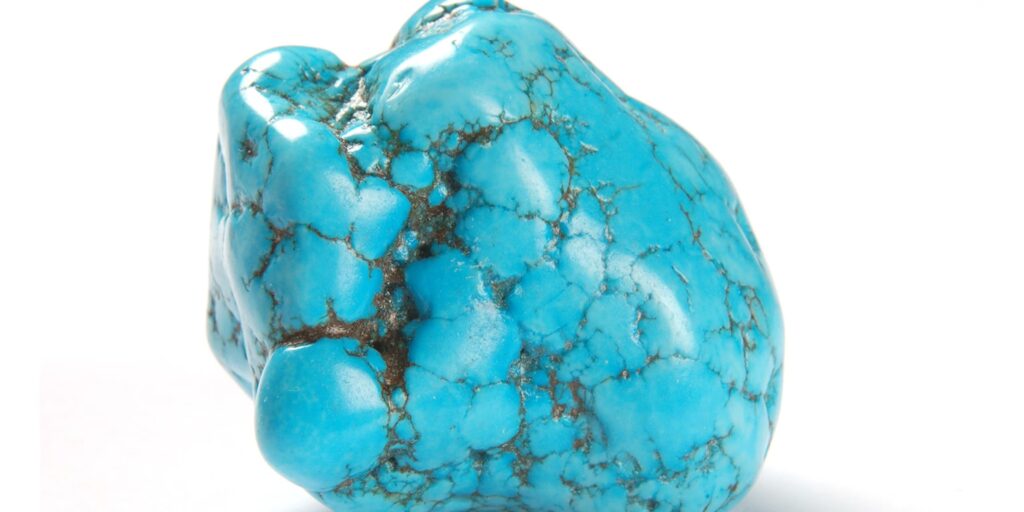
Turquoise forms through a secondary mineralization process within the oxidized zones of copper deposits, primarily in arid and semi-arid geological environments. The mineral develops when groundwater enriched with dissolved copper percolates through aluminum-rich rocks and interacts with phosphate-bearing solutions over extended periods of geological time. As these chemically active fluids move through fractures, cavities, and porous host rocks, changes in temperature, pressure, acidity, and evaporation conditions trigger the precipitation of hydrated copper-aluminum phosphate minerals, ultimately leading to the formation of turquoise. The process commonly occurs near the Earth’s surface under low-temperature conditions and is closely associated with the weathering and oxidation of pre-existing copper sulfide minerals. Turquoise is frequently found alongside secondary minerals such as malachite, chrysocolla, limonite, quartz, and kaolinite, which collectively indicate oxidizing geochemical environments. Because the formation of turquoise requires a highly specific combination of copper, aluminum, phosphorus, water availability, and suitable climatic conditions, economically significant deposits are relatively uncommon worldwide. The gemstone typically occurs as nodules, vein fillings, crusts, or compact cryptocrystalline masses within volcanic, sedimentary, or altered igneous host rocks, rather than as large individual crystals.
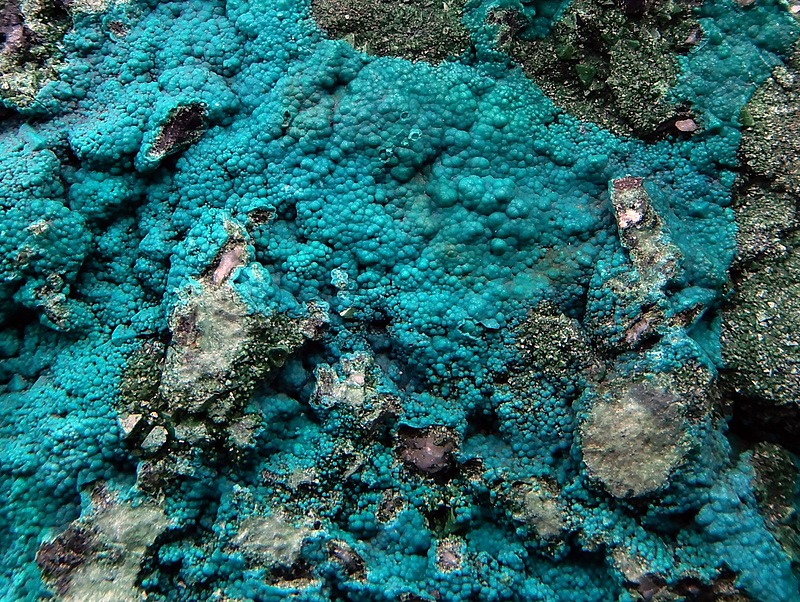
Turquoise has been valued by human civilizations for more than five millennia and is considered one of the earliest gemstones ever mined and used for ornamental purposes. Archaeological evidence indicates that ancient Egyptians extracted turquoise from the Sinai Peninsula as early as 3000 BCE, where it was fashioned into jewelry, ceremonial objects, amulets, and royal decorations. Some of the most famous ancient artifacts containing turquoise were discovered within the burial treasures of Pharaoh Tutankhamun. In ancient Persia, particularly in present-day Iran, turquoise became a symbol of wealth, protection, and divine favor, and Persian turquoise was highly prized throughout Asia and Europe for its intense sky-blue coloration. The gemstone was frequently incorporated into crowns, architecture, weapons, and religious objects. Turquoise also held profound cultural and spiritual importance among Indigenous peoples of the American Southwest, including Navajo, Zuni, and Hopi communities, who used the stone extensively in jewelry, trade, ceremonial practices, and artistic expression. In Tibetan and Chinese traditions, turquoise was similarly associated with protection, prosperity, healing, and spiritual significance. During the Middle Ages and later periods of international trade, turquoise spread across Europe and became increasingly popular among royalty and aristocratic societies. The modern English term “turquoise” originates from the French phrase pierre turquoise, meaning “Turkish stone,” because the gem historically entered Europe through Turkish trade routes despite being mined primarily in Persia. Today, turquoise remains culturally significant worldwide and continues to be admired for both its historical heritage and distinctive natural beauty.
Crystal Structure of Turquoise
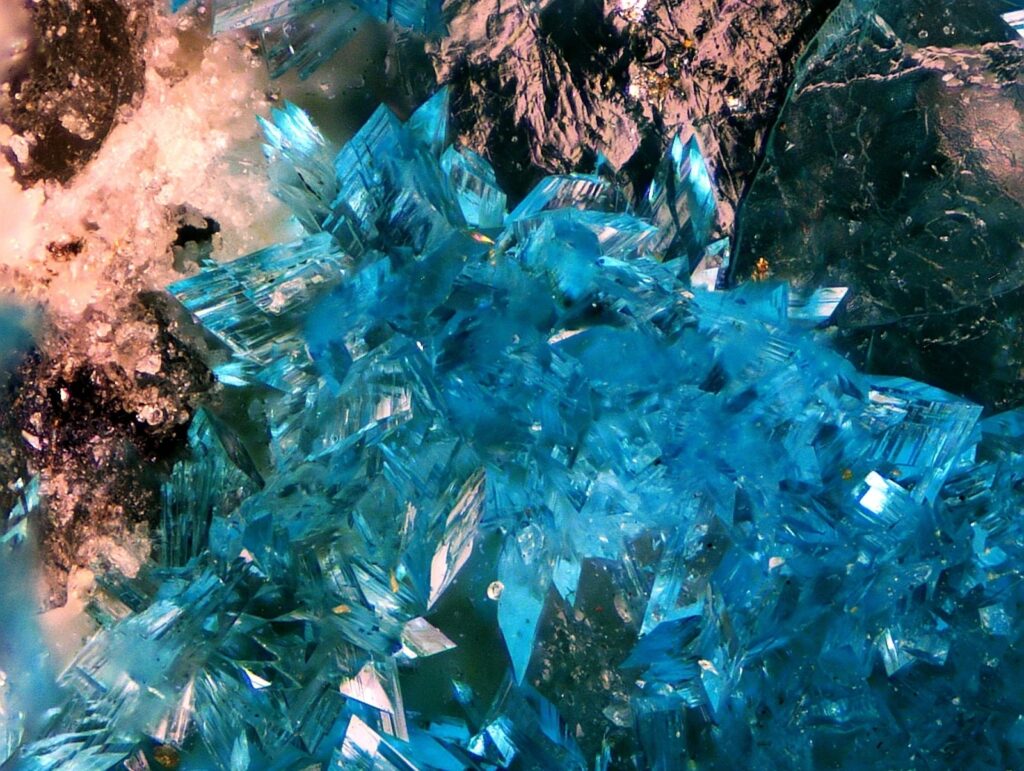
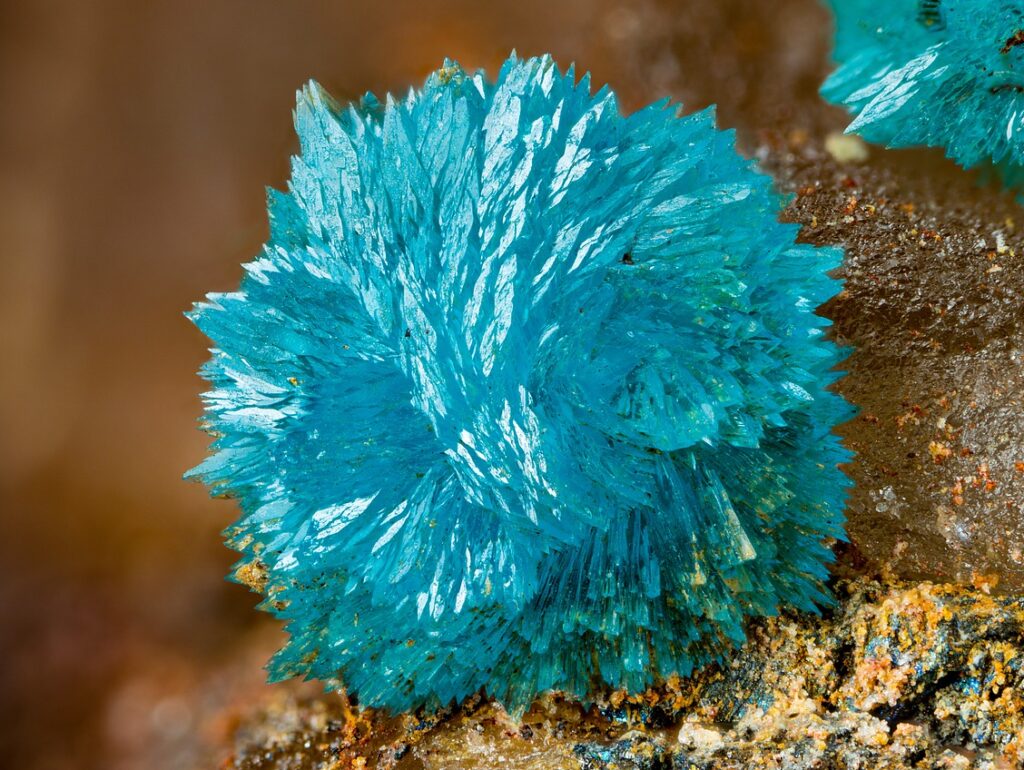
Turquoise is a hydrated copper-aluminum phosphate mineral with the chemical formula CuAl₆(PO₄)₄(OH)₈·4H₂O and crystallizes within the triclinic crystal system. Despite its crystallographic classification, well-formed individual crystals are exceedingly rare in nature, and the mineral is typically encountered as cryptocrystalline masses, compact nodules, vein fillings, crusts, or botryoidal aggregates. Its crystal structure consists of complex arrangements of copper and aluminum octahedra linked with phosphate tetrahedra and hydroxyl groups, while water molecules are incorporated within the structural framework. The triclinic symmetry contributes to the mineral’s generally poor crystal development and irregular aggregate growth habits. Turquoise commonly forms in porous host rocks and fracture systems associated with oxidized copper deposits, often occurring alongside secondary minerals such as malachite, chrysocolla, limonite, and quartz.
Color of Turquoise
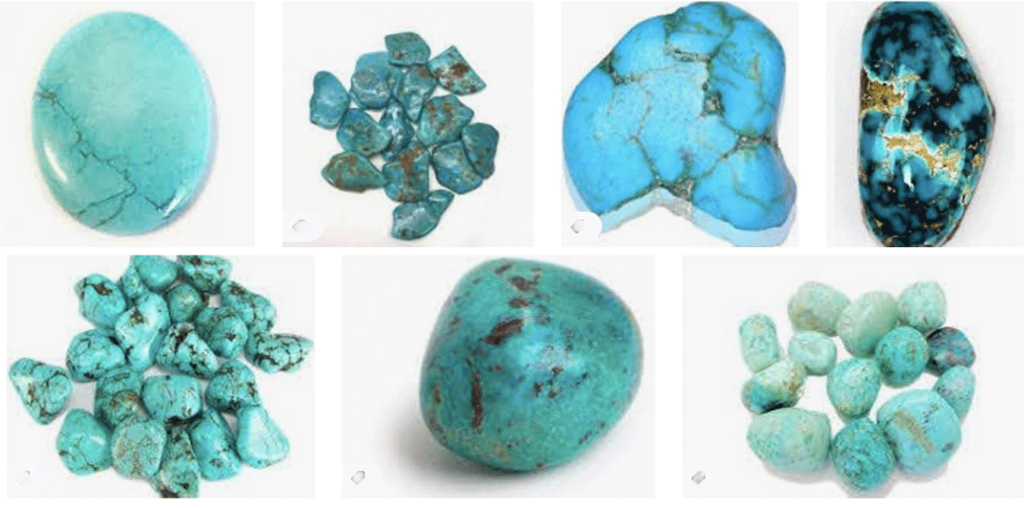
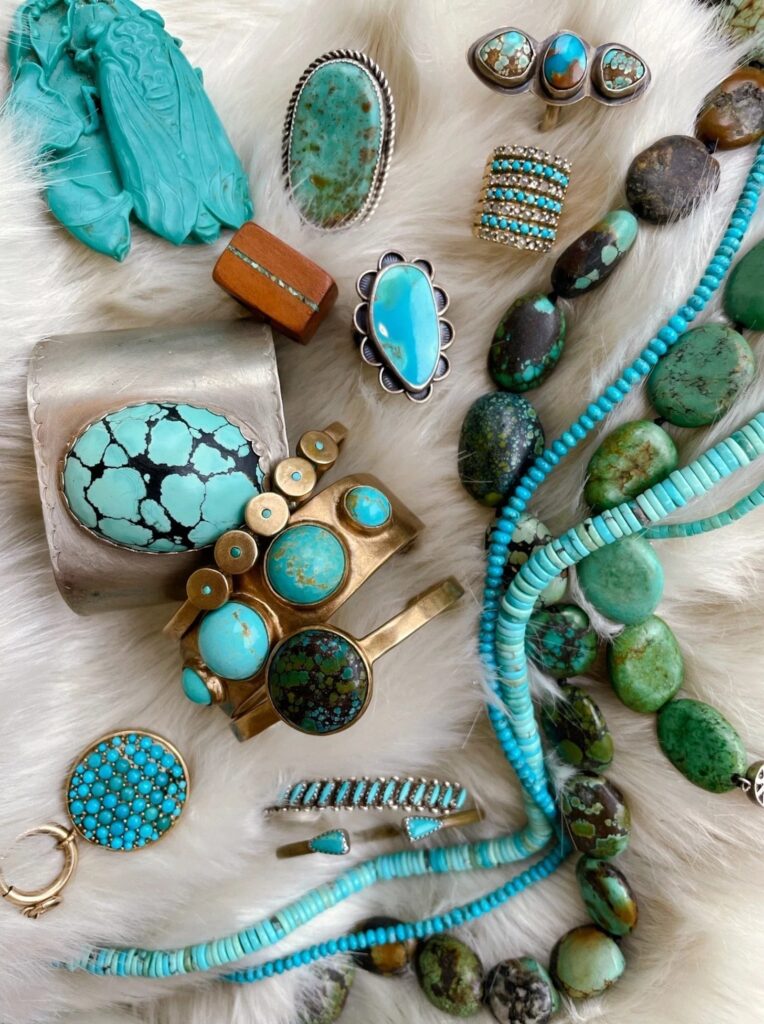
Turquoise is internationally renowned for its distinctive coloration, which ranges from vivid sky blue and robin’s-egg blue to greenish-blue, bluish-green, and pale green. The gemstone’s color is primarily controlled by trace-element chemistry within the mineral structure. Copper ions are chiefly responsible for the characteristic blue coloration, while increasing concentrations of iron tend to shift the color toward green tones. In some cases, zinc substitution may further influence chromatic variations. Environmental factors, porosity, and dehydration can also alter the appearance of turquoise over time. Some specimens display highly uniform coloration, whereas others contain intricate black, brown, or golden matrix veining derived from the surrounding host rock. These matrix patterns are especially common in turquoise from the southwestern United States and are often considered aesthetically desirable in jewelry and decorative applications.
Optical Properties of Turquoise
From an optical perspective, turquoise is characterized primarily as an opaque mineral, though exceptionally thin edges, flakes, or microscopic sections may exhibit a slight degree of translucency. Crystallizing in the triclinic system, turquoise is anisotropic and exhibits a refractive index typically ranging from 1.610 to 1.650, with a mean value frequently recorded around 1.62. Because it usually occurs as a cryptocrystalline (microscopic mass) aggregate rather than single crystals, determining distinct indices (alpha, beta, gamma) via a standard refractometer can be challenging, often yielding a single spot reading.
The mineral possesses a weak birefringence, though this property is largely obscured by its aggregate nature. In its raw state, the luster of turquoise ranges from subvitreous to waxy or dull; however, proper lapidary polishing yields a distinctive waxy to subvitreous luster that defines its gemstone appeal. Under high-magnification microscopy or scanning electron microscopy (SEM), the material reveals a complex microcrystalline matrix interspersed with varying degrees of porosity and frequent inclusions of host rock matrix (such as limonite, quartz, or pyrite). Due to its pervasive opacity, pleochroism is non-observable in bulk specimens. When exposed to ultraviolet (UV) radiation, the luminescent response of natural turquoise is highly variable and generally weak; it typically remains inert or exhibits a faint, patchy greenish-yellow to light blue fluorescence under long-wave UV, which is heavily dictated by trace copper-to-iron ratios and the presence of organic stabilizing agents.
Physical Properties of Turquoise
The physical durability of turquoise is highly variable, dictated almost entirely by its density and microstructural porosity. On the Mohs hardness scale, turquoise ranges from 5.0 to 6.0. The dense, compact varieties originating from premier deposits approach a hardness of 6.0, whereas highly porous or “chalky” specimens may drop below 5.0, requiring artificial stabilization before handling. The specific gravity (density) exhibits a parallel variance, generally spanning from 2.60 to 2.90, with higher values correlating directly with lower porosity and a higher iron content.Turquoise lacks distinct cleavage planes. Upon impact, it exhibits a characteristic conchoidal to uneven, granulitic fracture, producing a dull, unpolished surface. Because of its inherent porosity, untreated turquoise acts as an open capillary system. It is highly susceptible to the absorption of exogenous fluids—including dermal oils, cosmetics, moisture, and ambient industrial chemicals—which penetrate the structure and cause irreversible discoloration (often shifting the blue hues to a dull green) or surface degradation over time. Consequently, high-quality, dense material is significantly more stable against environmental weathering. Due to its physical softness, microcrystalline structure, and complete opacity, turquoise is virtually never faceted; instead, it is universally fashioned into cabochons, beads, intricate carvings, and flush inlays.
Chemical Properties of Turquoise
Chemically, turquoise is a hydrated basic copper aluminum phosphate, serving as the definitive member of the turquoise group. Its idealized chemical formula is expressed as CuAl₆(PO₄)₄(OH)₈·4H₂O.In natural environments, extensive isomorphous substitution occurs within the crystal lattice. Notably, trivalent iron (Fe³⁺) frequently substitutes for aluminum (Al³⁺); a higher concentration of copper yields the prized sky-blue coloration, whereas an increase in iron shifts the spectrum toward green. Trace amounts of zinc (Zn), calcium (Ca), and manganese (Mn) are also commonly detected.Turquoise is a secondary mineral, forming via supergene processes. This occurs under low-temperature, oxidizing conditions when acidic, copper-bearing meteoric waters percolate through aluminum-rich host rocks (such as weathered feldspars) in the presence of apatite or other phosphate sources, typically within arid or semi-arid copper deposits.
The mineral is highly sensitive to environmental and chemical stressors. It reacts poorly to thermal exposure; elevated temperatures induce dehydration, causing the mineral to lose its chemically bound water of crystallization, which results in structural fracturing and severe color fading. Furthermore, turquoise is readily attacked by mild acids and strong alkalis, which dissolve the phosphate framework and etch the polished surface. To mitigate these vulnerabilities, a significant portion of the commercial gemstone supply undergoes stabilization—a process where porous rough is impregnated with colorless resins, polymers, or sodium silicate to increase structural hardness, eliminate porosity, and preserve color integrity.
Major Sources of Turquoise
Turquoise deposits are distributed across several arid and semi-arid regions of the world, with each locality producing material distinguished by unique coloration, matrix patterns, and gemological characteristics. Historically, some of the most famous turquoise originated from Iran, particularly the ancient mines near Neyshabur, which have been exploited for more than two thousand years. Persian turquoise is internationally renowned for its intense, uniform sky-blue coloration and relatively low matrix content, and it has long been considered among the highest-quality turquoise ever discovered. In the United States, significant deposits occur throughout the American Southwest, especially in Arizona, Nevada, and New Mexico. American turquoise is highly diverse in appearance and often exhibits intricate black or brown spiderweb matrix patterns that are especially valued in Native American jewelry traditions. Well-known American mining districts include the Sleeping Beauty Mine in Arizona, the Bisbee Mine, the Kingman Mine, and Nevada’s numerous historic turquoise localities. China is currently one of the world’s largest producers of turquoise, with major deposits located primarily in Hubei Province. Chinese turquoise ranges widely in color from bright blue to green and commonly contains dark matrix veining. Tibetan turquoise, sourced from regions of Tibet and western China, is also culturally significant and often displays greenish-blue hues with distinctive matrix structures. Additional important sources include Egypt’s Sinai Peninsula, one of the oldest known turquoise mining regions in human history, as well as deposits in Mexico, Chile, Afghanistan, and Kazakhstan. Geological variations among these localities strongly influence the mineral’s chemical composition, hardness, porosity, color stability, and overall market value, making geographic origin an important factor in gemological identification and commercial classification.
Uses and Significance of Turquoise
Turquoise has held exceptional ornamental, cultural, and symbolic significance for thousands of years and remains one of the world’s most recognizable gemstones. Its primary application is within the jewelry industry, where it is widely fashioned into cabochons, beads, pendants, rings, bracelets, carvings, and inlay work due to its distinctive blue-green coloration and attractive matrix patterns. Turquoise is especially prominent in Native American, Tibetan, Persian, and Middle Eastern jewelry traditions, where it is often combined with silver and other decorative materials to create highly valued artistic designs. Beyond personal adornment, turquoise has historically been used in ceremonial objects, religious artifacts, mosaics, weapon decoration, architecture, and royal regalia. Ancient civilizations such as the Egyptians, Persians, Chinese, and Indigenous peoples of the American Southwest regarded turquoise as a stone of protection, prosperity, spiritual power, and social status. In many cultures, it was believed to provide protection against harm, attract good fortune, and promote physical and emotional well-being. Modern gemstone enthusiasts and collectors continue to value turquoise for both its historical importance and aesthetic uniqueness, particularly specimens displaying natural untreated color or distinctive spiderweb matrix patterns. Economically, turquoise remains an important gemstone in artisan craftsmanship, luxury jewelry, and cultural heritage markets worldwide. Scientifically, turquoise also holds mineralogical significance as an indicator of secondary copper mineralization and oxidizing geological environments, contributing to research in mineral formation, geochemistry, and provenance analysis.