
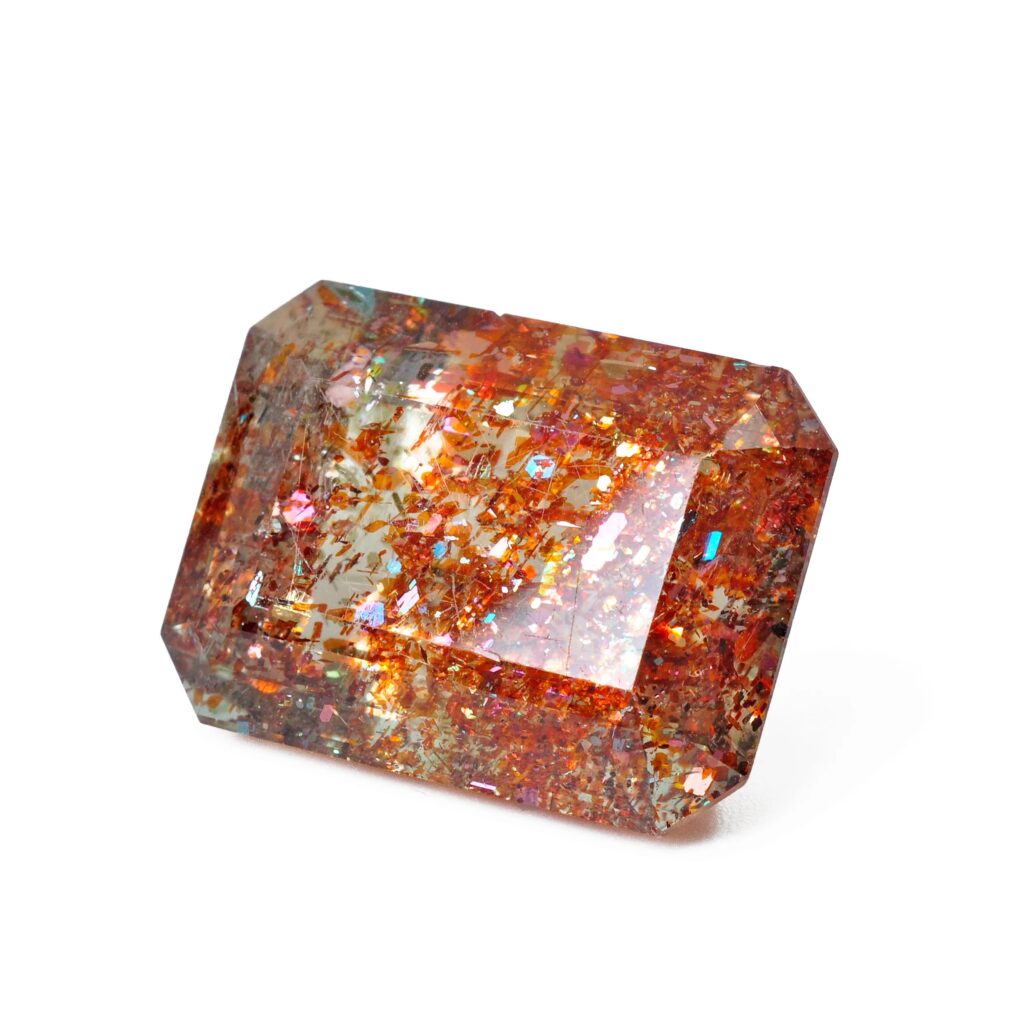
Sunstone is a specialized member of the feldspar group, typically classified as a variety of plagioclase (such as oligoclase or labradorite) or, more rarely, potassium feldspar (orthoclase). Its defining feature is a distinct optical phenomenon known as aventurescence—a glittering, metallic luster produced when light reflects off internal mineral inclusions. These inclusions usually consist of tiny, plate-like crystals of hematite, goethite, or native copper. The base color of the gemstone ranges from colorless and pale yellow to deep orange and reddish-brown. Beyond its aesthetic appeal, sunstone possesses a Mohs hardness of 6.0 to 6.5, making it a durable material suitable for various lapidary purposes and high-end jewelry.
The Geological Genesis and Formation Process
The formation of sunstone is rooted in the dynamic and often violent processes that shape the Earth’s crust, particularly within cooling igneous environments such as basaltic lava flows and granitic pegmatites. When molten magma begins its gradual transition into solid rock, feldspar minerals—especially oligoclase and labradorite—start to crystallize out of the melt. During this crystallization phase, trace amounts of metallic elements, including copper and iron, become trapped within the growing crystal lattice. These elements are not uniformly distributed; instead, as the temperature continues to drop and the crystal structure stabilizes, the system undergoes a phenomenon known as exsolution. In this process, the previously dissolved metal ions separate from the host feldspar and reorganize into distinct, microscopic platelets or flakes.
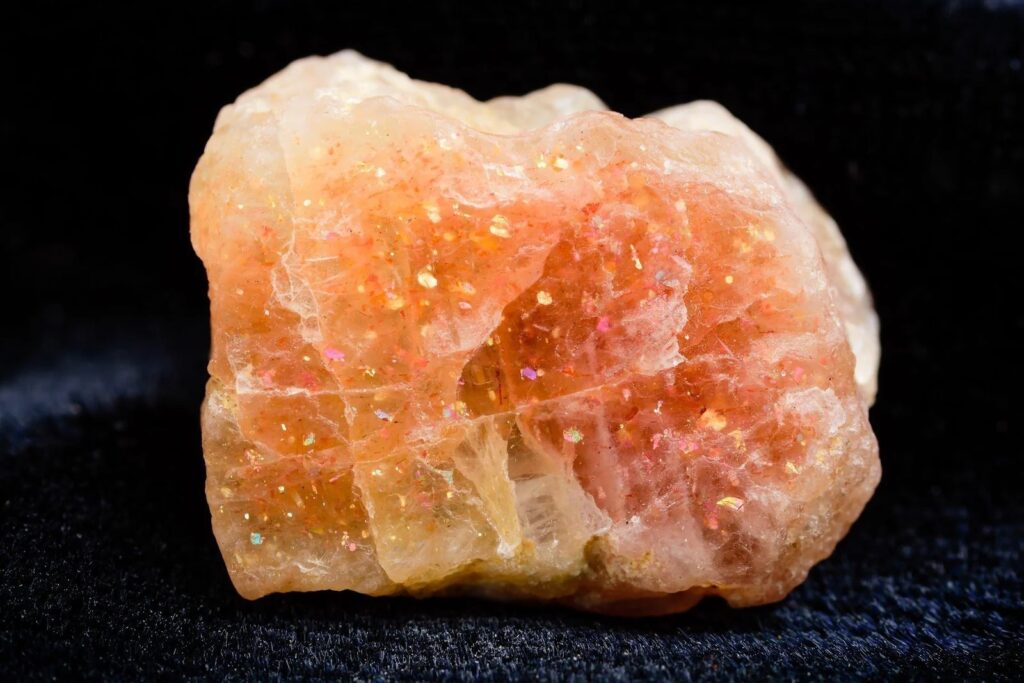
These inclusions are not randomly oriented. Due to the internal structure of feldspar crystals, the metallic platelets align themselves along specific crystallographic planes, creating a highly ordered internal architecture. It is this precise alignment that gives rise to the optical phenomenon known as aventurescence—a shimmering, reflective effect caused by light interacting with the embedded metallic layers. The intensity, color, and overall visual appeal of a sunstone specimen depend heavily on the composition, size, and density of these inclusions. For example, Oregon sunstone is particularly prized for its vivid reds, greens, and even bi-color effects, which result from the presence of native copper platelets. In contrast, sunstones from regions such as India or Norway typically exhibit golden or silvery sparkles due to iron oxide inclusions. Thus, each sunstone is effectively a geological record, preserving within its structure the thermal history and chemical environment of its formation.
Historical Significance and Cultural Evolution
Historically, sunstone has been a subject of both folklore and practical utility across various cultures. One of the most significant historical theories involves the Viking “Sunstone” (sólsteinn), mentioned in medieval Icelandic sagas. It is hypothesized that Norse navigators used the polarizing properties of certain minerals—potentially including sunstone or Iceland spar—to locate the sun’s position through thick cloud cover or during twilight, enabling transoceanic voyages without a visible sun. In addition to maritime history, sunstone holds a place in indigenous North American mythology, where it was often associated with solar deities or ancestral spirits. While it was considered a rare and exotic mineral throughout the 18th and 19th centuries, modern discoveries in regions like the United States, Tanzania, and Australia have allowed sunstone to transition from a legendary curiosity to a globally recognized gemstone.
Crystal Structure of Sunstone
Sunstone belongs to the feldspar group, specifically classified as a variety of plagioclase such as oligoclase or labradorite, or more rarely as potassium feldspar like orthoclase. Its crystal structure is a tectosilicate, consisting of a three-dimensional framework where every oxygen atom is shared between two silicon Si or aluminum Al ions. In the plagioclase series, this framework exists as a solid solution between albite NaAlSi₃O₈ and anorthite CaAl₂Si₂O₈. This arrangement typically results in a triclinic crystal system, defined by three unequal axes intersecting at oblique angles.The defining optical characteristic of sunstone, known as aventurescence, arises from secondary mineral inclusions rather than the silicate lattice itself. During the cooling of the host magma, trace elements such as iron or copper undergo exsolution, separating from the feldspar structure to form microscopic, plate-like crystals. These inclusions commonly consist of hematite α-Fe₂O₃, goethite, or native copper Cu.
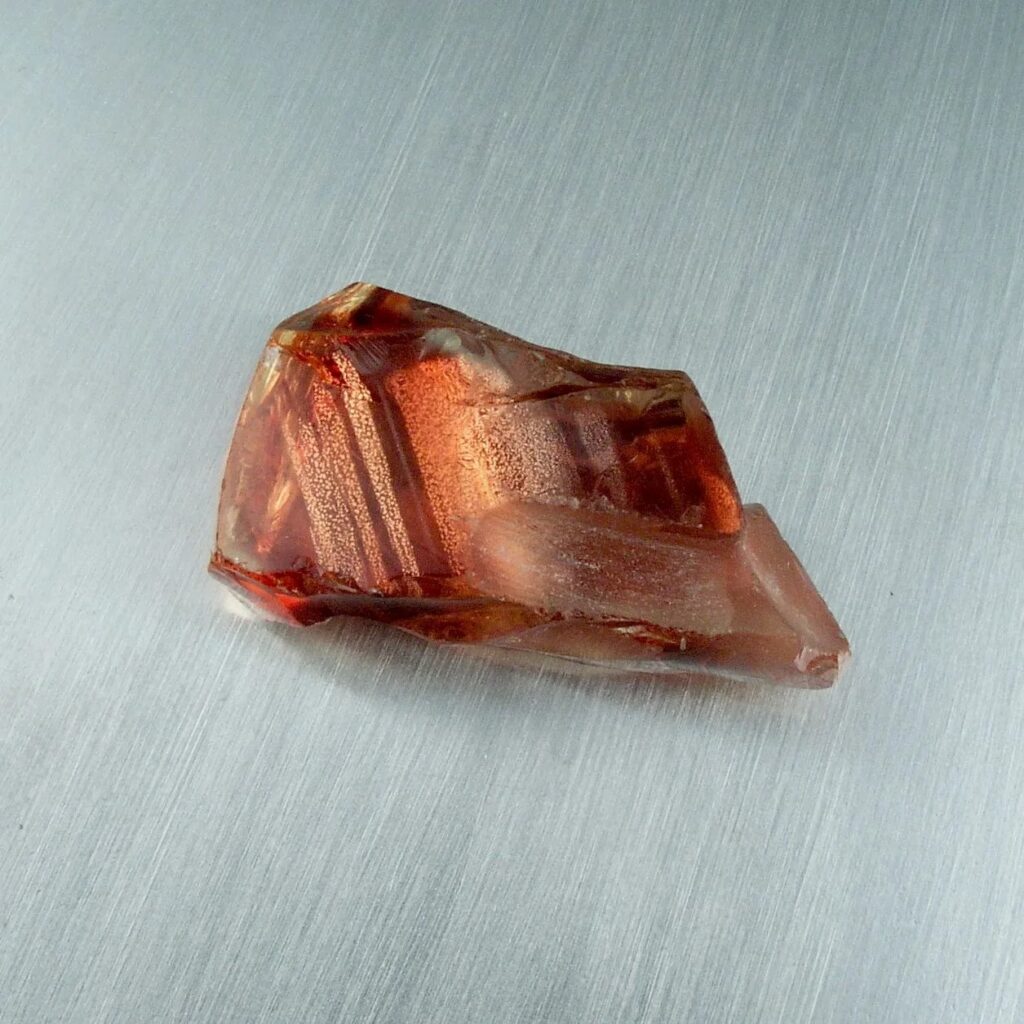
These metallic flakes are structurally aligned along the cleavage planes or specific crystallographic directions of the host feldspar. Sunstone features two directions of perfect cleavage intersecting at approximately 90°, which provides the physical planes where these inclusions settle to maximize light reflection. When light enters the gemstone and strikes these oriented metallic plates, it produces the shimmering, glittering effect that distinguishes sunstone from standard feldspar varieties.
Physical & Optical Properties
Sunstone possesses a specific set of physical and optical properties that result from its chemical composition as a member of the feldspar group. Physically, it typically has a Mohs hardness ranging from 6.0 to 6.5 and a specific gravity between 2.62 and 2.72. A key structural feature is its perfect cleavage in two directions meeting at nearly 90°, which often influences how the stone is cut. Its luster is described as vitreous to sub-vitreous, and it consistently leaves a white streak. Optically, sunstone is defined by aventurescence, a glittering effect caused by the reflection of light from microscopic, plate-like inclusions of hematite α-fe₂o₃ or native copper Cu. These inclusions act as tiny mirrors that create a metallic schiller or spangle effect when the gemstone is rotated. The refractive index usually falls between 1.525 and 1.552, and the mineral is biaxial. While many specimens are translucent to opaque, high-quality sunstones can be nearly transparent, offering a clear view of the shimmering internal flakes.
Varieties and Formation of Sunstone Inclusions
The diverse varieties of sunstone are primarily categorized by their mineralogical host and the specific nature of their internal inclusions, which dictate their color and optical brilliance. Common varieties include plagioclase sunstone, often sourced from Norway and India, and the highly prized Oregon sunstone, which is unique for its native copper content. Another distinctive type is confetti sunstone, recognized for its large, vivid hematite flakes that create a multicolored “confetti” appearance.The formation of these inclusions is the result of a geological process known as exsolution that occurs within a cooling igneous environment. As the host magma crystallizes into feldspar, trace metal ions are initially trapped within the mineral’s crystal lattice. As temperatures decrease, the solubility of these trace elements drops, causing them to separate from the feldspar structure and precipitate as independent, microscopic metallic plates.
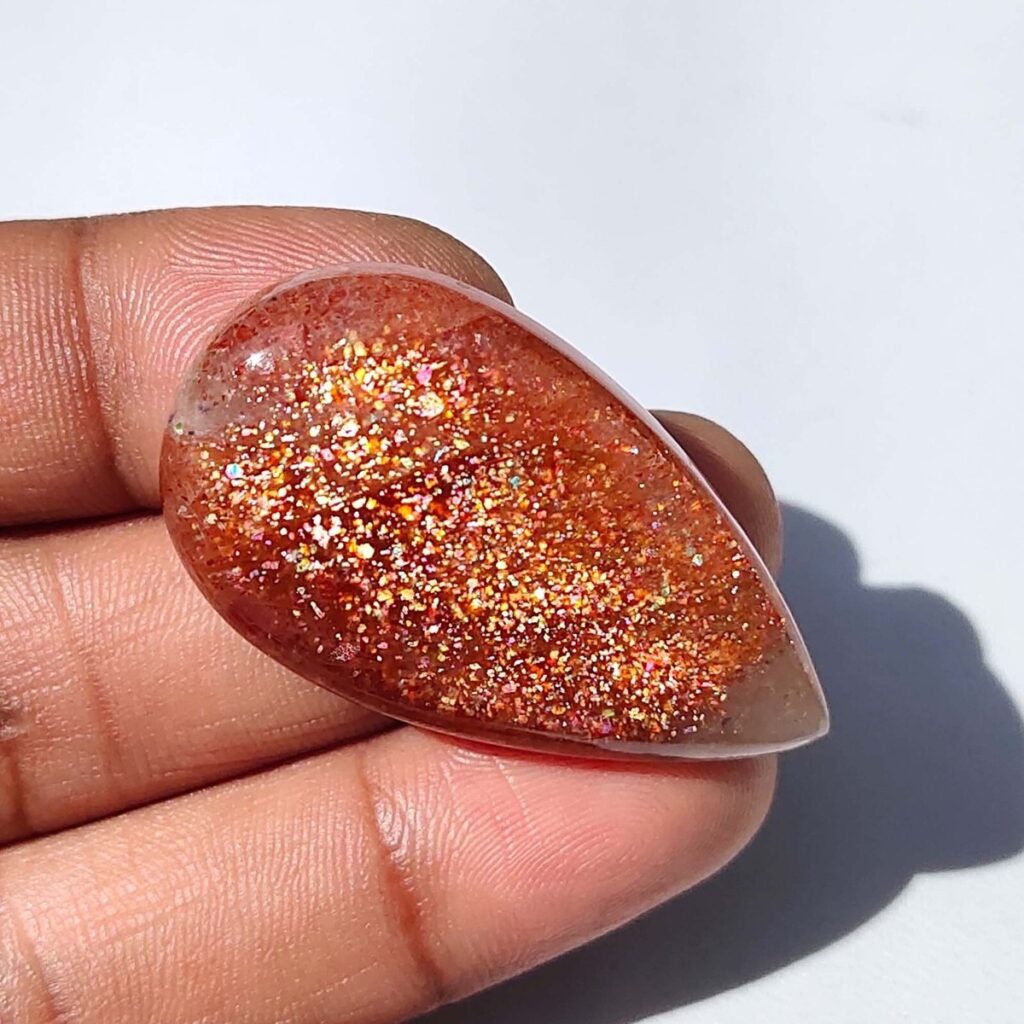
Hematite α-fe₂o₃ or Goethite: These are the most common inclusions found in varieties from India and Norway, appearing as gold or reddish-brown metallic flakes.
Native Copper Cu: This rare inclusion type is the signature of Oregon sunstone, producing a wide spectrum of colors including peach, green, and deep red, as well as unique dichroic effects.
Once formed, these plate-like inclusions align themselves precisely along the structural cleavage planes of the host feldspar, ensuring they reflect light simultaneously to produce the characteristic aventurescence.
Applications and Modern Uses of Sunstone
Sunstone occupies a unique niche in the global market, extending its utility from high-end jewelry design to scientific research and cultural tourism. In the realm of fine jewelry, sunstone is highly valued for its distinctive aventurescence, which creates a mesmerizing interplay of light that few other gemstones can replicate. Jewelers typically employ two primary cutting styles to maximize this effect: cabochon cuts, which emphasize the smooth, metallic “shimmer” of the inclusions, and faceted cuts, which enhance the stone’s internal fire and brilliance. These finished gems are frequently integrated into rings, pendants, and earrings, with high-transparency specimens—particularly the rare copper-bearing varieties—commanding premium prices among boutique designers and gemstone connoisseurs.Beyond its aesthetic application, sunstone serves as a significant subject for mineralogical study and academic research. As a member of the feldspar group, it provides geologists with critical insights into the processes of igneous crystallization and the exsolution of trace elements during the cooling of magma. By analyzing the orientation and composition of the hematite or copper platelets within the silicate framework, researchers can better understand the thermal history of the volcanic environments where these stones formed.
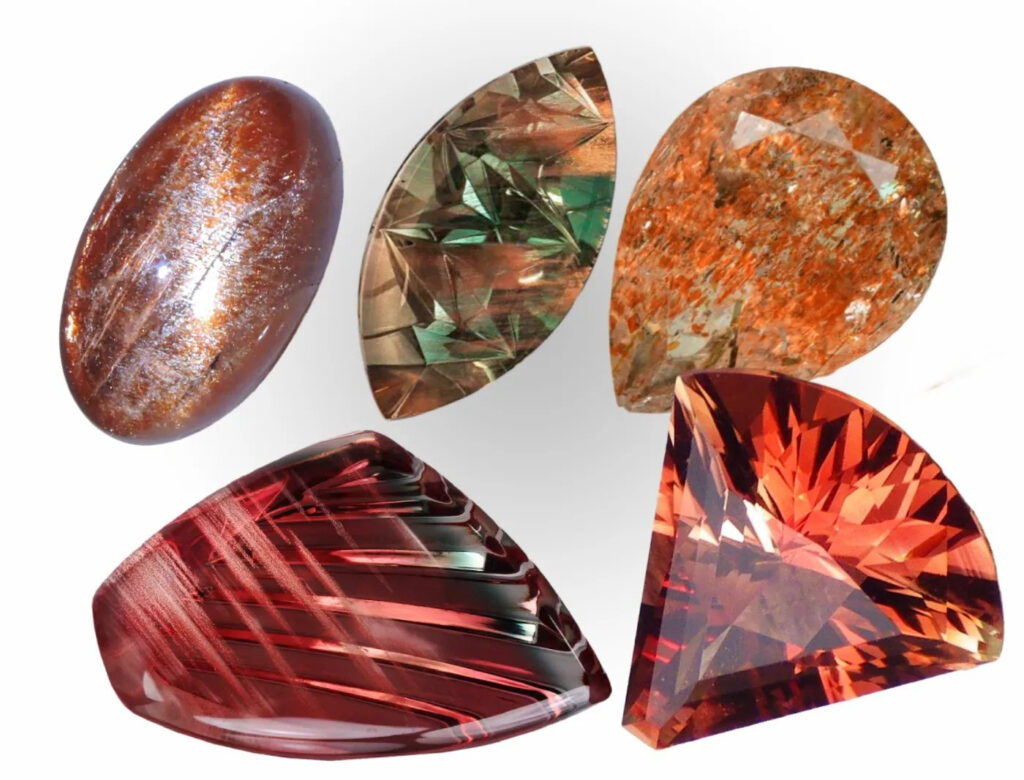
In the metaphysical and spiritual sectors, sunstone is utilized as a tool for personal empowerment and emotional healing. Practitioners often use the stone in meditation or as a protective talisman, believing it helps to clear stress, foster leadership qualities, and manifest positive energy through its symbolic connection to solar vitality. Furthermore, sunstone plays a vital role in regional economic development and geological branding. For instance, the promotion of sunstone as a state gemstone in certain regions has spurred the growth of “gem tourism,” where mine-to-market initiatives and public digging sites attract enthusiasts and tourists, thereby supporting local economies and preserving the cultural heritage associated with these “stones of the sun”.