
Sanidine is a high-temperature form of potassium feldspar with the chemical formula K(AlSi₃O₈). It typically occurs as colorless or white glassy crystals within felsic volcanic rocks such as rhyolite, trachyte, and phonolite. As a member of the alkali feldspar solid solution series, sanidine represents the most disordered structural state of potassium feldspar. It forms at temperatures generally exceeding 700°C, and because it is usually associated with rapid volcanic cooling, the disordered arrangement of aluminum and silicon atoms within its monoclinic crystal lattice is frozen in place. This prevents the mineral from transitioning into its more ordered low-temperature polymorphs, orthoclase or microcline.
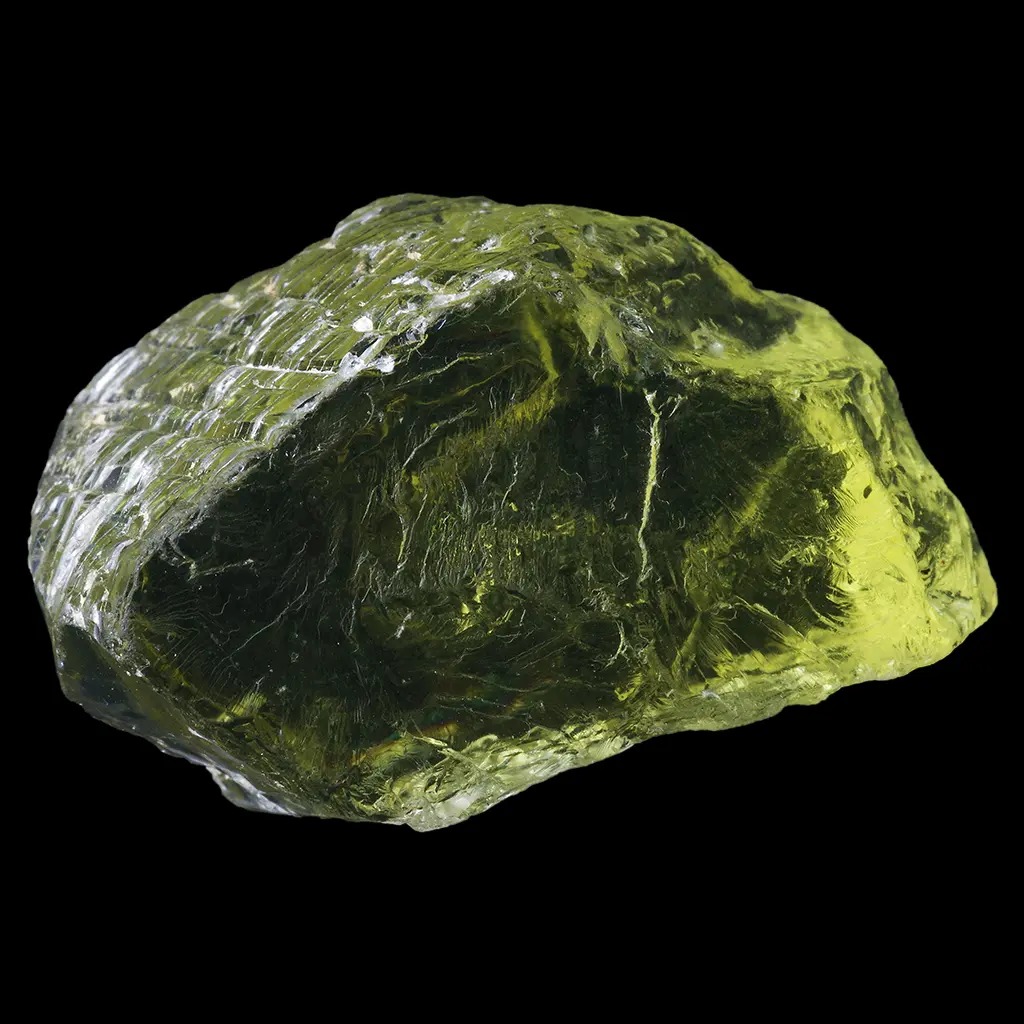
The mineral is characterized by its vitreous luster and a Mohs hardness of 6. In hand samples, it often appears as transparent to translucent phenocrysts, which are large, conspicuous crystals embedded in a fine-grained volcanic matrix. One of the most notable gemstone varieties of sanidine is moonstone; this variety exhibits a distinctive schiller or adularescence effect caused by the microscopic intergrowth of sanidine and albite. Because sanidine is stable only at high temperatures, its presence in a rock serves as a critical geothermometer, providing geologists with essential clues regarding the thermal history and cooling rates of ancient volcanic eruptions.
Historical Background and Etymology
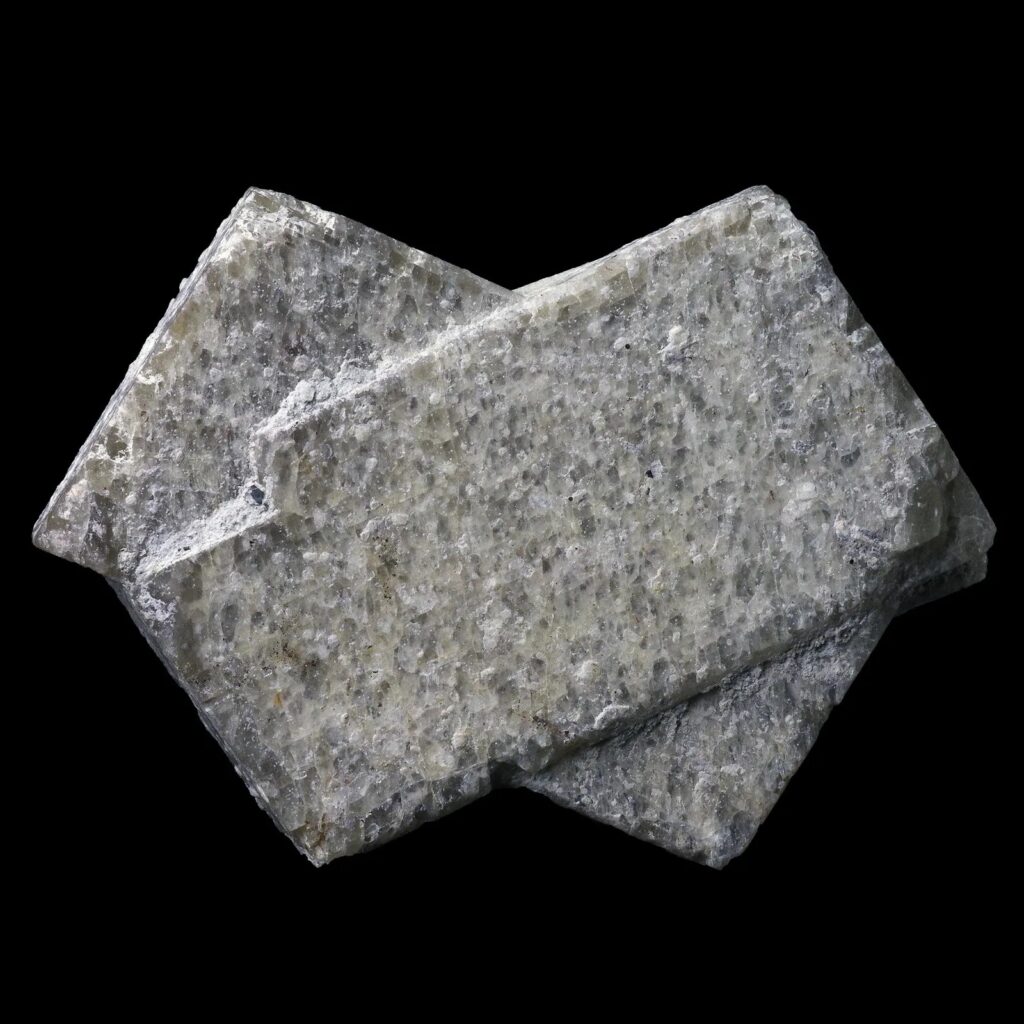
The historical recognition of sanidine as a distinct mineral species is closely tied to the advancement of mineralogy in the early 19th century. It was first described and named in 1808 by the German mineralogist Karl Wilhelm Nose, who derived the name from the Greek words “sanis,” meaning “tablet” or “board,” and “idos,” meaning “appearance,” in reference to the characteristic tabular shape of its crystals. Early geologists frequently encountered sanidine in the volcanic regions of the Eifel mountains in Germany, particularly within the Drachenfels trachyte. For many decades, it was often confused with orthoclase due to their identical chemical composition; however, the development of X-ray crystallography in the 20th century allowed scientists to confirm that sanidine’s unique, disordered atomic structure justified its classification as a separate high-temperature polymorph. Since then, it has played a pivotal role in the field of geochronology, specifically in argon-argon (Ar-Ar) dating, where its high potassium content and volcanic origin make it one of the most reliable “clocks” for determining the age of prehistoric eruptions.
Applications and Uses
Sanidine serves several important functions across scientific research and specialized industries. In the field of geosciences, its primary value lies in geochronology; because sanidine contains significant amounts of potassium and forms during rapid volcanic events, it is considered the gold standard for argon-argon (Ar-Ar) dating. By measuring the radioactive decay of potassium into argon within the crystal lattice, geologists can determine the precise age of volcanic ash layers, which in turn helps date surrounding fossil beds and archaeological sites. Additionally, its presence acts as a geothermometer, allowing researchers to calculate the specific temperature and pressure conditions present during a volcanic eruption.
Sanidine in Jewelry
While sanidine is a member of the widely known feldspar group, it remains a rarity in the mainstream jewelry market, primarily sought after by collectors and enthusiasts of exotic gemstones. Its Mohs hardness of 6 to 6.5 makes it suitable for jewelry, though it is softer than quartz and requires protective settings for rings to prevent scratches. Most sanidine crystals found in volcanic rocks are small, cloudy, or heavily fractured due to the rapid cooling and intense geological activity during their formation. However, exceptional transparent specimens—often referred to as “Precious Sanidine”—can be faceted into beautiful gemstones that exhibit a brilliant, vitreous luster and high clarity.
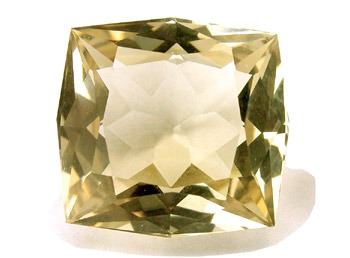
The most famous jewelry-grade variety of sanidine is moonstone. This gemstone is celebrated for its adularescence, an optical phenomenon that creates a glowing sheen reminiscent of moonlight. This effect occurs when sanidine and albite intergrow in microscopic layers; light scattering between these layers produces the signature blue or white shimmer. In addition to moonstone, rare yellow or champagne-colored transparent sanidine from localities like Madagascar or the Eifel region of Germany is occasionally cut into faceted stones. These gems are appreciated for their elegance and “water-clear” appearance, though they are usually reserved for high-end custom pieces or museum-quality mineral collections.
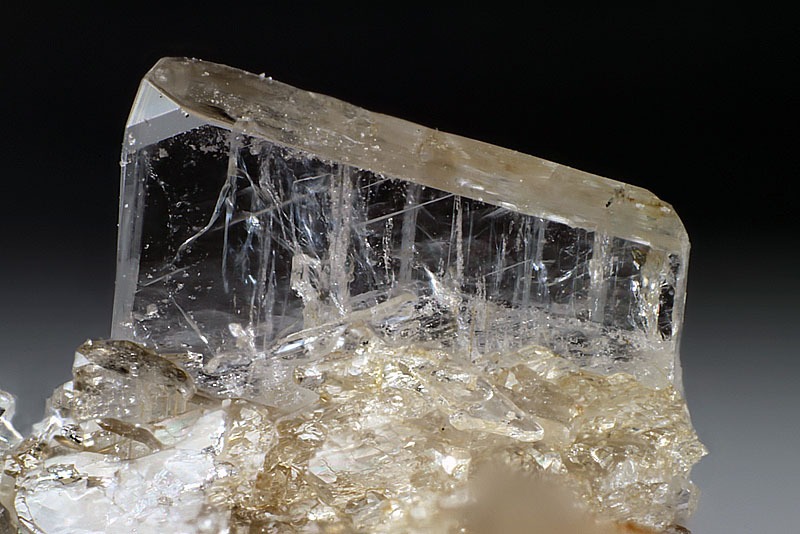
Beyond its scientific utility, sanidine has niche applications in the gemstone and ceramic industries. While common sanidine is often too fractured for jewelry, high-quality transparent specimens—particularly those from localities like the Eifel region in Germany or Madagascar—are occasionally faceted for collectors. The most commercially significant variety is moonstone, which is prized in the jewelry trade for its ethereal adularescence. In industrial settings, sanidine-bearing rocks are sometimes utilized in the production of glass and ceramics, where the mineral acts as a flux, lowering the melting temperature of the silica and improving the durability of the final product.