
Rubellite is a distinguished variety of elbaite, belonging to the complex boron silicate mineral group known as tourmaline. While tourmalines are celebrated for their vast spectrum of colors, only those that exhibit a deeply saturated pink to vivid “pigeon-blood” red qualify for the rubellite designation. The name itself is derived from the Latin rubellus, meaning reddish. Unlike other pink tourmalines that may shift toward brownish or grayish tones under artificial lighting, a true rubellite maintains its vibrant, intense hue regardless of the light source. This color stability is the primary gemological criterion for the variety. On a technical level, rubellite possesses a hardness of 7 to 7.5 on the Mohs scale and a refractive index ranging from 1.624 to 1.644. Its chemical composition is expressed as Na(Li,Al)₃Al₆(BO₃)₃Si₆O₁₈(OH)₄, making it both a durable and brilliant choice for fine jewelry.
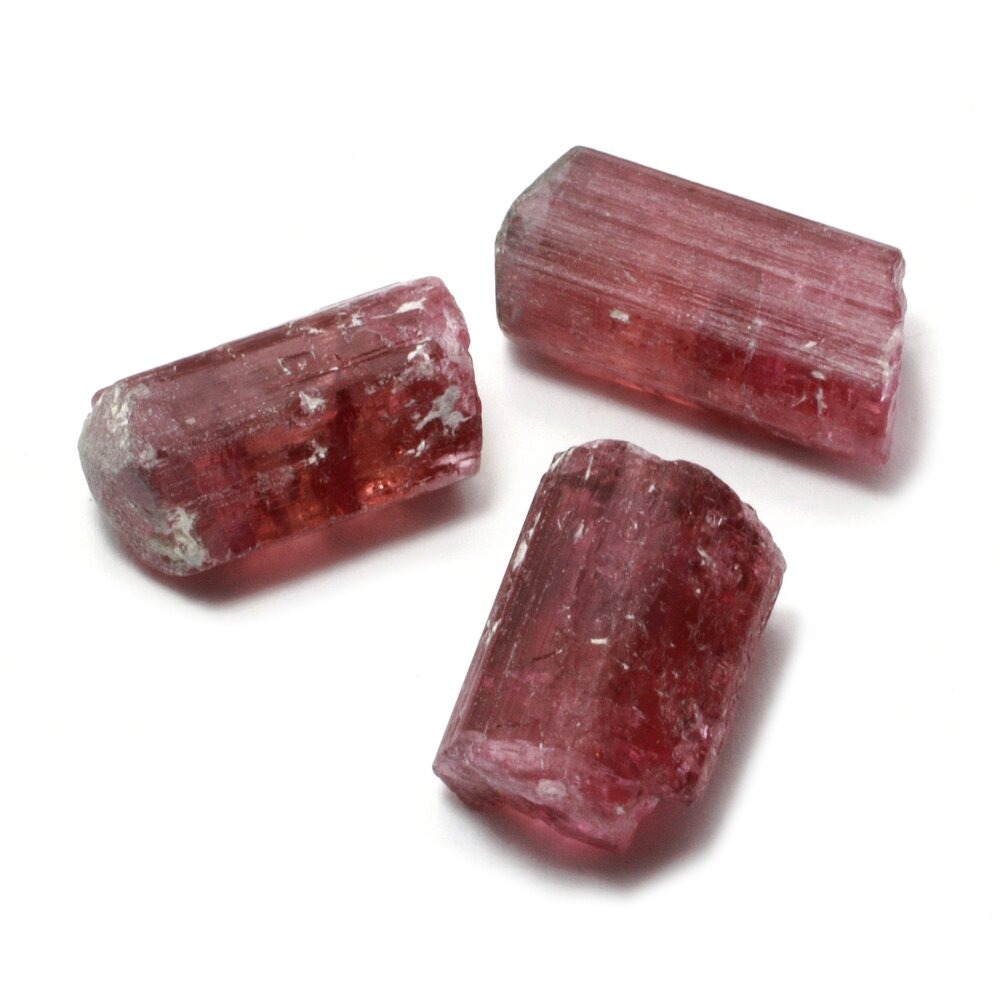
The formation of rubellite occurs deep within the Earth’s crust, typically within granitic pegmatites. These are unique igneous rocks formed during the final, fluid-rich stages of magma crystallization. As the magma cools, concentrated solutions of boron, lithium, and silica are forced into rock cavities, where they slowly crystallize over millions of years. The striking red and pink coloration of rubellite is primarily attributed to trace amounts of manganese (Mn³⁺) within the crystal structure. Often, natural irradiation over geological timescales enhances these colors, resulting in the deep saturation prized by collectors. These gemstones are frequently found alongside minerals like quartz, lepidolite, and cleavelandite. Major global sources include the Minas Gerais region of Brazil, the mountains of Afghanistan and Pakistan, and high-quality deposits in Madagascar and Nigeria.
Historically, rubellite is famous for being the world’s great “imposter” gemstone, as it was frequently mistaken for ruby for centuries. One of the most legendary examples is the “Caesar’s Ruby,” a massive 255-carat pendant in the Russian Crown Jewels. Presented to Catherine the Great, it was long believed to be a ruby until modern mineralogical testing revealed it was actually a magnificent Burmese rubellite. Beyond Europe, rubellite held immense cultural significance in China during the Qing Dynasty. The Empress Dowager Cixi was famously obsessed with the stone, leading to a massive trade boom between California and China in the late 19th century. She utilized the stone for intricate carvings, snuff bottles, and royal jewelry. It was only with the advancement of chemical analysis in the late 1800s that rubellite was officially recognized as a distinct mineral species, finally stepping out of the shadow of the ruby to be celebrated for its own unique beauty and complexity.
Crystal Structure of Rubellite
The crystal structure of rubellite is defined by its membership in the trigonal crystal system, typically forming elongated prismatic crystals with a characteristic rounded triangular cross-section. At the atomic level, its architecture is exceptionally complex, consisting of six-membered rings of silica tetrahedra (Si₆O₁₈) that are linked by borate groups, aluminum, and lithium ions. This structural arrangement creates a series of parallel channels along the c-axis of the crystal. These channels and the specific positioning of ions allow for the unique physical properties of the stone, such as its strong pleochroism, where the gem displays different depths of color when viewed from different angles.
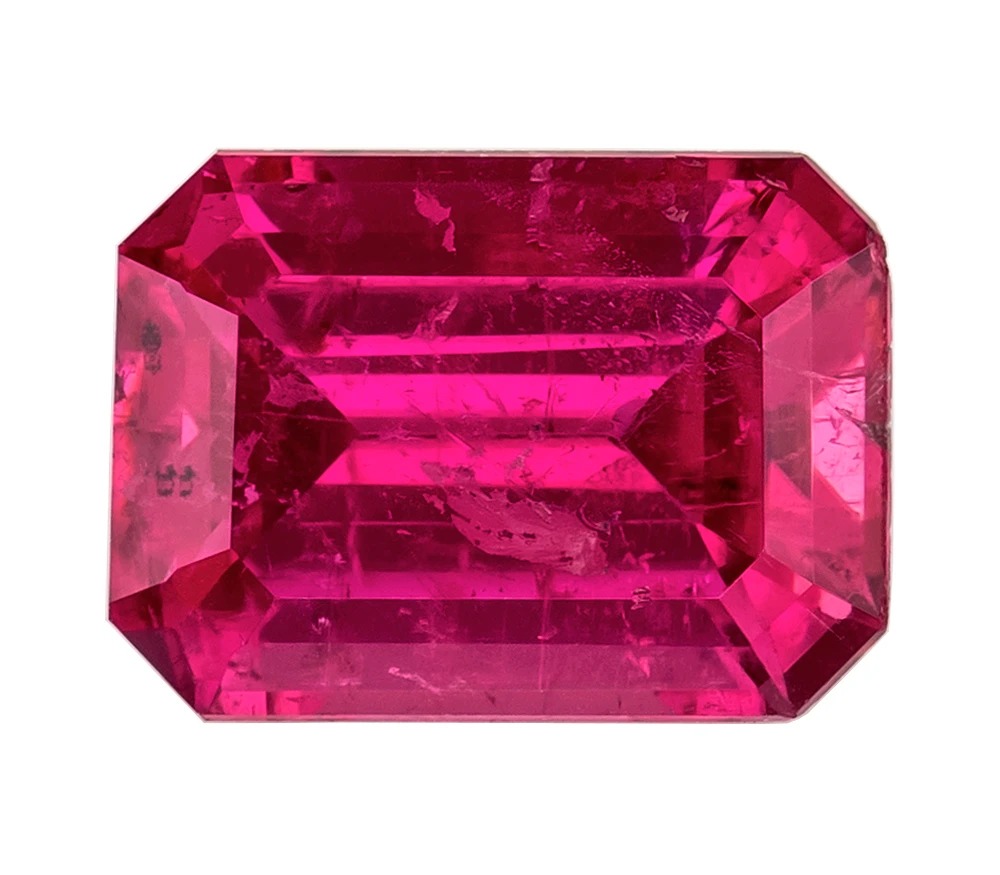
Within this lattice, the presence of manganese (Mn³⁺) ions serves as the primary coloring agent. These ions substitute into the octahedral sites of the crystal structure, absorbing specific wavelengths of light to produce the radiant reds and pinks that define rubellite. Because of the way these ions are integrated into the hexagonal rings and triangular borate units, the crystals often exhibit vertical striations on their faces, a hallmark feature that aids in the identification of raw specimens. This internal symmetry not only dictates the stone’s external beauty but also its piezoelectric and pyroelectric properties, meaning the crystal can become electrically charged when subjected to mechanical pressure or temperature changes.
Physical and Optical Properties of Rubellite
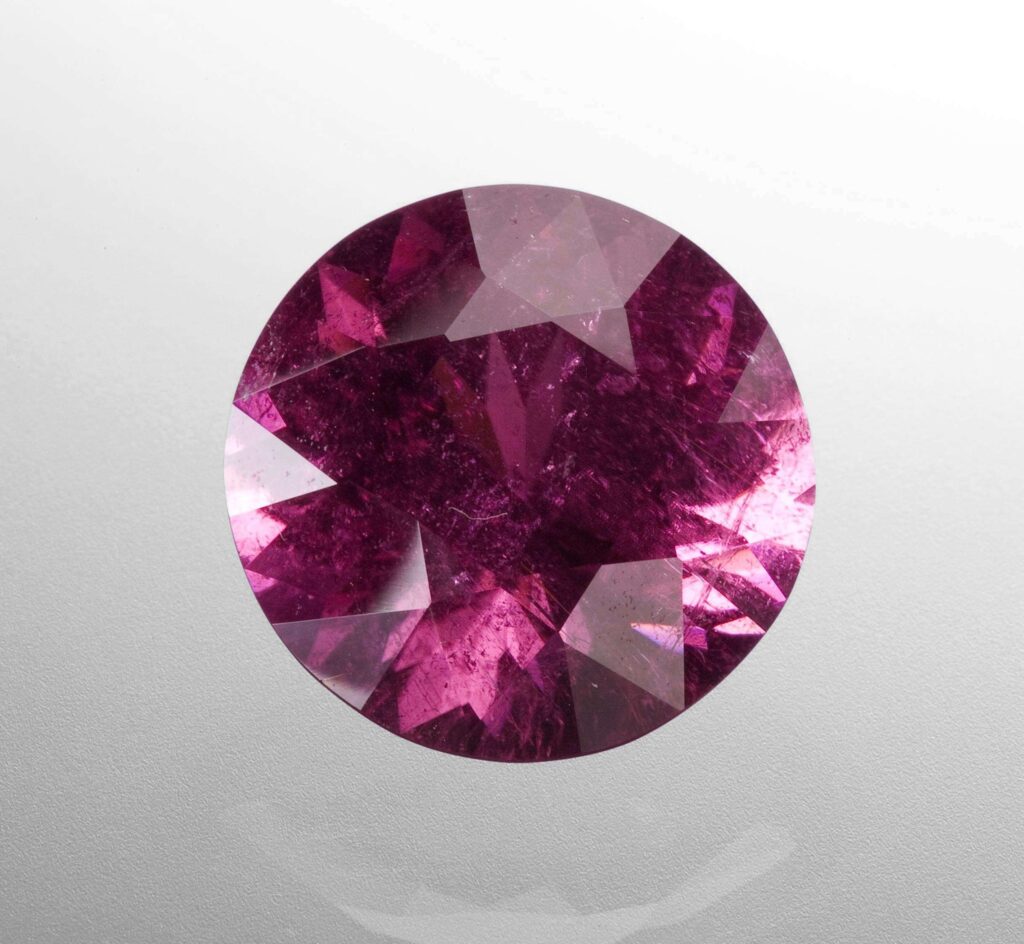
The physical and optical properties of rubellite define its status as a premium gemstone within the tourmaline group. Mechanically, it is quite robust, possessing a hardness of 7 to 7.5 on the Mohs scale, which allows it to resist scratches from most everyday objects. Its crystal structure is trigonal, and it lacks a distinct cleavage plane, instead breaking with a subconchoidal to uneven fracture. The density, or specific gravity, typically ranges between 3.01 and 3.06. One of the most fascinating physical traits of rubellite is its pyroelectric and piezoelectric nature; the gemstone can generate an electrical charge when heated or subjected to mechanical pressure, which often causes it to attract small particles like dust.Optically, rubellite is doubly refractive (uniaxial negative) with a refractive index usually falling between 1.624 and 1.644. It exhibits a high birefringence of approximately 0.018 to 0.020. A key optical hallmark is its strong pleochroism—the ability to show different colors or depths of color (typically dark red and light pink) when viewed from different crystallographic directions. While many gemstones are valued for being “eye-clean,” rubellite is known for being a “Type III” gemstone, meaning it almost always contains natural internal inclusions. These inclusions, often referred to as “trichites” or “silk,” are generally accepted by collectors as long as they do not significantly diminish the stone’s brilliance or structural integrity.
Suitability and Application in Fine Jewelry
Rubellite is considered an excellent and highly desirable choice for jewelry due to its vibrant aesthetics and reliable durability. With its respectable hardness, it is well-suited for a variety of designs, including earrings, necklaces, and brooches, which are less prone to impact. While it is durable enough for rings, jewelers often recommend protective settings, such as bezels or halos, to shield the stone from potential chipping during heavy daily activity. The primary appeal of rubellite in jewelry is its “nightstone” quality; unlike many other red gems that can appear brownish or “die” in low light, rubellite maintains its intense magenta-red glow under both natural and incandescent lighting, making it a spectacular choice for evening wear.
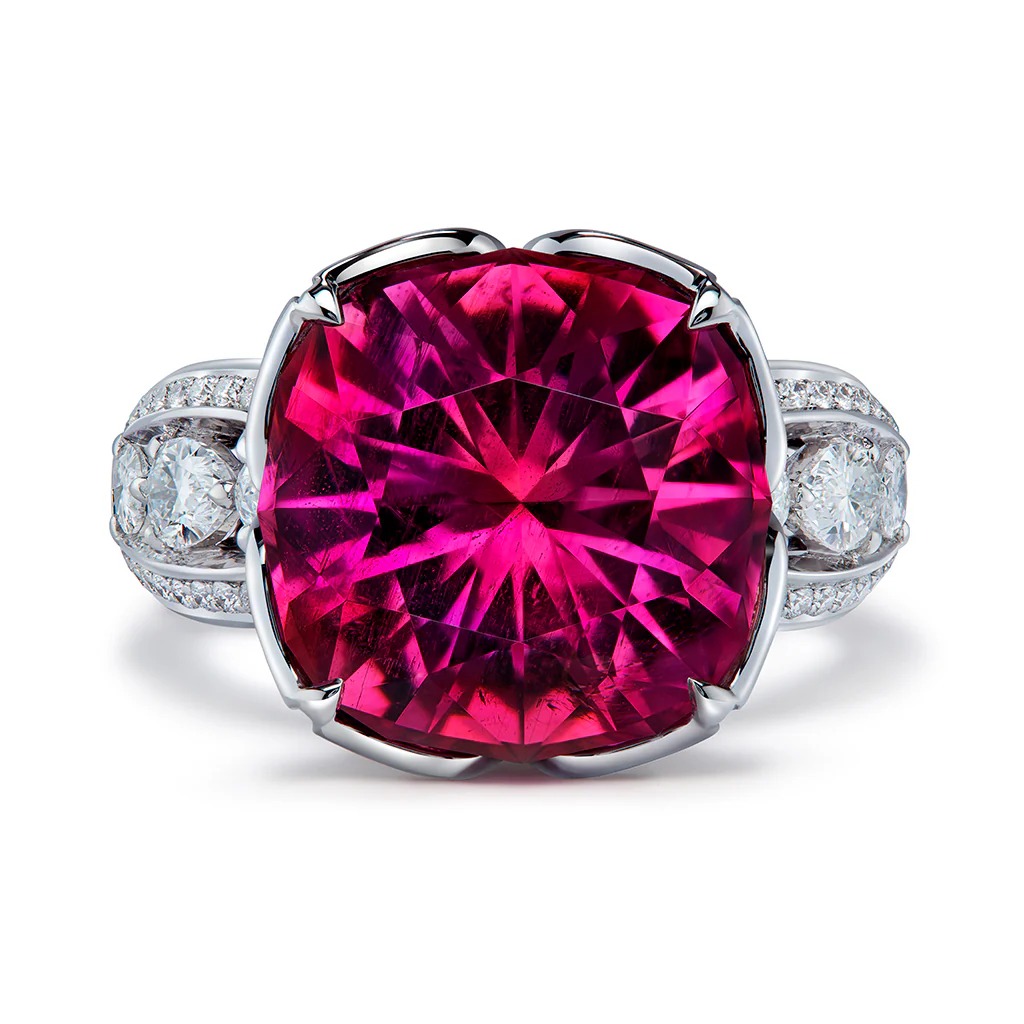
Furthermore, rubellite offers a unique advantage in terms of size and presence. Because tourmaline crystals can grow to significant lengths, designers can source large, high-saturation stones for statement pieces at a much more accessible price point than rubies of comparable weight. However, because rubellite is a Type III gemstone and frequently contains delicate internal inclusions, it requires specific care. It should never be cleaned using ultrasonic or steam cleaners, as the vibrations or heat could cause internal fractures to expand. Instead, the most effective way to maintain its brilliance is through gentle cleaning with warm, soapy water and a soft-bristled brush, ensuring the gem remains a radiant centerpiece for generations.
Symbolism and Metaphysical Significance of Rubellite
Beyond its physical beauty, rubellite is steeped in rich symbolism and is often regarded as a stone of the heart. It is most commonly associated with emotional healing, unconditional love, and the strengthening of romantic bonds. Many believe that rubellite carries a vibrant life force energy that helps the wearer overcome old emotional wounds, fostering a sense of peace and compassion. Unlike lighter pink stones that represent gentle affection, the deep, fiery red of rubellite symbolizes passion, courage, and the drive to bring one’s desires into reality. It is frequently gifted as a token of deep commitment and enduring friendship, representing a heart that remains resilient and vibrant through life’s challenges.In various spiritual traditions, rubellite is thought to balance the heart and root chakras, bridging the gap between earthly stability and emotional openness. It is often seen as a stone of vitality, believed by practitioners to increase physical energy and provide the wearer with the “zest for life” needed to pursue their creative or professional goals. In addition to its connection to love, rubellite is viewed as a symbol of self-love and internal strength. By wearing the stone, individuals seek to cultivate a more positive self-image and to radiate a confident, magnetic energy that attracts positive relationships and opportunities. This multifaceted symbolism makes rubellite a meaningful choice for those celebrating personal milestones or seeking a talisman for emotional growth.