
Rhodochrosite is a manganese carbonate mineral with the chemical formula MnCO₃. Belonging to the calcite group of minerals, it is celebrated for its distinctive rose-red to pink hues, which are fundamentally driven by the presence of manganese within its trigonal crystal lattice. In its pure form, rhodochrosite exhibits a vibrant, translucent red color; however, iron, magnesium, and calcium frequently substitute for manganese in a solid-solution series, altering its coloration and physical properties. It possesses a Mohs hardness of 3.5 to 4 and exhibits perfect rhombohedral cleavage, making it highly prized by mineralogists and collectors, though challenging for lapidary use.
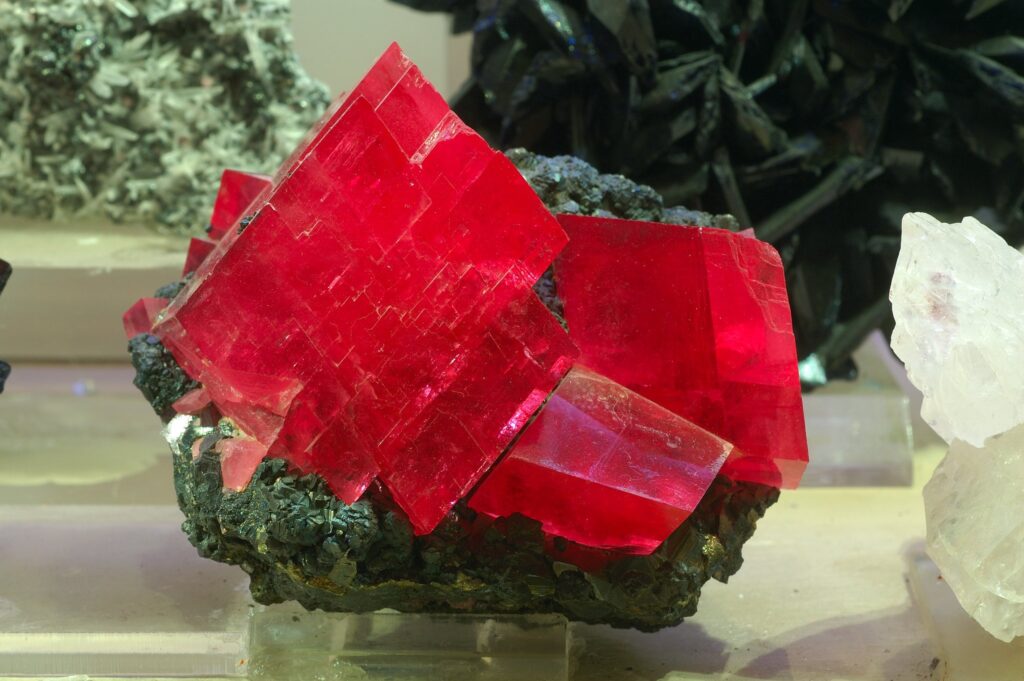
The nomenclature of the mineral is derived from the Greek words rhódon (meaning “rose”) and chrosis (meaning “coloring”), directly referencing its characteristic aesthetic. While the mineral was officially described and recognized by modern mineralogy in the early 19th century—largely attributed to discoveries in the silver mines of Romania—its historical significance stretches back much further. Notably, the Incas believed that rhodochrosite was the solidified blood of their ancestral rulers, leading to its popular colloquial designation as “Inca Rose” (Rosa del Inca). The Capillitas mine in Argentina remains a historically paramount locality, famed for producing spectacular stalactitic formations that display concentric, banded patterns of varying pink intensities.
One of the most significant events in the history of rhodochrosite collecting occurred during the 1960s at the famous Sweet Home Mine near Alma, Colorado. During a period of amateur prospecting, a rockhound miner discovered an exceptional rhodochrosite specimen that later became known as the “Alma Queen.” After uncovering a narrow vein containing small rhodochrosite crystals, he exposed a remarkable crystal group unlike anything previously known from the locality. The specimen was subsequently sold at a mineral show in Las Vegas and passed through several owners before being acquired by noted mineral dealer and collector David Wilber. When Wilber displayed the specimen at the Tucson Gem and Mineral Show during the 1970s, it attracted widespread attention among Colorado mineral collectors, who had never seen rhodochrosite crystals of such quality from the Sweet Home Mine. The publicity generated by the Alma Queen inspired renewed specimen-mining efforts at the mine, ultimately leading to the discovery of other world-famous rhodochrosite specimens, including the Alma King and Alma Rose. These discoveries helped establish the Sweet Home Mine as one of the most important rhodochrosite localities in the world and significantly enhanced the mineral’s reputation among collectors and museums.
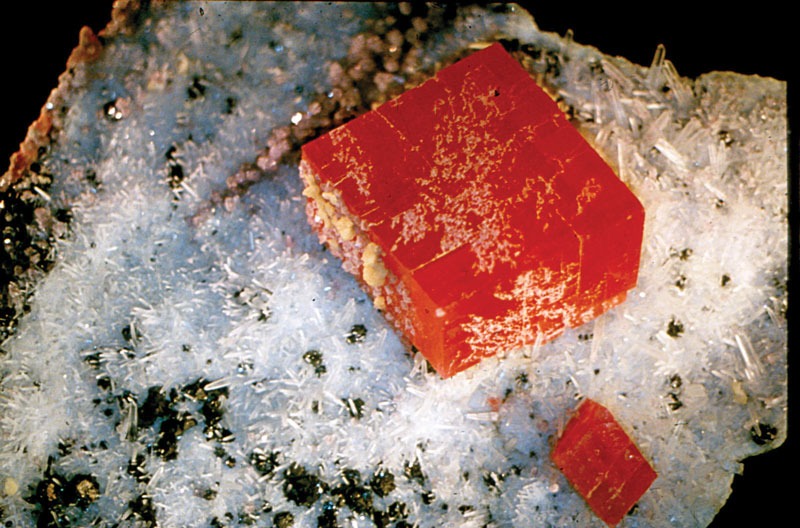
The genesis of rhodochrosite typically occurs under low- to medium-temperature hydrothermal conditions, where it precipitates as a secondary or gangue mineral within polymetallic veins. As hydrothermal fluids saturated with manganese and carbonate ions ascend through the Earth’s crust, changes in temperature, pressure, and pH trigger the crystallization of MnCO₃, frequently alongside sulfides of lead, zinc, and silver.Additionally, rhodochrosite forms via sedimentary and supergene processes. In sedimentary environments, it precipitates in anoxic, manganese-rich marine or lacustrine basins where microbial activity facilitates the reduction of manganese oxides. It can also develop as a secondary alteration product in the oxidation zones of manganese ore deposits, where meteoric waters leach manganese from primary minerals and redeposit it as carbonates within fractures, occasionally forming the iconic banded stalactites through slow, rhythmic precipitation.
Crystal Structure and Crystallographic Architecture
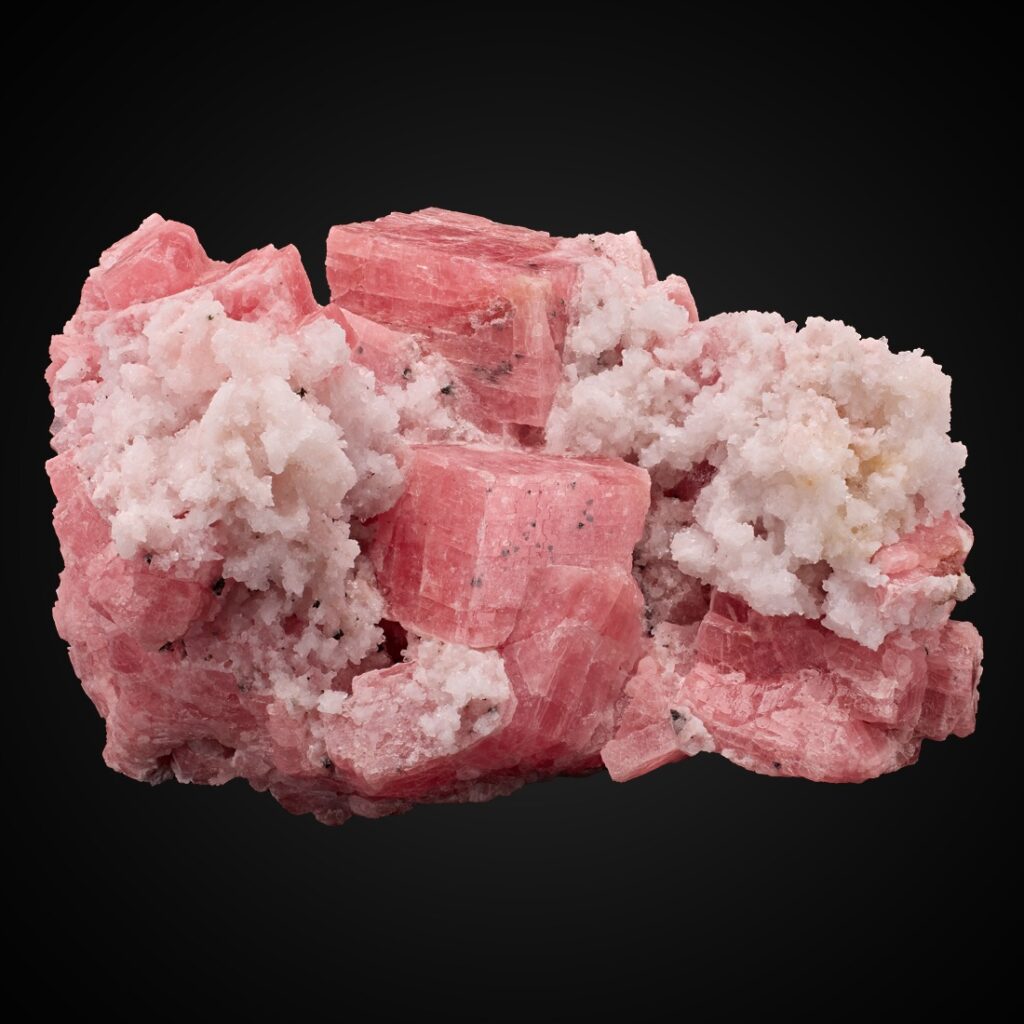
Rhodochrosite crystallizes in the trigonal system, specifically within the space group R-3c. As a prominent member of the calcite mineral group, its internal structure is characterized by an alternating arrangement of manganese cations (Mn²⁺) and triangular carbonate anionic complexes (CO₃²⁻). This structure can be conceptualized as a highly distorted, rhombohedrally compressed variant of the classic sodium chloride (NaCl) lattice type. Within this framework, each manganese ion is octahedrally coordinated by six oxygen atoms originating from surrounding carbonate groups. The CO₃²⁻ groups lie in planes perpendicular to the threefold c-axis, which induces a significant anisotropy in the physical and chemical bonds throughout the lattice. At room temperature, the unit cell dimensions are typically a = 4.777 Å and c = 15.67 Å for the hexagonal setting. However, because manganese readily undergoes isomorphous substitution with other divalent cations such as calcium (Ca²⁺), iron (Fe²⁺), and magnesium (Mg²⁺), these lattice parameters fluctuate. This continuous solid-solution series—most notably toward siderite (FeCO₃) and calcite (CaCO₃)—causes systematic expansions or contractions of the unit cell, directly impacting the mineral’s macro-structural stability.
Coloration Mechanisms and Optical Attributes
The signature pink-to-red palette of rhodochrosite is an intrinsic property governed by crystal field transitions within the structural manganese. The divalent manganese ion (Mn²⁺) possesses a d⁵ electronic configuration. In an octahedral coordination environment, spin-forbidden d-d orbital transitions occur, resulting in selective optical absorption. Specifically, the mineral strongly absorbs light in the blue and green regions of the visible spectrum (primarily around 410 nm, 450 nm, and 550 nm), while reflecting or transmitting the longer wavelengths that manifest as vibrant pink, rose, or deep cherry-red. Optically, rhodochrosite is uniaxial negative and exhibits exceptionally high birefringence (δ = 0.200 to 0.220), a direct consequence of the planar orientation of the carbonate groups. The refractive indices typically range from ω = 1.814 to 1.816 (ordinary ray) and ε = 1.596 to 1.598 (extraordinary ray). Under transmitted polarized light, this vast directional disparity in refractive index produces an intense, diagnostic “birefringence blink” when the microscope stage is rotated. Furthermore, the mineral displays distinct, though sometimes subtle, pleochroism—varying from dark rose-red along the ordinary ray to a much paler pink or colorless hue along the extraordinary ray. When subjected to long-wave ultraviolet radiation, certain calcium-rich specimens exhibit a faint to moderate pink fluorescence, though this behavior is often quenched if significant iron impurities are embedded within the matrix.
Physical and Chemical Properties
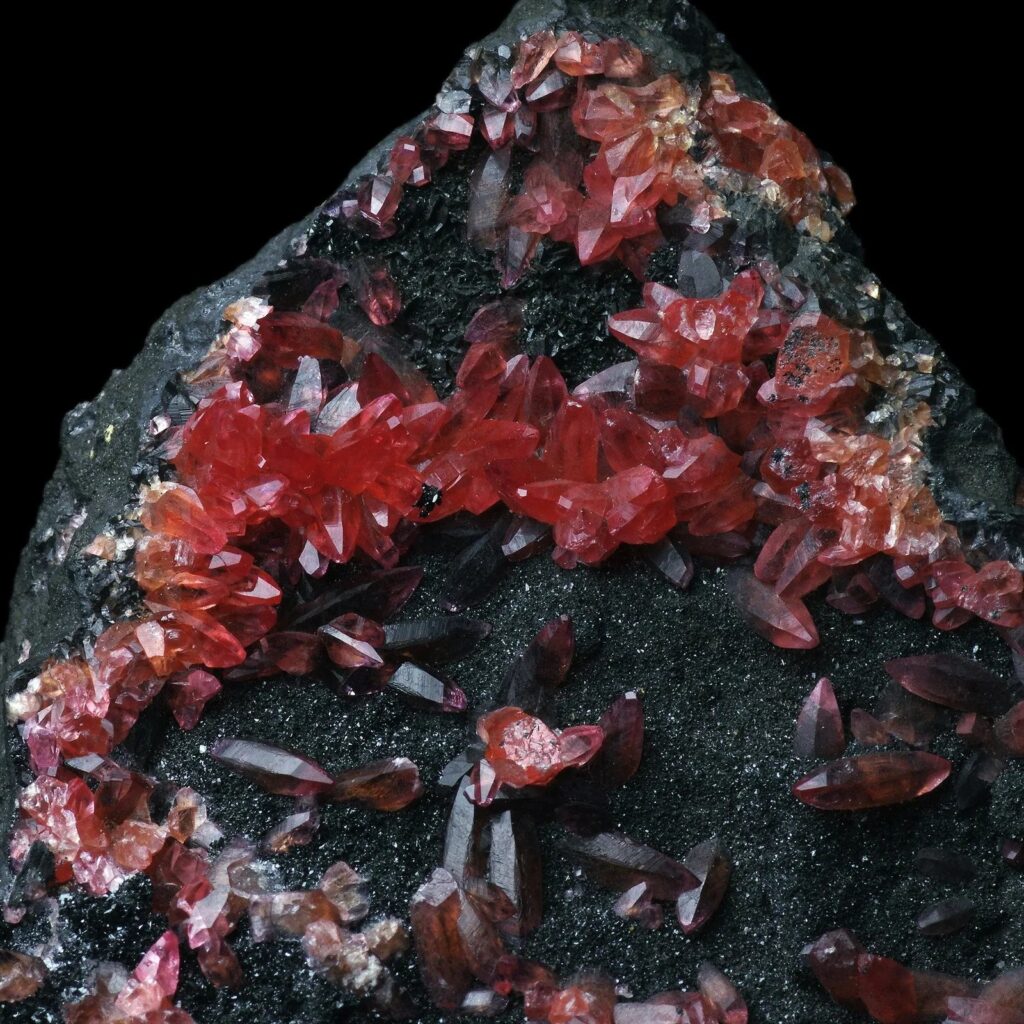
On a macroscopic scale, rhodochrosite presents a suite of definitive physical and chemical characteristics shaped by its underlying chemistry. It exhibits a relatively low Mohs hardness rating of 3.5 to 4.0, and its tenacity is brittle, making it highly susceptible to mechanical damage. It possesses perfect rhombohedral cleavage along the {10-11} planes. This complete three-directional cleavage yields smooth, mirror-like fragments when fractured, while un-cleaved surfaces show an uneven to conchoidal fracture profile. The specific gravity ranges tightly between 3.50 and 3.70 g/cm³, a value that increases incrementally as heavier iron ions substitute for manganese. The luster is predominantly vitreous, though it can transition to a pearly, silky, or dull appearance in fibrous, banded, or aggregated habits, with its diaphaneity varying from completely transparent to translucent. As a carbonate mineral, rhodochrosite reacts with acids. Unlike calcite, which effervesces vigorously in cold, dilute hydrochloric acid (HCl), pure rhodochrosite reacts slowly in cold acid and typically requires warm acid to initiate a sustained effervescence, liberating carbon dioxide gas according to the equation:
MnCO3 + 2HCl → MnCl2 + H2O + CO2↑
Applications of Rhodochrosite
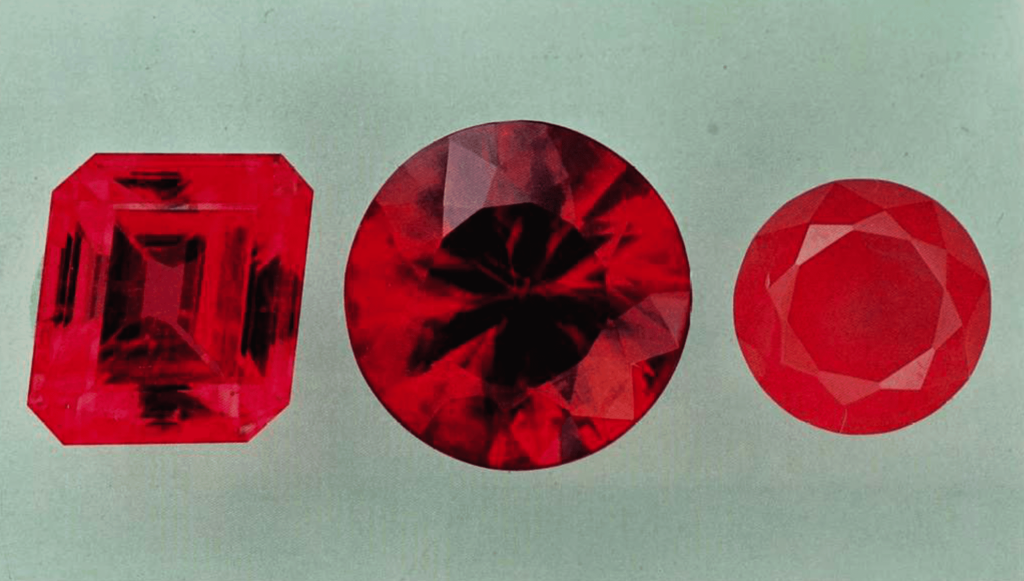
Rhodochrosite is primarily utilized as a gemstone, ornamental stone, and minor ore of manganese. High-quality specimens are cut into cabochons, beads, faceted gems, and decorative carvings for use in jewelry and artistic objects, while attractive crystal specimens are highly sought after by mineral collectors. In industry, rhodochrosite serves as a secondary source of manganese, which is extracted for the production of steel alloys, where manganese functions as an important strengthening, deoxidizing, and desulfurizing agent. Manganese carbonate obtained from rhodochrosite is also used in the manufacture of fertilizers, animal feed additives, ceramic glazes, pigments, and various manganese-based chemical compounds. Additionally, rhodochrosite has scientific applications in geology and geochemistry, as its isotopic composition can be analyzed to study hydrothermal activity, mineral-forming environments, fluid evolution, and past geological conditions. These diverse applications make rhodochrosite valuable not only as an attractive mineral specimen but also as an industrial and research material.