
Pyroxmangite is a rare manganese silicate mineral that crystallizes in the triclinic system. It belongs to the pyroxenoid group, a class of minerals characterized by single-chain silicate structures. While it is often visually indistinguishable from rhodonite, pyroxmangite is defined by a specific structural arrangement: its silicate chains consist of a repeating unit of seven tetrahedra, whereas rhodonite consists of five. This structural distinction is primarily a function of the pressure and temperature conditions present during the mineral’s formation, with pyroxmangite typically representing the high-pressure or high-temperature polymorph of manganese silicate.
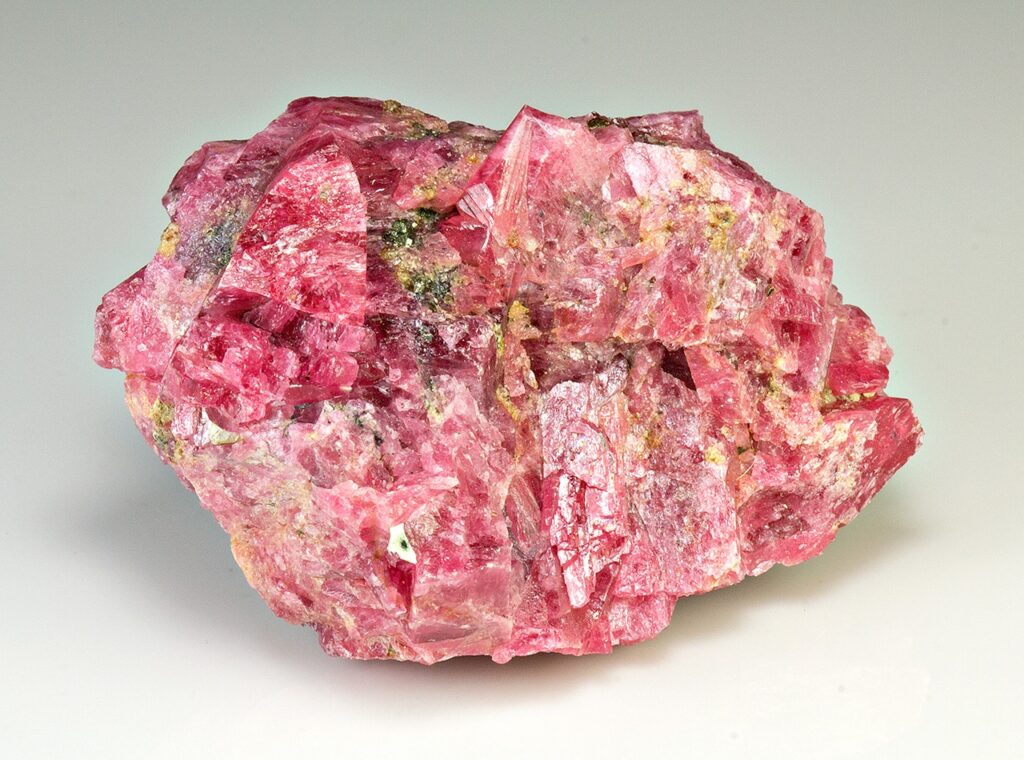
The mineral typically appears in shades of pink, rose-red, or reddish-brown. When exposed to weathering, its surfaces often develop a black or dark brown film of manganese oxides. In its pure form, the mineral has a vitreous luster and ranges from transparent to translucent. It possesses a Mohs hardness of 5.5 to 6 and exhibits perfect cleavage in two directions, making the material brittle and difficult to process for industrial or ornamental use.
The Origins and History of Pyroxmangite
The formation of Pyroxmangite is primarily the result of high-grade metamorphism acting upon manganese-rich sediments or pre-existing manganese minerals, such as rhodochrosite and quartz, under specific thermobaric conditions. As a high-pressure and high-temperature polymorph of manganese silicate, its stability is governed by the intensity of geological forces; specifically, when metamorphic grades increase, the five-unit silicate chain characteristic of rhodonite undergoes a structural reconfiguration into the more complex seven-unit chain that defines pyroxmangite. This transition typically occurs within regional metamorphic belts or at contact zones where igneous intrusions provide the necessary thermal energy, often at temperatures exceeding 400°C. Beyond solid-state transformation, the mineral can also precipitate from manganese-bearing hydrothermal fluids as they circulate through crustal fractures and react with surrounding rock. Throughout these processes, the geochemical environment must remain relatively low in calcium, as the presence of calcium would otherwise steer the crystallization toward minerals like bustamite or calcian rhodonite rather than the distinct triclinic structure of pyroxmangite.
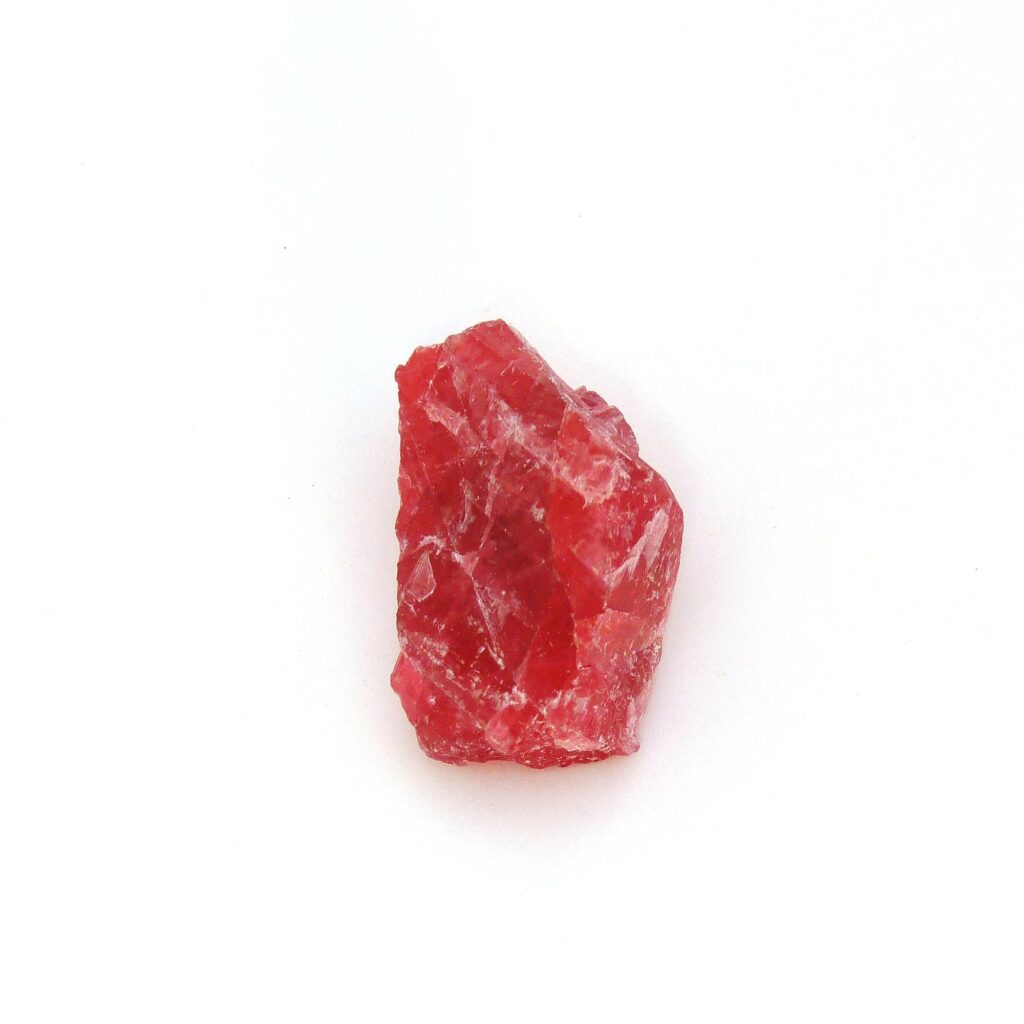
The historical record of Pyroxmangite began in 1913, when it was simultaneously identified and described by mineralogists from two distinct geographical locations: the Iva area in Anderson County, South Carolina, and the Långban mining district in Sweden. The name was derived from its visual and chemical resemblance to the pyroxene group and its dominant manganese content, though subsequent X-ray diffraction studies in the mid-20th century revealed that its internal “pyroxenoid” structure was far more complex than originally assumed. For decades, much of the world’s pyroxmangite was misidentified as rhodonite due to their nearly identical physical properties; it was not until the refinement of crystallographic analysis in the 1950s and 1960s that the mineral was widely recognized as a separate species defined by its unique seven-unit silicate chain. The historical significance of the mineral expanded significantly in the latter half of the century with the discovery of world-class, gem-quality crystals in the Conselheiro Lafaiete region of Brazil and the Taguchi Mine in Japan. These discoveries transitioned pyroxmangite from an obscure mineralogical curiosity found in metamorphic iron-manganese formations into a highly prized species for both systematic mineral collections and advanced gemological study.
Rhodonite vs. Pyroxmangite: What Really Sets Them Apart?
Rhodonite and Pyroxmangite may look nearly identical at first, sharing the same manganese silicate composition and similar pink to rose-red coloration, but their true difference lies in their internal crystal structures. As structural polymorphs, they form under different geological conditions, which leads to distinct atomic arrangements. Rhodonite is built from silicate chains that repeat every five tetrahedral units, resulting in a more open structure, while Pyroxmangite has a denser configuration with chains repeating every seven units—an indication that it forms under higher pressure or temperature conditions. In terms of physical properties, Pyroxmangite generally exhibits a slightly higher refractive index and specific gravity, making it marginally denser than Rhodonite, though these differences are subtle and not easily observed. Both minerals commonly appear as vibrant pink stones with black manganese oxide veining, but Pyroxmangite is more likely to occur in transparent, gem-quality crystals, albeit rarely. Despite these distinctions, the overlap in their properties makes them extremely difficult to tell apart using visual inspection or standard gemological tools, and accurate identification typically requires advanced laboratory techniques such as X-ray diffraction or Raman spectroscopy to determine whether the silicate chains follow a five-unit or seven-unit pattern.
Jewelry Suitability and Applications of Pyroxmangite
The utilization of pyroxmangite in jewelry is primarily restricted by its physical properties, positioning it as a specialty material for collectors rather than a candidate for mass-market adornment. While the mineral’s striking rose-red color and vitreous luster are visually comparable to more durable gemstones, its Mohs hardness of 5.5 to 6 leaves it vulnerable to scratches from common environmental particulates. The most significant technical barrier to its use in jewelry is its perfect cleavage and brittle tenacity; these factors make the stone exceptionally difficult to facet and prone to splitting if subjected to the mechanical stresses of traditional jewelry setting. Consequently, while transparent specimens are occasionally cut into gemstones, they are generally regarded as display pieces or reserved for protected jewelry items that do not experience heavy impact.
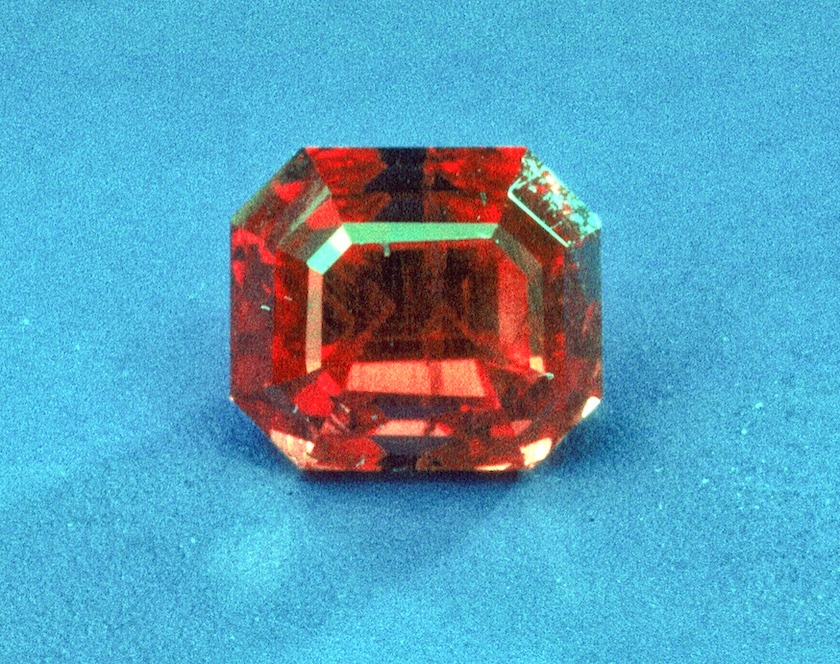
In the scientific and decorative sectors, pyroxmangite serves several functional roles. In geological research, the mineral acts as a reliable geothermometer and geobarometer, as its presence within metamorphic rock units allows scientists to calculate the specific temperature and pressure gradients experienced by the Earth’s crust during mountain-building events. In the ornamental arts, more opaque or massive varieties are sometimes processed into cabochons or decorative carvings, though this is less frequent than the use of its more robust counterpart, rhodonite. Ultimately, the primary value of pyroxmangite lies in its role as a mineralogical specimen; high-quality crystals are essential for museum archives and systematic collections, where they provide a record of the complex chemical and structural diversity found within manganese-rich metamorphic environments.