
Pyrophyllite is a distinct aluminum silicate hydroxide mineral, represented by the chemical formula Al₂Si₄O₁₀(OH)₂, that belongs to the 2:1 phyllosilicate family. Structurally, it is characterized by a dioctahedral layer lattice where a central octahedral alumina sheet is flanked by two outer tetrahedral silica sheets. Because it is dioctahedral, only two-thirds of the available octahedral sites are occupied by trivalent aluminum ions (Al³⁺), leaving the remaining sites vacant. Macroscopically, pyrophyllite exhibits a pearly to greasy luster, perfect basal cleavage, and a low Mohs hardness of 1 to 1.5. These physical properties frequently cause it to be mistaken for talc (Mg₃Si₄O₁₀(OH)₂); however, pyrophyllite is chemically differentiated by its dominant aluminum composition rather than magnesium. It typically occurs in nature as foliated, radiating lamellar forms, or as massive cryptocrystalline aggregates historically known as agalmatolite.
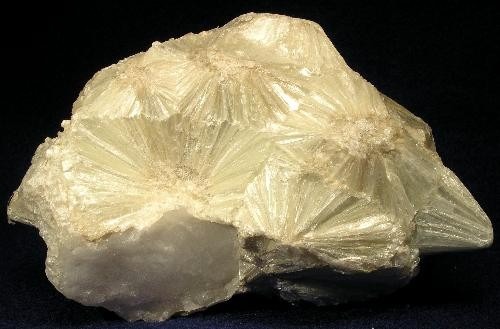
The mineral was officially recognized as a distinct geological species in 1829 by the German mineralogist and chemist August Breithaupt, who documented and analyzed type specimens recovered from the Chunya River region in the Ural Mountains of Russia. Breithaupt derived the name “pyrophyllite” from the Greek words pyr, meaning fire, and phyllon, meaning leaf. This nomenclature directly reflects the mineral’s highly characteristic behavior when subjected to thermal stress; when exposed to a blowpipe flame, the rapid volatilization of its structural hydroxyl groups (OH⁻) causes the mineral to exfoliate, swell, and distort into a white, fan-like or leaf-like mass. Long before its formal mineralogical classification, however, massive and compact varieties of the stone had been mined for centuries in Asia, particularly in China, where its softness made it a prized medium for intricate seals, statuettes, and ornamental carvings under the cultural designations of shoushan stone or pagodite.
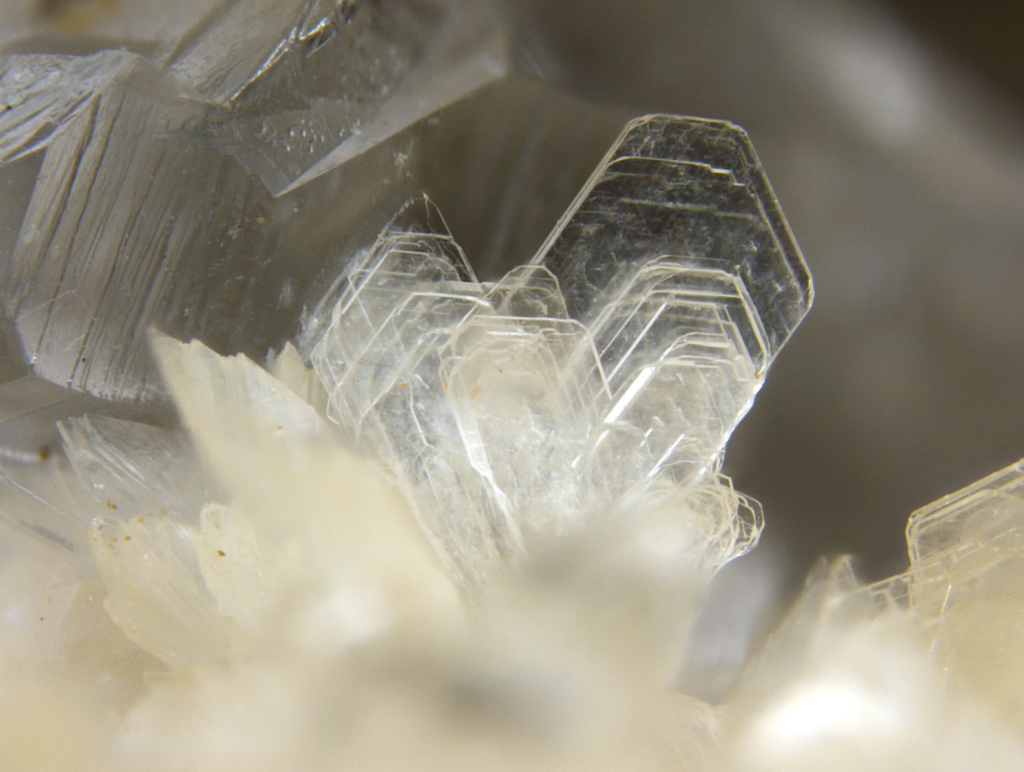
Geologically, pyrophyllite forms primarily through low-grade metamorphism and intermediate-temperature hydrothermal alteration within highly aluminous environments. It typically crystallizes within a stable thermodynamic window ranging from 250°C to 350°C, acting as a critical index mineral for sub-greenschist or anchizone metamorphic facies. In hydrothermal systems, pyrophyllite develops via advanced argillic alteration when acidic, silica-bearing fluids leach alkali elements (Na⁺, K⁺) out of precursor volcanic rocks like rhyolitic tuffs and dacites, leaving behind an aluminum-rich residue. Alternatively, in regional metamorphic terrains, it is generated through the prograde dehydration of lower-grade clay precursors. This occurs when kaolinite reacts with quartz under rising temperatures to yield pyrophyllite and water:
If temperatures surpass 350°C, the mineral becomes unstable and breaks down into andalusite or kyanite (Al₂SiO₅) and quartz, defining its upper thermal boundary in metamorphic petrology.
Varieties, Optical Phenotypes, and Physico-Chemical Attributes of Pyrophyllite
pyrophyllite is structurally classified based on its polytypic crystalline modifications and macroscopic textural habits rather than profound compositional variations, as its solid-solution substitutions remain strictly limited. Crystallographically, it occurs in two primary polytypes: monoclinic (2M₁) and triclinic (1Tc), which are differentiated by the complex stacking sequences of their dioctahedral silicate layers along the c-axis. Macroscopically, however, geological literature categorizes the mineral into distinct structural varieties. The most common is massive pyrophyllite (frequently termed agalmatolite or pagodite), a dense, cryptocrystalline, and compact aggregate that lacks visually distinct crystalline faces. Other prominent structural varieties include foliated pyrophyllite, which presents as flexible, non-elastic cleavages or flakes, and radiating/aciculate pyrophyllite, which crystallizes as elegant, fan-shaped, or stellate lamellar rosettes within hydrothermally altered veins.
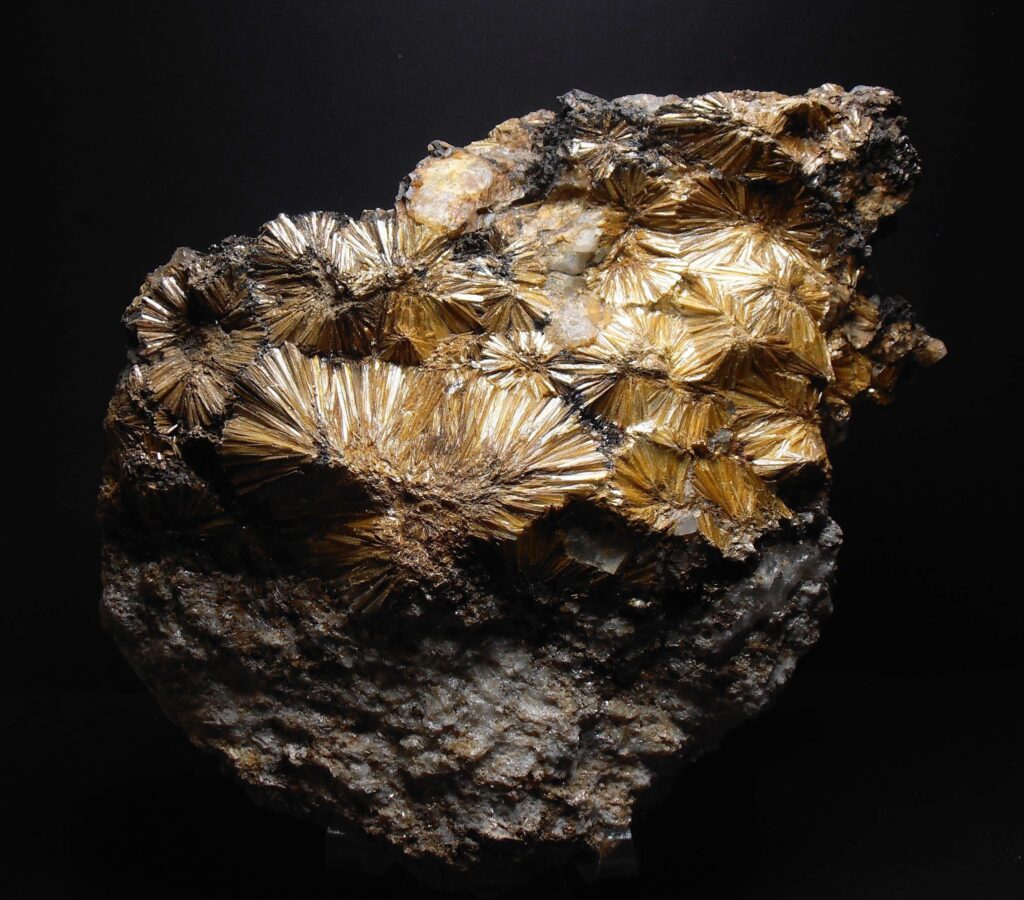
Optically, pure pyrophyllite exhibits a colorless, pristine white, or silvery-grey appearance. However, natural specimens routinely manifest an array of soft hues—including pale green, yellowish-brown, apple-green, and delicate pink—induced by trace structural impurities or microscopic intergrowths of accessory minerals like hematite, chlorite, or diaspore. In thin sections under a polarizing microscope, pyrophyllite presents precise optical parameters: it is biaxial negative with a moderate to high birefringence (δ = 0.040 – 0.050), yielding vibrant, high-order upper-second to third-order interference colors that easily distinguish it from low-birefringence kaolinite minerals. It typically possesses refractive indices ranging between α = 1.552 – 1.556, β = 1.586 – 1.589, and γ = 1.596 – 1.601. Its macroscopic luster varies dynamically from pearly on well-developed basal cleavage surfaces to a muted greasy or dull sheen within massive, fine-grained varieties.
Physically and chemically, pyrophyllite exhibits a unique paradox of extreme physical softness paired with exceptional chemical and thermal resilience. It features a pristine basal cleavage along the {001} plane, a greasy feel, and a low Mohs hardness of 1 to 1.5, allowing it to be easily scratched by a fingernail. Its specific gravity ranges between 2.65 and 2.90. Chemically, the mineral is highly stable; it is completely insoluble in standard cold acids and exhibits an exceptionally low electrical and thermal conductivity. Thermally, pyrophyllite undergoes structural dehydroxylation when heated within a critical range of 500°C to 800°C, driving off its structural hydroxyl units (OH⁻). Upon exceeding 1000°C to 1100°C, it irreversibly recrystallizes into a highly refractory mixture of mullite (3Al₂O₃·2SiO₂) and cristobalite (SiO₂). This thermal metamorphosis dramatically elevates its mechanical hardness and structural stability, explaining its extensive deployment in high-temperature industrial ceramics and refractory engineering.
Applications of Pyrophyllite
Pyrophyllite is a versatile industrial mineral widely utilized across ceramics, metallurgy, chemicals, and advanced materials due to its combination of low hardness, chemical inertness, thermal stability, and layered silicate structure. Beyond its primary use in ceramics and refractory materials—where it serves as a precursor for mullite formation and improves thermal shock resistance—it is also extensively applied in the paint, coatings, rubber, and plastics industries as a functional filler to enhance mechanical strength, dimensional stability, and dispersion properties. In the paper industry, pyrophyllite is used as a coating and filler mineral to improve smoothness, brightness, ink absorption control, and printability. In drilling engineering, finely ground pyrophyllite can be incorporated into drilling mud formulations as a weighting and rheology-modifying agent, contributing to improved lubrication and thermal stability under downhole conditions. It is also employed in foundry applications as a mold release agent and refractory coating material due to its high-temperature resistance and non-wetting behavior toward molten metals. In environmental and chemical applications, pyrophyllite is investigated as an adsorbent and carrier material for catalysts, agrochemicals, and controlled-release formulations because of its fine particle size and surface activity. Additionally, its electrical insulating properties make it suitable for use in high-voltage insulators and specialty ceramic components. In cosmetics and personal care products, it functions as a mild, non-abrasive mineral filler and texture modifier. Overall, pyrophyllite’s broad industrial adaptability and stable physicochemical properties make it an economically significant mineral in both traditional manufacturing and emerging advanced material technologies.