
Norbergite is a rare magnesium silicate fluoride mineral that represents the most magnesium-rich, silica-poor member of the humite group. Chemically classified as a nesosilicate with the formula Mg₃(SiO₄)(F,OH)₂, it consists of isolated silicate tetrahedra structurally interstratified with layers of magnesium hydroxide or magnesium fluoride. The mineral typically crystallizes in the orthorhombic crystal system, though distinct, well-formed crystals are exceedingly uncommon in natural occurrences. Instead, it predominantly manifests as anhedral disseminated grains or compact granular aggregates embedded within a host matrix. Its physical properties are defined by a vitreous luster, a Mohs hardness ranging from 6 to 6.5, and a distinct color palette that spans from light yellow and deep amber-orange to reddish-brown, a coloration primarily dictated by trace amounts of iron substituting for magnesium within the crystal lattice. Under shortwave ultraviolet light, norbergite frequently exhibits a characteristic bright yellow to golden-orange fluorescence, which serves as a critical diagnostic tool for distinguishing it from visually similar species in the field.
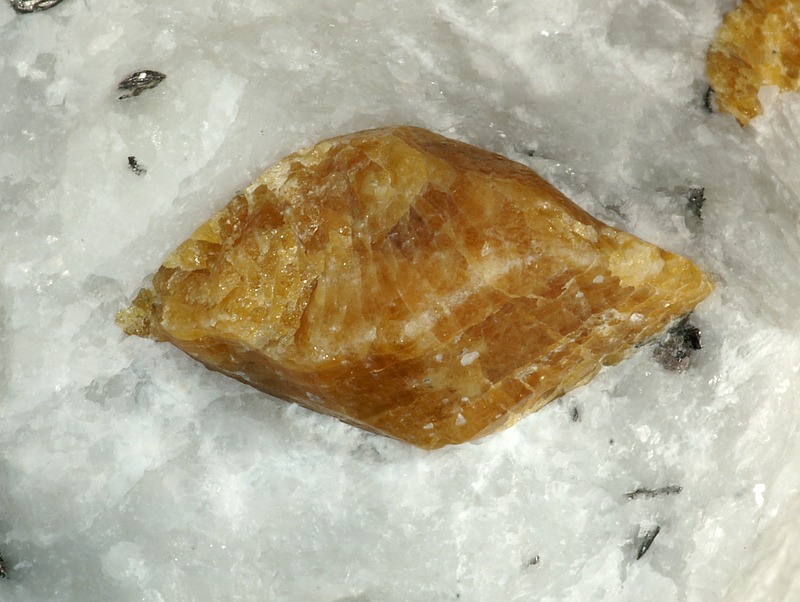
The formation of norbergite is strictly governed by high-grade contact metamorphism and metasomatic processes involving the infiltration of volatile-rich fluids. It develops primarily in localized contact zones where plutonic igneous intrusions intersect magnesium-rich carbonate rocks, such as dolomitic limestones or dolostones. During the intrusion, the host rock is subjected to intense thermal energy and simultaneously permeated by hydrothermal fluids enriched in fluorine and silicon. This metasomatic interaction facilitates the decarbonation of the dolomite and triggers the nucleation of norbergite within the resulting skarn zones. The mineral equilibrium of norbergite requires highly specific thermodynamic conditions and chemical constraints, particularly a high activity of fluorine relative to water. Consequently, it is rarely found in isolation and typically occurs in close paragenetic association with other humite group minerals—such as chondrodite, humite, and clinohumite—as well as associated metamorphic minerals including calcite, phlogopite, tremolite, wollastonite, spinel, and diopside.
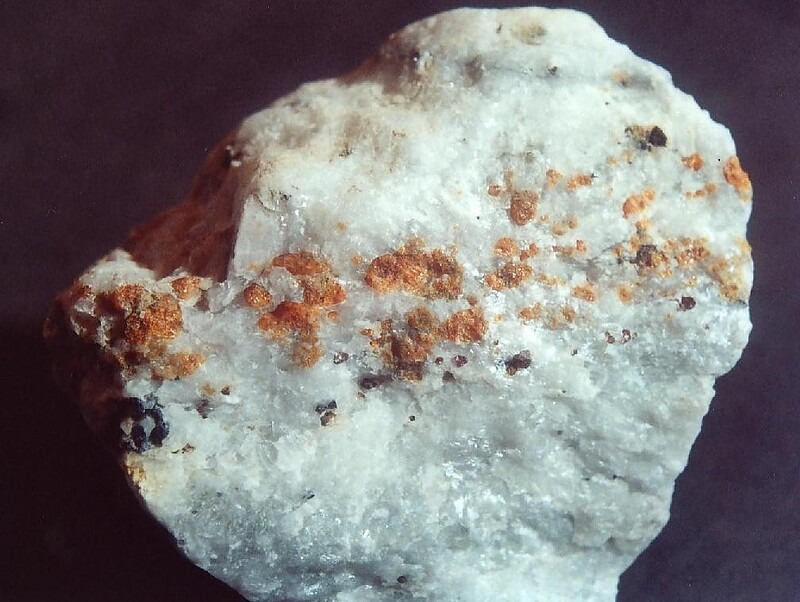
Historically, norbergite was first recognized as a distinct, independent mineral species in 1926 by the prominent Swedish mineralogist and geologist Per Geijer. The mineral was discovered during geological investigations of the Östanmoss iron mine, situated within the historic Norberg mining district in the Västmanland province of Sweden, which subsequently served as its type locality and namesake. Geijer’s identification of norbergite resolved prior mineralogical ambiguities regarding the structural and chemical progression within the humite group, establishing it as the end-member with the lowest silica-to-magnesium ratio. Following its initial documentation in Sweden, subsequent mineralogical surveys identified notable deposits globally, including high-quality specimens from Franklin, New Jersey, and the Adirondack region in New York, USA, as well as localities in Italy, Russia, and Madagascar. While norbergite lacks economic utility as an industrial mineral or commercial ore due to its scarcity, it remains highly significant within academic mineralogy and petrology, serving as a sensitive geological indicator for quantifying fluid-rock interactions and volatile transport in metamorphic systems.
Crystal Structure, Physical and Chemical Properties
Structurally, norbergite belongs to the orthorhombic crystal system, crystallizing within the Pbnm space group. Its internal architecture is characterized by a closely packed hexagonal array of anions (oxygen, fluorine, and hydroxyl ions) in which magnesium cations occupy octahedral sites, while silicon atoms occupy tetrahedral sites. The structural framework of norbergite consists of alternating layers: one layer comprises independent silicate tetrahedra interspersed with magnesium-oxygen/fluorine octahedra, structurally identical to the arrangement found in olivine group minerals, while the adjacent layer consists of pure magnesium hydroxide-fluoride components. This specific interstratification yields an structural unit cell with approximate parameters of a = 4.71 Å, b = 10.28 Å, and c = 8.94 Å. Because norbergite represents the end-member of the humite homologous series with the lowest silica-to-magnesium ratio, its lattice contains the highest proportion of the isolated Mg(F,OH)₂ layers relative to the olivine-like silicate domains.
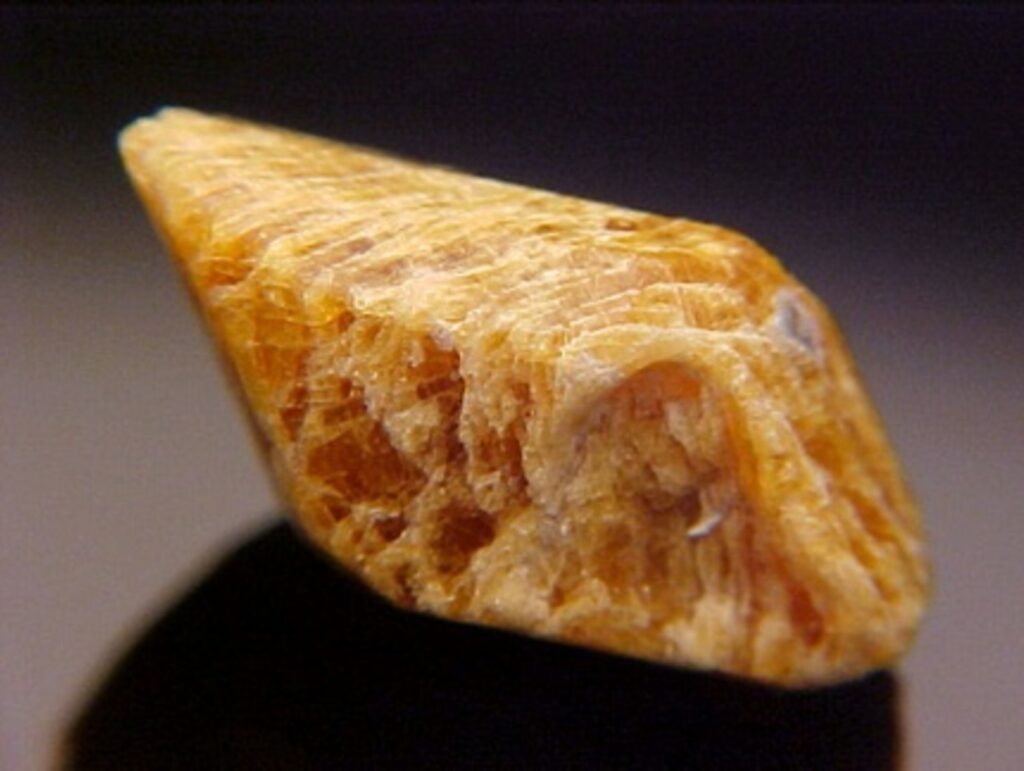
Chemically, norbergite is highly stable under standard surficial conditions but remains chemically responsive to environmental changes during high-temperature metamorphic processes. The chemical composition is heavily dominated by magnesium oxide (MgO) and silica (SiO₂), with fluorine (F) and water (H₂O, entering as structural hydroxyl, OH) acting as essential volatile components. The substitution mechanism between fluorine and the hydroxyl group is a defining chemical feature, where a high fluorine-to-water ratio is required to stabilize the mineral lattice during synthesis or natural crystallization. Norbergite is susceptible to alterations when exposed to acidic hydrothermal fluids, which can break down the silicate-fluoride framework and lead to the formation of secondary minerals such as serpentine, chlorite, or clay minerals. Trace amounts of iron (Fe²⁺) frequently substitute for magnesium in the octahedral sites, while minor quantities of titanium, manganese, and calcium may also enter the structure as impurities, directly influencing the mineral’s precise chemical equilibrium and spectroscopic profile.
Physically, norbergite exhibits a set of distinct macro and microscopic properties that reflect its underlying crystalline layout. It possesses a Mohs hardness of 6 to 6.5, making it relatively durable, and a specific gravity ranging tightly between 3.15 and 3.20. The mineral displays a vitreous to resinous luster on fresh surfaces and features a subconchoidal to uneven fracture pattern, coupled with a poor to indistinct cleavage along the {100} plane. Optically, norbergite is biaxial positive with refractive indices typically falling in the range of nα = 1.560–1.567, nβ = 1.563–1.573, and nγ = 1.587–1.593, exhibiting a low to moderate birefringence. While its macroscopic color ranges from vibrant canary yellow and deep amber to reddish-brown, it appears colorless to pale yellow in thin section under plane-polarized light, occasionally demonstrating weak pleochroism. One of its most notable diagnostic physical properties is its intense fluorescence under shortwave ultraviolet light, where it emits a bright golden-yellow to orange glow, a phenomenon driven by the activation of specific structural defects or trace elements within the lattice.
Applications of Norbergite
Norbergite is a rare magnesium borate fluoride mineral that has attracted attention for its potential applications in advanced ceramic materials, refractory products, and geological research. Due to its excellent thermal stability and resistance to high temperatures, Norbergite can be used as a component in heat-resistant ceramics and insulation materials. In addition, its unique crystal structure and fluorine content make it valuable for studying mineral formation processes in metamorphic rocks. Some researchers also explore its possible use in optical and functional materials because of its distinctive physical and chemical properties. Although Norbergite is not widely used in industry compared with common silicate minerals, it remains important in mineralogy, materials science, and high-temperature engineering research.
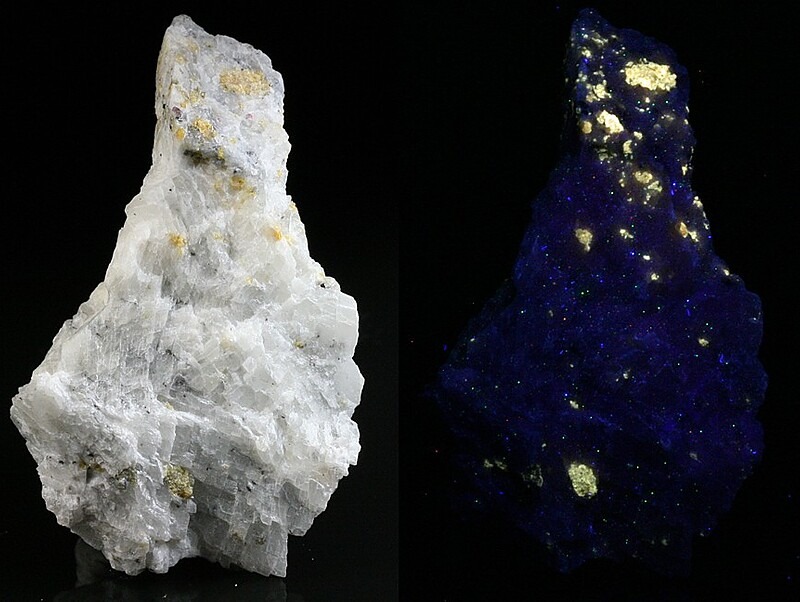
Due to its rarity and distinctive physical attributes, norbergite is also sought after within the international mineral collecting market. It is classified as a fluorescent mineral; when subjected to shortwave ultraviolet radiation, activators within the norbergite lattice trigger a distinct golden-yellow to orange fluorescence, making it a subject of interest for specialized mineral displays. On a gemological scale, while the mineral predominantly manifests as anhedral aggregates, occasional transparent, macro-crystals are discovered. These crystals are sometimes processed by lapidaries into faceted gemstones for collectors. Boasting a Mohs hardness of 6 to 6.5, these gems possess adequate durability for specific jewelry applications, though their scarcity limits their availability to private gemological portfolios rather than commercial retail markets.
Metaphysical and Esoteric Associations
Within contemporary metaphysical practices, crystal healing networks, and esoteric literature, norbergite is categorized by practitioners as a stone associated with alignment, personal fortitude, and intellectual clarity. Spiritual systems conceptually link the mineral to both the solar plexus chakra—traditionally associated with personal will and manifestation—and the third eye chakra, which practitioners connect to intuition and cognitive perception. In these systems, the yellow-to-orange coloration of the mineral is claimed to stimulate mental focus and assist in the integration of conceptual insights into practical applications.Because norbergite forms under the thermal energy of plutonic intrusions and metamorphic stress, esoteric literature symbolically correlates the mineral with themes of transition, resilience, and the clearing of perceived energetic blockages. Within these frameworks, it is often referred to as a “stone of transition,” drawing an analogy from its geological genesis to suggest that it helps individuals navigate situational pressures and undergo personal change. Consequently, holistic practitioners include norbergite in meditation practices intended to enhance focus, support creative problem-solving, and provide a sense of vitality during periods of personal transition.