
Mellite is a rare organic mineral composed of hydrated aluminum mellitate, with the accepted chemical formula Al₂[C₆(COO)₆]·16H₂O. Unlike the vast majority of minerals, which are formed from inorganic compounds such as silicates, oxides, or sulfides, Mellite originates from an organic acid known as mellitic acid (benzenehexacarboxylic acid). It crystallizes in the tetragonal crystal system and typically develops well-formed bipyramidal crystals that range in color from pale honey-yellow and golden amber to deep orange-brown. The mineral is transparent to translucent with a vitreous to resinous luster and possesses a relatively low hardness of approximately 2 to 2.5 on the Mohs scale. Due to its uncommon chemistry and distinctive crystal habit, Mellite is considered one of the most notable examples of naturally occurring organic minerals and remains an important species for both mineralogical research and specialized mineral collections.
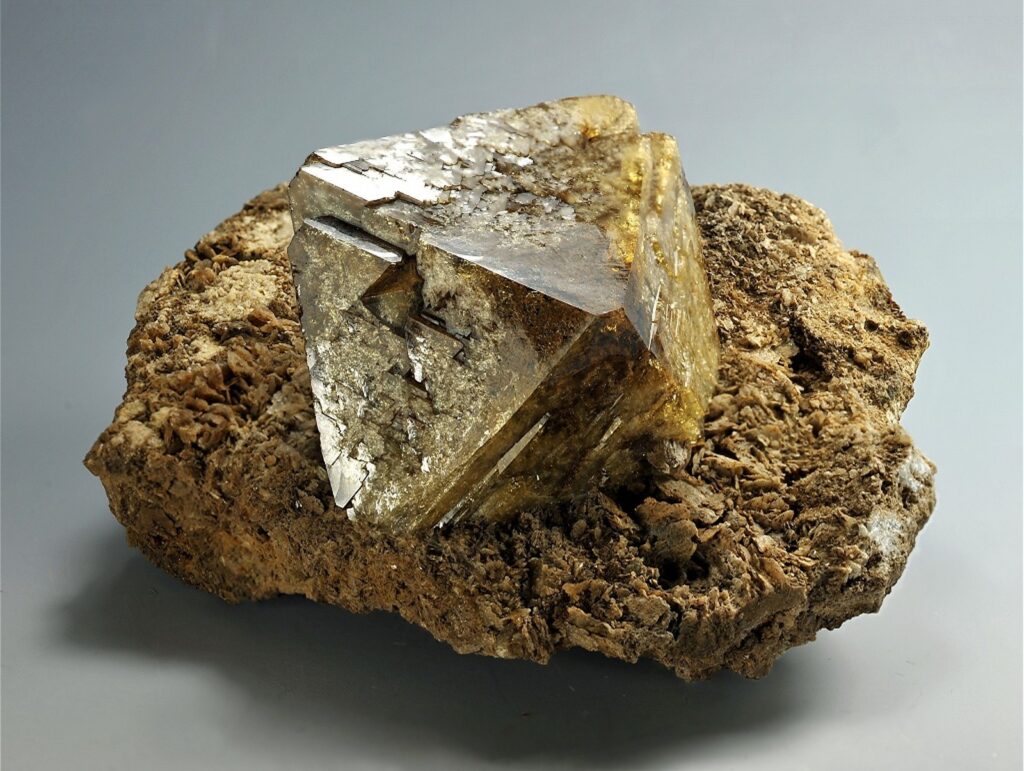
The formation of Mellite is closely linked to lignite and brown coal deposits, where large quantities of organic matter have accumulated and undergone geological alteration over millions of years. During the gradual oxidation and decomposition of plant-derived material, complex organic compounds may generate mellitic acid under suitable geochemical conditions. When groundwater containing dissolved aluminum ions migrates through these coal-bearing sediments, chemical reactions between the aluminum and organic acids can produce stable aluminum-mellitate complexes. As environmental conditions such as pH, temperature, and solution concentration change, these compounds eventually crystallize as Mellite within fractures, cavities, and cleats of the coal seams. Because this process requires a highly specific combination of organic chemistry, groundwater composition, and geological stability, Mellite occurrences are exceptionally rare and are generally restricted to localized low-temperature sedimentary environments.
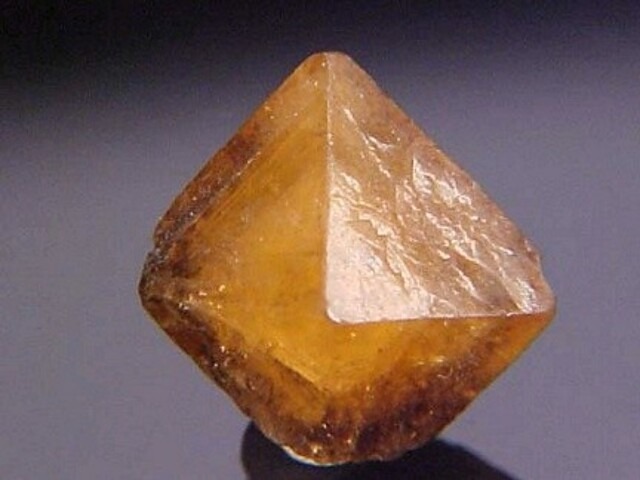
Mellite was first recognized in the late eighteenth century from lignite deposits near Artern in Thuringia, Germany, where it attracted the attention of early mineralogists and chemists due to its unusual composition. The mineral was studied by Christian Ehrenfried Weigel in 1789 and formally named in 1792 from the Greek word meli, meaning “honey,” in reference to its characteristic yellow coloration. Throughout the nineteenth century, Mellite became an important subject in the development of organic chemistry because it represented one of the earliest known examples of a naturally occurring crystalline organic compound. Subsequent discoveries expanded its known distribution to several European localities, particularly within coal-bearing regions of Hungary, Austria, and the Czech Republic. Today, Mellite continues to be valued as a scientifically significant mineral that illustrates the complex interactions between organic matter and geological processes within sedimentary environments.
Crystal Structure, Color, and Optical Properties of Mellite
Mellite crystallizes in the tetragonal crystal system and is most commonly encountered as well-developed dipyramidal crystals that may appear octahedral at first glance. Individual crystals often exhibit sharp edges, smooth crystal faces, and a high degree of symmetry, although the mineral can also occur as granular masses, compact aggregates, or irregular crystalline clusters within lignite deposits. The crystal structure is built around aluminum ions bonded to mellitate anions and water molecules, producing a hydrated organic framework that is distinctly different from the silicate-based structures found in most common minerals. This unusual chemistry contributes to Mellite’s relatively low hardness, low specific gravity, and sensitivity to dehydration when exposed to prolonged environmental changes. The mineral’s color range extends from pale honey-yellow and golden amber to orange-yellow, reddish-orange, brownish-yellow, and, in rare cases, nearly colorless. Variations in coloration are generally attributed to trace impurities, crystal thickness, and differences in the conditions under which the crystals formed.
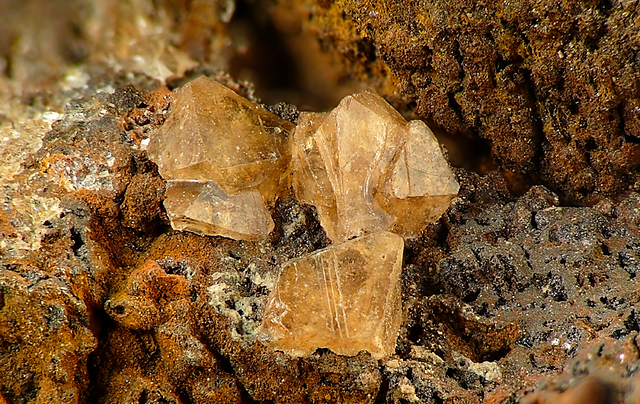
From an optical perspective, Mellite is classified as a uniaxial negative mineral, consistent with its tetragonal symmetry. It possesses refractive indices typically ranging from approximately 1.51 to 1.54 and displays weak to moderate birefringence, producing subtle optical effects when examined under polarized light. Fresh crystals are transparent to translucent and exhibit a vitreous to slightly resinous luster, while weathered surfaces may appear duller due to dehydration or alteration. Thin sections viewed under transmitted light often reveal a clear to pale yellow appearance, reflecting the mineral’s relatively low absorption of visible wavelengths. Some specimens have also been reported to display weak fluorescence under ultraviolet radiation, commonly showing pale yellow, bluish-white, or cream-colored luminescence depending on specimen composition and locality. These optical characteristics, combined with its uncommon organic chemistry and distinctive crystal habit, make Mellite an important mineral for crystallographic, optical, and geochemical investigations.
Physical and Chemical Properties of Mellite
Mellite is a hydrated aluminum mellitate mineral distinguished by its unusual combination of organic chemistry and crystalline mineral structure. Its accepted chemical formula, Al₂[C₆(COO)₆]·16H₂O, reflects the presence of aluminum ions bonded to mellitate anions derived from mellitic acid, together with sixteen molecules of water incorporated into the crystal lattice. Physically, Mellite is characterized by a relatively low Mohs hardness of approximately 2 to 2.5, a specific gravity ranging from about 1.6 to 1.7, and a brittle tenacity. It typically exhibits poor cleavage and an uneven to subconchoidal fracture. Due to its high water content and hydrated structure, the mineral can be sensitive to prolonged exposure to heat, dry conditions, or chemical alteration, which may lead to dehydration and deterioration of crystal quality over time.
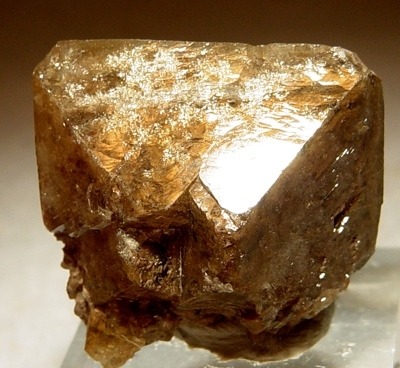
Chemically, Mellite is one of the few recognized minerals formed primarily from an organic acid rather than an inorganic anion such as silicate, sulfate, or carbonate. This unique composition places it within the organic mineral class and makes it an important subject in studies of organic geochemistry and mineral formation. The mineral is generally soluble in strong acids and alkaline solutions, where its crystal structure can break down and release aluminum and mellitate ions into solution. Upon heating, Mellite gradually loses its water of crystallization before decomposing and ultimately producing carbon-rich residues and aluminum-bearing compounds. Its chemical stability is greatest in the low-temperature, organic-rich sedimentary environments in which it forms, particularly within lignite and brown coal deposits. The combination of a hydrated framework, organic molecular constituents, and aluminum coordination chemistry makes Mellite one of the most chemically distinctive mineral species known.
Uses and Metaphysical Significance of Mellite
Because of its rarity, softness, and sensitivity to environmental conditions, Mellite has few practical industrial applications. Its primary value lies in the fields of mineralogy, geochemistry, and museum curation. Scientists study Mellite as one of the most notable examples of a naturally occurring organic mineral, providing insights into the interactions between organic matter and geological processes within sedimentary environments. The mineral is also significant in research concerning the formation of organic compounds in coal deposits and the geochemical behavior of aluminum in low-temperature systems. For collectors, well-formed Mellite crystals are highly sought after due to their distinctive tetragonal crystal habit, uncommon chemistry, and limited occurrence worldwide. Fine specimens are commonly preserved in museum collections, university archives, and specialized private collections rather than being used in jewelry or decorative objects.

In metaphysical traditions, Mellite is often associated with mental clarity, intellectual development, and positive personal transformation. Its honey-yellow coloration has led some crystal practitioners to connect it with themes of optimism, confidence, creativity, and emotional balance. The mineral is sometimes believed to assist with concentration, decision-making, and the release of negative thought patterns, making it a popular stone for meditation and spiritual reflection. Some practitioners also associate Mellite with the solar plexus chakra, viewing it as a stone that encourages personal growth, self-awareness, and inner motivation. However, these metaphysical interpretations are based on spiritual and cultural beliefs rather than scientific evidence, and no scientific studies have demonstrated that Mellite possesses healing or energetic properties beyond its recognized mineralogical characteristics.