
Maskelynite is a unique, glass-like substance primarily found in meteorites and at terrestrial impact craters. Although it resembles traditional glass in its lack of a crystalline structure, it is scientifically classified as a diaplectic glass rather than a product of melting. It originates from plagioclase feldspar, one of the most common minerals in the crusts of the Earth, Moon, and Mars. Unlike volcanic glass or man-made glass, which forms when a melt cools too quickly for crystals to grow, maskelynite is created through a solid-state transformation. This means the mineral transitions from a structured crystal to a disordered glass without ever becoming a liquid, preserving the chemical signature of the original mineral while losing its optical properties.
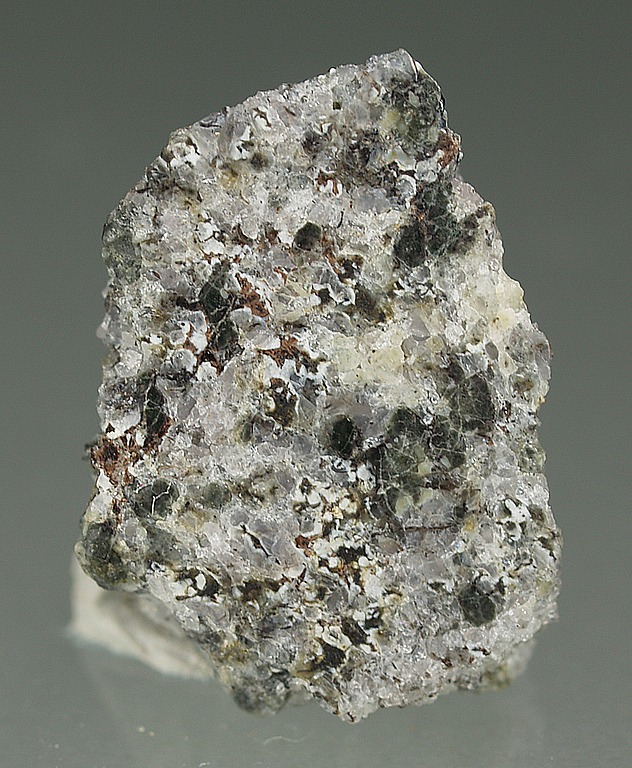
The formation of maskelynite is a direct consequence of shock metamorphism caused by high-velocity cosmic impacts. When an asteroid strikes a planetary surface, it sends a powerful shock wave through the surrounding rock. For plagioclase to transform into maskelynite, it must be subjected to extreme peak pressures typically ranging from 25 to 35 gigapascals. At this threshold, the intensity of the shock wave is high enough to physically displace the atoms within the crystal lattice, shattering their orderly arrangement. However, because the pressure pulse is so brief, the material does not have the time or sustained heat to flow as a liquid. Consequently, the atoms remain frozen in a state of chaotic disorder, effectively capturing a snapshot of the moment of impact.
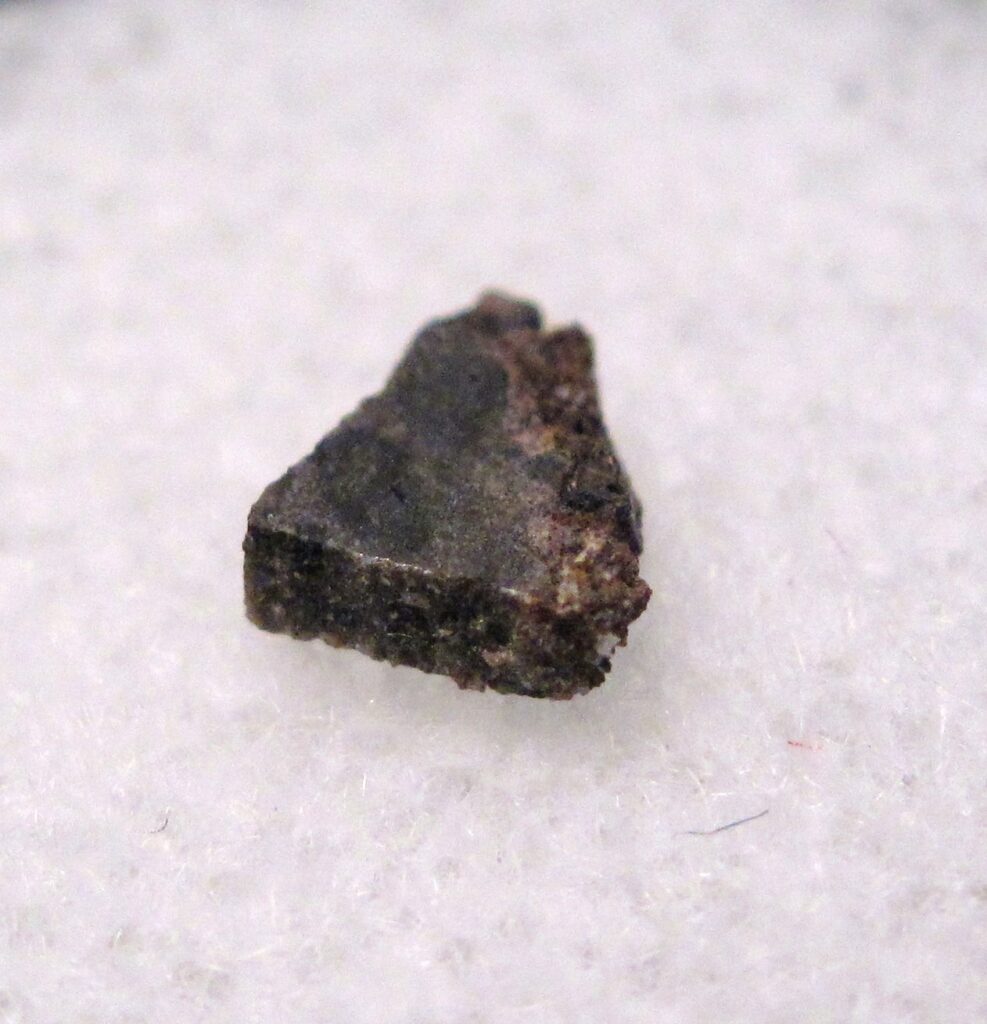
The history of maskelynite dates back to 1872, when the German mineralogist Gustav Tschermak first described it while studying the Shergotty meteorite, which had fallen in India a few years earlier. Tschermak named the substance after Mervyn Herbert Nevil Story-Maskelyne, a prominent British mineralogist and politician who curated the meteorite collection at the British Museum. For over a century, maskelynite remained a curiosity of mineralogy until the advent of the space age. Researchers eventually realized that many meteorites containing maskelynite, such as the Shergottites, were actually pieces of the Martian crust. The presence of this glass provided the evidence needed to explain how these rocks were ejected into space; the same impact force that created the maskelynite provided the velocity required to escape Martian gravity. Today, it remains a vital diagnostic tool for scientists to calculate the shock history and collision dynamics of planetary bodies.
Crystal Structure of Maskelynite
The crystal structure of maskelynite is defined by a paradoxical state of being: it possesses the chemical composition of a crystal but lacks the long-range atomic order that defines one. In its original form, plagioclase feldspar consists of a complex, three-dimensional framework of silicate and aluminate tetrahedra. These tetrahedra are arranged in a highly organized, repeating lattice where oxygen atoms are shared between silicon and aluminum centers. When the mineral is subjected to intense shock pressures, this delicate framework is violently compressed and distorted.Unlike thermal glass, which is created by heating a mineral until the bonds break and the atoms flow freely, the transition to maskelynite occurs in the solid state. The shock wave forces the atoms out of their equilibrium positions so rapidly that they cannot return to their original lattice sites once the pressure is released. This results in an amorphous, or non-crystalline, atomic arrangement. On a microscopic level, maskelynite lacks the periodic symmetry required to diffract X-rays or show birefringence under a polarizing microscope. Instead, the atoms are packed in a random, disordered network that resembles a frozen liquid.
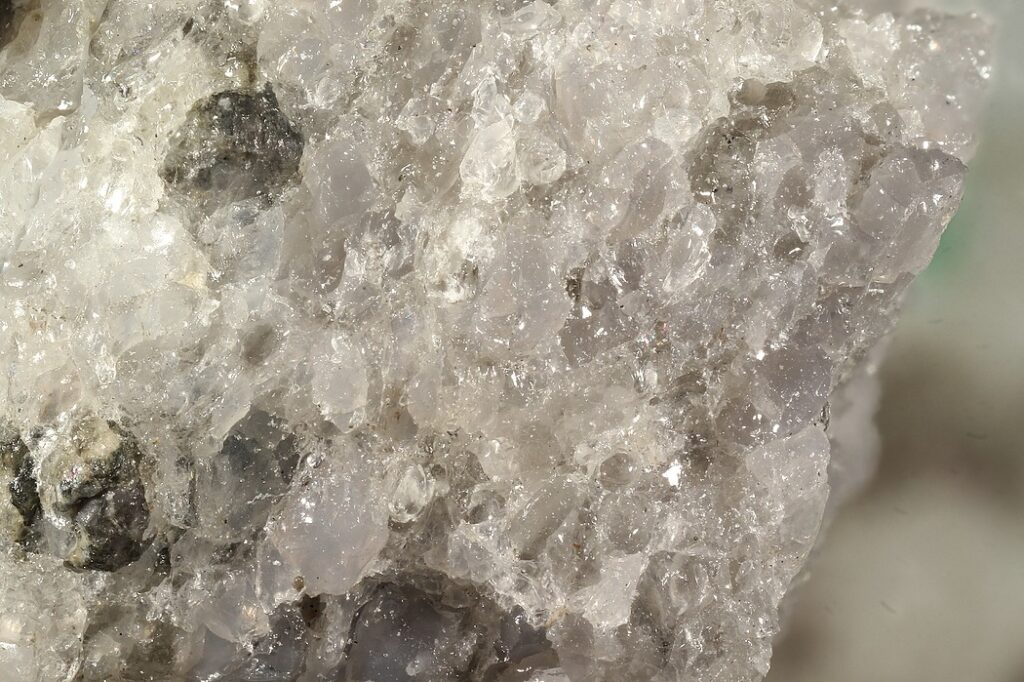
One of the most fascinating aspects of maskelynite’s structure is its “memory” of its crystalline past. Despite the internal chaos of its atoms, maskelynite often retains the external shape, cleavage planes, and even the zoning patterns of the original plagioclase crystal. This phenomenon is known as a pseudomorph. While the long-range order is destroyed, some short-range order—the local bonds between a single silicon atom and its immediate oxygen neighbors—remains partially intact. This structural state makes maskelynite an invaluable subject for spectroscopic analysis, as it serves as a permanent, structural record of the peak shock pressure experienced during a cosmic collision.
Physical & Optical Properties
Maskelynite stands as a unique witness to cosmic violence, appearing as a glass-like substance within meteorites or at massive impact sites on Earth. While it mirrors the outward shape and chemical makeup of plagioclase feldspar, it is technically a diaplectic glass created by intense shock metamorphism rather than melting. When an asteroid strikes a planetary surface, the resulting shock waves—hitting pressures between 25 and 35 gigapascals—violently disrupt the mineral’s internal crystal lattice. Because this occurs in mere microseconds, the atoms are jammed into a disordered, amorphous state before they have any chance to melt or reorganize, effectively freezing the energy of the impact into the stone. First identified in 1872 by Gustav Tschermak in the Shergotty meteorite, it has since become a vital tool for planetary scientists to decode the collision history of Mars and the Moon. Physically, it often retains the original mineral’s cleavage and zoning patterns as a “pseudomorph,” but it reveals its true nature under a microscope by remaining completely dark under polarized light, a property known as being isotropic. This combination of crystalline memory and glassy disorder makes maskelynite an invaluable pressure gauge for understanding the most powerful events in our solar system’s history.
Scientific Applications and Significance of Maskelynite
In the fields of planetary science and geology, maskelynite acts as a critical diagnostic tool for reconstructing the violent history of the solar system. Because this substance only forms within a specific and narrow pressure window—typically between 25 and 35 gigapascals—its presence allows researchers to act as cosmic detectives. By analyzing the maskelynite found within meteorites, scientists can precisely calculate the peak shock pressures a rock experienced when it was violently ejected from its parent body, such as Mars or the Moon. This data not only reveals the sheer intensity of the impact event but also helps experts understand the physical mechanics required for planetary material to achieve escape velocity and eventually journey to Earth.Beyond measuring pressure, maskelynite plays a vital role in establishing the chronological timeline of cosmic events. Scientists utilize isotopic dating techniques on the glassy components of the material to help map out the history of cratering across the Martian and lunar surfaces. This is essential for understanding the early evolution and bombardment history of the inner solar system. On Earth, finding maskelynite at a suspected impact site often serves as the “smoking gun” evidence needed to confirm a crater’s origin. Since the conditions required to create this diaplectic glass cannot be replicated by volcanic activity or standard tectonic shifts, its identification definitively separates meteorite impact structures from volcanic landforms.
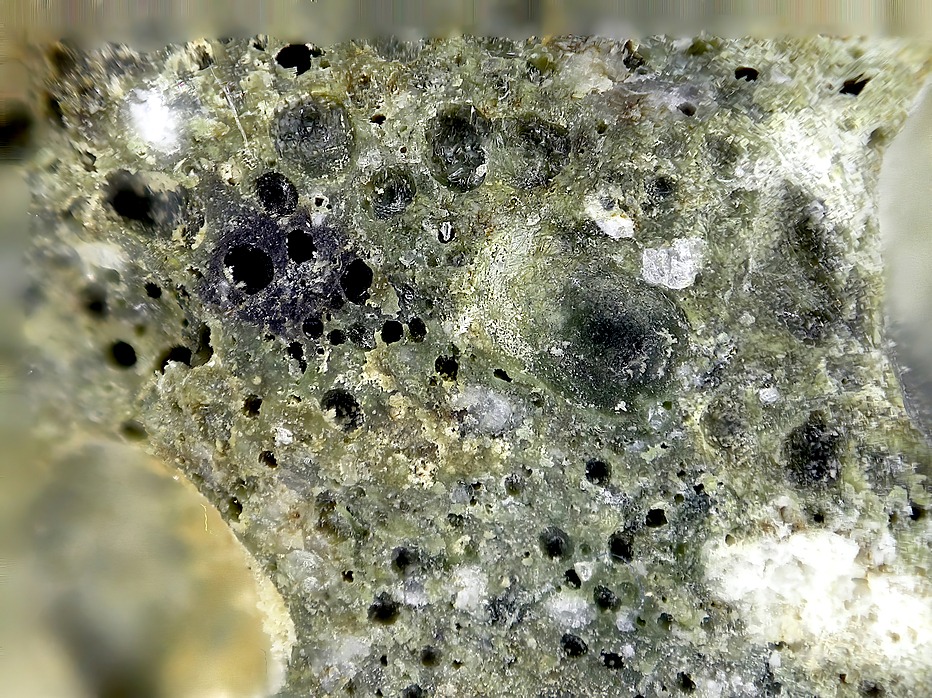
From a materials science perspective, maskelynite offers profound insights into how matter behaves under extreme stress. Studying how a highly organized crystal framework collapses into a disordered, amorphous state without ever melting provides a unique look at solid-state transformations. These observations are invaluable for engineers developing next-generation materials for aerospace and defense. By understanding the structural transition of minerals like plagioclase under impact, researchers can improve the design of high-strength ceramics and impact-resistant glass composites capable of withstanding the most severe physical environments.