
Lawsonite is a hydrous calcium aluminum silicate mineral with the chemical formula CaAl₂Si₂O₇(OH)₂·H₂O. It crystallizes within the orthorhombic crystal system, typically exhibiting space group Ccmm. Structurally, lawsonite consists of framework-like chains of edge-sharing AlO₆ octahedra that are cross-linked by isolated Si₂O₇ disilicate groups. This configuration forms large structural channels parallel to the c-axis, which accommodate Ca²⁺ cations and isolated H₂O molecules. Because of this unique crystal structure, lawsonite holds approximately 11.5 wt% of stoichiometric water within its lattice. It exhibits a Mohs hardness of 6 to 6.5, a specific gravity of roughly 3.09, and demonstrates distinct prismatic cleavage. Compositions remain remarkably close to the end-member formula, with only minor substitutions of iron (Fe³⁺) and titanium (Ti⁴⁺) replacing aluminum in the octahedral sites.
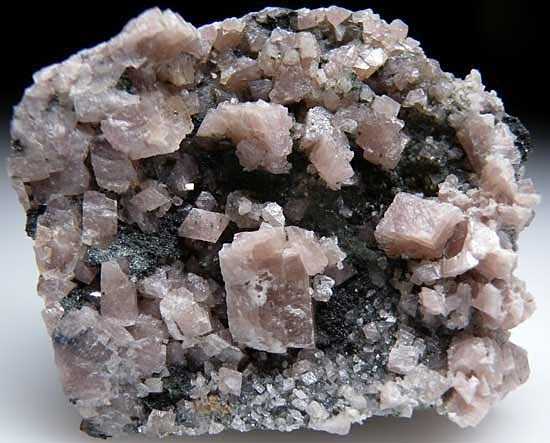
The mineral was first identified and described in 1895 by the American mineralogists Charles Palache and Frederick Leslie Ransome. The type locality for lawsonite is the Tiburon Peninsula in Marin County, California, where it was discovered within glaucophane-bearing metamorphic rocks of the Franciscan Complex. Palache and Ransome named the newly discovered species in honor of Andrew Cowper Lawson, an eminent Scottish-Canadian geologist and professor at the University of California, Berkeley, who made foundational contributions to the tectonic and structural geology of Western North America. The identification of lawsonite provided early metamorphic petrologists with a critical mineralogical marker that would later prove essential in formulating the concepts of high-pressure, low-temperature metamorphic facies series.
Lawsonite is a diagnostic index mineral indicative of high-pressure, low-temperature (HP-LT) metamorphism, serving as a defining phase of the blueschist facies and lower-temperature regimes of the eclogite facies. Its thermodynamic stability field spans pressures from approximately 0.5 to over 3.0 GPa and temperatures ranging from 200°C to 500°C. Lawsonite forms primarily through the prograde metamorphism and dehydration of altered oceanic basalts, gabbros, and greywackes during subduction. At lower grades, it replaces precursor hydrous phases such as laumontite, heulandite, or pumpellyite via reactions such as the breakdown of pumpellyite in the presence of chlorite and quartz to yield lawsonite, glaucophane, and fluid:
Because lawsonite can maintain its structural water at extreme pressures where other hydrous silicates like chlorite and amphibole break down, it acts as one of the primary mineralogical carriers for transporting volatile H₂O deep into the Earth’s upper mantle. The eventual deep dehydration of lawsonite at the lawsonite-eclogite to amphibole-eclogite boundary releasing fluids into the overlying mantle wedge is widely considered a key trigger for partial melting, arc volcanism, and intermediate-depth subduction zone seismicity.
Crystallographic Structure, Optical Characteristics, and Classification
Lawsonite is a hydrous calcium aluminum sorosilicate mineral belonging to the sorosilicate subclass of silicate minerals. It crystallizes in the orthorhombic crystal system and commonly occurs in the space group Cmcm. Its crystal structure consists of chains of edge-sharing AlO₆ octahedra extending parallel to the crystallographic c-axis. These octahedral chains are interconnected by isolated Si₂O₇ disilicate groups, creating a rigid three-dimensional framework that contains structural channels occupied by calcium cations together with essential hydroxyl groups and molecular water. The mineral generally maintains a composition very close to its ideal formula, CaAl₂Si₂O₇(OH)₂·H₂O, with only limited chemical substitution, most commonly involving minor amounts of ferric iron replacing aluminum within the octahedral sites.
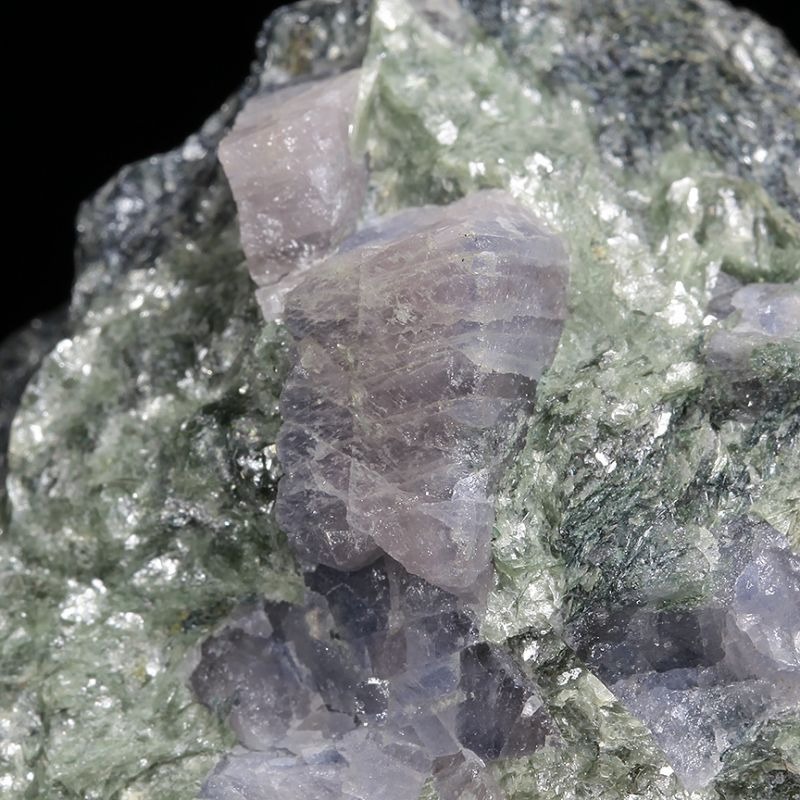
In hand specimen, lawsonite is typically colorless, white, pale gray, or faintly bluish, although trace impurities may produce pale green, bluish-green, or pinkish coloration. Well-formed crystals are commonly tabular or pseudo-tetragonal in appearance and may occur as short prismatic crystals, though the mineral more frequently develops as fine-grained aggregates within metamorphic rocks. Optically, lawsonite generally exhibits weak to moderate pleochroism in colored varieties. Under polarized light, it is characterized by high positive relief and moderate birefringence, making it relatively easy to recognize in thin section. Twinning may occur, although it is not always a dominant diagnostic feature. These optical properties, combined with its distinctive occurrence in high-pressure metamorphic environments, make lawsonite an important mineral for petrographic identification.
Physical and Chemical Properties
Lawsonite possesses a combination of physical properties that reflect its compact crystal structure despite its significant water content. It has a Mohs hardness of approximately 6 to 6.5, allowing it to scratch glass and making it harder than many other hydrous silicate minerals. Its specific gravity generally ranges from 3.05 to 3.12, with an average value near 3.09. The mineral exhibits good to perfect cleavage on the {010} and {100} planes, producing smooth cleavage surfaces that commonly display vitreous to slightly pearly luster.
One of the most significant chemical characteristics of lawsonite is its high concentration of structurally bound water, containing approximately 11 wt% H₂O in the form of both hydroxyl groups and molecular water. This substantial water content plays a critical role in its geological significance. Under normal surface conditions, lawsonite is relatively stable and resistant to weathering and dilute acids. However, increasing temperature eventually destabilizes the crystal structure, leading to dehydration and breakdown reactions. Under low-temperature, high-pressure conditions typical of subduction zones, lawsonite becomes remarkably stable and may persist at pressures exceeding 2 GPa and temperatures approaching 600°C, allowing it to transport water to considerable depths within the Earth’s interior.
Geological Occurrence and Scientific Importance
Lawsonite is one of the most important indicator minerals of high-pressure, low-temperature metamorphism and is particularly characteristic of blueschist-facies rocks formed within subduction-zone environments. Its presence provides strong evidence for the former existence of ancient convergent plate boundaries and oceanic lithosphere subduction. Because its stability field is well constrained, lawsonite is widely used by metamorphic petrologists to reconstruct pressure–temperature–time (P–T–t) histories and to evaluate the burial and exhumation pathways of metamorphic terranes. It commonly occurs in association with minerals such as glaucophane, jadeite, epidote, garnet, and phengite.
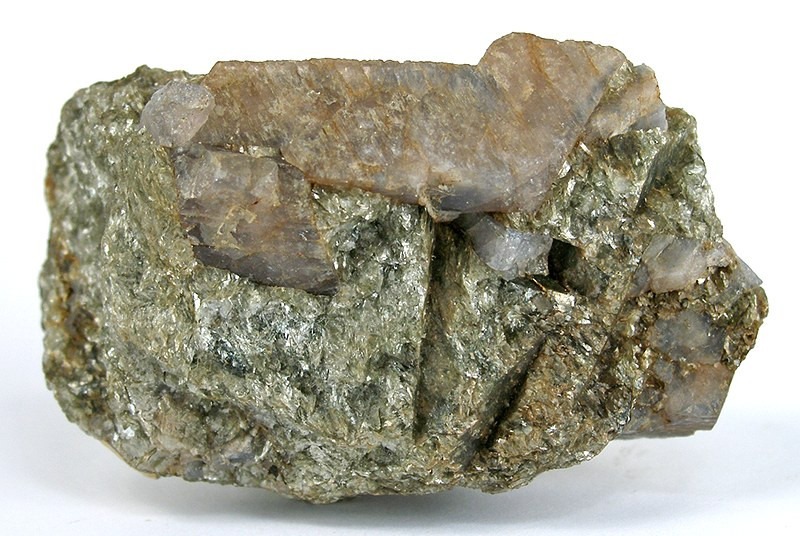
Beyond its value as a metamorphic indicator mineral, lawsonite plays a central role in studies of the Earth’s deep water cycle. During subduction, large volumes of seawater-derived fluids become incorporated into hydrous minerals within the descending oceanic crust. Compared with many other hydrous silicates that release water at relatively shallow depths, lawsonite remains stable over a broad range of high-pressure conditions and is capable of transporting significant quantities of water into the deep upper mantle. For this reason, it is considered one of the most important mineral reservoirs controlling the movement of water from Earth’s surface into its interior.
The breakdown of lawsonite at greater depths has major geodynamic consequences. As pressure and temperature conditions exceed its stability limits, lawsonite decomposes and releases substantial amounts of aqueous fluid while transforming into eclogite-facies mineral assemblages. The release of these fluids is widely regarded as one of the mechanisms that may contribute to intermediate-depth seismic activity within subducting slabs. In addition, fluids liberated during lawsonite dehydration migrate upward into the overlying mantle wedge, where they lower the melting temperature of mantle rocks and promote partial melting. This process contributes directly to the generation of magma beneath volcanic arcs and plays a fundamental role in the development of many volcanoes associated with convergent plate boundaries, including those surrounding the Pacific Ring of Fire.