
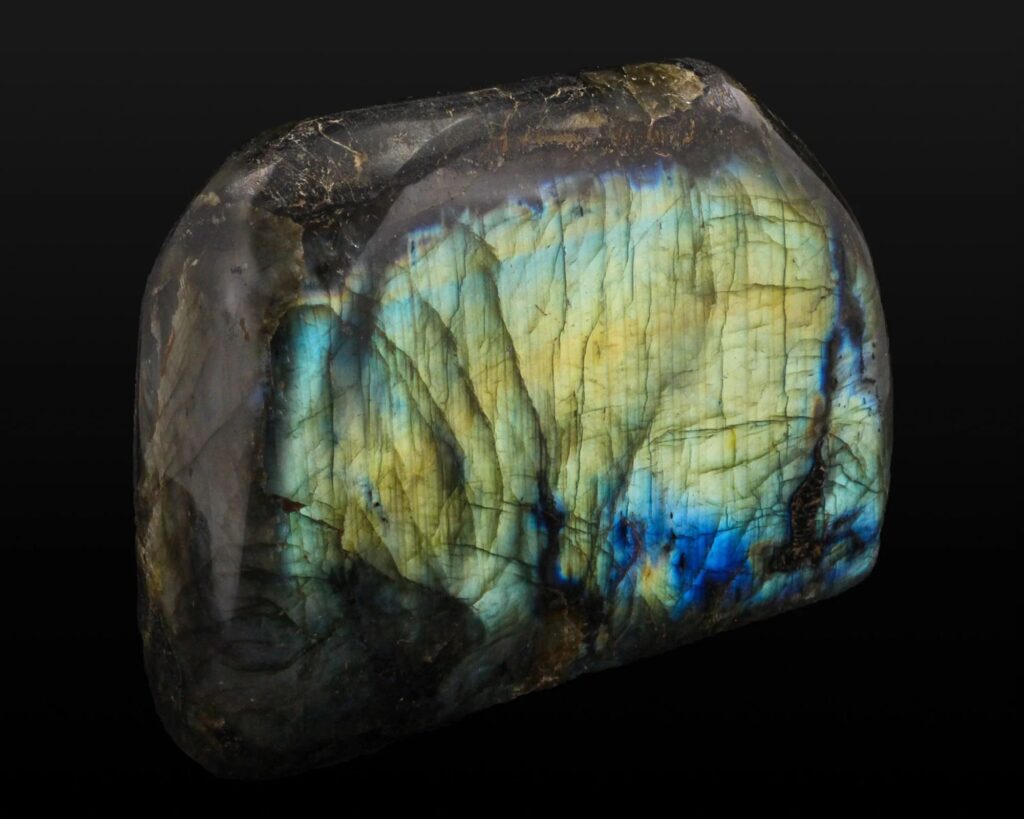
Labradorite is a visually striking member of the feldspar mineral group, distinguished by its compositional characteristics and exceptional optical behavior. It is classified as a calcium-rich plagioclase feldspar with the generalized chemical formula (Ca,Na)(Al,Si)₄O₈. In hand specimen, the mineral typically exhibits a dark gray to nearly black base coloration; however, this subdued appearance contrasts sharply with its most defining feature—labradorescence, an iridescent optical phenomenon that produces vivid flashes of color when the stone is observed from varying angles. This effect is not superficial but arises from complex internal interactions between light and the mineral’s microstructure.
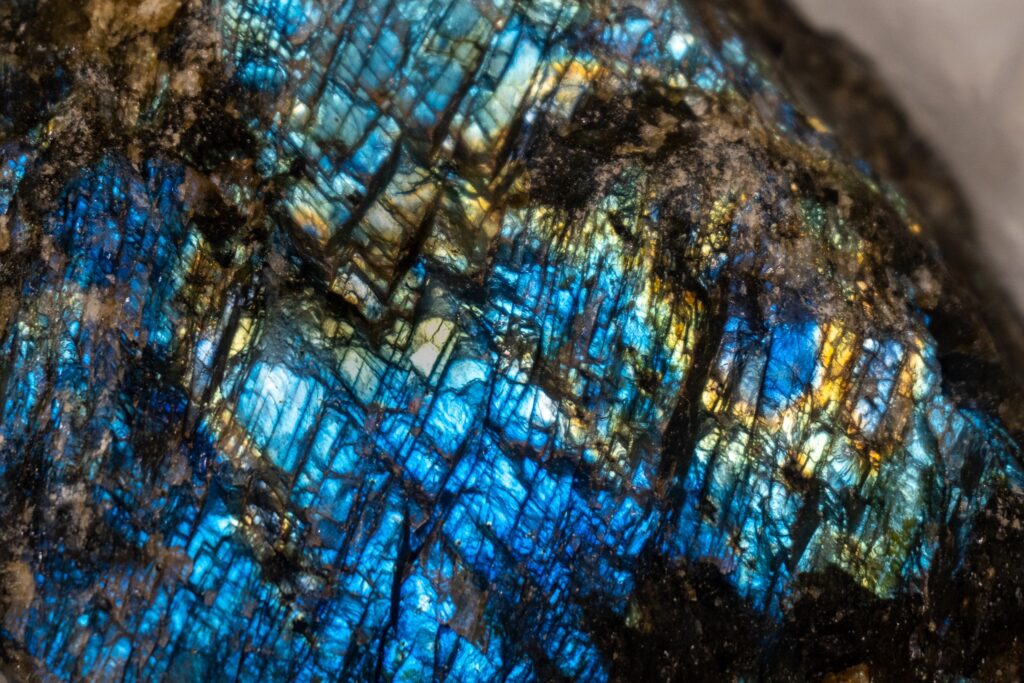
The phenomenon of labradorescence is a highly specialized form of iridescence that originates from submicroscopic structural features within the crystal lattice, rather than from pigment or chemical impurities. When incident light penetrates the polished surface of Labradorite, it encounters a sequence of finely intergrown lamellar structures—essentially microscopic “plates”—composed of alternating sodium-rich (Albite) and calcium-rich (Anorthite) feldspar phases. These internal layers function as a natural diffraction grating.
As light waves traverse these layers, they undergo a process of constructive and destructive interference. Specifically, light reflected from the boundary of one layer interacts with light reflected from the next. If the phase difference between these waves aligns, specific wavelengths are amplified and reflected back to the observer, generating the characteristic spectral hues of electric blue, emerald green, and gold. The precision of this effect is dictated by Bragg’s Law; the intensity and spectral range are strictly controlled by the thickness, spacing, and spatial regularity of the lamellae. When the lamellar spacing falls within the nanometer scale (typically 50 to 100 nm), it allows for the optimal interference of visible light. Any variation in structural uniformity or the angle of incidence results in localized color zoning, meaning the “flash” of the stone is only visible from specific orientations.
Geological Formation and the Exsolution Mechanism
Labradorite is a calcic-plagioclase feldspar that forms primarily in mafic igneous environments, crystallizing within plutonic rocks such as gabbro, norite, and anorthosite. Its development begins deep within the Earth’s crust where magma cools at a sufficiently slow rate to allow for complex thermodynamic transitions. Initially, at high temperatures, the mineral exists as a homogeneous solid solution, where sodium and calcium ions are distributed randomly within a single framework.
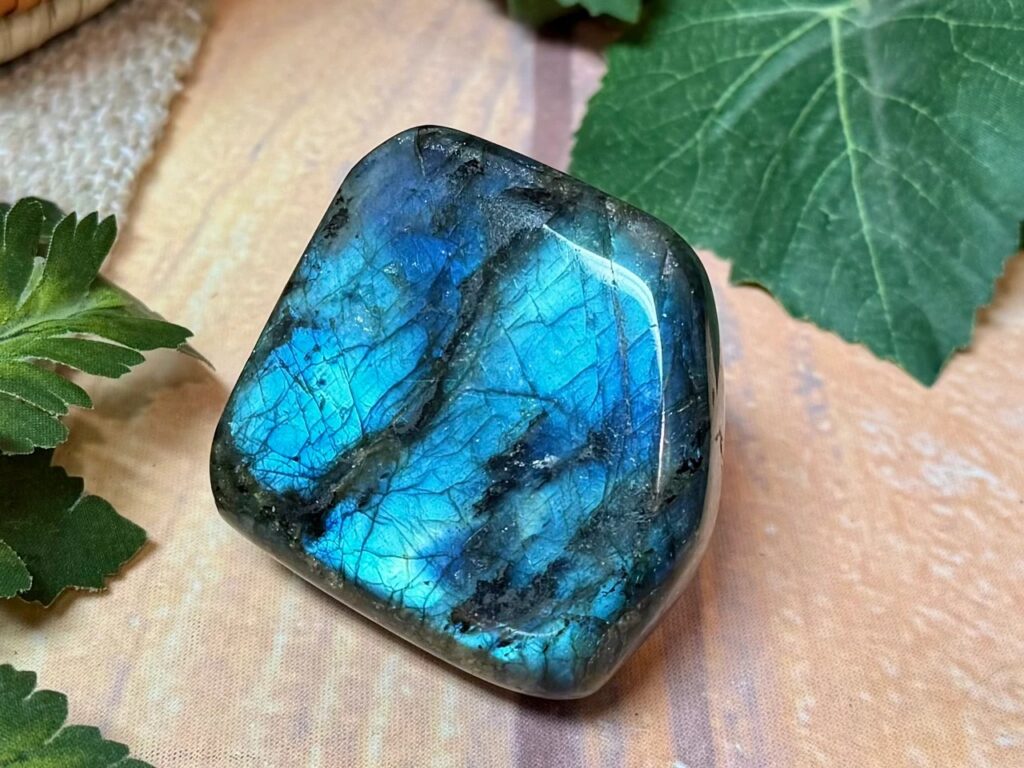
However, as the temperature decreases, the crystal lattice reaches a point of thermodynamic instability known as the solvus. This triggers a process called exsolution (or “unmixing”), where the once-uniform solid solution separates into distinct, alternating phases. This separation occurs in the solid state, creating the thin, parallel lamellae required for labradorescence. For the optical effect to manifest, the cooling rate must be perfectly balanced: if the magma cools too rapidly (as in volcanic basalt), the ions lack the time to migrate into organized layers, resulting in a “dull” mineral without iridescence. Conversely, in slow-cooling plutonic environments, these layers reach the precise nanometer-scale thickness required to interact with visible light waves.
Historical Discovery and Scientific Recognition
The formal scientific identification of Labradorite occurred in 1770 on Paul’s Island, located near the settlement of Nain off the coast of Labrador, Canada. It was documented by Moravian missionaries, who collected specimens and introduced them to the European scientific community. The mineral’s unique optical properties quickly garnered attention, leading to its classification within the plagioclase series of the feldspar group.
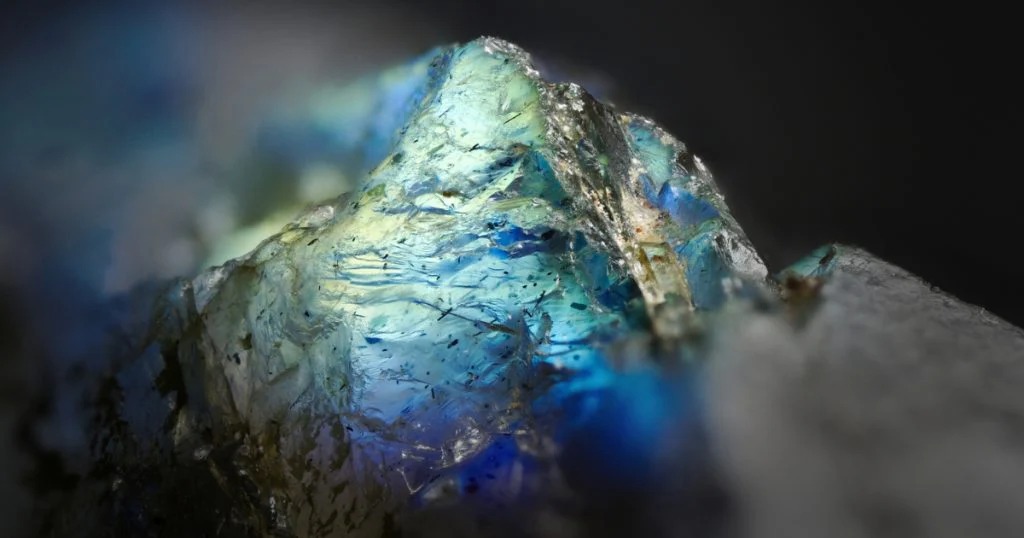
Following its scientific debut, Labradorite gained significant prominence in Europe during the late 18th and 19th centuries. It became a staple in Neoclassical and Victorian jewelry, often carved into intaglios or set as cabochons to highlight its “schiller” effect (the metallic luster). Despite its 18th-century European classification, the mineral had been recognized for centuries by the indigenous Inuit and Beothuk peoples of North America. They valued the stone not only for its aesthetic qualities but also for its cultural and spiritual resonance, long before it was integrated into Western gemological catalogs.
Cultural Significance and Arctic Mythology
In the oral traditions of the Inuit, Labradorite is inextricably linked to the Aurora Borealis, the celestial light display common in the subarctic regions where the stone is found. According to legend, the Northern Lights were once physically trapped within the jagged rocks of the Labrador coast. A legendary Inuit warrior discovered the glowing stones and, seeking to release the light, struck the rock formations with his spear.While much of the light was liberated to dance in the night sky as the Aurora, a portion remained perpetually confined within the mineral’s crystalline structure. This narrative serves as a sophisticated cultural interpretation of a natural optical phenomenon, drawing a direct parallel between the shifting colors of the atmosphere and the shimmering “flash” of the earth-bound stone. This interpretation reflects a broader human tendency to use mythological frameworks to explain complex physical realities, bridging the gap between the observer and the mysterious behavior of light and matter.
Varieties of Labradorite
Common Labradorite
This is the most widely recognized variety, typically characterized by a dark gray to charcoal base color. It displays the classic labradorescence effect, primarily flashing in shades of electric blue, sea green, and occasionally gold. Most commercial jewelry and polished “palm stones” fall into this category.
Spectrolite
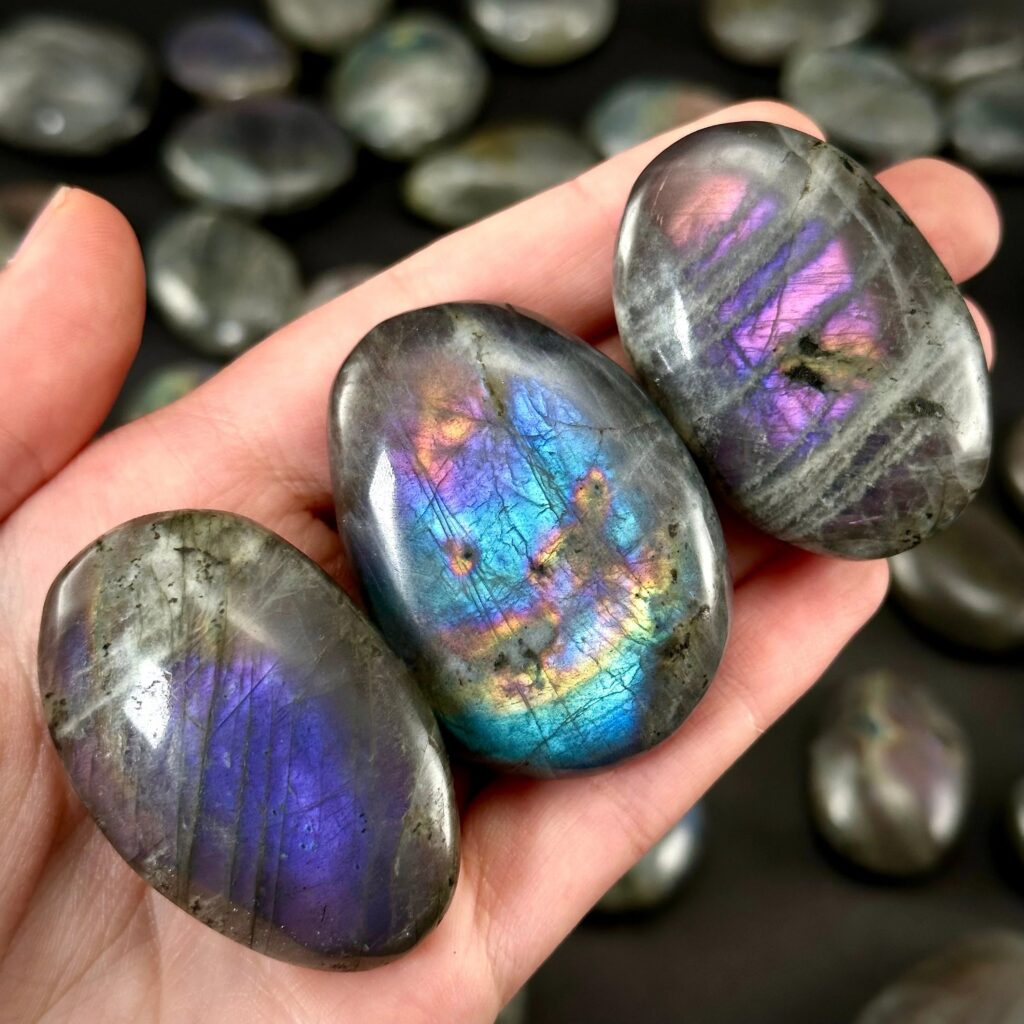
Spectrolite is regarded as the highest-quality variety of Labradorite in the world. Originally discovered in Finland, it is distinguished by an exceptionally high degree of opacity and a vivid, multi-colored flash. Unlike common Labradorite, Spectrolite can display the entire visible spectrum, including rare and highly sought-after hues like intense red, orange, and deep violet.
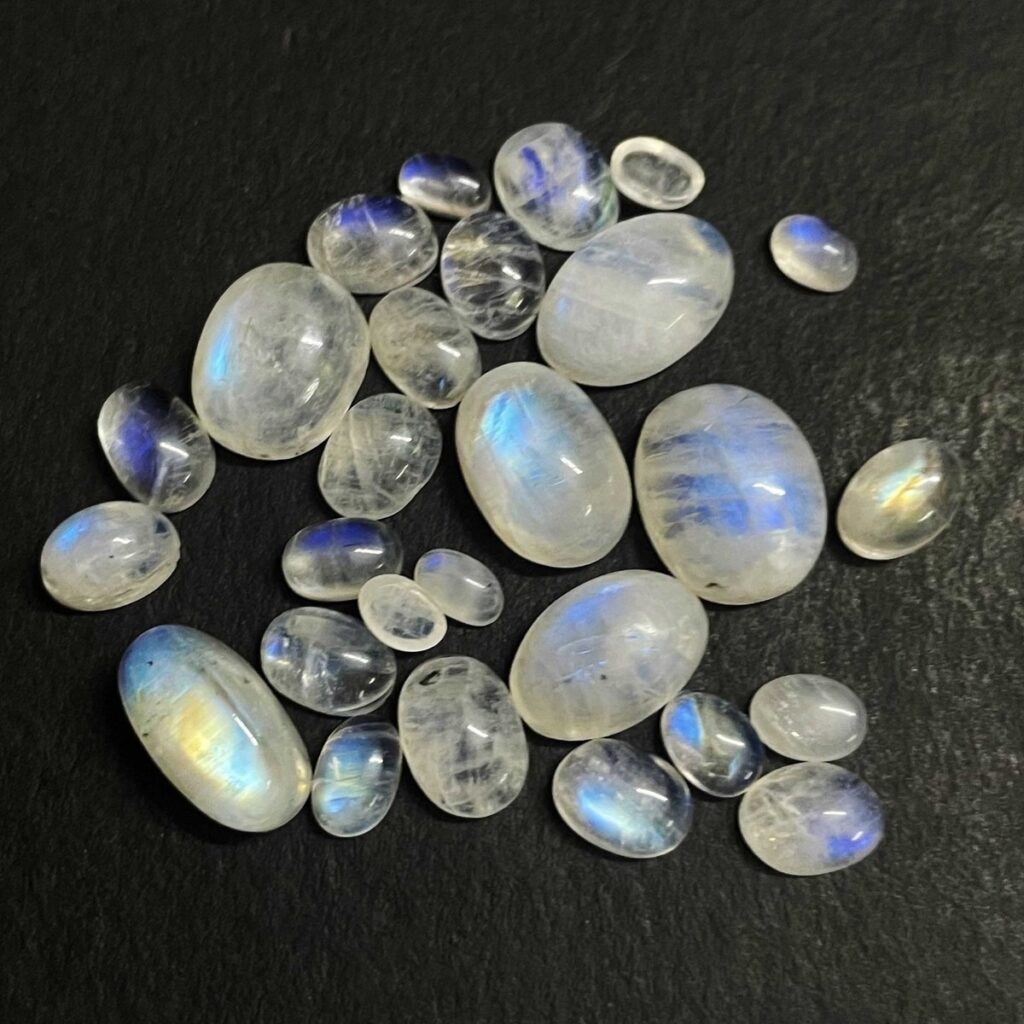
Rainbow Moonstone
Despite its commercial name, Rainbow Moonstone is mineralogically a variety of transparent to translucent Labradorite rather than a true Orthoclase moonstone. It is prized for its milky white or colorless base, which serves as a canvas for delicate, multi-colored iridescent flashes. Because it possesses the structural architecture of Labradorite, the “blue sheen” it exhibits is technically a form of labradorescence.
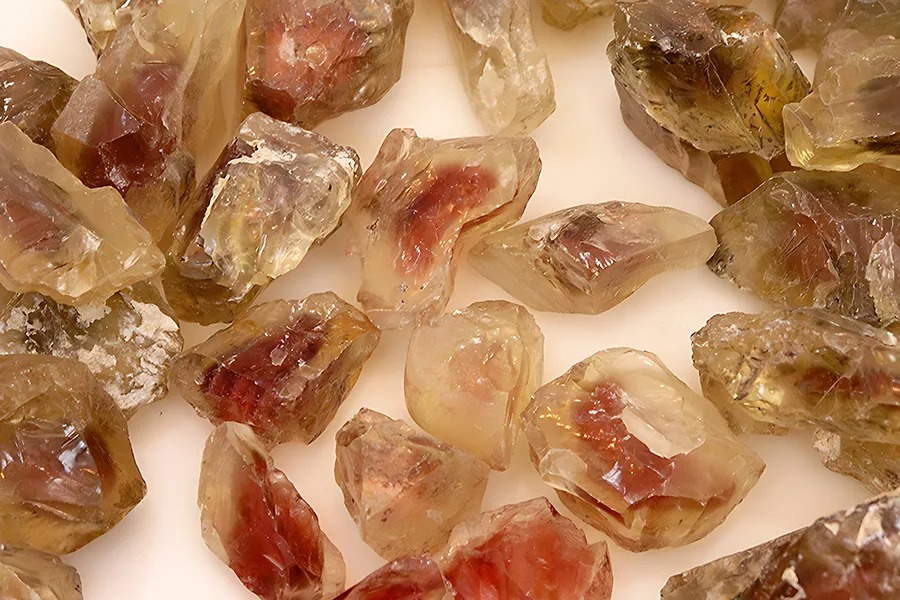
Oregon Sunstone
A rare and unique variety found in the United States, Oregon Sunstone is a transparent Labradorite that contains microscopic inclusions of elemental copper. These copper platelets reflect light to create a glittering effect known as aventurescence. Depending on the concentration of copper, the stone can range from clear to deep red or “watermelon” bi-colors.
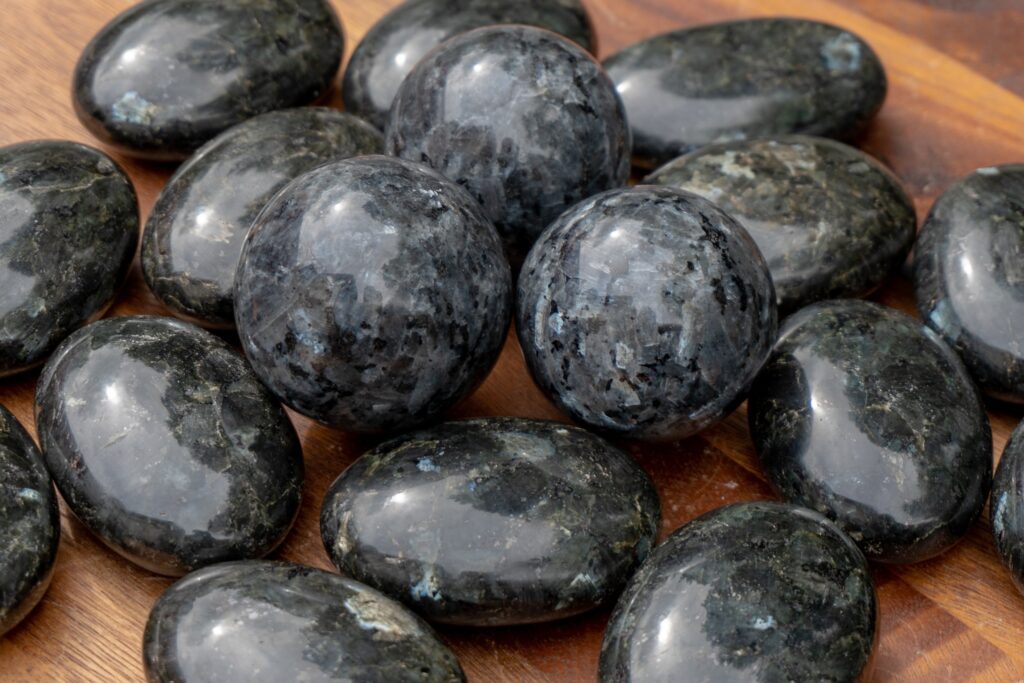
Larvikite
Often informally referred to as “Black Labradorite,” Larvikite is an igneous rock found in the Larvik region of Norway. While it is not a pure Labradorite, it contains large crystals of feldspar that exhibit a similar silver-blue schiller effect. It is widely used in high-end architecture and monumental masonry due to its durability and sophisticated metallic luster.
Applications and Jewelry Suitability of Labradorite
Labradorite is well suited for use in jewelry, particularly in pieces that emphasize visual uniqueness over extreme durability. With a Mohs hardness of approximately 6 to 6.5, it is sufficiently hard for many types of adornment, such as pendants, earrings, and brooches, where exposure to abrasion is relatively limited. However, due to its perfect cleavage and moderate toughness, it is more vulnerable to scratching and impact compared to harder gemstones like sapphire or diamond. As a result, when used in rings or bracelets, protective settings are often recommended to minimize mechanical stress. The gemstone is typically cut into cabochons or polished slabs to maximize the display of labradorescence, which is its primary aesthetic value.
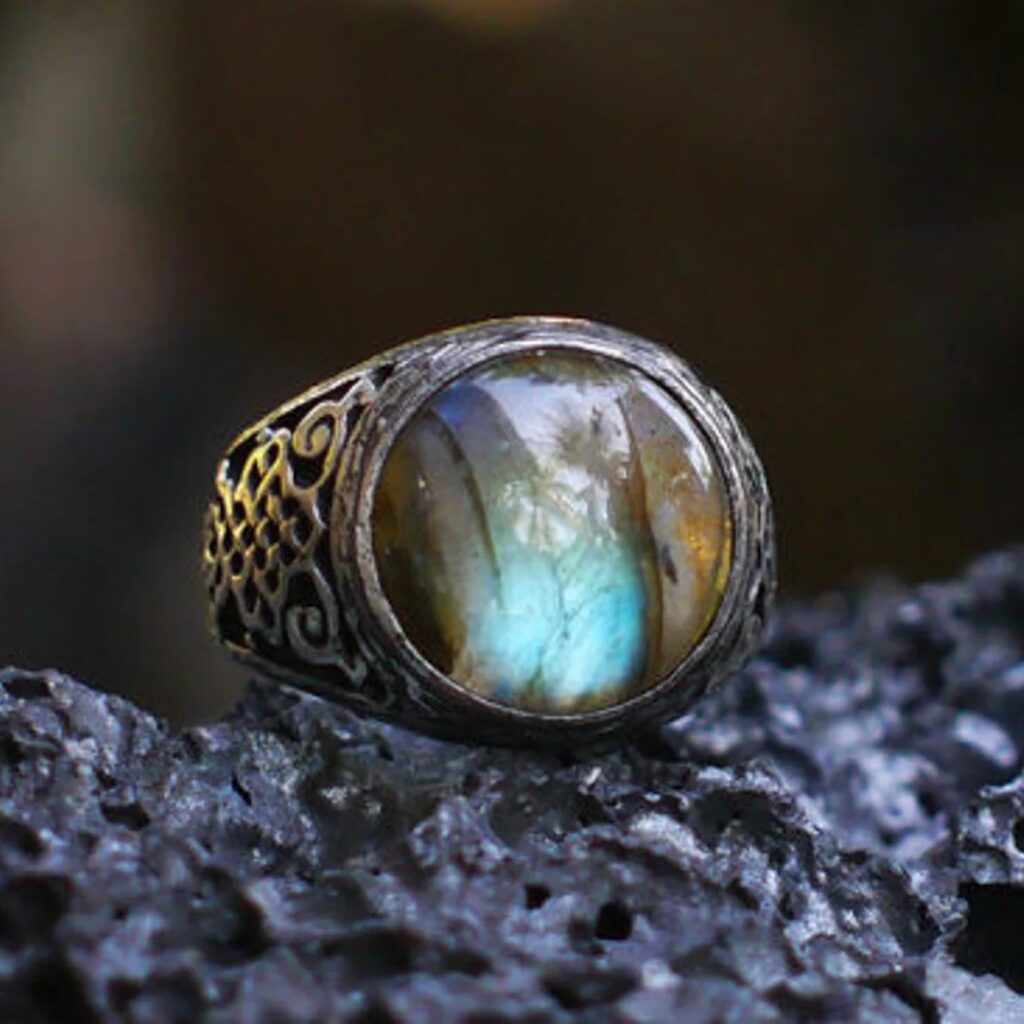
Labradorite has a variety of applications in both decorative and practical settings. It is commonly used as a decorative stone in carvings, sculptures, and architectural elements such as tiles and countertops, where its iridescent effect can be showcased. Additionally, it holds symbolic significance in spiritual and metaphysical practices, often being linked to transformation and protection, though these associations are based on cultural beliefs rather than scientific evidence. In industrial and geological contexts, Labradorite, like other feldspar minerals, is also utilized in the production of ceramics and glass, where it acts as a flux to lower melting temperatures and improve material properties.