
Inderite is a rare hydrated magnesium borate mineral with the chemical formula MgB₃O₃(OH)₅·5H₂O. It belongs to the group of hydrated borate minerals and is mainly formed in evaporite deposits where boron-rich and magnesium-rich solutions become concentrated through prolonged evaporation. The mineral is typically found as colorless, white, or pale greenish-blue crystals, often displaying a vitreous, pearly, or silky luster. Due to its high water content and delicate crystal structure, Inderite is considered a relatively soft and fragile mineral compared with many common rock-forming minerals.
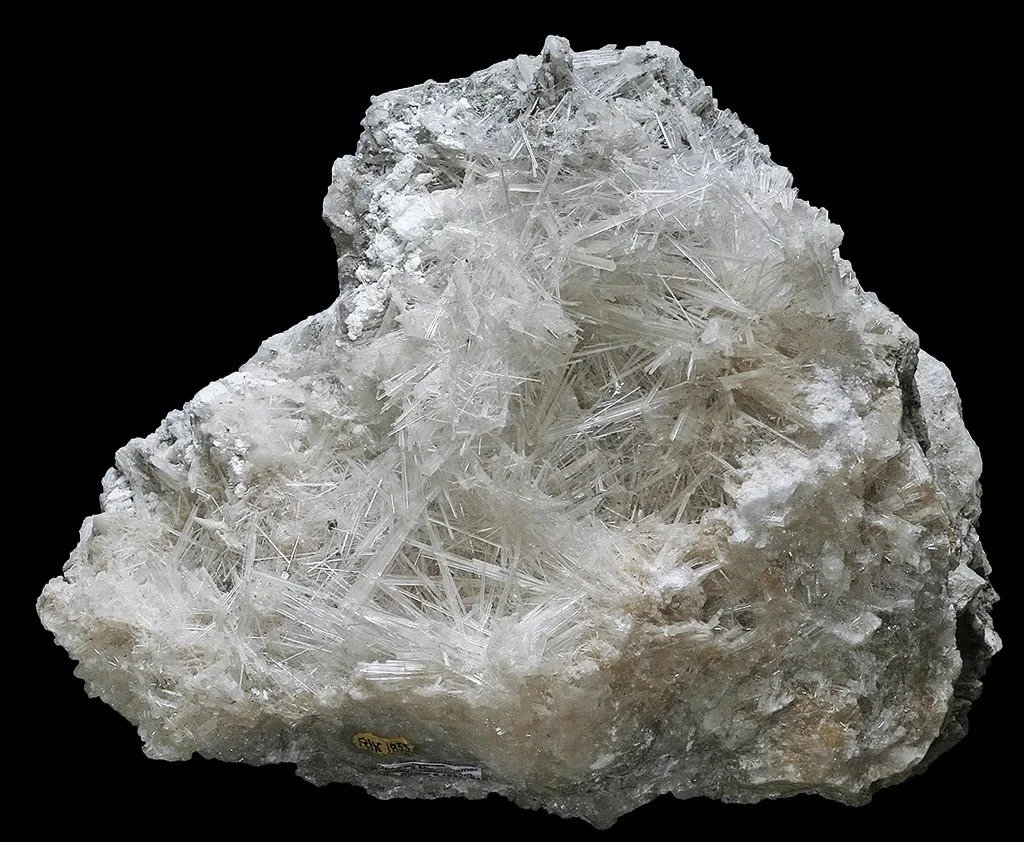
The mineral is closely related to other hydrated magnesium borates, particularly kurnakovite and inyoite, which often occur under similar geological conditions. These minerals form as part of complex evaporite mineral assemblages where chemical changes in saline environments control which borate minerals crystallize. Inderite is not considered a major commercial source of boron because of its limited distribution and rarity, but it remains an important mineral for collectors and mineralogical research due to its unusual composition and relationship with other borate species.
History and Discovery of Inderite
Inderite was first described from the famous borate deposits of the Inder region in western Kazakhstan, which is also the source of its name. The area has long been recognized as one of the important geological locations for borate minerals because ancient evaporating water bodies created favorable conditions for concentrating boron, magnesium, calcium, and other elements. During mineral exploration and scientific studies of these deposits, researchers identified several uncommon hydrated borate minerals, including Inderite.
The discovery of Inderite contributed to the understanding of how hydrated magnesium borates develop in evaporite environments. Because borate minerals often occur together and may have very similar appearances, detailed mineralogical analysis was required to distinguish Inderite from related species such as kurnakovite and inyoite. Studies of Inderite helped mineralogists better understand the relationships between different hydrated borate minerals and how changes in temperature, water chemistry, and evaporation conditions influence mineral formation.
Since its original discovery, Inderite has remained a relatively uncommon mineral species. Unlike major borate minerals that are mined extensively for industrial applications, Inderite is usually encountered only in specific geological settings and in limited quantities. Its importance is therefore mainly scientific and educational rather than economic.
Formation and Geological Environment of Inderite
Inderite forms primarily in evaporite environments, which develop when mineral-rich water accumulates in enclosed basins and gradually loses water through evaporation. As evaporation continues, dissolved elements become increasingly concentrated until minerals begin to precipitate from the remaining solution. In boron-rich environments, this process can produce a variety of borate minerals depending on the available elements and the physical conditions at the time of crystallization.
The formation of Inderite requires a combination of magnesium-bearing fluids and a sufficient supply of boron. When borate ions interact with magnesium in concentrated saline solutions, hydrated magnesium borate minerals may begin to form. The presence of water molecules within Inderite’s crystal structure indicates that it develops under conditions where hydrated mineral phases remain stable. Changes in temperature, humidity, or chemical composition may cause Inderite to transform into other borate minerals or lose structural water.
Inderite is generally associated with ancient salt lake deposits, desert evaporite basins, and marine sedimentary environments that experienced intense evaporation. These geological settings often contain a complex mixture of minerals including halite, gypsum, borax, colemanite, inyoite, and kurnakovite. The formation of Inderite represents a specific stage in the chemical evolution of boron-rich evaporite systems rather than a common mineral-forming process.
Types and Varieties of Inderite
Inderite is recognized as a single mineral species and does not have officially accepted varieties or named subtypes in mineralogical classification. However, natural specimens of inderite can show noticeable differences in appearance, crystal form, transparency, and color due to variations in geological environment, crystal growth conditions, associated minerals, and the presence of minor impurities. These variations are commonly used by collectors and mineral enthusiasts to describe different forms of inderite specimens, although they do not represent separate mineral species.
- Transparent or Translucent Crystalline Inderite – This form consists of well-developed individual crystals with relatively clear internal structures. Transparent specimens allow light to pass through the crystal, while translucent examples show partial light transmission due to internal inclusions or structural imperfections. Crystalline inderite may display distinct crystal faces, sharp edges, and recognizable growth patterns, making these specimens especially interesting for mineral collectors. The clarity and quality of the crystals often depend on the conditions under which they formed, including the availability of open spaces for crystal growth and the absence of excessive impurities.
- White Massive Inderite – Massive inderite occurs as compact aggregates without clearly separated individual crystals. This form typically appears white or pale in color because of its fine-grained texture and tightly packed mineral structure. Massive specimens usually develop when inderite forms in environments where crystal growth is restricted, preventing the formation of larger, well-defined crystals. Although less visually striking than transparent crystals, massive inderite provides important information about the mineral’s formation process and is commonly found as part of mineral associations in its natural occurrences.
- Pale Blue-Green Inderite – Some inderite specimens display a subtle blue-green coloration, which may result from trace elements incorporated into the mineral structure or from the presence of other minerals growing alongside inderite. The intensity of this coloration can vary from very light pastel shades to slightly stronger greenish tones depending on chemical composition and geological conditions. These colored specimens are often of interest to collectors because they show the natural chemical variations that can occur during mineral formation.
- Fibrous or Granular Inderite Aggregates – In some occurrences, inderite develops as groups of tiny crystals that grow together, creating fibrous, granular, or uneven aggregate textures. Fibrous forms may show a fine, thread-like appearance caused by elongated crystal growth, while granular aggregates consist of many small crystals packed closely together. These forms generally indicate different growth environments compared with isolated crystals, often developing where mineral-rich fluids interact with surrounding rocks under conditions that limit crystal expansion.
The different appearances of inderite mainly reflect variations in crystal habit, formation environment, and chemical conditions rather than officially recognized mineral varieties. Whether occurring as clear crystals, massive aggregates, or subtly colored specimens, each form provides insight into the geological processes responsible for the formation of this uncommon mineral. Collectors and researchers typically classify these forms based on physical appearance and occurrence rather than treating them as separate types of inderite.
Crystal Structure of Inderite
Inderite crystallizes in the monoclinic crystal system and has a structure based on hydrated magnesium borate groups. Within the crystal lattice, boron atoms are bonded with oxygen and hydroxyl groups, forming borate units that connect with magnesium coordination environments. Water molecules are an essential part of the structure, contributing to the mineral’s stability and influencing its physical properties.
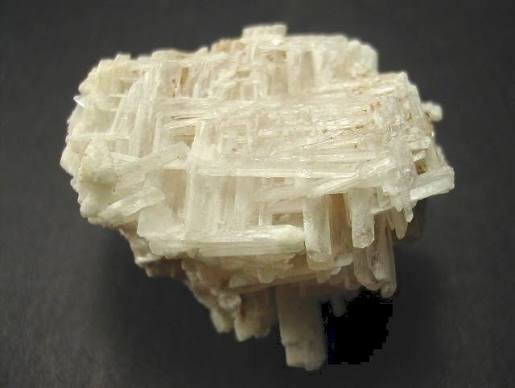
The hydrated structure of Inderite is one of its most important characteristics. Unlike minerals that only contain water as surface moisture or inclusions, Inderite contains water molecules incorporated directly into its crystal framework. This structural water affects its hardness, density, and thermal behavior. When heated, Inderite may lose water through dehydration, resulting in changes to its structure and possible transformation into other borate phases.
Inderite shares structural similarities with several other hydrated magnesium borates, especially kurnakovite and inyoite. These relationships demonstrate how small differences in chemical composition and environmental conditions can produce different mineral species within the same geological system.
Physical and Chemical Properties of Inderite
Inderite is a soft hydrated magnesium borate mineral with a Mohs hardness of approximately 2 to 3, which means it can be easily scratched by harder materials. It commonly occurs as prismatic crystals, crystalline aggregates, or compact masses. Fresh specimens are generally colorless or white, although some crystals may display pale bluish or greenish hues depending on mineral associations and impurities. The mineral can range from transparent to translucent, with transparency largely influenced by crystal quality, thickness, and internal features.
Inderite has a relatively low specific gravity of approximately 1.8–1.9, which is mainly related to the large amount of structural water contained within its crystal lattice. Its luster varies from vitreous on well-developed crystal faces to pearly or silky on cleavage surfaces and fine-grained aggregates. Like other hydrated borate minerals, Inderite can be sensitive to changes in temperature and humidity. Prolonged exposure to dry conditions or heating may cause dehydration, resulting in structural changes and possible transformation into other borate phases.
From a chemical perspective, Inderite is classified as a hydrated magnesium borate with the chemical formula MgB₃O₃(OH)₅·5H₂O. It belongs to the borate mineral group and crystallizes in the monoclinic crystal system. The mineral’s composition is dominated by magnesium, boron, oxygen, hydroxyl groups, and water molecules, which together form its hydrated crystal structure. Although boron is an economically important element used in industries such as glass manufacturing, ceramics, agriculture, and chemical production, Inderite itself has no major commercial value because it occurs only in limited quantities and is rarely concentrated in mineable deposits. Instead, its chemical properties are mainly studied to understand hydrated borate mineral formation, dehydration reactions, and the stability of boron-bearing minerals under different geological conditions.
The main physical and chemical characteristics of Inderite include its colorless to white appearance, pale greenish-blue variations, vitreous to pearly luster, transparent to translucent transparency, monoclinic crystal structure, soft hardness of 2–3 on the Mohs scale, and hydrated magnesium borate composition. These properties help distinguish Inderite from other similar evaporite minerals and provide important information about the geological environments in which it forms.
Occurrence and Locations of Inderite
The type locality and most significant occurrence of Inderite is the Inder borate deposit in Kazakhstan. This region contains extensive evaporite formations created by ancient saline environments where boron-rich waters underwent repeated cycles of evaporation and mineral precipitation. The unique chemical conditions of these deposits allowed many rare borate minerals to form.
Inderite has also been reported from other borate-bearing evaporite environments where magnesium and boron are concentrated together. However, compared with more common borate minerals, documented occurrences of Inderite remain limited. Its formation depends on a narrow range of chemical conditions, which explains why it is not widely distributed worldwide.
The mineral is often found associated with other evaporite minerals, including kurnakovite, inyoite, borax, colemanite, and hydroboracite. These mineral associations provide valuable information about the temperature, chemical composition, and evaporation history of the deposits where Inderite formed.
Uses and Applications of Inderite
Inderite has limited direct industrial applications because it occurs rarely and is not mined as a major boron resource. Commercial boron production mainly relies on minerals such as borax and colemanite, which occur in larger and more economically valuable deposits. However, Inderite remains significant in several scientific and educational fields.
For mineral collectors, Inderite is valued because of its rarity, crystal characteristics, and association with unusual borate mineral environments. Specimens from well-known localities are collected for study and display, especially when they occur as well-formed crystals.
In geological research, Inderite provides information about evaporite formation processes and the behavior of hydrated borate minerals. Scientists study its crystal structure and dehydration characteristics to understand how boron-bearing minerals form and transform under changing environmental conditions. Museum collections and educational institutions may also use Inderite specimens to demonstrate mineral diversity and the geological processes responsible for evaporite deposits.