
Hyperitdiabas is a rare variety of diabase (also known as dolerite), a dark-colored intrusive igneous rock formed from the slow cooling and crystallization of magma beneath the Earth’s surface. Unlike minerals that have a fixed chemical composition and crystal structure, Hyperitdiabas is a rock composed of several different minerals, mainly plagioclase feldspar and pyroxene. The name “Hyperitdiabas” refers to the presence of hypersthene, a magnesium-iron pyroxene mineral, together with other pyroxene minerals such as augite within the diabase structure.
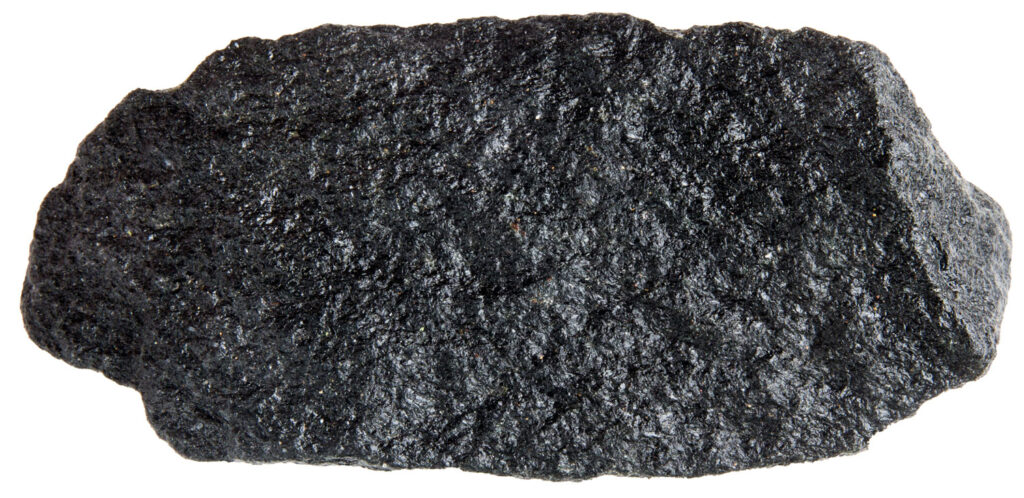
Hyperitdiabas is characterized by its dark appearance, compact texture, and fine- to medium-grained structure. Fresh surfaces usually appear black, dark gray, or brownish-black, while polished surfaces may show subtle mineral variations and a smooth, reflective appearance. Due to its dense composition and attractive dark color, certain varieties of Hyperitdiabas have been used as ornamental stone and decorative material. From a geological perspective, Hyperitdiabas is particularly significant because it represents ancient magmatic activity preserved within Precambrian crustal formations.
Although sometimes included in gemstone and decorative stone discussions, Hyperitdiabas is not a gemstone or a single mineral species. It belongs to the broader group of mafic intrusive rocks and is mainly valued for its geological characteristics, durability, and aesthetic qualities when cut and polished.
History and Discovery of Hyperitdiabas
Hyperitdiabas has been studied mainly in connection with the ancient geological formations of Scandinavia, especially Sweden, where extensive Precambrian rock systems contain numerous diabase intrusions. Swedish geological surveys have documented Hyperitdiabas occurrences as dark intrusive bodies that cut through much older continental rocks, providing evidence of ancient volcanic and tectonic processes that shaped the Scandinavian crust.
The term Hyperitdiabas developed from geological studies of diabase varieties containing hypersthene-bearing mineral assemblages. During early geological investigations, researchers identified differences between ordinary diabase and specific varieties enriched in particular pyroxene minerals. These studies helped classify Hyperitdiabas as a distinctive rock type rather than simply a common diabase.
Some Hyperitdiabas deposits have also attracted attention because they are associated with iron-, titanium-, and vanadium-bearing minerals. The famous Taberg area in southern Sweden, for example, contains a large mafic intrusion historically studied for its metallic mineral resources. These geological investigations contributed to a better understanding of the formation, mineral composition, and economic significance of Hyperitdiabas-related rocks.
Formation and Geological Origin of Hyperitdiabas
Hyperitdiabas forms when mafic magma rises into fractures or weak zones within the Earth’s crust and becomes trapped below the surface. Because the magma cools slowly underground, mineral crystals have enough time to develop and interlock, producing the characteristic crystalline texture of intrusive igneous rocks. The cooling process allows plagioclase feldspar and pyroxene minerals to crystallize together, creating the dense structure typical of diabase.
The formation of Hyperitdiabas is closely related to ancient geological activity, particularly during the Precambrian period when large amounts of magma were injected into continental crust. These magma movements created extensive dikes and sills that later became exposed through millions of years of erosion and geological uplift.
During its formation, variations in magma composition, cooling rate, and later geological alteration influenced the final appearance and mineral content of Hyperitdiabas. Some specimens retain their original igneous texture, while others may show signs of metamorphic alteration, including the development of amphibole minerals or changes in pyroxene composition.
Types and Varieties of Hyperitdiabas
Hyperitdiabas does not have officially recognized mineral varieties because it is a rock type rather than a single mineral species. However, geological and commercial classifications may distinguish different forms based on grain size, mineral alteration, and appearance.
- Fine-grained Hyperitdiabas
This variety has very small mineral grains and a compact, uniform texture. It is commonly dark black or dark gray and is often preferred for polished stone applications because of its smooth surface. - Medium-grained Hyperitdiabas
This type contains larger visible crystals of feldspar and pyroxene compared with fine-grained varieties. The mineral structure may be easier to observe on fresh broken surfaces. - Altered Hyperitdiabas
Some specimens have experienced metamorphic changes after formation. Secondary minerals such as amphibole may replace original pyroxene, creating differences in texture and mineral composition. - Decorative Hyperitdiabas
Selected material with attractive patterns, uniform dark coloration, or excellent polishing qualities may be used for ornamental purposes, including stone slabs, carvings, and collector specimens.
Mineral Composition and Chemical Characteristics of Hyperitdiabas
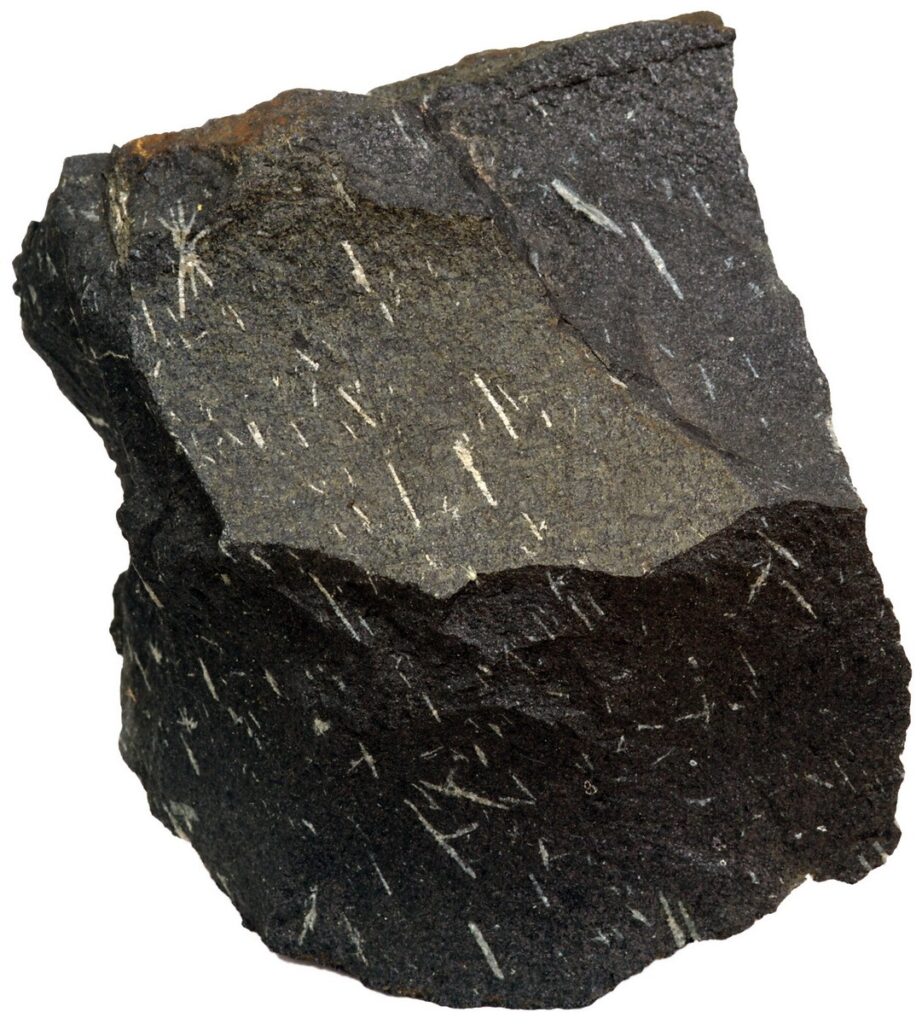
Hyperitdiabas is a complex intrusive rock and does not have a specific chemical formula because it is composed of several different minerals rather than a single mineral species. Its main mineral components are plagioclase feldspar and pyroxene minerals, especially hypersthene and augite. Plagioclase feldspar generally forms a significant portion of the rock, while pyroxene minerals fill the spaces between feldspar crystals and give Hyperitdiabas its characteristic dark appearance. Hypersthene, a magnesium-iron silicate mineral belonging to the pyroxene group, is the mineral feature that distinguishes Hyperitdiabas from many ordinary diabase varieties. The abundance of iron- and magnesium-rich minerals gives the rock its typically dark gray, black, or brownish-black color and contributes to its high density.
Besides the primary minerals, Hyperitdiabas may contain smaller amounts of accessory minerals that influence its physical and visual characteristics. Common accessory minerals include magnetite, ilmenite, amphibole, and other iron-bearing mineral phases. Magnetite and ilmenite are important because they increase the proportion of heavy elements within the rock and may affect its magnetic response. In some geological environments, the original pyroxene minerals may undergo alteration and partially transform into amphibole or other secondary minerals, producing differences in texture and mineral composition between individual specimens. These variations explain why Hyperitdiabas samples from different locations may display slightly different colors, grain sizes, and surface patterns.
From a chemical classification perspective, Hyperitdiabas belongs to the mafic group of igneous rocks, meaning it contains relatively high levels of magnesium and iron compared with felsic rocks such as granite. Its composition reflects the chemistry of the original basaltic magma from which it crystallized. During cooling, elements such as calcium, magnesium, iron, aluminum, and silicon combined to form the characteristic mineral assemblage of plagioclase and pyroxene. Because the exact proportions of these minerals can vary depending on the original magma conditions and later geological alteration, Hyperitdiabas is best understood as a rock type with a general mineral composition rather than a material with a fixed chemical formula.
Physical Properties of Hyperitdiabas
Hyperitdiabas is a dense and durable intrusive igneous rock known for its dark color, compact structure, and resistance to weathering. Its physical properties are closely related to its mafic mineral composition, especially the presence of pyroxene and iron-bearing minerals. Freshly exposed surfaces commonly appear dark gray, black, or nearly black, while some specimens may show brownish or slightly greenish tones depending on mineral alteration. The rock usually has a fine- to medium-grained texture, creating a relatively uniform appearance that becomes more noticeable when the surface is cut and polished.
The hardness of Hyperitdiabas is generally estimated at approximately 5 to 6 on the Mohs hardness scale, reflecting the hardness range of its main mineral components, including feldspar and pyroxene. It is an opaque material with a granular crystalline structure and does not transmit light. In its natural form, Hyperitdiabas usually has a dull or matte surface, but carefully polished specimens can develop a smooth finish with a subtle reflective luster. This polishing ability, combined with its deep dark coloration, makes selected varieties suitable for decorative stone applications.
Hyperitdiabas also has a relatively high density, commonly ranging from about 2.8 to 3.1 g/cm³, depending on the amount of heavy minerals such as pyroxene, magnetite, and ilmenite present. Its tightly interlocking crystal structure gives it good mechanical strength and resistance to abrasion. The low porosity of the rock helps reduce water absorption and improves its ability to withstand outdoor environmental conditions. These characteristics have contributed to its use in certain architectural, monument, and construction applications where a dark, durable stone is desired.
Crystal Structure and Texture of Hyperitdiabas
Hyperitdiabas does not have a single crystal structure because it is not an individual mineral but a mixture of several crystalline minerals formed together during the cooling of magma. Instead of having one repeating atomic arrangement, its internal structure consists of intergrown crystals of plagioclase feldspar, pyroxene, and minor accessory minerals. This mineral arrangement creates the typical diabasic texture, which is characterized by plagioclase crystals surrounded by pyroxene minerals in a compact interlocking pattern.
The texture of Hyperitdiabas provides important information about the conditions under which the rock formed. It develops when mafic magma intrudes into cracks or fractures within the Earth’s crust and cools more slowly than volcanic rocks exposed at the surface. The relatively slow cooling process allows mineral crystals to develop, although they remain smaller than those found in deeper intrusive rocks such as gabbro. Variations in cooling rate, magma composition, and depth of intrusion can influence the final grain size and overall appearance of the rock.
After its original formation, Hyperitdiabas may be affected by later geological processes such as metamorphism, deformation, and chemical alteration. These processes can modify the original mineral structure by replacing some pyroxene minerals with amphibole or introducing secondary minerals into cracks and spaces. Under microscopic examination, Hyperitdiabas typically displays the characteristic relationship between feldspar and pyroxene crystals, allowing geologists to identify the rock and study its geological history. The texture also provides clues about ancient magma movement and the evolution of the continental crust where the rock formed.
Occurrence and Locations of Hyperitdiabas
Hyperitdiabas is most strongly associated with Precambrian geological regions of Sweden, where it occurs as part of ancient mafic intrusive systems. These rocks formed billions of years ago when magma entered fractures and weak zones within the early continental crust. Over long periods of geological activity, erosion and uplift exposed these deep rock formations at the surface, allowing them to be studied and used as natural stone resources.
Important occurrences of Hyperitdiabas are found in southern and central Sweden, particularly in areas connected with major geological structures such as the Protogine Zone. The Taberg region near Jönköping is one of the most famous locations associated with Hyperitdiabas-related rocks. This area has attracted geological attention because of its unusual mineral composition and the presence of iron-, titanium-, and vanadium-bearing minerals. Studies of these occurrences have provided valuable information about ancient magmatic processes and the development of Scandinavian bedrock.
Although Hyperitdiabas is mainly recognized from Swedish deposits, similar hypersthene-bearing diabase rocks may occur in other ancient continental regions around the world. However, the specific name Hyperitdiabas is particularly connected with Scandinavian geology and Swedish geological research. These occurrences continue to be important for understanding Precambrian crustal evolution, mafic magma activity, and the relationship between intrusive rocks and associated mineral resources.
Applications of Hyperitdiabas
Hyperitdiabas has been used for both practical and decorative purposes because of its combination of durability, dark coloration, and ability to achieve a polished surface. One of its most recognized applications is as an ornamental stone. When cut and polished, high-quality Hyperitdiabas can display a deep black or dark gray appearance with subtle mineral variations, making it suitable for decorative slabs, architectural details, monuments, and other stone products. Its uniform color and strong structure allow it to provide a distinctive alternative to lighter-colored rocks commonly used in construction.
In construction and landscaping, Hyperitdiabas may be used as a dimension stone or crushed stone material because of its strength, density, and resistance to weathering. Its dark color is often valued in projects where a modern or contrasting appearance is desired. Compared with softer decorative stones, its compact mineral structure provides good durability in outdoor environments, although suitability depends on the quality and characteristics of individual deposits.
Hyperitdiabas is also appreciated by collectors, lapidary enthusiasts, and geological researchers. Attractive specimens with interesting textures or visible mineral contrasts may be cut into polished sections, display pieces, or educational samples. From a scientific perspective, Hyperitdiabas remains important because it records ancient geological processes, including magma intrusion, mineral crystallization, and the development of Precambrian continental crust. Through geological studies, this rock continues to provide information about the history and evolution of Earth’s early lithosphere.