
Hodgkinsonite is a rare manganese-zinc hydroxyl silicate mineral with the chemical formula Zn₂Mn(SiO₄)(OH)₂. It belongs to the silicate mineral class and crystallizes in the monoclinic crystal system. The mineral is typically characterized by pink, reddish-pink, orange-red, or brownish-red coloration, resulting primarily from the presence of manganese within its crystal structure. Hodgkinsonite generally exhibits a vitreous luster, white streak, and a Mohs hardness ranging from approximately 4.5 to 5, reflecting its moderate resistance to abrasion. Most occurrences are found as granular, massive, or compact aggregates, although well-developed crystals have occasionally been reported from exceptional localities. Owing to its uncommon chemistry and restricted distribution, Hodgkinsonite is considered an important mineral species for studies of manganese- and zinc-rich metamorphic environments.
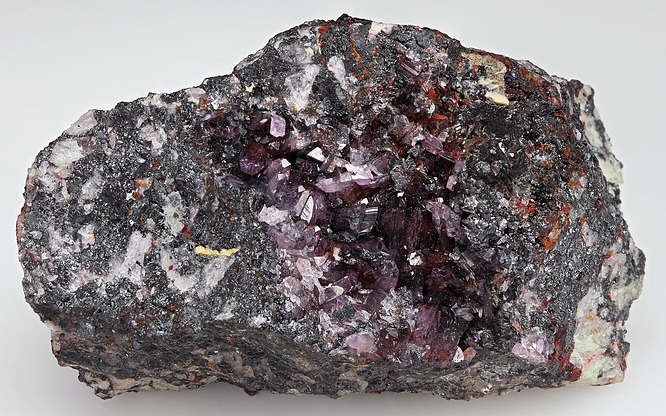
Hodgkinsonite forms within highly specialized manganese-zinc ore deposits that have undergone regional metamorphism and subsequent hydrothermal alteration. Its crystallization is associated with complex geochemical reactions involving zinc-bearing, manganese-bearing, and silica-rich minerals under conditions where hydrothermal fluids facilitate element transport and mineral replacement. The presence of hydroxyl groups within its structure indicates that water-bearing fluids played a significant role during mineral formation. Hodgkinsonite commonly occurs in association with minerals such as willemite, franklinite, zincite, tephroite, and calcite, reflecting the distinctive chemistry of its host deposits. Because the combination of manganese, zinc, silica, and suitable metamorphic-hydrothermal conditions is relatively uncommon, Hodgkinsonite remains one of the rarer silicate minerals known from terrestrial geological environments.
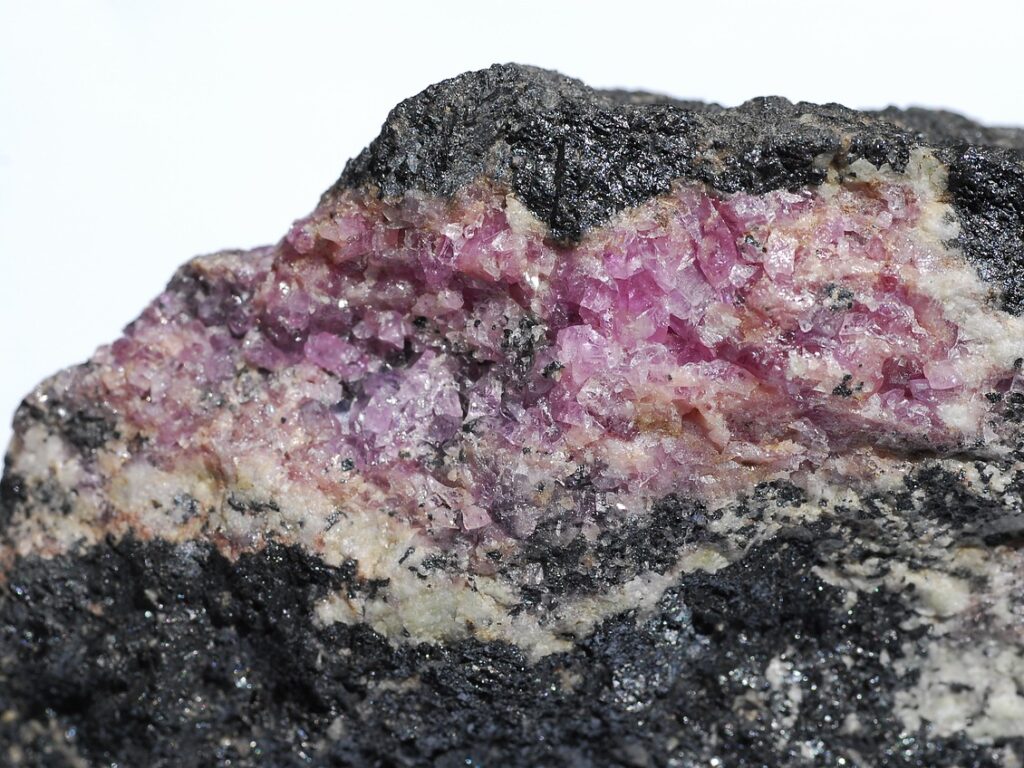
Hodgkinsonite was first described in 1913 from the renowned Franklin mining district of New Jersey, United States, one of the world’s most mineralogically diverse ore deposits. The mineral was named in honor of H. H. Hodgkinson, who was associated with mining operations and mineral investigations in the district. The Franklin-Sterling Hill ore bodies are internationally recognized for their exceptional concentration of rare zinc and manganese minerals, many of which were first identified there. Hodgkinsonite remains closely associated with this locality, which continues to serve as the type locality and principal source of scientifically significant specimens. Although additional occurrences have been documented elsewhere, Franklin specimens remain the most thoroughly studied and best characterized examples of the species, contributing substantially to the understanding of manganese-zinc silicate mineralization and metamorphic ore-forming processes.
Crystal Structure of Hodgkinsonite
Hodgkinsonite crystallizes in the monoclinic crystal system and is classified as a hydroxyl-bearing manganese-zinc silicate. Its crystal structure is composed of isolated silicate tetrahedra linked to zinc and manganese cations through oxygen and hydroxyl groups, forming a stable three-dimensional framework. Zinc occupies distinct octahedral coordination sites within the lattice, while manganese contributes both to the structural stability and the mineral’s characteristic coloration. The presence of hydroxyl groups distinguishes Hodgkinsonite from many anhydrous silicate minerals and indicates that water-bearing fluids played an important role during its formation. Crystallographic studies have shown that the arrangement of Zn, Mn, Si, O, and OH ions produces a relatively complex structure that reflects the unusual geochemical environment in which the mineral develops. Although well-formed crystals are uncommon, the mineral’s internal atomic architecture provides valuable information about manganese-zinc mineralization processes and metamorphic ore formation.
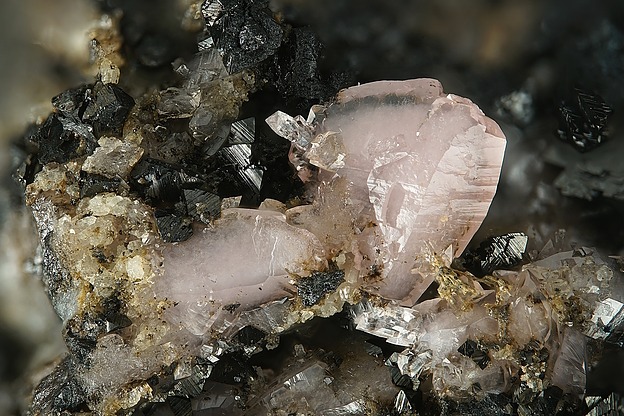
Major Sources and Occurrence of Hodgkinsonite
Hodgkinsonite is an exceptionally rare mineral with a very limited global distribution. The most important and historically significant occurrence is the famous Franklin Mining District, including the adjacent Sterling Hill ore deposit. These localities serve as the type locality for the mineral and have produced the majority of the world’s documented Hodgkinsonite specimens. The unique zinc-manganese-iron ore bodies found within this district created the specialized geological conditions necessary for the mineral’s formation, resulting in an extraordinary concentration of rare silicate and oxide minerals. Many of the finest and most thoroughly studied Hodgkinsonite specimens originate from these deposits, where the mineral commonly occurs alongside willemite, franklinite, zincite, tephroite, and other manganese-rich species.
Outside New Jersey, Hodgkinsonite has been reported from a small number of additional manganese- and zinc-bearing metamorphic deposits around the world, although occurrences are generally sparse and specimens are often microscopic or poorly developed. Minor discoveries have been documented in parts of Australia, where geological environments share certain similarities with the Franklin ore bodies, particularly in relation to manganese-rich metamorphic mineralization. However, these occurrences remain relatively uncommon and have not produced material comparable in abundance or quality to that found in the Franklin-Sterling Hill district.
The rarity of Hodgkinsonite is directly related to the highly specific geochemical conditions required for its formation. The mineral develops only where zinc, manganese, silica, and hydrothermal fluids interact under suitable metamorphic conditions, a combination that occurs in relatively few geological settings worldwide. As a result, Hodgkinsonite remains one of the least common manganese-zinc silicates known to science, and significant new localities continue to be exceptionally rare. Today, most museum-quality specimens originate from historical collections assembled during the active mining period at Franklin and Sterling Hill, making these localities the definitive source of the species.
Color and Optical Properties of Hodgkinsonite
Hodgkinsonite is best known for its attractive pink to reddish coloration, which is primarily caused by manganese ions incorporated into its crystal structure. Depending on chemical composition, crystal size, and associated impurities, specimens may display shades ranging from pale pink and rose-red to orange-red or brownish-red. The mineral is typically transparent to translucent and exhibits a vitreous to slightly greasy luster on fresh surfaces. Under transmitted light, thin fragments often reveal delicate pink tones and moderate brilliance. Optically, Hodgkinsonite is biaxial due to its monoclinic symmetry and possesses refractive indices that reflect its relatively high manganese and zinc content. Its optical behavior is useful for mineral identification under polarized light microscopy, where characteristic interference colors and optical orientations can help distinguish it from other manganese-rich silicates occurring in similar geological environments.
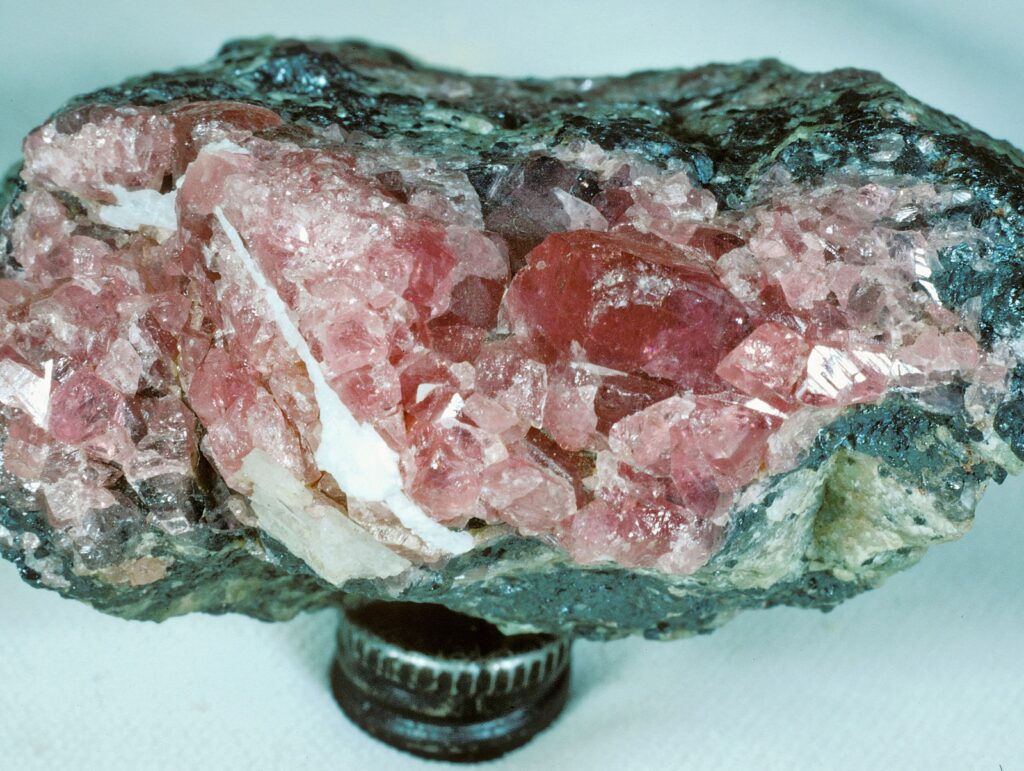
Physical and Chemical Properties of Hodgkinsonite
Hodgkinsonite has the chemical formula Zn₂Mn(SiO₄)(OH)₂ and is classified as a rare manganese-zinc hydroxyl silicate. It typically exhibits a Mohs hardness of approximately 4.5 to 5, indicating moderate resistance to scratching and abrasion. The mineral possesses a specific gravity generally ranging between 3.5 and 3.7, reflecting the presence of relatively heavy zinc and manganese atoms within its structure. Cleavage is usually imperfect or poorly developed, while fracture surfaces tend to be uneven to irregular. Most specimens occur as granular, compact, or massive aggregates rather than as large, well-defined crystals. Chemically, Hodgkinsonite is notable for its combination of zinc, manganese, silicon, oxygen, and hydroxyl groups, a composition that forms only under specialized geological conditions. Its stability is closely linked to the unique metamorphic and hydrothermal environments of manganese-rich ore deposits, making it an important mineral for understanding the geochemistry of zinc and manganese within metamorphosed ore systems.
Uses of Hodgkinsonite
Due to its extreme rarity and limited distribution, Hodgkinsonite has no significant commercial or industrial applications. Unlike common silicate minerals that are utilized in manufacturing, construction, or metallurgy, Hodgkinsonite occurs in quantities far too small to support economic extraction. Its primary importance lies in the fields of mineralogy, geology, and scientific research, where it serves as a valuable indicator of specialized manganese-zinc metamorphic environments. Researchers study Hodgkinsonite to better understand the complex geochemical processes responsible for the formation of zinc- and manganese-rich ore deposits, particularly those associated with the famous Franklin-Sterling Hill district of New Jersey. In addition, the mineral is highly sought after by collectors and museums because of its rarity, distinctive coloration, and historical significance. Well-preserved specimens are commonly displayed in institutional collections and are considered notable examples of uncommon manganese silicate mineralization.
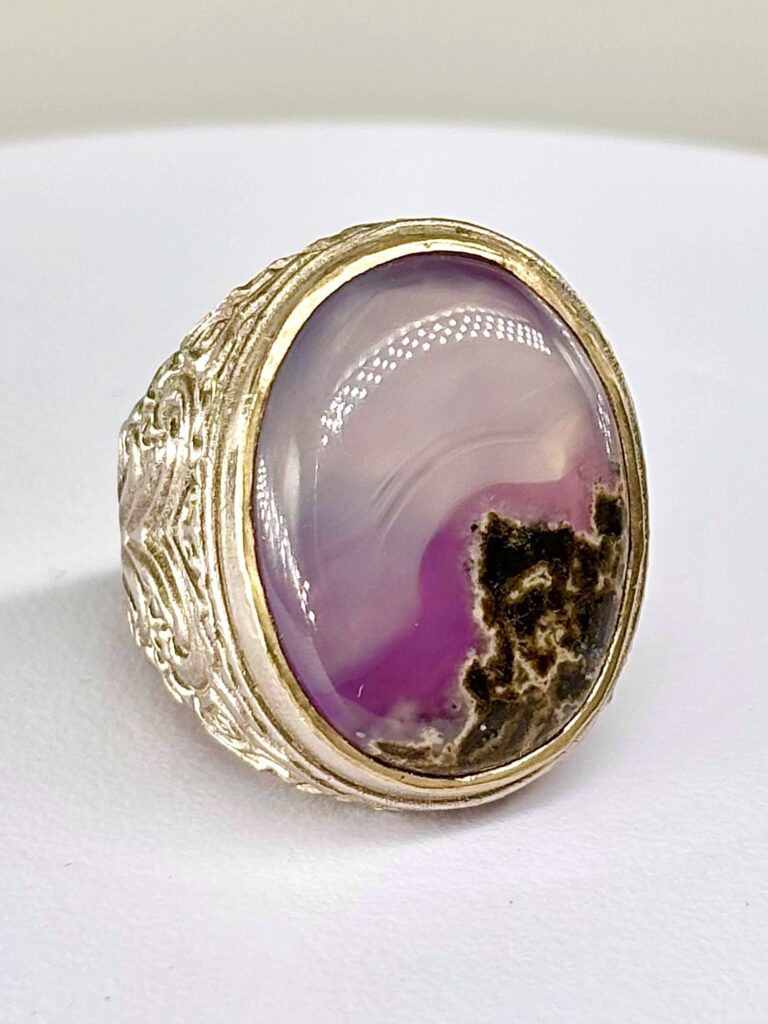
Metaphysical Meaning of Hodgkinsonite
In metaphysical and crystal-healing traditions, Hodgkinsonite is sometimes associated with emotional balance, personal growth, and inner resilience. Practitioners believe that its pink to reddish coloration symbolizes vitality, compassion, and the strengthening of emotional well-being. Some crystal enthusiasts regard Hodgkinsonite as a stone that encourages self-confidence, adaptability, and the release of negative thought patterns, helping individuals navigate periods of personal transformation. It is also occasionally linked to the heart and root chakras, representing a balance between emotional awareness and grounded stability. However, these interpretations originate from spiritual and metaphysical belief systems rather than scientific research. No scientific evidence supports claims that Hodgkinsonite possesses healing, energetic, or supernatural properties, and such associations should be viewed as cultural or personal beliefs rather than established mineralogical facts.