
Gypsum is a naturally occurring sulfate mineral composed of hydrated calcium sulfate with the chemical formula CaSO₄·2H₂O. It belongs to the sulfate mineral class and is among the most abundant evaporite minerals in sedimentary environments worldwide. The mineral crystallizes in the monoclinic crystal system and contains two molecules of structurally bound water, distinguishing it from its anhydrous counterpart, anhydrite (CaSO₄). Pure gypsum is colorless or white, although impurities may produce gray, yellow, brown, pink, or greenish hues. It has a Mohs hardness of 2, perfect cleavage in one direction, a vitreous to silky luster, and a specific gravity of approximately 2.30–2.33. Gypsum occurs in a variety of forms, including transparent crystalline selenite, fibrous satin spar, and fine-grained alabaster, each reflecting different growth conditions and textures. The mineral is widely distributed in sedimentary basins, hydrothermal veins, caves, and weathering environments, where it serves as an important indicator of sulfate-rich geological processes. Because of its distinctive physical properties, widespread occurrence, and relatively simple chemistry, gypsum has long been studied in mineralogy, sedimentology, geochemistry, and environmental geology, while also representing one of the world’s most economically significant industrial minerals.
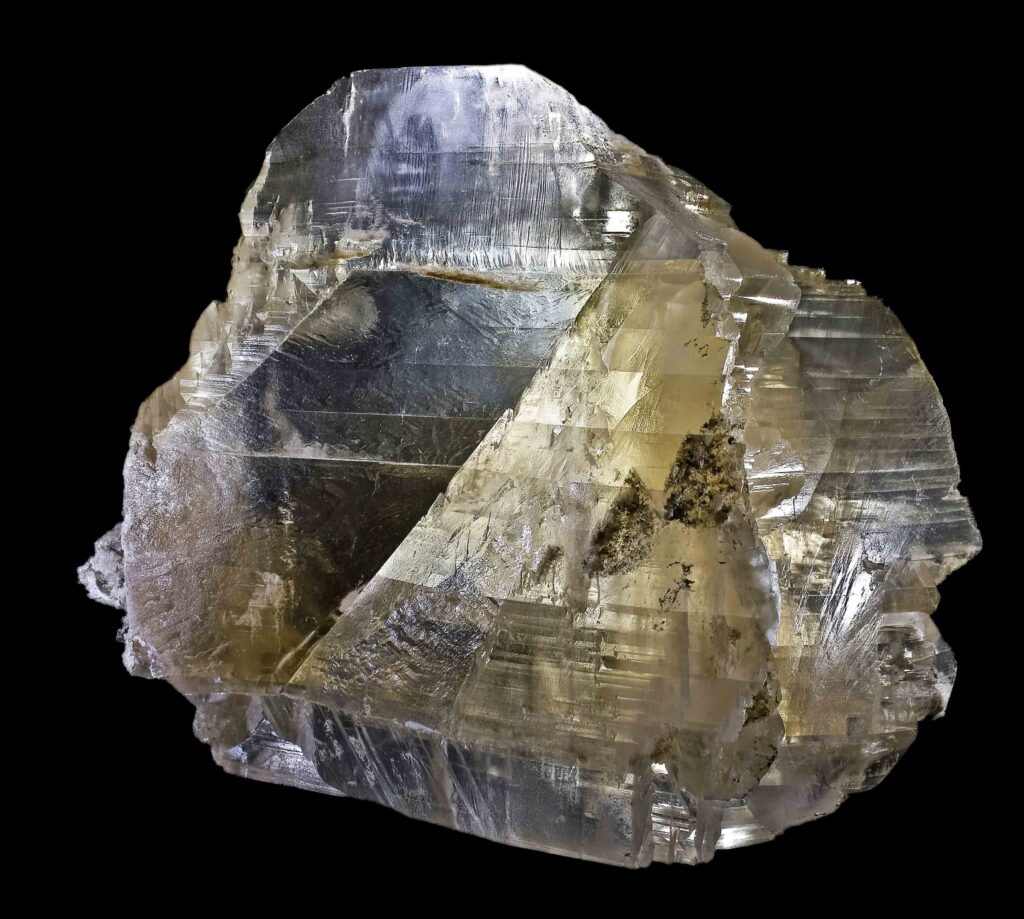
History of Gypsum
Gypsum has been used by humans for thousands of years and is among the earliest minerals employed for construction, decoration, and artistic purposes. Archaeological evidence indicates that gypsum plaster was already being produced during the Neolithic period, when the mineral was heated to remove part of its chemically bound water, creating a material that hardened again after mixing with water. Ancient civilizations throughout the Near East adopted this technology for floors, walls, and architectural finishes. In ancient Egypt, gypsum plaster was widely used in tombs, temples, and monumental buildings as a mortar and finishing material, while Mesopotamian cultures relied on it extensively for coating mudbrick structures and producing decorative reliefs. During the Greek and Roman periods, gypsum continued to be valued for interior plasterwork, ornamental molding, and architectural decoration, and its use remained widespread throughout the Byzantine and medieval eras. Scientific understanding of gypsum advanced considerably during the eighteenth and nineteenth centuries as mineralogy developed into a modern scientific discipline, leading to accurate characterization of its chemistry, crystal structure, and geological occurrence. With the Industrial Revolution, gypsum became an essential raw material for plaster products, cement manufacturing, and later drywall production, significantly expanding its economic importance. Today, gypsum remains one of the most extensively mined industrial minerals and continues to play an important role in geological research, construction materials, agriculture, and environmental engineering.
How Gypsum Forms
Gypsum forms through several geological processes, although the majority of economically important deposits originate in evaporite environments where sulfate-rich waters undergo intense evaporation. In restricted marine basins, coastal lagoons, inland saline lakes, and sabkha systems, evaporation progressively concentrates dissolved calcium and sulfate ions until the solution reaches saturation, allowing gypsum crystals to precipitate directly from the brine. Repeated cycles of seawater flooding and evaporation over millions of years can generate laterally extensive gypsum beds that form major evaporite sequences. Gypsum also commonly forms through the hydration of anhydrite, an anhydrous calcium sulfate mineral that develops under higher temperatures or greater burial depths; when groundwater later infiltrates these rocks, anhydrite absorbs water and transforms into gypsum, often producing volume expansion and deformation within the surrounding strata. Smaller gypsum deposits may crystallize from hydrothermal fluids circulating through fractures and cavities, where cooling or chemical changes trigger mineral precipitation and sometimes produce exceptionally large transparent crystals. In near-surface environments, gypsum may develop as a secondary mineral through the weathering and oxidation of sulfide minerals, particularly pyrite, when sulfuric acid generated during oxidation reacts with calcium-bearing rocks or groundwater. Microbial activity can also influence local sulfur cycling and water chemistry, indirectly promoting gypsum precipitation under suitable environmental conditions. Because its formation is closely controlled by salinity, hydrology, climate, and geochemical evolution, gypsum provides valuable evidence for reconstructing ancient depositional environments, paleoclimate, evaporite basin development, and the long-term cycling of sulfur and water within the Earth’s crust.
Occurrence and Distribution of Gypsum
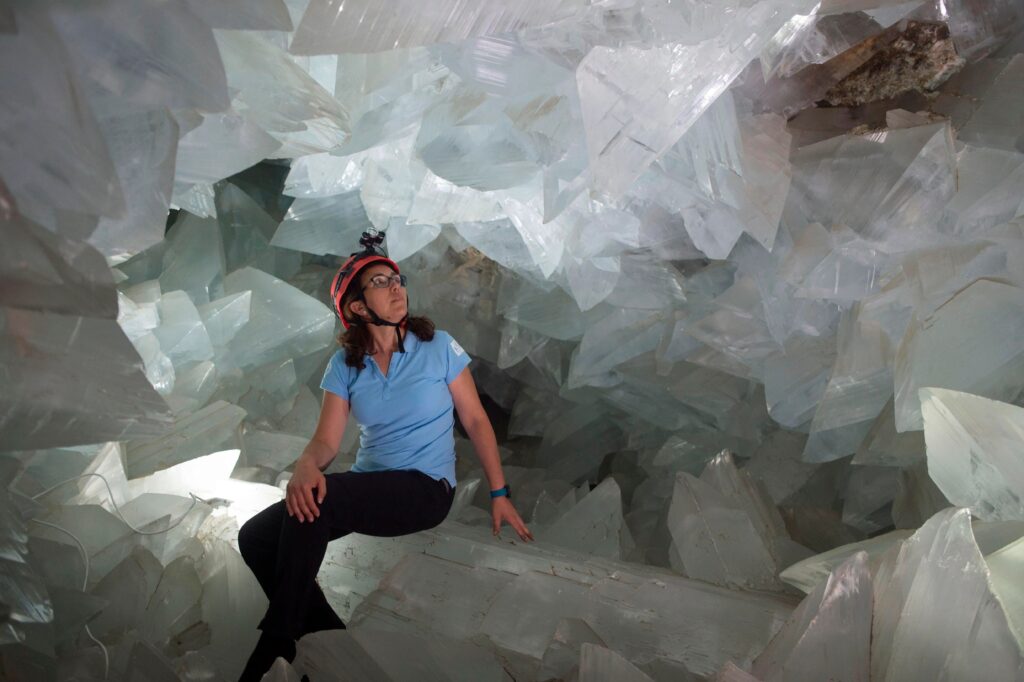
Gypsum is one of the most widely distributed sulfate minerals on Earth and occurs on every continent in a broad range of geological settings. The largest deposits are found in sedimentary evaporite basins, where thick gypsum beds formed through repeated evaporation of ancient seawater or saline lake water. These deposits are commonly associated with limestone, dolostone, shale, halite, and anhydrite and may extend continuously over hundreds of square kilometers. Major commercial gypsum resources occur in countries including the United States, Canada, Mexico, Spain, France, Germany, Italy, the United Kingdom, Türkiye, Iran, China, India, Thailand, Australia, and Morocco. Notable examples include the extensive Permian evaporite sequences of North America and Europe, the Zechstein Basin of northern Europe, the Paris Basin in France, and large evaporite basins throughout Central Asia and the Middle East. Beyond sedimentary deposits, gypsum also occurs in hydrothermal veins, volcanic fumarolic environments, caves, and weathering zones where sulfate-rich groundwater reacts with calcium-bearing rocks. Exceptionally large selenite crystals have formed in a few unique geological environments, such as the Naica Mine in Mexico, where hydrothermal conditions allowed gypsum crystals to grow to extraordinary dimensions over hundreds of thousands of years. Because gypsum forms under a variety of geological conditions, it serves as an important indicator of evaporitic, hydrothermal, and supergene processes in sedimentary and structural geology.
Types and Varieties of Gypsum
Although all varieties of gypsum have the same chemical composition (CaSO₄·2H₂O), differences in crystal habit, texture, transparency, and growth environment have produced several well-recognized varieties.
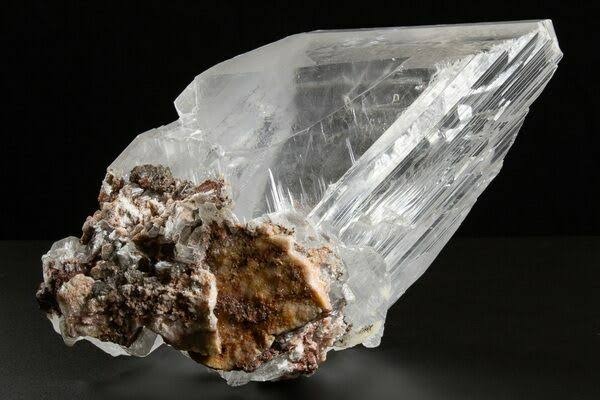
- Selenite – A transparent to translucent crystalline variety characterized by well-developed monoclinic crystals, vitreous luster, and perfect cleavage. Selenite commonly forms tabular, prismatic, or swallow-tail twinned crystals and is among the most recognizable forms of gypsum.
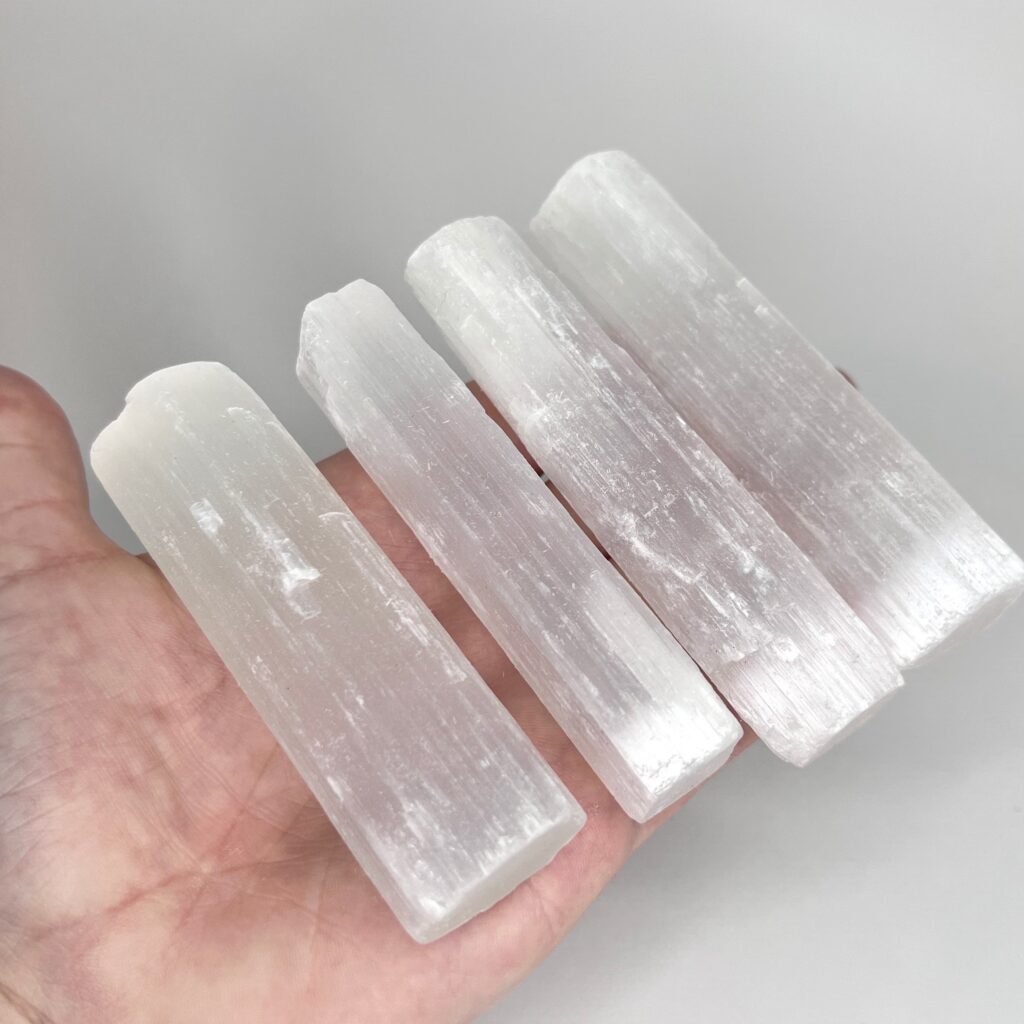
- Satin Spar – A fibrous variety composed of densely packed parallel crystals that create a silky luster and chatoyant effect. It is commonly white or cream-colored and is frequently cut and polished for ornamental objects and decorative carvings.
- Alabaster – A fine-grained, massive variety with a compact texture and smooth appearance. Its softness and uniform structure have made it a preferred material for sculpture, architectural ornamentation, decorative vessels, and artistic carvings since antiquity.
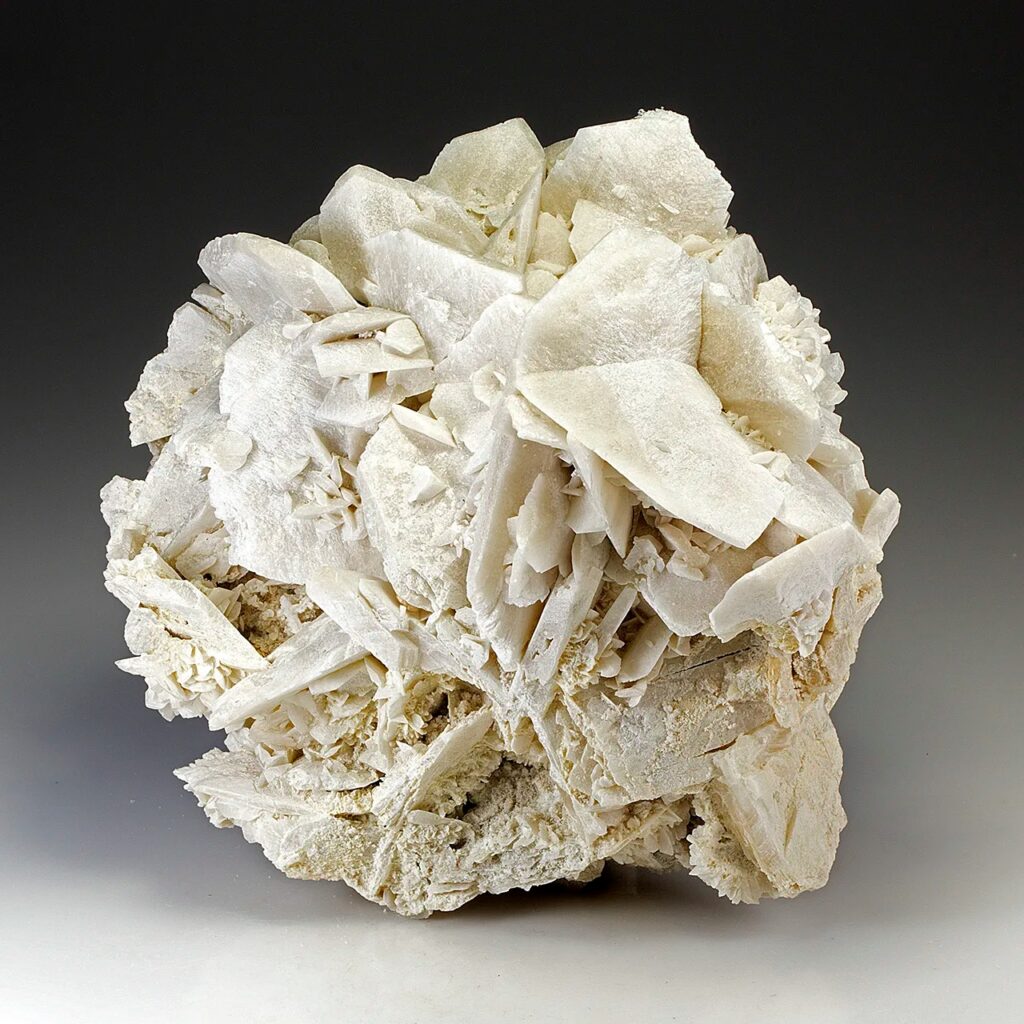
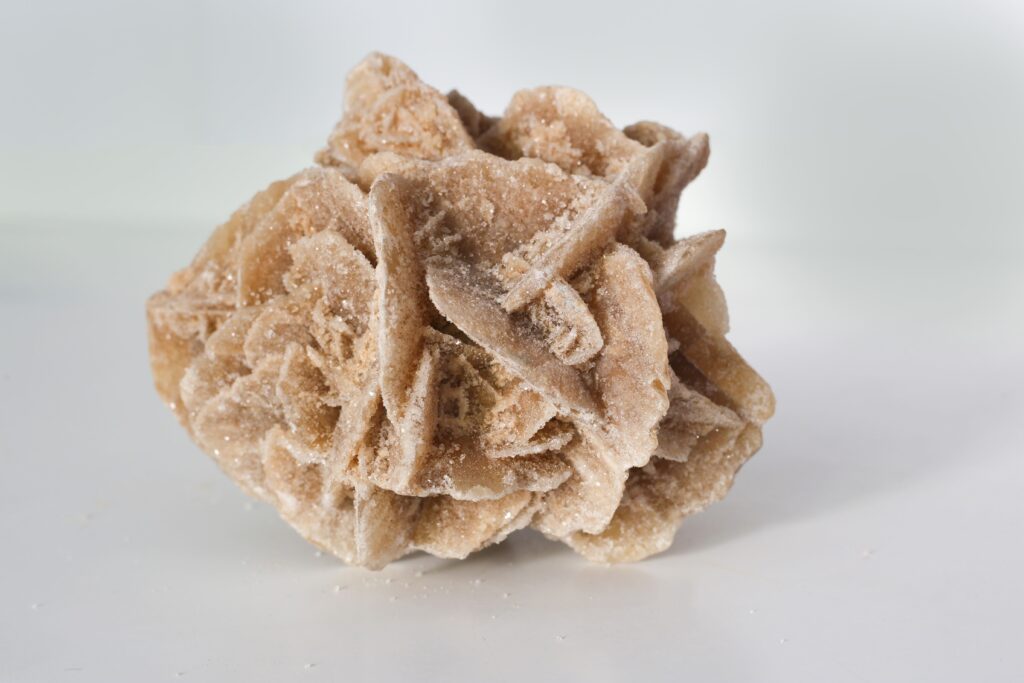
- Desert Rose – A rosette-shaped aggregate formed when gypsum crystals grow around sand grains in arid environments through the evaporation of mineral-rich groundwater. The inclusion of sand gives these specimens their distinctive flower-like appearance.
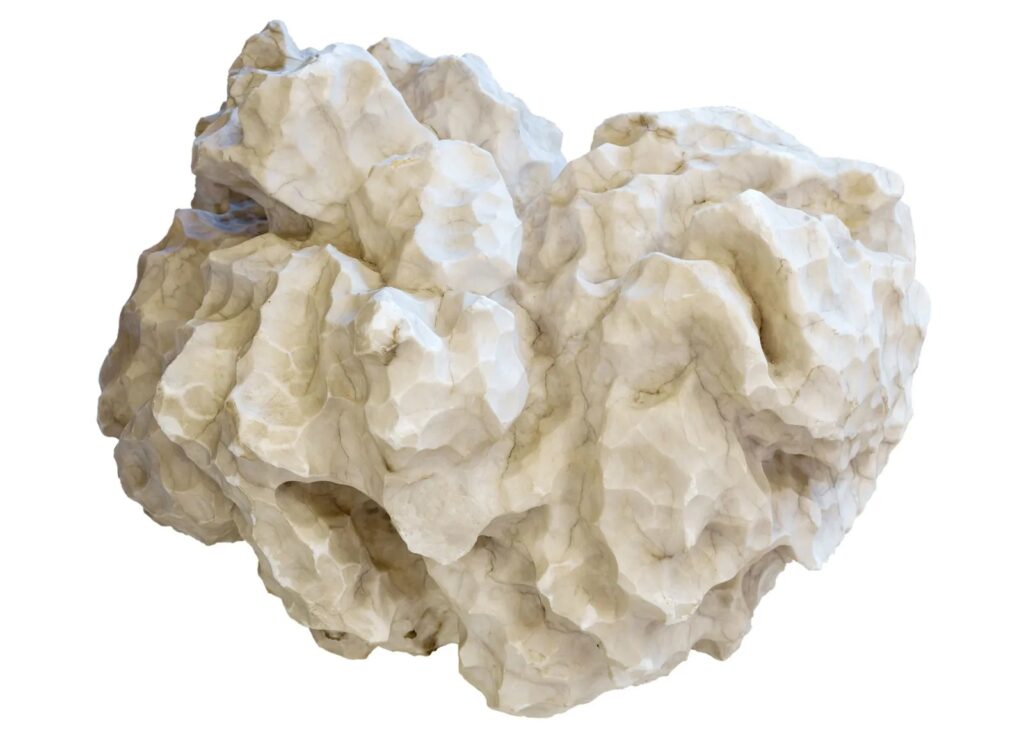
- Massive Gypsum – Dense, granular, or compact aggregates lacking distinct crystal faces. This is the most common form found in large sedimentary evaporite deposits and represents the principal source of gypsum used in industrial applications.
- Rosette and Nodular Gypsum – Rounded or radiating crystal aggregates that develop within evaporite sediments. These forms are produced by localized crystal growth under varying geochemical conditions and are common in saline lake and coastal evaporite environments.
Color and Optical Properties of Gypsum
Gypsum is typically colorless or white in its pure form, reflecting the absence of significant impurities within its crystal structure. However, natural specimens commonly display shades of gray, yellow, brown, pink, red, green, or black due to the presence of clay minerals, iron oxides, organic matter, or other mineral inclusions. Transparent selenite crystals are generally colorless with exceptional clarity, whereas massive varieties such as alabaster are usually white to cream-colored and translucent. Gypsum exhibits a vitreous to pearly luster on crystal faces and cleavage surfaces, while fibrous satin spar displays a distinctive silky luster caused by light reflecting from parallel crystal fibers. The mineral is transparent to translucent depending on crystal quality and grain size. Optically, gypsum is biaxial positive (+) and possesses relatively low refractive indices, typically ranging from 1.519 to 1.530, with moderate birefringence that produces interference colors under polarized light. Because of its perfect cleavage and optical anisotropy, gypsum is commonly studied in optical mineralogy and petrographic microscopy as a representative sulfate mineral.
Applications of Gypsum
Gypsum is one of the world’s most important industrial minerals and has a wide range of applications in construction, agriculture, manufacturing, environmental management, and the arts. The largest proportion of mined gypsum is used to manufacture wallboard (drywall or gypsum board), where its fire resistance, dimensional stability, and ease of installation make it a standard building material for residential and commercial construction. Calcined gypsum is also processed into plaster of Paris, which is widely used for interior plaster, decorative moldings, architectural restoration, ceramic molds, dental casts, orthopedic casts, and artistic sculptures because it hardens rapidly when mixed with water. In the cement industry, gypsum is added during the grinding of Portland cement clinker to regulate setting time and improve workability. In agriculture, finely ground gypsum serves as a soil amendment that supplies calcium and sulfur, improves soil structure, enhances water infiltration, reduces surface crusting, and helps reclaim sodic soils without significantly altering soil pH. The mineral is also employed in environmental engineering to reduce phosphorus runoff from agricultural land, treat industrial wastewater, and remove certain contaminants through chemical precipitation. Smaller quantities of high-purity gypsum are used in food processing, pharmaceuticals, paper manufacturing, ceramics, glass production, and chemical industries, while transparent selenite crystals and carved alabaster continue to be valued for ornamental objects, decorative architecture, museum specimens, and mineral collecting. Owing to its abundance, low cost, chemical stability, and versatile physical properties, gypsum remains one of the most economically significant sulfate minerals used worldwide.