
In the context of gemology, glass is an amorphous solid—a material that lacks the orderly, repeating internal atomic structure characteristic of natural gemstones. While mineral gems like diamonds or rubies form through slow geological processes that result in a defined crystal lattice, glass is created when a molten mixture of silica (often sand), soda, and lime is cooled so rapidly that the atoms are “frozen” in a disordered, liquid-like state. Because it lacks a crystal structure, glass is optically isotropic, meaning it displays the same physical and optical properties in every direction. When faceted, glass can mimic the luster and dispersion of precious stones, but its physical composition—marked by a distinct conchoidal (shell-like) fracture and internal signatures such as gas bubbles or flow lines—fundamentally distinguishes it from its natural counterparts.
What Is Glass?
glass is an amorphous, non-crystalline solid produced by the rapid cooling of a molten, silica-rich mixture, a process that prevents atoms from organizing into a structured crystal lattice and leaves them in a permanently disordered state.
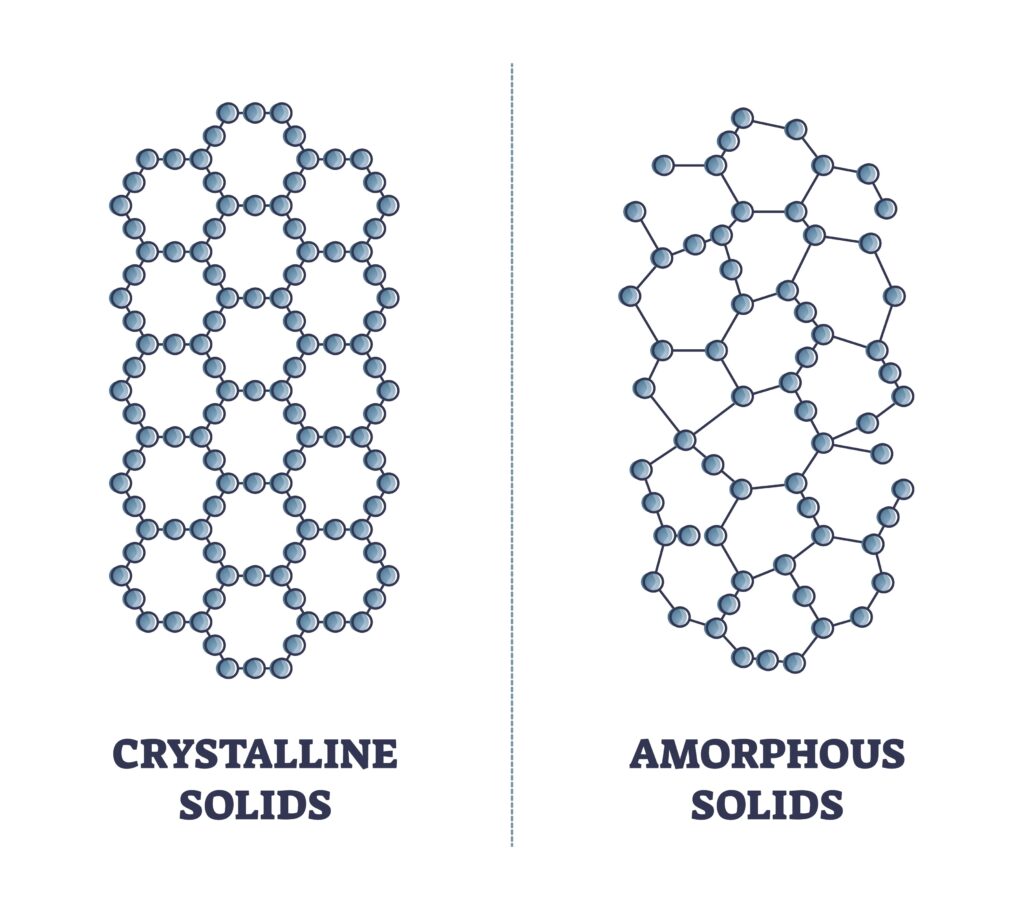
The foundation of this material typically relies on silica (SiO2) as the primary glass-former, while the addition of soda (Na2O) is utilized to lower the necessary melting temperature and lime (CaO) is incorporated to enhance chemical stability and durability. Beyond these basic components, the composition is frequently augmented with various oxides—such as lead (PbO), barium (BaO), or titanium (TiO2)—which are meticulously introduced to modify the material’s refractive index and dispersion, allowing artisans to tailor the optical performance of the glass to mimic the brilliance and fire of natural gemstones.
Glass Gemstones: A Guide to Types and Names
Alexandrium™
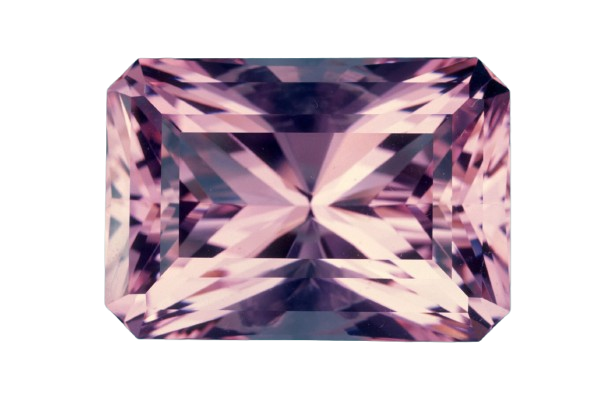
Alexandrium™ is a sophisticated synthetic glass specifically engineered to replicate the prestigious “alexandrite effect,” a dramatic optical phenomenon where a material undergoes a perceived change in color depending on the spectral distribution of the ambient light source. Unlike natural gemstones that rely on trace elements within a crystal lattice, this amorphous material utilizes a precise formulation of metallic additives and rare-earth elements, such as neodymium, to create specific light absorption bands. In natural daylight or cool-spectrum fluorescent lighting—which is rich in blue and green wavelengths—the glass exhibits a vibrant green or bluish-green hue. However, when moved under incandescent light or warm-spectrum candlelight—which is dominated by red wavelengths—it undergoes a distinct and immediate shift to a reddish-purple or raspberry-pink tone. While its visual performance is highly convincing, it can be definitively identified in gemological testing by its single refraction under a polariscope, a refractive index typically ranging between 1.50 and 1.58, and the presence of microscopic gas bubbles or swirl marks characteristic of its man-made origin.
Cat’s Eye Glass
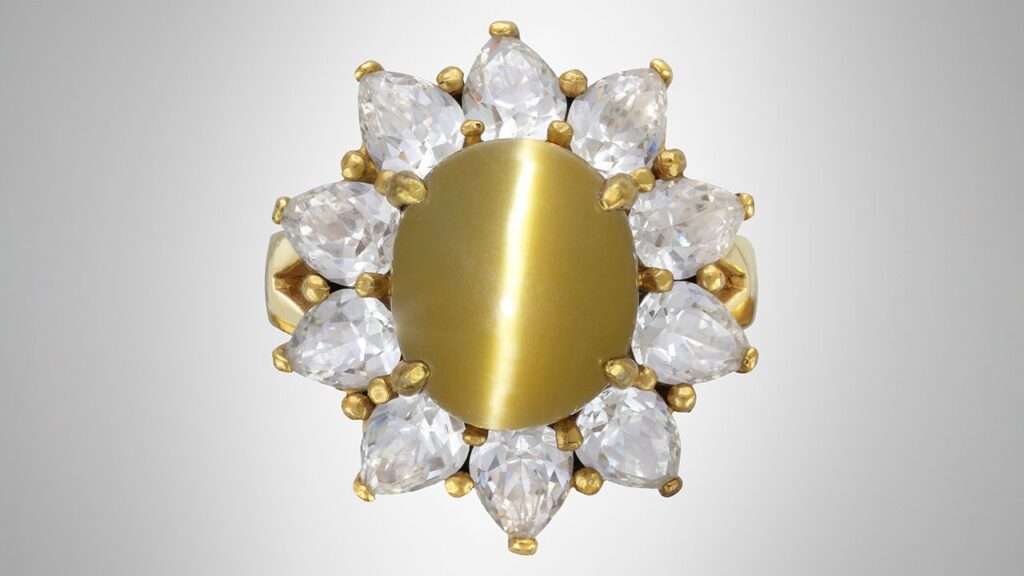
Cat’s Eye Glass is a specialized synthetic material engineered to replicate chatoyancy—the “cat’s eye” phenomenon—which is a striking optical effect traditionally found in rare natural minerals like chrysoberyl and tourmaline. This effect is achieved through a complex manufacturing process that incorporates thousands of parallel-aligned glass fibers or microscopic internal reflective inclusions within the glass matrix. When the material is expertly shaped into a cabochon cut, these dense, longitudinal structures interact with light to reflect a singular, luminous band that stretches across the surface of the stone. This bright line of light, often referred to as the “eye,” appears to glide and shimmer across the dome as the stone is tilted or the light source moves, mimicking the slit pupil of a feline. In gemological study, Cat’s Eye Glass is distinguished from its natural counterparts by its highly uniform fiber arrangement and intense, often vibrant color saturation. While natural chatoyant stones may exhibit irregular inclusions or subtle variations in the “eye,” the man-made version is characterized by a nearly perfect, razor-sharp band. Despite its convincing visual appeal, it can be identified by its specific gravity and refractive index, which align with glass properties rather than crystalline structures. Furthermore, when viewed under magnification from the side, Cat’s Eye Glass often reveals a unique “honeycomb” or cellular structure created by the fused glass fibers, a hallmark feature that clearly separates this elegant simulant from earth-mined gemstones.
Dichroic Glass
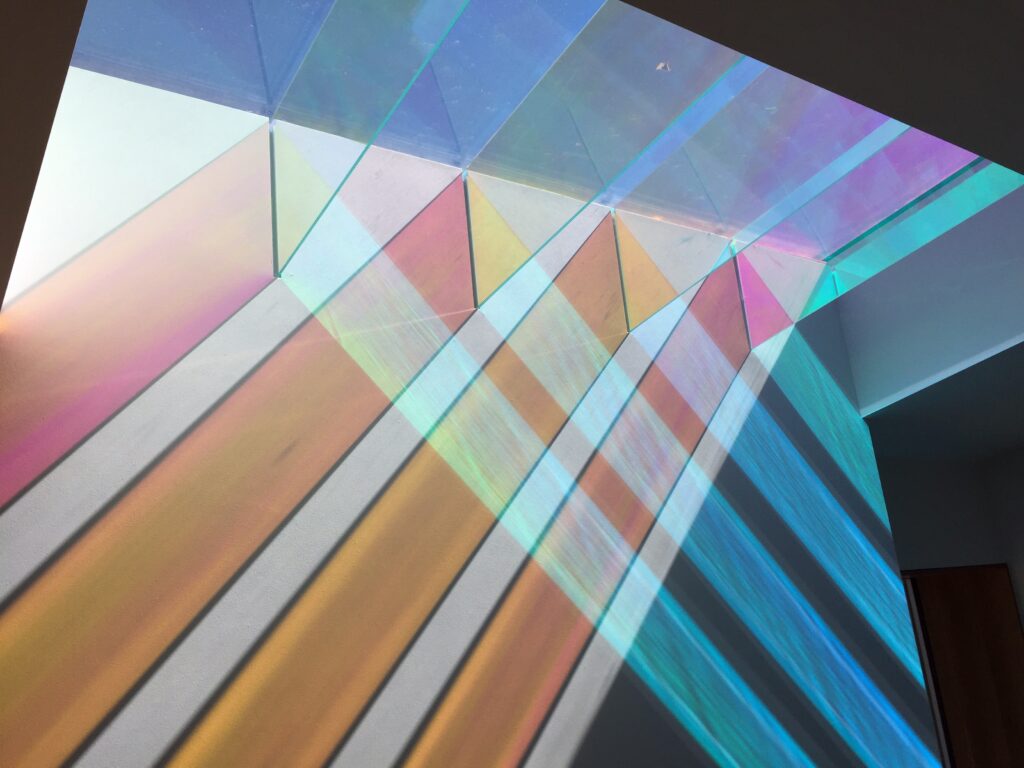
Dichroic glass is a technologically advanced material that achieves its striking appearance through an intricate process known as thin-film physics. Unlike traditional stained glass which uses pigments, this modern variety is created via the vacuum deposition of multiple ultra-thin layers of different metal oxides—such as titanium, chromium, or magnesium—onto the surface of a glass substrate. These microscopic layers, sometimes totaling more than thirty, act as a series of interference filters that selectively allow certain wavelengths of light to pass through while reflecting others. This produces an intense, multidimensional color-shift or iridescent effect that changes dramatically depending on the angle of observation and the lighting conditions. In gemology, it is often utilized to mimic the complex play-of-color found in natural precious opal or the labradorescence seen in high-grade labradorite. While the visual depth of dichroic glass is remarkably captivating, it can be identified by its characteristic “metallic” luster on the layered surface and the absence of a natural crystal structure. Under magnification, the thin-film coating can sometimes be seen as a distinct, paper-thin layer on the edge of the glass, a diagnostic feature that separates this high-tech simulant from the organic or mineral structures of natural iridescent gemstones.
Saphiret
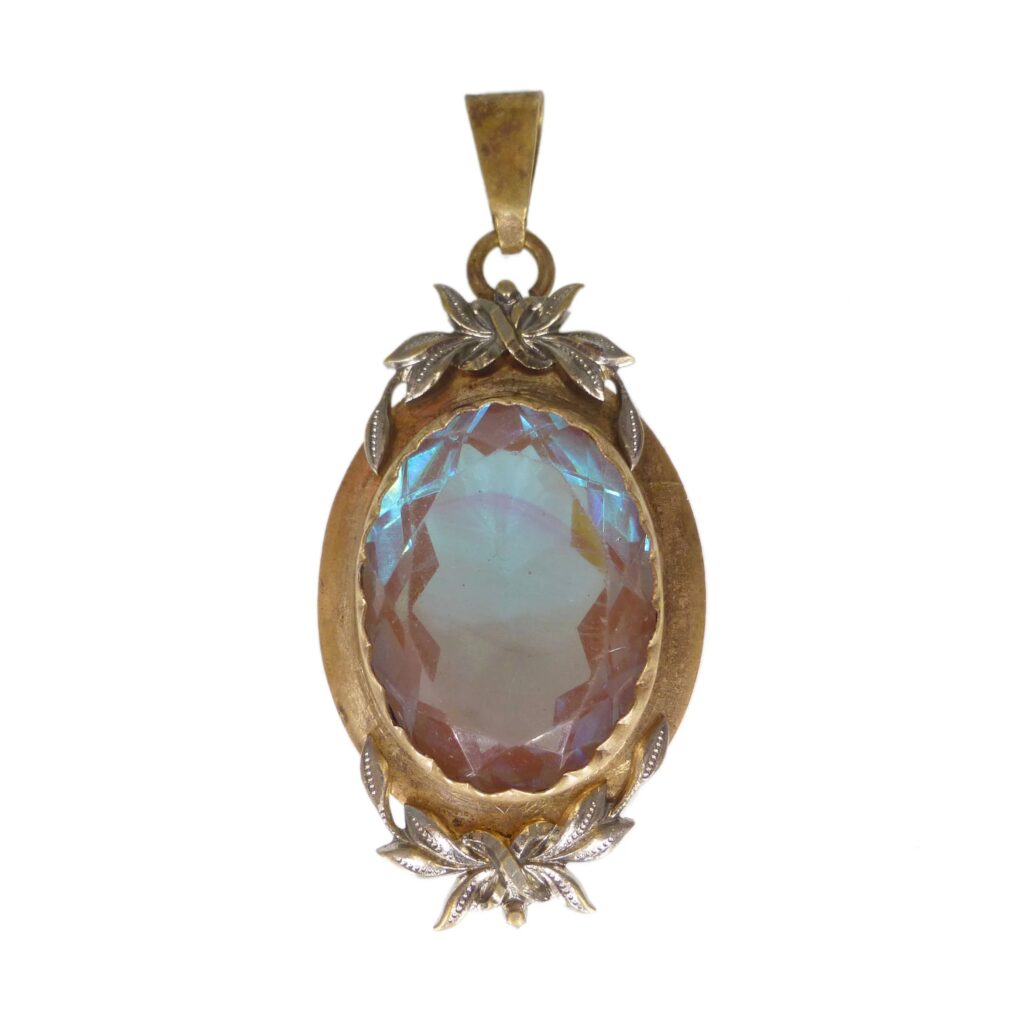
Saphiret is a historical type of glass manufactured primarily in Gablonz, Bohemia, during the 19th and early 20th centuries. It is highly valued by vintage collectors due to its unique optical properties, which are achieved by adding metallic gold into the molten glass mixture during the production process. When observed in neutral or ambient lighting, Saphiret typically displays a semi-opaque, brownish or cocoa-colored base. However, when light interacts with the internal composition—often dispersed through scattering effects—it produces a striking, glowing opalescent flash of azure or cornflower blue. This vivid color shift is responsible for the popular, albeit non-scientific, collector’s nickname “dragon’s breath.” From a gemological perspective, Saphiret is an amorphous glass simulant rather than a mineral; its diagnostic features include a refractive index consistent with glass, typical conchoidal fracturing, and, under magnification, occasional air bubbles or flow lines that confirm its man-made origin. While it remains a significant subject of study in the field of antique jewelry and glass chemistry, it is important to distinguish it from modern glass imitations that attempt to replicate the effect using thin-film coatings rather than the original gold-infused glass composition.
Paste
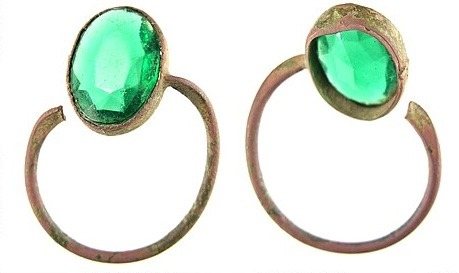
Paste glass holds a position of significant historical importance in the evolution of jewelry design and gemology. Originating in the 18th century, “paste” refers to a high-lead-content glass, sometimes known as flint glass, which was meticulously faceted to replicate the brilliance, fire, and visual properties of diamonds and expensive colored gemstones. By increasing the lead oxide content—sometimes up to 50%—the glass achieved a substantially higher refractive index and greater dispersion than standard soda-lime glass, allowing it to produce a high degree of light “fire” that closely mimicked the aesthetic of precious stones. During the 18th and 19th centuries, it became a dominant and widely accepted feature in European jewelry, sought after by the elite and middle classes alike for its ability to provide the look of high-end, rare stones at a significantly lower cost. Unlike modern mass-produced simulants, antique paste stones were often hand-cut and individually foiled or set in closed-back settings to enhance their light reflection. From a modern gemological perspective, paste is defined by its characteristic soft, rounded facet edges resulting from its lower hardness (typically 5 to 6 on the Mohs scale), a distinctively warm or “oily” luster, and, under microscopic examination, the frequent presence of minute gas bubbles or internal “swirls” that confirm its molten, non-crystalline manufacturing origin.
Strass
Strass represents a landmark innovation in 18th-century glassmaking, pioneered by the jeweler Georges Frédéric Strass around 1730. By significantly increasing the proportion of lead oxide in the glass composition—often referred to as lead crystal or flint glass—manufacturers were able to achieve a remarkably high refractive index and a superior level of dispersion. This high dispersion is critical, as it causes the glass to split white light into its component spectral colors, effectively replicating the characteristic “fire” and scintillation typically seen in high-quality diamonds. Because of these advanced optical properties, Strass became the industry standard for high-end imitation jewelry throughout the 18th and 19th centuries, offering a level of brilliance that far surpassed standard lime glass of the era. From a modern gemological perspective, while Strass is structurally a non-crystalline glass, its high density—a direct result of the lead content—remains a defining diagnostic trait. Although it is now easily distinguished from diamond by its lower hardness (typically 5 to 6 on the Mohs scale), its historical significance lies in its role as one of the first sophisticated materials engineered specifically to manipulate light refraction to mimic the precious gemstone market.
Rhinestones & Chatons
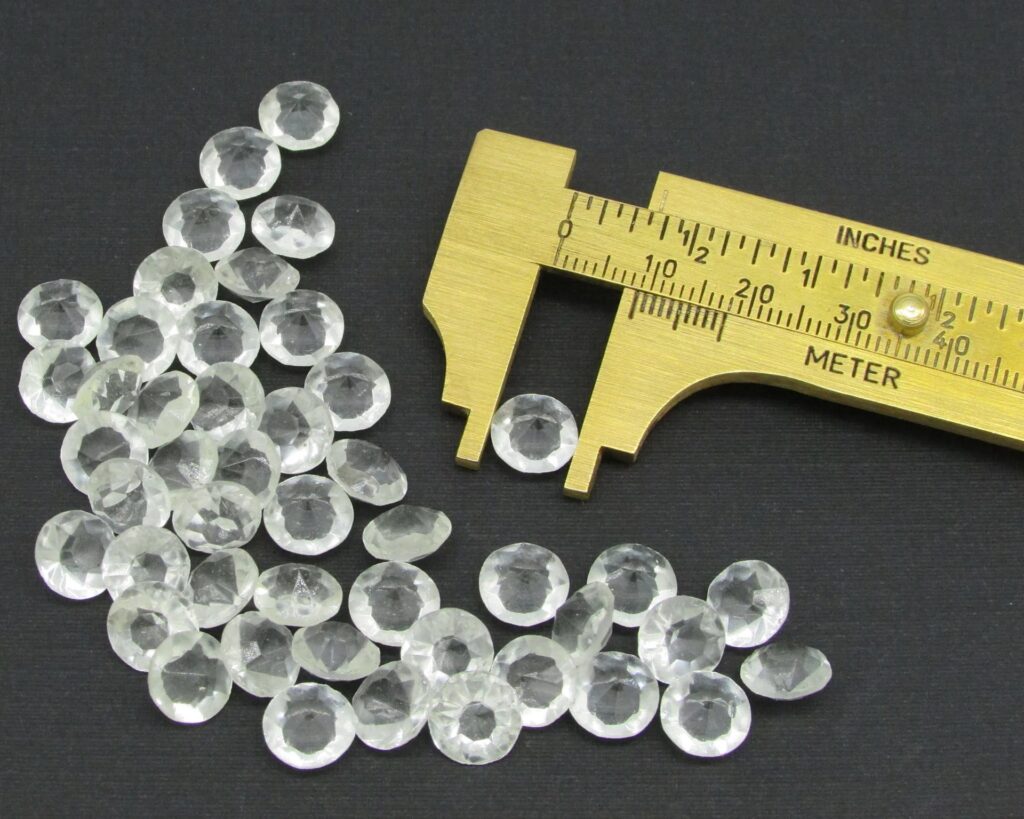
Rhinestones and chatons are fundamental components of the mass-market costume jewelry industry, engineered specifically to replicate the brilliance and scintillation of diamonds through cost-effective glass materials. A rhinestone is a generic term for a faceted glass stone designed to imitate the appearance of a diamond; these are often manufactured with a flat or pointed base and typically utilize a metallic foil or silver-mirrored backing to maximize internal light reflection and sparkle, a technique that allows the stone to project brightness even in settings with limited light access. Chatons represent a specific category of these stones, characterized by their small, highly faceted size and typically conical, pointed-back shape. Because of their compact geometry, chatons are specifically designed to be easily set into cup-shaped prongs, channel settings, or pressed into jewelry bases, making them the industry standard for high-volume costume jewelry production. From a gemological perspective, while both are made from low-dispersion glass compared to modern synthetic stimulants like cubic zirconia, their optical impact is heavily reliant on the quality and durability of the reflective backing. Under microscopic examination, modern rhinestones and chatons are readily distinguished from natural gemstones by their perfectly uniform facet geometry, the absence of natural mineral inclusions, and—in cases where the foil backing is damaged—the clear, amorphous nature of the underlying glass matrix.
French Jet
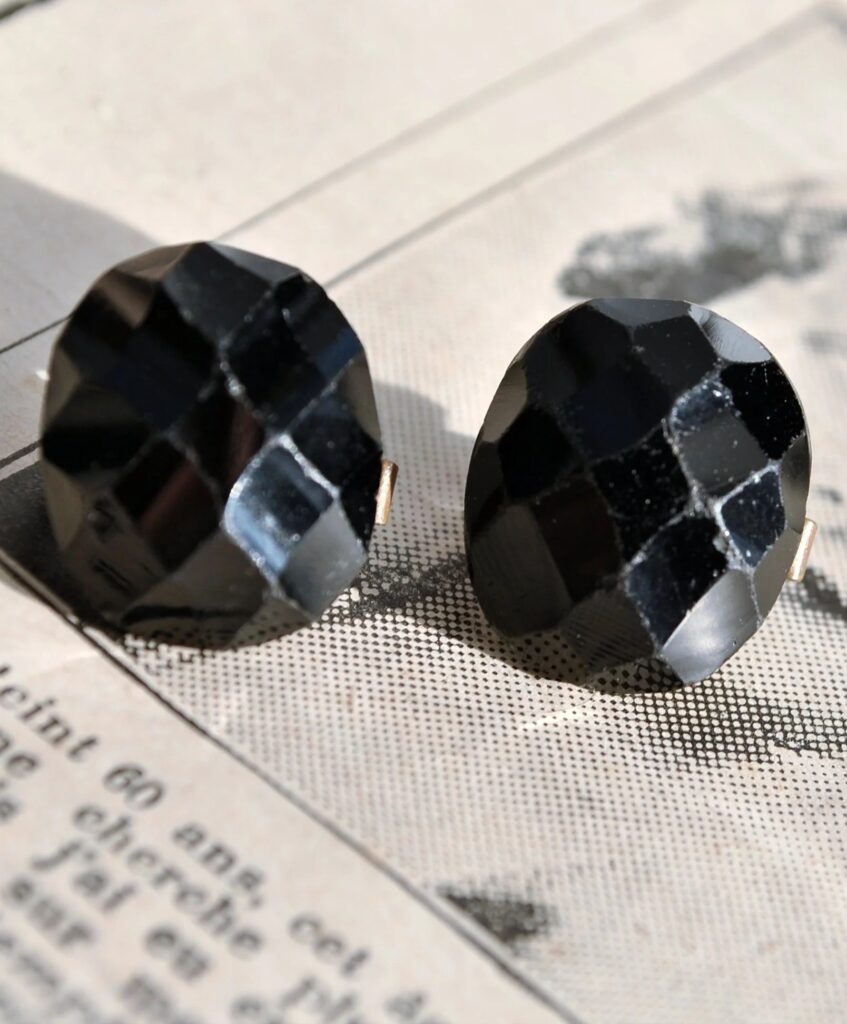
French Jet is a specialized form of black, opaque glass that was mass-produced during the Victorian era to serve as a cost-effective and highly durable alternative to natural jet, a fossilized organic material that had become exceptionally fashionable for mourning jewelry following the death of Prince Albert in 1861. Unlike natural jet, which is lightweight, somewhat brittle, and requires meticulous care due to its organic origin, French Jet is a dense, man-made glass that offers a similar deep, high-gloss appearance while possessing superior resistance to scratching and environmental degradation. The material was frequently molded or faceted into elaborate, intricate shapes typical of mourning jewelry, such as cameos, beads, and floral motifs, which were then polished to a jet-black, vitreous luster. From a gemological standpoint, French Jet can be definitively distinguished from natural jet by several key indicators: while natural jet is warm to the touch and has a low specific gravity (often floating in concentrated salt solutions), French Jet is notably cool to the touch and significantly denser. Furthermore, under microscopic magnification, French Jet will show the characteristic conchoidal, or shell-like, fractures and potential internal gas bubbles typical of an amorphous glass, whereas natural jet exhibits a fibrous, woody grain structure that reflects its origins as fossilized wood.
Opalite & Slocum Stone
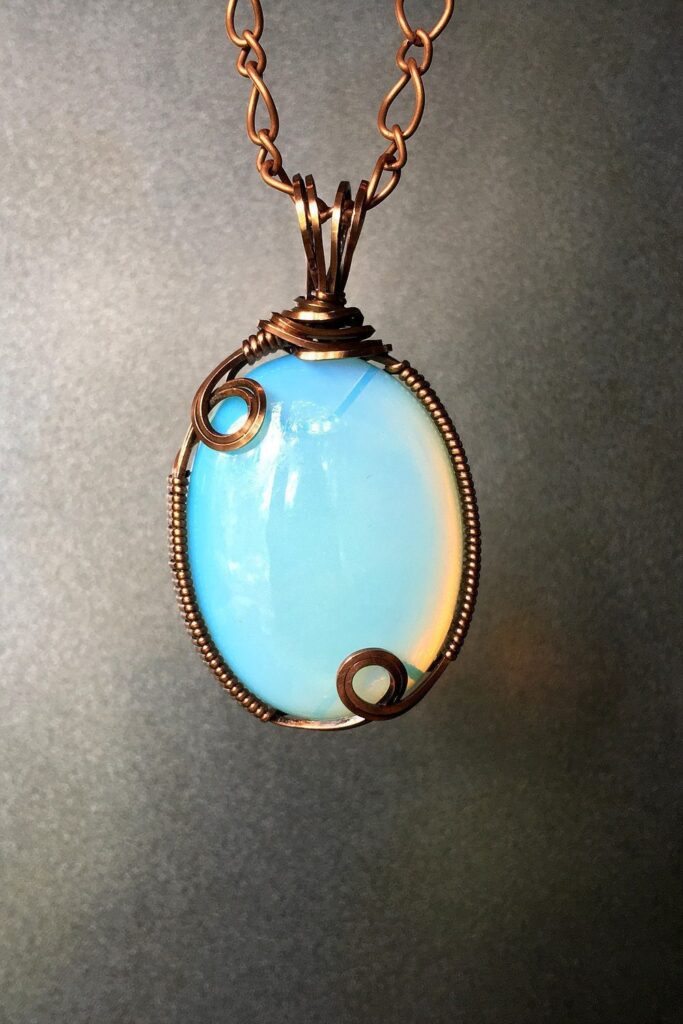
Opalite and Slocum Stone represent two distinct approaches to simulating precious opal, each occupying a different tier of technical complexity within the world of glass-based gemology. Opalite is a deceptively simple, milky, and translucent glass engineered specifically to mimic the ethereal, adularescent glow of moonstone or the soft, diffused body color of white opal. It is typically manufactured as a standard soda-lime glass with a high degree of light scattering, which creates its characteristic blueish-white haze and glowing appearance in ambient lighting. In contrast, Slocum Stone is a far more sophisticated and complex material developed in the 1970s as a high-end synthetic imitation of natural opal. Unlike the monolithic structure of Opalite, Slocum Stone is constructed through a layered, multi-stage process where thin, irridescent metallic or plastic flakes are suspended within a glass matrix. These embedded flakes are angled to refract light in a manner that simulates the intense, directional flashes of color—known as play-of-color—found in natural precious opal. From a diagnostic perspective, Opalite is easily identified by its lack of structural complexity and low refractive index, whereas Slocum Stone can be distinguished from natural opal under magnification by observing the geometric, often overlapping, nature of the reflective flakes, which appear distinct from the more fluid, organic, or “harlequin” color patterns of authentic, earth-mined precious opal.
Scorolite
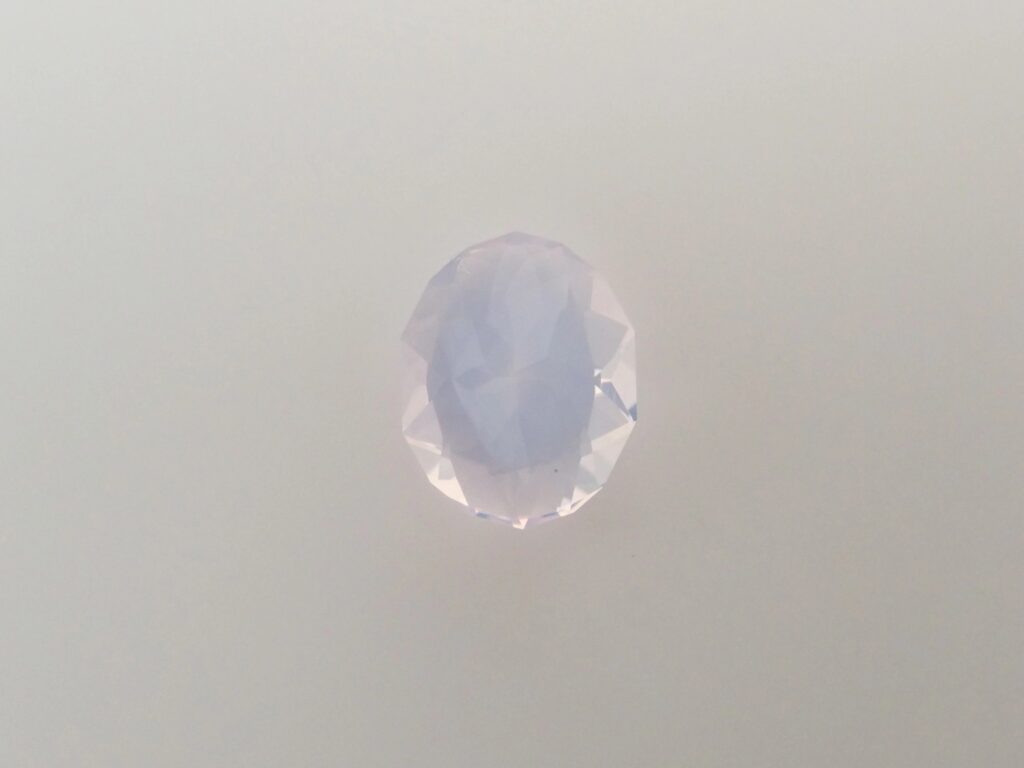
Scorolite is a specialized decorative glass formulation developed primarily to emulate the aesthetic appeal of rich, purple-hued gemstones such as amethyst or violet sapphire. Unlike natural minerals, which derive their deep color from iron impurities and irradiation within a crystal lattice, Scorolite is an amorphous glass material designed for cost-effective mass production in the costume jewelry market. It achieves its characteristic violet coloration through the precise introduction of manganese or nickel compounds into the molten glass batch, which results in a consistent, uniform intensity that is rarely seen in natural stones of similar size. From a gemological standpoint, Scorolite is classified as an imitation rather than a synthetic, as it lacks the chemical composition and crystalline structure of the gem it mimics. Identification is straightforward for a trained professional: while amethyst typically exhibits distinct pleochroism—displaying different shades of violet depending on the viewing axis—Scorolite is isotropic and shows no such variation. Furthermore, under standard microscopic examination, Scorolite lacks the characteristic “zebra stripes” or fluid-like growth zones typical of amethyst, often revealing instead the diagnostic gas bubbles, swirl marks, or molded facet edges that are the hallmark of its glass-based, man-made nature.
Aurora Borealis (AB)
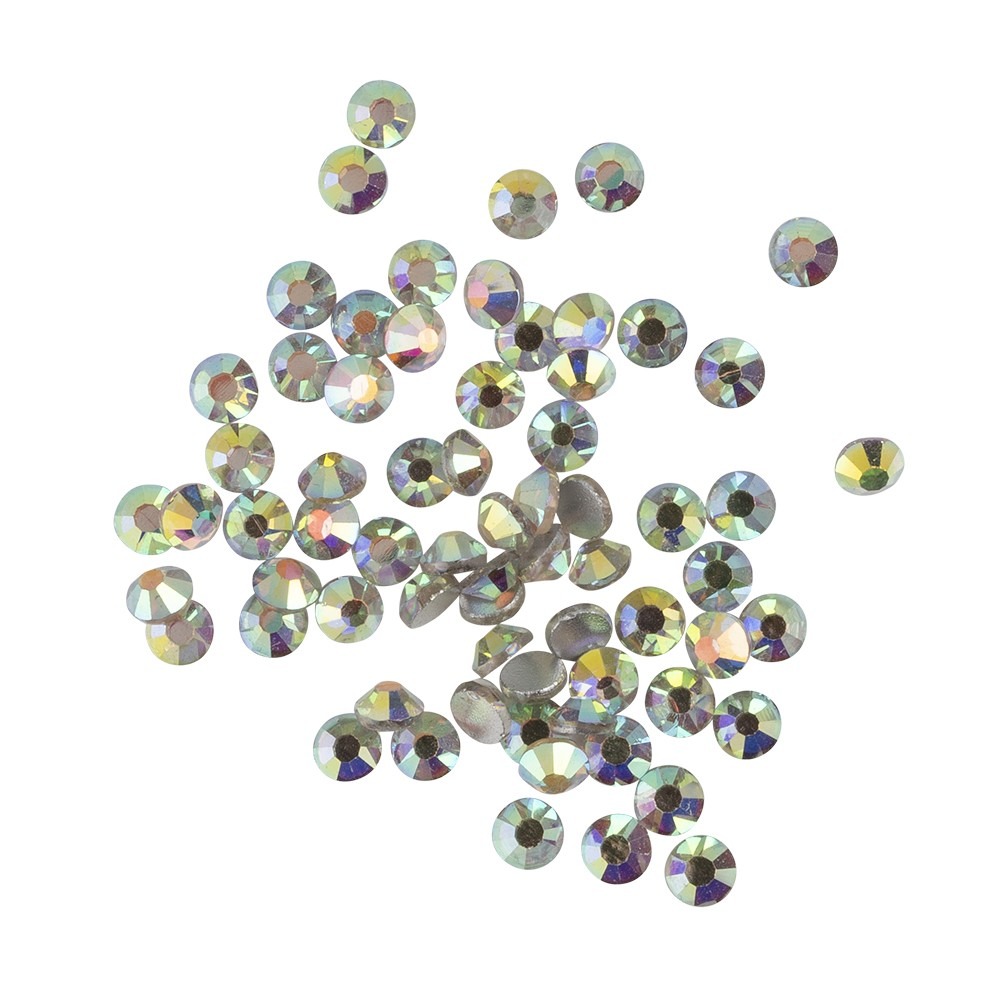
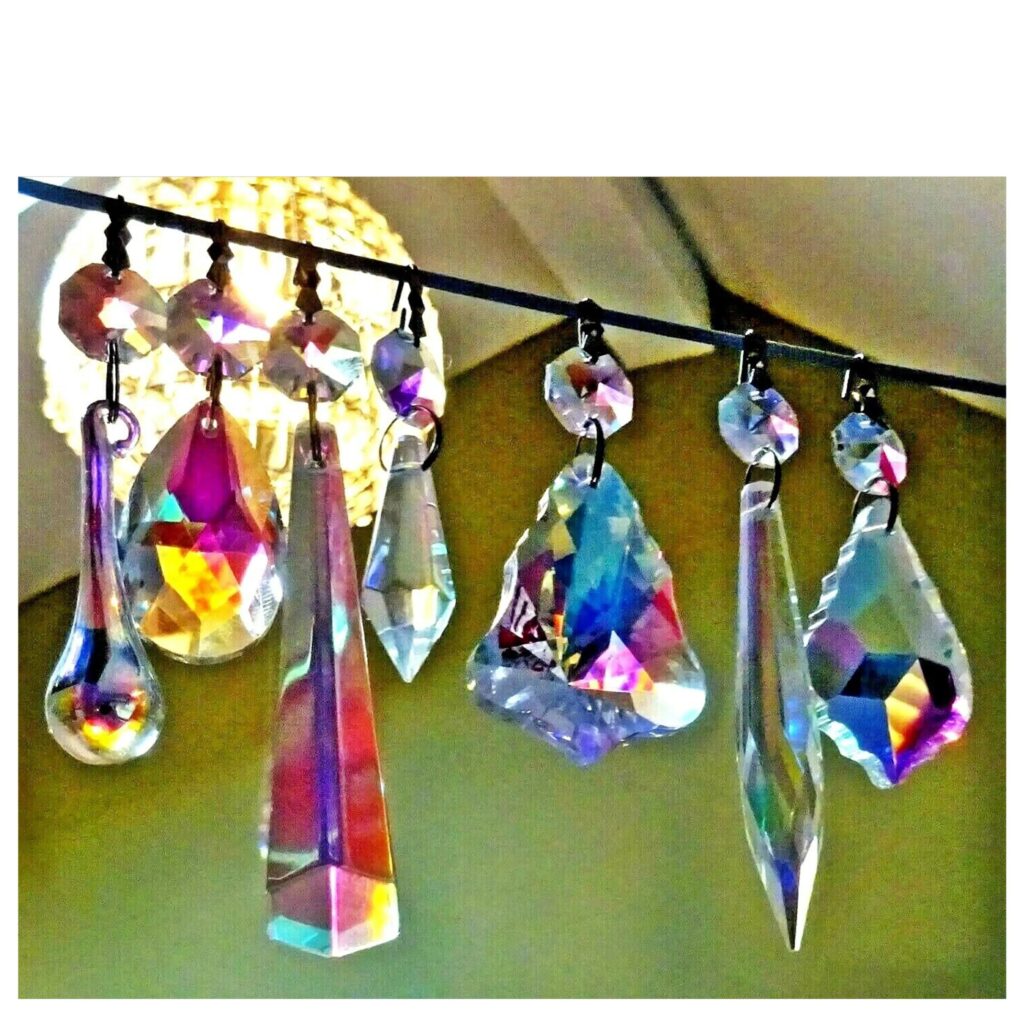
Aurora Borealis (AB) represents a transformative advancement in the aesthetics of costume jewelry, first introduced in the mid-1950s through a collaboration between Swarovski and Christian Dior. These stones are essentially high-quality glass rhinestones that have been treated with a specialized, ultra-thin vacuum-applied metallic film, typically composed of titanium or other metal oxides. This microscopic coating acts as a sophisticated interference filter that forces light to disperse into a vivid, multi-chromatic, and iridescent rainbow-like spectrum, reminiscent of the natural northern lights for which the effect is named. Unlike natural chatoyancy or opal’s internal play-of-color, the AB effect is a surface-dependent phenomenon. When viewed under various light sources, the coating causes the stone to shift color intensity and hue, reflecting flashes of blue, yellow, pink, and violet. In gemological terms, while the glass substrate remains inert and amorphous, the metallic coating is highly susceptible to wear, abrasion, and chemical damage over time. Under magnification, the thin-film layer is often visible on the surface facets, and any chipping or scratching of the stone will reveal the clear, colorless glass beneath the vibrant, shimmering exterior, a definitive diagnostic marker that separates these iconic mid-20th-century pieces from natural, intrinsically colored gemstones.
Goldstone (Aventurine Glass)
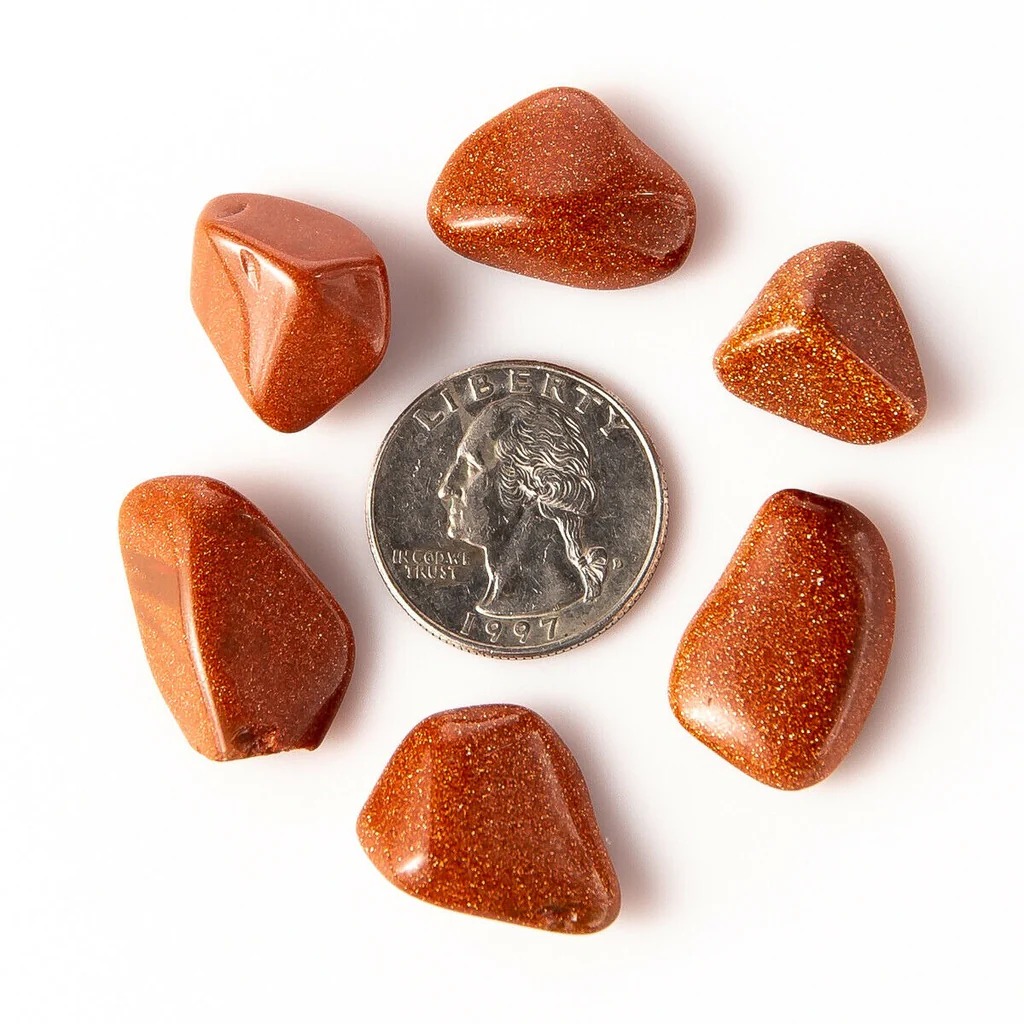
Goldstone, often referred to as aventurine glass, is a captivating man-made material characterized by its dense, glittery appearance. Contrary to its common misidentification as a natural mineral, it is actually a special type of glass that contains thousands of suspended, micron-sized metallic crystals. During the manufacturing process, the molten glass is carefully cooled in a reducing atmosphere, which allows copper compounds within the mixture to crystallize into tiny, reflective platelets. When light strikes these suspended crystals simultaneously, they act as a multitude of microscopic mirrors, creating a distinct, intense, and shimmering metallic effect often called “aventurescence.” While this effect is visually similar to natural aventurine quartz or sunstone, Goldstone is easily identified by its highly uniform, angular, and saturated crystal structure. Under microscopic examination, the crystals in Goldstone appear as sharp-edged, hexagonal, or triangular plates trapped within a clear or semi-opaque glass matrix, completely lacking the natural, disordered fibrous inclusions or the distinctive chatoyant “silk” found in genuine earth-mined stones. Its high density and consistent color—ranging from traditional copper-red to blue or green—further mark it as a quintessentially engineered glass simulant that has been cherished in ornamental jewelry for centuries.
Uranium & Vaseline Glas
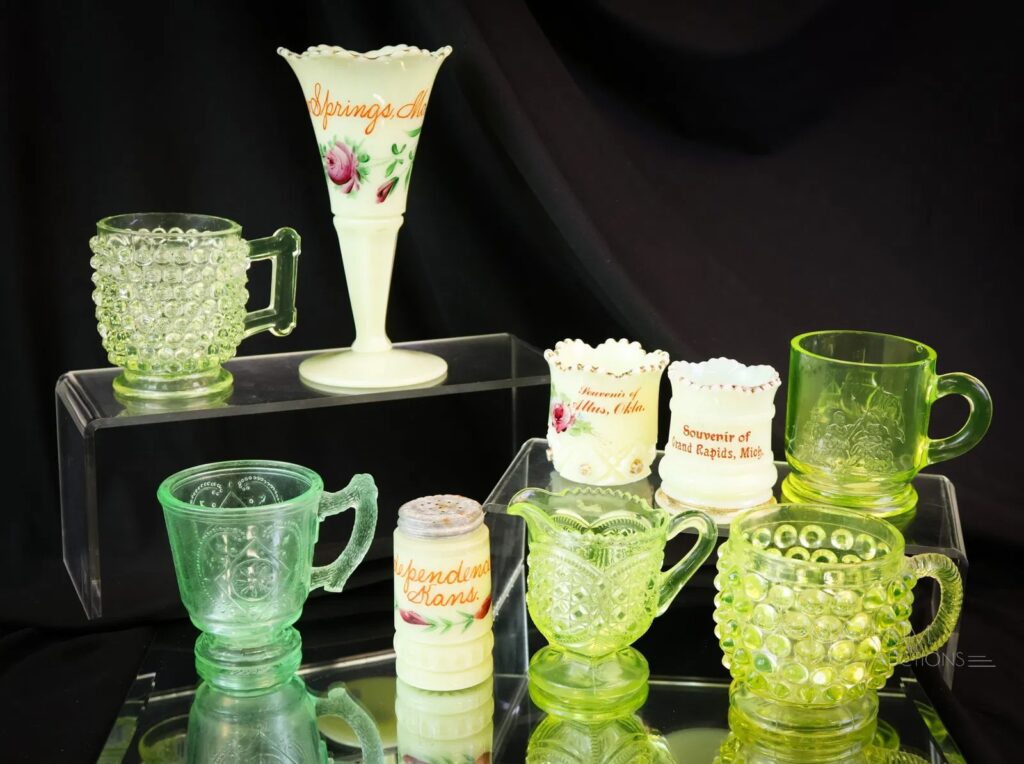
Uranium glass and its iconic subset, Vaseline glass, occupy a unique and historically fascinating niche in the world of glass technology and collectibles. Uranium glass is a specialized formulation that incorporates small amounts—typically 0.1% to 2%—of uranium oxide into the molten glass batch. This additive serves a dual purpose: it imbues the glass with a characteristic, often vibrant yellow-green hue, and, more significantly, it acts as a powerful activator, causing the material to fluoresce with a striking, vivid neon-green glow when exposed to short- or long-wave ultraviolet (UV) light. Vaseline glass represents a specific, highly coveted subset of this category, famously named during the late 19th century for its semi-translucent, pale yellow-green color, which bore a remarkable aesthetic resemblance to the appearance of petroleum jelly, or Vaseline, as it was commonly known at the time. From a gemological and forensic standpoint, the presence of uranium within the glass matrix makes its identification straightforward and definitive; the immediate, high-intensity fluorescence under a standard UV light source is a diagnostic property that no natural gemstone or non-uranium simulant can replicate. Despite its radioactive history, modern laboratory testing confirms that the level of radiation emitted by these glass pieces is typically negligible and poses minimal risk to collectors, though it remains a hallmark of antique production methods that highlight the experimental spirit of 19th and early 20th-century glass chemistry.
Faience
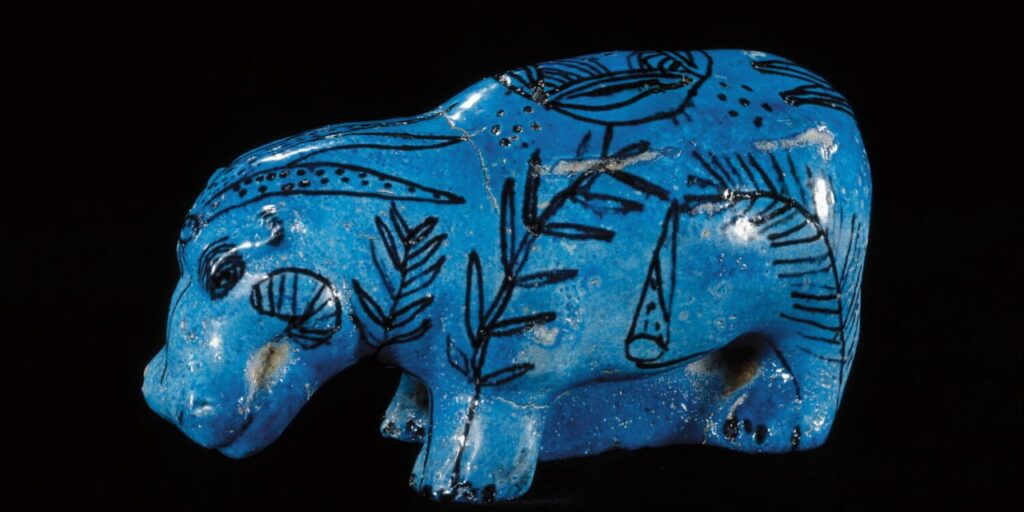
Faience is a historically significant, ancient glazed ceramic material that represents one of the earliest and most vital precursors to the development of sophisticated glass technology. Originating primarily in ancient Egypt and Mesopotamia, faience is not technically a true glass, but rather a sintered-quartz ceramic crafted from a core of finely crushed quartz or sand mixed with small amounts of lime and natron or plant ash. During the firing process at high temperatures, the alkaline salts migrate to the surface to form a vitreous, glassy layer, which often takes on a vibrant turquoise or blue hue due to the addition of copper minerals. This process is fundamentally related to glass technology because the chemical principles required to create the faience glaze—specifically the fusion of silica and alkali at high heat—are the same foundational processes that eventually allowed early artisans to move away from ceramic cores and develop true cast or core-formed glass. From an archaeological and material science perspective, faience bridges the gap between traditional pottery and true vitrified glass; while its core remains porous and granular, the development of its brilliant, self-glazing surface required an advanced understanding of thermal chemistry and fluxing agents. This mastery of silica-based fusion over 5,000 years ago laid the necessary groundwork for the evolution of all subsequent glassmaking traditions, including the decorative and optical varieties discussed throughout this series.
Slag Glass
Slag glass, a term originating from the industrial byproduct—or “slag”—found in metal smelting, is a distinctive, opaque material recognized by its complex, variegated appearance. In the glass industry, this effect is created by deliberately blending different batches of molten, colored glass to create swirling, marbled, or streaked patterns, which mimic the natural, irregular banding often found in opaque, earth-mined minerals like malachite, jasper, or agate. Because these streaks are created by the physical folding and mixing of molten glass, each piece of slag glass is effectively unique, possessing an organic, non-uniform aesthetic that is highly sought after for artisanal and statement jewelry. From a gemological perspective, while its visual appeal is intended to replicate the appearance of minerals, slag glass is easily distinguished by its vitreous luster, conchoidal fracture patterns, and overall lower hardness compared to natural silicates like agate or chalcedony. Under magnification, the interface between the different colored glass layers often reveals distinct flow lines or small, trapped air bubbles that underscore its man-made, molten origin, clearly separating it from the mineral growth zones found in genuine stones.
Victoria Stone
Victoria Stone, also known as Imori Stone, represents a pinnacle of mid-20th-century materials science, developed by the Japanese scientist Dr. S. Imori in the 1960s. Unlike standard glass, Victoria Stone is a highly sophisticated glass-ceramic composite engineered to replicate the intricate, multi-layered aesthetics of rare natural gems such as opal, jade, and star sapphire. The manufacturing process involves a complex, controlled crystallization sequence where specific chemical batches are melted and then subjected to carefully timed thermal cycles. This process induces the growth of microscopic, needle-like or plate-like crystal structures within a glassy matrix, which mimic the internal “phenomena” and mineral-like textures of high-end natural stones. The resulting material exhibits a unique combination of depth, translucency, and often a subtle, chatoyant or opalescent internal shimmer that is startlingly realistic. From a gemological perspective, Victoria Stone is distinguished from natural minerals by its uniform, albeit complex, internal distribution and its physical properties, which fall between those of traditional glass and true crystalline minerals. Under microscopic examination, it lacks the chaotic growth zones, natural inclusions, or genuine “play-of-color” patterns found in precious opal, often revealing instead a fine, web-like or cellular crystalline structure that is a definitive hallmark of its synthetic, lab-grown origins.
Sea Glass
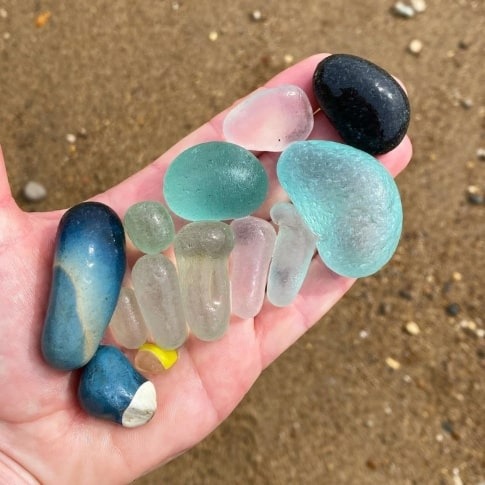
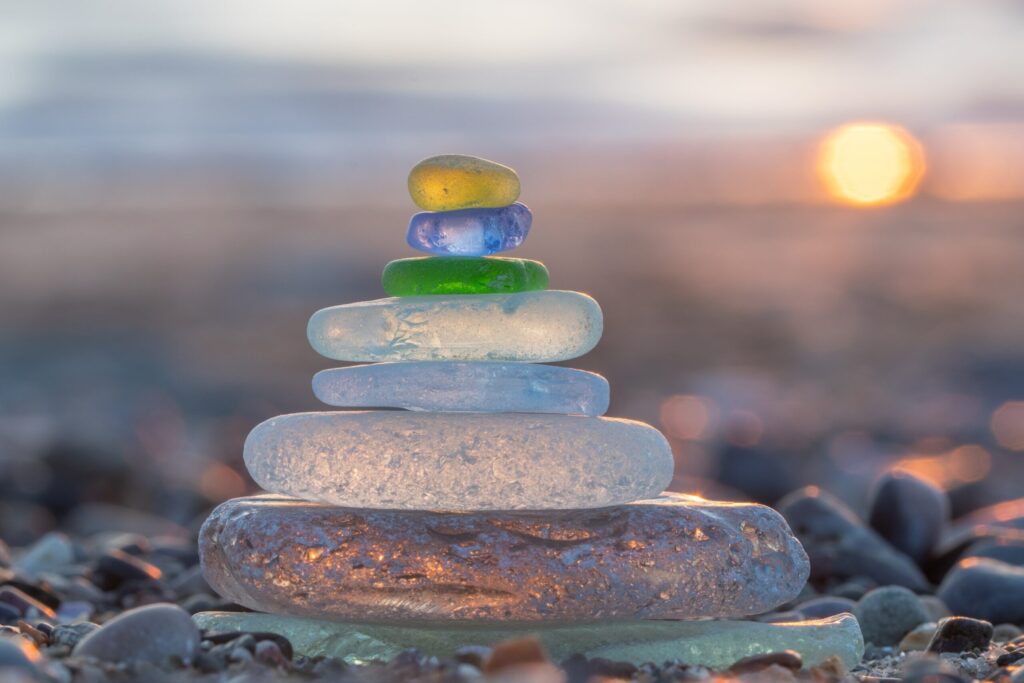
Sea glass is fundamentally distinct from the other varieties we have discussed, as it is not a purposefully engineered gemstone simulant but rather a product of environmental weathering. Often referred to as “ocean-tumbled glass,” this material originates from discarded bottles, tableware, or industrial glass debris that finds its way into the marine environment. Over the course of decades—or even centuries—the abrasive action of sand, salt, and tidal currents continuously tumbles these shards, gradually eroding their sharp, manufactured edges and producing a characteristic matte, “frosted” surface texture.
The aesthetic appeal of sea glass lies in its softened geometry and diffused, translucent appearance, which can mimic the muted tones of certain semi-precious stones. From a gemological and forensic perspective, the defining diagnostic features of authentic sea glass are its rounded, non-uniform edges and the unique, pitted surface pattern that results from long-term exposure to salt water and mechanical abrasion; these features are nearly impossible to replicate perfectly using modern rock tumblers or acid-etching techniques. While the chemical composition remains that of common soda-lime glass, the physical state of sea glass provides a fascinating record of human history filtered through the forces of nature, making it a unique category that sits between post-consumer waste and naturally modified ornamental material.
Cristinite™
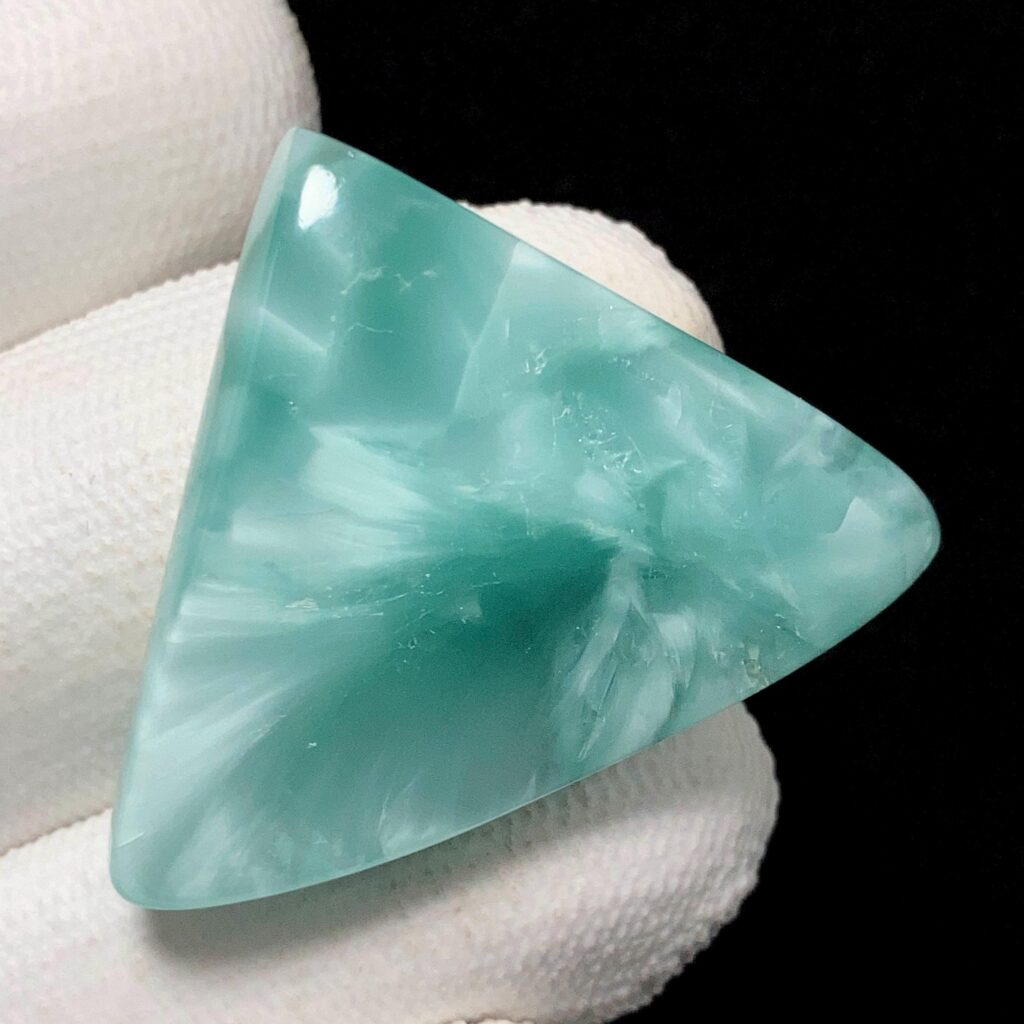
Cristinite™ represents a specialized class of proprietary materials engineered specifically to emulate the intricate textures, inclusions, and physical characteristics of natural gemstones. Unlike mass-produced glass or basic resin simulants, this material is formulated to replicate the specific optical depth and structural complexity often associated with high-quality minerals through a multi-staged manufacturing process that involves the controlled precipitation of crystal-like phases within an amorphous matrix. This technique allows for the precise imitation of features such as banding, particulate inclusions, or internal cloudiness that are hallmark traits of organic or mineral-grown stones. From a gemological standpoint, while Cristinite™ is designed to be highly realistic, it remains distinct from natural materials due to its controlled and repeatable synthetic nature. Under microscopic examination, rather than displaying the irregular, chaotic growth patterns or fluid-filled cavities characteristic of earth-mined gems, this material often reveals a highly uniform distribution of artificial inclusions or a signature synthetic matrix texture that confirms its laboratory-engineered composition. Its refractive index and dispersion are typically tuned to match specific target gemstones, making it a sophisticated, though non-natural, alternative for modern jewelry design.es.
Laserblue
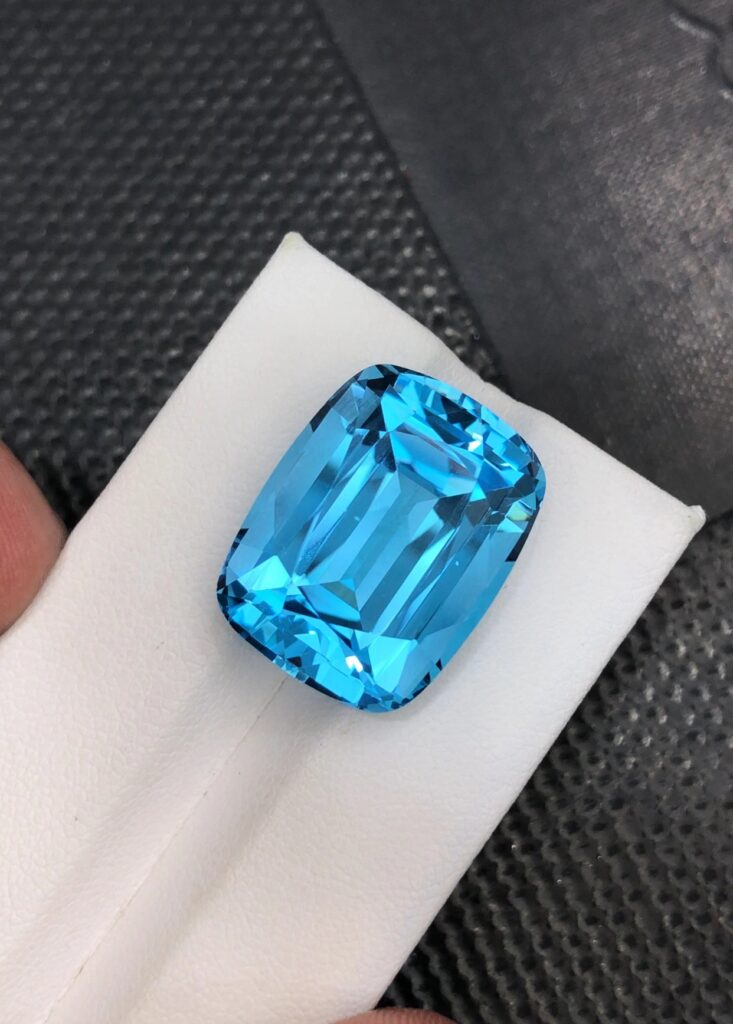
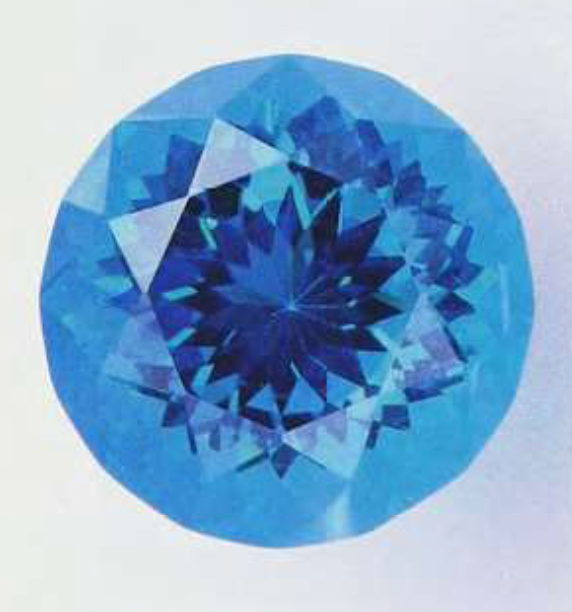
Laserblue is a modern, high-intensity variety of glass that has become popular in contemporary jewelry for its striking, vibrant, and highly saturated electric-blue hue. Unlike historical glass simulants which often relied on subtle mineral inclusions to achieve color, Laserblue is formulated using precise modern chemical additives—such as specialized cobalt and copper combinations—designed to produce an exceptionally consistent and brilliant spectral blue that mimics the appearance of high-end, heat-treated blue gemstones like neon apatite or certain treated sapphires. From a gemological perspective, the defining characteristic of Laserblue is its lack of internal “softness” or natural light-absorption patterns; it exhibits a high degree of transparency with very little light leakage, which gives it a sharp scintillation under focused light sources. Because it is a mass-produced, amorphous material, it is entirely isotropic, meaning it shows no pleochroism—a feature that immediately separates it from the natural gemstones it mimics. Under magnification, Laserblue is typically very clean, lacking the natural inclusions, silk, or growth planes found in minerals, and it may show minor, uniform manufacturing artifacts such as microscopic, perfectly spherical gas bubbles. Its primary utility lies in its affordability and its ability to provide a consistent, intense color palette that remains stable across large production runs of costume jewelry.
Milk Glass
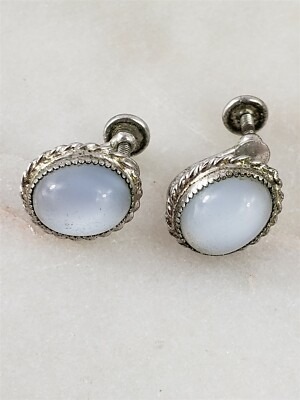
Milk glass is a distinctively opaque or semi-translucent material that gained widespread popularity for its ability to mimic the soft, ethereal appearance of natural minerals such as white jade, moonstone, or fine porcelain. Its characteristic milky-white color is achieved by adding specific opacifying agents—traditionally compounds like tin dioxide, arsenic, or bone ash—to the molten glass batch, which creates microscopic particles that cause light to scatter internally rather than passing through clearly. Depending on the concentration of these additives and the cooling rate during production, the material can range from a dense, porcelain-like opaque to a subtle, translucent “opalescent” finish. In jewelry and decorative arts, milk glass was highly prized for its smooth, uniform texture and its ability to be molded into intricate shapes, offering a durable and cost-effective aesthetic that rivaled more expensive, harder-to-carve gemstones. From a gemological standpoint, it is easily identified by its lack of natural crystal structure; under microscopic examination, it often reveals tiny, trapped gas bubbles or faint flow lines from the molding process, which are entirely absent in natural, earth-formed specimens. Because of its historical versatility and soft, diffused aesthetic, milk glass remains a hallmark of Victorian and mid-20th-century costume jewelry, serving as a quintessential example of how human-engineered glass has long been used to enhance the accessibility of high-fashion designs.
Man-made Obsidian/Vulcan Glass
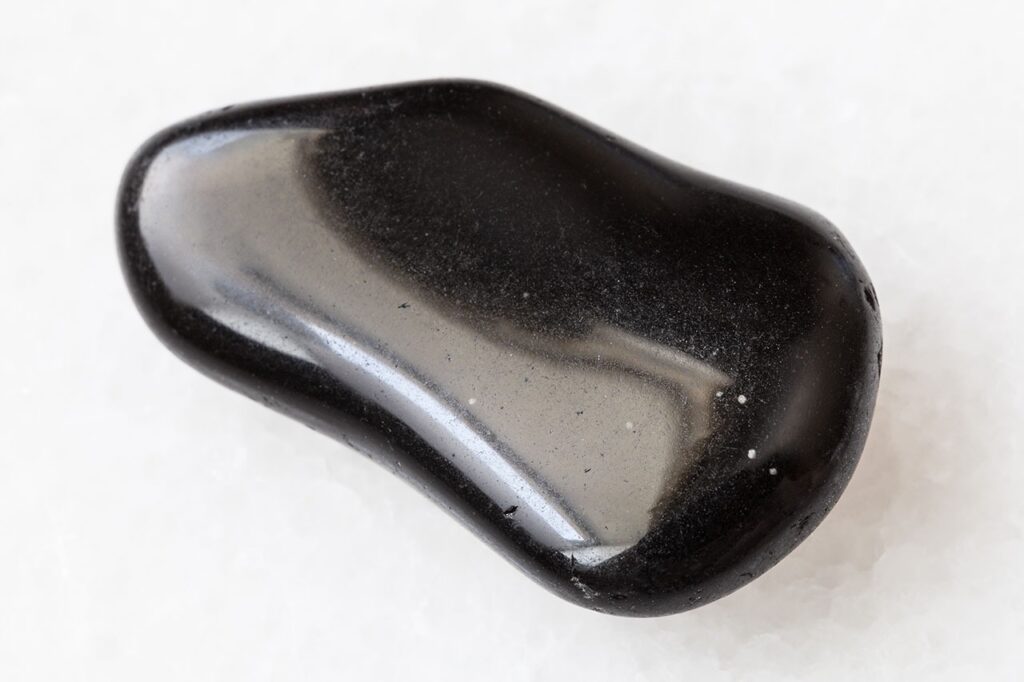
Man-made obsidian, often marketed under trade names like “Vulcan Glass,” is a dense, monochromatic black glass engineered to serve as a low-cost, durable alternative to natural onyx or obsidian. Unlike natural volcanic glass (obsidian), which forms through the rapid cooling of silica-rich lava and often contains subtle, microscopic flow patterns or “snowflake” inclusions, man-made obsidian is produced under highly controlled industrial conditions. This results in a product that is consistently homogenous, free from natural internal impurities, and exceptionally easy to cut and polish into consistent, uniform beads, cabochons, and facets. From a gemological perspective, while natural obsidian is technically a mineraloid with a conchoidal fracture, man-made varieties are typically categorized as amorphous glass. They can be definitively distinguished by their lack of natural inclusions and their uniform, “perfect” appearance; under microscopic examination, these glass products may reveal minute, spherical gas bubbles or distinctively unnatural, “swirly” flow lines from the molding process, which differ significantly from the natural, layered, or erratic growth structures found in earth-mined onyx or volcanic obsidian.
Verre de Soie (Silk Glass)
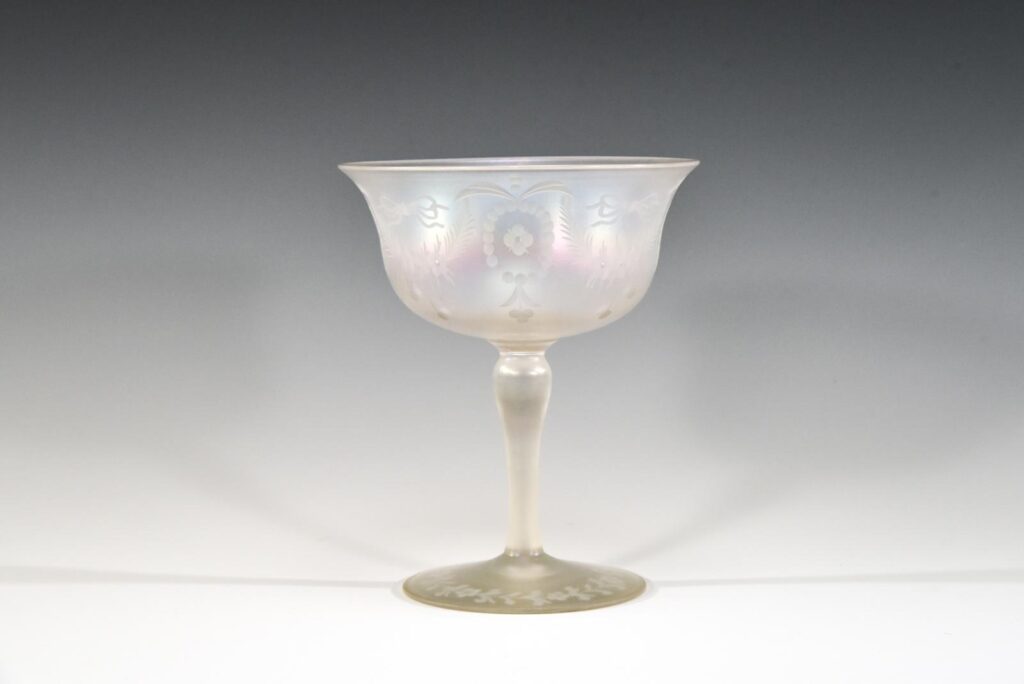
Verre de Soie, or “silk glass,” is an elegant, historically significant glass variety best known for its uniquely delicate, fibrous-looking surface texture. Developed in the late 19th and early 20th centuries by renowned glassmakers such as Tiffany Studios and Steuben, this material is distinguished by its subtle, satiny iridescence, which mimics the gentle, directional shimmer of woven silk. This effect is achieved through the application of metallic salts—typically stannous chloride—to the hot glass surface in a controlled, vapor-phase environment, creating an ultra-thin, microscopic layer that interacts with light to produce a soft, opalescent luster. From a gemological and forensic perspective, Verre de Soie is distinct from later, more aggressive “AB” (Aurora Borealis) coatings because its iridescence appears integrated into the glass’s surface rather than as a thick, applied film. Under microscopic examination, the surface often reveals fine, parallel striations or directional cooling marks that contribute to its fibrous aesthetic, clearly separating it from the smooth, high-gloss surfaces of standard synthetic glass or the deep, internal play-of-color seen in natural precious opal. Because it is highly fragile and prone to surface wear, genuine antique examples are prized by collectors for their ethereal, light-diffusing properties, serving as a masterclass in the technical artistry of early modern glass chemistry.
Beryllium Glass
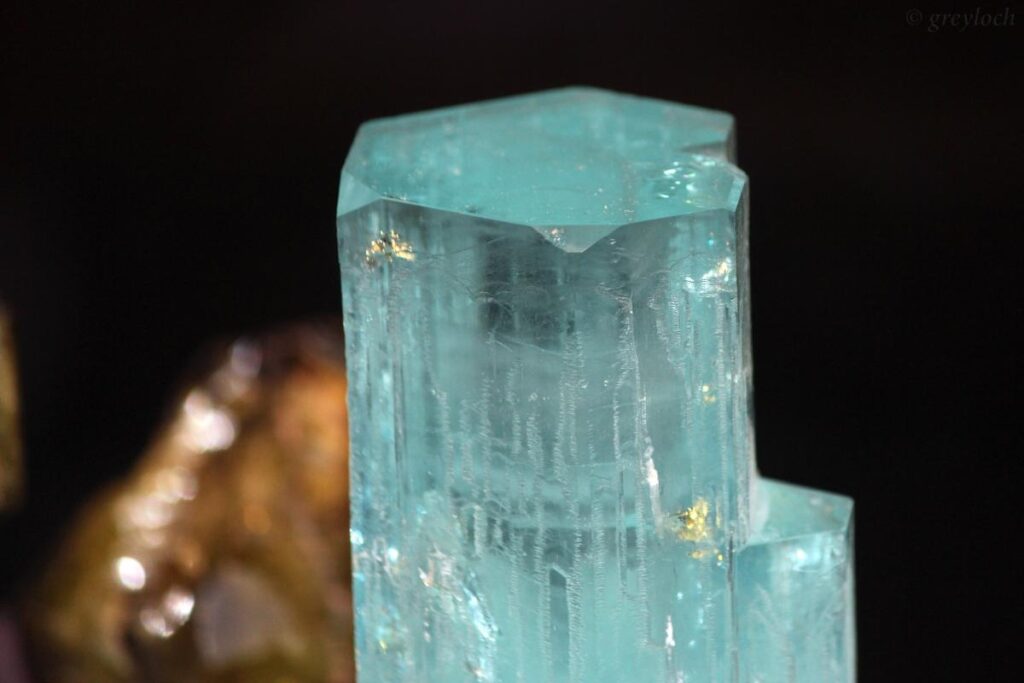
Beryllium glass is a highly specialized, technical glass formulation that incorporates beryllium oxide into its matrix to achieve exceptional optical and physical properties, specifically an unusually high refractive index coupled with relatively low density. This unique composition makes it an ideal choice for high-precision optical components such as lenses, prisms, and windows, while its inherent thermal stability and superior chemical resistance allow it to withstand harsh environments and intense radiation that would typically degrade standard soda-lime or borosilicate glass. From a materials science and gemological perspective, although Beryllium glass is an amorphous silicate, it is engineered to be significantly more durable and harder than most decorative glass simulants. Its high refractive index allows it to exhibit intense fire and scintillation when precision-cut, leading to its occasional use as a sophisticated, high-end simulant for colorless gemstones like sapphire or diamond. However, it remains definitively non-natural; under microscopic examination, it lacks the characteristic liquid-inclusion “fingerprints” or crystalline growth planes found in earth-mined minerals. Instead, it often displays a pristine, exceptionally clear internal appearance, sometimes marked only by tiny, perfectly spherical gas bubbles trapped during the vacuum-melting process—a stark contrast to the chaotic growth structures found in natural gems.
Diagnostic Criteria for Identifying Glass Gemstones
While glass is remarkably versatile and can be crafted to replicate the appearance of almost any natural gemstone, its physical and optical properties typically differ significantly from those of the natural minerals it may resemble. By utilizing a loupe, gemologists can identify many telltale signs of manufactured origins, such as internal inclusions like curved swirl marks and perfectly spherical gas bubbles—features that are rarely found in natural gems. Pieces that have been molded to appear faceted may also exhibit mold marks, rounded facet edges, and concave facets, which occur as the material shrinks during the cooling process. However, it is important to note that some glass varieties are professionally faceted rather than molded; consequently, these specimens would not necessarily display rounded edges or concave facets.
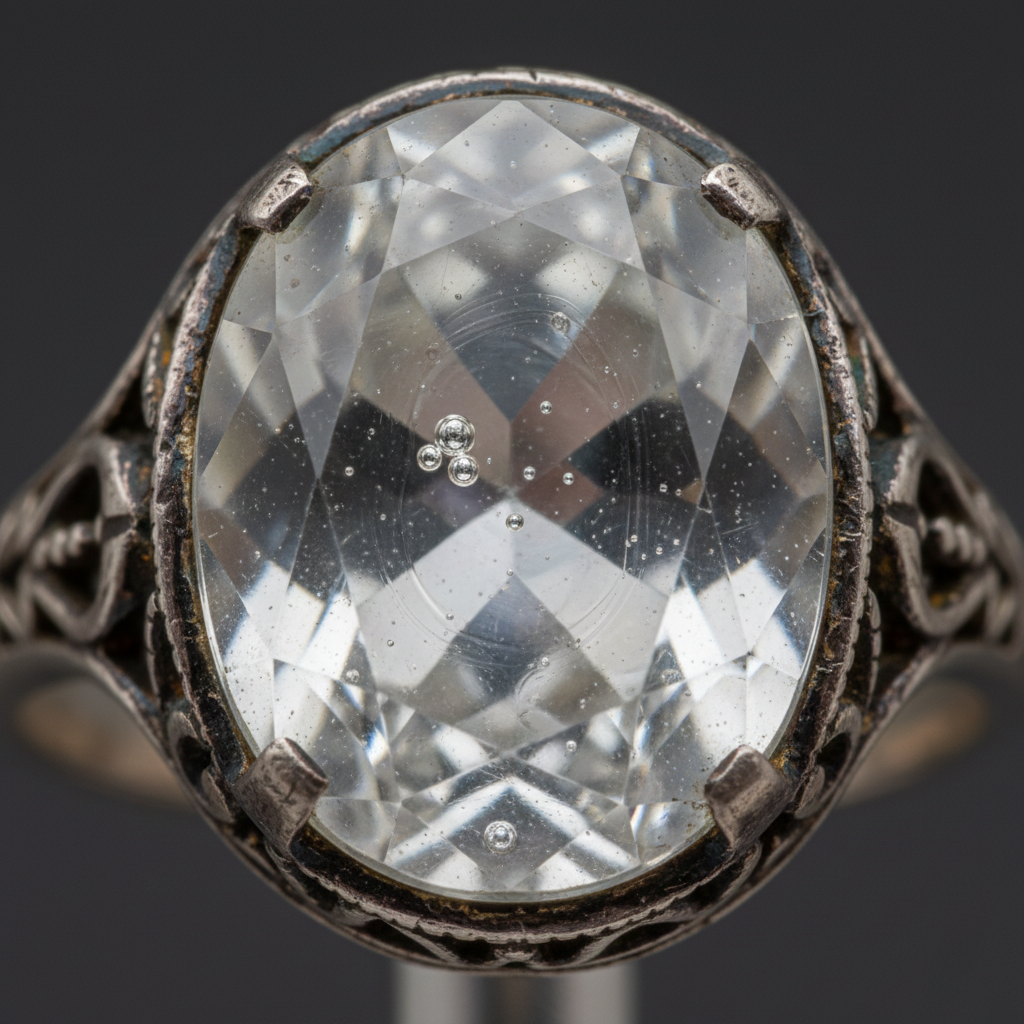
Beyond internal features, gemologists must also consider surface texture and physical behavior. Manufactured glass may sometimes show an uneven surface known as “orange peel,” though it is important to note that this effect can occasionally be seen on some natural gems as well. Furthermore, because amorphous glasses conduct heat much faster than crystalline materials, they will feel warm to the touch—significantly warmer than most of the natural stones they might resemble. While glasses are fundamentally singly refractive, they frequently exhibit anomalous double refraction (ADR), which requires careful interpretation during testing. The historical prevalence of such materials is well-documented, such as the “Novagems”—faceted glass gemstones that once adorned the 435-foot tall Tower of Jewels at the 1915 Panama Pacific International Exposition in San Francisco. These official souvenirs from the exposition remain a significant historical artifact, currently on display at the California State Capitol Museum.
Why is Lead Added to Glass Gemstones?
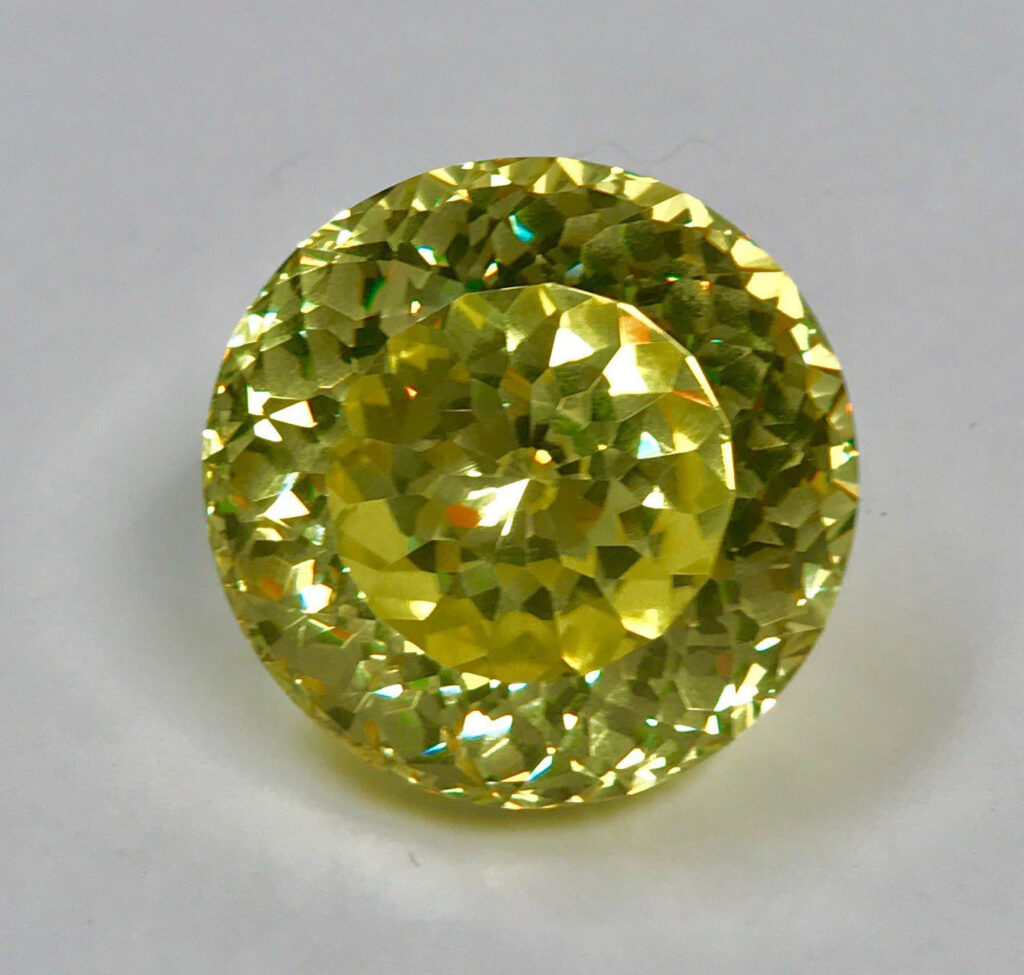
Lead oxide is frequently added to glass used in jewelry—a material commonly referred to as lead glass or crystal—to enhance its optical and physical properties. The addition of lead serves four primary functions: first, it increases the refractive index of the glass, which heightens its brilliance and sparkle, allowing it to more effectively mimic high-dispersion gemstones such as diamonds. Second, lead enhances the material’s dispersion, enabling it to separate white light into spectral colors more strongly, thereby increasing the “fire” seen in faceted stones. Third, the added weight provided by the lead density allows the glass to feel more substantial and similar to natural gemstones. Finally, lead improves the workability of the material by lowering the melting point, which makes it significantly easier for craftsmen to cut, polish, and shape the glass. Because of these distinct advantages, lead glass has historically been a preferred material for creating high-quality gemstone simulants.
Methods of Enhancing Glass Gemstones
To further refine their aesthetic appeal, glass gemstones can undergo a variety of enhancements that significantly alter their final appearance. One common treatment is the application of foil backing, where a reflective metal layer is placed behind the stone to dramatically increase its overall brightness. Manufacturers also employ surface coatings, utilizing thin metallic layers to generate iridescent or color-shifting optical effects. During the initial manufacturing process, glass is frequently dyed or colored with various metal oxides to achieve specific hues. Furthermore, makers may deliberately introduce internal inclusions, such as fibers or crystals, into the molten mixture to successfully imitate natural optical phenomena like chatoyancy or asterism.