
Deep within the abyss of the sapphire sea lies nature’s most prestigious “palette.” Coral, the gemstone hailed as the “Flower of the Ocean,” possesses neither the icy detachment of diamonds nor the ostentatious glitz of gold. Growing silently amidst the surging waves, it condenses the sheer vitality of the ocean into a texture as warm and mellow as jade. As an “organic gemstone” birthed from the deep, coral is far more than a mere ornament worn around the neck; it is a crimson legend, sculpted by the rhythmic hands of time and tide.
What Is Coral?
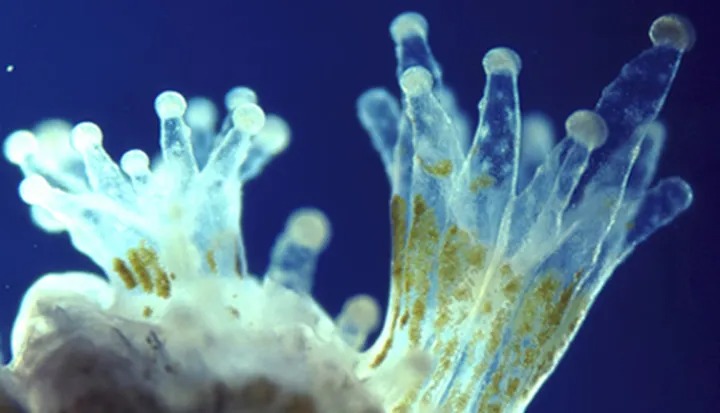
In the specialized field of gemology, coral is classified as an organic gemstone, a rare category of jewels birthed by biological life rather than geological pressure. Coral is the external skeleton of a tiny, plant-like marine animal called the coral polyp. Gem-quality coral primarily originates from precious marine species belonging to the genus Corallium, most notably Corallium rubrum. Unlike the porous, brittle corals found in shallow tropical reefs, these precious corals thrive in the dark, high-pressure depths of the Mediterranean and Pacific. These organisms are colonial polyps—tiny, soft-bodied creatures that act as master architects of the deep. To protect their delicate forms, they extract minerals from the surrounding seawater to secrete a dense, internal skeleton of calcium carbonate (CaCO3) in the form of calcite.
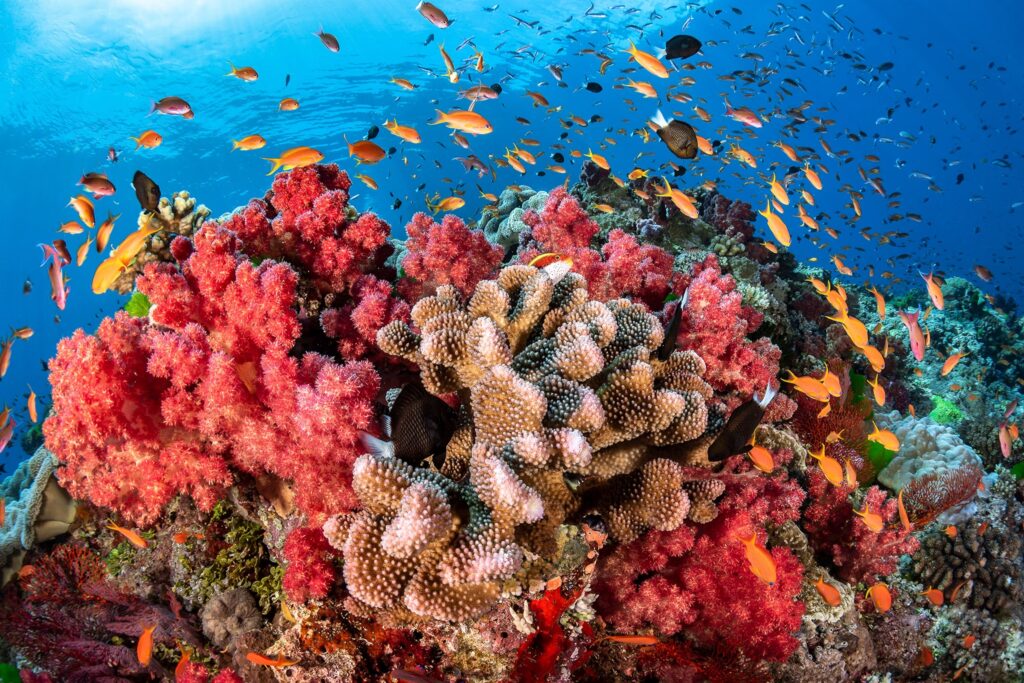
The structures that result from generations of these creatures growing as colonies on top of each other can be quite massive, building rigid, branching skeletons over decades or even centuries. The slow growth rate—sometimes as little as 1mm per year—is what grants the material its remarkable density and fine-grained texture. Since time immemorial, coral has been used for carvings, cabochons, and other jewelry pieces. Once harvested, the dull, outer skin is removed to reveal a core that, when expertly cut and polished, transforms from skeletal remains into a gemstone with a vitreous, mirror-like luster. From the fiery crimson of Sardegna to the ethereal Angel Skin pink, these polished skeletons are the very living gemstones that have graced royal treasuries for millennia.
From Polyp to Reef: The Journey of Growth
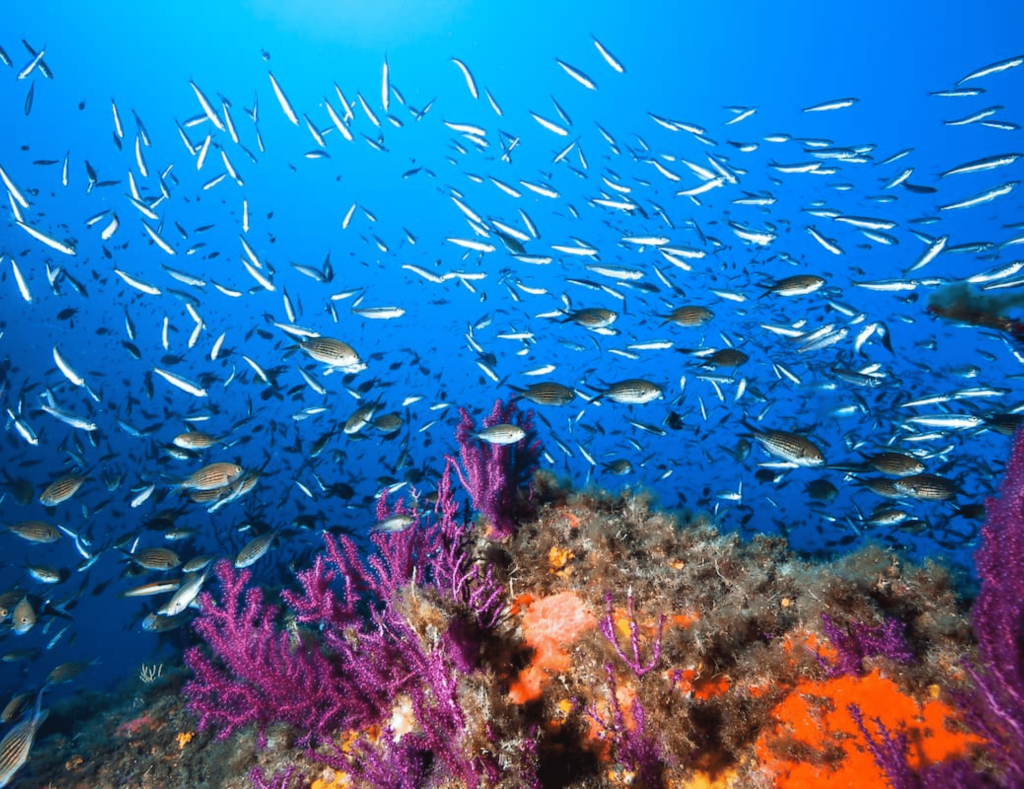
The journey begins with the coral polyp, a tiny, soft-bodied marine animal that resembles a miniature sea anemone. Despite its delicate appearance, the polyp is a master architect. These organisms are colonial, meaning they live in massive groups where individuals are interconnected by living tissue. To protect their vulnerable bodies, polyps extract calcium and carbonate ions from the surrounding seawater to secrete a hard internal skeleton of calcium carbonate (CaCO3) in the form of calcite.
As generations of these creatures grow as colonies on top of each other, the process unfolds in stages:
- Foundation: A single polyp or a small group attaches itself to a hard surface on the seabed, such as a rock or an existing skeletal structure.
- Secretion and Stacking: Each polyp secretes its own cup-like skeleton (a calyx). When the polyp dies, its rigid skeleton remains, serving as a foundation for the next generation to grow directly on top.
- Expansion: Over decades and centuries, these stacked skeletons build rigid, branching structures that resemble miniature, leafless trees. Because the growth rate is incredibly slow—sometimes as little as 1mm per year in diameter—it takes thousands of years for these colonies to reach significant sizes.
- Reef Formation: Eventually, these massive colonial structures merge with other colonies. The resulting structures can become quite massive, forming the sprawling, complex ecosystems we recognize as coral reefs.
This transition from a singular, “plant-like” marine animal to a colossal limestone monument creates the “Living Gemstone” that has been used since time immemorial for carvings, cabochons, and jewelry.
The Color Standards of Precious Coral
The trade names for calcareous coral form a specialized vocabulary that identifies quality, color, and origin in the gemstone market. At the top of the color intensity scale, terms like ox blood, arciscuro, and carbonetto are used to describe the darkest red shades, while rosso scuro and rosso represent standard dark red and red varieties. The delicate pink category is particularly diverse, featuring the highly prized angel skin—also known by the Italian name pelle d’angelo—alongside rosa pallido, salmon, and rosa vivo, which signifies a medium pink tone. Geographically, sardinian coral is renowned for its high quality and extreme hardness, whereas algerian and sicilian corals are generally categorized as lower quality. From the Pacific, Japanese coral is noted for its pink hue and distinctive white center, with specific grades such as moro for high-quality purplish red and tosa for average quality. Other notable international varieties include the white bianco, the good-quality white or pink Italian coral, akori from Cameroon, and the African star from South Africa, which is unique for its spectrum ranging from red and pink to violet and yellow-orange.
Aka (Oxblood Red): Regarded as the pinnacle of coral colors, Aka (the Japanese word for red) describes a very dark, intense crimson often referred to as oxblood. It typically possesses a slight translucency and a glass-like luster, often featuring a distinct white “soul” or center in its raw state.
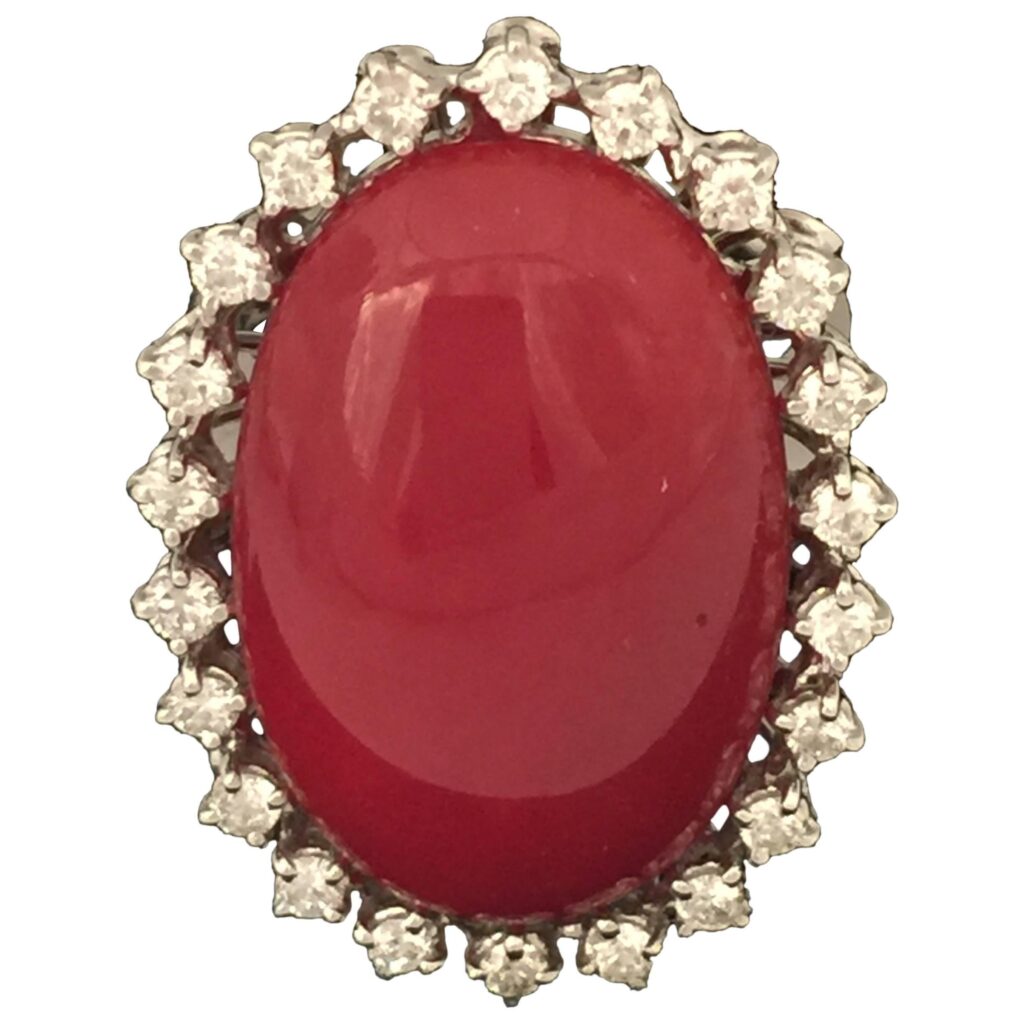
Sardegna (Sardinian Red): Named after the Mediterranean island, this is the standard for “true red” coral. It is characterized by a vibrant, uniform saturation without a white core, making it highly desirable for spherical beads and symmetrical jewelry.
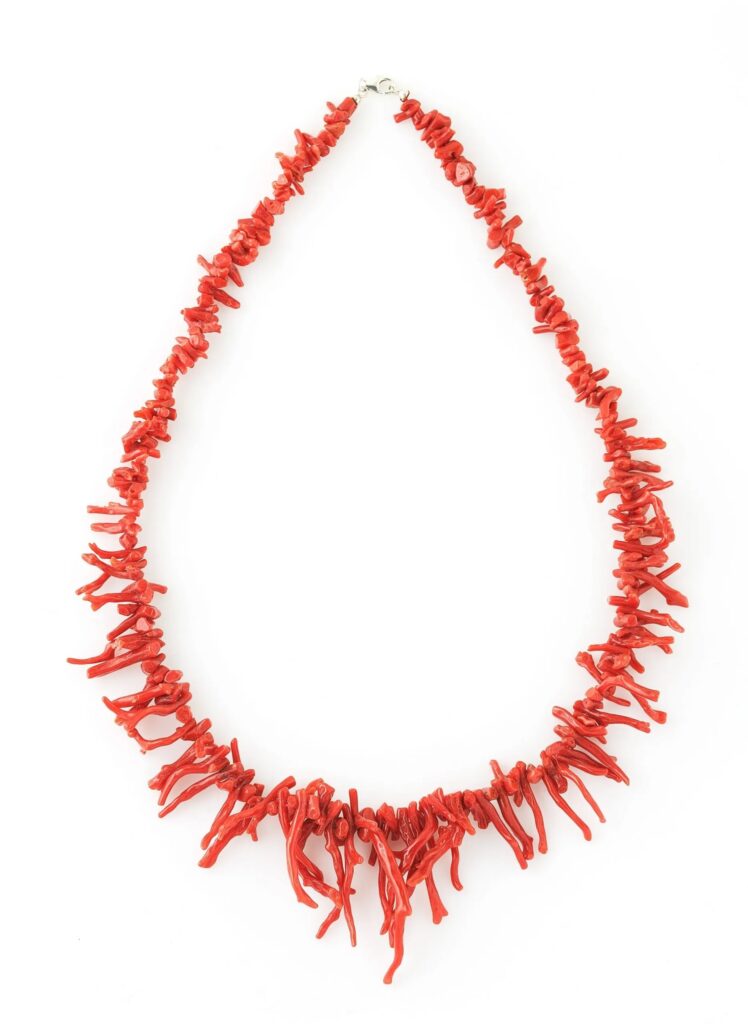
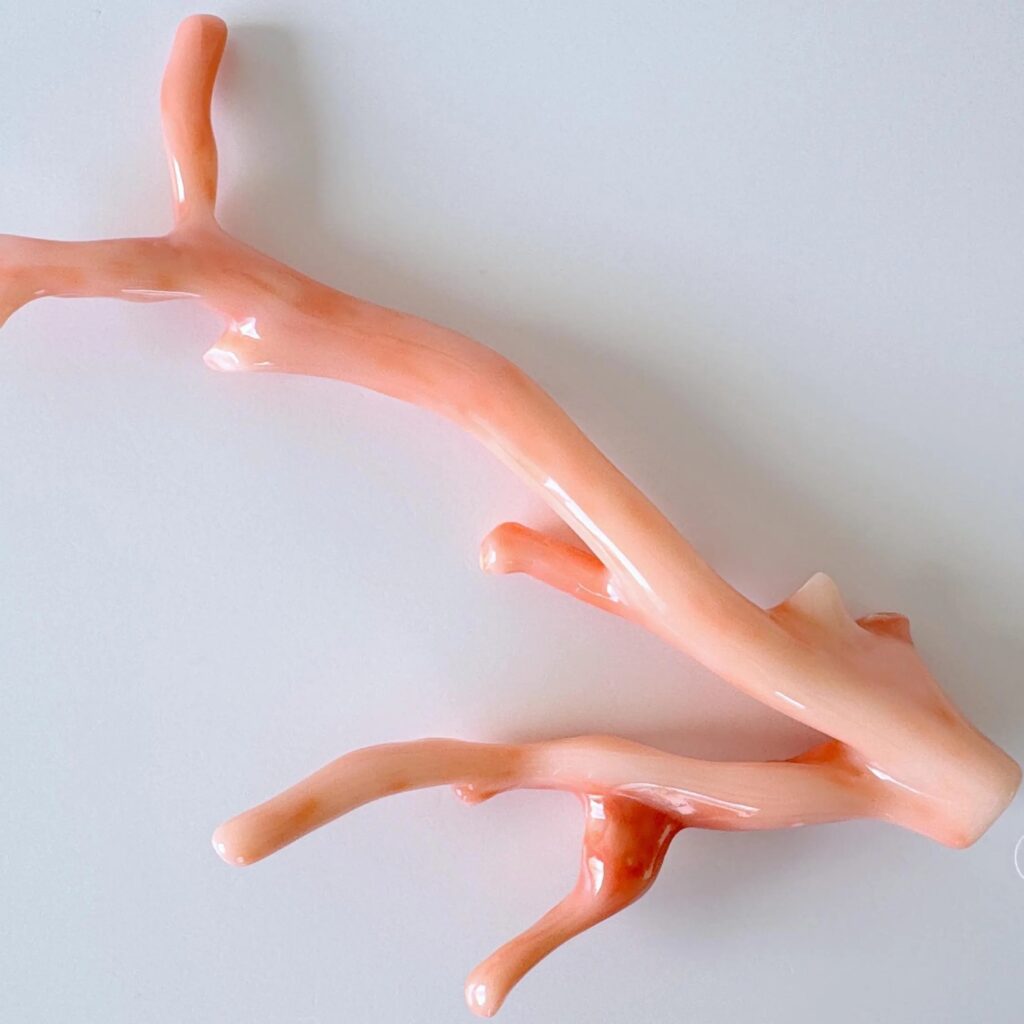
Momo (Peach and Salmon): This category covers a broad range of warm tones, from rich orange-reds to soft peach hues. Momo coral is often found in larger sizes, making it the preferred choice for intricate carvings and large cabochons.
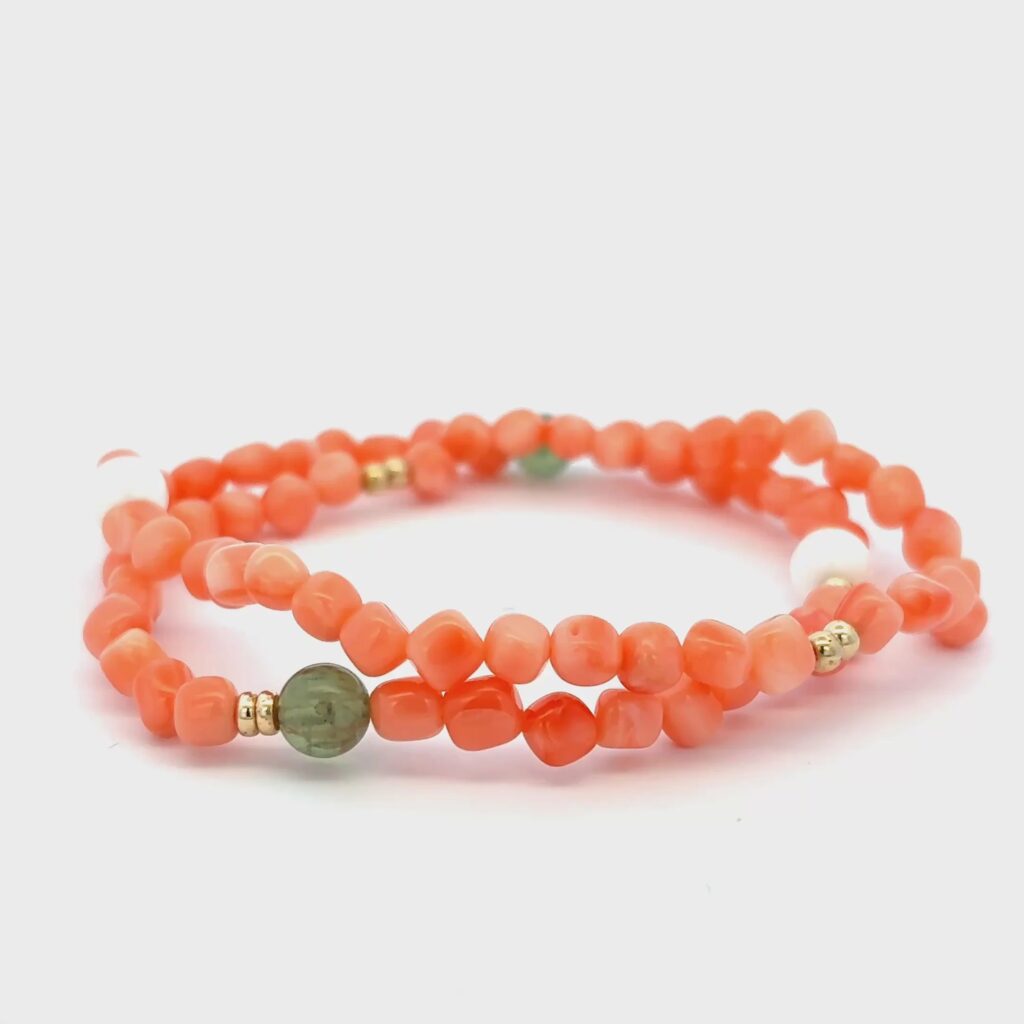
Angel Skin (Pelle d’Angelo): One of the rarest and most sought-after varieties, Angel Skin coral is an extremely pale, uniform pink. It is prized for its delicate, fleshy tone that resembles the legendary complexion of an angel, possessing a soft, ethereal glow.
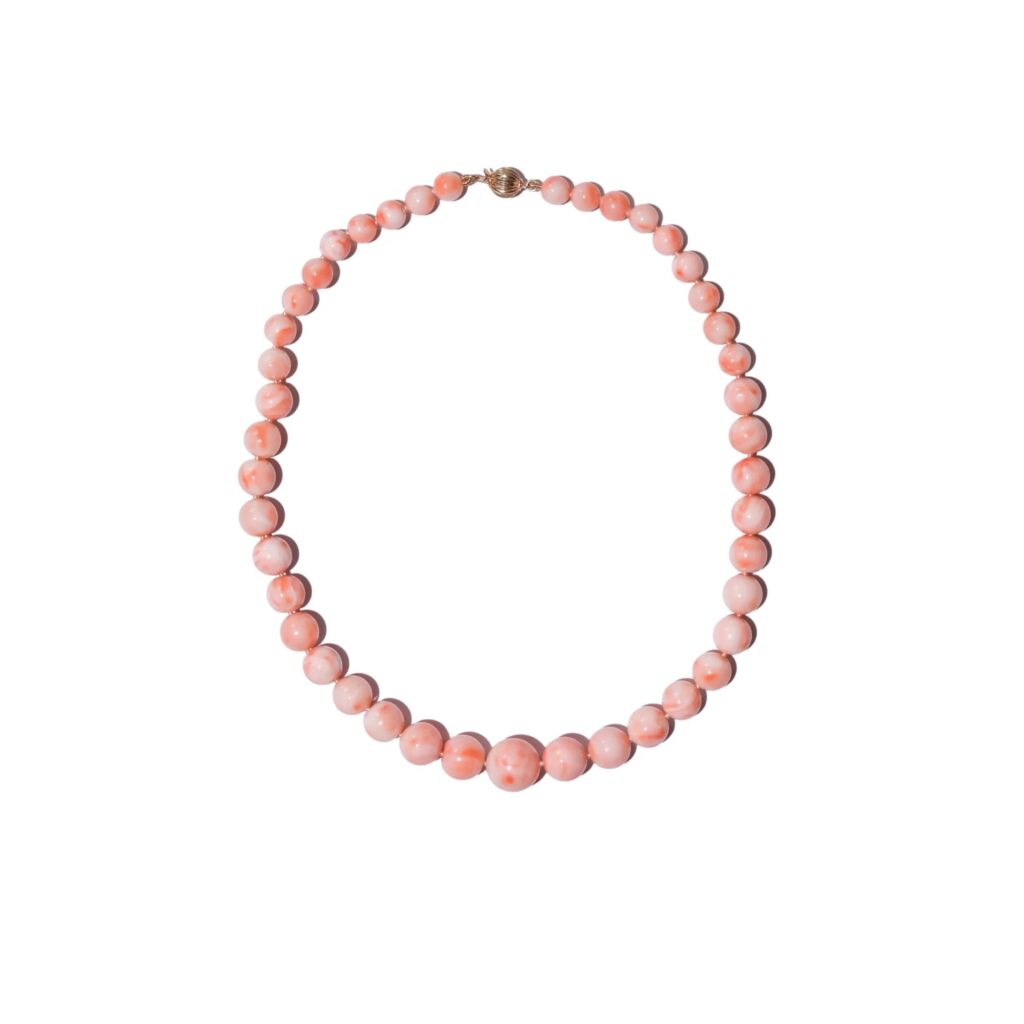
Deep Sea Pink: This variety typically features a white base marbled with pink veins or spots. As the name suggests, it is harvested from much deeper waters than Mediterranean varieties, resulting in a unique, variegated appearance.
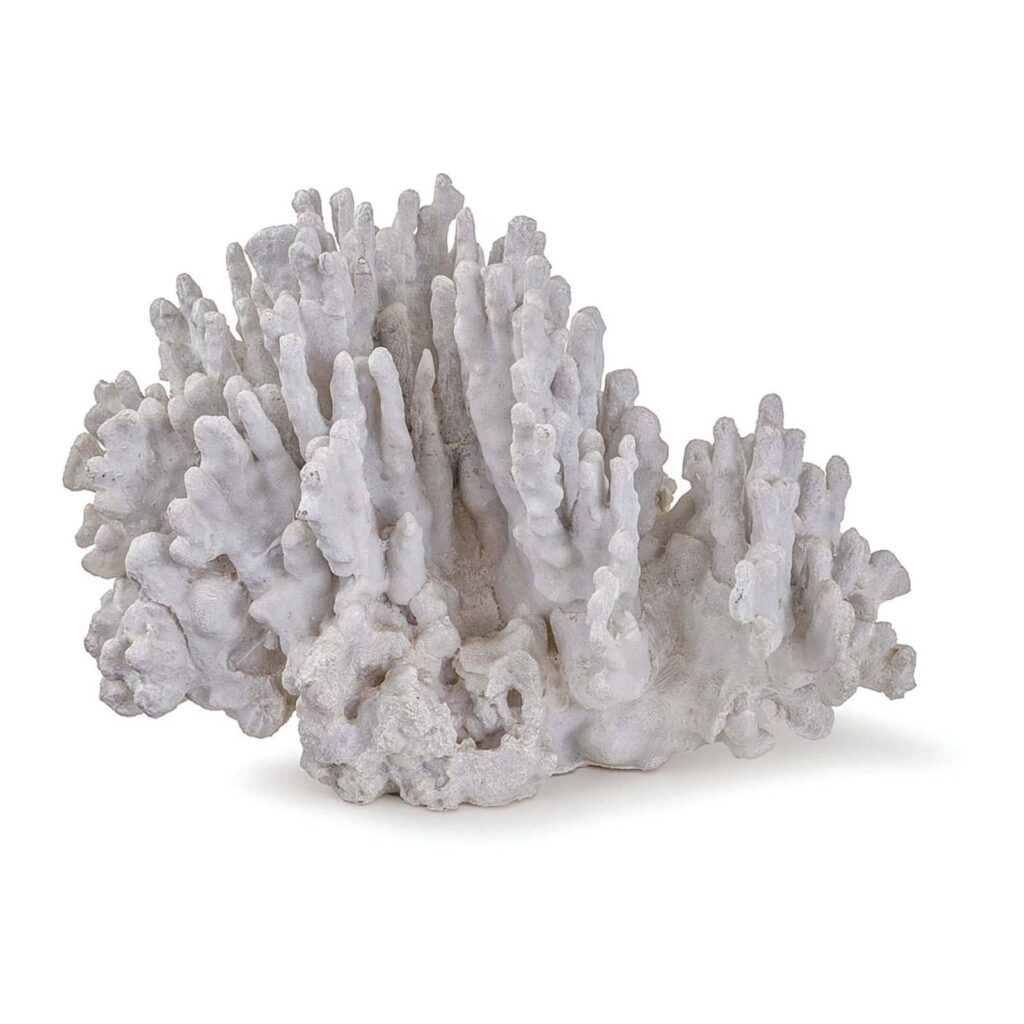
White (Bianco): Pure white coral is devoid of any red or pink pigments. While less common in high-end jewelry than its red counterparts, it is highly valued in specific artistic traditions for its clean, ivory-like aesthetic.
Black and Gold Coral: Unlike the calcium-based corals mentioned above, black and gold varieties are organic, horn-like corals. Black coral is recognized by its dense, jet-black color, while gold coral is famous for its natural metallic sheen and yellowish-brown luster.
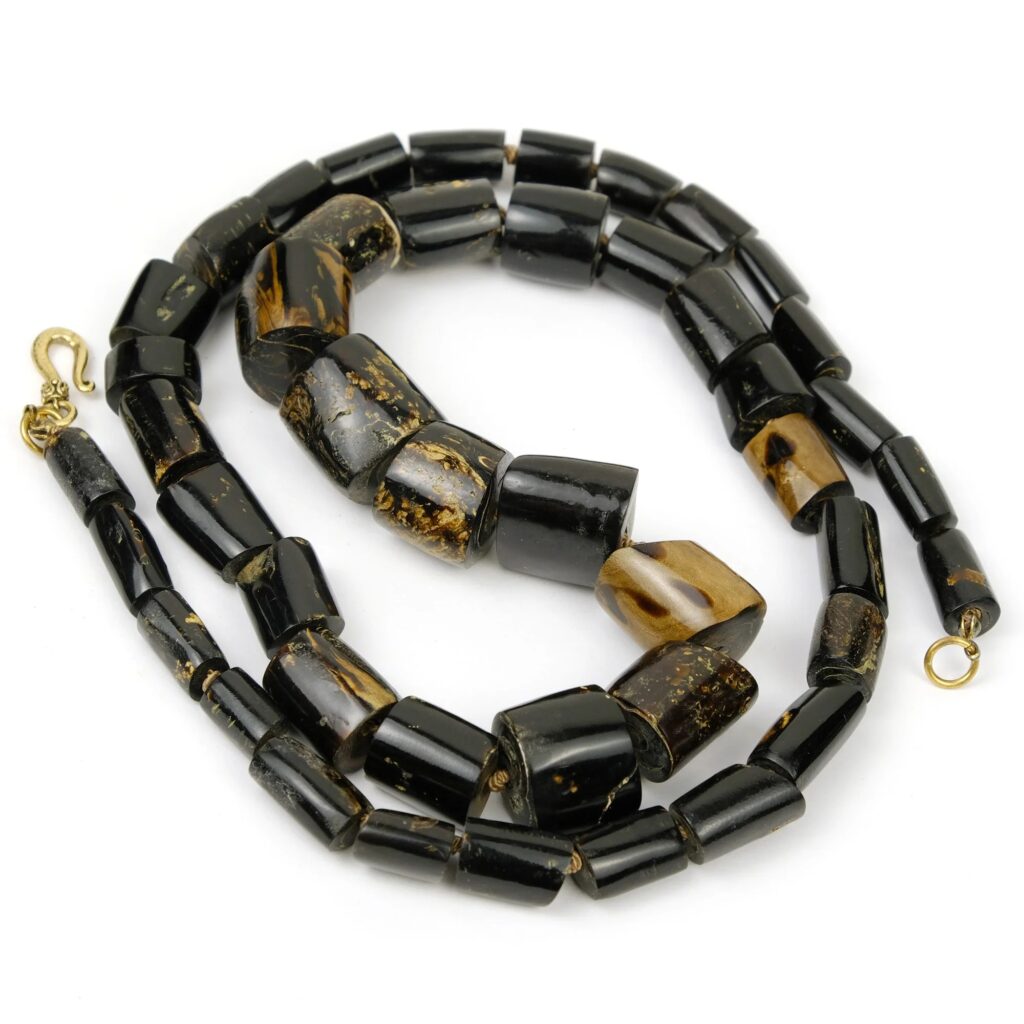
The market value of precious coral varies significantly based on variety, color intensity, and size, with prices ranging from modest sums to thousands of dollars per carat. Aka (Oxblood Red) coral stands at the pinnacle of the market, where high-clarity, large-diameter beads can command several thousand dollars per gram due to their intense crimson hue and glass-like luster. Sardegna (Sardinian Red) and Angel Skin (Pelle d’Angelo) represent the high-end jewelry tier; while Sardegna is the standard for vibrant, uniform red beads often valued in the thousands for high-quality strands, the rare, ethereal pink Angel Skin varieties can achieve prices comparable to mid-to-high-grade rubies at auction. Beyond color, the sheer volume of the material plays a critical role, as the slow growth rate of roughly 1mm per year makes large, intact branches or masterfully carved statues exponentially more valuable than smaller fragments.
Primary Sources of Precious Coral
- The Mediterranean Sea: This is the most historic source of precious coral, particularly around the coasts of Italy (Sardinia), Algeria, and Tunisia. It is the primary producer of the “Sardegna” variety, known for its uniform, intense red color and lack of a white pith.
- The Pacific Ocean (Japan and Taiwan): The waters surrounding Japan and Midway Island are world-famous for producing “Aka” (Oxblood) and “Momo” corals. These Pacific varieties typically grow at much greater depths than Mediterranean species and are characterized by their larger size and the presence of a white “soul” or center in the branches.
- The Hawaiian Islands: Hawaii is a significant source of “Gold Coral” and “Black Coral.” Unlike the calcium-carbonate based red corals, these are organic-rich species that thrive in the deep currents of the Pacific archipelago.
- The South China Sea: This region has historically been a source for various shades of pink and “Momo” corals, contributing significantly to the traditional coral carving industries in East Asia.
Synthetic Corals and Identification
In the realm of synthetic and imitation materials, the most notable development occurred in the 1970s when Pierre Gilson created “created corals” as a conservation effort to protect natural varieties from destructive harvesting practices. These lab-grown imitations, typically available in red and pink hues, possess a specific gravity of 2.44, which is consistently lower than that of their natural counterparts. From a gemological standpoint, this synthetic material exhibits weak birefringence and lacks the organic growth structures found in genuine coral. When viewed under high magnification, the material reveals a distinctively fine granular texture rather than the parallel striations seen in nature. Beyond these sophisticated lab creations, common plastic imitations also exist in the market; these can be identified through specialized methods such as hot point testing or acid testing. However, because these tests can be destructive or hazardous, they should only be conducted by trained professionals.
Conservation and Sustainability
The preservation of coral is a critical global priority as these living gemstones face unprecedented threats from climate change, ocean acidification, and historical over-harvesting. Because precious coral grows at an exceptionally slow rate—often as little as 1mm per year—reefs can take centuries to recover from physical damage or intensive collection. Modern conservation efforts focus on strictly regulating the international trade of coral species through CITES (Convention on International Trade in Endangered Species of Wild Fauna and Flora) to ensure that harvesting remains sustainable and traceable. Beyond legal protections, the jewelry industry is increasingly turning to ethical sourcing and the use of “created corals” to alleviate pressure on wild marine ecosystems. Protecting these vibrant “flowers of the ocean” is not merely about preserving a luxury material; it is about safeguarding the biodiversity of the deep-sea habitats that rely on these ancient, skeletal structures to thrive.