
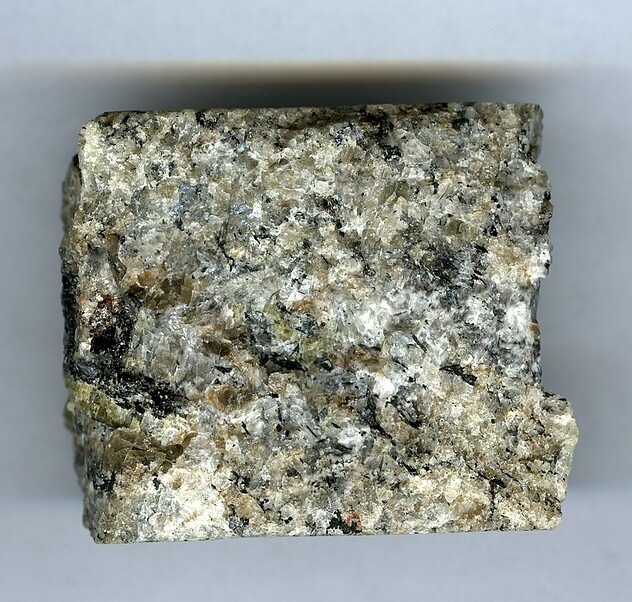
Canasite is a rare silicate mineral primarily found in highly alkaline igneous environments. It is characterized by its distinct purple to violet coloration, which can range from pale lavender to deep, saturated hues. While it shares a similar color profile with minerals like Amethyst, Canasite is distinguished by its unique chemical composition and geological origin. It is most famously associated with the Khibiny and Lovozero massifs on Russia’s Kola Peninsula, though it has been documented in a few other specialized locations worldwide, such as Namibia. The name “Canasite” is a literal reflection of its primary chemical building blocks: Calcium, Natrium (Sodium), and Silicon. Structurally, it often forms as fibrous or prismatic aggregates, which contribute to its characteristic vitreous to pearly luster.
Origin and Discovery
The primary source for gem-quality canasite is a specific geological region in Russia. The mineral was first identified during the 1970s within the Murun Massif, located in eastern Siberia. This remote area is recognized by geologists for its complex alkaline igneous formations, which favor the crystallization of rare silicate minerals.
The Murun complex is also the type locality for charoite, an ornamental stone characterized by its distinct purple coloration and swirled texture. Due to the specific geochemistry required for their formation, canasite is occasionally found in association with charoite within the same alkaline host rocks.
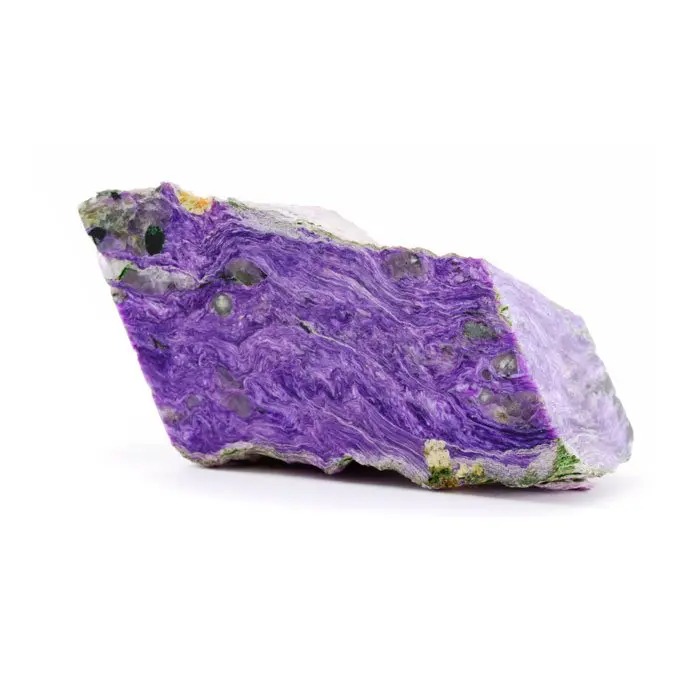
The accessibility of these deposits is constrained by both the remote geographical location and the technical challenges associated with extracting mineral specimens from the host rock without inducing fracturing. Consequently, the limited output of gem-quality material has maintained the scarcity of canasite in the mineral market. Verified occurrences of canasite outside of this Siberian region are geographically isolated, reinforcing its status as a specialized specimen for mineralogical collections.
Classification within the Canasite Group
In systematic mineralogy, “canasite” is not merely a single mineral species, but the namesake of a distinct mineral group. Due to variations in chemical composition—specifically the proportions of fluorine and hydroxyl groups—and shifts in crystal symmetry, the International Mineralogical Association (IMA) recognizes three separate but closely related species within this group.
1. Canasite
Canasite is the foundational species of the group, crystallizing in the monoclinic system. Its structural framework consists of a complex silicate chain integrated with calcium, sodium, and potassium, incorporating both fluorine and hydroxyl groups. It is characteristically found in highly alkaline igneous environments, typically appearing as purple to violet fibrous or prismatic aggregates.

2. Fluorcanasite
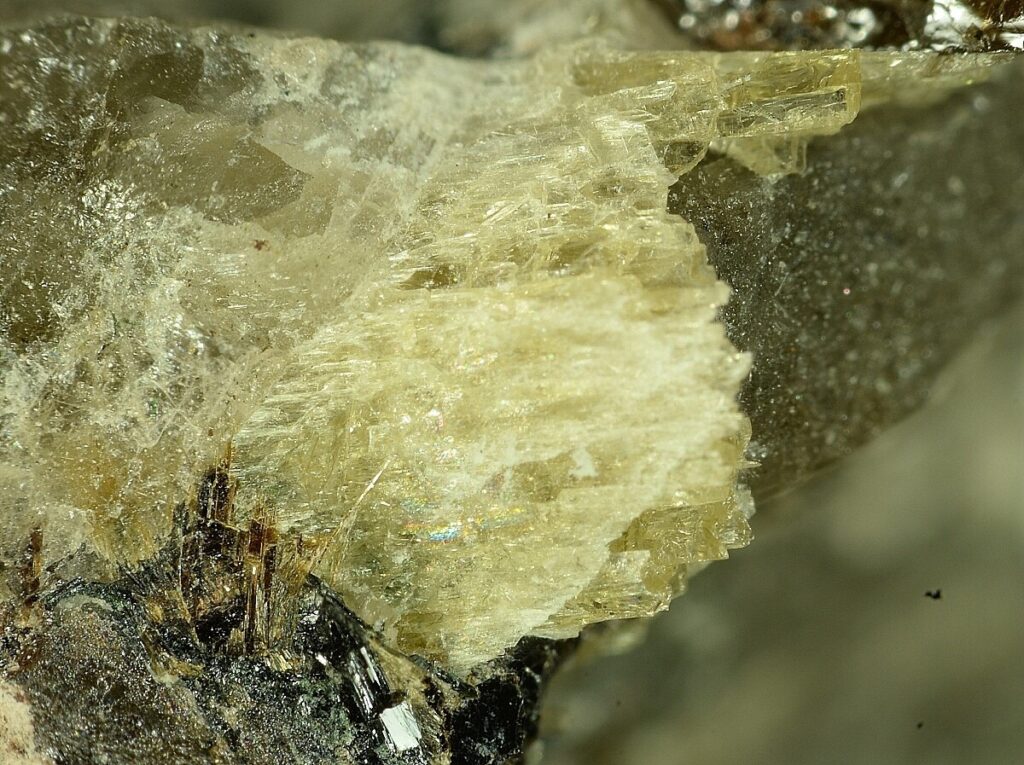
First reported by a team led by Alexander P. Khomyakov in 2003, fluorcanasite is the fluorine-dominant analogue of canasite. Its chemical structure indicates the complete substitution of the hydroxyl group by fluorine. While it maintains a physical appearance similar to canasite—often presenting in shades of purple—its chemical purity regarding fluorine content establishes it as a distinct mineral species.
3. Frankamenite
Frankamenite represents the most structurally distinct member of the group. Unlike the monoclinic canasite and fluorcanasite, frankamenite crystallizes in the triclinic system. It was discovered in the charoitic rocks of the Murunskii Massif and officially named in 1996 to honor the Russian crystallographer Victor Albertovitch Frank-Kamenetsky.
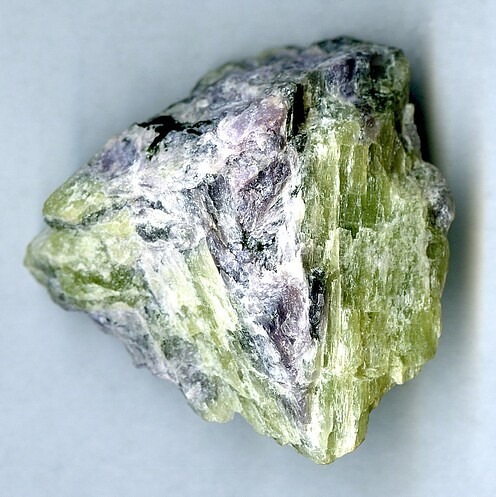
In addition to its unique symmetry, frankamenite contains structural water within its framework, setting it apart from the anhydrous structure of the other members. Visually, frankamenite can manifest in a broader spectrum of hues than the standard purple canasite, including various shades of green, blue, and lilac-gray.
The canasite group stands as a compelling example of mineralogical complexity within alkaline igneous environments. What may appear to the naked eye as a simple purple stone is, upon closer inspection, a sophisticated interplay of crystal lattice adjustments and elemental substitutions. Whether it is the fundamental canasite, the fluorine-enriched fluorcanasite, or the structurally distinct, water-bearing frankamenite, each member of this group provides critical insights into the geological conditions of their formation.