
Bytownite is a critical member of the plagioclase feldspar group, representing a specific compositional range within the albite-anorthite solid-solution series. Chemically defined as a calcium-sodium aluminosilicate with the formula (Ca,Na)[Al(Al,Si)Si₂O₈], bytownite is specifically categorized by its molar proportion of anorthite, which ranges from 70% to 90% (An₇₀–An₉₀). This high calcium content places it between the more common labradorite and the purely calcic end-member, anorthite. Physically, it typically presents as colorless, white, or grey crystals, though it may occasionally exhibit a greenish or yellowish hue. With a Mohs hardness of 6 to 6.5 and a triclinic crystal system, it possesses the characteristic perfect cleavage of the feldspar group, often showing subtle twin lamellae under microscopic examination.
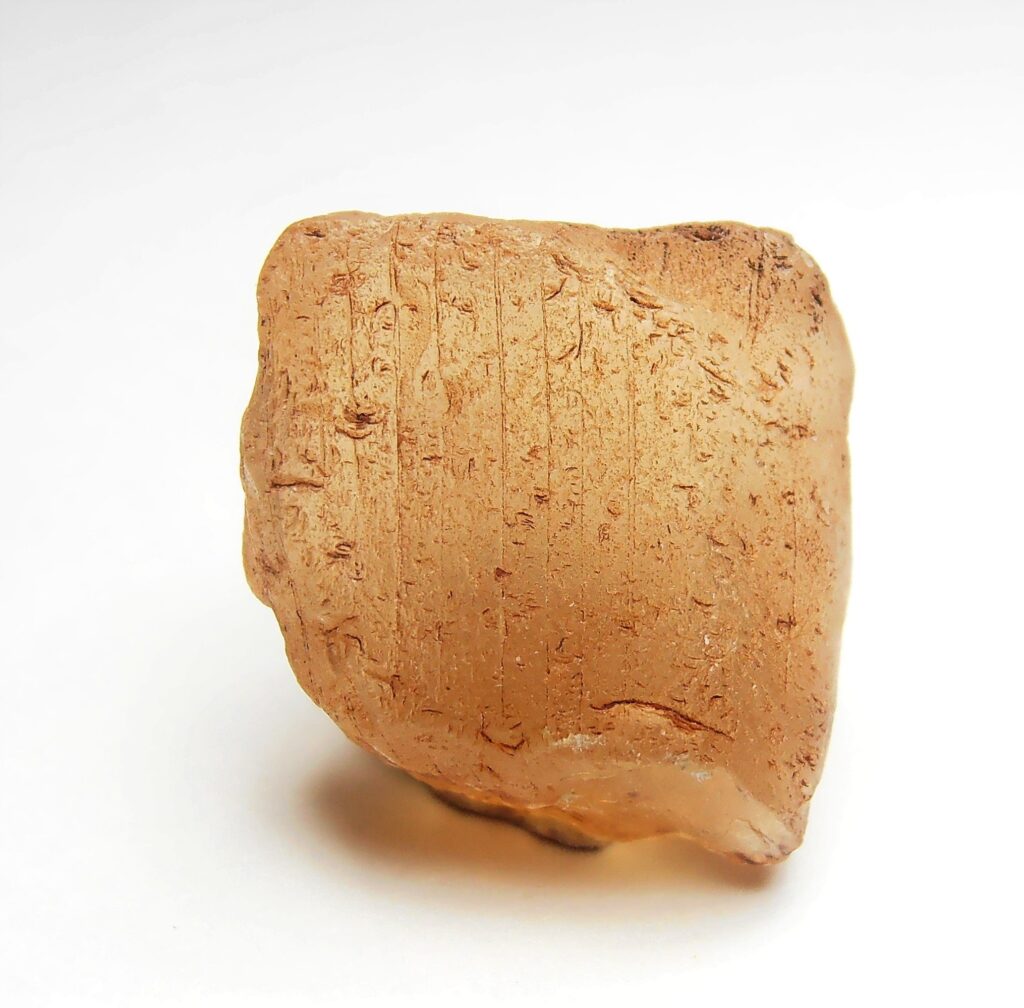
The formation of bytownite is predominantly a high-temperature magmatic process. According to Bowen’s Reaction Series, it is one of the earliest minerals to crystallize as mafic magma begins to cool, following the initial precipitation of olivine and pyroxene. Consequently, bytownite is an essential rock-forming component in basic igneous rocks, such as gabbro, norite, and troctolite. It is particularly prominent in massive layered igneous complexes like the Stillwater Complex in Montana, where it forms significant layers of the Earth’s lower crust. Beyond terrestrial environments, bytownite has also been identified in lunar rocks and stony meteorites, indicating its stability in the low-pressure, high-temperature crystallization environments of planetary crusts throughout the solar system.
The nomenclature and history of bytownite are deeply tied to the early 19th-century geological exploration of North America. The mineral was first named and described in 1836 by the Scottish chemist Thomas Thomson, who derived the name from “Bytown,” the original name of the city that eventually became Ottawa, Canada’s capital. The original type material was discovered in a greenish-white glacial boulder found near the city. However, the mineralogical history of bytownite is somewhat unusual; later investigations in the early 20th century revealed that the original specimens from Bytown were actually complex mixtures of different minerals rather than a pure single species. Despite this initial ambiguity, the name was retained by the International Mineralogical Association to standardize the description of plagioclase feldspars within the 70% to 90% anorthite range. Today, while the original Bytown locality is largely lost to history, the term remains indispensable to petrologists for classifying mafic rocks and understanding the chemical evolution of magma chambers.
Is Bytownite Suitable for Jewelry?
Bytownite is classified as a “collector’s gemstone.” With a Mohs hardness of 6 to 6.5, it is durable enough for jewelry pieces that do not experience heavy impact, such as pendants, earrings, and brooches. However, because it possesses perfect cleavage in two directions, it is susceptible to fracturing if struck sharply, making it less ideal for everyday rings unless placed in a protective setting.
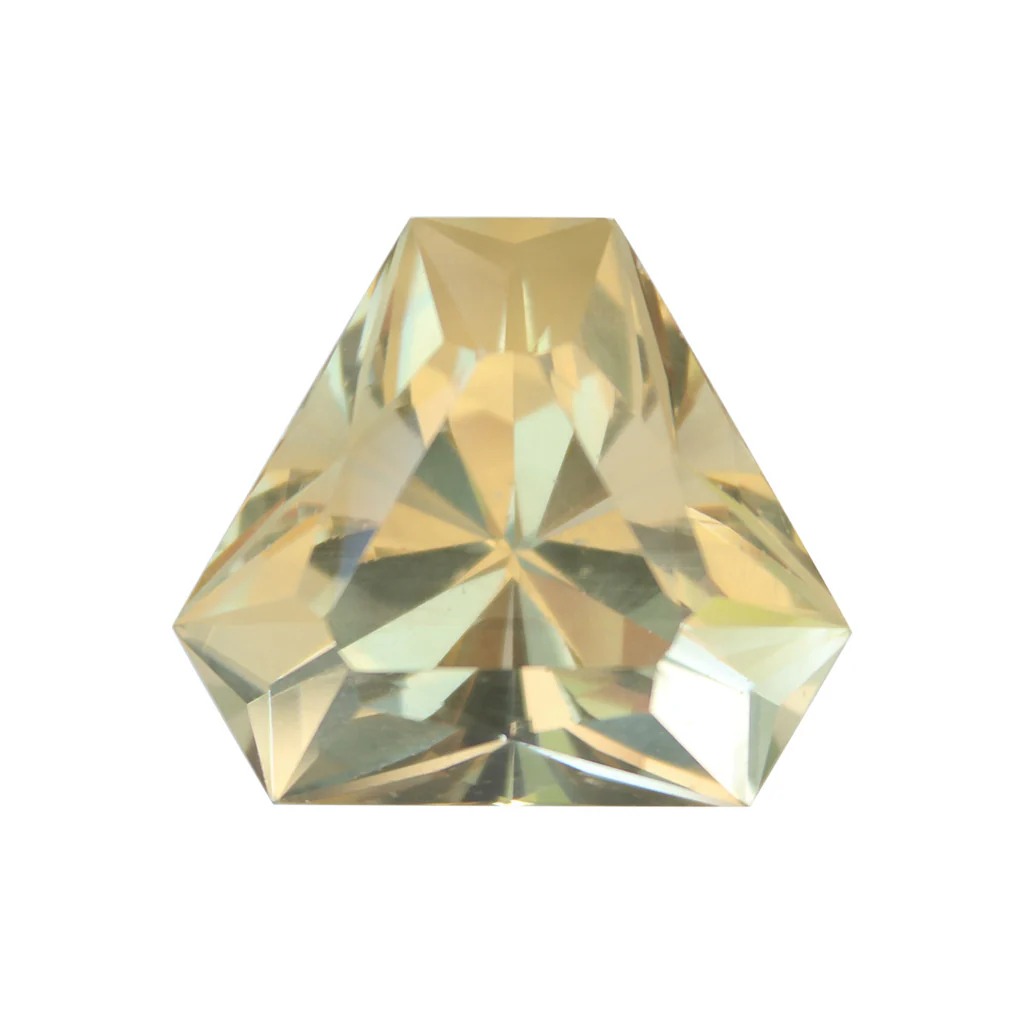
The appeal of bytownite in jewelry lies in its transparency and luster. High-quality specimens are often faceted into brilliant cuts that showcase a stunning vitreous (glass-like) luster. While common bytownite is often cloudy, gem-grade material is prized for its clarity and its sophisticated palette of colors—ranging from pale straw-yellow to rich, honey-gold and champagne. These warm tones, combined with its relative rarity in commercial jewelry stores, make it a favorite for those seeking unique, artisanal pieces.
Varieties and Notable Distinctions
Bytownite varieties are typically distinguished by their optical phenomena and geological origins rather than formal trade names:
Golden Bytownite: The most popular variety for faceting, often sourced from volcanic regions in Mexico and the United States (Oregon). It is celebrated for its exceptional transparency and warm golden hues.
Iridescent Bytownite: Although labradorescence is more common in labradorite, stones sitting on the chemical boundary (near An70) can exhibit a subtle play of color, showing flashes of metallic blue or green.
Maskelynite: A fascinating variety found in meteorites. This is bytownite that has been transformed into a natural glass by the intense shockwaves of a cosmic impact, preserving the mineral’s chemistry while destroying its crystalline structure.
Practical and Industrial Applications
Bytownite serves several critical functions across various scientific and industrial sectors, extending its utility far past its role as a collector’s specimen. To petrologists, the mineral acts as a sophisticated “chemical archive”; by meticulously analyzing the specific ratio of calcium to sodium within its crystal lattice, researchers can reconstruct the cooling history and thermodynamic pressure conditions of the magma chambers from which the host rock originated. This makes bytownite an invaluable tool for understanding the geodynamic processes of the Earth’s crust and even the volcanic history of other planetary bodies.
In a more tangible, large-scale capacity, bytownite is widely utilized in the construction industry. When found in its bulk form as a primary constituent of mafic rocks like gabbro or basalt, it is processed into high-quality crushed stone aggregate. Due to its significant density and natural resistance to mechanical wear, it is considered an excellent material for manufacturing high-strength concrete, stabilizing road bases, and providing durable ballast for railroad tracks. Furthermore, like other members of the feldspar family, bytownite finds utility in the specialized fields of ceramics and glassmaking. When ground into a fine powder, it functions as an efficient fluxing agent that lowers the melting temperature of alumina and silica. This chemical intervention not only improves the structural integrity and chemical resistance of the final product but also significantly reduces energy consumption during the manufacturing process, aligning technical performance with industrial efficiency.