
Anorthite is a mineral composed of magnesium-aluminum silicate with the chemical formula CaAl₂Si₂O₈. It is one of the primary members of the plagioclase feldspar group, specifically representing the calcium-rich endmember of the plagioclase solid-solution series. The plagioclase feldspar group contains a range of compositions between albite (sodium-rich) and anorthite (calcium-rich), with anorthite forming at the high-calcium end of the spectrum. A specimen is classified as anorthite only if over 90% of its composition is dominated by the calcium endmember, denoted as An90–An100.
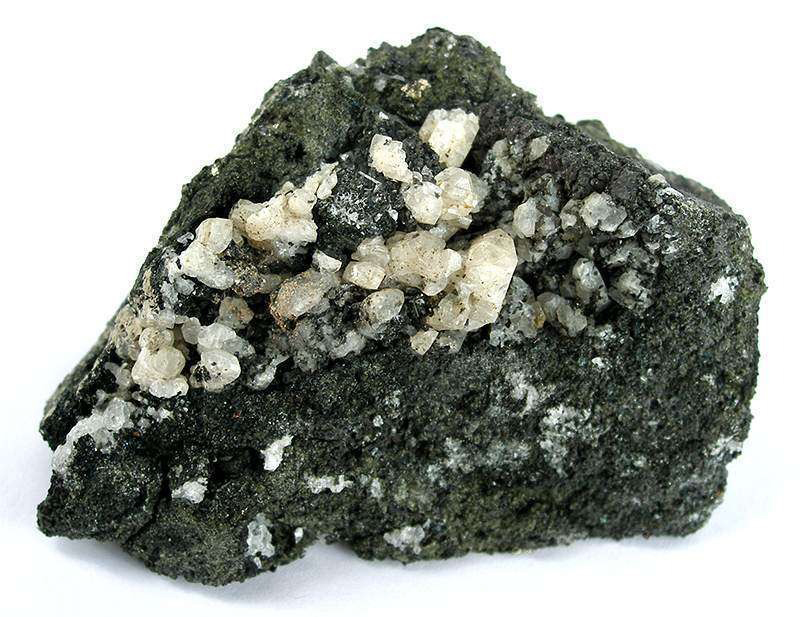
Visually, anorthite is typically white, gray, or colorless, with a vitreous (glass-like) luster, making it an attractive material in the mineral world. It crystallizes in the triclinic system, meaning that its crystal axes are of unequal length and intersect at oblique angles, which gives the mineral its characteristic shape. With a Mohs hardness of 6 to 6.5, anorthite is durable, though it is prone to weathering, especially when exposed to the acidic conditions found on Earth’s surface. This mineral is not just a visually intriguing specimen but also holds great scientific importance due to its formation processes and unique properties.
How is Anorthite Formed?
Anorthite primarily forms in high-temperature igneous environments, and its crystallization is closely tied to the cooling and solidification of magma. In the Bowen’s Reaction Series, which describes the order in which minerals crystallize as magma cools, anorthite is one of the first plagioclase minerals to form. Due to its high melting point of around 1,550°C, anorthite crystallizes early from mafic magmas—those rich in magnesium and iron. As the temperature of the magma decreases further, the feldspar composition changes, becoming more sodium-rich, leading to the formation of minerals like albite.Besides magmatic crystallization, anorthite can also form through metamorphism, a process in which pre-existing rocks undergo transformation due to heat and pressure. In particular, anorthite may develop from the metamorphism of calcium-rich rocks, such as impure limestones or marls, when they are subjected to intense geological conditions.
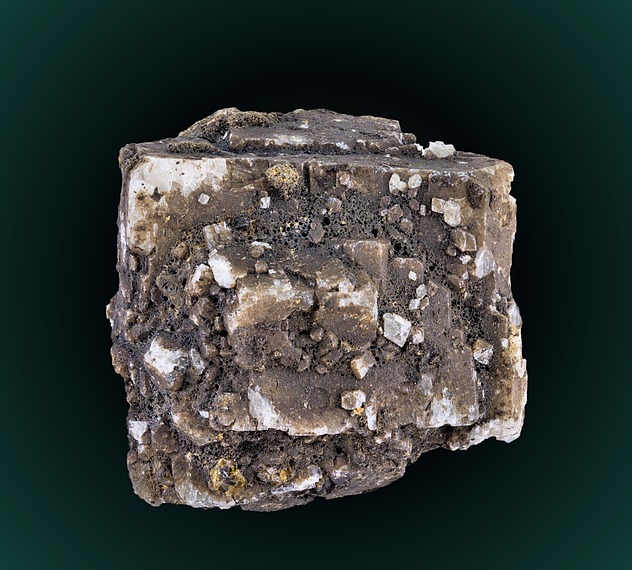
Anorthite is also crucial in the context of lunar geology. During the early stages of the Moon’s formation, a phase known as the “Lunar Magma Ocean” occurred, where the Moon was once molten. During this time, anorthite crystallized from the cooling lunar magma and floated to the surface due to its relatively low density. As a result, it contributed to the formation of the Moon’s light-colored crust, which remains one of its defining features.
The History and Discovery of Anorthite
The mineral anorthite was first identified in 1823 by the German mineralogist Gustav Rose, who coined the name from the Greek word “anorthos”, meaning “oblique,” which referred to the mineral’s triclinic crystal structure where no angles are at right angles. The mineral was first discovered from samples collected at Mount Somma, the ancient caldera of Mount Vesuvius in Italy, a location known for its volcanic activity.Anorthite gained even more recognition when it played a significant role in lunar exploration. During the Apollo missions, lunar rock samples were brought back to Earth and analyzed. These samples showed that the Moon’s highlands are composed almost entirely of anorthosite—a rock made predominantly of anorthite. This discovery provided crucial evidence about the cooling and solidification process of the Moon, further supporting theories about its early magma ocean.
Crystal Structure of Anorthite
Anorthite crystallizes in the triclinic system, which means its crystals have three axes of unequal length that intersect at oblique angles. This results in a distorted and asymmetrical crystal structure, making anorthite easily distinguishable from other feldspars. The triclinic system is one of the least symmetric crystal systems, which gives anorthite a distinctive appearance under a microscope.

At the atomic level, the structure is a complex three-dimensional framework of silicate (SiO₄) and aluminate (AlO₄) tetrahedra. In anorthite, there is a strictly ordered distribution of aluminum and silicon: they alternate throughout the lattice to minimize electrostatic repulsion. The relatively large calcium cations (Ca²⁺) occupy the irregular interstitial spaces within this tetrahedral scaffold. The specific crystal habits of anorthite can vary, but it typically forms prismatic crystals that are tabular or blocky in shape. This unique crystal structure contributes to its relatively high hardness and stability, despite its susceptibility to weathering when calcium ions are leached by environmental acids.
Chemical Composition of Anorthite
Anorthite’s chemical composition is primarily made up of calcium, aluminum, silicon, and oxygen, with the formula CaAl₂Si₂O₈. The mineral is rich in calcium, which distinguishes it from other feldspars like albite, which is sodium-rich. Anorthite belongs to the plagioclase feldspar group, and its composition can range from fully calcium-rich anorthite (An100) to those that contain varying amounts of sodium, such as labradorite or bytownite.Its chemical structure consists of silicon-oxygen tetrahedra that form a framework, with aluminum and calcium ions occupying specific sites within the structure. The presence of calcium makes anorthite more stable at high temperatures compared to other feldspar minerals. In this framework, aluminum (Al³⁺) and silicon (Si⁴⁺) ions alternate to maintain charge balance, while the relatively large calcium (Ca²⁺) cations sit within the open spaces of the lattice. This specific arrangement is what gives anorthite its characteristic density and high melting point, making it a key component in early-crystallizing magmatic rocks.
Physical & Optical Properties
Anorthite exhibits a range of physical and optical properties that make it identifiable and useful for both scientific and industrial purposes. It has a Mohs hardness of 6 to 6.5, which means it is durable but can still be scratched by harder minerals. Its color is typically white, gray, or colorless, though it may have a faint bluish or greenish tint in some cases.
The mineral has a vitreous luster, giving it a shiny appearance when freshly broken or polished. Its cleavage is distinct, with two planes that break along its crystal axes, though it is imperfect. Anorthite also displays a characteristic twinning pattern, which can be useful in its identification. Optically, anorthite exhibits birefringence due to its triclinic crystal system, meaning light is refracted differently along various axes of the crystal.
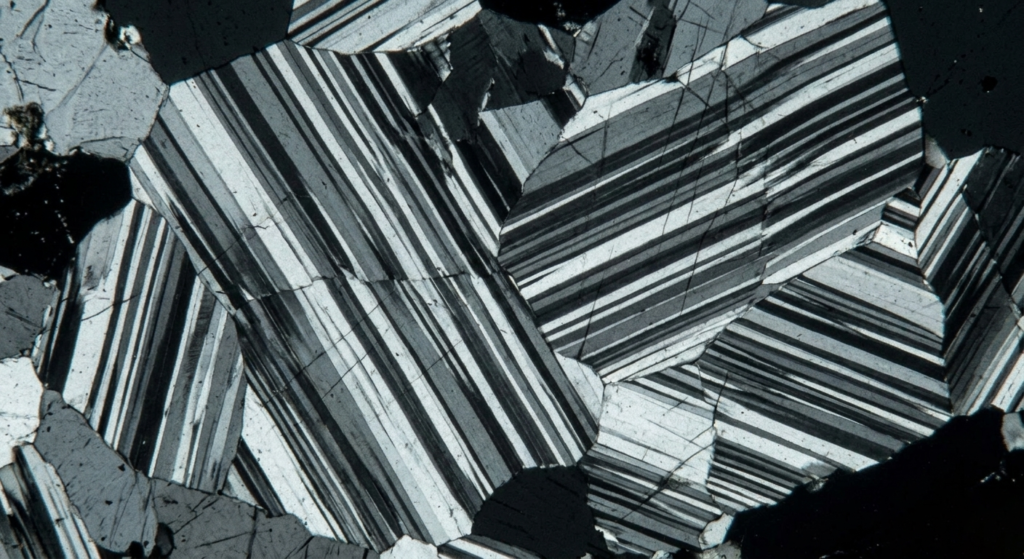
This optical behavior is often studied using a petrographic microscope, where the characteristic “striped” appearance of polysynthetic twinning becomes visible under cross-polarized light. These stripes are a direct result of the crystal lattice reflecting the distorted symmetry of the triclinic system. Additionally, anorthite has a relatively high specific gravity (around 2.74 to 2.76) compared to other feldspars, a property that stems from its dense packing of calcium and aluminum ions within the silicate framework.
Applications of Anorthite
Anorthite possesses a high melting point and exceptional chemical stability, making it a valuable material across several technical fields. In the industrial sector, it serves as a primary raw material for the production of high-strength ceramics and specialized glass, particularly E-glass fiberglass used for insulation and structural reinforcement. Due to its ability to withstand extreme thermal shock, anorthite is frequently utilized in manufacturing laboratory equipment and ceramic substrates for electronic devices.
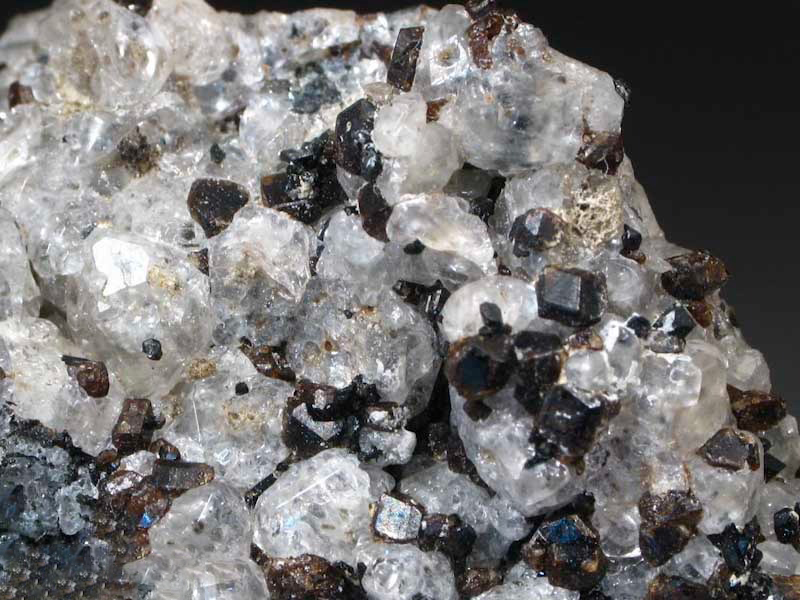
In planetary science, anorthite is a central focus of research. As the dominant mineral of the lunar highlands, it is used by scientists to create lunar soil simulants for testing the durability of space exploration hardware. Within environmental technology, anorthite is also being studied for carbon sequestration, as it can react with CO₂ to form stable carbonate minerals, offering a potential pathway for long-term carbon storage.