
Anglesite occupies a unique niche in the mineral kingdom, standing as a collector’s gem that bridges the gap between industrial ore and ethereal beauty. As a secondary lead sulfate mineral typically formed within the oxidation zones of lead deposits, it is prized by gemologists for a rare trifecta of physical properties: an adamantine luster, remarkable density, and a fire (dispersion) that can rival that of a diamond.While its chemical composition grants it a signature heaviness and brilliant optical performance, that same lead-rich nature renders the stone exceptionally fragile. Consequently, while transparent crystals are occasionally faceted into breathtaking gems, Anglesite remains a treasure reserved for the display case rather than the jewelry box—a brilliant paradox of nature’s power and vulnerability.
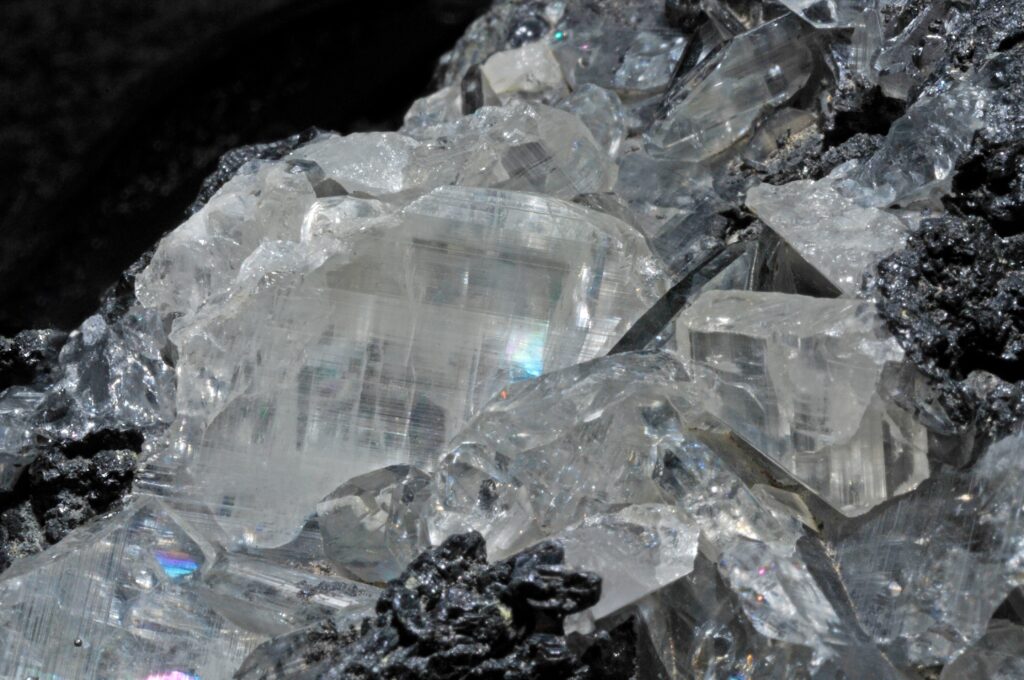
Geological Origins and Formation
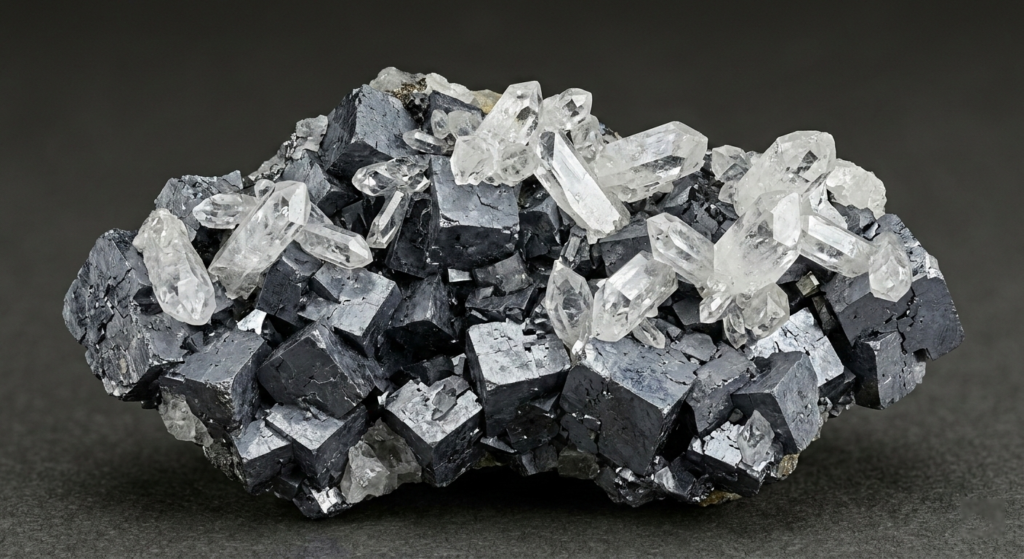
Anglesite is primarily a secondary mineral, meaning it does not crystallize directly from molten rock or hydrothermal fluids. Instead, it is a product of “secondary enrichment.” It forms through the chemical weathering and oxidation of primary lead sulfide minerals, most notably galena.
When galena is exposed to oxygenated meteoric waters (rainwater) in the upper, oxidized zones of ore deposits, a chemical reaction occurs where the sulfur in the galena is replaced by sulfate. This transformation often happens in situ, sometimes resulting in “pseudomorphs” where the Anglesite retains the original cubic shape of the galena it replaced. These deposits are typically found in arid or semi-arid regions where the water table is deep, allowing for extensive oxidation of the ore body.
Historically, the mineral’s name pays homage to its type locality: the Parys Mountain copper mines on the Isle of Anglesey, Wales. However, the most significant gem-quality crystals have since been discovered in the Tsumeb Mine in Namibia and the Touissit district in Morocco, where the geological conditions allowed for the growth of large, transparent, and structurally sound crystals.
The Palette of Anglesite: From Ethereal Clarity to Earthy Hues
While the most celebrated specimens of Anglesite are those of pure, colorless transparency, the mineral actually occurs in a surprisingly diverse range of colors. These variations are typically the result of trace impurities or minute inclusions of other minerals trapped during the oxidation process.
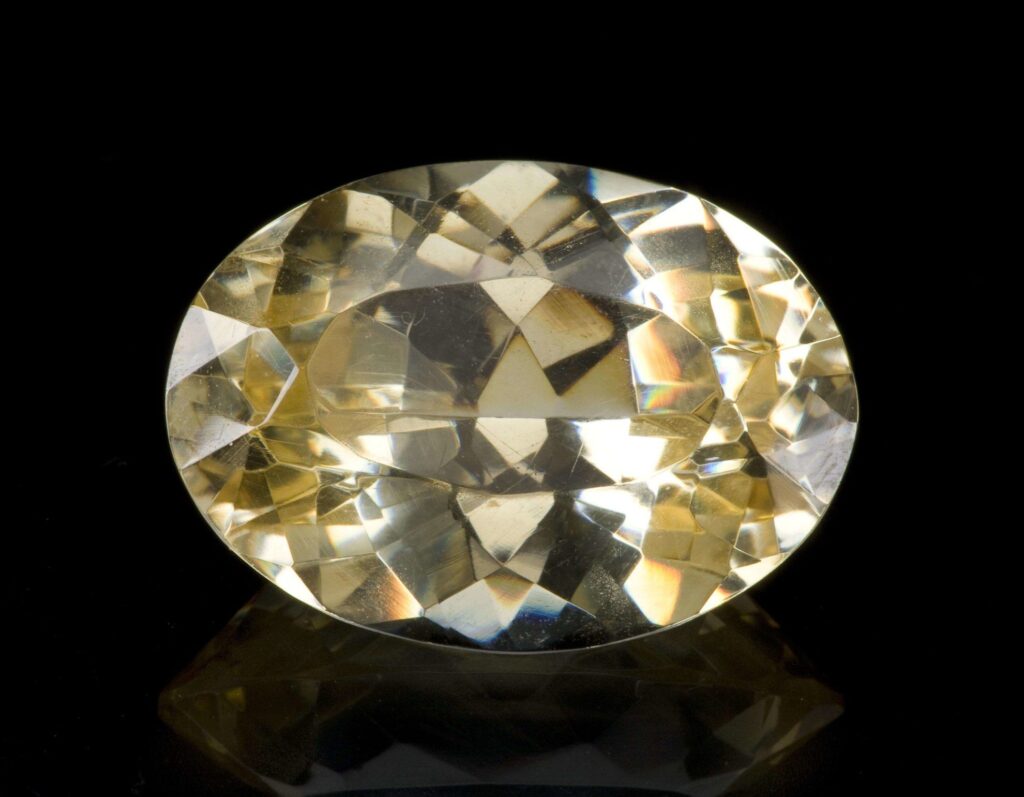
Colorless and White: The “purest” form of Anglesite is colorless. In its transparent, faceted state, it is often mistaken for diamond due to its high dispersion. When it occurs in massive or microcrystalline forms, it often appears as a milky or opaque white.
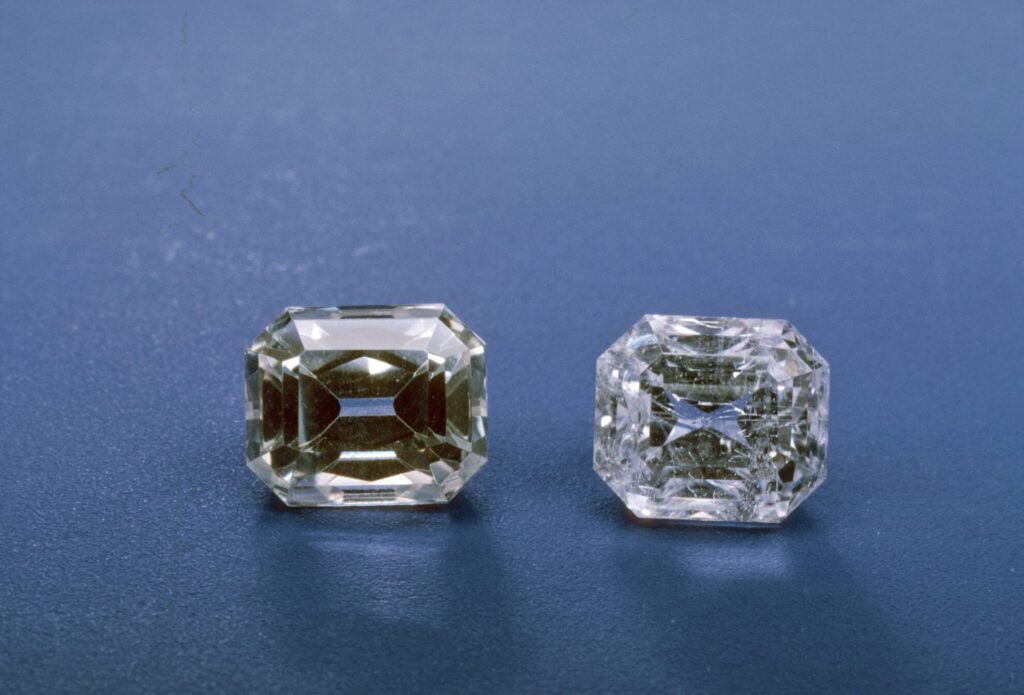
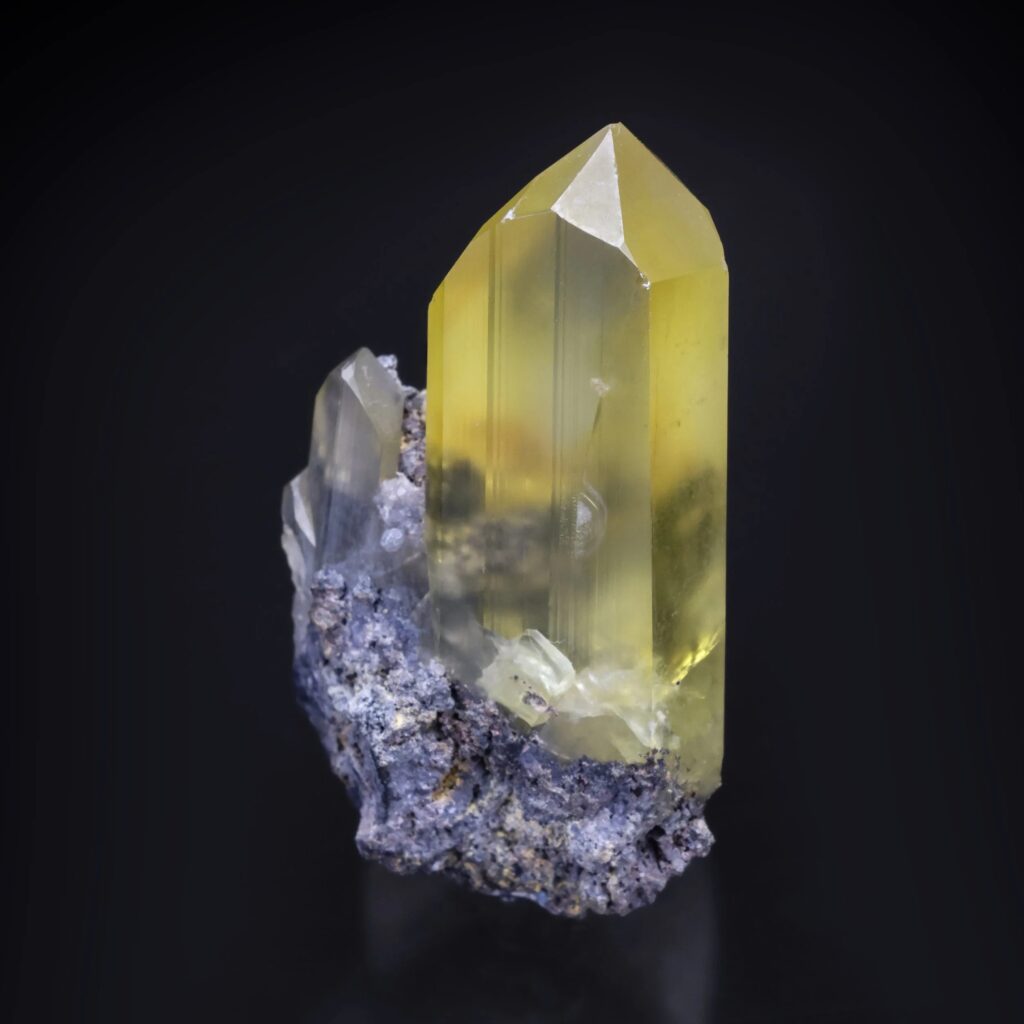
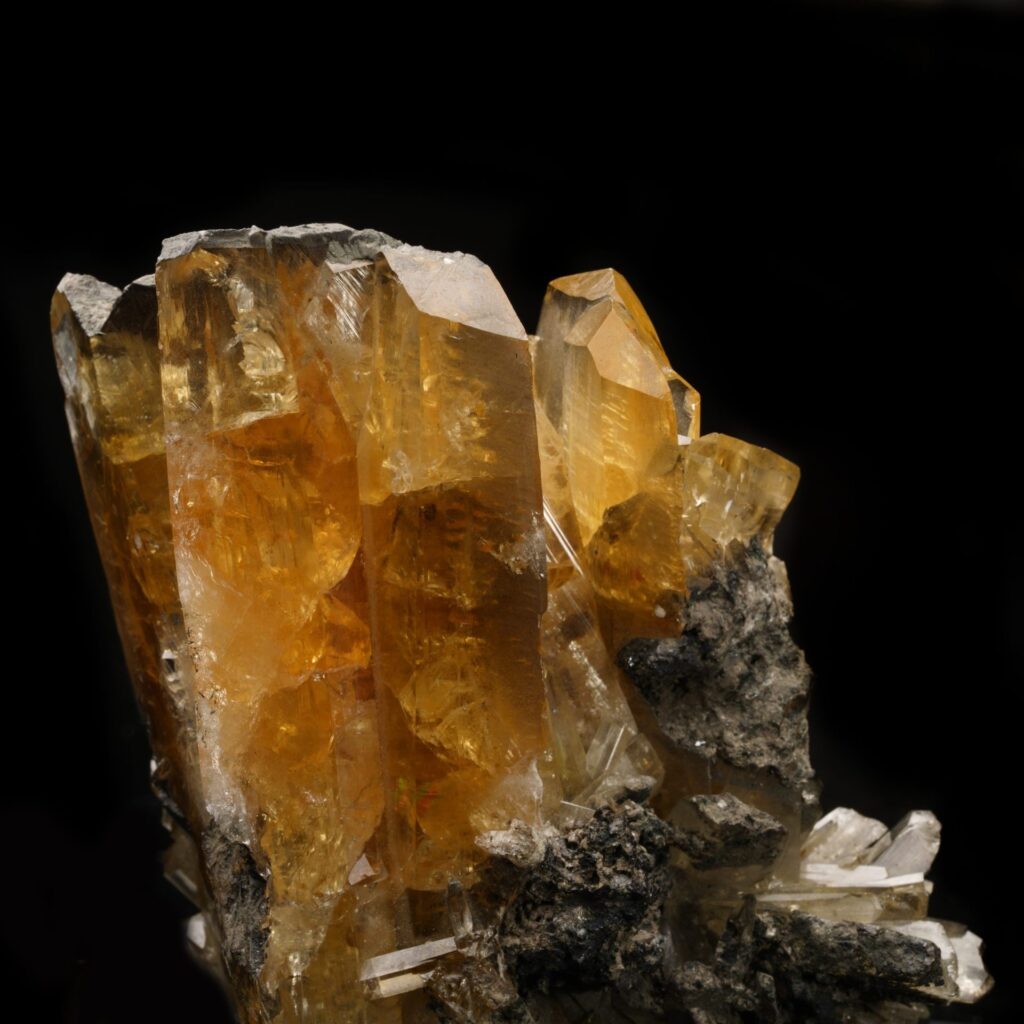
Golden Yellow and Amber: Among collectors, the warm, honey-colored to vibrant lemon-yellow varieties are highly sought after. these golden hues are often attributed to trace amounts of iron oxides or other metallic impurities absorbed from the surrounding ore body during formation.
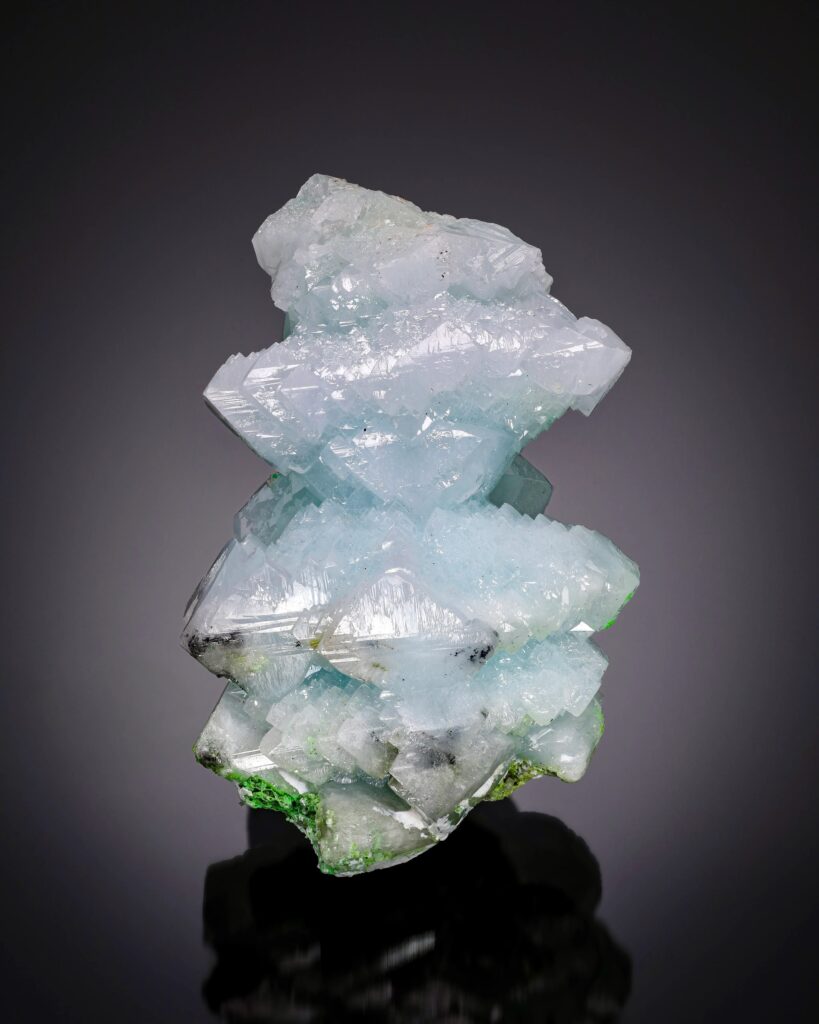
Pale Blue and Green: Perhaps the rarest and most enigmatic varieties are the delicate blues and soft greens. These colors are frequently caused by trace amounts of copper (often sourced from nearby minerals like malachite or azurite) being incorporated into the crystal lattice.
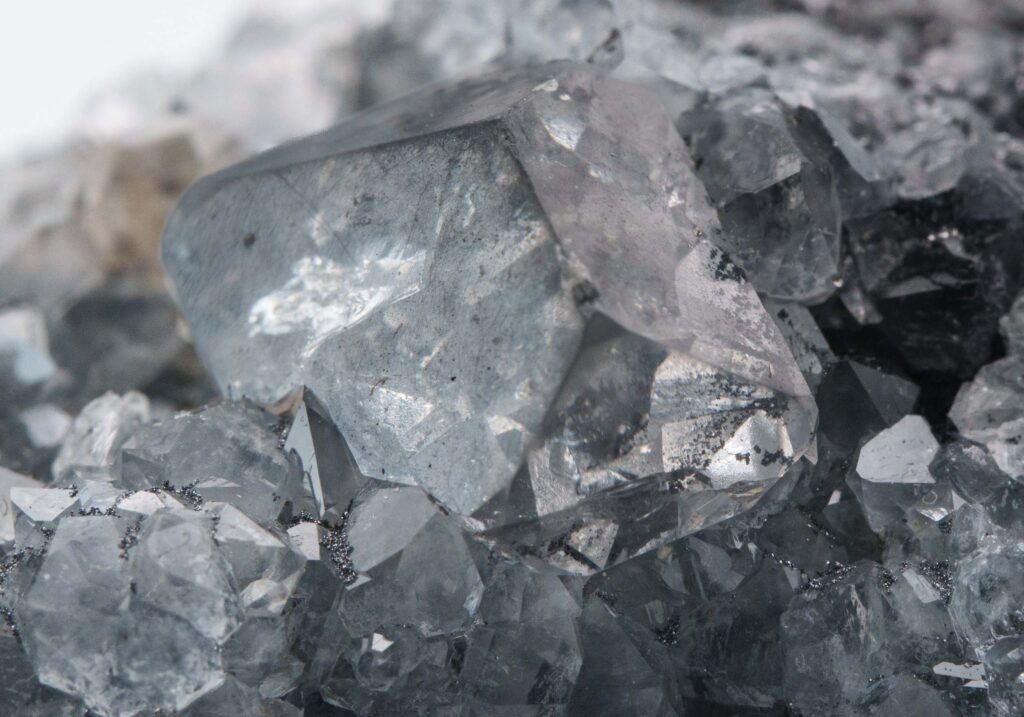
Grey and Black: In many mining localities, Anglesite appears in darker, more somber tones. These specimens are often “stained” by microscopic inclusions of unoxidized galena, giving the crystals a metallic grey or even a soot-black internal phantom.
Brown and Orange: Deep brownish-orange or “cognac” colored stones can be found, particularly in Moroccan deposits. These earthy tones provide a sophisticated backdrop for the mineral’s high-lead sparkle.
Is Anglesite Good for Jewelry?
Despite possessing an adamantine luster and fire that can rival a diamond, Anglesite is rarely found in mainstream jewelry. Its absence from the commercial market is primarily due to its extreme physical vulnerability. With a Mohs hardness of only 2.5 to 3.0, the stone is soft enough to be scratched by a copper penny or even a fingernail. Furthermore, its perfect cleavage and brittle nature make it highly susceptible to fracturing during the setting process or under the stresses of daily wear. Beyond its fragility, the mineral’s high lead content—approximately 70%—presents a toxicity risk if dust is inhaled during cutting or if worn against the skin for extended periods. Consequently, faceted Anglesite is strictly regarded as a “collector’s gemstone,” intended for display and study rather than functional adornment.
Market Characteristics and Collector Demand
Anglesite occupies a specialized niche within the mineral and collector gemstone market rather than the mainstream jewelry trade, and its value is determined primarily by crystal quality, aesthetic appeal, structural integrity, and locality prestige rather than standardized commercial grading systems. Because of its low hardness (2.5–3 on the Mohs scale), perfect cleavage, and brittleness, faceting is technically challenging and high-yield cutting is uncommon; as a result, most clean faceted stones under 3–4 carats typically trade in a limited collector range of approximately $30 to $150 per carat, depending on clarity, color, and origin, while larger eye-clean examples above 4 carats may command higher—but still highly locality-dependent—prices within a small specialist market. For many collectors, however, natural crystal specimens are more desirable than cut gems, particularly well-formed transparent crystals displayed on contrasting matrices such as Galena, where aesthetic balance and condition strongly influence value. Specimens from historically significant localities, especially the Tsumeb Mine and the Touissit, often carry locality premiums; museum-quality pieces from these sources may trade in the approximate range of $500 to $2,500 or more depending on crystal size, clarity, coloration, and overall specimen integrity. Despite its rarity in gem-quality form, Anglesite should be regarded primarily as a collector mineral of aesthetic and scientific interest rather than a conventional investment gemstone, as its market remains small, specialized, and driven more by connoisseur demand than by broad financial speculation.
Identification and Diagnostic Methods
Because Anglesite can be confused with other high-luster gems like Cerussite, Phosgenite, or even Diamond, gemologists rely on a combination of physical and optical tests:
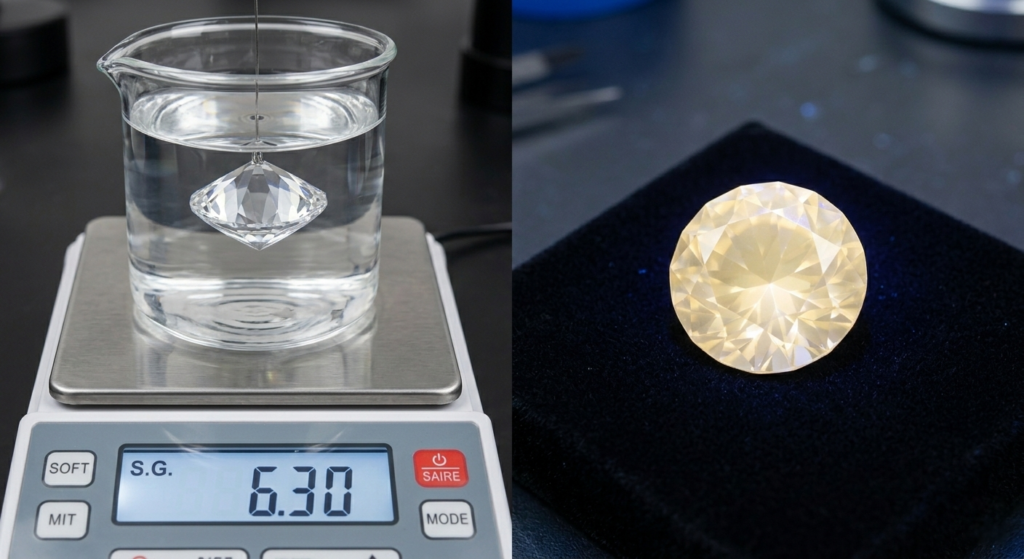
Extreme Density: One of the most immediate identifiers is its specific gravity. At approximately 6.3, it feels unnaturally heavy for its size. In a laboratory setting, hydrostatic weighing will quickly separate it from lighter look-alikes.
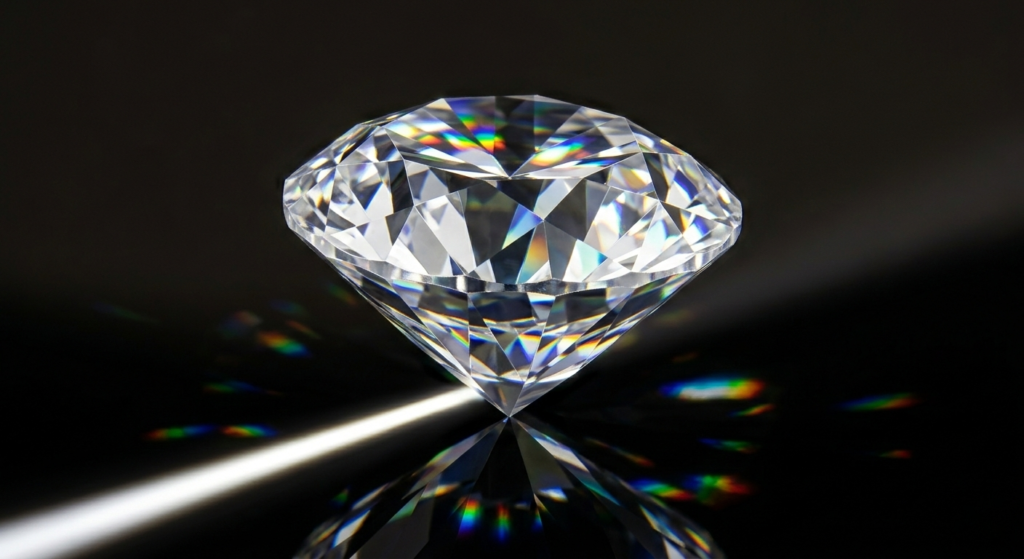
Luster and Dispersion: Under a jeweler’s loupe, Anglesite displays a distinct “adamantine” (diamond-like) luster. Its dispersion—the ability to split white light into spectral colors—is 0.044. While this is nearly identical to diamond, Anglesite’s much lower hardness makes it easy to distinguish under magnification by looking for rounded facet junctions or surface scratches.
Refractive Index: Anglesite has a refractive index (RI) ranging from 1.87 to 1.89. This is “over the limit” (OTL) for a standard refractometer, requiring advanced equipment like a reflectometer or immersion methods for precise measurement.
Ultraviolet Fluorescence: Many specimens exhibit a characteristic fluorescence. Under short-wave UV light, Anglesite often glows a pale yellow or golden-yellow, which can help differentiate it from other lead-based minerals in a rough state.
Acid Testing: As a sulfate, Anglesite is slowly soluble in concentrated acids, though this is a destructive test and rarely performed on faceted stones.
In the grand tapestry of the mineral kingdom, Anglesite stands as a testament to the fact that brilliance does not always equal strength. It is a mineral that demands respect, not only for its geological journey from dark lead ore to luminous crystal but also for the specialized care required to preserve its “ethereal beauty.”For the dedicated collector, owning a fine Anglesite—whether it is a Tsumeb blue cluster or a high-dispersion faceted gem—is about more than just market value. It is about stewarding a “brilliant paradox”: a stone that captures light with the intensity of a diamond, yet possesses a soul as delicate as a dried leaf. While it may never find a home in a common jewelry box, its place in the display cases of the world’s finest museums and private collections is forever secured as one of nature’s most dazzling, albeit vulnerable, masterpieces.