
Andesine is an intermediate member of the plagioclase feldspar series, occupying a compositional range between sodium-rich albite and calcium-rich anorthite. It is defined by an anorthite content of approximately 30–50 mol%, and its generalized chemical formula is (Na,Ca)(Si,Al)₄O₈. As part of the triclinic crystal system, andesine typically forms tabular crystals, though it more commonly occurs as granular aggregates within igneous and metamorphic rocks. Its physical properties are consistent with other plagioclase feldspars, including a vitreous luster, relatively low hardness, and well-developed cleavage. In hand specimen, it is usually translucent to transparent, and its color varies depending on compositional differences and trace element presence, ranging from pale yellow and gray-green to orange and red. These color variations are not always intrinsic and may be influenced by structural defects or trace elements such as copper in certain cases.
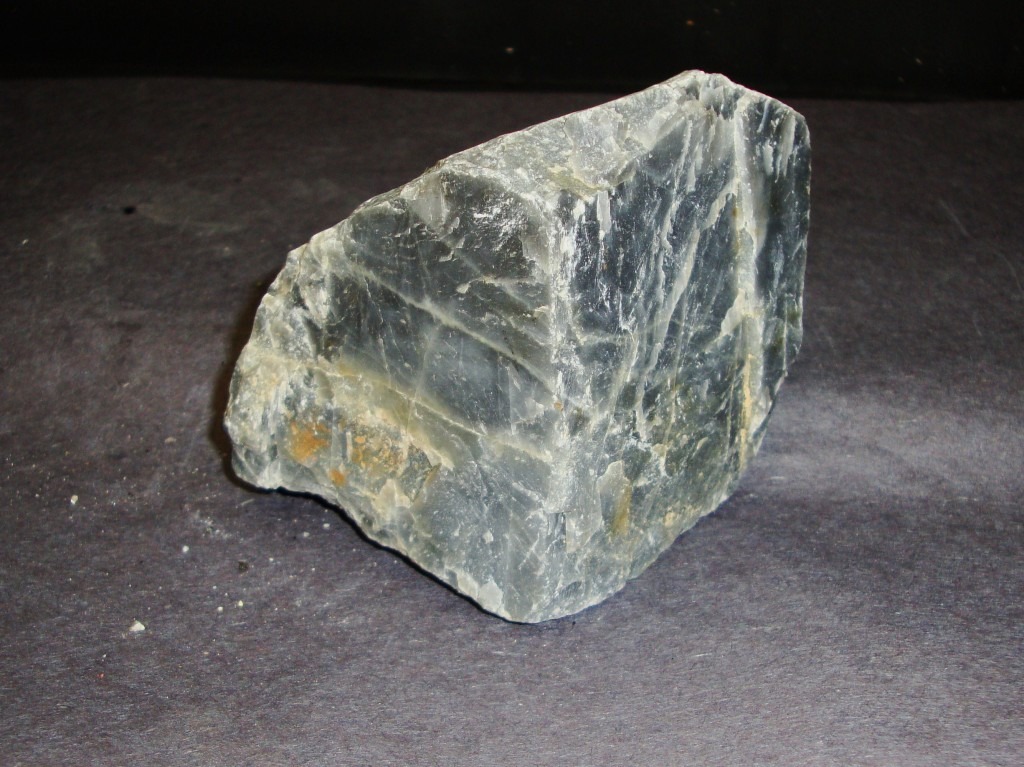
From a geological perspective, andesine is a common rock-forming mineral and plays a role in the classification and interpretation of igneous rocks. It forms under intermediate magmatic conditions and is particularly associated with calc-alkaline magmatic systems. Its crystallization occurs during the fractional crystallization of magma, as described in Bowen’s Reaction Series, where calcium-rich plagioclase crystallizes at higher temperatures and progressively transitions toward more sodium-rich compositions as cooling proceeds. Andesine represents a transitional stage in this sequence, reflecting a balance between calcium and sodium in the melt. It is most commonly found in volcanic rocks such as andesite and dacite, as well as in intrusive equivalents including diorite and syenite. These lithologies are typically associated with convergent tectonic settings, especially subduction zones, where intermediate magmas are generated.
In addition to its primary igneous occurrence, andesine may also develop under metamorphic conditions. It is present in amphibolite- to granulite-facies rocks, where elevated temperature and pressure conditions facilitate mineral recrystallization and chemical re-equilibration. In such environments, pre-existing feldspar minerals may adjust their composition to form intermediate plagioclase such as andesine. This process reflects changes in thermodynamic stability under varying pressure–temperature regimes and contributes to the redistribution of elements within the rock.
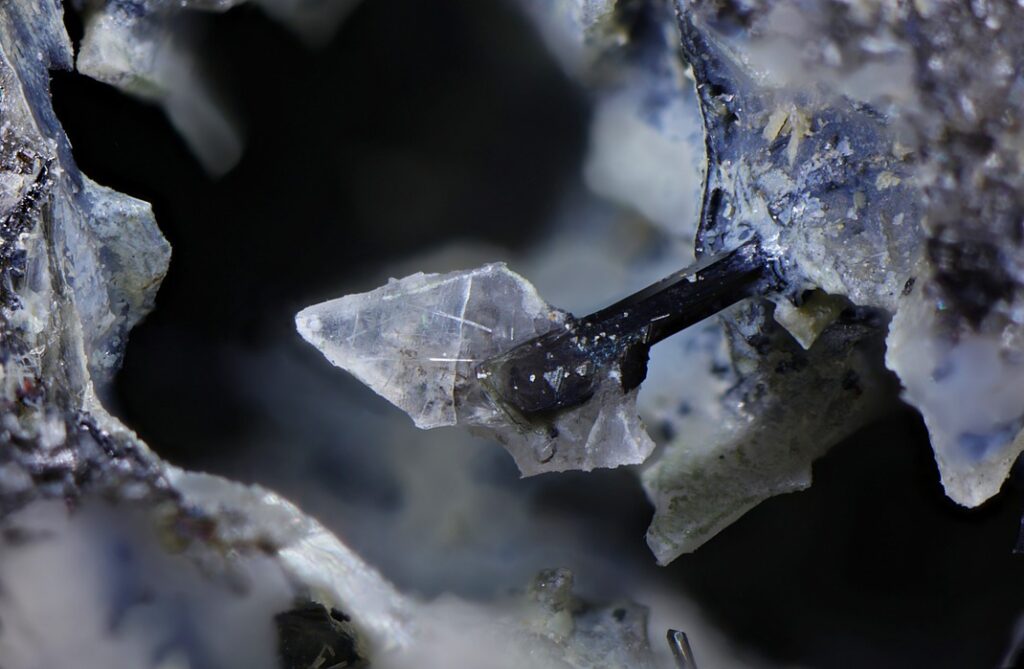
Historically, andesine was first described in 1841 by the German mineralogist Gustav Rose and named after the Andes Mountains, where it is widely distributed in volcanic terrains. For much of its documented history, it was primarily studied within the context of petrology and mineral classification rather than as a gemstone material. Interest in andesine within gemological contexts increased in the early 21st century, particularly following the appearance of red-colored material reportedly sourced from Tibet and Inner Mongolia. Subsequent investigation into these materials led to questions regarding the origin of their coloration, with some specimens identified as having undergone copper diffusion treatment. This development prompted more detailed analytical work within gemology, including the application of techniques such as Laser Ablation Inductively Coupled Plasma Mass Spectrometry (LA-ICP-MS) to determine trace element composition and identify treatment processes. As a result, distinctions between natural and treated andesine have become more clearly defined in gemological practice.Overall, andesine remains significant primarily as a rock-forming mineral within intermediate igneous and metamorphic systems, while its role in the gemstone market is more limited and subject to material-specific evaluation based on origin, composition, and treatment history.
Andesine Deposits in Tibet and Inner Mongolia
Field investigations conducted by the Gemological Institute of America (GIA) provide detailed insight into the occurrence and distribution of andesine in Tibet and Inner Mongolia, two regions that became central to the modern gemological discussion of this mineral. These studies indicate that andesine in both areas is primarily recovered from secondary, alluvial deposits rather than directly from primary bedrock sources. The material is typically found within unconsolidated sediments such as الرمل、gravel, and weathered volcanic detritus, where feldspar grains have been transported and mechanically concentrated over time.
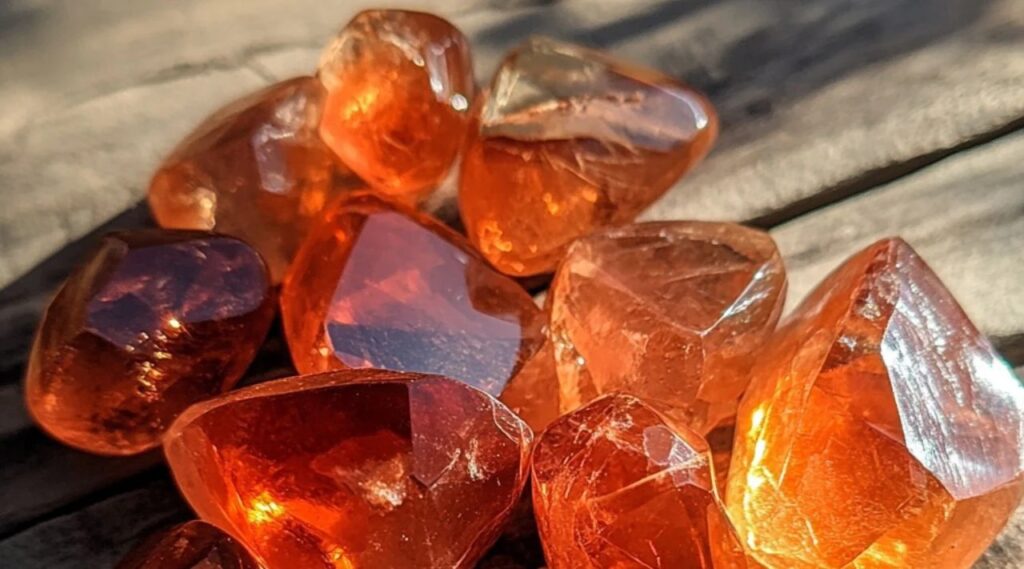
In Inner Mongolia, particularly in the Guyang region, andesine occurs in relatively accessible low-altitude environments. Mining operations are generally small-scale and involve manual or semi-mechanized extraction from shallow sedimentary layers. The recovered material is commonly pale yellow, colorless, or light green, with only a limited proportion suitable for faceting. Grain sizes are typically small, and many specimens show evidence of transport, including rounded edges and surface wear. These characteristics are consistent with prolonged fluvial reworking.By contrast, andesine deposits in Tibet, especially in the Shigatse area, are located at significantly higher elevations, often exceeding 4,000 meters. Mining in these regions is constrained by environmental and logistical factors, including limited accessibility and short seasonal working periods. Extraction is largely manual, and production volumes are comparatively low. The material reported from these deposits has drawn attention due to the presence of orange to red coloration, which differs from the more subdued tones commonly observed in Inner Mongolian material.
Color Origin and Treatment Controversy
The appearance of red andesine in the early 2000s led to considerable discussion within the gemological community regarding the origin of its color. Initial reports suggested that the coloration might be natural, potentially related to trace elements such as copper. However, subsequent analytical studies raised questions about this interpretation, as some samples exhibited chemical and structural features inconsistent with naturally occurring red feldspar.
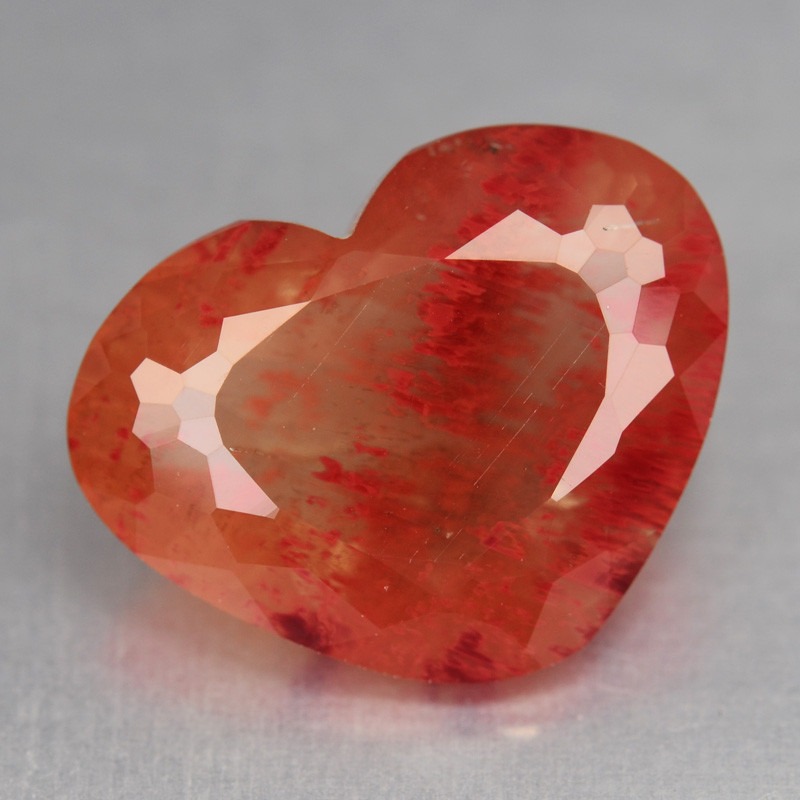
Detailed examination using advanced analytical techniques, including Laser Ablation Inductively Coupled Plasma Mass Spectrometry (LA-ICP-MS), revealed that certain specimens contained elevated concentrations of copper near their surfaces, indicating the possibility of diffusion treatment. In this process, trace elements are artificially introduced into the crystal lattice under controlled conditions, producing enhanced coloration that may resemble natural material. Additional evidence, such as uneven color distribution and concentration gradients, supported the conclusion that at least part of the material in circulation had been treated.The investigation also highlighted the difficulty of distinguishing between natural and treated andesine using standard gemological methods alone. As a result, laboratory-based analytical techniques became necessary for reliable identification. This period contributed to the refinement of testing protocols and increased awareness within the gem trade regarding disclosure and material origin.
Current Understanding and Classification
Current gemological consensus recognizes that both natural and treated andesine exist in the market, though their identification requires careful analysis. Natural coloration is generally associated with subtle trace element incorporation and structural features formed during crystallization, whereas treated material often shows evidence of artificial enhancement through diffusion processes. The distinction is not always apparent through visual inspection and typically requires advanced instrumentation.From a geological standpoint, the occurrence of andesine in Tibet and Inner Mongolia remains consistent with its classification as a plagioclase feldspar formed in intermediate magmatic environments, later redistributed through weathering and sedimentary processes. The GIA field studies emphasize that while these deposits provide a source of gem material, they also illustrate the complexity of interpreting mineral origin when post-formational processes and human intervention are involved.
Uses and Applications of Andesine
Andesine is utilized primarily within the fields of geology and gemology, serving different functions based on its quality and form. In geological research, it is used as a diagnostic mineral to classify igneous rocks and understand the cooling history of volcanic systems. Because its chemical composition reflects the specific temperature and pressure of the magma from which it crystallized, petrologists analyze andesine crystals to determine the conditions of the Earth’s crust during rock formation. In industrial contexts, plagioclase feldspars like andesine are sometimes used in the production of ceramics and glass, where they act as a fluxing agent to reduce the melting point of silica during the manufacturing process.
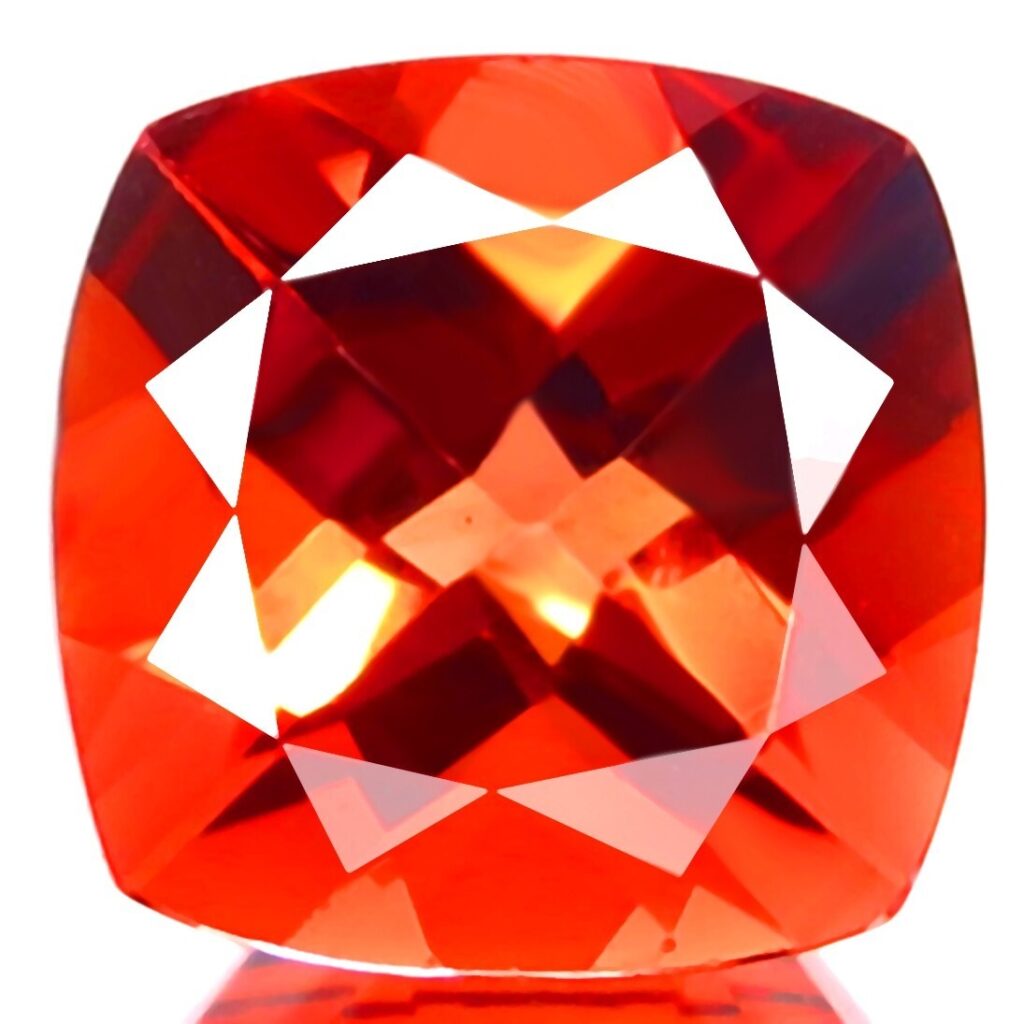
In the commercial gemstone market, andesine is used for jewelry and decorative purposes. Transparent specimens with desirable colors, such as red, orange, or green, are faceted into various shapes for use in rings, earrings, and pendants. Translucent or opaque material is typically cut into cabochons or shaped into beads for necklaces and bracelets. While it lacks the hardness of gemstones like sapphire or diamond, its Mohs scale rating of 6 to 6.5 makes it suitable for items that do not receive heavy daily wear. Additionally, mineral collectors acquire natural, well-formed andesine crystals as representative specimens of the plagioclase feldspar group for educational and private collections.