{{ osCmd }} K
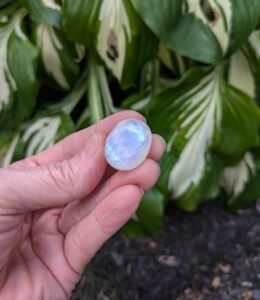
يد تحمل حجر قمر بيضاوي مصقول في الهواء الطلق، يظهر بريقه الأزرق اللامع على خلفية خضراء ضبابية مورقة.
حجر القمر الكريم: نظرة عامة احترافية على علم الأحجار الكريمة

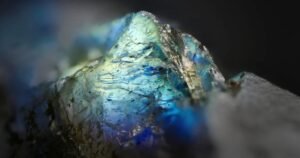
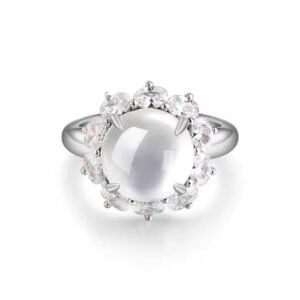
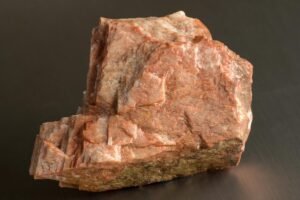
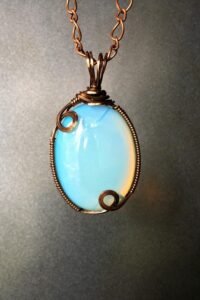
Moonstone is a member of the feldspar mineral group and is best known for its distinctive optical phenomenon called adularescence, a soft, floating glow that appears to move across the surface of the stone as it is viewed from different angles. This effect gives moonstone its characteristic “moonlight” appearance and is the primary reason it has been valued in jewelry for thousands of years. Mineralogical Composition and The Physics of Light From a mineralogical perspective, moonstone is primarily a variety of orthoclase feldspar containing microscopic alternating layers of albite. This layered structure is the result of exsolution—a process where two minerals intermix at high temperatures but separate into distinct, alternating lamellae as the magma cools. The physics of the glow is a matter of light interference and scattering: Gemological Properties of Moonstone In gemological terms, moonstone is classified as a feldspar gemstone with moderate durability, making it suitable for jewelry when properly set and handled with care. It has a Mohs hardness of approximately 6 to 6.5, which allows it to resist minor scratches but also means it is more vulnerable than harder gemstones such as sapphire or diamond. As a result, moonstone is better suited for earrings, pendants, and necklaces, or for rings designed with protective settings.Moonstone typically exhibits a refractive index ranging from about 1.518 to 1.526 and a specific gravity averaging between 2.56 and 2.59, values that are consistent with orthoclase–albite feldspar compositions. Its optical character contributes to a vitreous to pearly luster, which enhances the gemstone’s soft, luminous appearance rather than sharp brilliance. One of the most important structural characteristics of moonstone is its perfect cleavage, a feature common to feldspars, which makes the stone susceptible to chipping or cracking if subjected to sudden impact. Because of these properties, moonstone requires thoughtful cutting, setting, and long-term care. Cabochon cuts are most commonly used, as they best display adularescence while minimizing stress on cleavage planes. In jewelry design, moonstone is often set in bezels or other protective mountings to reduce the risk of damage, especially in rings and bracelets that experience frequent wear. Colors and Varieties of Moonstone Moonstone occurs in a variety of body colors, including colorless, white, gray, peach, brown, and green. Among these, near-colorless stones displaying vivid blue adularescence are considered the most valuable in the gem market. Transparency also plays a significant role in value assessment; stones that are transparent to semi-transparent with a strong, centered glow are generally more desirable than cloudy or dull material. Formation and Geological Occurrence Geologically, moonstone forms in feldspar-rich igneous environments where molten rock cools slowly enough to allow mineral phases to separate through a process known as exsolution. During this cooling stage, an originally homogeneous feldspar crystal gradually divides into intergrown layers of orthoclase and albite. These microscopic lamellae later become responsible for the optical phenomenon of adularescence, as light interacts with the alternating mineral structures inside the stone. Moonstone is most commonly associated with granitic pegmatites and other feldspar-dominant igneous rocks, where large crystal growth is possible due to extended cooling periods. The quality of the internal layering—particularly the thickness, regularity, and orientation of the albite lamellae—plays a major role in determining the strength and color of the sheen observed in finished gems. Stones formed under stable geological conditions with very fine, uniform layers are more likely to display the desirable blue adularescence prized in the jewelry trade.Important commercial sources of moonstone include Sri Lanka, India, Madagascar, Myanmar, Australia, and parts of the United States. Sri Lanka has long been regarded as one of the most significant producers of high-quality moonstone, especially material showing strong blue sheen combined with good transparency. India is also a major supplier, often producing a wider range of body colors such as peach, gray, and brown varieties commonly used in decorative and designer jewelry. Madagascar has become an increasingly important modern source, contributing both orthoclase moonstone and related feldspar gems to the global market. Historically, fine blue-sheen moonstone from Myanmar was highly valued, though such material is now less commonly encountered. Smaller deposits in regions such as Norway and the United States contribute limited quantities, often sought by collectors rather than mass-market jewelry production. Overall, the geographic origin of moonstone can influence not only color and transparency but also the intensity and character of its adularescent effect, making provenance an additional consideration in gem evaluation. Internal Characteristics and Identification Under a jeweler’s loupe or microscope, moonstone reveals its “birthmarks.” The most diagnostic feature is the “centipede” inclusion—small, stress-induced fissures that resemble many-legged insects. Distinguishing natural moonstone from imitations is crucial: Professional Care and Maintenance Moonstone is sensitive to environmental stressors. Its vulnerability to heat and chemicals means it should never be cleaned in an ultrasonic or steam cleaner, as the vibrations can trigger cleavage fractures. For details, please refer to our Gemstone Care Guide. Today, moonstone remains an important gemstone in both fine jewelry and designer collections. As one of the recognized birthstones for June, it holds lasting appeal for consumers seeking meaningful and symbolic jewelry. Its unique optical behavior, relatively accessible price range, and long cultural history—from ancient Roman and Indian traditions to modern contemporary design—continue to make moonstone one of the most recognizable and commercially significant feldspar gemstones in the global market.
Clean Gemstone Jewelry

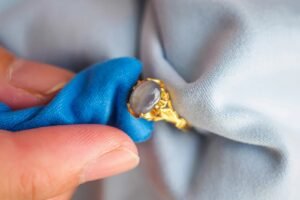
كيفية تنظيف مجوهرات الأحجار الكريمة بأمان

Gemstone jewelry requires proper care to maintain its beauty, durability, and value. Because gemstones differ widely in hardness, toughness, porosity, and treatment methods, there is no single cleaning method suitable for all gemstones. Key Factors That Determine How a Gemstone Should Be Cleaned Factor Why It Matters Hardness Determines scratch resistance, not chemical or impact resistance Toughness Indicates resistance to cracking or chipping Porosity Porous stones absorb liquids and chemicals Cleavage Stones with perfect cleavage can split easily Treatments Oil, resin, dye, or heat treatments may be damaged Setting Type Prongs, pavé, or antique settings affect cleaning safety Universal Safe Home Cleaning Method Step Recommended Practice Cleaning solution Warm water + mild liquid dish soap Tools Soft toothbrush or cosmetic brush Technique Gentle brushing, especially under the stone Rinsing Lukewarm running water Drying Lint-free cloth + air drying Frequency Every few weeks for regular wear Cleaning Methods Overview: What’s Safe and What’s Not Cleaning Method Effectiveness Risk Level Recommended For Mild soap & water Moderate Low Most gemstones Soft brushing Moderate Low Routine maintenance Ultrasonic cleaner High High Only hard, untreated stones Steam cleaner Very high Very high Diamonds, sapphires (professional only) Chemical cleaners High Extreme Generally not recommended Polishing cloth Low Low Metal surfaces only Gemstones Safe for Ultrasonic Cleaning ⚠ Even for these stones, ultrasonic cleaning can loosen settings. Gemstone Ultrasonic Safe? Conditions Diamond Yes No fractures or inclusions Ruby Yes Untreated only Sapphire Yes Untreated only Spinel Yes Natural, untreated Chrysoberyl Yes No inclusions Gemstones That Should NOT Be Ultrasonically Cleaned Gemstone Reason Emerald Oil or resin filled Opal High water content, cracking risk Turquoise Porous and dyed Tanzanite Brittle, cleavage Moonstone Cleavage and inclusions Lapis Lazuli Porous, dyed Fluorite Low hardness, cleavage Cleaning Recommendations by Gemstone Type Gemstone Soap & Water Ultrasonic Steam Notes Diamond ✔ Yes ✔ Yes ✔ Yes Inspect for cracks Ruby ✔ Yes ⚠ Limited ⚠ Limited Avoid treated stones Sapphire ✔ Yes ⚠ Limited ⚠ Limited Heat-treated stones need care Emerald ✔ Gentle ❌ No ❌ No Oil-filled Opal ❌ No ❌ No ❌ No Damp cloth only Pearl ❌ No ❌ No ❌ No Organic material Aquamarine ✔ Yes ❌ No ❌ No Brittle inclusions Topaz ✔ Yes ❌ No ❌ No Perfect cleavage Garnet ✔ Yes ⚠ Limited ❌ No Heat sensitive Chemicals and Substances to Always Avoid Substance Potential Damage Bleach Etches stones and corrodes metals Chlorine Weakens prongs Ammonia Strips treatments Acids Surface erosion Alkalis Color fading Warm water, a mild cleaning agent, and a soft-bristled brush are consistently the safest approach for cleaning most gemstones. Mechanical cleaning methods should only be considered when the gemstone has been accurately identified and its structural stability is clearly understood. If there is any uncertainty, seek advice from a certified gemologist or entrust the piece to a professional jewelry service.

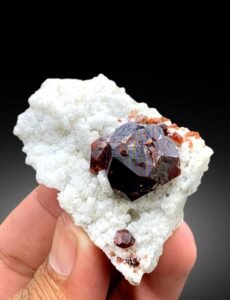
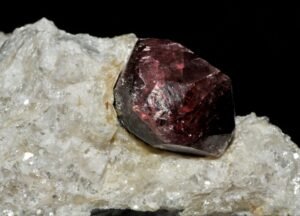
لقطة مقربة لبلورة عقيق برتقالية اللون ذات شكل جميل على مصفوفة معدنية بيضاء.

العقيق الجروسولاري: الخصائص والتكوين والأصناف والأهمية الجيولوجية

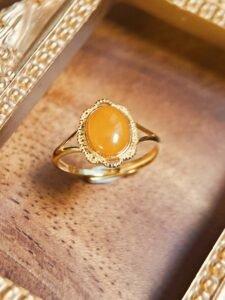
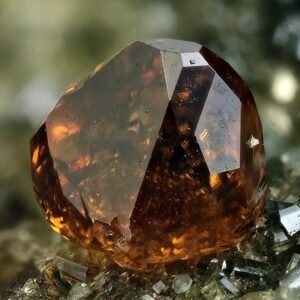
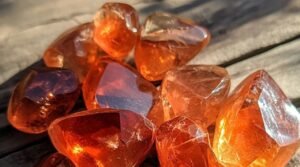
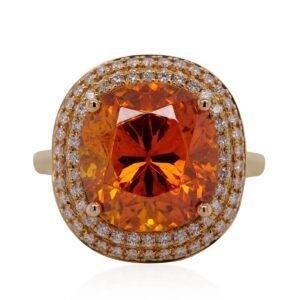
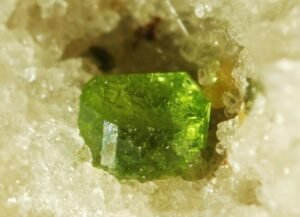
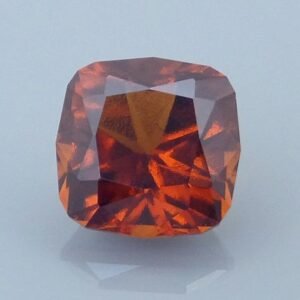
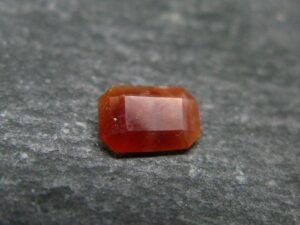
Grossular garnet is a calcium–aluminum silicate mineral belonging to the garnet group, with the chemical formula Ca₃Al₂(SiO₄)₃. It is one of the most compositionally pure endmembers of the garnet family and is best known for its unusually wide range of colors, which distinguish it from many other garnet species.Unlike the more familiar red almandine or pyrope garnets, grossular occurs in shades of green, yellow, orange, brown, pink, colorless, and even rare bluish-green tones. This diversity results from trace elemental substitutions rather than major structural changes, making grossular an important mineral for studying solid-solution behavior in silicate systems. Major Varieties of Grossular Garnet Tsavorite Tsavorite is a vivid green variety colored by chromium and vanadium. Discovered in East Africa, it is valued for its saturation, brilliance, and natural clarity. Unlike emerald, tsavorite typically lacks significant inclusions and does not require treatments. Hessonite Hessonite is an orange to reddish-brown variety often called “cinnamon stone.” It commonly shows internal swirl-like inclusions and lower transparency compared to other garnets, yet remains mineralogically significant. Hydrogrossular Hydrogrossular forms when hydroxyl groups partially replace silica within the structure. This variety often appears opaque and is commonly found in massive or granular aggregates rather than well-formed crystals. Colorless and Pale Grossular Rare colorless or very light-colored grossular garnets occur when trace impurities are nearly absent. These specimens are important for scientific study because they represent the most chemically pure form of the mineral. Identification and Diagnostic Features of Grossular Garnet In gemological laboratory testing, Grossular garnet is distinguished by several diagnostic features that separate it from other members of the garnet group and its common stimulants. Crystal Habit and Internal Zoning Grossular garnets often present as well-formed dodecahedral or trapezohedral crystals. Internally, they may exhibit distinct growth zoning. In the Hessonite variety, this is often accompanied by a characteristic “roiled” or “treacle” appearance—a swirly internal texture caused by the irregular distribution of transparency and minute inclusions, such as rounded apatite or zircon crystals. Anomalous Double Refraction (ADR) While the garnet species belongs to the isometric system and should theoretically remain dark under crossed polars (isotropic), Grossular frequently exhibits Anomalous Double Refraction. When viewed through a polariscope, this appears as “snake-like” extinction patterns or patchy strain shadows, a result of structural tension during the crystal’s growth. Ultraviolet and X-Ray Fluorescence Fluorescence serves as a helpful secondary test. Many Grossular specimens are inert, but specific varieties may show distinctive reactions. For instance, some yellow or light green grossulars may fluoresce a weak to moderate orange or pink under long-wave (LW) and short-wave (SW) ultraviolet light. Under X-ray excitation, certain specimens may also exhibit a noticeable orange or yellowish glow. Spectroscopic Analysis For definitive separation from other species like Andradite or Hydrogrossular, gemologists look for specific absorption bands. Hessonite typically shows manganese-related bands at 407nm and 430nm. Tsavorite, the green variety, displays a distinct chromium and vanadium spectrum, with absorption in the violet and a transmission window in the green. By integrating these physical and optical observations—specifically the refractive index, specific gravity, and internal strain patterns—gemologists can effectively distinguish Grossular from the iron-rich Almandine or the magnesium-rich Pyrope species. Global Distribution and Notable Localities Grossular garnet is found in diverse geological environments across the globe, with reports of both gem-quality and specimen-grade material from nearly every continent. In North America, the United States offers significant occurrences in California, the New England region, and Vermont, while Canada’s Quebec province, particularly the Jeffrey Mine, has historically produced world-class crystals. Africa remains a premier source for high-value varieties, with Kenya and Tanzania leading production for the vibrant green tsavorite and the luminous Merelani Mint grossular. In Asia, important deposits are located in China, Pakistan, and Sri Lanka, the latter being famous for its characteristic hessonite gravels. European and other regional sources include the alpine-type fissures of Italy and Switzerland, along with the historically significant deposits in Russia. Each of these localities produces grossular with unique gemological properties, crystal habits, and color profiles, providing a wealth of diversity for researchers and mineral collectors alike. Applications in Jewelry Design As a gemstone material, grossular offers a remarkable spectrum of colors that makes it suitable for a wide range of jewelry design styles, from high-end statement pieces to delicate everyday wear. Its moderate hardness, ranging from 6.5 to 7.5 on the Mohs scale, implies that while it is durable, protective settings should be considered for high-impact jewelry such as rings to ensure longevity and resist abrasion.One of the most appealing aspects of grossular for modern consumers is that it typically does not undergo heat treatment or artificial dyeing. This makes it a preferred choice for those seeking natural and untreated gemstones. Whether it is the intense green of tsavorite or the warm, honey-like tones of hessonite, grossular provides designers with a pure and versatile palette. Care and Maintenance Recommendations To maintain the luster and integrity of grossular garnet, proper care is essential. Like most natural gemstones, it should be protected from sudden thermal shocks and intense mechanical vibrations or impacts. For routine cleaning, it is best to use lukewarm water combined with a mild, neutral detergent and a soft-bristled brush.While grossular is relatively durable, its scratch resistance is slightly lower than that of corundum species such as ruby or sapphire. Therefore, owners should exercise caution during wear and ensure the gemstone is stored separately from harder minerals to prevent surface scratches. By following these simple preservation steps, the brilliance and structural wholeness of the gem can be maintained for generations. FAQ Is Grossular a Garnet? Yes. Grossular is a true member of the garnet family, scientifically classified as a garnet species rather than a variety. Garnets are defined by a shared crystal structure and general chemical formula, and grossular represents the calcium–aluminum endmember of this group.In gemology, any stone identified as grossular is, by definition, a garnet. Is Grossular Garnet Rare? Grossular as a mineral is not rare, but gem-quality grossular in certain colors—such as vivid green tsavorite or clean colorless stones—is relatively rare. Rarity depends

سيليستيت

علم وجمال السيلستيت: دليل كامل عن المعادن والأحجار الكريمة

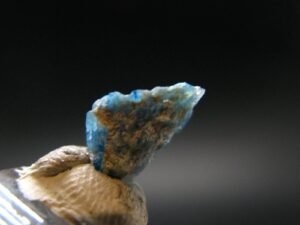
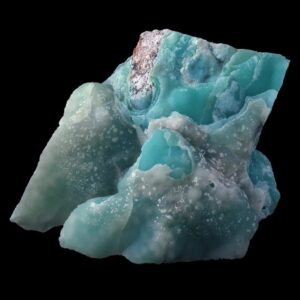
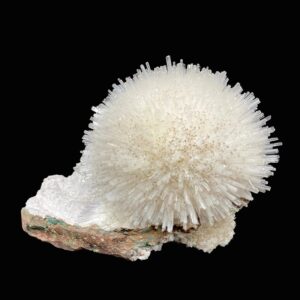
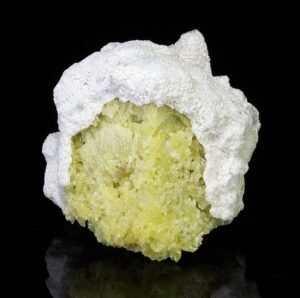
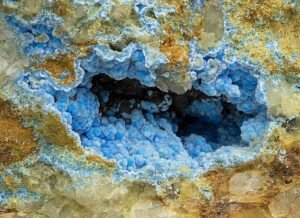
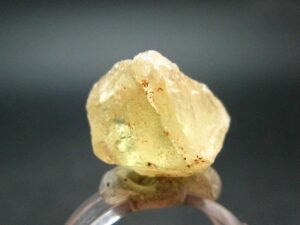
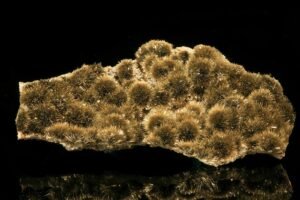
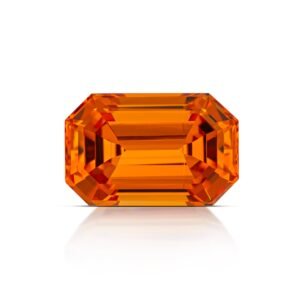
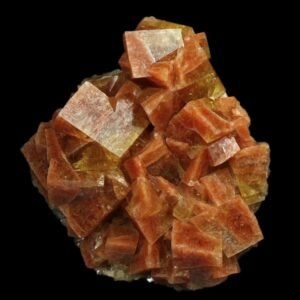
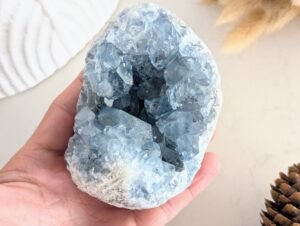
Celestite, also spelled celestine, is a naturally occurring form of strontium sulfate (SrSO₄) recognized for its often delicate sky‑blue color and crystalline beauty. The mineral’s name derives from the Latin coelestis, meaning “heavenly,” a reference to this characteristic hue. Scientifically, celestite is significant both as a major geological source of strontium and as an indicator mineral in sedimentary environments. Although attractive specimens are sometimes faceted or displayed by collectors, its physical properties limit its practical use in conventional jewelry. Mineralogical Identity and Classification Celestite belongs to the broader sulfate mineral group, sharing close affinities with barite (BaSO₄) and anglesite (PbSO₄). These minerals form a continuum in which the dominant cation transitions from strontium at the celestite endmember to barium in barite. All three crystallize in related structures within the orthorhombic crystal system, reflecting the shared geometry of the sulfate anion (SO₄²⁻) coordinated with different metal cations. Chemically, celestite can exhibit limited solid‑solution behavior with barite and occasionally with other sulfates, depending on local chemistry during formation. This capacity for elemental substitution explains the mineral’s occurrence in varied geological settings and the range of colors observed in specimens. Color and Variety While many people are most familiar with celestite’s pale blue forms, the mineral can also present in a wider spectrum, including colorless, white, yellow, orange, and even rare reddish or greenish shades. These color variations are often due to trace elemental inclusions, slight structural imperfections, or fluid inclusions present during growth. The classic sky‑blue specimens are most often associated with excellent transparency and contrast sharply with internal structural imperfections, making them visually appealing as collector pieces or occasional faceted gems. Geological Formation and Occurrence Sedimentary and Evaporite Settings Celestite most commonly forms in evaporite deposits and sedimentary rocks, particularly dolomitic limestones and restricted basin environments where seawater or saline groundwater becomes concentrated through evaporation or diagenetic processes. In these settings, sulfate and strontium ions reach concentrations sufficient to precipitate celestite crystals within cavities, fractures, or pore spaces. The mineral can also develop through diagenetic replacement, where strontium released during the breakdown of carbonate minerals interacts with sulfate in groundwater to form discrete celestite crystals. Significant celestite localities include: These occurrences span diverse sedimentary and evaporitic basins, illustrating celestite’s broad geological distribution. Geochemical Significance and Strontium Source From a geochemical perspective, celestite is the primary natural source of strontium, an alkaline earth metal with applications in pyrotechnics, glass manufacture, and specialized ceramics. Strontium extracted from celestite is often converted into strontium carbonate or nitrate for industrial use. In sedimentary geology, the presence of celestite within a rock sequence can serve as a proxy for past salinity conditions, fluid evolution, and basin restriction levels. Strontium isotope ratios in celestite also provide valuable data for reconstructing past seawater composition and correlating stratigraphic units over large distances. Gemological Perspectives Suitability as a Gemstone While celestite’s delicate sky-blue hues and exceptional transparency can rival more prominent gemstones, its physical properties impose significant limitations on its use in conventional jewelry. With a Mohs hardness of only 3–3.5 and perfect cleavage in multiple directions, celestite is considerably more fragile than standard gem materials, rendering it highly susceptible to scratches and structural cleavage fractures. Consequently, faceted celestite remains a rarity, typically reserved for specialized collectors or museum displays rather than everyday wear. Furthermore, the mineral exhibits notable sensitivity to environmental factors; prolonged exposure to direct light can cause its “heavenly” blue color to fade, and temperatures exceeding 200°C can cause irreversible degradation of the stone’s structure. Collector and Display Use In the lapidary arts, celestite is most frequently fashioned into step cuts or emerald cuts to maximize weight retention and showcase its natural clarity. While the material’s inherent brittleness makes large faceted gems difficult to produce, exceptional museum-grade specimens can occasionally reach tens of carats, though most commercial cuts remain under three carats. Beyond the niche market for faceted stones, celestite is most prized in its natural mineral form. Large, crystal-lined geodes—particularly those sourced from Madagascar—are highly sought after for interior display and mineralogical collections due to their striking prismatic habits and vibrant coloration. Care and Handling Given its extreme fragility, celestite requires meticulous handling to prevent damage. Cleaning should be performed exclusively using a soft-bristled brush and mild detergent in lukewarm water, as harsh chemicals or ultrasonic cleaners can cause immediate fracturing. If the stone is incorporated into jewelry, protective settings such as bezels are essential to shield the edges from impact. Moreover, jewelers must exercise extreme caution during repairs, as the application of heat from a torch or exposure to intense workshop lighting can result in a permanent loss of color or thermal shock. Comparison with Related Minerals Celestite is often compared with other sulfate minerals: The gradational series between barite and celestite reflects how cation substitution affects mineral stability, form, and occurrence in nature. Celestite is a multifaceted mineral that bridges sedimentary geology and gemology. Composed of strontium sulfate and crystallizing in the orthorhombic system, it offers insight into ancient evaporitic environments and the global mobility of strontium within the Earth’s crust. While its physical properties limit its use in conventional jewelry, its aesthetic appeal and rich scientific context make it a mineral of lasting interest to collectors and researchers alike.

فريديليت

ما هو الفريدليت؟ الخصائص، التواجد، والاستخدامات

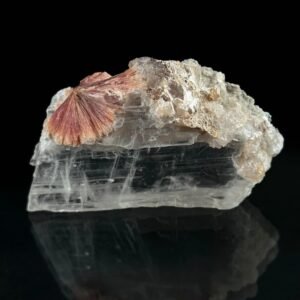
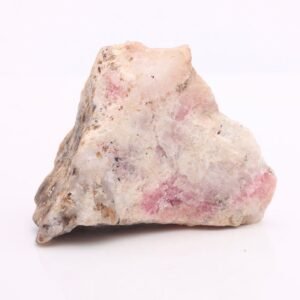
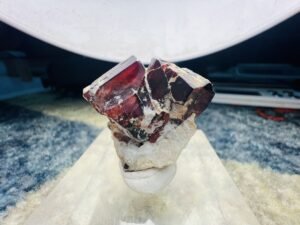
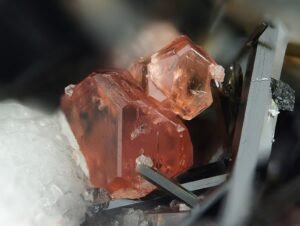
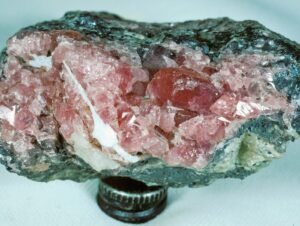
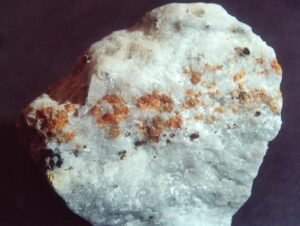
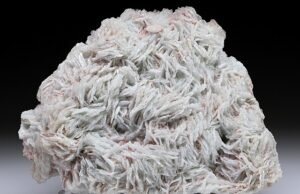
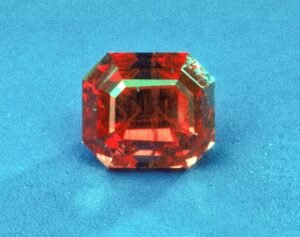
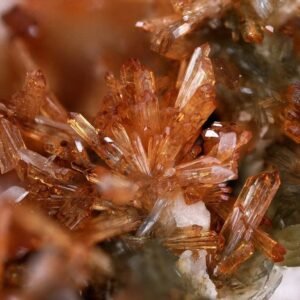
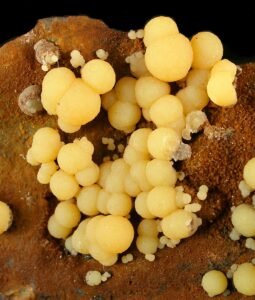
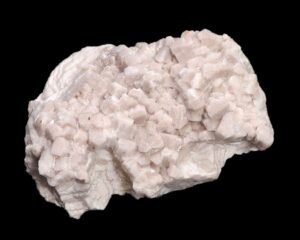
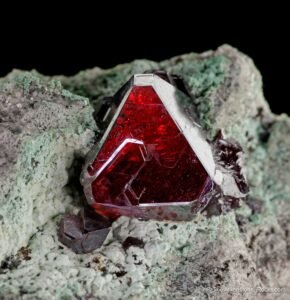
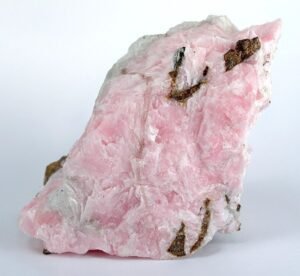
Friedelite is a relatively rare manganese silicate mineral belonging to the humite group. It is best known for its deep pink to reddish coloration and its close association with manganese-rich metamorphic environments. Although occasionally encountered in gem collections, friedelite is primarily valued for its mineralogical importance rather than widespread commercial use. Note:Historically associated with the humite group, but currently the namesake of the Friedelite group. The mineral was first described in 1876 and named in honor of Charles Friedel, a French chemist and mineralogist known for his contributions to crystallography and organic chemistry. Since its discovery, friedelite has remained a mineral of interest mainly to researchers, collectors, and those studying manganese-bearing geological systems. Chemical Composition and Mineral Classification Chemically, friedelite is a hydrated manganese silicate with the idealized formula Mn₈Si₆O₁₅(OH)₁₀. In natural specimens, manganese is commonly partially substituted by iron, magnesium, or zinc. These substitutions lead to slight variations in chemical composition and can influence color intensity and texture, though they do not significantly change the mineral’s fundamental structure. Friedelite is a member of the humite group, a family of nesosilicate minerals characterized by alternating layers of silicate tetrahedra and hydroxyl-bearing octahedral sheets. Other minerals in this group include humite, clinohumite, and norbergite. What distinguishes friedelite within this group is its unusually high manganese content, which plays a key role in both its coloration and geological occurrence. Crystal Structure and Physical Properties Friedelite crystallizes in the trigonal crystal system, although well-formed individual crystals are relatively uncommon. Most specimens occur as granular masses, fibrous or lamellar aggregates, or compact crusts intergrown with other manganese-rich minerals. The layered nature of its crystal structure often gives friedelite a foliated or slightly micaceous appearance, particularly in fibrous varieties. The most distinctive feature of friedelite is its color, which typically ranges from deep rose pink to reddish pink and brownish red, with occasional orange-red tones. This coloration is primarily caused by manganese ions within the crystal lattice. Friedelite is generally translucent to opaque, and its luster varies from vitreous to silky, especially on fibrous surfaces. On the Mohs scale, friedelite has a hardness of approximately 4.5 to 5, placing it among moderately soft minerals. Its specific gravity typically ranges from about 3.1 to 3.3. These physical properties make friedelite unsuitable for most jewelry applications, particularly where durability is required. Geological Formation and Environment Metamorphic Origin Friedelite forms predominantly in manganese-rich metamorphic environments, particularly where sedimentary manganese deposits have undergone regional or contact metamorphism. Its formation typically requires medium to high temperatures, silica-rich fluids, and the presence of hydroxyl-bearing components. Under these conditions, friedelite develops as part of complex mineral assemblages within metamorphosed manganese ores. Associated Minerals Friedelite commonly occurs alongside other manganese silicates and oxides, including rhodonite, pyroxmangite, spessartine garnet, hausmannite, tephroite, and quartz. These associations make friedelite a useful indicator mineral for interpreting the paragenesis and metamorphic history of manganese deposits. Occurrence and Global Distribution Major Localities Friedelite is considered geologically uncommon, with well-documented occurrences restricted to specific regions. Notable localities include France, which produced classic type locality specimens, as well as Sweden and Italy in manganese-rich metamorphic zones. Additional occurrences have been reported in the United States, particularly in New Jersey and parts of the western states, and in Japan within complex manganese ore bodies. The most significant and world-renowned localities are the Franklin and Sterling Hill mines in New Jersey. These sites are globally recognized for producing the highest quality specimens, including rare, transparent material with the greatest gem-quality potential. Friedelite from these locations often exhibits exceptional color saturation and is highly sought after by collectors of Franklin’s unique mineral suite. Specimens from different regions may vary in color saturation, texture, and associated mineral assemblages, reflecting local geological conditions. Friedelite in Mineral Collecting Although friedelite is not widely used as a gemstone, it holds significance among systematic mineral collectors and institutional collections. Specimens displaying intense coloration, well-developed fibrous textures, or clear associations with other manganese minerals are especially valued for educational and research purposes. Due to its moderate hardness and tendency to fracture, friedelite is rarely faceted. When cut, it is typically shaped into cabochons or polished sections intended for display rather than commercial jewelry. Distinguishing Friedelite from Similar Minerals Friedelite can be confused with other pink or red manganese minerals, particularly rhodonite, rhodocrosite, and pyroxmangite. Rhodonite is generally harder and often displays black manganese oxide veining, while rhodocrosite is a carbonate mineral with distinct cleavage and lighter pink tones. Pyroxmangite has a similar chemical composition but differs in crystal structure and cleavage behavior. Accurate identification of friedelite usually requires analytical methods such as X-ray diffraction or electron microprobe analysis, especially when it occurs within complex mineral assemblages. Is Friedelite Rare? While friedelite is not among the rarest minerals known, it is considered geologically uncommon. Its formation requires a specific combination of high manganese concentration, silica availability, and suitable metamorphic conditions, which limits its global distribution. As a result, high-quality specimens are relatively scarce and more commonly found in museum or academic collections than on the open mineral market. Chemical Identification Tip: > A traditional and effective mineralogical test for distinguishing Friedelite from other silicates is its reaction to acids. Unlike many similar-looking minerals, Friedelite gelatinizes in hydrochloric acid (HCl). This characteristic “gel test” is a classic chemical method used to identify certain layered silicate minerals and can help confirm a specimen’s identity when visual inspection is insufficient.

الأمازونيت

اللغز الأزرق والأخضر: غوص عميق في علم المعادن الأمازونيت

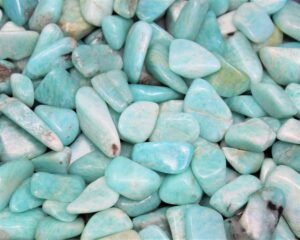
Amazonite is a green to blue-green variety of microcline feldspar, a potassium-rich tectosilicate mineral that forms a major component of the Earth’s continental crust. Although widely recognized in gemological and decorative contexts, Amazonite is best understood through the lens of mineralogy and geology rather than commercial classification. Its significance lies not in rarity, but in the combination of its color, crystal chemistry, geological formation, and long history of human use. Feldspar Minerals and the Place of Amazonite Overview of the Feldspar Group Feldspars are the most abundant group of minerals in the Earth’s crust, accounting for approximately 60 percent of continental rocks. They are framework silicates, or tectosilicates, characterized by a three-dimensional network of silicon and aluminum tetrahedra bonded with alkali or alkaline earth metals. Feldspars are broadly divided into two major groups: alkali feldspars and plagioclase feldspars. Amazonite belongs to the alkali feldspar group, which is dominated by potassium feldspar varieties. These minerals play a central role in igneous petrology and are key indicators of magmatic processes, cooling history, and chemical environments within the crust. Fundamental Chemical Formula The idealized chemical formula of Amazonite is KAlSi₃O₈. This formula reflects a framework of silicon and aluminum tetrahedra linked by shared oxygen atoms, with potassium ions occupying interstitial sites to maintain electrical neutrality. Variations in composition are generally minor and occur at the trace-element level. From a crystallographic perspective, Amazonite exhibits a highly ordered aluminum-silicon distribution, a characteristic feature of microcline formed under slow cooling conditions. Trace Elements and Color Mechanisms The origin of Amazonite’s distinctive color was historically misunderstood. Early hypotheses attributed the green coloration to copper, largely by analogy with other green minerals. However, detailed spectroscopic and chemical analyses have demonstrated that copper is not responsible for the color. Modern research indicates that trace amounts of lead incorporated into the crystal lattice, combined with structural water, play a central role in producing Amazonite’s color. These trace constituents create specific electronic defects that affect light absorption in the visible spectrum. Minor variations in lead concentration, water content, and lattice distortion can result in a wide range of green and blue-green tones. The study of Amazonite has therefore contributed to broader scientific understanding of color mechanisms in minerals, particularly the role of trace elements in otherwise chemically uniform structures. Hardness and Mechanical Behavior Amazonite has a Mohs hardness ranging from approximately 6 to 6.5. This places it within the moderate hardness category, comparable to many common silicate minerals. While sufficiently hard for ornamental use, it is not resistant to abrasion or impact in the same way as harder gemstones such as quartz or corundum. Like all feldspars, Amazonite exhibits two directions of perfect cleavage at nearly right angles. This cleavage reflects planes of weakness in the crystal lattice and has important implications for both geological behavior and lapidary processing. Density and Streak The specific gravity of Amazonite typically ranges from 2.56 to 2.58, consistent with potassium feldspars. Its streak is white, regardless of the intensity of its surface color, which is a useful diagnostic property in mineral identification. Optical Characteristics and Internal Morphology Amazonite typically ranges from translucent to opaque, with true transparency occurring only in rare, thin fragments. Its surface exhibits a characteristic vitreous luster, though a subtle pearly sheen is often visible on its distinct cleavage planes—a diagnostic feature that distinguishes it from the more uniform reflections of quartz or carbonates. One of the most striking visual aspects of Amazonite is its internal texture, often characterized by white streaks or grid-like “perthitic” patterns. These features are the result of perthitic exsolution, a process where sodium-rich feldspar lamellae separate from the potassium-rich host during slow cooling. These textures are not merely aesthetic; they serve as a geological “clock,” providing petrographic researchers with vital data regarding the thermal history and cooling rates of the host rock. Petrogenesis and Mineralogical Associations The formation of Amazonite is almost exclusively tied to granitic pegmatites, which represent the chemically evolved “last gasps” of crystallizing magma. These environments are characterized by high volatile content and slow cooling, allowing crystals to grow to significant sizes. The transition of microcline into its triclinic structure—and the subsequent development of the Amazonite variety—is highly dependent on these stable, late-stage magmatic conditions. Typically, Amazonite is found in a rich mineralogical assemblage alongside smoky quartz, albite, biotite, and occasionally fluorite or beryl. Because it requires specific geochemical triggers, such as the presence of trace lead and structural water, the occurrence of Amazonite acts as a reliable indicator of the highly differentiated nature of its parent pegmatite system. Geographic Distribution and Geological Variability Despite its misleading nomenclature, Amazonite is not reliably documented within the Amazon River basin. Instead, well-established deposits are distributed across key global regions, most notably the Ural Mountains of Russia, Madagascar, Brazil, India, China, and various African nations. In the United States, significant occurrences are found in the extensively studied pegmatites of Colorado and Virginia. These diverse localities yield specimens with distinct variations in color intensity, texture, and mineral assemblages—differences that serve as a direct record of the specific temperature, pressure, and trace-element availability present during the mineral’s formation. Consequently, Amazonite serves as an invaluable subject for comparative geological studies and environmental reconstruction. Ethno-Archaeological Significance and Historical Context The historical utility of green feldspar minerals consistent with Amazonite dates back to the third millennium BCE, with significant archaeological evidence found in Ancient Egypt. These materials were expertly crafted into beads, amulets, and intricate inlays for ceremonial use. Similar artifacts identified in Mesopotamian and Near Eastern contexts suggest a widespread ancient appreciation for green feldspars. Historically, the value of Amazonite was derived from its vibrant aesthetic and relative workability rather than rarity; its physical properties allowed ancient artisans to shape it using primitive tools, cementing its role as a staple of early decorative arts. Etymology, Identification, and Scientific Value The name “Amazonite” was popularized in 18th-century European mineralogy based on the erroneous belief that the stone originated near the Amazon River. Although subsequent exploration failed to locate major deposits in

أكتينوليت

ما هو الأكتينوليت؟ الدليل الشامل للمعدن الأخضر المشع

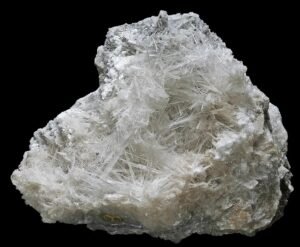
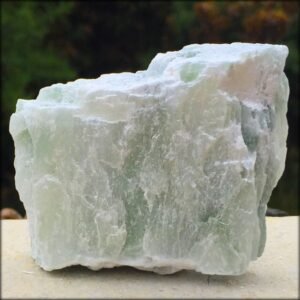
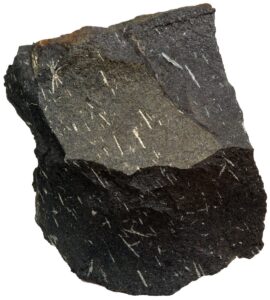
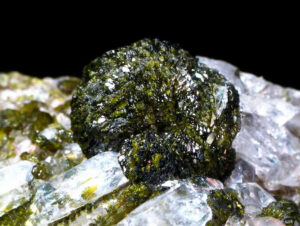
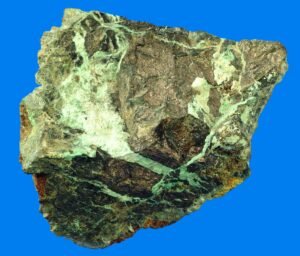
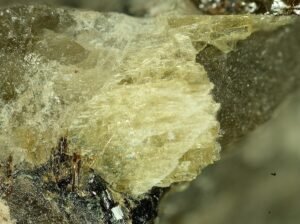
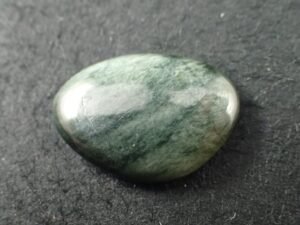
Actinolite is more than just a mineral; it is a geological storyteller. Often recognized for its striking green needles and its fundamental role in the formation of Nephrite Jade, actinolite is a centerpiece of metamorphic petrology. Whether you are a mineral collector, a geologist, or a gemstone enthusiast, understanding the complexities of actinolite reveals a world where chemistry, pressure, and time converge.Actinolite is a member of the amphole group, specifically part of the double-chain silicate family. Its name is derived from the Greek word aktis (ray), a nod to its frequent occurrence in radiating, needle-like (acicular) clusters.Chemically, actinolite sits in the middle of a solid-solution series. On one end, you have the magnesium-rich Tremolite; on the other, the iron-rich Ferro-actinolite. Actinolite occupies the green middle ground where magnesium and iron swap places within the crystal lattice. Pleochroism: The Color Shifter One of the most fascinating optical properties of actinolite is pleochroism. When viewed through a microscope under plane-polarized light, actinolite “changes” color as the stage is rotated. It may shift from a pale yellow-green to a deep emerald green. This is a primary way geologists distinguish it from similar minerals like hornblende. Chemical Composition and the Solid Solution Series The beauty of actinolite lies in its chemical flexibility. In mineralogy, a solid solution series describes a mineral where specific elements can substitute for each other without changing the underlying structure. The iron content doesn’t just change the color; it affects the mineral’s density and refractive index. As iron increases, the mineral becomes heavier and more “optically dense.” Where Does Actinolite Come From? Actinolite is a “metamorphic” mineral. It is not born from cooling lava (igneous) or settling sand (sedimentary). Instead, it is forged from the transformation of pre-existing rocks under intense heat and pressure. The Greenschist Facies Actinolite is the “poster child” for the Greenschist Facies. When basalt or gabbro (dark, volcanic rocks) are buried miles deep and subjected to temperatures between 300°C and 450°C, they undergo a chemical makeover. The original pyroxenes and plagioclases break down, and actinolite grows in their place. This gives the resulting rock—aptly named Greenschist—its characteristic color and schistose texture. Contact Metamorphism and Skarns Beyond regional metamorphism, actinolite forms in skarns. These are zones where hot, mineral-rich fluids from a magma chamber “cook” surrounding limestone or dolomite. The reaction between the silica in the fluid and the calcium/magnesium in the carbonate rock produces spectacular actinolite crystals. Actinolite and the “Jade” Connection Perhaps the most famous form of actinolite is one you might already own: Nephrite Jade. What is Nephrite? Nephrite is not a mineral in itself. It is a rock composed of extremely dense, felted, and interlocking fibers of actinolite and tremolite. This “interlocking” structure is key—it makes nephrite one of the toughest natural materials on Earth. While a diamond is harder (resisting scratches), nephrite is tougher (resisting shattering). The Cultural Significance of Actinolite-Jade Actinolite as Asbestos: Health and Safety It is impossible to discuss actinolite without addressing its classification as one of the six types of asbestos. Fibrous vs. Non-Fibrous Actinolite occurs in two main “habits”: Acicular/Prismatic: Long, needle-like crystals. These are generally safe to handle as large specimens. Asbestiform: Extremely thin, hair-like fibers that can be separated. When actinolite grows in these hair-like fibers, it is considered asbestos. If these fibers become airborne and are inhaled, they can lodge in the lung lining (mesothelium), leading to serious health issues like asbestosis or mesothelioma. Safety Tip: If you have a “fuzzy” or “hairy” specimen of actinolite, keep it in a sealed display box. Never grind, sand, or saw actinolite without proper respiratory protection and wet-cutting techniques. Major Global Occurrences of Actinolite Actinolite is a widely distributed mineral, appearing on every continent. However, several localities are particularly famous for the quality, size, or unique characteristics of their specimens: Zillertal, Austria – This region is world-renowned for the striking “Actinolite in Talc” specimens. Here, vivid green actinolite crystals grow embedded in a snowy-white talc matrix, creating a sharp contrast that is highly prized by collectors and museums. The Zillertal deposits are especially noted for the long, slender crystal habits that display the mineral’s characteristic fibrous structure. Taiwan – Taiwan is a major source of cat’s-eye actinolite, prized for its chatoyancy, and high-quality nephrite. The deposits are mainly located in metamorphic rocks where actinolite forms under specific temperature and pressure conditions. Taiwanese actinolite often exhibits a silky luster, making it highly sought after for jewelry and ornamental carvings. British Columbia, Canada – This province hosts some of the largest and most significant nephrite jade deposits in the world. Actinolite is a key component of these nephrite formations, and the jade extracted here is renowned for its deep green color, toughness, and uniform texture. The quality of Canadian nephrite has made it a major material for both traditional carving and modern jewelry. California, USA – In the Coast Ranges of California, actinolite occurs extensively within glaucophane schists, a type of metamorphic rock. These localities yield specimens ranging from fibrous to granular forms. Collectors often seek samples that show the mineral’s classic green coloration and well-defined crystal structure. Madagascar – Madagascar produces some of the largest and most transparent actinolite crystals, which are occasionally suitable for rare faceted gemstones. These crystals are highly valued for gem cutting due to their clarity and vivid green hues. The Malagasy deposits also provide specimens with exceptional size, making them important for both collectors and the gem trade. In summary, actinolite’s global distribution offers a remarkable variety of forms and qualities. From the fibrous chatoyant cat’s-eye stones of Taiwan to the massive nephrite jade of Canada and the transparent gem-quality crystals of Madagascar, each locality contributes unique characteristics that enhance the mineral’s scientific and aesthetic value. Identifying Actinolite vs. Similar Minerals In the field, actinolite is often confused with other green minerals. Here is how to tell them apart: Actinolite vs. Hornblende Hornblende is another amphibole, but it is usually much darker (black) and contains aluminum. Actinolite is typically greener and forms

amethyst

دليل شامل عن الجمشت: المعنى، الخصائص، التصنيف، القيمة والعناية

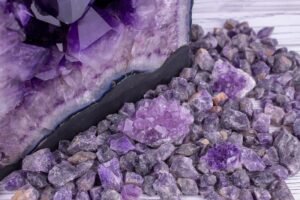
Amethyst is a violet-to-purple variety of quartz (SiO₂). Its distinctive color is caused by trace amounts of iron and natural irradiation during crystal formation. With a Mohs hardness of 7, amethyst is durable enough for everyday jewelry while still being easy to cut and polish.As a purple variety of quartz, amethyst has been admired for thousands of years for its beauty, durability, and symbolic meaning. From ancient royal jewelry to modern gemstone collections, amethyst continues to hold a special place in gemology and culture. Amethyst Color and Rarity Amethyst is the violet to purple variety of quartz, a mineral that is widely distributed throughout the Earth’s crust. While quartz itself is extremely common, truly exceptional amethyst is not. The finest quality is often referred to in the trade as “Siberian color,” a term used to describe a deep, rich purple resembling concord grapes, combined with subtle red or blue secondary flashes when viewed under incandescent light.These secondary flashes are a key indicator of top-quality amethyst and are typically visible only in stones with strong color saturation. Lighter or weaker purple material rarely displays this effect, which is why deeply colored amethyst with red or blue undertones is considered especially rare and desirable. Most amethyst found on the market occurs in shades ranging from pale lavender and light violet to soft pinkish-purple tones. When cut properly, even lighter-colored amethyst can be very attractive, often showing excellent brilliance and liveliness due to the stone’s transparency. In recent years, Brazil has produced notable lavender-pink amethyst that can occasionally resemble fine kunzite or morganite in appearance. This color was seen decades ago but disappeared from the market for many years, making its reappearance particularly interesting to cutters and collectors. Although exact matches remain rare, similar material continues to surface and is valued for its unique aesthetic. Where Amethyst Comes From The term “Siberian” refers to a color standard rather than a modern mining location. Despite its name, truly fine amethyst from Siberia is rarely seen today. Historically, one of the most important sources of top-quality amethyst was Zambia, especially during the 1980s and early 1990s. Zambian amethyst was prized for its deep, velvety purple color with strong red and blue secondary hues. However, this material often contained significant inclusions, requiring skilled cutting and careful removal of flawed sections. Production from this source declined sharply after the mid-1990s. Brazil has long been the world’s largest producer of amethyst, known more for quantity and crystal size than consistent top color. Major Brazilian sources include Rio Grande do Sul, Bahia, and Marabá. Brazil is also unique in producing pink amethyst, bi-color material, and unusually clear purple stones that are rarely found elsewhere. After Zambian production declined, Uruguay emerged as an important source. Uruguayan amethyst is known for its excellent crystal structure, high clarity, and saturated color, making it especially attractive to gemstone cutters. The strong crystal form often produces stones with deep color and exceptional brilliance. Bolivia is famous for ametrine, a natural bi-color quartz combining purple amethyst with golden citrine in a single crystal. While Bolivia also produces amethyst-only stones, their color is generally lighter compared to material from other major sources. North America produces limited quantities of amethyst, with notable deposits in Thunder Bay, Canada, and the Four Peaks mine in Arizona. Smaller occurrences are also found in Colorado and Maine. Madagascar, however, is considered by many experienced gem professionals to be one of the finest sources of all, producing deep amethyst with intense red and blue secondary flashes and outstanding color saturation. Amethyst Grading Explained Amethyst grading focuses primarily on color and clarity, rather than carat weight, because these two factors have the greatest influence on the gemstone’s appearance and value. How to Grade Amethyst Clarity Amethyst clarity is graded by evaluating the presence, size, and visibility of internal inclusions and surface-reaching features. High-quality amethyst is typically considered eye-clean, meaning no inclusions are visible to the naked eye when the stone is viewed face-up under normal lighting conditions. Common inclusions in amethyst may include tiny crystals, faint fractures, color zoning, or needle-like mineral growths, all of which are natural characteristics of quartz. Stones with fewer and less noticeable inclusions allow light to pass through more freely, resulting in better brilliance and overall appearance. While minor inclusions are generally acceptable in amethyst, especially in larger stones, those that are easily visible, disrupt transparency, or weaken durability will lower the clarity grade and overall value of the gemstone. Inclusions: The Amethyst Grading Chart AAAA – Top-tier amethyst with a deep, saturated purple color and excellent clarity; no visible inclusions to the naked eye. AAA – High-quality stones with medium to dark purple hues and minimal inclusions. AA – Medium purple with more noticeable inclusions; still attractive but less intense than higher grades. A–B – Lighter or uneven color with visible inclusions; often used in beads or less formal jewelry. Amethyst: Meaning, Symbolism, and Birthstone Significance Amethyst has been revered across cultures for millennia, prized not only for its mesmerizing violet shades but also for its profound symbolic weight. From ancient legends to modern wellness, this gemstone remains one of the most storied jewels in history. The Legend of Sobriety The name “amethyst” finds its roots in the ancient Greek word amethystos, which translates literally to “not intoxicated.” This etymology reflects an early belief that the stone possessed the power to prevent drunkenness and instill a sense of mental clarity. To harness this protection, ancient Greeks and Romans would often fashion drinking vessels from amethyst, hoping the stone would ward off the physical and cognitive effects of excess wine. Spiritual and Royal Heritage Beyond its association with temperance, amethyst has long served as a vessel for spiritual and protective significance: The February Birthstone Amethyst is universally celebrated as the official birthstone for February. This tradition evolved from ancient customs that linked specific gems to the months of the year, a practice rooted in religious texts and later standardized into modern gemstone calendars. Today, giving amethyst to

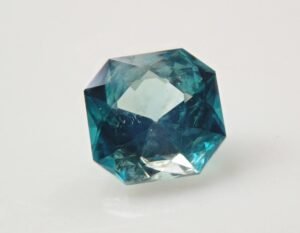
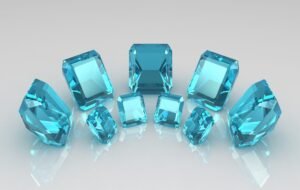
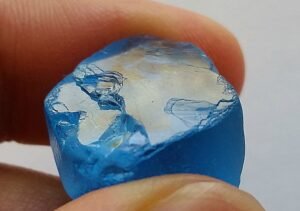
بلورة توباز زرقاء تظهر سطح انقسام أملس وعاكس.

ما هو انشقاق الأحجار الكريمة؟

يشير انقسام الأحجار الكريمة إلى ميل البلورة إلى الانكسار على طول مستويات داخلية محددة حيث تكون الروابط الذرية أضعف. تتوافق هذه المستويات مع الترتيب الطبيعي للذرات داخل البنية البلورية. عندما يتم تطبيق الضغط على طول هذه المستويات

موسوعة الأحجار الكريمة

قائمة بجميع الأحجار الكريمة من الألف إلى الياء مع معلومات مفصلة عن كل منها

حجر الميلاد

اكتشف المزيد عن هذه الأحجار الكريمة الشهيرة ومعانيها

مجتمع

انضم إلى مجتمع محبي الأحجار الكريمة لمشاركة المعرفة والتجارب والاكتشافات.