
Samarskite is a complex rare-earth oxide mineral that occurs mainly in granitic pegmatites and other highly evolved igneous rocks. The name Samarskite generally refers to a mineral group historically divided into several closely related species, with samarskite-(Y) being one of the principal recognized members. These minerals are characterized by high concentrations of yttrium and other rare-earth elements, together with uranium, thorium, iron, niobium, tantalum, titanium, and oxygen. Their complex compositions reflect the highly fractionated geological environments in which they form.
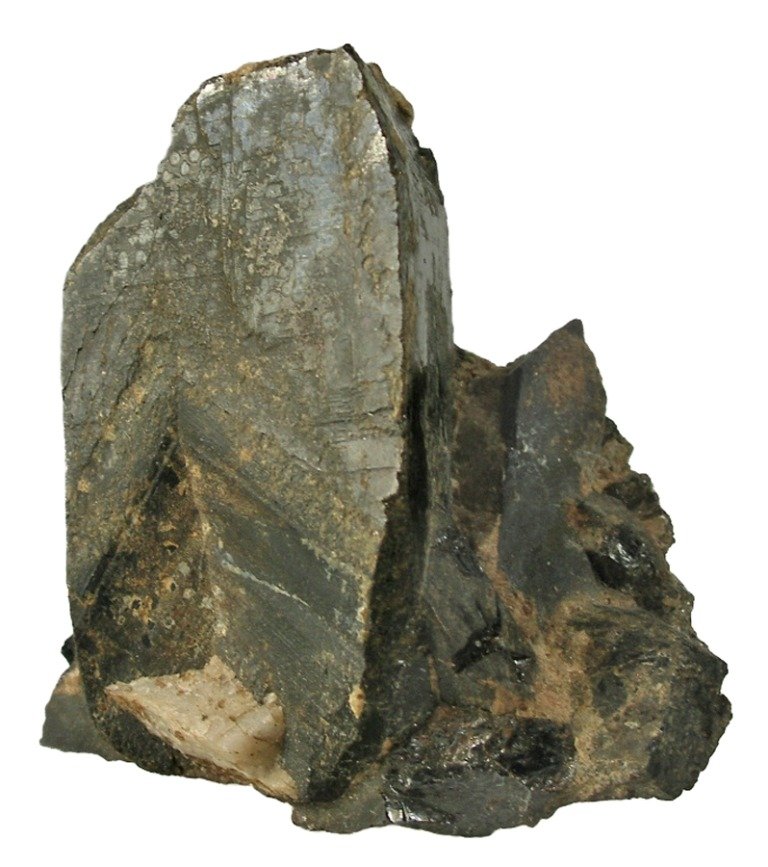
Samarskite typically occurs as massive, granular, or irregular aggregates, although well-formed crystals can also develop. Crystals are commonly black, brownish-black, or dark brown, and fresh surfaces may show a submetallic to resinous appearance. The mineral generally has a high specific gravity because of its substantial content of heavy elements such as rare-earth elements, uranium, thorium, and niobium. Its color, density, composition, and occurrence in rare-element pegmatites are important characteristics used in its identification.
The chemical composition of samarskite is variable because of extensive substitution among rare-earth elements and other cations. Samarskite-(Y), for example, is dominated by yttrium among the rare-earth elements, while uranium and thorium may occupy important structural positions. Niobium is also a major constituent, and tantalum can substitute for niobium to varying degrees. This compositional variability is characteristic of many complex oxide minerals associated with rare-element-enriched geological systems.Samarskite is also notable for its radioactive properties. Uranium and thorium incorporated into its structure can produce measurable radioactivity, and prolonged radioactive decay may damage the mineral’s crystal structure. This process can lead to metamictization, in which an originally crystalline mineral becomes partially or extensively disordered at the atomic scale. As a result, the physical properties of individual samarskite specimens can vary considerably depending on their degree of radiation damage and alteration.
In mineralogical studies, samarskite is particularly important as an example of a complex rare-earth and niobium-bearing oxide. It can contain a broad range of economically and scientifically significant elements, including yttrium, uranium, thorium, niobium, tantalum, and various lanthanides. Its occurrence is therefore closely associated with the geochemical concentration of incompatible elements during the late stages of magmatic crystallization.
History and Naming of Samarskite
The history of samarskite is closely connected with the study of rare-earth elements during the nineteenth century. The mineral was named in honor of Vasili Evgrafovich Samarsky-Bykhovets, a Russian mining official. The name was subsequently applied to a group of chemically complex minerals containing rare-earth elements, uranium, thorium, niobium, tantalum, and related elements.Samarskite became particularly significant in early rare-earth research because chemical analyses of specimens revealed unusual and previously poorly understood combinations of elements. During the nineteenth and early twentieth centuries, investigations of minerals such as samarskite contributed to the broader development of rare-earth chemistry and helped demonstrate the complexity of natural rare-earth-bearing minerals.
Modern mineral classification has refined the historical use of the name. Rather than treating all samarskite material as a single chemically uniform mineral, mineralogical studies recognize distinct species within the samarskite group based on their dominant elements and crystal-chemical characteristics. Samarskite-(Y) is one of the principal species, while related compositions are distinguished according to the dominant rare-earth element occupying the relevant structural site.
The study of samarskite has also provided useful information about radioactive mineral alteration. Because uranium and thorium can be incorporated into its structure, natural radioactive decay may progressively disrupt its crystal lattice. Some specimens therefore preserve evidence of radiation damage, alteration, and later recrystallization. These characteristics make samarskite relevant not only to mineral classification but also to studies of mineral stability and the behavior of radioactive elements in geological environments.
Formation and Geological Occurrence of Samarskite
Samarskite forms primarily in highly evolved, rare-element-enriched igneous environments, especially granitic pegmatites. These geological settings develop during the late stages of magma crystallization, when elements that do not readily enter the structures of earlier-forming minerals become concentrated in the remaining melt. Rare-earth elements, uranium, thorium, niobium, tantalum, and titanium can become enriched in these residual fluids and melts, providing the chemical conditions necessary for the formation of complex oxide minerals such as samarskite.
Within pegmatites, samarskite commonly occurs together with other rare-element minerals. Associated minerals may include columbite-group minerals, tantalite-group minerals, euxenite-group minerals, fergusonite, gadolinite, xenotime, monazite, zircon, and various feldspars and quartz. The exact mineral assemblage depends on the composition of the host pegmatite and the degree of magmatic fractionation. Samarskite is particularly characteristic of pegmatites enriched in niobium, yttrium, uranium, thorium, and other incompatible elements.
The mineral may develop during relatively late stages of pegmatite crystallization, when the residual melt has undergone substantial chemical differentiation. Changes in temperature, pressure, fluid composition, oxidation state, and the availability of volatile components can influence which rare-element minerals crystallize. Because samarskite can accommodate several different elements within its structure, it is able to form in chemically complex environments where multiple rare-element phases may compete for the same components.Samarskite can also undergo extensive alteration after its initial crystallization. Uranium and thorium decay continuously over geological time, producing radiation damage within the crystal structure. This can result in metamictization, which reduces long-range atomic order and may substantially modify the mineral’s original physical properties. Hydrothermal fluids and weathering processes can further alter samarskite, causing the redistribution or removal of some elements and producing secondary minerals around or within altered grains.
Geological occurrences of samarskite are known from a number of rare-element and rare-earth-bearing pegmatite districts around the world. Important specimens have been reported from granitic pegmatites in regions of North America, Europe, Africa, Asia, and other areas where highly fractionated felsic magmatism has concentrated incompatible elements. Individual localities can produce samarskite with significantly different proportions of yttrium, rare-earth elements, uranium, thorium, niobium, tantalum, and titanium, reflecting differences in the chemistry and evolution of the host geological system.
Crystal Structure of Samarskite
Samarskite has a complex oxide structure capable of accommodating a wide range of relatively large and highly charged cations. The structure is dominated by oxygen atoms coordinated with niobium and other cations, while yttrium, rare-earth elements, uranium, thorium, calcium, iron, and other elements can occupy larger structural sites. Extensive elemental substitution is one of the defining characteristics of samarskite-group minerals and contributes to their considerable chemical variability.
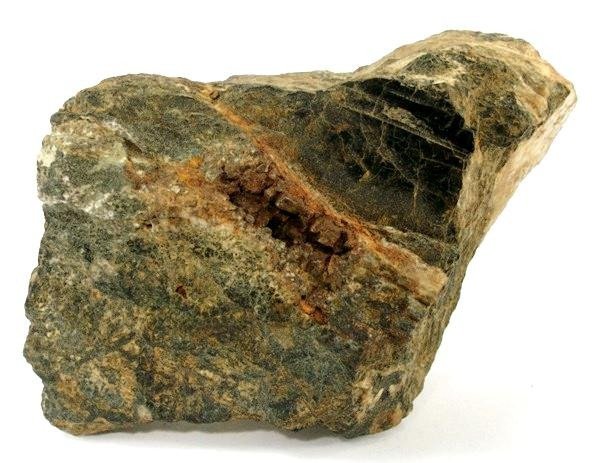
Samarskite-(Y), one of the principal species in the group, is generally described within the monoclinic crystal system. However, natural specimens may show substantial structural disorder as a result of radioactive decay. The radiation emitted by uranium and thorium progressively damages the crystal lattice, disrupting the regular arrangement of atoms. In strongly affected specimens, this process can produce a metamict state in which the original long-range crystalline order is greatly reduced.The degree of metamictization varies among specimens and depends on factors such as uranium and thorium concentration, geological age, and the history of the mineral after crystallization. Heating can sometimes restore portions of the original crystalline structure, allowing researchers to study the relationship between the original mineral structure and its radiation-damaged state. This behavior is one reason samarskite has been investigated in studies of radiation damage in natural minerals.
Because of its complex chemistry and structural disorder, samarskite may display considerable variation in physical properties. Crystallographic studies therefore need to distinguish between relatively well-preserved material and strongly metamict specimens. Chemical analysis, X-ray diffraction, and spectroscopic techniques can be used together to characterize its composition and structural condition.
Chemical Composition of Samarskite
The chemical composition of samarskite is highly variable because its crystal structure can accommodate numerous elements through extensive ionic substitution. Samarskite-(Y), one of the principal species associated with the samarskite group, is characterized by yttrium as the dominant element at the relevant large-cation site. However, other rare-earth elements, including erbium, ytterbium, gadolinium, dysprosium, and other lanthanides, can substitute for yttrium in different proportions. Calcium and other large cations may also occur in the structure.
Niobium is an important constituent of samarskite, while tantalum can substitute for part of the niobium. Uranium and thorium are also commonly present and account for much of the mineral’s high density and natural radioactivity. Additional elements such as titanium, iron, manganese, zirconium, and lead may occur in minor or variable amounts. The exact composition depends strongly on the geological environment and the chemical evolution of the mineral-forming system.
Because of this extensive substitution, natural samarskite specimens rarely conform to a simple fixed composition based only on a few major elements. Chemical analyses are therefore important for distinguishing samarskite-group minerals and determining the dominant elements within their structures. The distribution of rare-earth elements can also provide information about the conditions under which the mineral crystallized and the degree of differentiation experienced by the host pegmatite.
Physical Properties of Samarskite
Samarskite is typically black, brownish-black, dark brown, or nearly opaque in hand specimens. Its streak is generally dark brown to reddish-brown, although the exact streak color can vary with composition and alteration. The luster ranges from resinous to submetallic, and fresh surfaces may appear relatively reflective compared with weathered or strongly altered material.
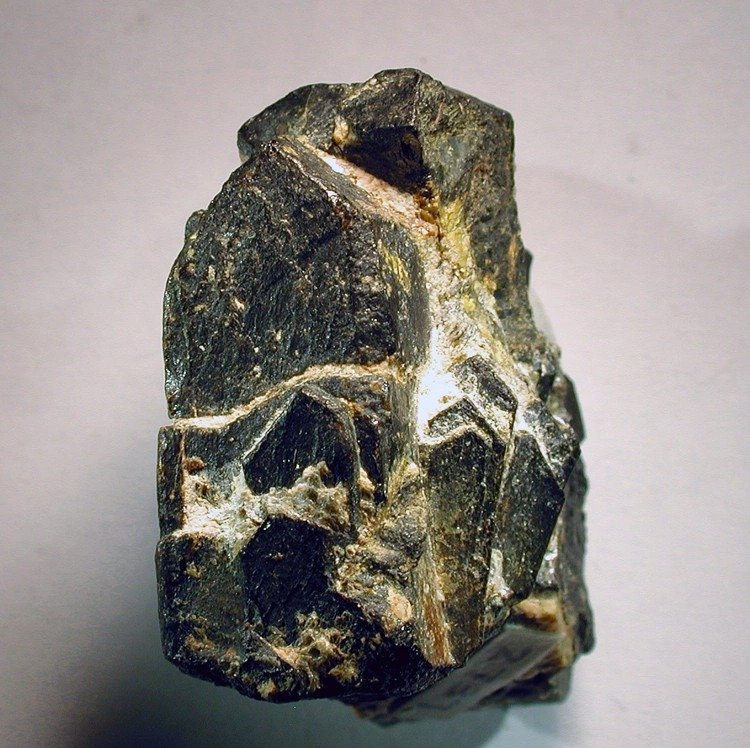
The hardness of samarskite is commonly around 5 to 6 on the Mohs scale, although measurements can vary depending on the specimen’s degree of alteration and radiation damage. Its specific gravity is relatively high, commonly falling in the approximate range of 5.0 to 5.8. The high density results from its content of heavy elements, particularly rare-earth elements, uranium, thorium, niobium, and tantalum.Samarskite commonly occurs as massive or granular material rather than as large, well-developed crystals. When crystals are present, they may be short-prismatic or irregularly developed, and crystal faces can be modified or obscured by alteration. Cleavage is generally indistinct or poorly developed, while fracture may be uneven to subconchoidal. Strongly metamict specimens can show physical properties that differ from those of relatively well-preserved crystalline material.
One of the most distinctive physical characteristics of samarskite is its radioactivity. Specimens containing significant uranium and thorium can produce measurable radiation. The intensity varies substantially according to chemical composition, particularly the concentration of radioactive elements. For this reason, radioactive samarskite specimens should be handled and stored appropriately, especially when they are large or contain unusually high concentrations of uranium or thorium.
Optical Properties of Samarskite
Samarskite is generally opaque or nearly opaque in ordinary hand specimens because of its dark color and complex composition. Thin fragments or sections may provide more information under transmitted or reflected-light microscopy, although extensive metamictization and alteration can complicate optical identification.The mineral commonly appears dark brown, brownish-black, or black in reflected or transmitted observations depending on thickness and degree of alteration. Internal reflections may sometimes be visible in polished sections. Its optical behavior can vary considerably between specimens because the chemical composition and structural condition are not constant.
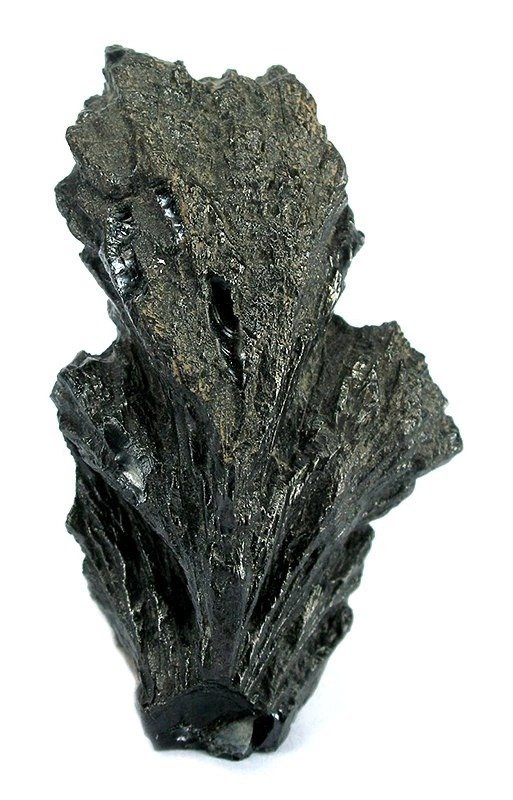
The combination of dark color, high density, complex chemistry, and frequent association with other rare-element oxides makes optical properties alone insufficient for a definitive identification. Mineralogical laboratories generally combine optical observations with chemical analysis and crystallographic or spectroscopic methods when accurate species identification is required.
Types and Varieties of Samarskite
The name Samarskite has historically been used for a group of closely related rare-earth and niobium-bearing oxide minerals. Modern mineral classification distinguishes individual species according to their dominant elements and crystal-chemical characteristics. The most commonly discussed members and related compositions include:
- Samarskite-(Y) — A yttrium-dominant samarskite-group mineral and the principal species associated with the name Samarskite. It commonly contains significant uranium, thorium, niobium, tantalum, iron, titanium, and other rare-earth elements.
- Samarskite-(Yb) — A related species in which ytterbium is dominant among the relevant rare-earth elements. It belongs to the same broader chemical and structural family but is distinguished by its dominant rare-earth component.
- Samarskite-group minerals — A broader classification covering closely related rare-earth, uranium, thorium, niobium, and tantalum oxides. Their compositions can overlap considerably because of extensive elemental substitution.
- Metamict samarskite — Not a separate mineral species, but a description commonly applied to samarskite that has experienced substantial radiation damage. Uranium and thorium decay can progressively disrupt the original crystal lattice and reduce its long-range structural order.
Because samarskite-group minerals can contain many elements in variable proportions, historical literature may use the term Samarskite more broadly than modern mineralogical classification does. When a specimen is being formally identified, its chemical composition and structural characteristics are important for determining the appropriate species designation.
Radioactivity and Metamictization
The presence of uranium and thorium is an important characteristic of many samarskite specimens. These radioactive elements undergo natural decay and release energetic particles that progressively damage the surrounding crystal lattice. Over geological periods, accumulated radiation damage can substantially reduce the structural order of the mineral.
This process is known as metamictization. A strongly metamict samarskite specimen may retain the external appearance and overall chemical composition of the original mineral while losing much of its original long-range crystalline order. As structural order decreases, properties such as hardness, density, optical behavior, and X-ray diffraction characteristics may also change.The extent of metamictization depends on several factors, including the concentration of uranium and thorium, the age of the specimen, the rate of radioactive decay, and the mineral’s geological history. Some samarskite remains sufficiently crystalline for conventional crystallographic analysis, whereas other material may be extensively metamict.
Heating experiments have shown that radiation-damaged minerals can undergo structural recovery under suitable conditions. During thermal treatment, portions of the disordered material may recrystallize, producing diffraction patterns more closely related to the original crystalline structure. This behavior has made samarskite and related uranium- and thorium-bearing minerals useful natural materials for studying radiation damage and structural recovery in geological materials.
Samarskite in Granitic Pegmatites
Samarskite is particularly associated with granitic pegmatites that have undergone extensive magmatic differentiation. Pegmatites form from the late-stage portions of felsic magmas and can become strongly enriched in elements that are excluded from the major rock-forming minerals during earlier crystallization. These residual melts may contain elevated concentrations of rare-earth elements, niobium, tantalum, uranium, thorium, and other incompatible elements.
Within such pegmatites, samarskite may occur as isolated grains, irregular masses, or aggregates associated with other rare-element minerals. It is commonly found alongside minerals belonging to the columbite-tantalite group, as well as euxenite, fergusonite, gadolinite, xenotime, monazite, zircon, and other accessory phases. The mineral associations can provide useful information about the chemical evolution of the pegmatite and the distribution of rare elements during its crystallization.
Samarskite may also occur in different textural positions within a single pegmatite. Some grains form during relatively late magmatic crystallization, while others may subsequently be affected by hydrothermal alteration. Altered grains can develop secondary mineral coatings, fractures, or compositional changes caused by interaction with later fluids. Consequently, a single specimen may preserve several stages of geological history, including primary crystallization, radioactive damage, and secondary alteration.
Chemical and Elemental Associations of Samarskite
Samarskite is an important host for a diverse range of rare and high-field-strength elements. Yttrium and other rare-earth elements commonly occupy major structural positions, while niobium is an important component of the oxide framework. Tantalum may substitute for niobium, and uranium and thorium can occur in significant concentrations. Smaller amounts of titanium, zirconium, iron, manganese, calcium, and other elements may also be incorporated.
The distribution of rare-earth elements within samarskite is particularly variable. Yttrium may dominate, but the mineral can contain substantial amounts of heavy rare-earth elements and smaller proportions of other lanthanides. This compositional variation reflects the chemical conditions of the parent melt and the competition among different rare-element minerals during crystallization. Minerals such as xenotime, monazite, fergusonite, and euxenite can accommodate some of the same elements, so their relative abundance and composition can provide information about the evolution of the pegmatite.
Uranium and thorium are especially significant because they affect both the chemical composition and long-term structural condition of samarskite. Their radioactive decay produces radiation damage, while the resulting daughter elements can gradually accumulate within the mineral. Lead produced through uranium and thorium decay may therefore become an important component of older samarskite specimens. Chemical zoning and variations in elemental concentrations may also occur within individual grains.
Occurrence and Mineral Associations
Samarskite is most commonly found in rare-element granitic pegmatites, particularly those enriched in yttrium, niobium, tantalum, uranium, thorium, and other incompatible elements. These pegmatites are generally associated with evolved felsic magmatism and can contain a wide range of unusual accessory minerals. Samarskite may occur in the central or intermediate zones of pegmatite bodies, although its precise position depends on the local chemical and structural conditions.
Common associated minerals include feldspar, quartz, muscovite, albite, and tourmaline, which form major parts of many granitic pegmatites. More specialized associations can include columbite-group minerals, tantalite-group minerals, fergusonite, euxenite, xenotime, gadolinite, monazite, zircon, and other rare-element oxides and phosphates. The presence of these minerals alongside samarskite often indicates a strongly fractionated mineral-forming system.
Samarskite can also be affected by late-stage hydrothermal alteration. Fluids moving through fractures and grain boundaries may modify its chemical composition or partially replace the original mineral. Uranium, thorium, rare-earth elements, and other components can be redistributed during alteration, potentially producing secondary phases around the original grain. In weathered pegmatites, samarskite may therefore occur together with a complex assemblage of secondary oxides, phosphates, and hydrated minerals.
Notable Localities of Samarskite
Samarskite has been reported from rare-element pegmatites in several parts of the world. Important occurrences include regions of the United States, Canada, Brazil, Madagascar, Norway, Sweden, Russia, and other areas with evolved granitic pegmatite systems. The composition of samarskite can differ significantly between localities because each occurrence reflects a distinct combination of source-rock composition, magmatic evolution, temperature, fluid activity, and later alteration.
Some well-known pegmatite districts have produced relatively large or chemically unusual samarskite specimens. In North America, rare-element pegmatites of the Appalachian region have yielded samarskite and other yttrium- and niobium-bearing minerals. Brazilian and African pegmatites are also important sources of rare-earth and niobium minerals, while Scandinavian pegmatites have contributed historically significant specimens to mineralogical collections.
Locality information is particularly useful when studying samarskite because chemical composition can vary considerably from one deposit to another. Analytical data from individual localities can reveal differences in the relative abundance of yttrium, heavy rare-earth elements, uranium, thorium, niobium, tantalum, and titanium. Such variations can be used to investigate the geochemical evolution of the pegmatites in which the mineral formed.
How to Identify Samarskite
Samarskite can be recognized by a combination of its dark color, relatively high density, hardness, association with rare-element pegmatites, and commonly radioactive composition. Typical specimens are black to brownish-black and may have a resinous, submetallic, or somewhat dull luster. The mineral commonly occurs as irregular grains or massive aggregates rather than as large, sharply defined crystals. Its high specific gravity can be noticeable when compared with many of the lighter silicate minerals occurring in the same host rock.
Radioactivity can provide an additional indication when uranium- or thorium-rich material is present. However, radioactivity alone is not sufficient for identification because numerous other minerals can also contain radioactive elements. A radiation detector can be useful for screening specimens, but laboratory analysis is required to establish the mineral species and its exact composition.Samarskite can be difficult to distinguish visually from other dark rare-element oxides found in granitic pegmatites. Minerals such as euxenite, fergusonite, columbite-group minerals, and certain altered uranium-bearing oxides may have similar colors and textures. Chemical composition, crystal structure, and mineral associations are therefore more reliable than appearance alone.
For mineralogical identification, techniques such as electron microprobe analysis, energy-dispersive X-ray spectroscopy, X-ray diffraction, Raman spectroscopy, and other analytical methods may be used. X-ray diffraction can be particularly challenging when a specimen is strongly metamict because radiation damage reduces the intensity and clarity of its crystalline diffraction pattern. In such cases, chemical analysis and complementary spectroscopic methods can provide important additional information.
Samarskite and Similar Minerals
Samarskite occurs with several other dark, high-density rare-element minerals, and distinguishing them may require analytical testing. Some of the most relevant comparisons include:
| Mineral | Main Composition | Common Appearance | Distinguishing Features |
|---|---|---|---|
| Samarskite | Yttrium, rare-earth elements, uranium, thorium, niobium, tantalum, oxygen | Black to brownish-black, resinous to submetallic | Complex rare-earth oxide; commonly radioactive and strongly associated with evolved pegmatites |
| Euxenite | Yttrium, rare-earth elements, calcium, uranium, thorium, titanium, niobium | Black to brownish-black | Similar rare-element oxide, but characterized by a different dominant chemical and structural arrangement |
| Fergusonite | Yttrium, rare-earth elements, niobium, oxygen | Brown, yellowish-brown, or black | Niobium-rich oxide with compositions centered on the fergusonite structure |
| Columbite | Iron, manganese, niobium, tantalum, oxygen | Black to brownish-black | Generally associated with niobium-tantalum pegmatites and has a different chemical composition from samarskite |
| Tantalite | Iron, manganese, tantalum, niobium, oxygen | Black to dark brown | Tantalum-dominant member of the columbite-group mineral series |
| Xenotime | Yttrium, phosphate, rare-earth elements | Usually yellowish-brown, brown, or reddish-brown | Yttrium phosphate rather than a complex niobium-bearing oxide |
The distinction between these minerals is particularly important in rare-element pegmatites because several can occur together within the same rock. Visual characteristics can provide an initial indication, but definitive identification generally depends on chemical and crystallographic data.
Uses and Scientific Importance of Samarskite
Samarskite has relatively limited direct commercial use as a mineral specimen compared with common industrial minerals. Its primary significance is associated with mineralogical research, rare-earth geochemistry, radioactive mineral studies, and the characterization of highly evolved pegmatites. Because it can incorporate yttrium, other rare-earth elements, niobium, tantalum, uranium, and thorium, its composition can provide information about the concentration and distribution of incompatible elements during late-stage magmatic crystallization.
Samarskite is also relevant to studies of natural radiation damage. The radioactive decay of uranium and thorium can progressively disrupt its crystal structure, making samarskite a useful natural material for investigating metamictization and the relationship between radiation damage and mineral structure. Comparisons between crystalline and strongly metamict specimens can help researchers examine how prolonged radiation exposure modifies minerals over geological timescales.
For collectors, samarskite is primarily valued as a mineralogical specimen because of its characteristic dark appearance, high density, unusual chemistry, and occurrence in rare-element pegmatites. Specimens containing significant uranium or thorium should be handled and stored with appropriate consideration of their radioactivity, particularly when large or highly radioactive pieces are involved.