
Brucite, a magnesium hydroxide mineral with the chemical formula Mg(OH)2, is a relatively uncommon secondary alteration product that forms when magnesium-rich rocks interact with water in low-temperature, hydrous environments. Belonging to the hydroxide mineral group, it features hydroxyl groups bonded to magnesium ions, resulting in a soft texture with a Mohs hardness around 2.5, a distinctive pearly to glassy luster, and a diverse color palette ranging from white and colorless to vibrant green, blue, gray, and yellow. It commonly occurs in association with minerals such as serpentine, magnesite, hydromagnesite, and dolomite, often forming tabular, fibrous, or botryoidal crystal habits. Named in honor of American mineralogist Archibald Bruce (1777–1818) for his pioneering study of U.S. mineral specimens, brucite holds significant scientific value for offering insight into magnesium alteration processes and hydroxide formation, while exceptional specimens remain highly prized by mineral collectors for their striking aesthetic qualities.
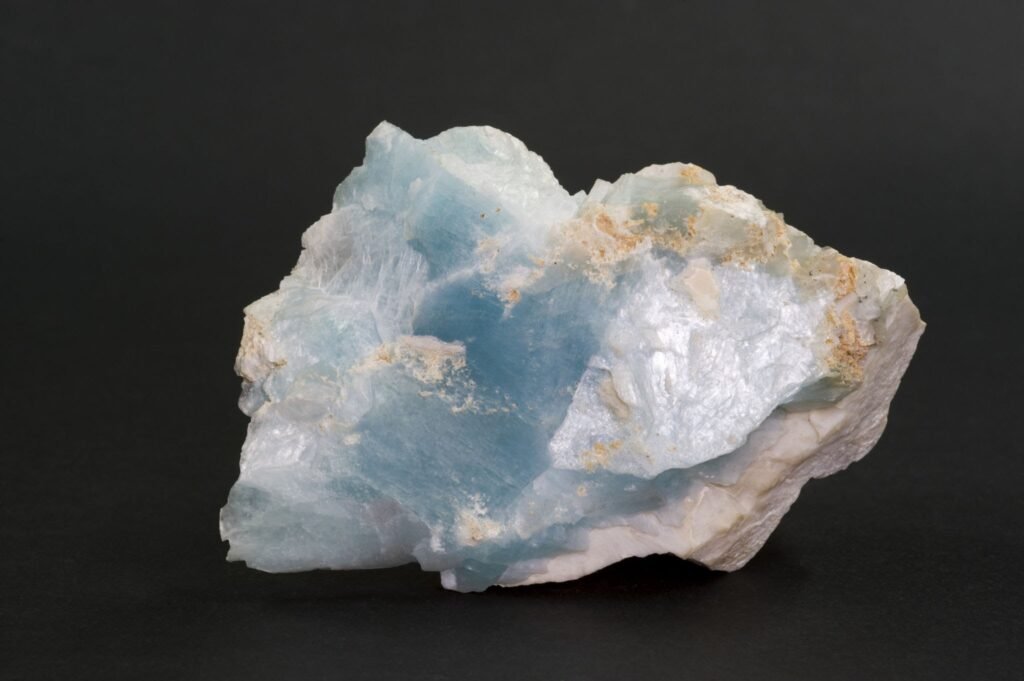
History of Brucite
First described as a distinct mineral species in the early 19th century, brucite was named in honor of Archibald Bruce (1777–1818), a pioneering American physician, mineralogist, and editor of the early American Mineralogical Journal, who first investigated unique specimens from New Jersey and Pennsylvania. As modern mineral classification systems developed, brucite gained foundational importance within mineralogy as a classic prototype of a simple hydroxide mineral, owing to its straightforward chemical formula, Mg(OH)2, and its layered trioctahedral crystal structure. Over the centuries, scientific research into brucite has significantly advanced our understanding of rock-water interactions, hydrothermal alteration, and the hydration processes that transform ultramafic rocks into serpentinites within the Earth’s crust. Today, beyond its historical and geological role as a key indicator of low-temperature metamorphic environments, brucite maintains strong contemporary relevance as an industrial source of high-purity magnesium oxide and eco-friendly flame retardants, while exceptionally formed, colorful specimens continue to hold a celebrated place in major museum collections and private mineral displays worldwide.
Formation of Brucite
Brucite forms predominantly through the alteration and hydration of magnesium-rich minerals—such as periclase (MgO), olivine, pyroxene, and magnesium-bearing carbonates—when exposed to water across a range of geological settings. Within ultramafic rocks like peridotites, brucite typically precipitates during serpentinization, a low-temperature hydrothermal process where circulating groundwater breaks down primary magnesium silicates and releases magnesium ions that bind with hydroxyl groups inside fractures, veins, and open cavities. Beyond mantle-derived rock transformations, brucite develops in contact metamorphic zones where limestones or dolomites interact with hot, magnesium-infused fluids, as well as in low-grade metamorphic terrains where hydrothermal circulation fosters its co-crystallization alongside serpentine and magnesite. Because its thermodynamic stability depends heavily on environmental constraints, brucite precipitates as fine-grained masses, fibrous aggregates, or well-defined crystals primarily in low-temperature, water-rich, and highly alkaline conditions with elevated magnesium concentrations.
Types and Varieties of Brucite
Brucite occurs in several distinct structural, compositional, and visual varieties, largely determined by the specific geological conditions under which it precipitates and the presence of trace element substitutions:
- Nemalite (Fibrous Brucite): A unique, highly distinct structural variety characterized by fine, silky, or thread-like elongated fibers. Nemalite often forms along veinlets and fractures within serpentinized ultramafic rocks. It frequently contains minor amounts of iron replacing magnesium, giving it a slightly pale green, yellow, or greyish cast.
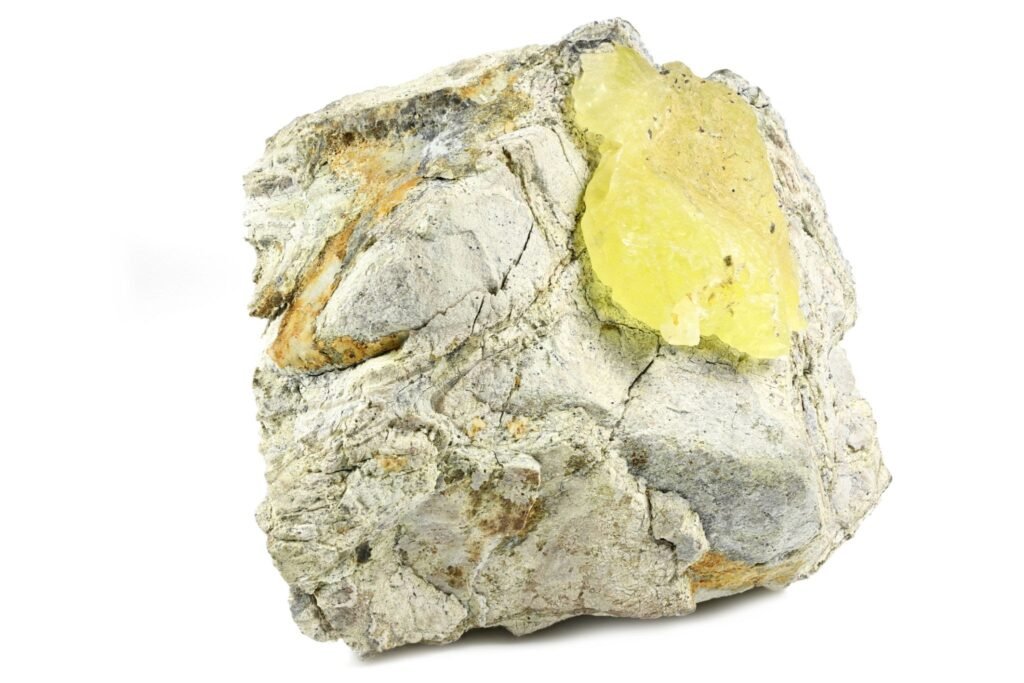
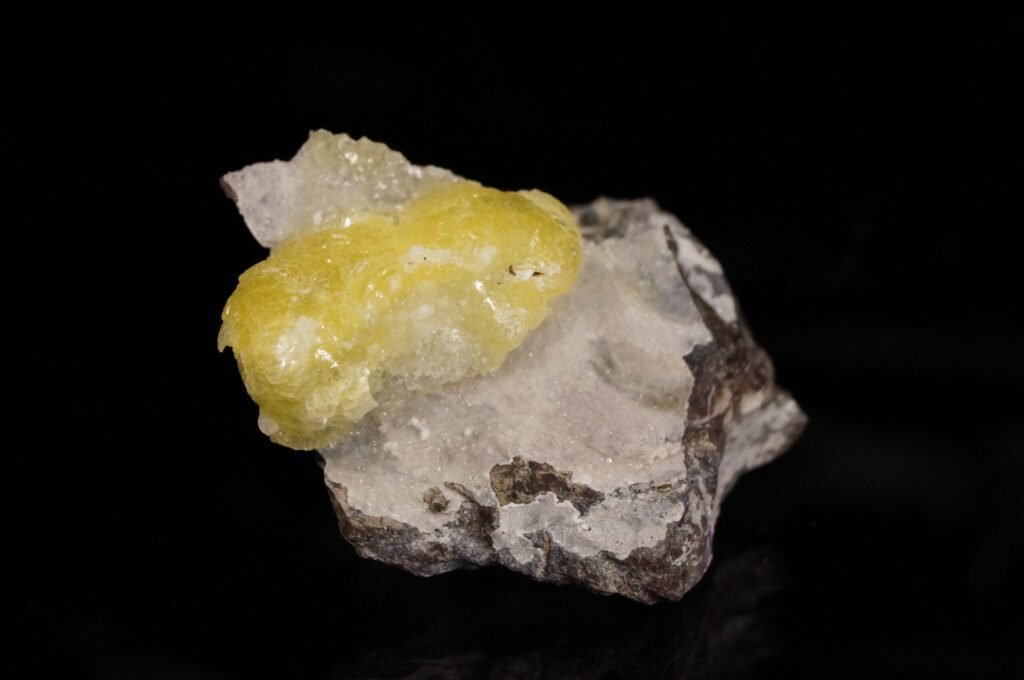
- Botryoidal / Yellow Brucite: Highly prized by mineral collectors, this variety forms rounded, grape-like clusters (botryoidal aggregates) or hemispherical spheres rather than flat plates. Notable deposits in Baluchistan, Pakistan, yield famous, intensely saturated canary-yellow to lime-green specimens whose striking colors are caused by trace impurities and structural growth conditions.
- Ferroan Brucite (Iron-Bearing Brucite): A chemically modified variety in which divalent iron ions (Fe2+) substitute for magnesium (Mg2+) within the crystal lattice. Exposure to air and surface weathering often causes the iron content to oxidize, shifting the mineral’s color from a translucent pale grey or green to darker brownish or reddish-brown tones.
- Manganiferous Brucite (Manganbrucite): A manganese-rich variety where manganese (Mn2+) partially replaces magnesium. These specimens typically exhibit brownish, reddish, or honey-yellow coloration. Upon prolonged exposure to air, the surface manganese oxidizes, causing the mineral to darken significantly over time.
- Crystalline / Tabular Brucite: The classic form of brucite, displaying well-defined hexagonal, plate-like, or tabular crystals with a strong pearly luster along the cleavage planes. Pure forms are colorless or snow-white, though slight pale blue or mint-green tints are common depending on minor trace element variations.
Crystal Structure of Brucite
Crystallizing in the trigonal crystal system (space group P3m1), brucite possesses a prototypical layered hydroxide structure comprised of stacked sheet units of magnesium ions coordinated with hydroxyl groups. Within each individual sheet, a central plane of magnesium cations (Mg²⁺) is sandwiched between two parallel layers of hydroxyl anions (OH⁻), where each magnesium atom sits in an octahedral coordination with six surrounding hydroxyl groups. These edge-sharing Mg(OH)₆ octahedra form tightly bonded, continuous two-dimensional sheets; however, adjacent sheets interact only through exceptionally weak van der Waals forces and faint hydrogen bonding across the interlayer space. This stark structural anisotropy directly accounts for brucite’s characteristic physical behavior—namely its extremely soft Mohs hardness of 2.5, flexible nature, and prominent, perfect basal cleavage {0001} along which the layered planes easily slide apart. While brucite shares this cadmium iodide (CdI₂) structural archetype with other hydroxide minerals like portlandite (Ca(OH)₂) and pyrochroite (Mn(OH)₂), differences in cation size and polarizability alter the interlayer spacing and unit cell dimensions, yielding distinct density and stability traits. Macroscopically, this underlying atomic geometry manifests in crystal habits ranging from crisp, hexagonal tabular plates and foliated sheets to compact granular masses or elongated, fibrous aggregates.
Physical and Chemical Properties of Brucite
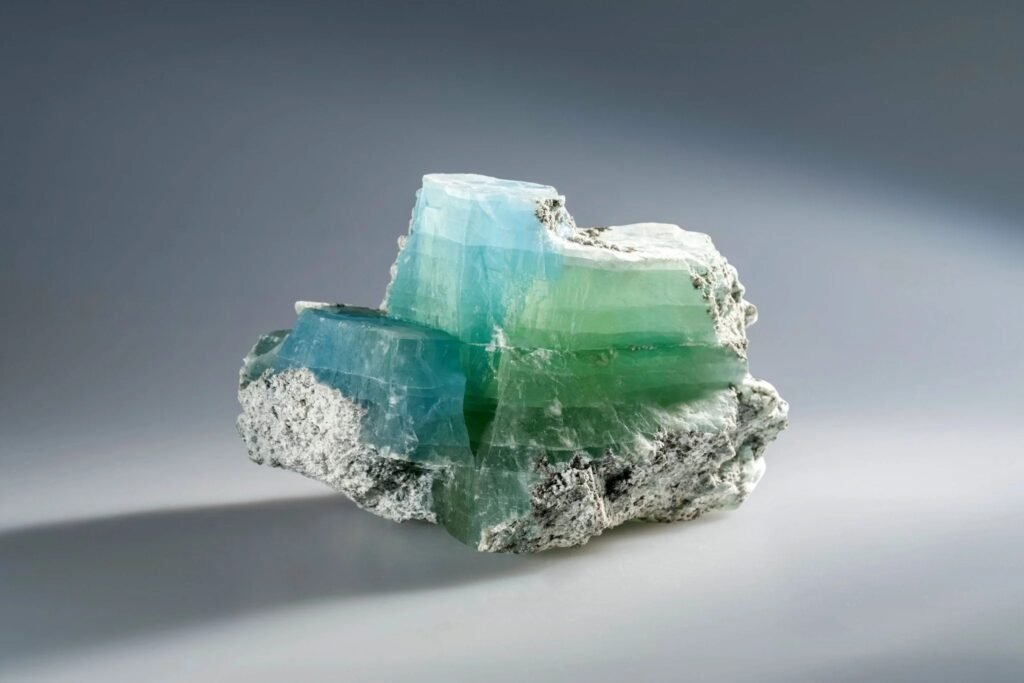
Brucite has a relatively soft and distinctive physical appearance compared with many other magnesium minerals. It has a Mohs hardness of 2.5–3, making it easily scratched by harder materials. The mineral usually appears white, colorless, gray, green, blue, or yellow, depending on impurities and geological conditions during formation. Brucite commonly shows a pearly to vitreous luster, especially on cleavage surfaces, and may occur as tabular, platy, fibrous, or massive aggregates. It has a perfect basal cleavage, which allows it to separate easily along layered planes within its crystal structure. The mineral is typically transparent to translucent, has a white streak, and possesses a relatively low specific gravity of about 2.3–2.4. Its soft texture and layered structure are important identifying characteristics that distinguish it from similar magnesium-bearing minerals such as serpentine and magnesite.
Chemically, brucite is a magnesium hydroxide mineral with the formula Mg(OH)₂, consisting of magnesium ions bonded with hydroxyl groups. It belongs to the hydroxide mineral class and contains a high proportion of magnesium, making it an important natural source of magnesium compounds. Brucite is generally stable in alkaline environments but can react with acids, producing magnesium salts and water. When heated, it undergoes a dehydration process in which hydroxyl groups are removed, transforming into magnesium oxide (periclase, MgO) and releasing water vapor. This thermal behavior makes brucite useful in industrial applications involving magnesium oxide production. Its chemical properties also make it significant in studies of water-rock interactions, mineral alteration, and geochemical processes involving magnesium-rich geological environments.
Locations and Occurrence of Brucite
Brucite occurs in diverse geological settings worldwide wherever magnesium-rich host rocks interact with hydrous or hydrothermal fluids, with major industrial-grade deposits and collector-quality occurrences documented across countries such as the United States, Russia, China, Pakistan, Canada, Italy, Austria, and South Africa. In the United States, significant deposits are situated in Nevada, California, and Texas, while the historically renowned Franklin-Sterling Hill mining district in New Jersey is celebrated for producing exceptional mineral specimens where brucite occurs alongside unique zinc- and magnesium-bearing species. On an industrial scale, vast commercial reserves are actively mined in eastern Russia (notably the Kuldhur deposit in the Jewish Autonomous Oblast) and China (such as in Liaoning Province), where massive brucite bodies hosted in metamorphosed carbonates and serpentinized ultramafic formations yield high-purity magnesium for refractories and eco-friendly flame retardants. Conversely, world-class collector specimens are far more localized: the Killa Saifullah district in Baluchistan, Pakistan, has become globally famous for its stunning, intensely saturated canary-yellow and lime-green botryoidal spheres, while select localities in Russia and Canada produce rare translucent blue and mint-green tabular crystals, reflecting specific, pristine fluid chemistries during low-temperature crystallization.
Applications of Brucite
Due to its remarkably high theoretical magnesium oxide content (up to 69% MgO) and strong alkaline properties, brucite serves as an indispensable resource across industrial, environmental, and scientific domains rather than as a commercial gemstone. Industrially, it is calcined to produce high-purity caustic calcined and dead-burned magnesia, essential for manufacturing high-temperature refractory furnace linings, ceramics, construction boards, and eco-friendly flame retardant fillers for polymers. In environmental and agricultural engineering, its natural alkalinity makes it an ideal, non-toxic neutralizing agent for treating acidic industrial wastewater, flue gas desulfurization, and adjusting soil pH while supplying vital magnesium nutrients to crops. Geochemically, brucite plays a vital role in cutting-edge research regarding mineral carbonation and geological carbon sequestration, as its reactive hydroxyl structure readily reacts with dissolved carbon dioxide to form stable magnesium carbonate minerals. Finally, while its softness precludes its use in jewelry, vibrant yellow, green, and translucent blue crystalline specimens are highly valued by museum curators, mineralogists, and private collectors as aesthetic highlights and essential teaching tools for studying low-temperature hydrothermal systems.