
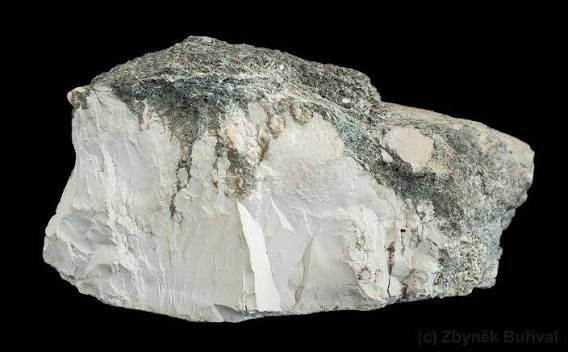
Magnesite is a carbonate mineral composed mainly of magnesium carbonate, with the chemical formula MgCO₃. It belongs to the calcite group of minerals and is recognized for its white, gray, yellowish, brown, or occasionally colorless appearance. Magnesite commonly forms as massive granular aggregates, although well-developed rhombohedral crystals can occur in certain geological environments. The mineral is characterized by its relatively low hardness, white streak, and carbonate composition, which allows it to react with acids when powdered. It forms primarily through the alteration of magnesium-rich rocks, sedimentary processes, and hydrothermal activity. Due to its high magnesium content and ability to produce magnesium oxide when heated, magnesite is an important industrial mineral used in refractory materials, magnesium production, chemical manufacturing, and various construction applications. Some attractive varieties are also polished and used as decorative stones or ornamental materials.
History of Magnesite
Magnesite was first identified and described as a distinct mineral species in the early 19th century. Its name was derived from magnesium, the chemical element that forms the main component of its composition, highlighting its strong association with magnesium-bearing geological environments. The recognition of magnesite as a separate mineral helped advance the understanding of carbonate minerals and their relationship with magnesium-rich rocks. During the 19th and 20th centuries, magnesite gained increasing economic importance as industries discovered its value as a source of magnesium and as a raw material for producing heat-resistant materials. The expansion of steel manufacturing, cement production, and other high-temperature industrial processes significantly increased demand for magnesite-based refractory products. As a result, large-scale mining operations developed in regions with abundant magnesite deposits, including Austria, Greece, China, Russia, Brazil, and Turkey. Today, magnesite remains an important industrial mineral, serving as a major source of magnesium compounds and playing a significant role in modern manufacturing and mineral resource industries.
Formation of Magnesite
Magnesite forms through several geological processes, mainly involving the interaction between magnesium-rich rocks, carbonate-bearing fluids, and environments where magnesium can combine with carbon dioxide. One of the most common formation mechanisms is the carbonation of ultramafic rocks, such as peridotite and serpentinite, which contain abundant magnesium-bearing minerals like olivine and serpentine. When these rocks interact with carbon dioxide-rich fluids, magnesium is gradually released from the original minerals and reacts with carbonate ions to form magnesium carbonate (MgCO₃). This process can produce magnesite veins, nodules, and massive deposits, and it is also considered an important natural mechanism for carbon storage because carbon dioxide becomes incorporated into stable carbonate minerals.
Magnesite can also form through sedimentary, hydrothermal, and metamorphic processes. In sedimentary environments, especially ancient marine basins and evaporite settings, magnesium-rich waters may become concentrated through evaporation, allowing magnesite to precipitate as layered deposits. Hydrothermal fluids circulating through fractures and cavities can transport magnesium and carbonate components, which later crystallize as magnesite under suitable temperature and chemical conditions. In metamorphic environments, existing magnesium-rich rocks may undergo chemical alteration and recrystallization, forming new magnesite deposits. The formation of magnesite is influenced by factors such as magnesium availability, carbon dioxide concentration, temperature, pressure, and fluid chemistry, resulting in a variety of textures ranging from fine-grained massive aggregates to crystalline rhombohedral specimens found in different geological regions worldwide.
Types and Varieties of Magnesite
Magnesite is generally recognized as a single mineral species with the chemical formula MgCO₃, but it can occur in different varieties based on its color, texture, crystal form, impurities, and geological formation conditions. These variations influence its appearance, industrial value, and use as a decorative material. Common types and varieties of magnesite include:
- White Magnesite
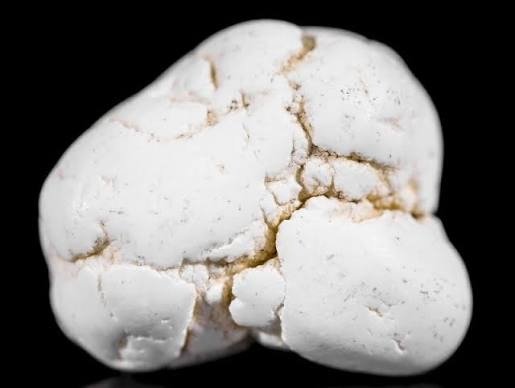
White magnesite is the most common variety and is typically composed of relatively pure magnesium carbonate. It often appears as a fine-grained, chalky, or porcelain-like material and is widely used for industrial purposes, including the production of magnesium oxide and refractory materials. - Crystalline Magnesite
Crystalline magnesite forms when mineral growth occurs under favorable geological conditions, allowing distinct rhombohedral crystals to develop. These specimens are less common than massive forms and are valued by mineral collectors for their crystal structure and appearance. - Massive Magnesite
Massive magnesite occurs as compact, granular, or irregular aggregates without clearly developed individual crystals. This variety represents the majority of commercially mined magnesite deposits and is primarily used in industrial applications. - Iron-Bearing Magnesite
Iron-bearing magnesite contains varying amounts of iron replacing magnesium within the crystal structure. The presence of iron can give the mineral gray, yellowish, brown, or reddish tones and may create a transition toward siderite-rich compositions. - Veined Magnesite
Veined magnesite contains contrasting lines, patterns, or mineral inclusions formed during geological alteration. These decorative patterns make it popular for carvings, ornaments, and polished stone products. - Colored Magnesite
Although pure magnesite is usually white or colorless, trace elements and impurities can produce varieties with yellow, brown, gray, or other subtle colors. These natural color variations are mainly caused by elements such as iron, manganese, and organic materials. - Dyed Magnesite
Dyed magnesite is a commercially treated variety in which porous magnesite is artificially colored to imitate other gemstones, especially turquoise. It is commonly used in inexpensive jewelry, beads, and decorative items due to its ability to absorb dyes and take a smooth polish.
Crystal Structure of Magnesite
Magnesite belongs to the trigonal crystal system and is part of the calcite group of carbonate minerals. Its crystal structure is composed of magnesium ions (Mg²⁺) and carbonate groups (CO₃²⁻), which are arranged in a repeating rhombohedral framework. Each magnesium ion is surrounded by oxygen atoms from carbonate groups, creating a stable ionic structure that gives magnesite its characteristic physical properties, including its cleavage and relatively high density compared with many other carbonate minerals.
The atomic arrangement of magnesite is similar to that of calcite, with carbonate groups positioned between layers of metal ions. The carbonate groups are arranged in a planar triangular configuration, while magnesium occupies specific positions within the structure, forming a tightly connected lattice. This structure results in perfect rhombohedral cleavage, allowing the mineral to break along specific crystallographic planes. Magnesite commonly develops as rhombohedral crystals when formed under suitable conditions, although most natural specimens occur as fine-grained, massive aggregates due to rapid growth, alteration processes, or geological deformation. Small substitutions of elements such as iron, calcium, and manganese within the magnesium sites can modify the crystal structure slightly and influence the mineral’s color, density, and overall appearance.
Physical and Chemical Properties of Magnesite
Magnesite has a range of physical and chemical properties that reflect its carbonate mineral composition and crystal structure. It has the chemical formula MgCO₃ and belongs to the calcite group of minerals. Pure magnesite is usually white or colorless, but impurities such as iron, manganese, calcium, and organic materials can produce gray, yellow, brown, or reddish tones. It has a Mohs hardness of approximately 3.5–4.5, making it a relatively soft mineral that can be scratched by harder materials. Magnesite typically shows a vitreous to pearly luster, a white streak, and perfect rhombohedral cleavage due to its trigonal crystal structure. Its specific gravity is generally around 3.0–3.1, and it can range from transparent to opaque depending on crystal quality and texture.
Chemically, magnesite is a magnesium carbonate mineral composed of magnesium ions bonded with carbonate groups. It is relatively stable under normal environmental conditions but reacts with dilute acids, especially when powdered, releasing carbon dioxide due to its carbonate content. When heated to high temperatures, magnesite undergoes thermal decomposition, breaking down into magnesium oxide (MgO) and carbon dioxide (CO₂). This ability to produce magnesium oxide is one of its most important chemical characteristics and is the basis for its widespread use in refractory materials and magnesium-related industries. Elemental substitutions, particularly the replacement of magnesium by iron, calcium, or manganese, can slightly alter its chemical composition, color, density, and physical appearance.
Major Deposits and Occurrence Locations of Magnesite
Magnesite deposits are widely distributed around the world and are mainly found in regions with magnesium-rich rocks, carbonate formations, and suitable geological conditions for mineral formation. Some of the most important magnesite-producing countries include China, Austria, Greece, Turkey, Russia, Brazil, Australia, and the United States. China contains some of the world’s largest magnesite reserves, with major deposits located in Liaoning Province, where the mineral is extensively mined for magnesium production and refractory materials. Austria has a long history of magnesite mining and is known for high-quality deposits formed in Alpine geological environments. Greece and Turkey also host significant deposits associated with ultramafic rocks and carbonate formations, while Russia and Brazil contain large resources formed through ancient geological processes. In the United States, magnesite occurrences are found mainly in areas such as California, Nevada, and Washington, where deposits are associated with altered ultramafic rocks and sedimentary environments. The size, purity, and economic importance of magnesite deposits vary depending on factors such as magnesium carbonate content, geological age, surrounding rock types, and the presence of impurities.
Uses and Applications of Magnesite
Magnesite is an important industrial mineral with a wide range of applications due to its high magnesium content and ability to produce magnesium oxide when heated. The largest use of magnesite is in the production of refractory materials, especially magnesia-based bricks and linings used in steel furnaces, cement kilns, glass manufacturing equipment, and other high-temperature industrial facilities. After calcination, magnesite produces magnesium oxide (MgO), a material known for its high melting point, thermal stability, and resistance to chemical corrosion. Magnesite is also used as a raw material for producing magnesium metal, magnesium chemicals, fertilizers, and various compounds used in agriculture, environmental treatment, and chemical industries. In addition to industrial applications, certain attractive varieties of magnesite are cut, polished, and used for decorative objects, carvings, beads, and ornamental stones. Although magnesite is not considered a major gemstone, its ability to take a smooth polish and its varied colors and patterns make it popular among mineral collectors and designers of affordable decorative materials.