
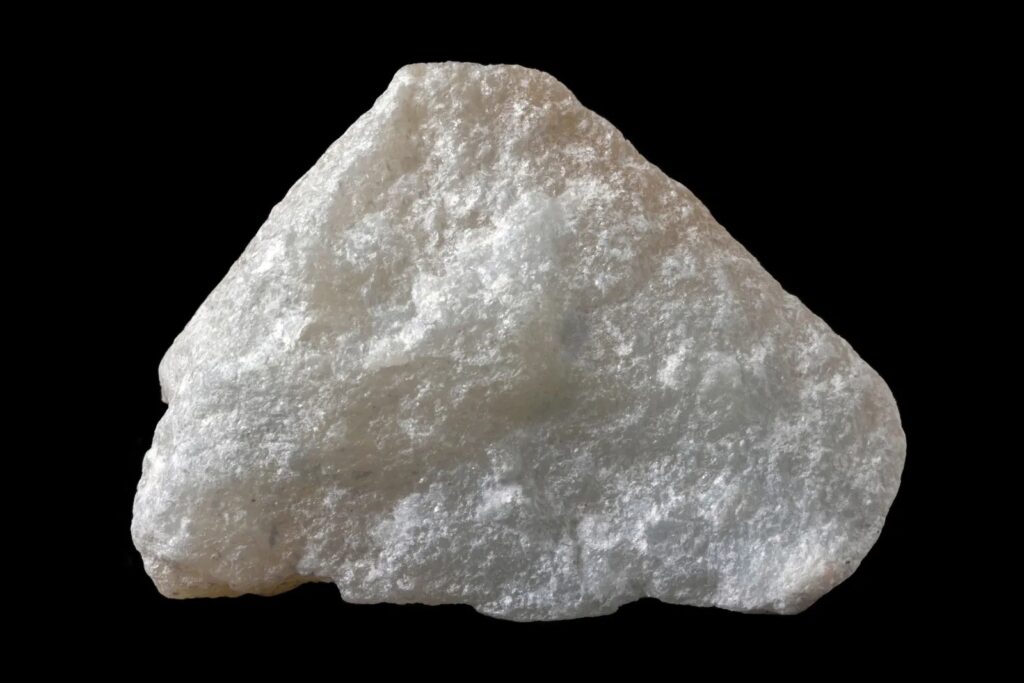
Talc is a naturally occurring magnesium silicate mineral with the chemical formula Mg₃Si₄O₁₀(OH)₂. It belongs to the phyllosilicate group of minerals, which are characterized by a layered crystal structure made up of thin sheets of silicate and magnesium units. This unique structure gives talc its distinctive physical properties, including extreme softness, a smooth and slippery texture, and perfect cleavage along its layers. With a Mohs hardness of 1, talc is recognized as the softest mineral on the hardness scale and can be easily scratched with a fingernail. In its pure form, talc is usually white or colorless, but natural specimens may appear gray, green, pale brown, or other shades due to the presence of impurities or associated minerals. It commonly occurs as massive or compact aggregates rather than well-developed crystals and has a pearly, greasy, or dull luster.
History of Talc
The history of talc dates back thousands of years, with ancient civilizations using talc-rich materials and soapstone for carving, decorative objects, tools, and practical items because of their softness and ease of shaping. The name “talc” comes from the Arabic word “talq,” which refers to a soft mineral with a smooth texture. Over time, the mineral became better understood as the science of mineralogy developed, and researchers identified talc as a magnesium silicate mineral belonging to the phyllosilicate group. During the 18th and 19th centuries, advances in geological research revealed more about its chemical composition, layered crystal structure, and formation processes. In the modern era, improvements in mining and processing technology transformed talc into an important industrial mineral, with its unique properties such as softness, chemical stability, heat resistance, and fine texture leading to widespread use in ceramics, paper, plastics, paints, coatings, cosmetics, and other industries. Today, talc remains an important mineral resource studied for both its geological characteristics and its broad range of industrial applications.
Formation of Talc
Talc forms primarily through metamorphic processes that involve the alteration of magnesium-rich rocks under specific temperature, pressure, and chemical conditions. It commonly develops when rocks such as ultramafic rocks, serpentinite, and magnesium-rich carbonate rocks undergo chemical reactions with silica-bearing fluids. During these geological processes, existing minerals containing magnesium, such as olivine, pyroxene, serpentine, or dolomite, may react with dissolved silica and water, leading to the formation of talc. These reactions usually occur in metamorphic environments where heat, pressure, and fluid activity allow minerals to recrystallize and form new stable mineral phases. The formation of talc is often associated with hydrothermal alteration zones, where hot, mineral-rich fluids move through cracks and fractures in rocks, changing their original composition over time.
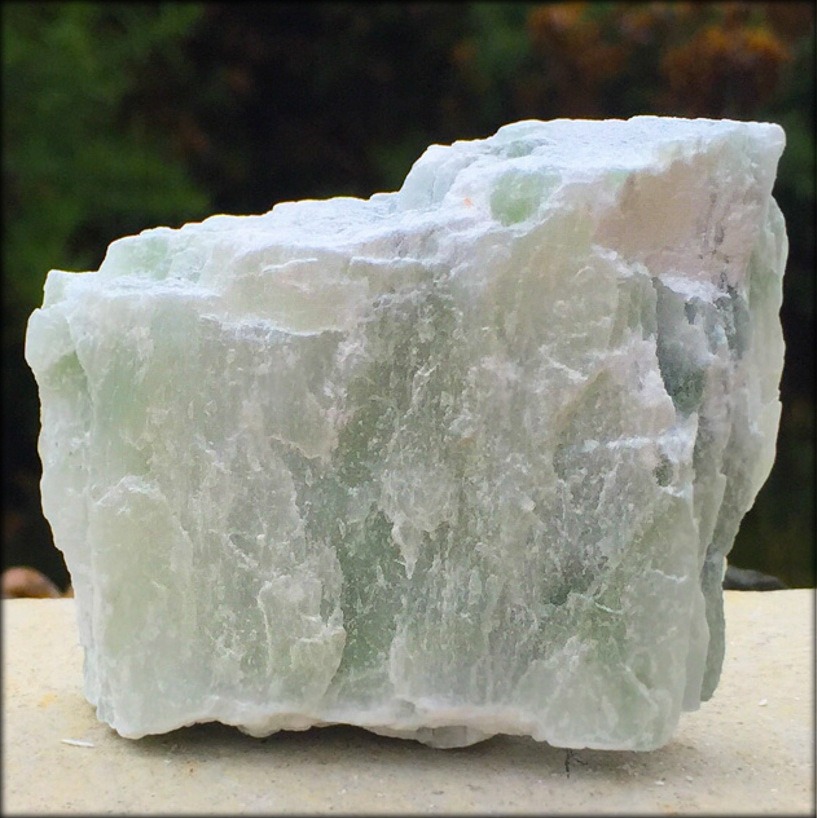
The exact composition and quality of talc deposits depend on the nature of the parent rocks and the geological conditions during formation. High-quality talc deposits generally form in environments where chemical reactions produce relatively pure talc with fewer impurities, while other deposits may contain associated minerals such as chlorite, serpentine, magnesite, dolomite, or amphibole minerals. These associated minerals can influence the color, texture, and industrial properties of the final talc material. Talc is commonly found in metamorphic belts and regions with a history of tectonic activity, where the interaction between rock deformation, heat, pressure, and mineral-rich fluids has created suitable conditions for its development. Through these long geological processes, talc deposits are formed and preserved in various locations around the world, becoming important sources of this widely used industrial mineral.
Types and Varieties of Talc
Talc is generally considered a single mineral species with a consistent chemical composition, but natural talc specimens can vary in appearance, texture, purity, and mineral associations depending on their geological origin. These differences are mainly caused by variations in formation conditions, impurities, and the surrounding rock environment. Common forms and varieties of talc include:
- Massive Talc – The most common form of talc found in commercial deposits. It occurs as compact, fine-grained masses with a smooth texture and is widely used for industrial purposes such as ceramics, plastics, and coatings.
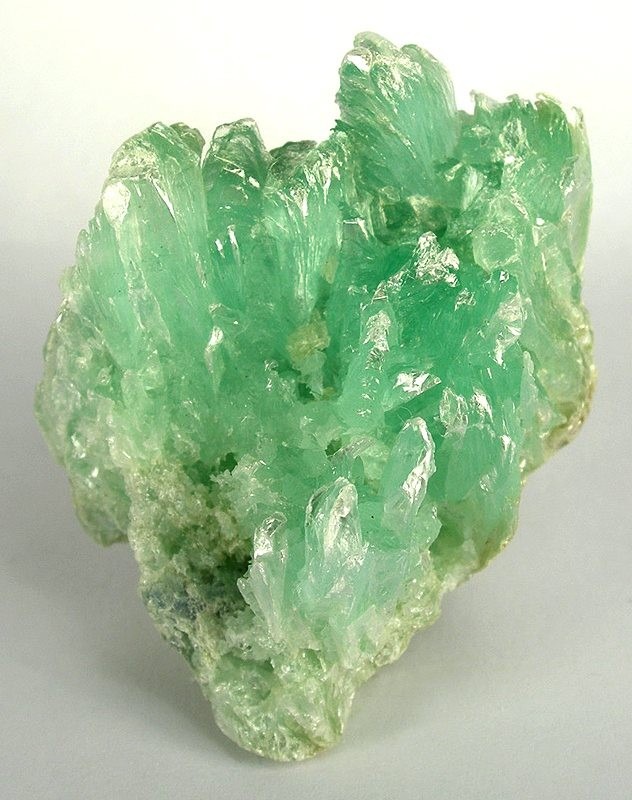
- Crystalline Talc – A form that displays more recognizable crystal development. Well-formed talc crystals are relatively uncommon because the mineral usually forms as aggregates, but small crystalline specimens are valued by mineral collectors.
- Fibrous Talc – A variety characterized by a fibrous or needle-like texture caused by its crystal growth pattern. It is less common than massive talc and may occur in specific metamorphic environments.
- Steatite (Soapstone) – A talc-rich metamorphic rock composed mainly of talc along with varying amounts of other minerals such as chlorite, carbonates, and amphiboles. Due to its softness and workability, steatite has been widely used for carving sculptures, decorative objects, and architectural materials.
- White Talc – A relatively pure form of talc with a high magnesium silicate content and low levels of impurities. It is commonly preferred for applications requiring brightness and fine particle size, including paper, paint, and cosmetic industries.
- Green Talc – Talc specimens with green coloration caused by the presence of minerals such as chlorite, serpentine, or iron-bearing compounds. The color and texture vary depending on the associated minerals and geological conditions.
- Impure Talc – Talc that contains significant amounts of other minerals or elements, resulting in variations in color, hardness, and physical properties. These materials are often associated with complex metamorphic deposits and may have different industrial uses depending on their composition.
These varieties represent differences in texture, appearance, and geological environment rather than separate mineral species. The chemical structure of talc remains largely consistent, while natural variations influence how each type is identified and utilized.
Crystal Structure of Talc
Talc has a layered monoclinic crystal structure and belongs to the phyllosilicate group of minerals, which are characterized by sheet-like arrangements of atoms. Its crystal structure consists of two silica tetrahedral sheets surrounding a central magnesium-rich octahedral sheet, forming a repeating three-layer structure known as a T-O-T (tetrahedral-octahedral-tetrahedral) layer. Within each layer, the atoms are strongly bonded, but the individual layers are connected by relatively weak van der Waals forces. This weak bonding between layers allows them to separate easily, which is the main reason for talc’s exceptional softness, perfect basal cleavage, and smooth, slippery feel.
The magnesium atoms in the octahedral sheet are coordinated with hydroxyl groups and oxygen atoms, while the silica tetrahedral sheets provide structural stability within each layer. Because of its stable and flexible layered arrangement, talc can form thin flakes and maintain a low-friction surface. This crystal structure also contributes to several important physical properties, including its low hardness, pearly or greasy luster, chemical resistance, and ability to be ground into a fine powder. Although talc crystals are rarely found as large, well-developed individual crystals, microscopic crystal structures strongly influence the mineral’s appearance, texture, and industrial performance.
Major Talc Deposits and Locations
Talc deposits occur in many regions around the world and are mainly associated with metamorphic environments where magnesium-rich rocks have been altered by heat, pressure, and chemical fluids. The quality and characteristics of talc vary depending on the geological conditions of each deposit, including the purity of the mineral, grain size, color, and the presence of other associated minerals. Major talc-producing areas are found across Asia, North America, Europe, South America, and Africa, providing important sources for both industrial-grade and high-purity talc.
China is one of the world’s leading producers of talc, with significant deposits located in provinces such as Liaoning, Shandong, Guangxi, and Jiangxi. Chinese talc deposits are known for their wide range of qualities and are widely used in industries including ceramics, plastics, paper, and coatings. India also has abundant talc resources, particularly in regions such as Rajasthan, where deposits provide material for industrial applications and mineral processing.
In the United States, important talc deposits occur in states including Montana, New York, Vermont, and Texas. These deposits formed mainly through metamorphic processes involving magnesium-rich rocks and have historically contributed to domestic talc production. Brazil is another significant source of talc, with deposits associated with metamorphic rock formations that produce both industrial and specialty-grade materials. In Europe, France is known for major talc deposits in the Pyrenees region, while countries such as Austria, Italy, and Spain also have notable occurrences. Other important talc-producing regions include Pakistan, Afghanistan, South Korea, and several African countries, where geological conditions have created suitable environments for talc formation. Together, these global deposits make talc an important non-metallic mineral resource used in a wide variety of industries.
Physical and Chemical Properties of Talc
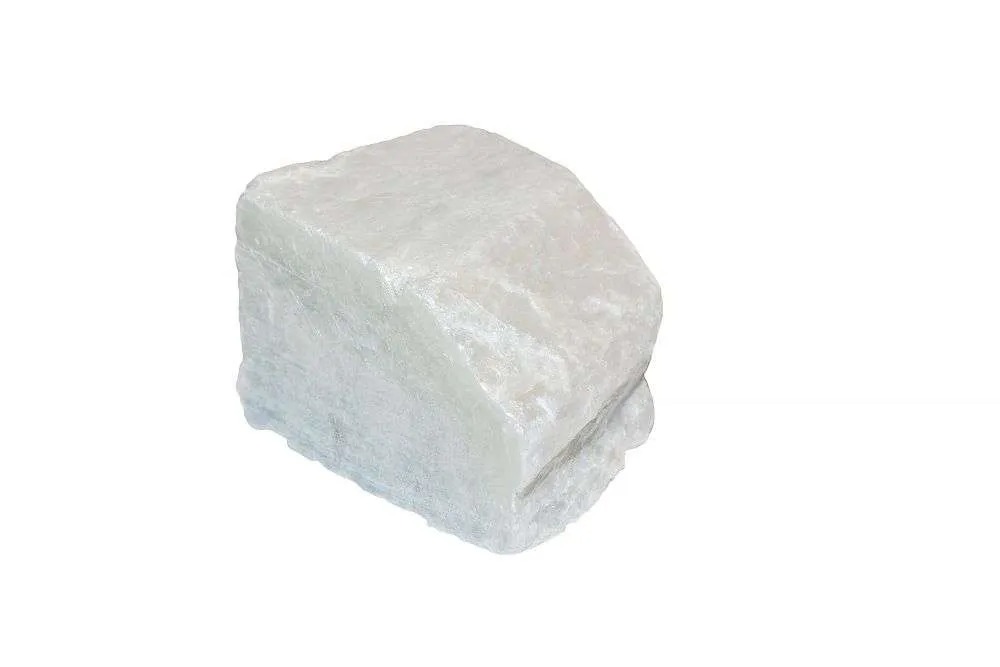
Talc has a unique combination of physical and chemical properties that distinguish it from other silicate minerals. It is the softest known mineral, with a Mohs hardness of 1, allowing it to be easily scratched by a fingernail. This extreme softness is caused by its layered crystal structure, where individual mineral sheets are held together by weak bonding forces. Talc usually appears as white, gray, pale green, or colorless, although impurities may produce variations in color. It commonly has a pearly, greasy, or dull luster and a white streak. The mineral has perfect cleavage in one direction, allowing it to separate into thin flakes, while its fracture is generally uneven or splintery. Talc has a relatively low density, typically around 2.7–2.8 g/cm³, and is generally transparent to translucent in thin sections. Its smooth texture, low friction, and ability to absorb moisture are among the most recognizable physical characteristics of talc.
Chemically, talc is a hydrated magnesium silicate with the formula Mg₃Si₄O₁₀(OH)₂. It consists mainly of magnesium, silicon, oxygen, and hydroxyl groups arranged within a stable layered structure. Talc is considered a chemically stable mineral and is resistant to many chemical reactions under normal environmental conditions. It has low electrical conductivity, high thermal resistance, and a relatively high melting point, making it suitable for industrial applications that require heat stability and insulation properties. Talc is generally not affected by water and shows limited reaction with weak acids, although impurities within natural specimens may influence its chemical behavior. These physical and chemical properties allow talc to be widely used in ceramics, plastics, paints, coatings, paper production, rubber manufacturing, pharmaceuticals, and other industrial fields.
Applications and Uses of Talc
Talc is an important non-metallic mineral widely used in many industries because of its softness, chemical stability, heat resistance, low friction, and ability to improve the texture and performance of other materials. One of the most well-known applications of talc is in the cosmetics and personal care industry, where finely processed talc has traditionally been used in powders, makeup products, and skincare formulations due to its smooth texture and moisture-absorbing properties. In these applications, talc is carefully processed and evaluated to meet specific quality and safety standards.
In the ceramics industry, talc is used as an important raw material in the production of tiles, porcelain, sanitary ware, and electrical ceramics. It helps improve thermal properties, reduce shrinkage during firing, and enhance the strength and durability of ceramic products. Talc is also widely used as a filler and reinforcing agent in plastics, rubber, paints, and coatings. In plastics, it can improve stiffness, dimensional stability, and resistance to heat, while in paints and coatings it helps provide a smoother surface, better coverage, and improved durability.
The paper industry uses talc as a functional mineral additive that can improve paper smoothness, brightness, and print quality. In rubber manufacturing, talc acts as a processing aid and helps prevent materials from sticking during production. Due to its electrical insulation properties and resistance to high temperatures, talc is also used in electrical components and specialized industrial materials. In addition, talc-rich rocks such as soapstone have been used for centuries in carving, sculptures, countertops, and decorative objects because of their softness and ease of shaping. These diverse applications make talc one of the most widely utilized industrial minerals worldwide.