
Serpentine is a group of hydrous magnesium phyllosilicate minerals that form through the hydration and metamorphic alteration of ultramafic rocks, particularly peridotite, dunite, and pyroxenite. Rather than representing a single mineral species, the Serpentine Group consists of several closely related minerals that share similar chemical compositions but differ in crystal structure and physical characteristics. The three principal members are antigorite, chrysotile, and lizardite, each developing under different geological conditions and exhibiting distinct habits ranging from compact massive aggregates to platy crystals and flexible fibrous forms. The idealized chemical formula of serpentine minerals is Mg₃Si₂O₅(OH)₄, although natural specimens commonly contain varying amounts of iron, nickel, manganese, aluminum, chromium, and other trace elements through ionic substitution. As members of the phyllosilicate class, serpentine minerals possess layered crystal structures composed of alternating silica tetrahedral sheets and magnesium hydroxide octahedral sheets, a structural arrangement that largely determines their characteristic softness, cleavage, and physical behavior.
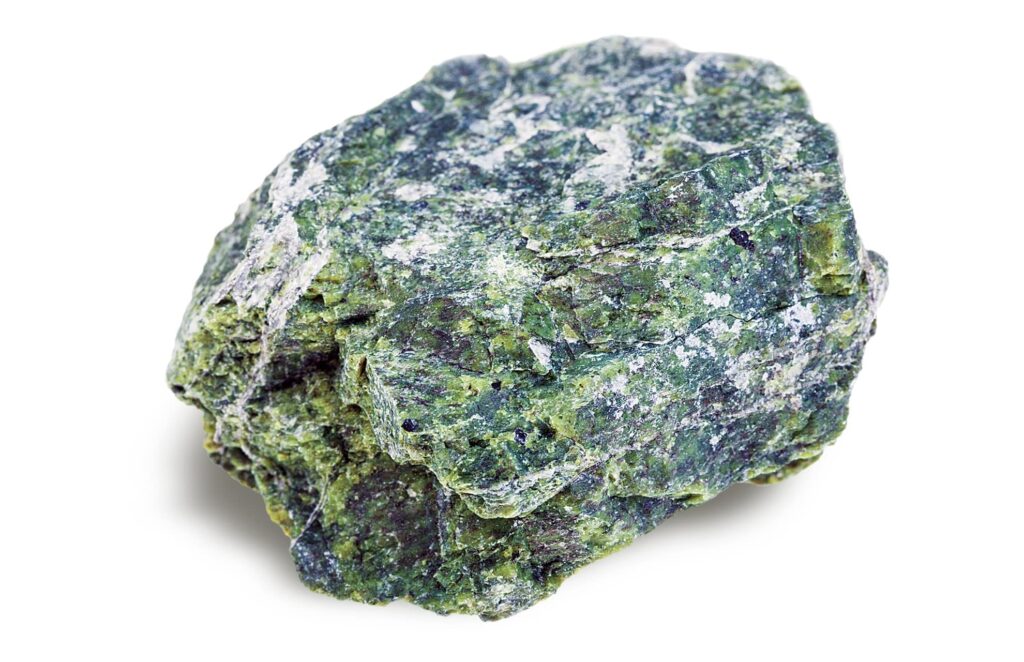
Serpentine is among the most widespread alteration minerals in Earth’s oceanic and continental lithosphere and plays a fundamental role in geological processes involving water-rock interaction. The transformation of ultramafic rocks into serpentine, commonly referred to as serpentinization, is one of the most significant hydrothermal reactions occurring within the Earth’s crust and upper mantle. During this process, water reacts with magnesium-rich silicate minerals such as olivine and pyroxene, producing serpentine minerals together with brucite, magnetite, and hydrogen gas. This reaction influences the physical and chemical properties of rocks by reducing density, modifying seismic velocities, altering mechanical strength, and affecting fluid circulation within tectonic environments. Consequently, serpentine has become an important subject of research in metamorphic petrology, plate tectonics, geochemistry, marine geology, and even astrobiology, where serpentinization is considered a potential energy source for microbial life in deep subsurface environments.
History of Serpentine
The name Serpentine is derived from the Latin word serpens, meaning “snake,” a reference to the mineral’s characteristic green coloration and mottled patterns that often resemble the skin of a serpent. This descriptive name has been used for centuries and reflects one of the mineral group’s most recognizable visual features. Although the term was originally applied to attractive green ornamental stones, advances in mineralogical science eventually demonstrated that serpentine is not a single mineral but a complex group of closely related hydrous magnesium silicates sharing similar chemical compositions while differing in crystal structure. Modern mineral classification recognizes serpentine as a mineral group within the phyllosilicate class, with antigorite, lizardite, and chrysotile representing its principal species. The distinction among these minerals became increasingly clear during the nineteenth and twentieth centuries as crystallography, optical mineralogy, X-ray diffraction, and electron microprobe analysis provided more precise methods for identifying mineral structures and chemical compositions.
Serpentine has one of the longest documented histories of human use among ornamental stones. Archaeological evidence indicates that it was carved and polished thousands of years ago by civilizations throughout Europe, Asia, Africa, and the Americas to produce ceremonial objects, seals, amulets, vessels, sculptures, and architectural decorations. Ancient Egyptians, Greeks, and Romans valued green serpentine for decorative purposes because of its attractive appearance and relative ease of carving compared with harder gemstones. In China, various serpentine varieties were widely fashioned into ritual objects, figurines, and jewelry, where they were sometimes used as affordable alternatives to nephrite jade due to their similar colors and textures. Throughout the Middle Ages and Renaissance, serpentine continued to be employed in churches, palaces, and public buildings as an ornamental stone for columns, wall panels, flooring, and decorative inlays. Numerous historic structures across Italy and other parts of Europe still preserve polished serpentine used as architectural stone, demonstrating its durability and aesthetic appeal over centuries of exposure.
Scientific interest in serpentine expanded dramatically during the twentieth century as geologists recognized its importance in understanding metamorphic processes and plate tectonics. Researchers discovered that serpentine minerals are produced through the hydration of ultramafic mantle rocks, making them key indicators of hydrothermal alteration and fluid-rock interaction within oceanic lithosphere and subduction zones. The process of serpentinization became a major area of geological research because it influences rock density, seismic properties, hydrogen production, carbon cycling, and the mechanical behavior of tectonic plates. More recently, serpentine has gained additional significance in environmental science and planetary geology, where its formation is studied as evidence of past water activity on planetary bodies such as Mars and as a potential mechanism for long-term carbon dioxide sequestration through mineral carbonation. Today, serpentine remains an important mineral group in both scientific research and museum collections, bridging the fields of mineralogy, petrology, geochemistry, environmental geology, and the history of decorative stone craftsmanship.
Formation of Serpentine
Serpentine forms primarily through a geological process known as serpentinization, a hydration reaction in which ultramafic rocks rich in magnesium and iron are chemically altered by water circulating through fractures and pore spaces within the Earth’s crust and upper mantle. The parent rocks most commonly involved include peridotite, dunite, harzburgite, lherzolite, and pyroxenite, all of which contain abundant olivine and pyroxene. When these minerals come into contact with hydrothermal fluids under suitable pressure and temperature conditions, they become thermodynamically unstable and react with water to produce serpentine minerals together with brucite, magnetite, talc, chlorite, and other secondary phases. This transformation typically occurs at temperatures ranging from approximately 150°C to 500°C, depending on pressure, fluid composition, and the specific mineral assemblage, although the exact stability ranges vary among the different serpentine species. The reaction also generates hydrogen gas through the oxidation of ferrous iron, making serpentinization one of the most chemically significant water-rock interactions occurring within Earth’s lithosphere.
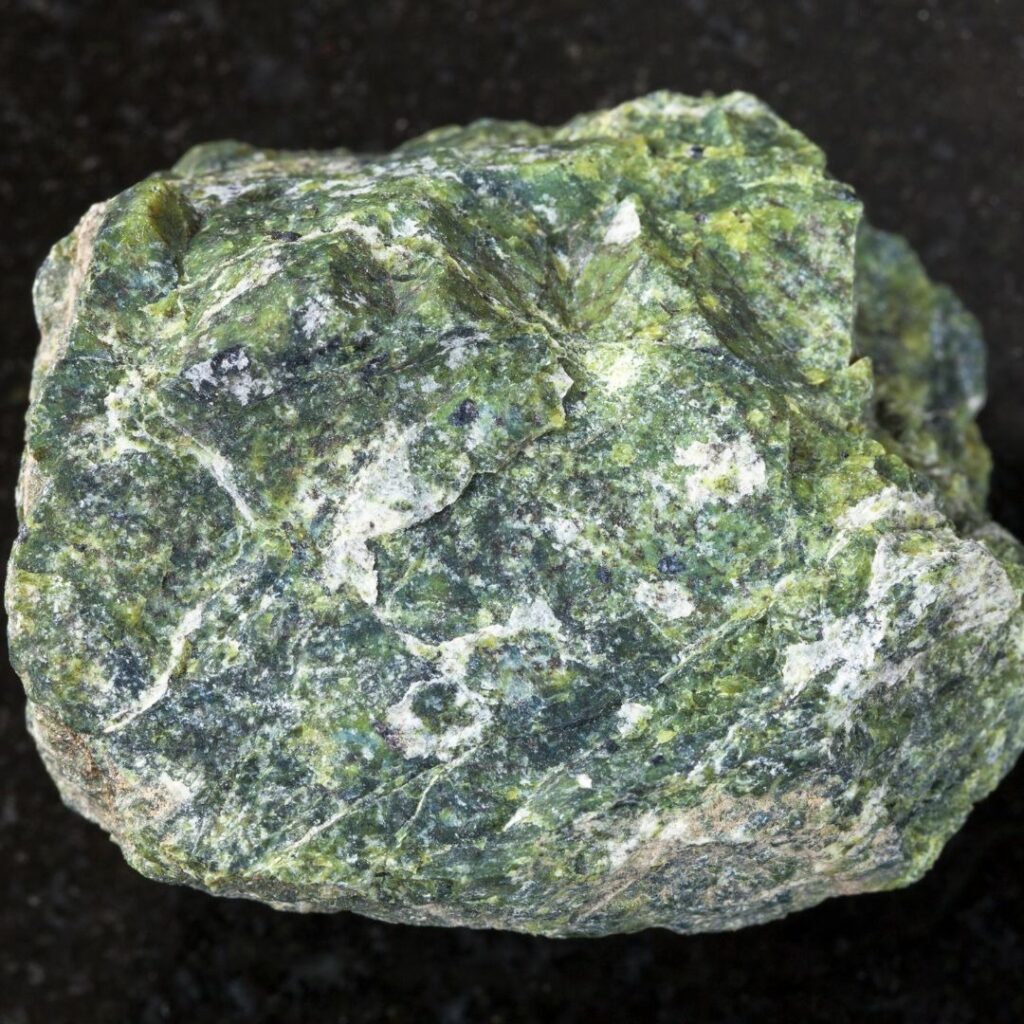
Serpentinization is especially widespread along mid-ocean ridges, oceanic transform faults, subduction zones, ophiolite complexes, and deeply fractured continental ultramafic bodies where seawater or groundwater can penetrate mantle-derived rocks. In oceanic environments, seawater infiltrates newly formed oceanic lithosphere through extensive fracture systems, initiating hydrothermal alteration of mantle peridotites beneath the seafloor. Similar processes occur in continental mountain belts where fragments of ancient oceanic crust and upper mantle, known as ophiolites, have been tectonically emplaced onto continental margins. As hydration progresses, the original anhydrous minerals are progressively replaced by serpentine, causing the host rock to expand in volume while simultaneously decreasing in density and mechanical strength. These physical changes significantly influence fault mechanics, seismic wave propagation, fluid migration, and the long-term evolution of tectonic plate boundaries. Because serpentinized rocks are mechanically weaker than fresh peridotites, they often play an important role in accommodating deformation within active convergent and transform plate margins.
Different members of the Serpentine Group form under slightly different geological conditions, reflecting variations in temperature, pressure, deformation, and fluid chemistry. Lizardite commonly develops during low-temperature alteration near the Earth’s surface and is frequently found in relatively undeformed serpentinites. Chrysotile, the fibrous member of the group, generally crystallizes along fractures and veins where hydrothermal fluids circulate through ultramafic rocks under conditions that promote fiber growth. Antigorite, by contrast, is stable at higher temperatures and pressures than the other serpentine minerals and is therefore characteristic of regional metamorphism and subduction-related environments, where it may persist to depths exceeding several tens of kilometers before eventually breaking down into denser mineral assemblages. These differences in stability make the individual serpentine species valuable indicators of metamorphic conditions and tectonic evolution. By identifying which serpentine mineral is present within a rock, geologists can reconstruct its thermal history, estimate metamorphic grade, and better understand the geological processes that affected a region over millions of years.
Beyond its importance in metamorphic petrology, serpentinization has attracted considerable attention in modern geochemistry, environmental science, and planetary exploration. The process plays a major role in Earth’s deep carbon and hydrogen cycles, influences the chemistry of hydrothermal systems, and supports unique microbial ecosystems that derive energy from hydrogen generated during water-rock reactions rather than from sunlight. In addition, serpentinization has been proposed as a natura
Types of Serpentine
The Serpentine Group consists of several mineral species that share a similar chemical composition but differ in crystal structure, morphology, and geological occurrence.
- Antigorite – The most stable serpentine mineral at relatively high temperatures and pressures. It commonly occurs as platy, foliated, or massive aggregates and is the dominant serpentine species found in regional metamorphic rocks and subduction-zone environments.
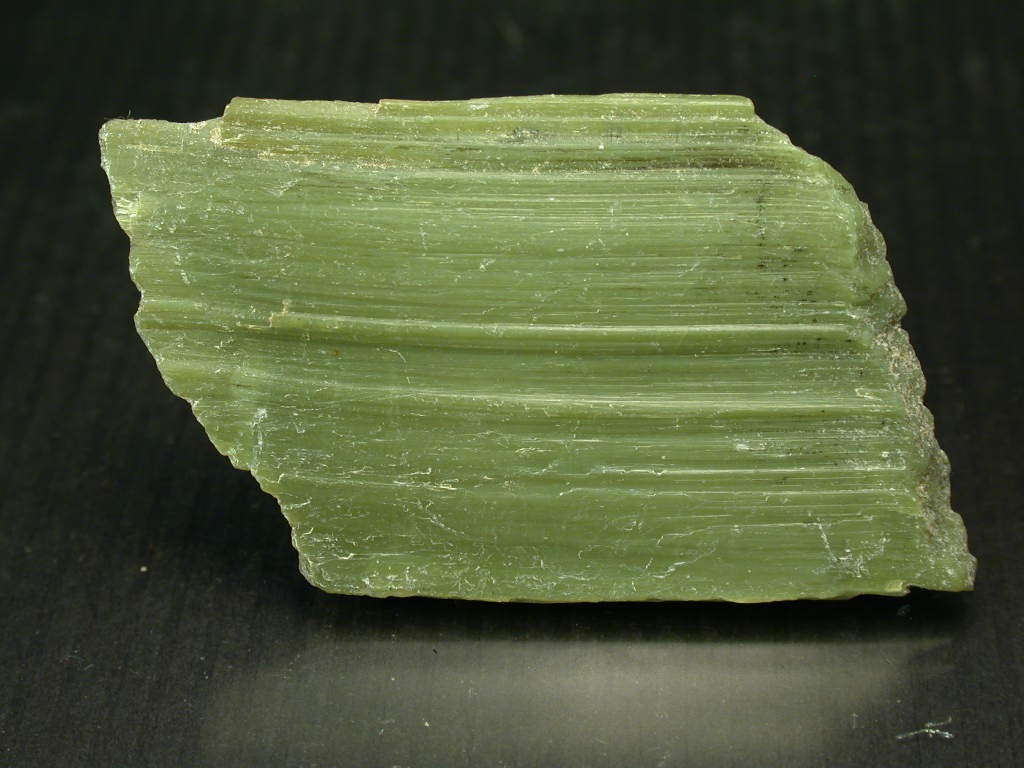
- Lizardite – The most abundant and widespread member of the Serpentine Group. It typically forms through low-temperature hydrothermal alteration of ultramafic rocks and occurs as fine-grained massive, platy, or cryptocrystalline aggregates.
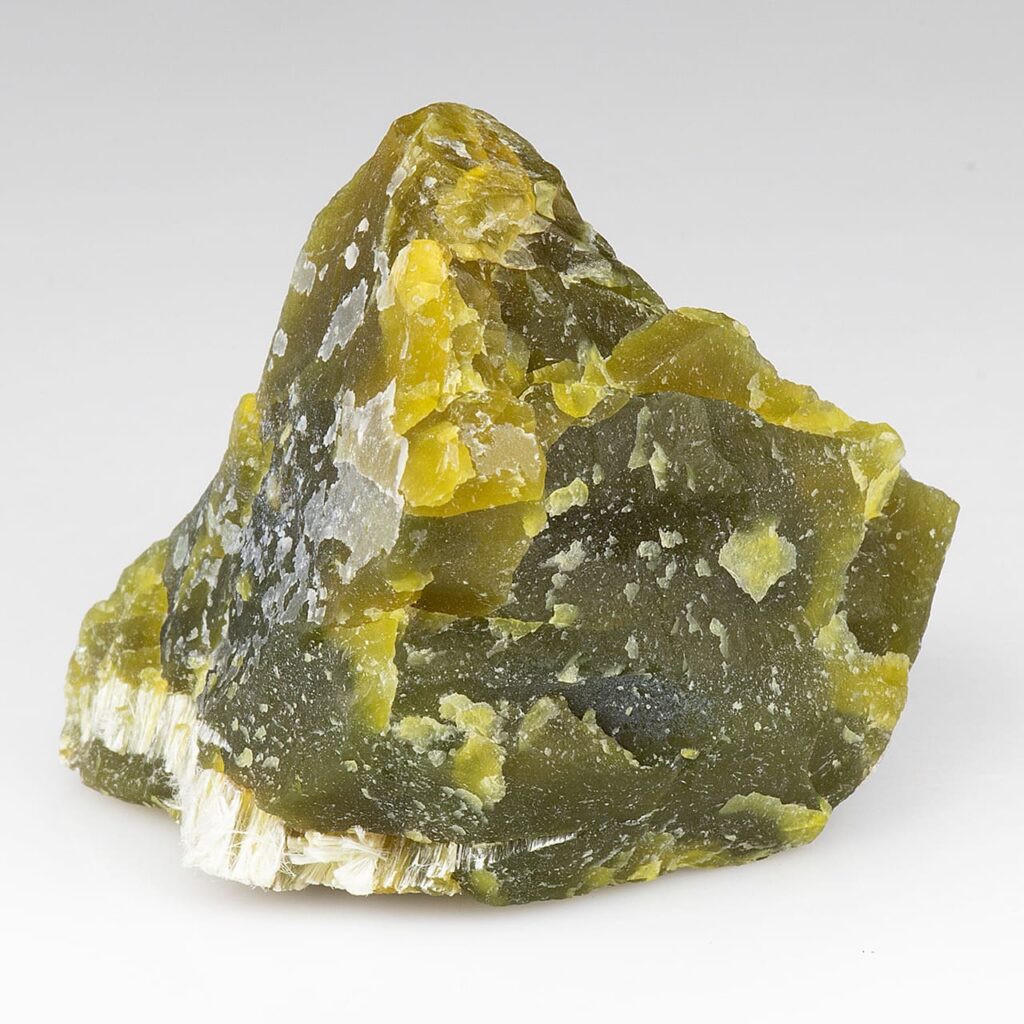
- Chrysotile – A fibrous variety of serpentine that crystallizes in veins and fractures within serpentinite. Its flexible, silky fibers made it the principal source of white asbestos, although its commercial use has declined significantly because of health concerns associated with airborne fibers.
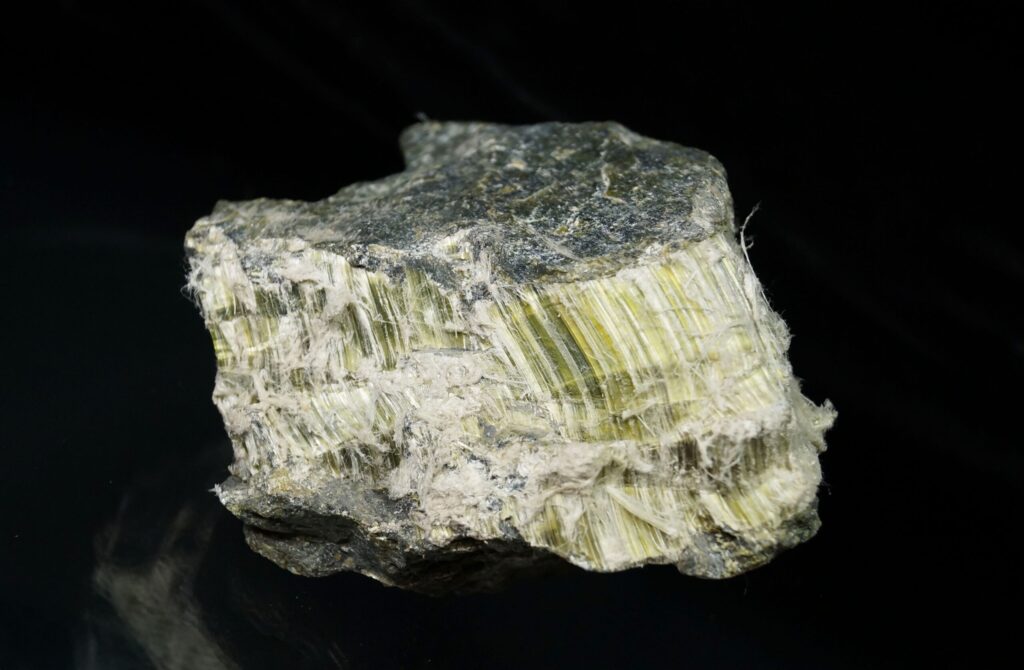
- Polygonal Serpentine – A relatively uncommon structural variety characterized by polygonal tubular crystal arrangements. It is primarily identified through crystallographic and electron microscopic studies rather than by hand specimen.
- Polygonal Chrysotile – A rare transitional form exhibiting structural characteristics intermediate between conventional chrysotile and polygonal serpentine. It is mainly of scientific interest for understanding the crystal growth mechanisms of serpentine minerals.
Occurrence and Distribution
Serpentine is one of the most widely distributed metamorphic mineral groups on Earth and occurs on every continent in association with ultramafic rocks that have undergone hydration and hydrothermal alteration. Because serpentine forms through the transformation of mantle-derived rocks rather than direct crystallization from magma, it is especially abundant in serpentinite, a metamorphic rock composed predominantly of serpentine minerals. Extensive serpentinite bodies are commonly found within ophiolite complexes, where fragments of ancient oceanic crust and upper mantle have been tectonically emplaced onto continental margins. These geological settings preserve valuable records of plate tectonic processes, ocean floor evolution, and mantle dynamics, making serpentine-bearing rocks an important focus of geological research. In addition to ophiolites, serpentine is frequently encountered in subduction zones, alpine metamorphic belts, hydrothermal systems associated with mid-ocean ridges, and altered peridotite massifs exposed by faulting or uplift.Significant serpentine deposits have been documented throughout the world. In Italy, serpentinite occurs extensively in the Alps and Apennines and has been used as an ornamental stone since Roman times. Switzerland, Austria, and France also contain important Alpine serpentinite occurrences associated with regional metamorphism. Large ultramafic complexes in Norway, Finland, Greece, and Turkey host widespread serpentine formed during ancient tectonic events. In Russia, serpentine-bearing rocks are abundant within the Ural Mountains and Siberian ultramafic belts, where they occur alongside chromite, talc, and magnetite deposits. Across Asia, notable occurrences are found in China, Japan, India, and Pakistan, where serpentine is associated with ophiolite belts, metamorphic terranes, and hydrothermally altered ultramafic complexes. China possesses numerous ornamental serpentine deposits that have historically been carved into sculptures, decorative objects, and architectural materials, while Japan contains classic localities that have contributed significantly to mineralogical studies of the Serpentine Group.
In North America, serpentine is particularly widespread in the western United States, including California, Oregon, Washington, and parts of Alaska, where large ophiolite complexes and altered mantle rocks are exposed. California is especially well known for its extensive serpentinite formations, which are closely associated with the Coast Ranges and the San Andreas Fault system. Serpentine also occurs in Vermont, Maryland, Pennsylvania, North Carolina, and several provinces of Canada, particularly British Columbia, Quebec, and Newfoundland. In the Southern Hemisphere, significant serpentinite belts are found in Australia, New Zealand, Brazil, South Africa, and Zimbabwe, reflecting the global distribution of ultramafic rocks within ancient and modern tectonic environments. These widespread occurrences demonstrate that serpentinization is a fundamental geological process operating across diverse tectonic settings throughout Earth’s history.
Serpentine commonly occurs in association with a variety of metamorphic and hydrothermal minerals that reflect similar pressure-temperature conditions and fluid compositions. Frequently associated minerals include magnetite, brucite, talc, chlorite, tremolite, actinolite, olivine, pyroxene, calcite, dolomite, magnesite, chromite, and antigorite itself within mixed serpentinite assemblages. In hydrothermal veins, serpentine may also occur alongside quartz, calcite, prehnite, epidote, and various sulfide minerals. The precise mineral assemblage depends on the composition of the original ultramafic rock, the chemistry of infiltrating fluids, and the pressure-temperature history experienced during alteration. These associations provide geologists with valuable information for reconstructing the evolution of ancient hydrothermal systems and understanding the metamorphic transformation of Earth’s mantle-derived rocks.
Crystal Structure
Serpentine minerals belong to the phyllosilicate, or sheet silicate, class and possess one of the most distinctive layered crystal structures among silicate minerals. Their fundamental building block consists of alternating silica tetrahedral sheets (Si₂O₅) and magnesium hydroxide octahedral sheets [Mg₃(OH)₄], which are bonded together to form a repeating 1:1 layer structure. Although this arrangement resembles that of clay minerals such as kaolinite, a slight mismatch between the dimensions of the tetrahedral and octahedral sheets causes internal structural strain. Rather than remaining perfectly flat, the layers often bend, curve, or undulate to accommodate this mismatch, producing the characteristic crystal structures observed in the various serpentine species. These subtle structural differences are responsible for the contrasting physical properties and crystal habits of antigorite, lizardite, and chrysotile despite their nearly identical chemical compositions.Among the three principal species, lizardite possesses the simplest crystal structure, with relatively flat layered sheets arranged in a nearly planar configuration. It commonly forms fine-grained massive or platy aggregates and represents the most abundant serpentine mineral in low-temperature serpentinites. Chrysotile, by contrast, develops when the structural mismatch causes individual layers to roll into microscopic cylinders, producing extremely fine hollow fibers. This tubular crystal structure gives chrysotile its remarkable flexibility and tensile strength, properties that historically led to its widespread industrial use as white asbestos. Antigorite exhibits the most complex structure of the group, with layers that periodically reverse direction in a wave-like pattern, creating corrugated sheets capable of remaining stable under significantly higher temperatures and pressures than either lizardite or chrysotile. This structural complexity explains why antigorite dominates in many high-pressure metamorphic environments associated with subduction zones.
The crystal chemistry of serpentine is characterized by extensive ionic substitution, allowing magnesium to be partially replaced by iron, nickel, manganese, chromium, aluminum, and other elements without fundamentally altering the crystal framework. These substitutions account for the considerable variation in color, density, magnetic properties, and chemical composition observed among natural specimens collected from different geological settings. Water is incorporated directly into the crystal lattice in the form of hydroxyl groups, making serpentine a hydrous mineral capable of transporting significant quantities of structurally bound water into the Earth’s interior during subduction. As pressure and temperature continue to increase during deep burial, serpentine minerals eventually become unstable and decompose into denser anhydrous silicates while releasing water that contributes to mantle melting and volcanic activity above subduction zones. Consequently, the crystal structure of serpentine is not only fundamental to mineral identification but also plays a critical role in large-scale geological processes involving Earth’s water cycle, mantle dynamics, and plate tectonics.
Physical and Chemical Properties
Serpentine exhibits a wide range of physical characteristics because it represents a mineral group rather than a single mineral species. Most serpentine minerals are green in color, although natural specimens may also appear yellow-green, bluish green, dark green, olive green, brown, gray, black, or nearly white depending on their chemical composition and degree of alteration. Iron-rich varieties generally display darker shades, while magnesium-rich specimens tend to be lighter green. Many massive serpentines exhibit mottled, veined, or marbled patterns created by the intergrowth of different serpentine species and associated minerals, making them particularly attractive as ornamental stones. The mineral typically possesses a waxy, greasy, silky, or vitreous luster depending on crystal habit, and polished specimens often develop a smooth, jade-like appearance. Serpentine is usually translucent along thin edges but may range from transparent in rare microscopic crystals to completely opaque in dense massive aggregates.
The hardness of serpentine generally ranges from 2.5 to 5.5 on the Mohs scale, although individual species differ somewhat in resistance to scratching. Chrysotile, because of its fibrous structure, is among the softer members of the group, whereas antigorite is typically harder and more compact. The specific gravity commonly falls between 2.4 and 2.8, reflecting the mineral’s magnesium-rich composition and relatively low density compared with many other silicate minerals. Cleavage varies according to crystal structure but is generally perfect to good in one direction due to the layered arrangement of silicate sheets, while fracture is uneven, splintery, or fibrous in massive and asbestos-forming varieties. Most serpentine minerals are relatively soft and can be easily carved, contributing to their long history as decorative and ornamental stones. Their layered crystal structure also results in moderate flexibility in certain fibrous varieties, although massive serpentines remain brittle when subjected to strong mechanical stress.
Chemically, serpentine is a hydrous magnesium phyllosilicate with the idealized formula Mg₃Si₂O₅(OH)₄, though natural specimens frequently contain significant substitutions of iron, nickel, manganese, aluminum, chromium, and other trace elements. These substitutions produce subtle differences in color, density, magnetic properties, and stability among the various species. Water is incorporated into the crystal lattice as hydroxyl groups rather than free water molecules, making serpentine an important reservoir of structurally bound water within the Earth’s crust and upper mantle. Under increasing pressure and temperature during regional metamorphism, serpentine eventually becomes unstable and dehydrates, releasing water that contributes to magma generation above subduction zones. This dehydration process plays a fundamental role in global plate tectonics and the deep Earth water cycle, making serpentine one of the most geologically significant hydrous minerals despite its relatively simple chemical composition.
From an identification standpoint, serpentine can sometimes be confused with jade, chlorite, nephrite, green marble, soapstone, or other green ornamental stones because of its similar appearance. However, it is generally softer than jade and possesses a characteristic greasy or waxy feel that experienced mineralogists can recognize. Laboratory identification typically involves X-ray diffraction, Raman spectroscopy, infrared spectroscopy, scanning electron microscopy, and electron microprobe analysis, particularly when distinguishing among antigorite, lizardite, and chrysotile. Because the individual species have nearly identical chemical formulas but different crystal structures, crystallographic methods remain the most reliable means of accurate identification. These physical and chemical characteristics not only define serpentine as a mineral group but also explain its importance in geological research, mineral classification, and industrial mineralogy.
Serpentine vs. Jade
Although Serpentine and Jade often appear similar because of their green color and polished surface, they differ significantly in mineral composition, hardness, durability, crystal structure, and geological origin.
| Property | Serpentine | Jade |
|---|---|---|
| Mineral Group | A group of hydrous magnesium phyllosilicate minerals including antigorite, lizardite, and chrysotile. | Refers to two distinct minerals: Nephrite (amphibole) and Jadeite (pyroxene). |
| Chemical Composition | Mainly Mg₃Si₂O₅(OH)₄ with varying amounts of iron, nickel, manganese, chromium, and aluminum. | Nephrite is a calcium-magnesium-iron silicate, while jadeite is a sodium-aluminum silicate. |
| Formation | Forms through serpentinization, the hydrothermal alteration of ultramafic rocks such as peridotite and dunite. | Forms under high-pressure metamorphic conditions associated with subduction zones. |
| Crystal Structure | Layered phyllosilicate structure with sheet silicates. | Interlocking fibrous (nephrite) or granular (jadeite) crystal structure that provides exceptional toughness. |
| Mohs Hardness | 2.5–5.5 | Nephrite: 6.0–6.5 Jadeite: 6.5–7.0 |
| Durability | Moderately durable but more susceptible to scratches, abrasion, and impact damage. | Extremely tough and highly resistant to impact, making it one of the most durable gemstone materials. |
| Appearance | Usually green with waxy or greasy luster, often displaying mottled or veined patterns. | Typically exhibits a smooth oily luster with more uniform color and greater translucency in fine-quality specimens. |
| Common Colors | Green, yellow-green, olive green, brown, black, gray, and mottled combinations. | Green, white, lavender, yellow, black, orange, red, and other rare colors depending on mineral type. |
| Transparency | Usually opaque to translucent. | Translucent to semi-transparent in high-quality material. |
| Typical Uses | Carvings, sculptures, cabochons, beads, decorative objects, architectural stone, and ornamental jewelry. | Fine jewelry, luxury carvings, cultural artifacts, collectibles, and high-end gemstones. |
| Commercial Value | Generally affordable and widely available. | Usually much more valuable, particularly high-quality jadeite and premium nephrite. |
| Identification | Can be distinguished using hardness testing, refractive index, Raman spectroscopy, infrared spectroscopy, and X-ray diffraction. | Gemological testing confirms nephrite or jadeite through optical and spectroscopic methods. |
Applications of Serpentine
Serpentine has been valued for both its geological significance and its practical uses for thousands of years. Historically, massive serpentine has been widely used as an ornamental and decorative stone because of its attractive green coloration, smooth texture, and ease of carving. Sculptors, architects, and artisans have fashioned serpentine into statues, figurines, bowls, vases, jewelry, beads, seals, mosaics, and decorative panels since ancient times. Many historical buildings in Europe, particularly in Italy, feature polished serpentine as an architectural stone for columns, flooring, wall cladding, and interior decoration. Because some varieties closely resemble nephrite jade after polishing, serpentine has also been marketed under trade names such as “new jade,” “Korean jade,” “Suzhou jade,” and “olive jade.” Although these commercial names are widely used in the gemstone trade, serpentine is mineralogically distinct from true jade and generally possesses lower hardness and durability.
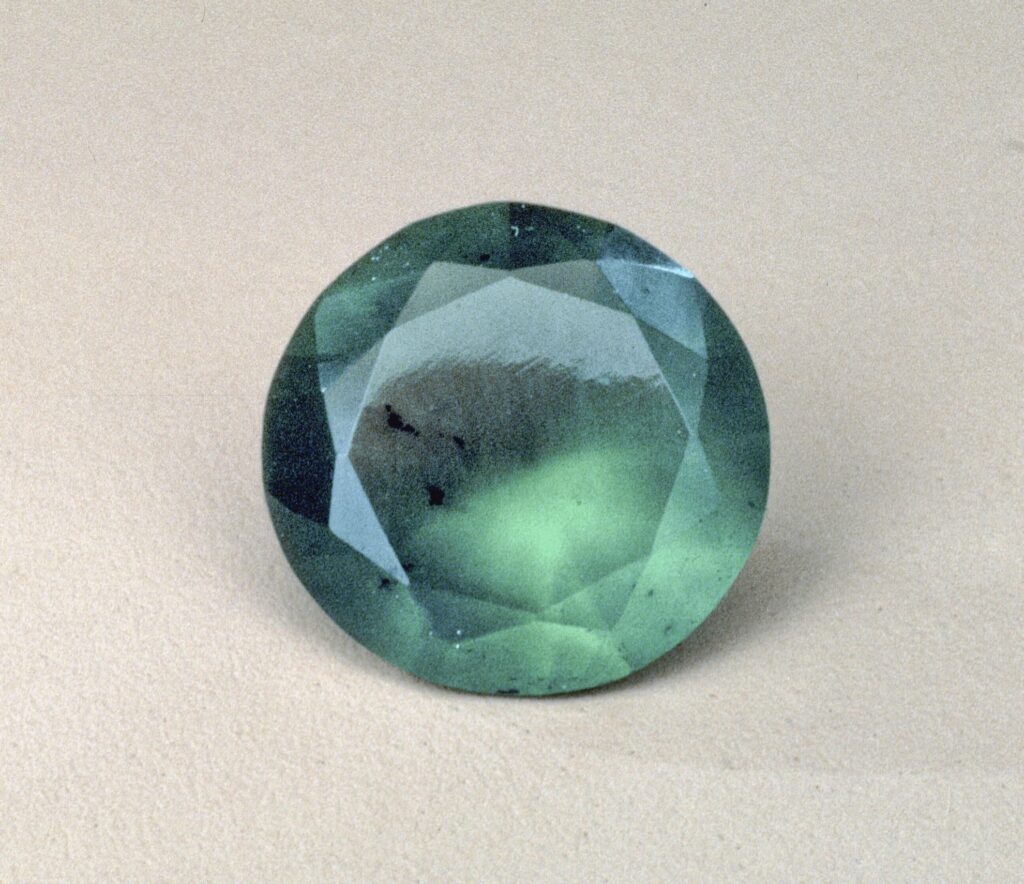
In geology and mineralogy, serpentine is one of the most important indicator minerals for identifying hydrothermal alteration of ultramafic rocks and reconstructing tectonic processes. The presence of serpentine within ophiolite complexes, subduction zones, and mantle-derived rocks provides direct evidence that hydration reactions have occurred, allowing geologists to interpret the pressure-temperature history of a region and better understand the evolution of ancient oceanic lithosphere. Serpentine-bearing rocks are extensively studied in metamorphic petrology, structural geology, geochemistry, and geophysics because serpentinization significantly influences rock density, seismic wave velocities, fault mechanics, and fluid migration within the Earth’s crust. In addition, the mineral’s ability to transport structurally bound water into the mantle has made it central to modern research on plate tectonics and the global water cycle.Serpentine also has growing importance in environmental and industrial research. Because magnesium-rich serpentine can react naturally with carbon dioxide to produce stable carbonate minerals, it has attracted considerable attention as a potential material for carbon capture and mineral carbonation, an emerging technology aimed at permanently storing atmospheric CO₂. Researchers continue to investigate methods of accelerating these reactions to help reduce greenhouse gas emissions and mitigate climate change. Serpentine is also studied as a source of magnesium for industrial applications and as a potential raw material in certain refractory products, ceramics, and specialty construction materials, although these uses remain relatively limited compared with more abundant industrial minerals.
One member of the Serpentine Group, chrysotile, deserves special consideration because of its historical significance and associated health risks. Chrysotile was once extensively mined and utilized as white asbestos due to its exceptional flexibility, tensile strength, heat resistance, chemical stability, and insulating properties. Throughout much of the twentieth century, it was incorporated into building materials, insulation, roofing products, brake linings, textiles, and numerous industrial components. However, scientific research established that prolonged inhalation of airborne asbestos fibers can cause serious respiratory diseases, including asbestosis, lung cancer, and mesothelioma. As a result, the mining and commercial use of chrysotile have been heavily restricted or completely banned in many countries. It is important to emphasize that massive ornamental serpentine used for carvings or gemstones generally does not present the same level of risk as friable chrysotile asbestos, although proper precautions should always be taken when cutting, grinding, or processing any serpentine-bearing material that may contain fibrous minerals.