
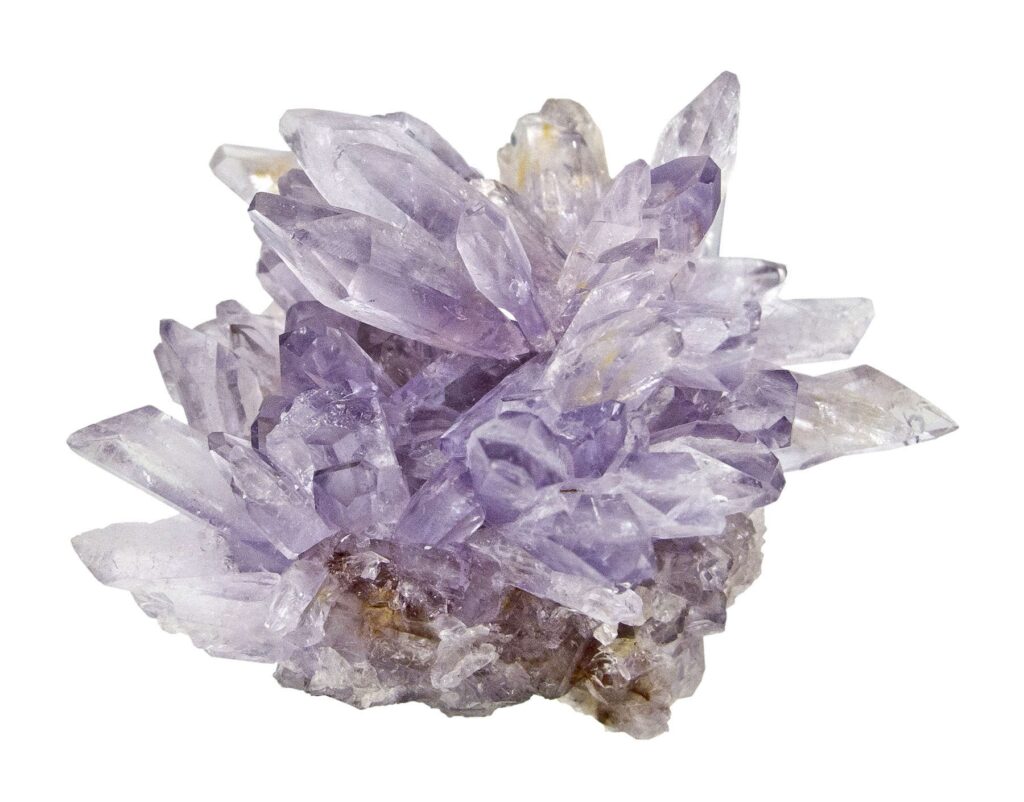
Creedite is a rare hydrated calcium aluminum sulfate fluoride mineral with the ideal chemical formula Ca₃Al₂(SO₄)(F,OH)₁₀·2H₂O, belonging to the sulfate mineral class. It crystallizes in the monoclinic crystal system and is best known for its spectacular crystal habits, which commonly include elongated prismatic, acicular, and needle-like crystals arranged in radiating sprays, spherical aggregates, hedgehog-like clusters, and drusy coatings. The mineral typically exhibits a vitreous to pearly luster, a white streak, perfect cleavage on the {100} plane, and a Mohs hardness of 3.5 to 4. Pure creedite is generally colorless to white and transparent to translucent, although trace impurities and microscopic inclusions can produce attractive shades of orange, amber, yellow, brown, purple, and lilac. Its distinctive fluorine-rich chemistry, striking crystal morphology, and relative rarity have made creedite one of the most desirable secondary sulfate minerals among collectors and mineralogists alike.
Creedite forms as a secondary supergene mineral within the oxidized zones of fluorine-rich hydrothermal ore deposits. Its formation begins when oxygenated groundwater penetrates sulfide-bearing mineralized veins and initiates the oxidation of primary minerals such as galena, sphalerite, and pyrite. This process generates acidic sulfate-rich solutions that subsequently react with surrounding fluorite deposits and aluminum-bearing host rocks. As fluorine, calcium, aluminum, and sulfate ions become concentrated within cavities, fractures, and vugs, gradual neutralization, evaporation, and cooling of the mineralizing fluids cause creedite to crystallize from solution. Because its formation requires a highly specific combination of fluorine availability, sulfate-rich waters, and aluminum sources, creedite is relatively uncommon in nature. It is frequently associated with other secondary minerals including fluorite, barite, celestine, anglesite, gypsum, quartz, and limonite, providing valuable evidence of the complex geochemical processes occurring during the late stages of hydrothermal deposit alteration.
Creedite was first identified and scientifically described in 1916 from specimens collected at the Colorado Central Fluorspar Mill near Creede, Mineral County, Colorado, USA, the locality from which the mineral derives its name. American mineralogists Eliot S. Larsen Jr. and George Steiger recognized the material as a previously unknown mineral species while examining samples recovered during fluorite mining operations. Following its original discovery, additional occurrences were documented in several countries, significantly expanding scientific understanding of the mineral’s geological distribution. Some of the finest specimens ever discovered originated from the famous mining districts of Naica, Santa Eulalia, and Durango in Mexico, where exceptional orange crystal aggregates attracted international attention among collectors. Later discoveries in Kazakhstan, particularly at Akchatau and Ortatau, revealed rare purple and lilac varieties that are widely regarded as some of the most aesthetically remarkable creedite specimens known. Today, creedite remains an important mineral for both scientific research and museum-quality collections due to its rarity, unique chemistry, and extraordinary crystal formations.
Crystal Structure, Color, and Optical Properties
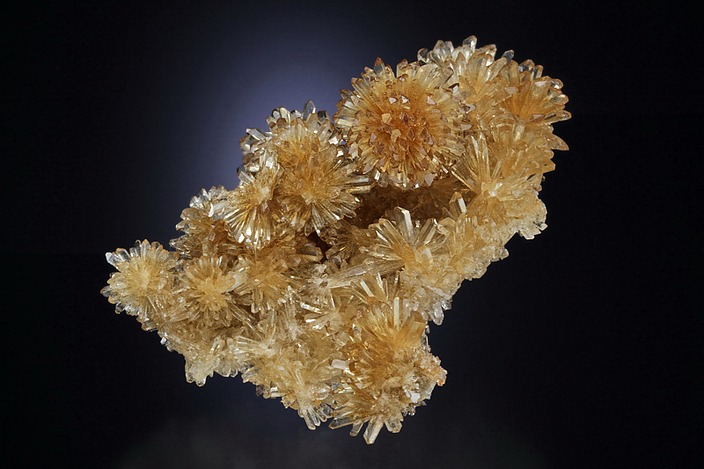
Creedite crystallizes in the monoclinic crystal system and possesses a complex hydrated crystal structure composed of calcium polyhedra, aluminum octahedra, sulfate tetrahedra, and fluorine-rich hydroxyl groups. This atomic arrangement promotes the development of elongated prismatic, acicular, and needle-like crystals that commonly form spectacular radiating sprays, spherical aggregates, hedgehog-like clusters, and drusy coatings. Individual crystals often exhibit well-developed terminations and exceptional transparency, while densely packed crystal groups can create highly aesthetic mineral specimens prized by collectors. The mineral’s relatively delicate crystal structure is reflected in its moderate hardness and perfect cleavage, characteristics typical of many hydrated sulfate minerals.
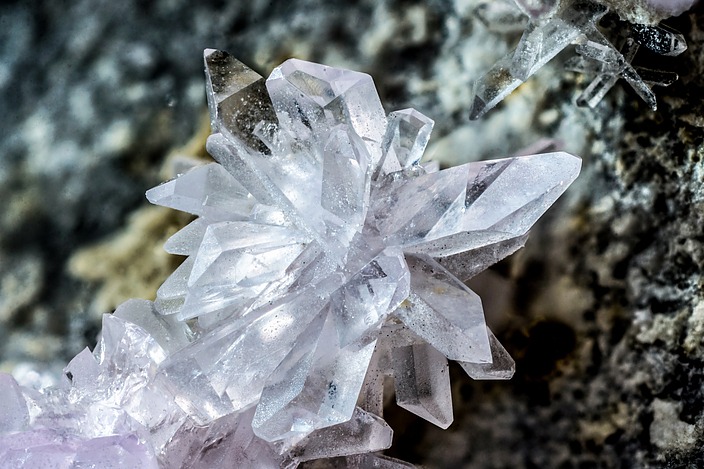
In its purest form, creedite is colorless to white and transparent to translucent; however, natural specimens display a remarkable range of colors resulting from trace impurities and geological conditions during crystallization. Orange, amber, honey-yellow, and brown varieties are commonly attributed to microscopic iron oxide inclusions, whereas rare purple, lavender, and lilac specimens are believed to result from unique trace-element substitutions and crystal-growth environments. Optically, creedite exhibits a vitreous to pearly luster, a white streak, and moderate birefringence consistent with its monoclinic symmetry. High-quality crystals can display excellent brilliance and light transmission, while large radiating aggregates produce a striking sparkling effect that enhances the mineral’s visual appeal and makes creedite one of the most distinctive secondary sulfate minerals found in hydrothermal oxidation zones.
Physical and Chemical Properties
Creedite is a chemically distinctive hydrated calcium aluminum sulfate fluoride mineral with the idealized formula Ca₃Al₂(SO₄)(F,OH)₁₀·2H₂O, placing it among the more complex members of the sulfate mineral class. Its structure incorporates calcium and aluminum coordinated with sulfate groups, fluorine, hydroxyl ions, and water molecules, resulting in a highly hydrated framework that reflects its low-temperature supergene origin. The mineral possesses a Mohs hardness of 3.5–4, making it relatively soft compared to many common rock-forming minerals, and exhibits a specific gravity generally ranging between 2.70 and 2.85. Creedite displays perfect cleavage on the {100} plane, brittle tenacity, and an uneven to subconchoidal fracture. Its luster varies from vitreous to pearly, particularly on cleavage surfaces, while the streak remains consistently white regardless of specimen color. Due to its hydrated composition and secondary formation environment, creedite is relatively sensitive to weathering and may gradually alter under prolonged exposure to acidic conditions or unstable environmental settings. From a geochemical perspective, the mineral is significant because its occurrence reflects the mobilization and concentration of fluorine, calcium, aluminum, and sulfate ions during the oxidation of hydrothermal ore deposits. Consequently, creedite serves as an important mineralogical indicator of fluorine-rich supergene processes and provides valuable information regarding fluid evolution, oxidation chemistry, and late-stage alteration within mineralized systems.
Applications and Metaphysical Properties
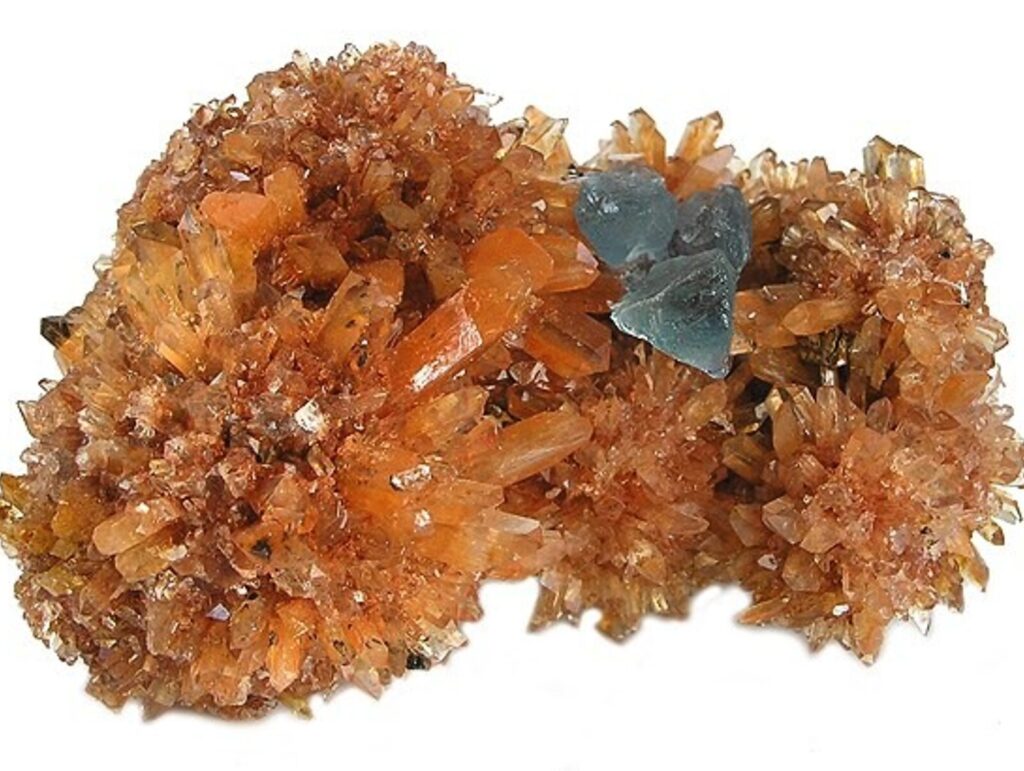
Despite its rarity and attractive appearance, creedite has virtually no direct industrial or commercial applications due to its limited abundance, fragile crystal habit, and relatively low hardness. Its primary value lies in the fields of mineralogy, geology, and mineral collecting. Researchers study creedite to better understand the geochemical behavior of fluorine and sulfate-bearing fluids in oxidized hydrothermal environments, while its occurrence can assist in reconstructing the paragenesis and alteration history of ore deposits. For collectors, creedite is considered one of the most aesthetically impressive secondary sulfate minerals, particularly when found as radiating clusters of transparent orange, amber, or rare purple crystals. Exceptional specimens from Mexico and Kazakhstan are highly sought after and are frequently displayed in museum collections, universities, and major mineral exhibitions around the world. Beyond its scientific and collectible value, creedite has also gained popularity within metaphysical and crystal-healing communities. It is often regarded as a stone of spiritual expansion, heightened awareness, and energetic purification, with its radiating crystal formations symbolizing the outward flow of positive energy and higher consciousness. Many practitioners associate creedite with enhanced intuition, meditation, emotional clarity, and connection to higher spiritual realms, particularly when working with rare violet-colored specimens. Although these metaphysical properties are not supported by scientific evidence, they have contributed significantly to the mineral’s popularity among crystal enthusiasts. Today, creedite occupies a unique position as a mineral appreciated simultaneously for its geological significance, collector appeal, exceptional crystal aesthetics, and enduring presence within modern metaphysical traditions.