
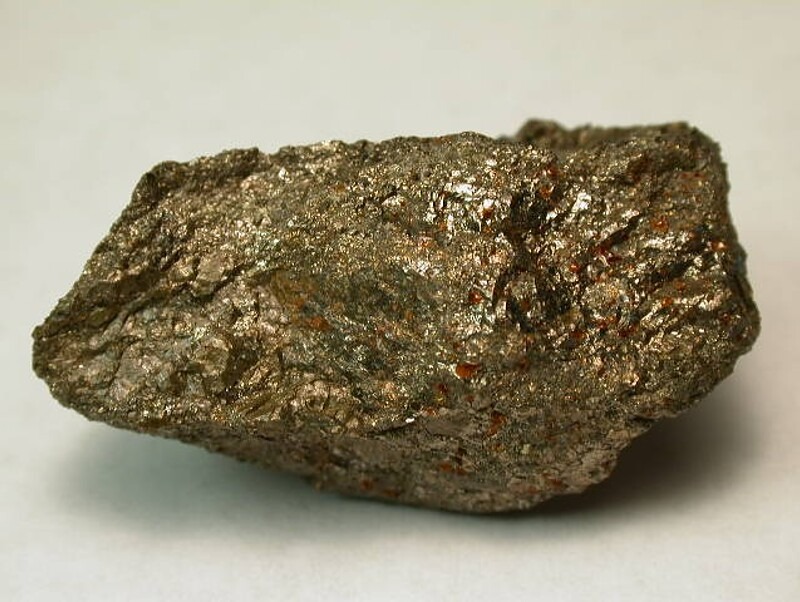
Pentlandite is a major iron-nickel sulfide mineral with the chemical formula (Fe,Ni)9S8. It serves as the primary and most economically significant source of global nickel ore, making it an indispensable resource for the production of stainless steel, electric vehicle (EV) batteries, and various high-strength alloys. Visually, pentlandite is characterized by its distinct light bronze-yellow to brassy-yellow color, a metallic luster, and a pale bronze-brown streak.It typically has a Mohs hardness of 3.5 to 4 and a specific gravity ranging from 4.6 to 5.0. Although it looks highly similar to pyrite (“fool’s gold”) and chalcopyrite, pentlandite can be distinguished by its non-magnetic nature, or very weak magnetism, and its octahedral parting rather than a true cleavage. In industrial mining, it is almost always found closely intergrown with pyrrhotite and other sulfide minerals.
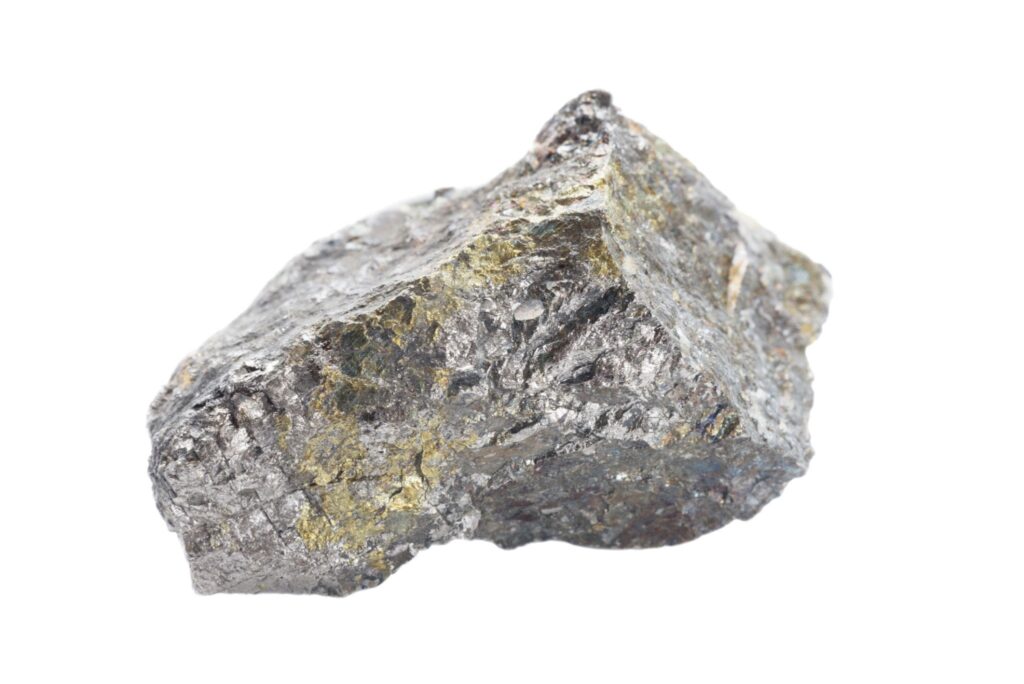
Pentlandite forms primarily through magmatic processes associated with mafic and ultramafic igneous rocks. As mantle-derived magma cools within the Earth’s crust, it may become saturated with sulfur, causing an immiscible sulfide liquid to separate from the surrounding silicate melt. These sulfide liquids efficiently concentrate metals such as nickel, iron, copper, cobalt, and platinum-group elements. Due to their higher density, the sulfide accumulations commonly migrate downward and collect along the bases of magma chambers, lava conduits, or intrusive bodies, eventually forming economically significant nickel sulfide deposits.
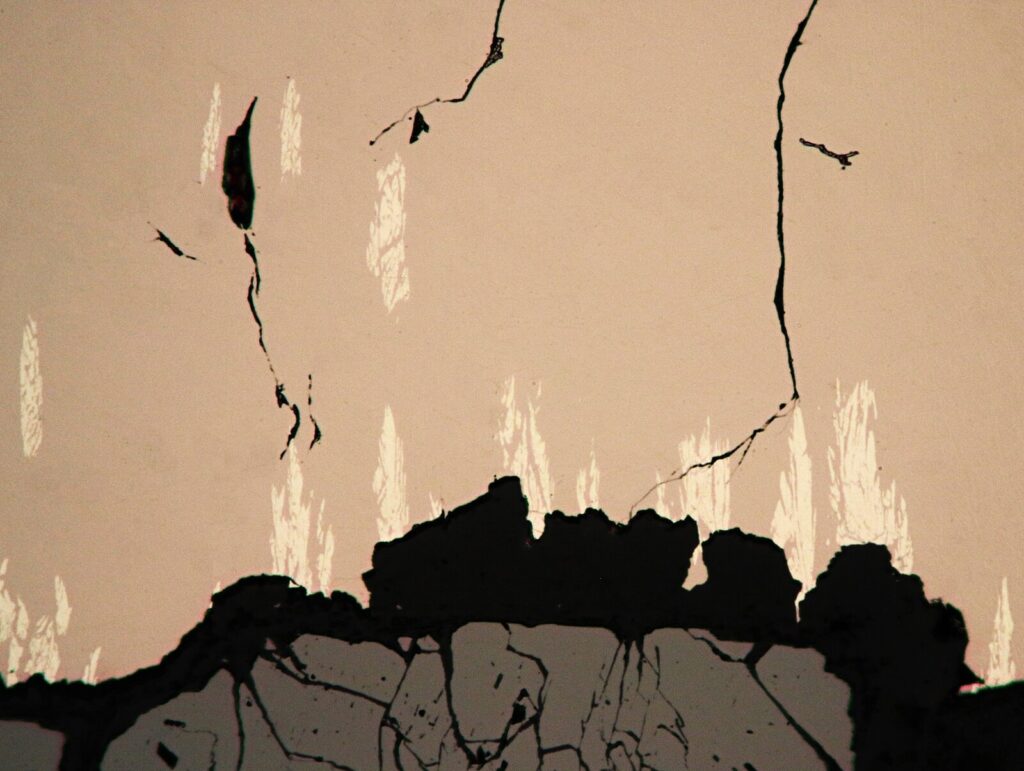
Rather than crystallizing directly from the initial high-temperature melt, pentlandite typically develops during the later cooling stages of a monosulfide solid solution. When temperatures fall below approximately 610°C (1130°F), pentlandite exsolves as a separate mineral phase, commonly forming granular intergrowths or flame-like textures within pyrrhotite-rich host rocks. This process is characteristic of many nickel sulfide systems and is widely observed in layered mafic intrusions, komatiite-associated deposits, and large impact-related igneous structures.
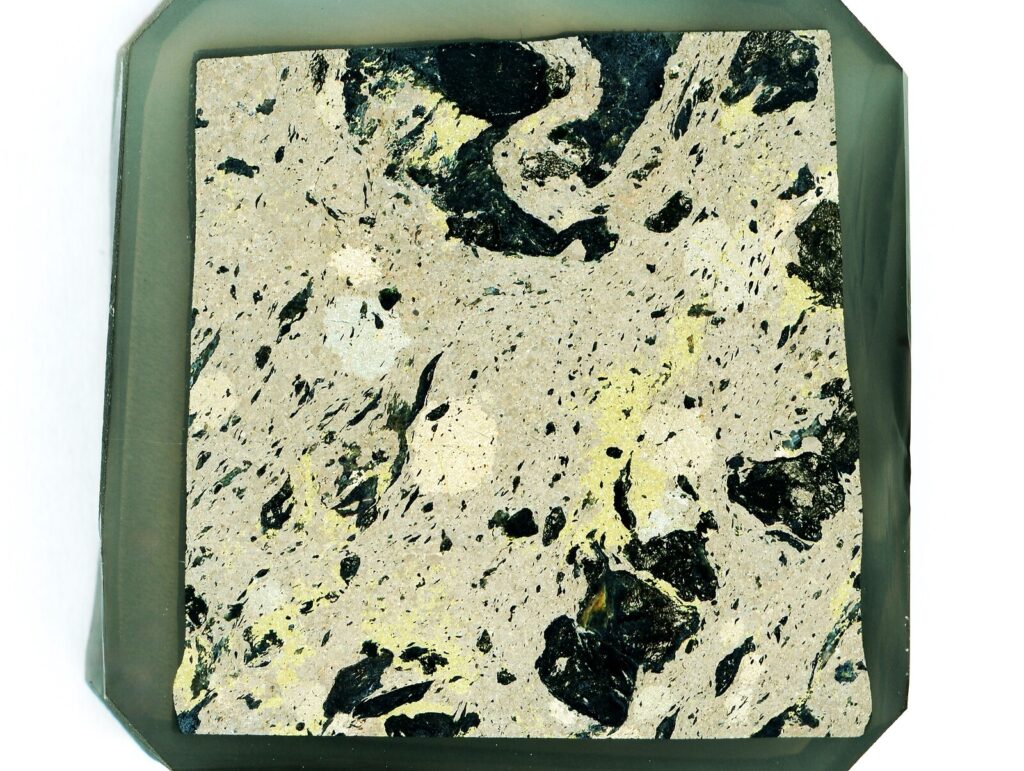
The mineral was named after Joseph Barclay Pentland, an Irish geographer and naturalist who lived from 1797 to 1873. Pentland collected and studied the mineral during geological investigations in the early 19th century, and it was later formally described and named pentlandite by the French mineralogist Dufrénoy in 1856. Although initially regarded mainly as a mineralogical curiosity, pentlandite gained major industrial importance following the discovery of extensive nickel sulfide deposits in the Sudbury Basin of Ontario, Canada, during railway construction in the 1880s. Since then, pentlandite-bearing deposits in regions such as Sudbury, Norilsk-Talnakh in Russia, and the Kambalda district of Australia have become globally important sources of nickel and associated metals used in stainless steel production, alloys, and modern battery technologies.
Crystal Structure of Pentlandite
Pentlandite crystallizes in the isometric, or cubic, crystal system and belongs specifically to the face-centered cubic space group Fm3m. Its atomic structure is considered relatively complex among sulfide minerals because it involves an ordered arrangement of both metallic and sulfur components within a tightly packed lattice. The structural framework is dominated by sulfur atoms arranged in a cubic close-packed configuration, forming the primary backbone of the crystal. Within this sulfur framework, iron and nickel atoms occupy interstitial positions, distributed between both tetrahedral and octahedral coordination sites. In tetrahedral coordination, a metal atom is surrounded by four sulfur atoms, while in octahedral coordination, it is surrounded by six sulfur atoms. The coexistence of these coordination environments contributes to the mineral’s structural stability and metallic behavior. One of the defining crystallographic characteristics of pentlandite is the presence of clusters composed of eight edge-sharing metal-centered tetrahedra. These clusters create unusually short metal–metal distances within the crystal lattice, resulting in strong metallic bonding interactions between iron and nickel atoms. This arrangement is directly responsible for several important physical properties, including the mineral’s high density, electrical conductivity, and metallic luster. Because nickel and iron can substitute extensively for one another within the structure, pentlandite exhibits compositional flexibility while still maintaining overall structural integrity. Although pentlandite belongs to the cubic system, well-formed external crystals are relatively uncommon in nature. Most occurrences appear as massive, granular, disseminated, or intergrown sulfide aggregates associated with pyrrhotite and chalcopyrite. Under microscopic examination, pentlandite often occurs as exsolution flames or blebs within pyrrhotite, reflecting its formation during slow cooling of sulfide melts. This exsolution texture is particularly important in ore microscopy and economic geology because it helps geologists identify magmatic nickel sulfide systems and reconstruct the thermal history of ore deposits. The crystal chemistry of pentlandite also plays an important role in its economic significance. The structure readily accommodates trace amounts of cobalt and, in some deposits, platinum-group elements. These substitutions occur because the crystal lattice can tolerate slight variations in ionic radius and charge balance without destabilizing the mineral. As a result, pentlandite commonly serves not only as the principal nickel ore mineral but also as a host for economically valuable accessory metals in magmatic sulfide deposits worldwide.
Color and Optical Properties
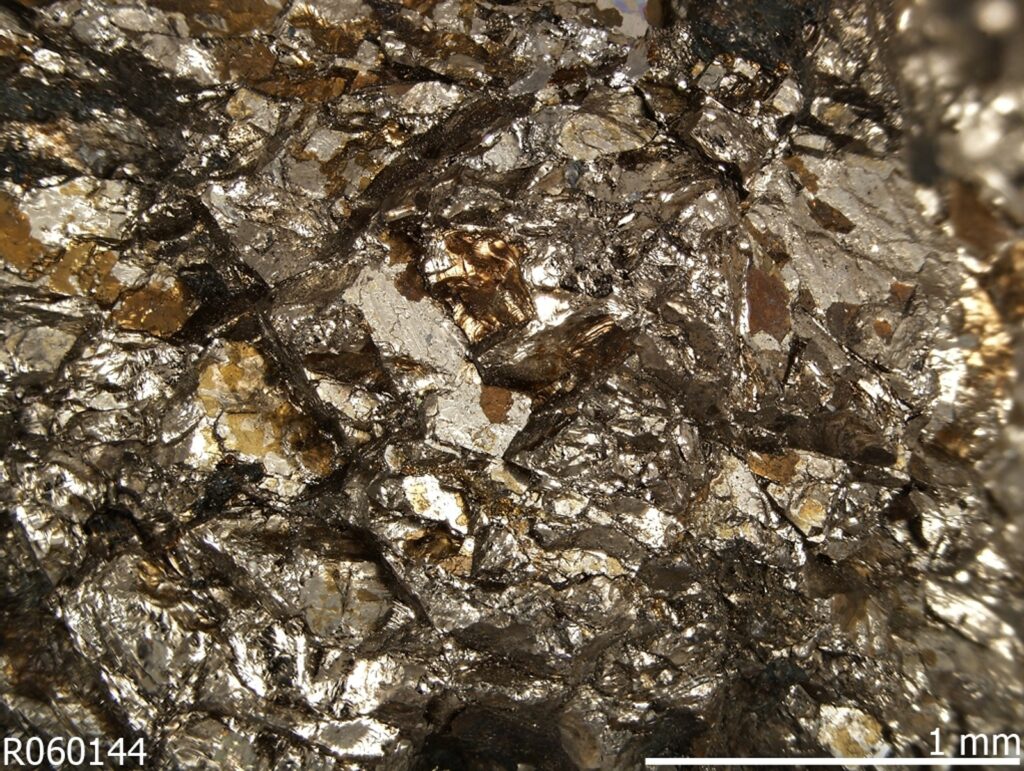
In hand specimens, pentlandite typically displays a light bronze-yellow, brassy-yellow, or pale coppery metallic color that can resemble pyrite or chalcopyrite at first glance. Freshly broken surfaces often show a bright metallic sheen with strong reflectivity, while prolonged exposure to air and moisture may cause the surface to tarnish into darker bronze, brownish-yellow, or iridescent hues due to oxidation. The mineral is completely opaque because visible light cannot penetrate its dense metallic structure, a characteristic shared by most sulfide minerals. Pentlandite possesses a distinctly metallic luster, producing strong reflections under natural and artificial lighting conditions. Its reflective surfaces are often smoother and slightly paler in tone than those of pyrrhotite, allowing experienced mineralogists to distinguish the two minerals visually in polished ore samples. Cleavage is generally poor or indistinct, and fractured surfaces may appear uneven to subconchoidal with a reflective metallic appearance. Under reflected-light microscopy, which is the standard method used for studying opaque ore minerals, pentlandite exhibits a pale creamy-yellow to light bronze-white color. One of its most diagnostically important optical characteristics is its isotropic behavior. Because pentlandite belongs to the cubic crystal system, it remains optically uniform in all crystallographic directions. Under crossed polarizers in a reflected-light microscope, the mineral remains dark during stage rotation and does not display bireflectance or anisotropic color changes. This isotropic property helps distinguish pentlandite from many associated sulfides that exhibit noticeable anisotropy. The reflectance of pentlandite in visible light is relatively high, typically ranging from approximately 40% to 50%, depending on wavelength and composition. Internal reflections are absent because of the mineral’s opacity and metallic bonding. In polished sections, pentlandite commonly appears intergrown with pyrrhotite in flame-like or granular textures produced during exsolution. These textures are of major importance in ore petrography because they reveal cooling histories and sulfide phase relationships within magmatic ore systems. From a mineralogical perspective, the optical properties of pentlandite are closely related to its electronic structure and metallic bonding. The interaction between free-moving electrons and incident light produces its characteristic metallic reflectivity and opacity. Variations in nickel-to-iron ratio, oxidation state, and weathering conditions may slightly influence color and reflectance, although the mineral generally maintains its recognizable pale bronze appearance across most geological environments.
Physical and Chemical Properties
Pentlandite is a brittle metallic sulfide mineral with moderate hardness and relatively high density. On the Mohs hardness scale, it typically ranges from 3.5 to 4, meaning it can be scratched by a steel blade and is softer than many common silicate minerals. Due to its brittleness, pentlandite fractures rather than deforming plastically when subjected to stress. Fracture surfaces are generally uneven or subconchoidal, and cleavage is poorly developed or absent. These physical characteristics reflect the mineral’s metallic atomic bonding and densely packed sulfide structure. The specific gravity of pentlandite commonly ranges from approximately 4.6 to 5.0, significantly higher than most rock-forming silicate minerals. This elevated density results from the abundance of heavy transition metals such as iron and nickel within the crystal lattice. In ore deposits, pentlandite often occurs together with pyrrhotite, chalcopyrite, and other sulfides, forming dense magmatic sulfide assemblages that are economically mined for nickel and associated metals. Magnetically, pure pentlandite is generally non-magnetic or only weakly magnetic, especially when compared to pyrrhotite, which is strongly magnetic. However, minor magnetic behavior may occasionally occur due to microscopic intergrowths with magnetic sulfide phases. The streak of pentlandite is typically pale bronze-brown to light brownish-black, and the mineral retains a metallic appearance even in powdered form. Chemically, pentlandite is classified as an iron–nickel sulfide with the idealized formula (Fe,Ni)₉S₈. The iron-to-nickel ratio varies considerably depending on geological environment and formation conditions, though many natural samples contain roughly comparable amounts of both elements. Cobalt frequently substitutes into the structure in minor quantities, and trace concentrations of platinum-group elements may also be present in some ore systems. The flexibility of the crystal lattice allows these substitutions without major structural disruption, making pentlandite an important carrier of economically valuable metals. Pentlandite is relatively stable under deep geological conditions but becomes chemically unstable near the Earth’s surface. Exposure to oxygen, water, and acidic weathering environments gradually oxidizes the sulfide structure, causing the mineral to alter into secondary nickel-bearing minerals such as violarite, millerite, garnierite, limonite, and various nickel-rich iron oxides. This weathering process can significantly modify the mineralogy of nickel deposits over geological time and may lead to the formation of secondary enrichment zones in tropical or highly oxidizing climates. From an industrial perspective, the chemical composition of pentlandite makes it the most important primary ore mineral of nickel worldwide. Nickel extracted from pentlandite is widely used in stainless steel manufacturing, high-temperature superalloys, electroplating, catalysts, and rechargeable battery technologies. Because pentlandite may also contain cobalt and platinum-group elements, many deposits possess substantial economic value beyond their nickel content alone.
Applications of Pentlandite
Pentlandite is recognized as the most significant primary ore mineral of nickel, making it critically important to modern industry and global metallurgy. The mineral is extensively mined for its nickel content, which is essential in the production of stainless steel, superalloys, rechargeable batteries, and corrosion-resistant industrial materials. Nickel extracted from pentlandite plays a key role in lithium-ion battery technology used in electric vehicles and renewable energy storage systems. In addition to nickel, pentlandite deposits commonly contain economically valuable quantities of cobalt, copper, and platinum-group elements, increasing their strategic importance within the mining sector. Major pentlandite-bearing sulfide deposits are associated with mafic and ultramafic igneous complexes, where the mineral is processed through flotation and smelting techniques to recover metallic resources for high-performance engineering, aerospace, and electronic applications.
Metaphysical Meaning of Pentlandite
In metaphysical traditions, Pentlandite is regarded as a stone of inner strength, transformation, and energetic resilience. Practitioners believe the mineral carries grounding and stabilizing energies due to its strong association with iron and nickel, both of which are symbolically connected to endurance, determination, and protection. Pentlandite is sometimes used during meditation to encourage confidence, mental clarity, and the release of emotional blockages, particularly during periods of personal change or self-development. Some crystal healers associate the mineral with enhancing motivation, balancing emotional energy, and strengthening one’s connection to practical decision-making. Its metallic luster and deep bronze coloration are also thought to symbolize hidden potential and the discovery of inner value beneath external pressure. While these metaphysical interpretations are rooted in spiritual and cultural beliefs rather than scientific evidence, pentlandite remains appreciated among mineral collectors and crystal enthusiasts for both its geological rarity and symbolic meaning.