
Grossular garnet is a calcium–aluminum silicate mineral belonging to the garnet group, with the chemical formula Ca₃Al₂(SiO₄)₃. It is one of the most compositionally pure endmembers of the garnet family and is best known for its unusually wide range of colors, which distinguish it from many other garnet species.Unlike the more familiar red almandine or pyrope garnets, grossular occurs in shades of green, yellow, orange, brown, pink, colorless, and even rare bluish-green tones. This diversity results from trace elemental substitutions rather than major structural changes, making grossular an important mineral for studying solid-solution behavior in silicate systems.
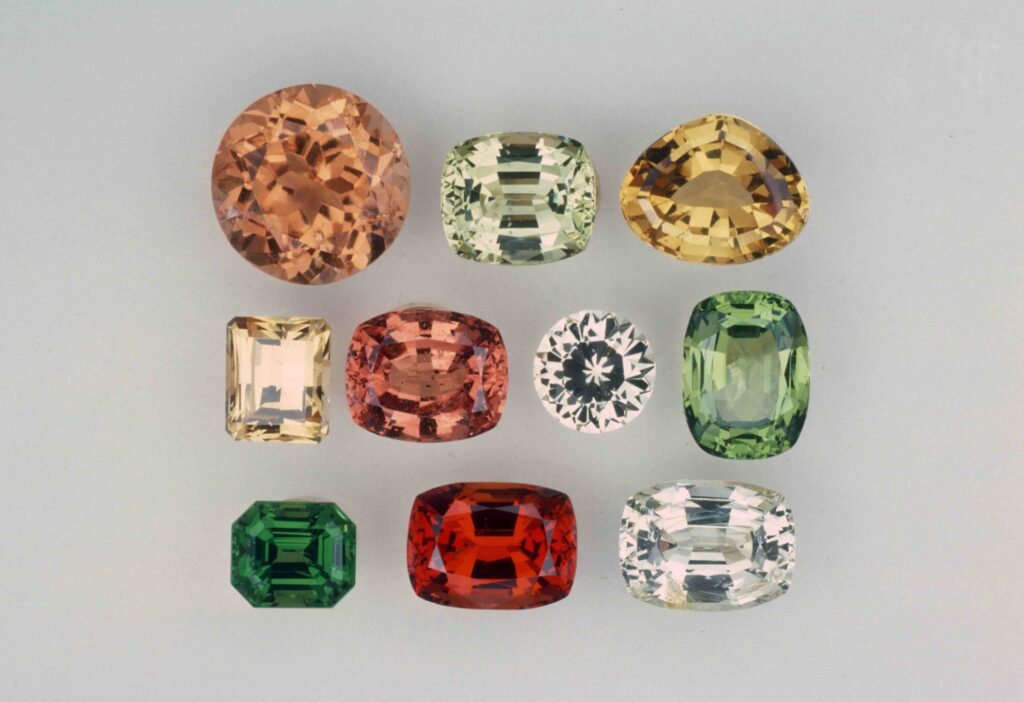
Major Varieties of Grossular Garnet
Tsavorite
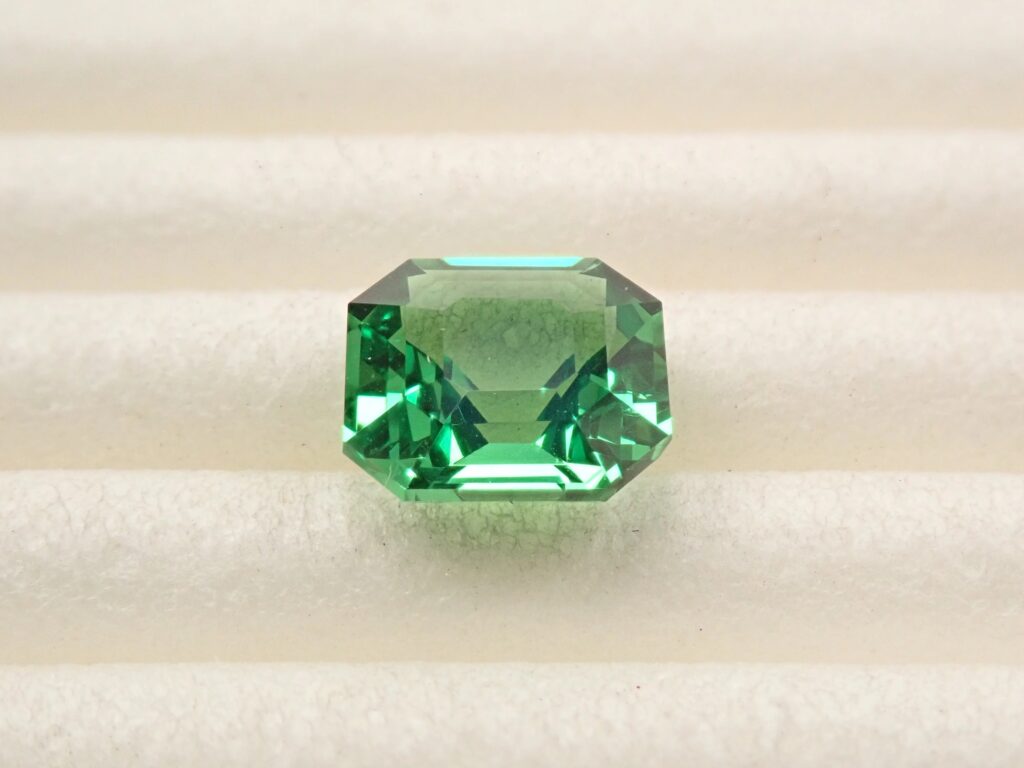
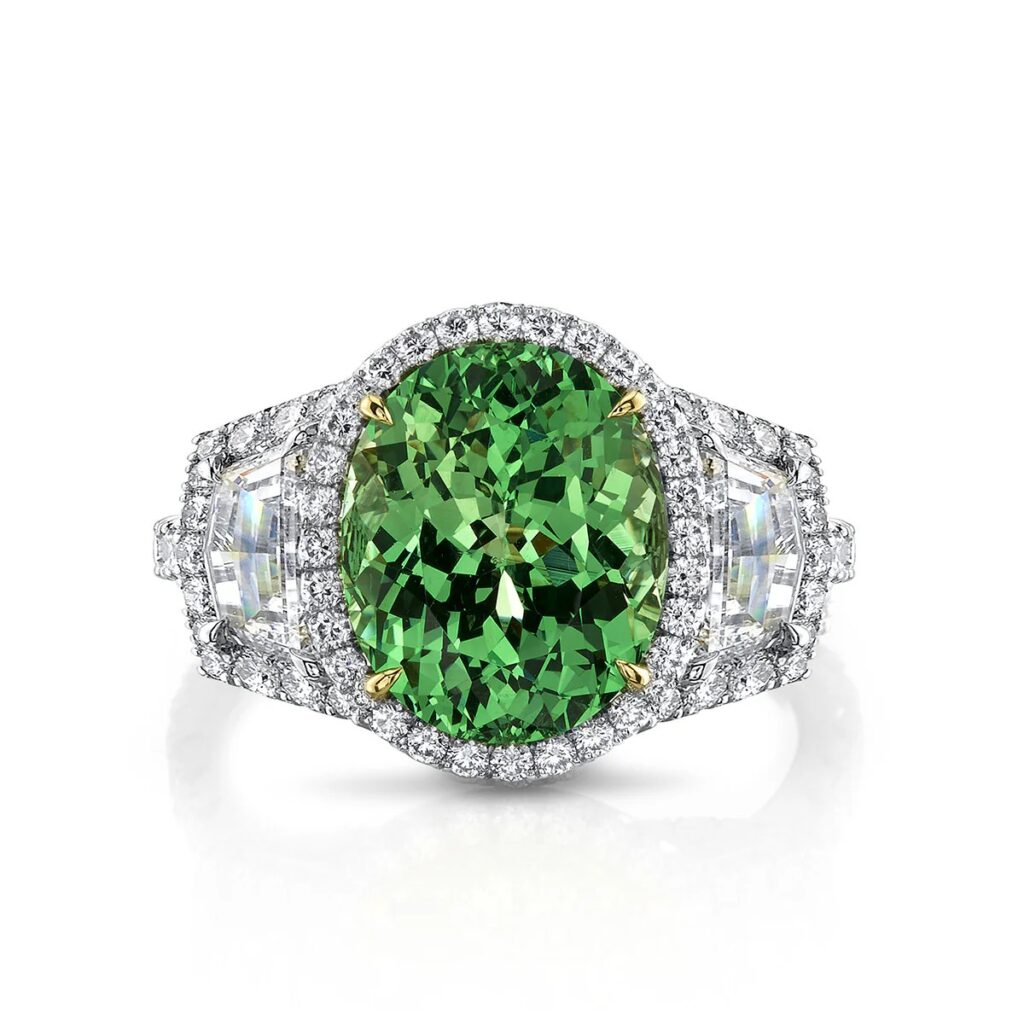
Tsavorite is a vivid green variety colored by chromium and vanadium. Discovered in East Africa, it is valued for its saturation, brilliance, and natural clarity. Unlike emerald, tsavorite typically lacks significant inclusions and does not require treatments.
Hessonite
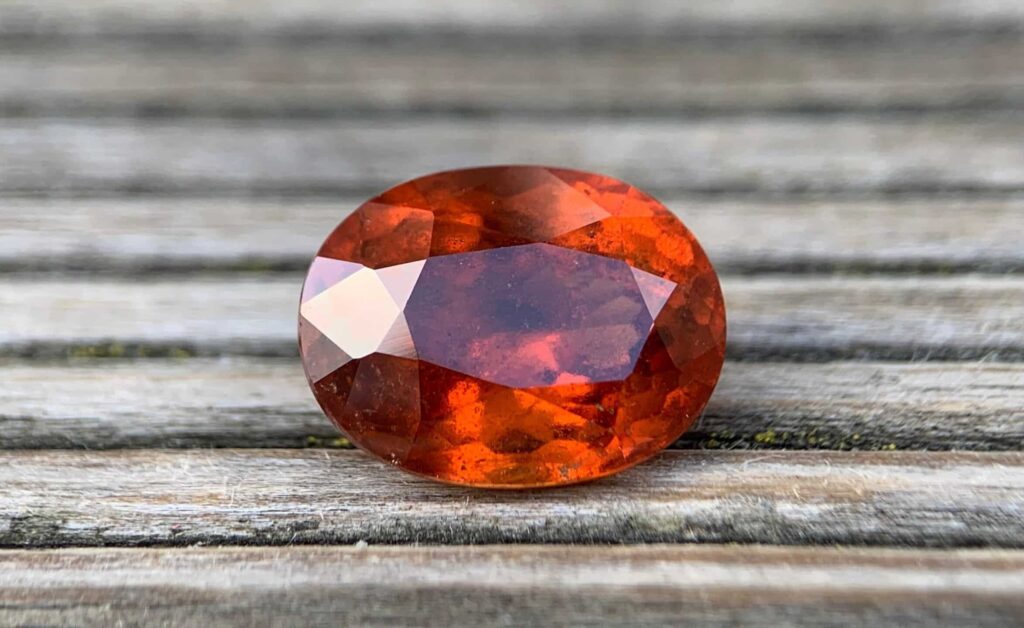
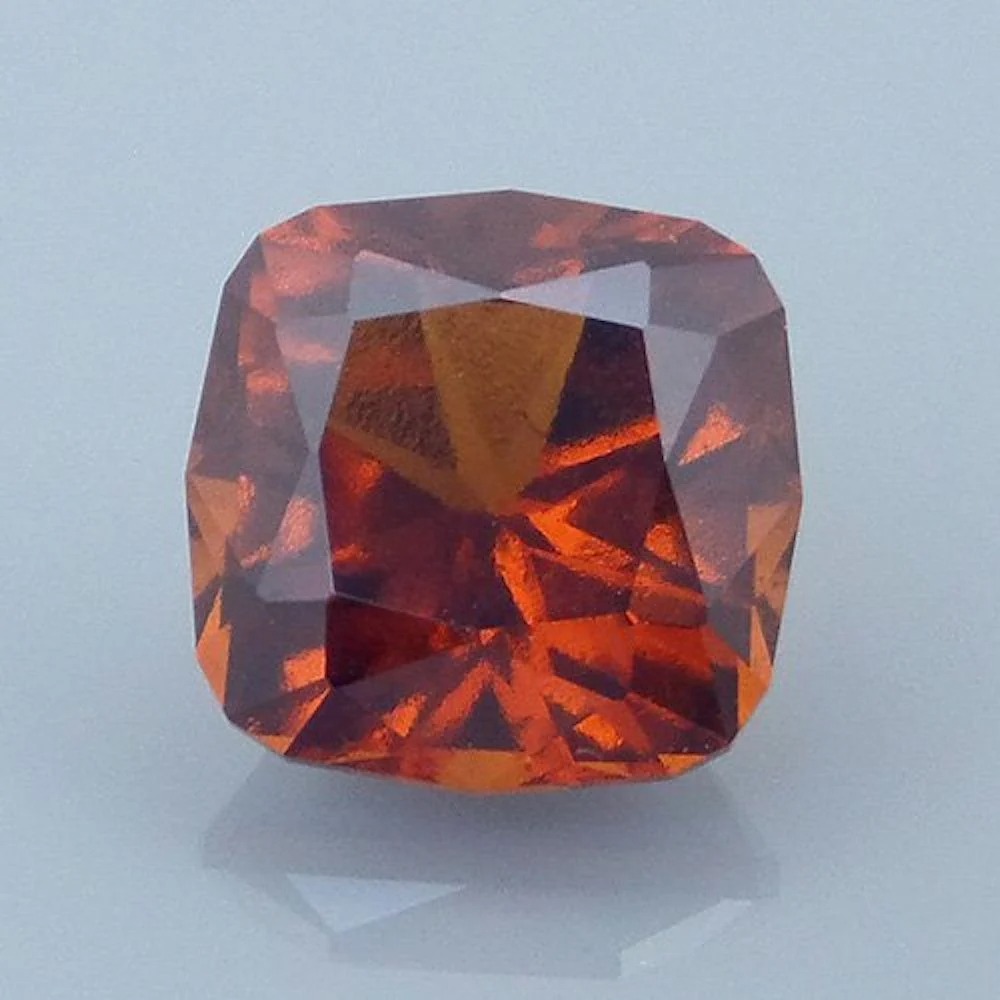
Hessonite is an orange to reddish-brown variety often called “cinnamon stone.” It commonly shows internal swirl-like inclusions and lower transparency compared to other garnets, yet remains mineralogically significant.
Hydrogrossular
Hydrogrossular forms when hydroxyl groups partially replace silica within the structure. This variety often appears opaque and is commonly found in massive or granular aggregates rather than well-formed crystals.
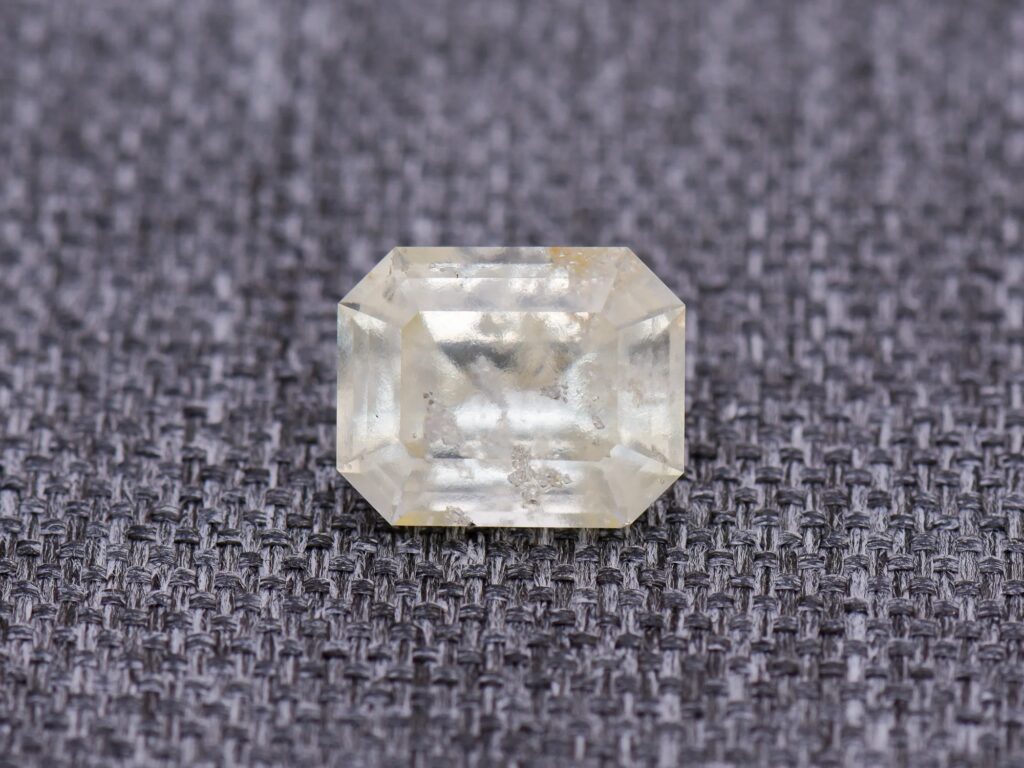
Colorless and Pale Grossular
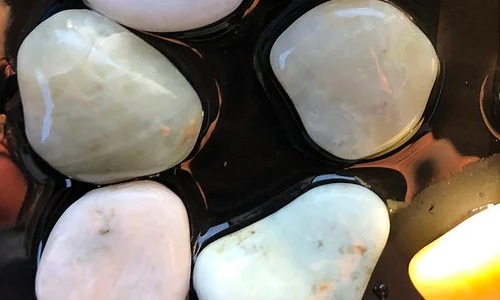
Rare colorless or very light-colored grossular garnets occur when trace impurities are nearly absent. These specimens are important for scientific study because they represent the most chemically pure form of the mineral.
Identification and Diagnostic Features of Grossular Garnet
In gemological laboratory testing, Grossular garnet is distinguished by several diagnostic features that separate it from other members of the garnet group and its common stimulants.
Crystal Habit and Internal Zoning
Grossular garnets often present as well-formed dodecahedral or trapezohedral crystals. Internally, they may exhibit distinct growth zoning. In the Hessonite variety, this is often accompanied by a characteristic “roiled” or “treacle” appearance—a swirly internal texture caused by the irregular distribution of transparency and minute inclusions, such as rounded apatite or zircon crystals.
Anomalous Double Refraction (ADR)
While the garnet species belongs to the isometric system and should theoretically remain dark under crossed polars (isotropic), Grossular frequently exhibits Anomalous Double Refraction. When viewed through a polariscope, this appears as “snake-like” extinction patterns or patchy strain shadows, a result of structural tension during the crystal’s growth.
Ultraviolet and X-Ray Fluorescence
Fluorescence serves as a helpful secondary test. Many Grossular specimens are inert, but specific varieties may show distinctive reactions. For instance, some yellow or light green grossulars may fluoresce a weak to moderate orange or pink under long-wave (LW) and short-wave (SW) ultraviolet light. Under X-ray excitation, certain specimens may also exhibit a noticeable orange or yellowish glow.
Spectroscopic Analysis
For definitive separation from other species like Andradite or Hydrogrossular, gemologists look for specific absorption bands. Hessonite typically shows manganese-related bands at 407nm and 430nm. Tsavorite, the green variety, displays a distinct chromium and vanadium spectrum, with absorption in the violet and a transmission window in the green.
By integrating these physical and optical observations—specifically the refractive index, specific gravity, and internal strain patterns—gemologists can effectively distinguish Grossular from the iron-rich Almandine or the magnesium-rich Pyrope species.
Global Distribution and Notable Localities
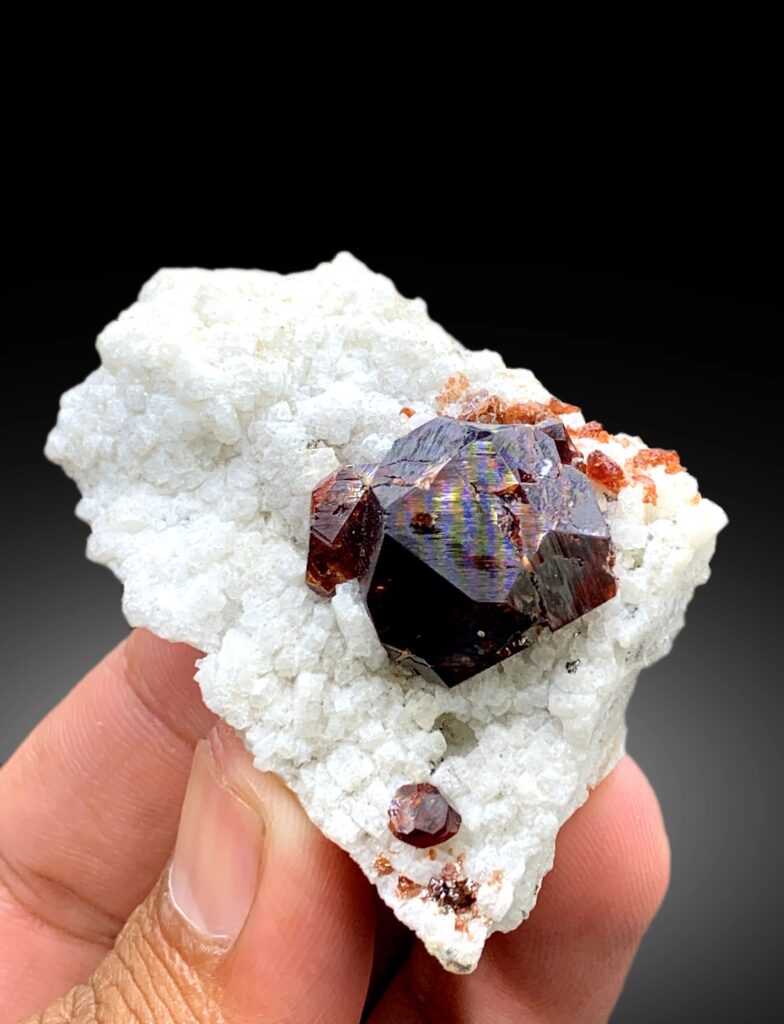
Grossular garnet is found in diverse geological environments across the globe, with reports of both gem-quality and specimen-grade material from nearly every continent. In North America, the United States offers significant occurrences in California, the New England region, and Vermont, while Canada’s Quebec province, particularly the Jeffrey Mine, has historically produced world-class crystals. Africa remains a premier source for high-value varieties, with Kenya and Tanzania leading production for the vibrant green tsavorite and the luminous Merelani Mint grossular.
In Asia, important deposits are located in China, Pakistan, and Sri Lanka, the latter being famous for its characteristic hessonite gravels. European and other regional sources include the alpine-type fissures of Italy and Switzerland, along with the historically significant deposits in Russia. Each of these localities produces grossular with unique gemological properties, crystal habits, and color profiles, providing a wealth of diversity for researchers and mineral collectors alike.
Applications in Jewelry Design
As a gemstone material, grossular offers a remarkable spectrum of colors that makes it suitable for a wide range of jewelry design styles, from high-end statement pieces to delicate everyday wear. Its moderate hardness, ranging from 6.5 to 7.5 on the Mohs scale, implies that while it is durable, protective settings should be considered for high-impact jewelry such as rings to ensure longevity and resist abrasion.One of the most appealing aspects of grossular for modern consumers is that it typically does not undergo heat treatment or artificial dyeing. This makes it a preferred choice for those seeking natural and untreated gemstones. Whether it is the intense green of tsavorite or the warm, honey-like tones of hessonite, grossular provides designers with a pure and versatile palette.
Care and Maintenance Recommendations
To maintain the luster and integrity of grossular garnet, proper care is essential. Like most natural gemstones, it should be protected from sudden thermal shocks and intense mechanical vibrations or impacts. For routine cleaning, it is best to use lukewarm water combined with a mild, neutral detergent and a soft-bristled brush.While grossular is relatively durable, its scratch resistance is slightly lower than that of corundum species such as ruby or sapphire. Therefore, owners should exercise caution during wear and ensure the gemstone is stored separately from harder minerals to prevent surface scratches. By following these simple preservation steps, the brilliance and structural wholeness of the gem can be maintained for generations.
FAQ
Is Grossular a Garnet?
Yes. Grossular is a true member of the garnet family, scientifically classified as a garnet species rather than a variety. Garnets are defined by a shared crystal structure and general chemical formula, and grossular represents the calcium–aluminum endmember of this group.
In gemology, any stone identified as grossular is, by definition, a garnet.
Is Grossular Garnet Rare?
Grossular as a mineral is not rare, but gem-quality grossular in certain colors—such as vivid green tsavorite or clean colorless stones—is relatively rare. Rarity depends heavily on color, clarity, and geographic origin.