
Andalusite is an aluminum silicate mineral with the chemical formula Al₂SiO₅. It belongs to the aluminosilicate group and is one of three naturally occurring polymorphs with the same chemical composition, the other two being kyanite and sillimanite. Although these minerals share an identical chemical formula, they differ in crystal structure and are stable under different pressure and temperature conditions. Andalusite typically forms during regional or contact metamorphism of aluminum-rich rocks, particularly in environments where relatively low pressure and moderate temperatures favor its crystallization.
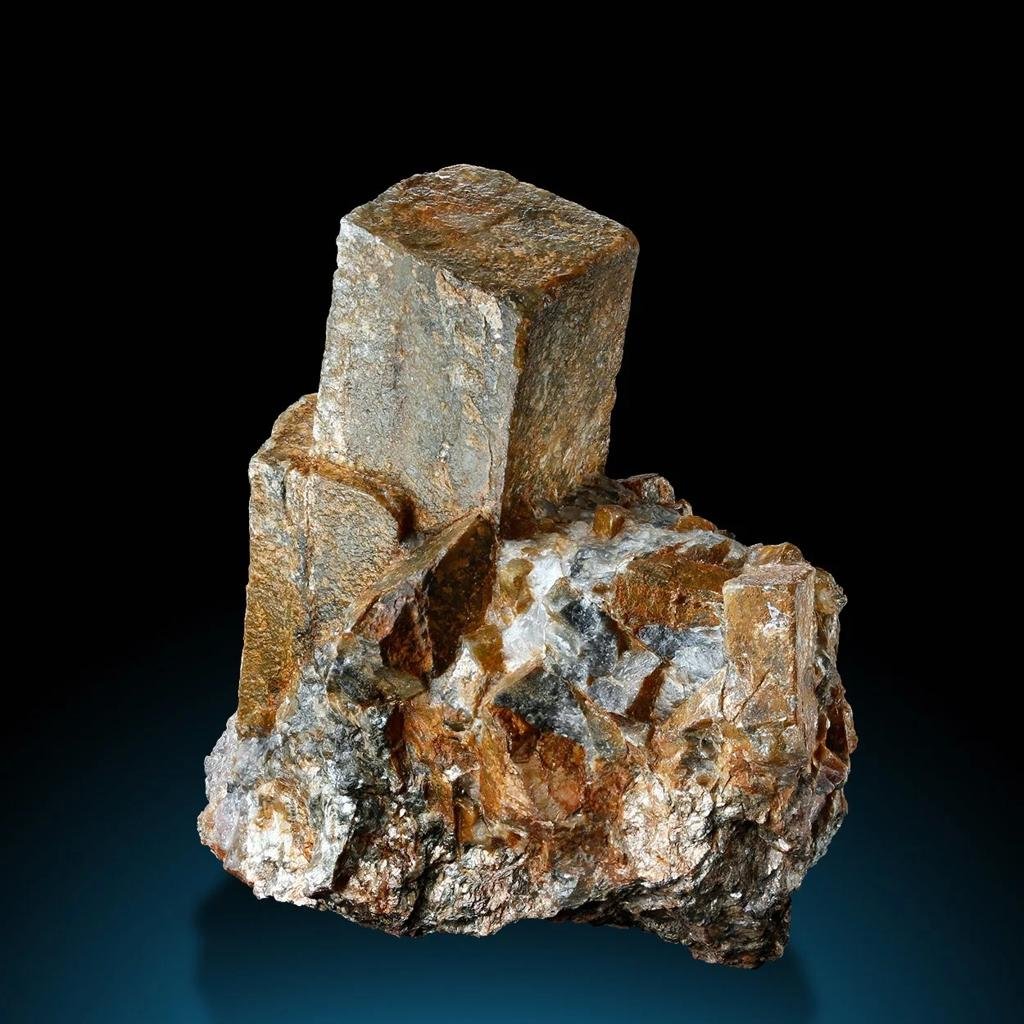
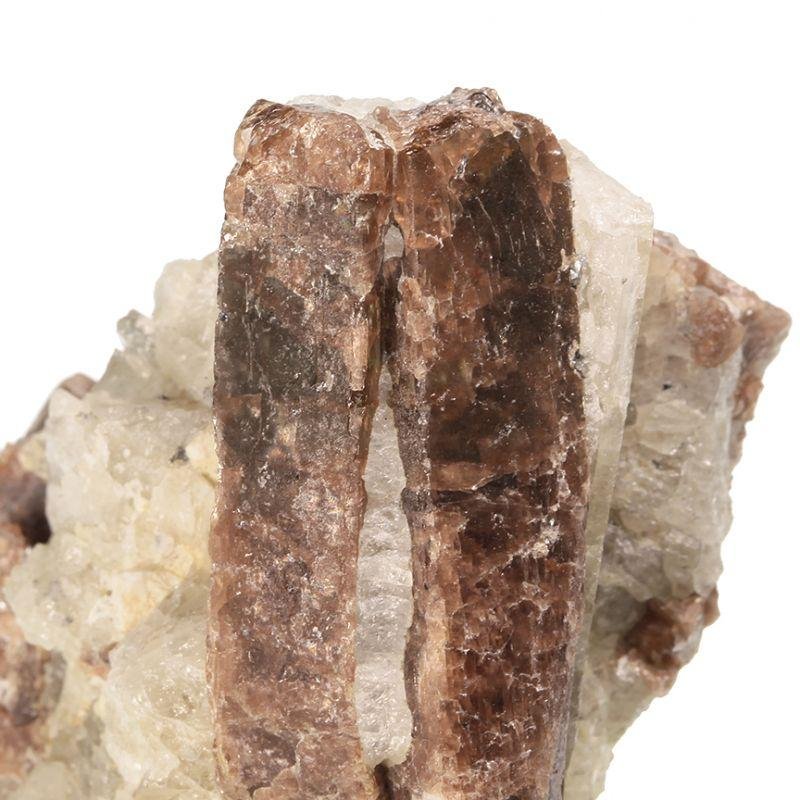
Andalusite commonly occurs in shades of brown, reddish brown, gray, green, yellowish brown, and pink, although colorless specimens are also known. Its crystals are generally prismatic and may display a nearly square cross-section. One of its most distinctive features is chiastolite, a variety characterized by dark inclusions arranged in a cross-shaped pattern when viewed in cross-section. Transparent andalusite can also be cut as a gemstone, with some specimens exhibiting pleochroism, an optical effect in which the observed color changes according to the direction of light transmission through the crystal. These properties make andalusite relevant to mineral identification, metamorphic petrology, and gemstone studies.
History and Discovery of Andalusite
Andalusite was named after Andalusia, a region in southern Spain where the mineral was first described in the late 18th century. The name reflects its historical association with this part of the Iberian Peninsula, although andalusite occurs in metamorphic rocks on several continents. Early mineralogical studies focused on its crystal form, optical characteristics, and chemical composition, helping distinguish it from other minerals with similar appearances.
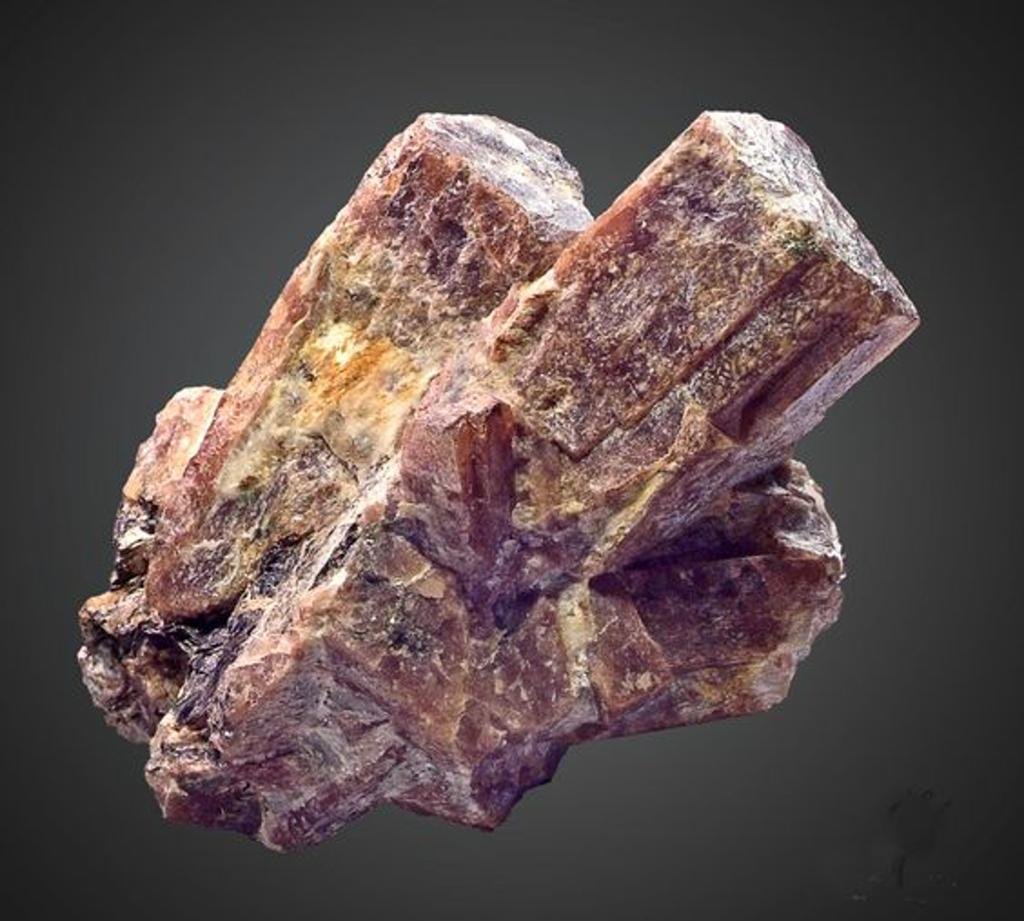
As mineralogy developed during the 19th century, andalusite became increasingly important in the study of metamorphic rocks. Researchers established that it has the same chemical composition as kyanite and sillimanite but a different crystal structure. These minerals are now recognized as polymorphs of Al₂SiO₅, and their stability fields provide valuable information about the pressure and temperature conditions under which metamorphic rocks form. Andalusite subsequently became an important mineral in metamorphic petrology because its presence can help constrain the geological conditions experienced by aluminum-rich rocks.
The mineral also gained commercial importance through its industrial properties and use as a gemstone. Its ability to withstand high temperatures makes andalusite-bearing materials useful in the production of refractory products, particularly those used in furnaces and other high-temperature industrial environments. Transparent crystals with strong pleochroism have also attracted interest in gemology, where their changing colors and optical behavior distinguish them from many other gemstones.
Formation and Geological Occurrence of Andalusite
Andalusite primarily forms through the metamorphism of aluminum-rich rocks under relatively low-pressure and moderate-temperature conditions. It is commonly associated with pelitic rocks, such as shale and mudstone, that contain abundant clay-derived aluminum-bearing minerals. During contact metamorphism, heat from nearby magma intrusions can transform these rocks and promote the crystallization of andalusite without requiring substantial increases in pressure. The mineral may also develop during regional metamorphism when the pressure-temperature conditions fall within its stability field. Its formation depends on the original rock composition, temperature, pressure, and the availability of fluids that influence metamorphic reactions.
In contact metamorphic environments, andalusite frequently occurs in hornfels and other fine-grained metamorphic rocks surrounding igneous intrusions. These rocks may develop when heat alters pre-existing sedimentary formations, particularly those rich in aluminum and relatively poor in calcium. Andalusite crystals can grow within the metamorphic matrix or form larger porphyroblasts that stand out from the surrounding rock. In some deposits, the crystals contain inclusions of graphite, clay minerals, or other fine-grained materials inherited from the original rock or incorporated during crystal growth. These inclusions may produce the characteristic cross-shaped pattern associated with chiastolite.
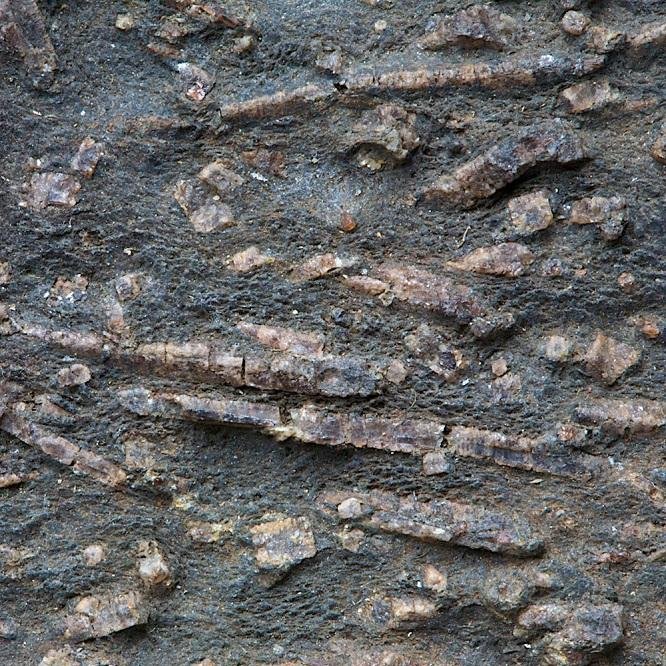
Andalusite can also occur in regionally metamorphosed schists and gneisses, particularly in areas where metamorphic conditions favor its formation. It is sometimes associated with minerals such as cordierite, biotite, muscovite, garnet, quartz, and feldspar, depending on the chemical composition of the host rock and the degree of metamorphism. Its relationship with kyanite and sillimanite is particularly significant because changes in pressure and temperature can cause one Al₂SiO₅ polymorph to become more stable than another. Consequently, andalusite is widely used by geologists as an indicator mineral when reconstructing the metamorphic history of a rock.
Weathering and erosion can release resistant andalusite crystals from their original host rocks. Because the mineral is relatively hard and can survive some degree of mechanical transport, individual grains may accumulate in sediments and, under suitable conditions, in placer deposits. However, its most characteristic geological occurrence remains within aluminum-rich metamorphic rocks, where its crystal form, mineral associations, and relationship to other aluminosilicate polymorphs provide evidence of the conditions under which the surrounding rocks developed.
Crystal Structure and Chemical Composition of Andalusite
Andalusite is an aluminum silicate mineral with the chemical formula Al₂SiO₅, consisting of aluminum, silicon, and oxygen. It belongs to the orthorhombic crystal system, in which the three crystallographic axes are mutually perpendicular but have different lengths. Its crystal structure is distinct from those of kyanite and sillimanite, even though all three minerals share the same chemical composition. These structural differences influence their physical properties, crystallographic characteristics, and stability under different pressure and temperature conditions.
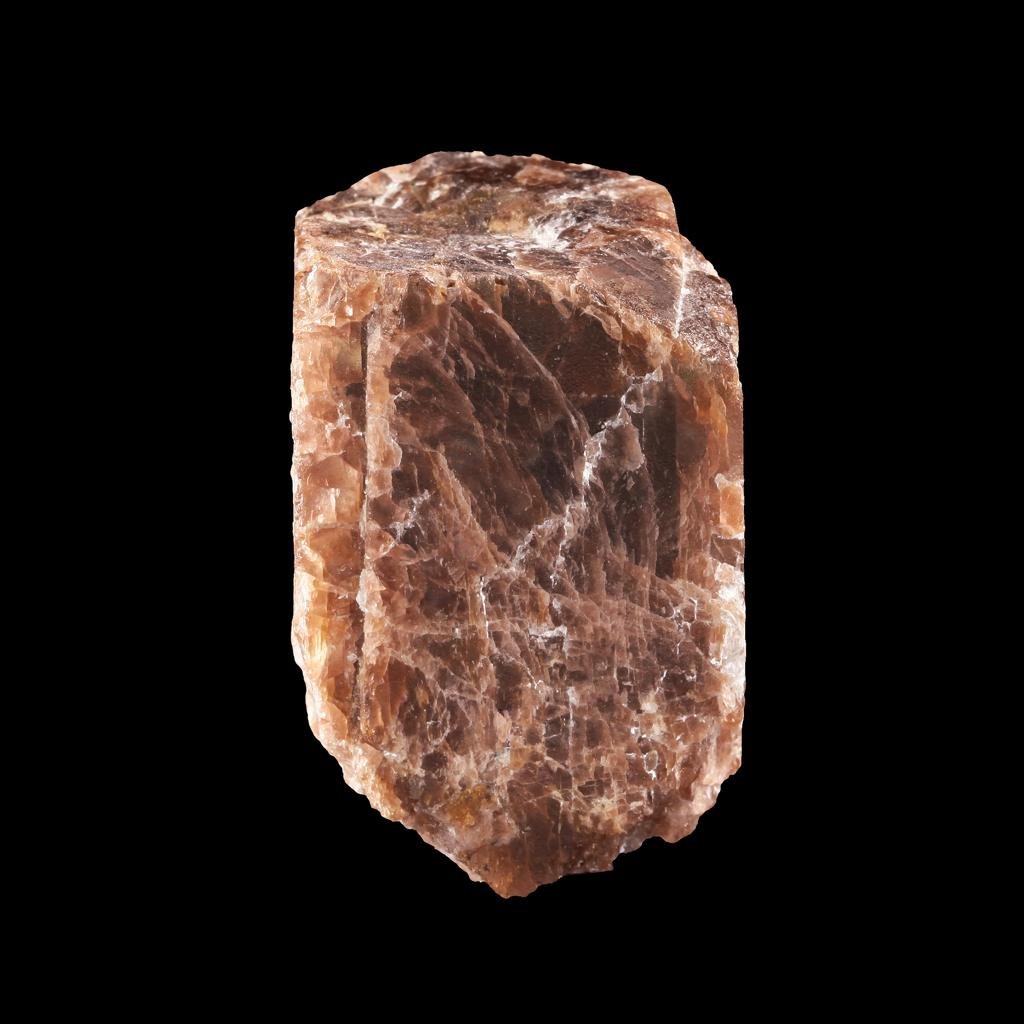
In the structure of andalusite, aluminum occurs in two principal coordination environments. One aluminum site is surrounded by six oxygen atoms, forming AlO₆ octahedra, while the other is coordinated by five oxygen atoms, forming AlO₅ polyhedra. Silicon is surrounded by four oxygen atoms in SiO₄ tetrahedra. These structural units connect through shared oxygen atoms to form a three-dimensional framework. The arrangement of aluminum and silicon within this framework distinguishes andalusite from its polymorphs and contributes to its characteristic crystallographic and optical properties.
The ideal chemical composition of andalusite consists of approximately 62.9% Al₂O₃ and 37.1% SiO₂ by weight. Natural specimens may contain minor amounts of iron, manganese, and other elements, which can substitute for aluminum or occur in associated inclusions. Iron-bearing compositions may contribute to brown, reddish-brown, or greenish coloration, although color is also influenced by trace-element concentrations, crystal defects, and inclusions. The presence of these minor components does not change the mineral’s fundamental classification as an aluminum silicate.
Andalusite is one of the three principal polymorphs of Al₂SiO₅, alongside kyanite and sillimanite. Their relative stability is governed primarily by pressure and temperature, as well as the chemical and geological conditions of the surrounding rock. Andalusite is generally favored at comparatively low pressures and moderate temperatures, whereas kyanite is associated with higher-pressure conditions and sillimanite commonly forms at higher temperatures. The boundaries between their stability fields are important in metamorphic petrology because the occurrence of these minerals can help constrain the pressure-temperature history of metamorphic rocks. However, interpreting those conditions requires consideration of mineral assemblages, rock composition, and possible later geological changes rather than relying on andalusite alone.
Physical and Chemical Properties of Andalusite
Andalusite has a Mohs hardness of 6.5–7.5, making it relatively resistant to scratching and suitable for certain gemstone applications. Its specific gravity generally ranges from approximately 3.13 to 3.16, and it typically exhibits a vitreous luster on fresh crystal surfaces. The mineral has imperfect to distinct cleavage in one direction, while fracture surfaces may be uneven or subconchoidal. Andalusite is usually transparent to translucent, although opaque specimens are common, particularly when they contain abundant mineral inclusions. Its streak is white, and its crystals commonly develop elongated prismatic habits with a nearly square cross-section. It crystallizes in the orthorhombic system and may occur as individual crystals, granular aggregates, or embedded porphyroblasts within metamorphic rocks.
The color of andalusite varies from colorless and pale pink to yellowish brown, reddish brown, gray, olive green, and dark green. Some crystals display strong pleochroism, meaning that their apparent color changes when viewed along different crystallographic directions under polarized light. Gem-quality material may show combinations of green, brown, yellow, or reddish hues as the stone is rotated. This optical property is particularly useful in gemological identification and is associated with the mineral’s anisotropic crystal structure and the selective absorption of light. Chiastolite, a distinctive variety of andalusite, contains dark inclusions commonly arranged in a cross-shaped pattern. These inclusions often consist of carbonaceous or clay-rich material incorporated during crystal growth.
Chemically, andalusite is an anhydrous aluminum silicate with the ideal formula Al₂SiO₅. It does not contain essential hydroxyl groups or water in its ideal crystal structure. The mineral is generally stable under ordinary surface conditions and is not readily dissolved by water. However, its composition and structure can change through geological processes involving metamorphic reactions, particularly when pressure, temperature, or surrounding chemical conditions shift sufficiently to favor another mineral assemblage. Andalusite can transform into sillimanite under suitable higher-temperature conditions, while kyanite may be favored at higher pressures. These transformations depend on the full pressure-temperature environment and reaction kinetics rather than on temperature alone.
One of the most important industrial properties of andalusite is its behavior at elevated temperatures. When heated sufficiently, it can undergo thermal decomposition and form mullite, an aluminum silicate phase with high thermal stability, together with silica-rich material. This reaction is relevant to the manufacture of refractory products used in furnaces, kilns, and other high-temperature installations. Andalusite-bearing materials are valued for their potential to develop mullite during firing, helping produce products with good thermal stability and resistance to deformation. The exact performance depends on the mineral’s purity, grain size, processing conditions, and the composition of the finished refractory material.
Types and Varieties of Andalusite
Andalusite occurs in several recognized forms and descriptive varieties, distinguished mainly by internal inclusions, transparency, color, and suitability for particular uses. Although these varieties share the same fundamental chemical composition and crystal structure, differences in mineral inclusions and optical properties can produce noticeably different appearances.
Chiastolite: Chiastolite is a distinctive variety of andalusite characterized by dark, commonly cross-shaped patterns visible in cross-section. These patterns form when carbonaceous material, clay-rich substances, or other inclusions become concentrated in particular zones during crystal growth. Chiastolite typically occurs in metamorphosed, aluminum-rich sedimentary rocks and is frequently used as a geological specimen and ornamental material.
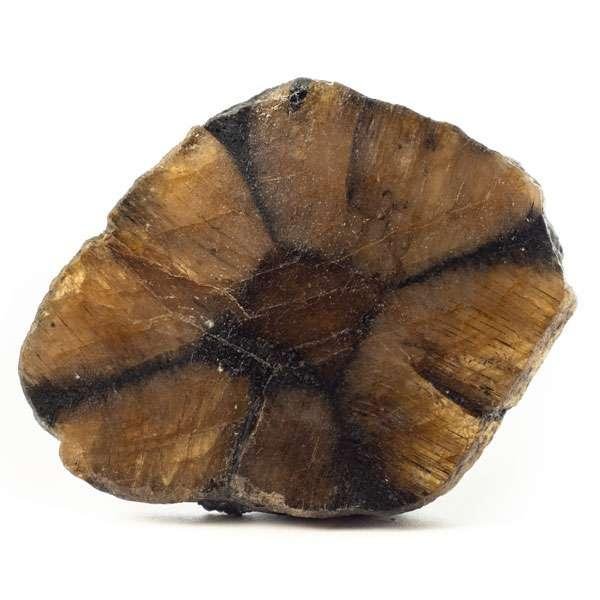
Gem-Quality Andalusite: Transparent to translucent andalusite with suitable clarity and color may be cut into faceted gemstones. These stones are particularly notable for strong pleochroism, which can produce green, brown, yellow, or reddish tones depending on the viewing direction and cutting orientation. Gem-quality crystals are generally less common than opaque or heavily included specimens, and their appearance depends on color distribution, clarity, and orientation within the finished stone.
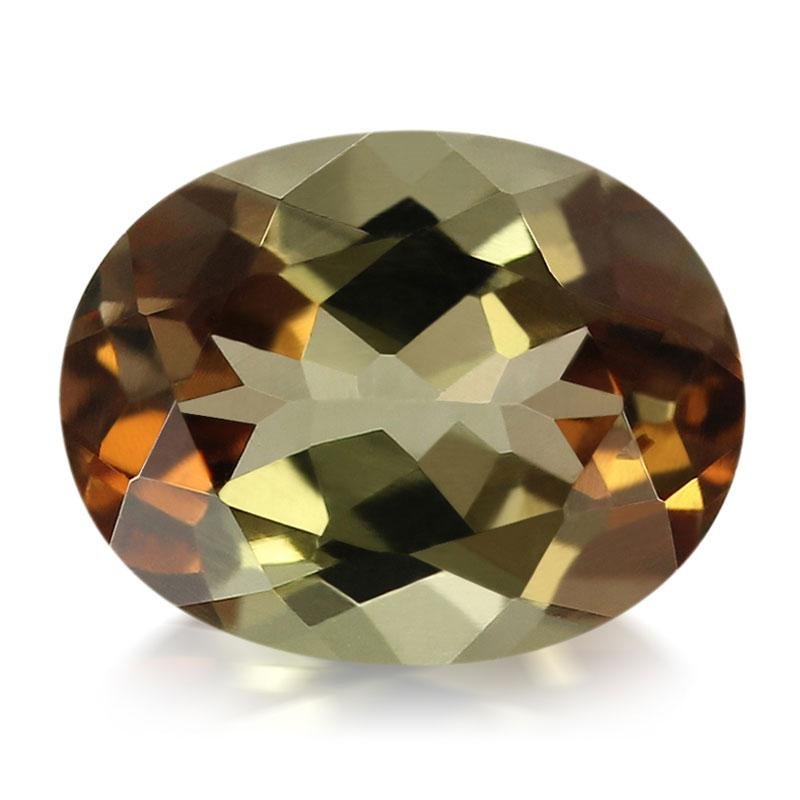
Green Andalusite: Green andalusite is a color variety that may range from pale olive green to deeper greenish hues. Its coloration is commonly associated with trace elements, particularly iron, although the precise cause varies among specimens. Transparent green material may be used in jewelry, while less transparent crystals are primarily collected as mineral specimens.
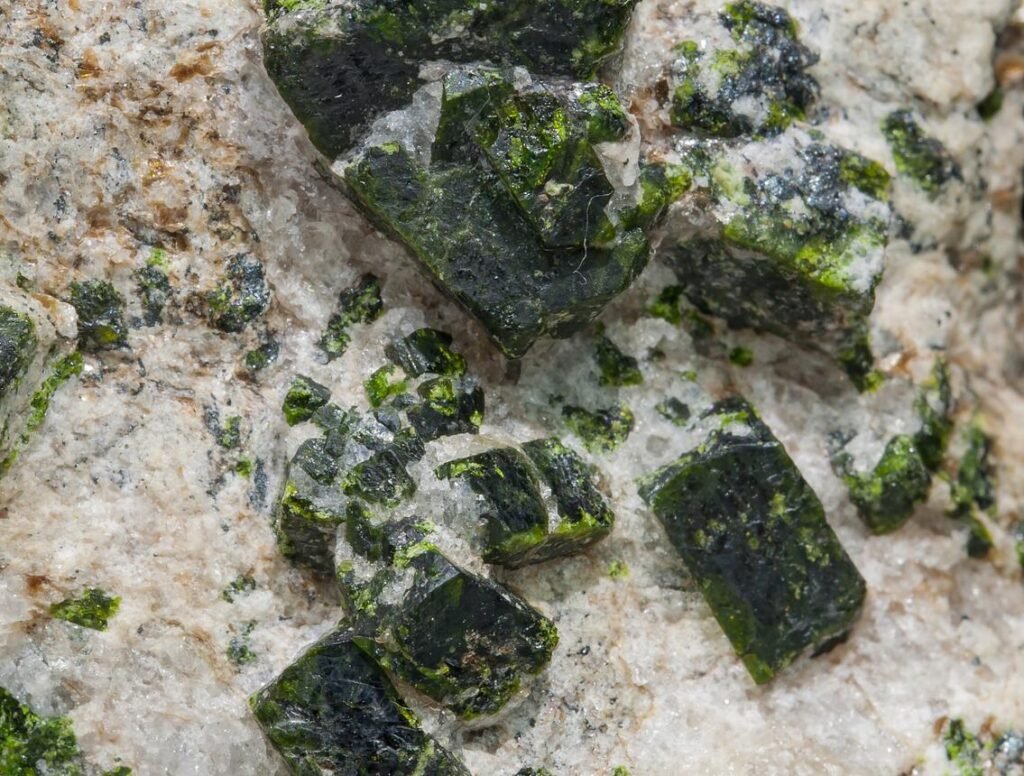
Brown and Reddish-Brown Andalusite: Brown and reddish-brown andalusite is common in natural metamorphic occurrences. The coloration may result from trace-element substitution, crystal defects, and inclusions. These specimens can occur as well-formed prismatic crystals or as grains embedded in metamorphic rocks.
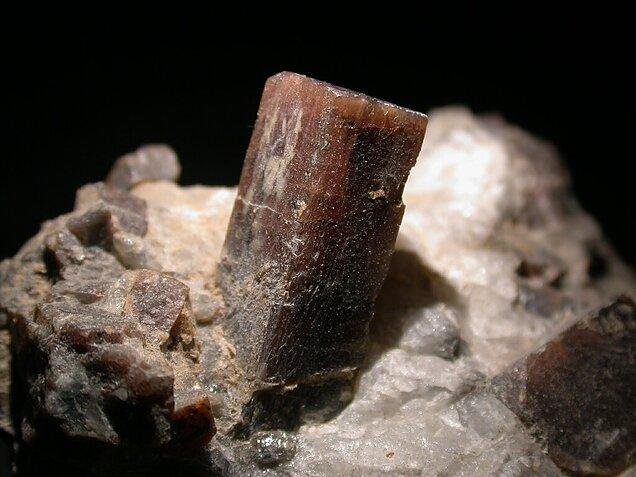
Colorless and Pale-Colored Andalusite: Some andalusite crystals are colorless, pale yellow, pinkish, or gray. Transparent specimens with relatively few inclusions may be suitable for faceting, although their optical appearance and commercial value depend on clarity, color, size, and pleochroism.
These varieties are primarily descriptive or gemological categories rather than separate mineral species. Chiastolite is distinguished by its characteristic inclusion pattern, whereas green, brown, and colorless andalusite are classified according to appearance. All retain the fundamental mineralogical identity of andalusite, an orthorhombic aluminum silicate with the chemical formula Al₂SiO₅.
Major Localities of Andalusite
Andalusite occurs in metamorphic rocks across many parts of the world, particularly in regions where aluminum-rich sedimentary rocks have been subjected to contact or regional metamorphism. The distribution of the mineral is closely related to the geological conditions that favor its formation, including relatively low pressures, moderate temperatures, and suitable bulk-rock compositions. Some localities are known for well-formed crystals and distinctive mineral specimens, while others are important sources of industrial-grade andalusite or gem-quality material.
Spain is historically associated with andalusite, and the mineral’s name derives from Andalusia in southern Spain. Andalusite-bearing metamorphic rocks occur in parts of the Iberian Peninsula, where regional geological processes have altered aluminum-rich sedimentary formations. Spanish occurrences have contributed to the mineral’s historical recognition and study.
France has several documented occurrences of andalusite in metamorphic terrains. The mineral is found in contact-metamorphosed rocks and schists, where it may occur as prismatic crystals or porphyroblasts within a finer-grained matrix. Certain French localities are also known for chiastolite specimens displaying characteristic cross-shaped inclusions.
Brazil is an important source of mineral specimens and gemstone-quality andalusite. Crystals from Brazilian deposits may display green, brown, yellowish, or reddish colors, sometimes with pronounced pleochroism. The country’s diverse geological environments have produced specimens used in mineral collections and the gemstone trade.
Sri Lanka is known for gem-bearing geological deposits and has yielded andalusite suitable for cutting. Material from the island may exhibit distinct pleochroic colors, making crystal orientation an important consideration during gemstone cutting. The occurrence of andalusite alongside other resistant minerals in sedimentary deposits reflects the region’s complex geological history.
South Africa is an important producer of andalusite for industrial applications. Deposits in the country are associated with metamorphic rocks and provide raw material for refractory manufacturing. South African andalusite is valued for its behavior during high-temperature processing, particularly its capacity to form mullite, a phase used in heat-resistant industrial products.
Austria, the United States, and other regions also contain documented andalusite occurrences. In the United States, the mineral has been reported from several metamorphic terrains, including areas affected by contact metamorphism. Austrian occurrences are associated with metamorphic geological settings in which aluminum-rich rocks have experienced suitable pressure-temperature conditions. Additional deposits are found in countries across Europe, Asia, Africa, and the Americas.
The quality and appearance of andalusite vary substantially among localities. Geological conditions influence crystal size, color, inclusion content, and the degree of crystallization, while the intended use determines which characteristics are most important. For mineral collectors, well-formed crystals and distinctive chiastolite patterns may be desirable; for gemologists, transparency and pleochroism are key considerations; and for industrial applications, chemical composition, mineral purity, and performance during high-temperature processing are more important than visual appearance.
Uses and Applications of Andalusite
Andalusite has several applications in refractory manufacturing, gemology, mineral collecting, and geological research. Its industrial importance is primarily related to its behavior at high temperatures, while its use as a gemstone depends on its color, transparency, and distinctive pleochroism. The most significant commercial application of andalusite is in the manufacture of refractory materials designed to withstand high temperatures. When heated under appropriate conditions, andalusite can transform into mullite, a thermally stable aluminum silicate phase, together with silica-rich material. This transformation contributes to the production of refractory products with good resistance to heat, thermal deformation, and temperature fluctuations. Andalusite is therefore used as a raw material in refractory bricks, castables, and other products employed in industrial furnaces, kilns, and metallurgical installations. Its performance depends on factors such as mineral purity, grain size, firing conditions, and the formulation of the finished product.
Transparent andalusite is also used as a gemstone, particularly when it displays distinct pleochroism and a suitable combination of colors. Depending on the viewing direction, a single crystal may show green, yellowish-brown, reddish-brown, or related tones. Gem cutters must consider this directional color variation when orienting the rough material, as the cutting angle can influence the appearance of the finished stone. Andalusite is sometimes fashioned into faceted gemstones for rings, pendants, earrings, and other jewelry. Its Mohs hardness of approximately 6.5–7.5 provides reasonable resistance to scratching, although its cleavage and potential for damage mean that protective settings and careful handling are advisable, especially for rings exposed to frequent impact. Well-formed andalusite crystals are also collected for their crystal habit, color, and geological associations. Chiastolite specimens are particularly recognizable because of their cross-shaped internal patterns, which can be revealed in polished cross-sections. Such material is used in mineral collections, educational displays, and occasionally in polished ornamental objects or jewelry. The value of specimens depends on factors including crystal form, pattern clarity, locality, condition, and overall appearance.
In geological research, andalusite is an important mineral in metamorphic petrology because it helps researchers interpret the pressure-temperature conditions under which rocks formed. Its occurrence alongside minerals such as kyanite, sillimanite, cordierite, and garnet can provide information about metamorphic reactions and changes in geological conditions. Geologists examine these mineral assemblages to reconstruct the thermal and tectonic histories of metamorphic terrains. Andalusite is also studied to understand the relationship between crystal structure, chemical composition, optical properties, and polymorphism among the Al₂SiO₅ minerals. Overall, its principal industrial role is in refractory materials, while transparent crystals have a more specialized role in the gemstone market. Its distinctive inclusion patterns and value as an indicator of metamorphic conditions also make it useful in mineral collections, education, and geological research.